How to Keep Trail Runners Working in Bad Weather
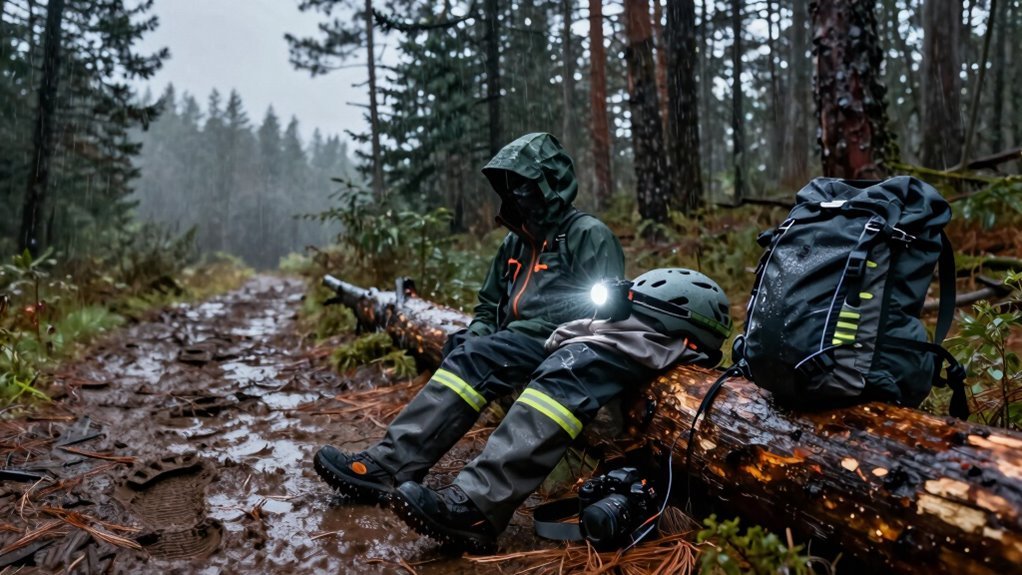
Keep your trail runners game-ready in lousy weather by choosing pairs with Gore-Tex and DWR coatings—they laugh at puddles. These features are key for maintaining performance and keeping your feet dry during wet conditions.
Toss on gaiters to block mud’s sneaky invasion, like bouncers for your feet. They add an extra layer of protection, especially on muddy or slushy trails.
Rinse off muck right after runs, then air-dry them properly—never over a radiator, unless you enjoy crispy glue. Remove insoles and laces to speed things up, allowing for thorough drying.
Reproof when water stops beading on the surface. This restores the shoe’s water resistance and extends its life in bad weather.
Rotate pairs and fix small tears early, because soggy socks are *never* part of the plan. You’ve got more tricks up your sleeve.
Choose Weather-Resistant Trail Runners Wisely
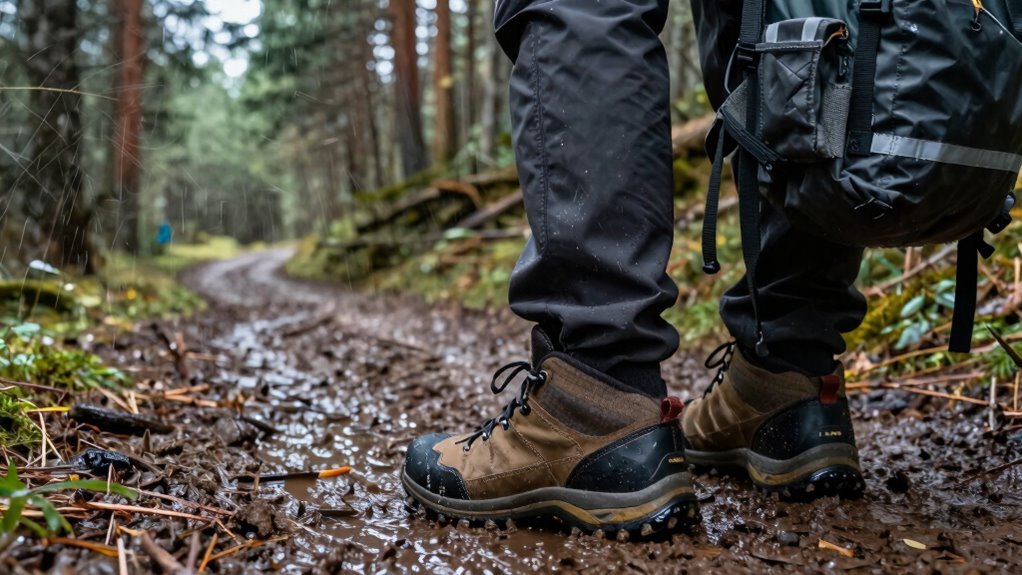
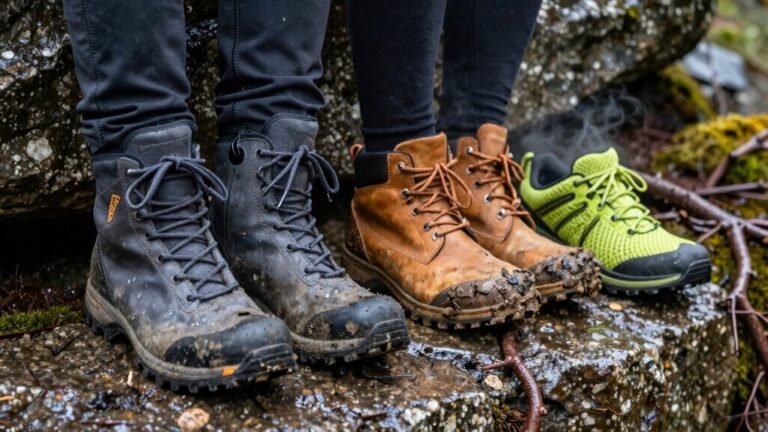
Ever wonder how to stay light on your feet when the trail turns into a muddy slip-n-slide? You’ll want trail runners with a Gore-Tex liner—it keeps water out like a raincoat for your feet. Those DWR-treated uppers shrug off puddles like a duck’s back. But heads up: they trap sweat just as well, so long slogs might get swampy inside. They’re heavier than airy mesh, sure, but they’ve got your back in snow, sleet, or knee-deep creek hops. The Vibram outsole bites into slick roots and greasy rocks without flinching. Aggressive lugs kick mud loose like甩 (shuǎi) and grip icy roads too. Rock plates and rubber bumpers guard against stubbed toes and sharp surprises. Yeah, they’re overkill on dry days—but when skies open and trails turn nasty? You’ll be grinning, not limping. Pick smart, stay dry, and let the muck fly. Your feet will thank you. These models often feature a gusseted tongue to block water entry from the top.
Use Gaiters to Block Mud and Debris
When the trail turns into a sloppy mess of mud, gravel, and sneaky pine needles, your shoes might look tough—but they’ve still got a weak spot: the top.
That’s where gaiters come in, your shoe’s best friend against gunk invasion.
Slap on ankle or full-shoe gaiters to block dirt, pebbles, and even fine dust from sneaking in.
They seal the gap like a bouncer at a club—no mud, no gravel, no pine needles allowed.
Breathable, water-resistant fabrics keep things light and dry, while Velcro, straps, or O-rings lock them firmly in place—no shoe peeling needed.
Whether you’re splashing through slush or grinding scree, gaiters mean fewer pit stops to dump out debris.
Plus, they’re tough enough to survive hail, sand dunes, and surprise puddles.
Stick ‘em on, and run wild—your feet will thank you later.
No more gritty socks or surprise pebbles playing footsie!
Many models feature adjustable instep straps for a secure, customizable fit that stays put on rough terrain.
Rinse Off Mud Immediately After Runs
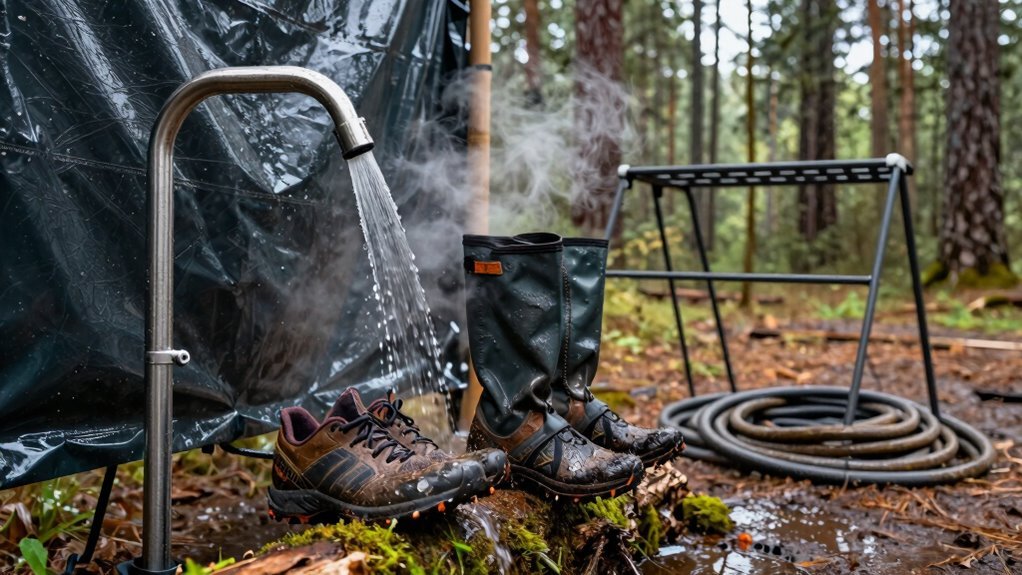
Squelch right into cleanup the second you finish your run—don’t wait for the mud to harden into armor.
Give your shoes a quick dunk in a creek, puddle, or even a snow patch right at the trail’s edge.
Still got ‘em on? Drag ‘em through water or snow to shake off the worst gunk.
Stomp on firm ground to knock clumps loose before you even hit the car.
If your shoes are breathable, a lake dip works wonders—just skip soaking leather or suede.
Back home, grab the hose and spray away dirt, pulling out footbeds first so water doesn’t pool.
Scrub tricky spots with an old toothbrush, and use baking soda paste for sole grooves.
Brush off loose muck outside—nobody wants muddy footprints indoors.
Rinsing fast keeps gunk from wrecking your shoes, saves fabric, and means less elbow grease later.
Trust us, your future self will high-five you.
Consider doing this cleanup immediately after running through trail drainage depends on construction and soil type to prevent long-term damage from trapped moisture.
Air Dry Shoes Properly—Never Use Heat
Drying your shoes the right way keeps them happy, healthy, and ready for your next muddy adventure.
Skip the heat—it’s a fast track to wrecked soles and warped fabric.
Instead, go natural and let air do the magic.
You’ll keep your trail runners in top shape and smelling fresher than a mountain breeze (well, almost).
Here’s how to nail it:
- Stuff with newspaper to suck out moisture like a sponge in a puddle
- Set in front of a fan so breezes chase water out of every crevice
- Let sunshine peek in—just briefly—to zap bacteria without frying your shoes
- Place in a well-ventilated spot where air flows like a gentle river
- Avoid dryers and hairdryers—they’re shoe kryptonite, not allies
Your runners worked hard—reward them with smart, cool, no-heat drying that actually lasts.
Remove Insoles and Laces for Thorough Drying
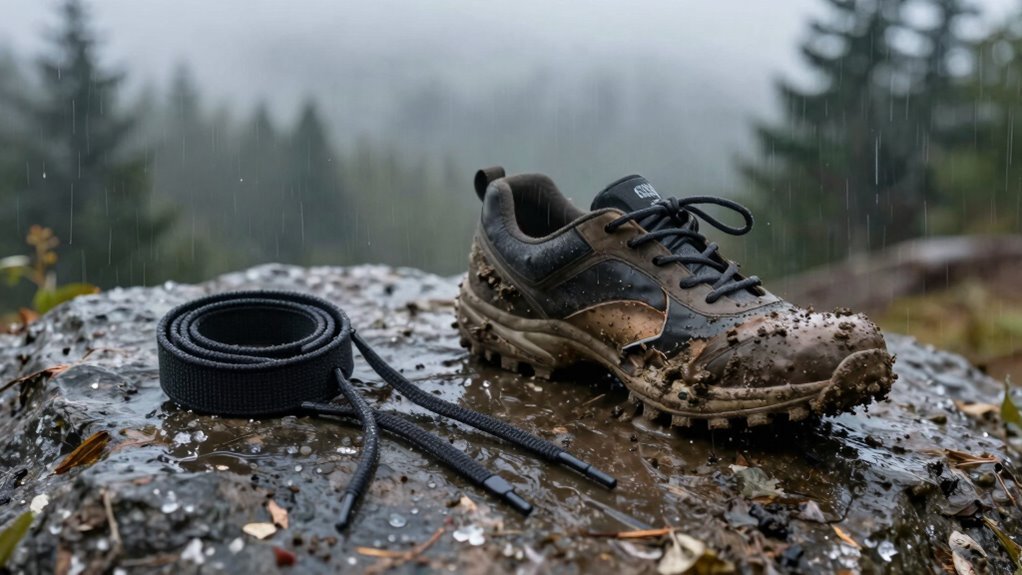
Peeling out your insoles and loosening those laces isn’t just satisfying—it’s your trail runners’ ticket to a faster, fresher recovery after splashing through puddles or trudging through mud.
Pulling out the insoles lets air reach hidden, soggy spots, while loose laces open up every nook for better airflow.
Those sockliners hold onto moisture like sponges, so drying them separately near a fan speeds things up—plus it helps nix stink-causing bacteria.
Inov-8 kickers lost 62% water in 30 minutes without insoles or laces!
Stuff shoes with newspaper (after you’ve removed both) to soak up gunk in the toe box, swapping every couple hours.
Tests prove this combo cuts drying time down from overnight to just a few hours in the sun or breeze—no heat needed.
Your runners will be dry, fresh, and ready for the next muddy adventure.
Score!
Store in a Well-Ventilated Area
While your trail runners are built for mud, muck, and mayhem, they still need a cozy, breezy spot to chill after the adventure.
—and no, shoving them in a dark closet or jamming them into a plastic bin isn’t giving them the retirement they deserve.
Let them breathe easy with these tips:
- Keep airflow steady to stop moisture from sneaking into mesh and midsoles
- Store between 59–77°F—too hot and your soles might melt like ice cream in July
- Ditch the plastic boxes—they trap humidity like a mini sauna gone wrong
- Use open shelves or racks so air can dance freely around your kicks
- Shield from sunlight—UV rays fade colors and wreck foam faster than a weekend race
A well-ventilated home keeps your trail runners fresh, mold-free, and ready to crush the next muddy loop without stinking up your closet like forgotten gym socks.
Rotate Between Multiple Pairs in Wet Seasons
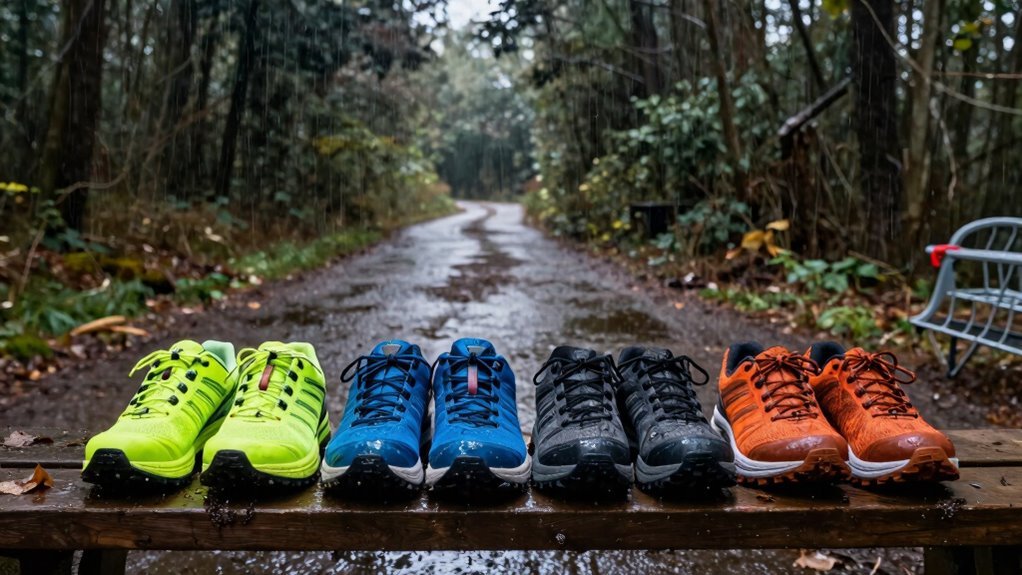
You’ve given your trail runners a breezy spot to rest, so they’re not growing mold like last week’s leftovers—great!
Now, level up: rotate between at least two pairs in wet seasons. This lets the foam in your midsoles rebound like a sponge after a downpour, staying springy and supportive.
When one pair’s soaked from a muddy slog, the other’s dry and raring to go—no more squishing through puddles.
Plus, switching shoes spreads out the wear and tear, so you’re not pounding the same foam every single day.
Studies even say runners who swap shoes cut injury risk by nearly 40%—your legs will thank you.
Whether it’s two identical pairs or different drops and cushioning, rotating keeps your feet fresh, your gear lasting longer, and your runs way more fun.
Wet weather won’t slow you down when you’ve got a solid rotation game!
Avoid Washing Machines and Harsh Cleaners
When the trail leaves your shoes caked in mud, it’s tempting to toss them in the washing machine and call it a day—don’t do it! You’ll risk wrecking your favorite trail dogs before their time.
Instead, treat them right with some gentle TLC. Cleaning smart keeps your kicks running strong, trail after trail.
- Skip the machine: It warps foam and fabric—your shoes aren’t laundry!
- Ditch harsh brushes and cleaners: They shred delicate uppers like shredded cheese.
- Use a soft brush: A toothbrush works magic on gunked-out soles and eyelets.
- Rinse with cold water: Heat melts glue, but cold water flushes mud safely.
- Wash with mild soap: Baking soda or a drop of dish soap does the trick—no drama.
Your shoes carry you through muck and miles—return the favor with care!
Reapply Water-Repellent Treatments Regularly
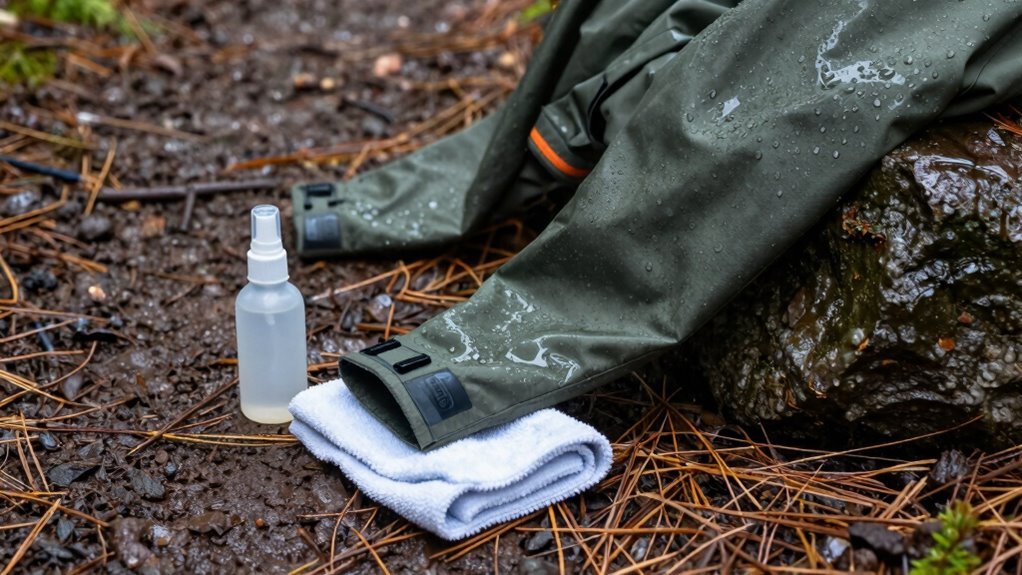
Now that your trail runners are clean and dry—no more mud monster vibes—it’s time to bring back their rain-ready superpower.
When water stops beading and soaks in instead, it’s a clear sign they’re begging for help.
The factory DWR coating fades over time, especially with frequent muddy runs or wet trails, so don’t wait.
Grab a water-based spray—like NST Proof for GORE-TEX or Revivex for fabric—and apply it evenly from 6 to 8 inches away.
Focus on toes, seams, and spots that flex the most.
For leather, use a gel and buff it in.
Apply thin, even coats, letting each dry before adding more.
Avoid waxes—they clog breathability.
Once done, air-dry them away from sunlight for at least 24 hours.
Stuff with newspaper to keep their shape.
When ready, test with a splash—beads mean success.
Boom, you’re weatherproof again!
Inspect for Wear and Repair Early
Grab a flashlight and play shoe detective—your trail runners are talking, and they’re about to spill their secrets.
Catching small issues early keeps you safe, dry, and bouncing over roots like a pro.
Don’t wait for soles to peel or seams to split—inspect regularly and fix fast.
- Clean outsoles to keep grip sharp and avoid slipping like a cartoon character
- Spot-clean uppers so dirt doesn’t sandpaper your mesh to shreds
- Pull out insoles and scrub them—your feet (and nose) will thank you
- Check foam and glue joints before squish turns to sad pancake
- Look for tears or lifts before a downpour turns your shoe into a sponge
Small fixes now mean big adventures later. Stay trail-ready, not wrecked.
Frequently Asked Questions
Can I Wear Trail Runners in Heavy Snow?
Yes, you can absolutely wear trail runners in heavy snow—you’ve just gotta pick the right pair.
Look for deep lugs, waterproof Gore-Tex lining, and maybe even carbide studs for icy patches.
With cozy insulation and a snug Boa closure, your feet stay warm, dry, and locked in.
They’re like mini snow boots with bounce!
Just don’t expect miracles on pure ice—but hey, who’s out there running blizzards for fun anyway?
How Often Should I Replace Trail Running Insoles?
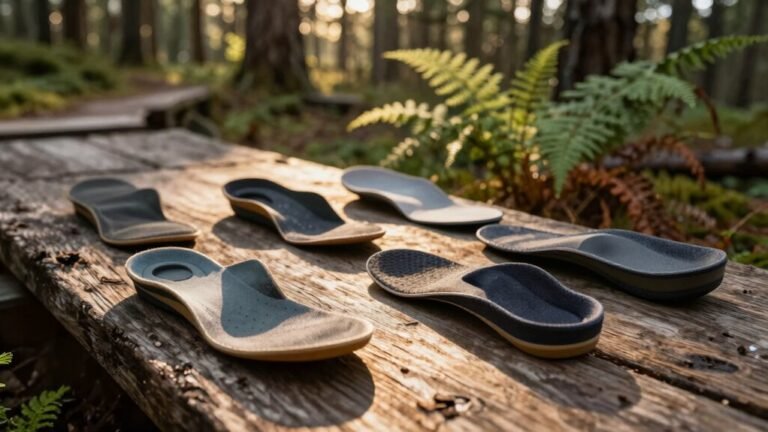
You should replace your trail running insoles every 2 to 3 months, or around 350–450 miles—whichever comes first.
Heavy trails, sweat, and pounding rocks wear them down fast.
Check for flat spots, cracked foam, or new blisters.
If they feel mushy, not bouncy, it’s time.
Rotate pairs if you can, and your feet will thank you with happy, springy steps—no sad squish on sketchy slopes!
Are Waterproof Trail Runners Worth the Investment?
Yeah, waterproof trail runners are worth it if you love splashing through puddles or trudging in snow—they keep your feet cozy and dry, so you skip the soggy sock struggle.
Sure, they cost a bit more and can get steamy when it’s warm, but they’re tough, grippy, and game-changers in wet weather.
Think of them as rain boots with soul, ready to stomp through the muck while you grin like a kid with fireproof galoshes.
What’s the Best Way to Store Trail Runners Long-Term?
You store trail runners long-term by keeping them cool, dry, and out of direct sunlight—you’ve got this!
Stuff them with paper or shoe trees to hold their shape, let air flow around them, and never stack.
Loosen the laces, dry them fully first, and toss in silica gel if it’s humid.
Check on them monthly—because yes, your shoes deserve a spa check!
Do Gaiters Work on All Types of Trail Shoes?
Yeah, most gaiters work with all trail shoes, but some are picky—like being friends with everyone versus only hanging out with specific crews.
Gaiters like Dirty Girl or Salomon use front hooks and elastic, so they’ll fit your kicks no problem.
Others, like Inov8 or Topo, need special hooks or traps.
Just check the attachment style—you don’t want them flying off mid-run like rebellious socks!
Conclusion
You’ve got this—just remember, trail runners who rotate shoes in wet weather cut wear and tear by up to 40%! So grab a second pair, let that mud dry, then brush it off before it sets in. Keep ‘em aired out, ditch the dryer (seriously, no toaster ovens!), and give ‘em a little love with water-repellent spray now and then. Your feet will thank you—happy trails, muck monsters!
References
- https://runrepeat.com/guides/best-trail-waterproof-running-shoes
- https://www.solereview.com/the-best-waterproof-trail-running-shoes/
- https://rununited.com/blog/5-key-features-to-look-for-when-choosing-trail-running-shoes/
- https://www.rei.com/learn/expert-advice/should-you-get-waterproof-trail-running-shoes.html
- https://backpackinglight.com/forums/topic/42252/
- https://www.outdoorgearlab.com/topics/shoes-and-boots/best-trail-running-shoes
- https://www.merrell.com/US/en/waterproof-trail-running-shoes/
- https://www.altrarunning.com/en-us/waterproof-shoes
- https://www.irunfar.com/best-running-gaiters
- https://www.runnersworld.com/uk/gear/g64172472/best-running-gaiters/