Common Hiking Shoes Mistakes and Easy Fixes
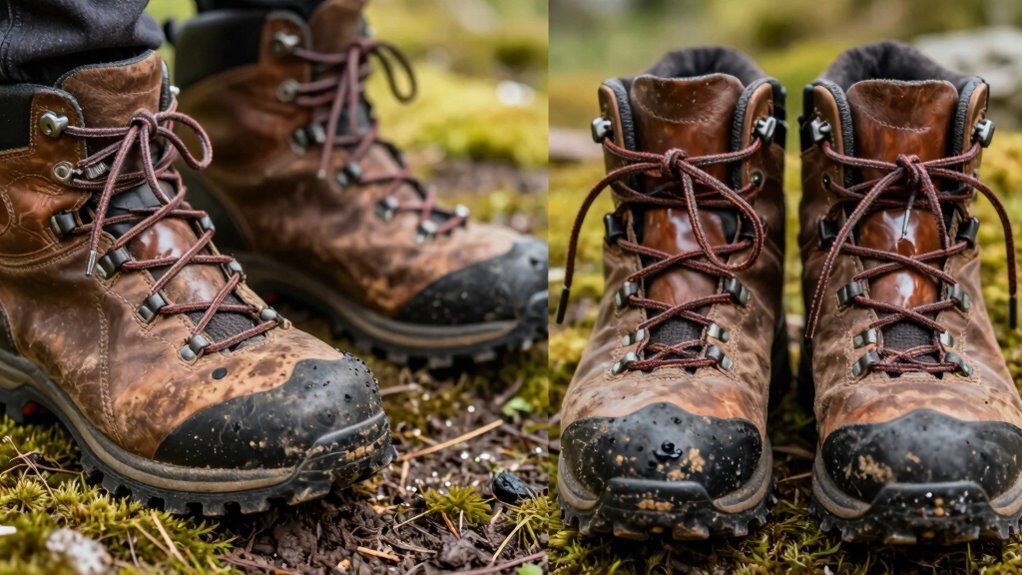
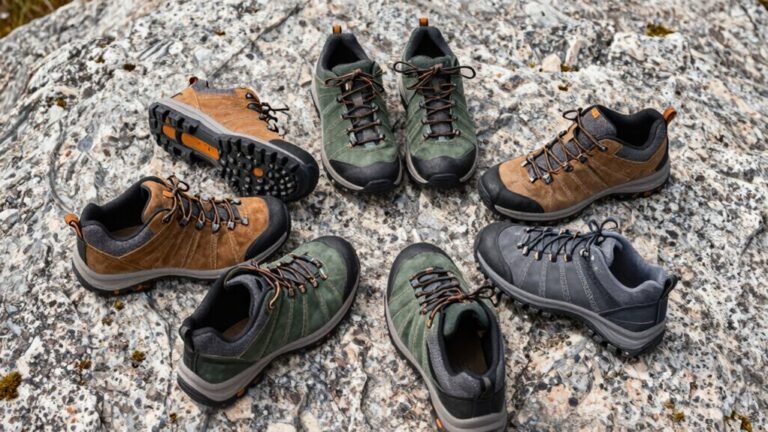
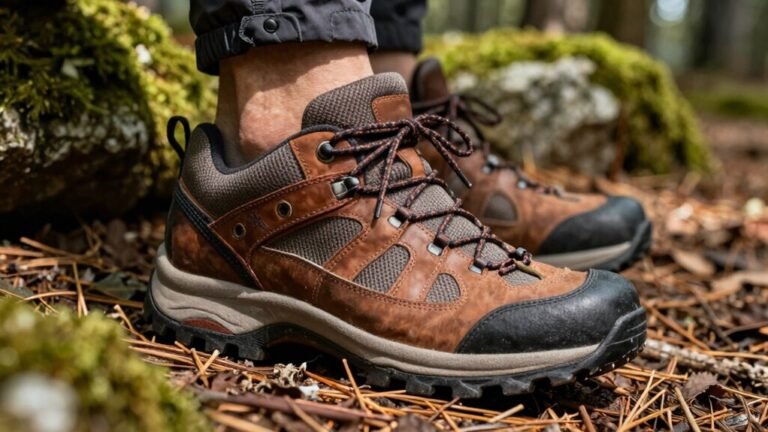
You’re probably wearing the wrong hiking shoes for the trail, squeezing your toes or sliding with every step. Picking the right hiking shoes makes all the difference—they should match the terrain, with flexible soles for smooth paths and sturdy treads for rocky ground.
Get the fit right: your hiking shoes should feel snug but not tight, with enough room to wiggle your toes. Always break in your hiking shoes at home before hitting the trail to avoid blisters and discomfort.
Ditch cotton socks, which trap moisture and cause friction, and choose wool or synthetic blends instead. Lace up smart—use a heel-lock technique to keep your feet stable and prevent slipping with every step.
Choosing the Wrong Shoe Type for Your Terrain
Ever wonder why your legs feel so drained halfway through a hike?
You’re probably wearing the wrong shoes for the terrain.
On smooth, paved trails, stiff boots just weigh you down—go for flexible, low-cut sneakers like Topo’s Traverse or Columbia’s Crestwood for comfort and quicker steps.
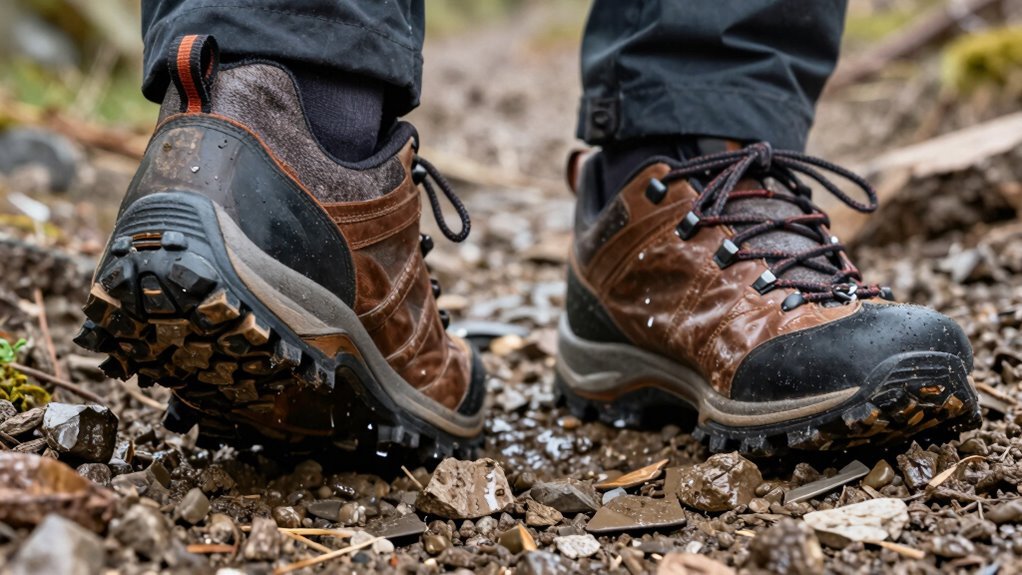
But once roots, rocks, or puddles pop up, you’ll need mid-height support with cushion and a tough outsole—think Katabatic designs built to last 385+ miles.
Rocky scrambles? Save the flimsy runners; grab a shoe with a TPU chassis like Bridger Ridge GTX to avoid bruised soles.
Desert hikes need sand protection, while forest trails beg for gusseted tongues to keep out gunk.
Matching your footwear to the trail isn’t overkill—it’s how you hike happier, longer, and with way fewer “why me?” moments.
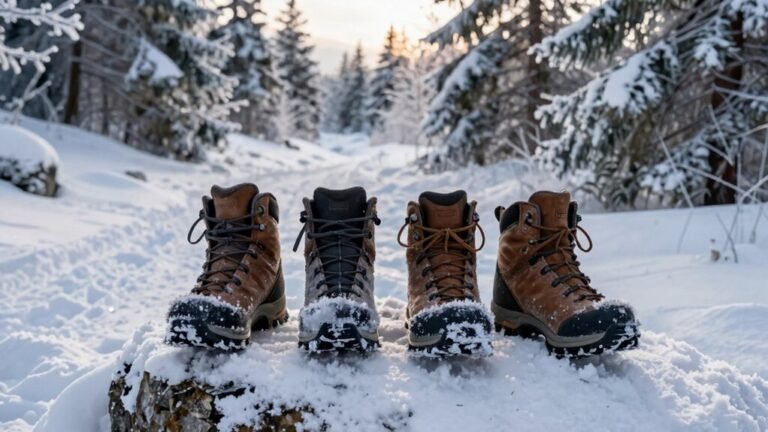
Your feet will thank you—promise! The right shoe type depends on terrain difficulty, distance, and load, so consider rugged terrain when choosing higher-cut boots with firm outsoles and durable construction.
Ignoring the Importance of Proper Fit
What if the secret to happy feet on the trail comes down to one simple rule?
It’s all about fit—snug but not tight, with just enough wiggle room for your toes.
Sizing isn’t one-size-fits-all; your foot’s width, arch, and shape matter big time.
Got wide feet?
Skip narrow shoes that squeeze.
Narrow feet?
Avoid boots that let your foot slide like a loose ice cube.
High arches need support, flat feet love firm midsoles.
Try shoes at day’s end when your dogs are tired and puffy.
Wear your hiking socks, walk around, even test the insoles—your thumb should fit between toes and shoe end.
Ankle support varies significantly depending on hiking shoe style, so choose based on your terrain.
Ignore fit, and hello blisters, sore toes, or worse—ankle drama.
Trust me, your feet will thank you when you’re not limping by mile three.
Proper fit isn’t fussy—it’s trail magic.
Wearing Incompatible Socks With Your Hiking Shoes
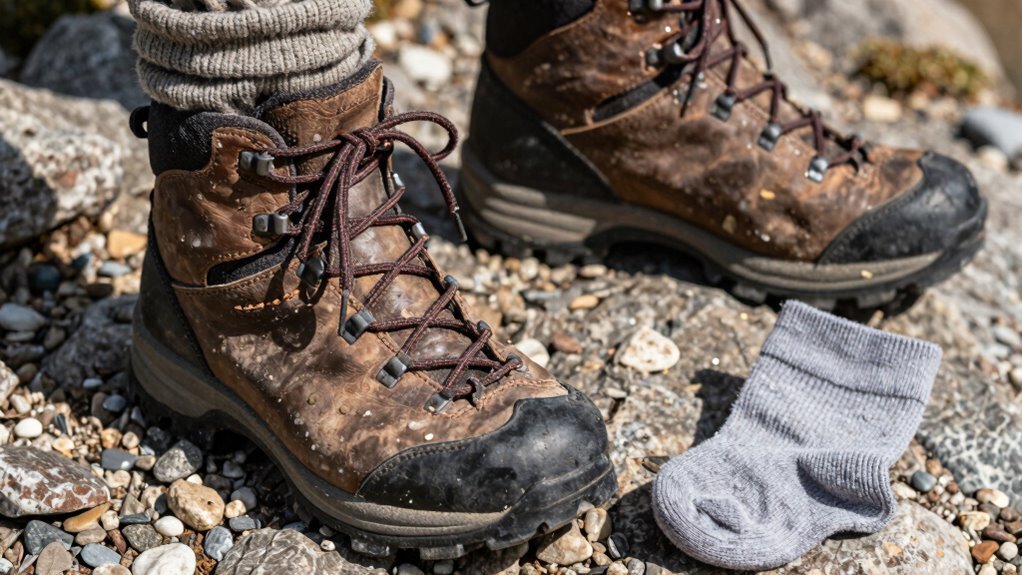
While your hiking shoes do the heavy lifting, don’t let your socks play second fiddle—what you wear on your feet can make or break the trail experience.
If your socks are too short, they’ll let your heels rub raw—opt for crew-length with high-top boots.
No-shows? Only for low-cut runners, not serious hikes.
Baggy socks bunch up and cause blisters, while tight ones cut off flow—pick the right fit for your foot, not your shoe.
Cotton is a no-go; it soaks up sweat like a sponge.
Go for wool or synthetic blends that wick moisture and fight friction.
Try a liner sock under a thicker outer layer—it slashes blister risk and manages sweat.
And don’t just guess—test your sock-shoe team at home.
Your feet will thank you when the trail gets tough.
Socks with 1-5% elastane provide the ideal balance of stretch and recovery to stay in place without restricting circulation.
Skipping the Break-In Period Before Hitting the Trail
Breaking in your hiking boots mightn’t sound as exciting as topping a peak at sunrise, but it’s the unsung hero of a comfortable adventure.
Skipping this step is like showing up to a dance without learning the moves—awkward and painful.
New boots are stiff, and your feet need time to sync with them.
Wear them around the house first, then take short walks in the neighborhood or garden.
Gradually hit easier trails before tackling big climbs.
This softens the materials, prevents blisters, and stops hot spots from turning into full-on foot drama.
Leather especially loves a little moisture, so don’t shy away from puddles—they help!
Just remember: break-in won’t fix a bad fit, but it will turn a good fit into a dream.
Your feet will thank you when you’re miles in, blister-free, and still smiling.
Using Incorrect Lacing Techniques
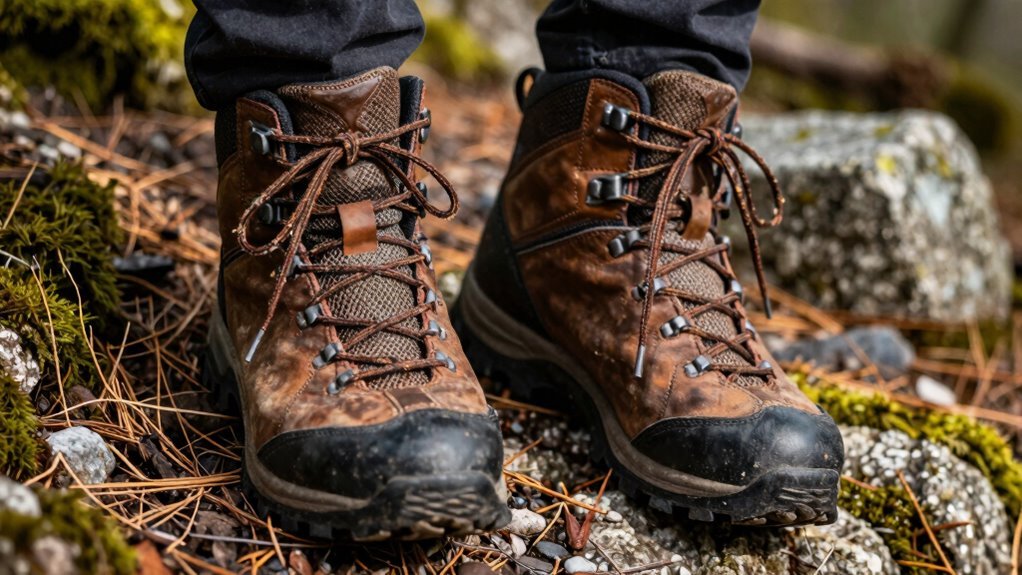
If your boots feel like they’re staging a rebellion every time you hit the trail, chances are it’s not the terrain—it’s your laces fighting against you.
Heel slippage? Try a heel lock lacing or twist the laces around the top hooks for a snugger grip.
Blisters from pressure? Skip tight spots with window or box lacing and ease the squeeze.
Jamming toes downhill? Tighten the front, loosen the ankle, and use diagonal lacing to shift pressure.
And if your laces keep coming undone, lock them in with a double overhand knot or a runner’s loop.
Fancy tricks like ladder lacing or surgeon’s knots give you custom control, especially when the trail gets rowdy.
Pull slack before tying to keep blood flowing and feet happy.
With the right lacing, your boots won’t just behave—they’ll perform.
Who knew a few loops and crosses could turn shoe struggles into smooth strides?
Frequently Asked Questions
Can I Use Trail Running Shoes for Long Hikes?
Yeah, you can use trail running shoes for long hikes—especially if you’re packing light and love moving fast.
They’re comfy, breathable, and perfect for well-maintained trails.
Just don’t expect them to handle heavy loads or rocky scrambles like hiking shoes.
Think of them as the nimble squirrels of the trail: quick and agile, but not built for brawling with rough terrain.
Swap pairs more often, and you’ll be golden.
How Often Should I Replace My Hiking Shoes?
You should replace your hiking shoes like clockwork, every 300 to 1,000 miles—think of ’em like car tires, wearing down with every turn.
Light trail runners? Swap ’em at 300-500 miles.
Heavy boots can go 500-800.
If soles feel slick, the stitching’s fraying, or your feet ache more than usual, don’t wait—swap ’em out and keep crushing trails in comfort!
Are Waterproof Hiking Shoes Worth the Extra Cost?
Yeah, waterproof hiking shoes are worth the extra cash if you’re dodging puddles, snow, or sudden downpours. They keep your feet dry and comfy on long, soggy trails. Sure, they cost more and don’t breathe as well, but models like Merrell or Outdry work hard so you don’t end up with swamp feet. Think of them as raincoats for your shoes—fancy, yes, but totally awesome when the trail turns into a mudslide!
Can I Machine Wash My Hiking Shoes?
Think of your hiking shoes like a double-decker sandwich held together with glue—tossing them in the washer’s like leaving it in the sun; everything melts and falls apart.
You can’t machine wash them, or you’ll wreck the adhesives and shape.
But hey, no panic!
Just unzip, hand-wash with soapy water, scrub gently, and let ‘em air-dry.
Easy, fresh, and totally hike-ready again!
Do Hiking Shoes Need Special Cleaning After Muddy Trails?
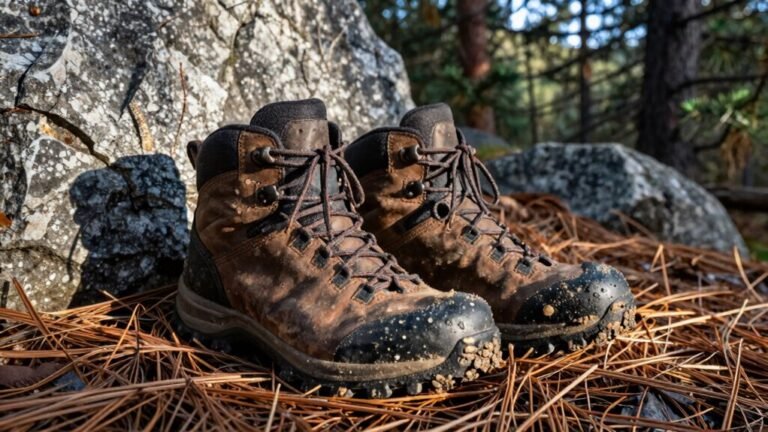
Yes, your hiking shoes definitely need some extra love after muddy trails—you’re basically a mobile mud-pie factory out there!
Skip the lazy wipe and really scrub off that dried gunk, so it doesn’t wreck the fabric.
Pull out laces, rinse lugs, and banish hidden pebbles trying to hitch a ride indoors.
Treat ’em right, and they’ll keep you steady on every adventure—mud warriors need backup!
Conclusion
You wouldn’t run a race in flip-flops, so don’t hike in mismatched shoes. Ditch the blisters and boot-born battles by choosing the right fit, socks, and laces like a trail-savvy pro. Break ’em in like a favorite playlist, not a surprise solo. With these quick fixes, your feet will thank you with happy skips, not sad slips—turning rugged paths into pure adventure candy.
References
- https://www.rei.com/learn/expert-advice/hiking-boots.html
- https://obozfootwear.com/en-us/community/hiking-footwear-styles-explained-choosing-the-best
- https://www.alpenglowgear.com/blogs/adventureawaits/choosing-footwear-for-different-terrain-types/
- https://www.outdoorgearlab.com/topics/shoes-and-boots/best-hiking-shoes
- https://www.youtube.com/watch?v=D8oMRJQdOKE
- https://stories.hanwag.com/en/how-to-choose-hiking-boots-finding-your-model/
- https://www.thenorthface.com/en-fi/help-section/faq/products/how-should-hiking-shoes-fit
- https://www.newportpt.com/Newsletters/Full-Articles/Hiking-and-Proper-Footwear/a~38748/article.html
- https://shine365.marshfieldclinic.org/bone-joint/proper-fitting-hiking-footwear/
- https://www.grisport.co.uk/blog/the-importance-of-appropriate-footwear-when-hiking/