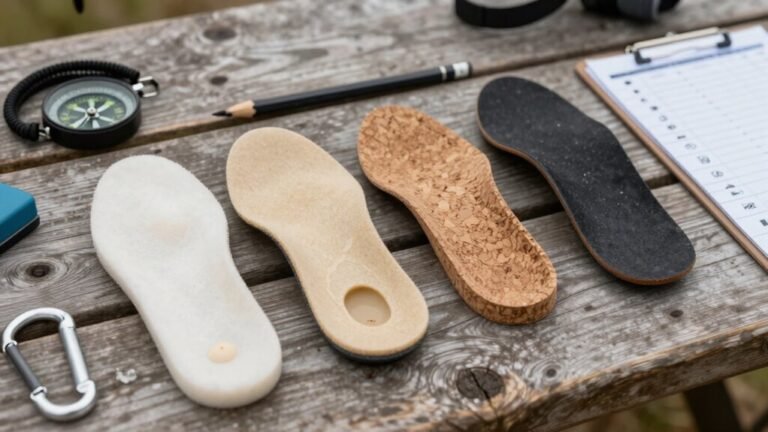
How to Keep Hiking Boots Working in Bad Weather
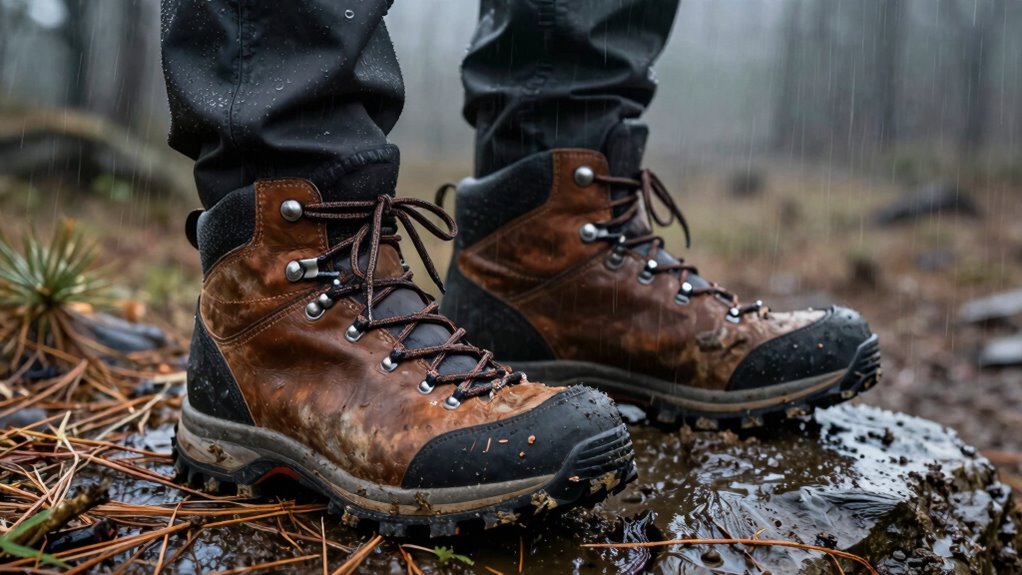
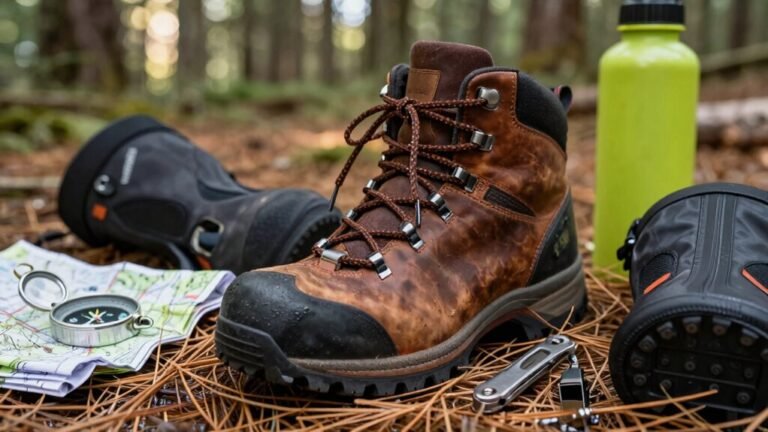
To keep hiking boots working in bad weather, choose waterproof styles with Gore-Tex and sealed seams—they’re your first line of defense against wet conditions. These features help ensure your feet stay dry when tackling rain, snow, or muddy trails.
Reapply DWR treatment when water stops beading on the surface to maintain your hiking boots’ weather resistance. Don’t skip the gaiters; they act like raincoats for your ankles, providing extra protection in deep mud or slush.
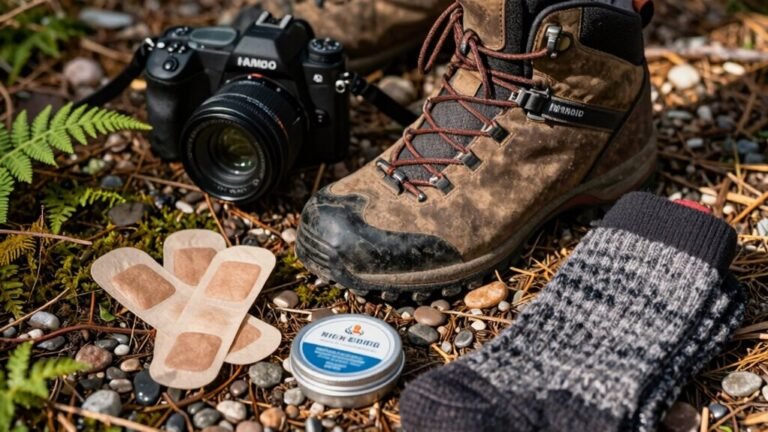
Wear merino wool socks to wick moisture and fight cold, soggy feet during long treks. After each hike, clean and dry your hiking boots properly to preserve materials and prevent odor or deterioration.
Regularly check laces, soles, and seams for wear and damage—catching issues early keeps your hiking boots reliable in bad weather. Staying proactive means you’ll avoid mid-hike surprises and extend the life of your gear.
Choose Waterproof Boots Designed for Wet Conditions
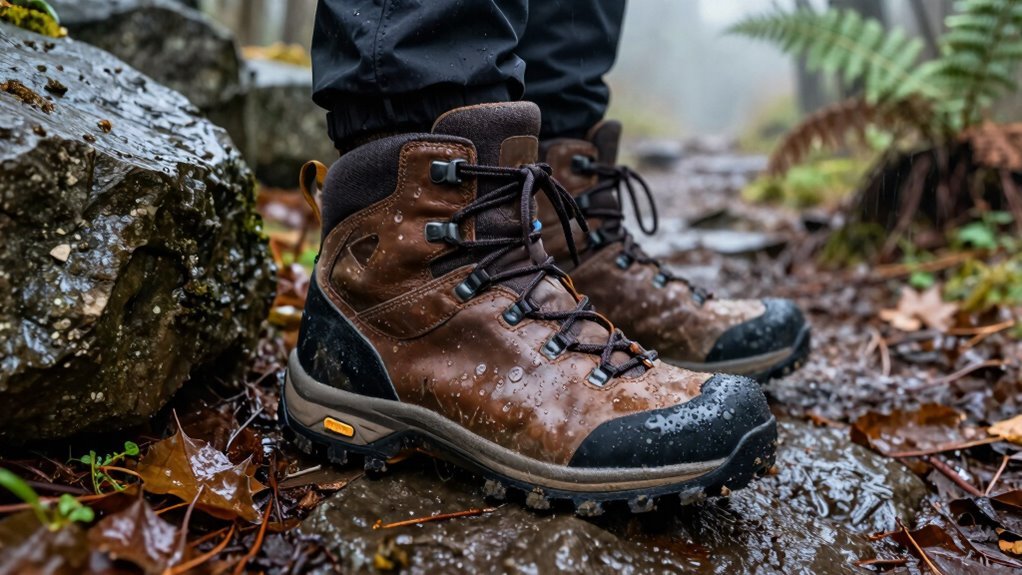
When the trail turns into a muddy slip-n-slide or you’re staring down a puddle like it’s a dare, you’ll be glad you grabbed a pair of waterproof boots built for wet chaos.
You’re not just stomping through puddles—you’re winning the battle against soaked socks and soggy feet.
Gore-Tex, Sympatex, or eVent membranes keep water out while letting sweat escape, so your feet stay dry and comfy.
Fully sealed seams and gusseted tongues block sneaky leaks, especially where laces meet muck.
Nubuck or full-grain leather uppers team up with waterproof liners for serious defense.
High-cut styles give ankle support on slippery rocks, while deep lugs and Vibram or Continental outsoles grip like they mean it.
You’ll find models like the Merrell Moab 3 GTX deliver reliable performance thanks to its 14.6 mm tongue thickness, enhancing protection against water ingress.
Whether it’s rain, mud, or creek jumps, your boots won’t flinch.
You’re not just hiking—you’re laughing in the face of wet, wild weather.
Now that’s a win.
Apply a Durable Water Repellent Treatment Regularly
Roll up your sleeves and grab that bottle—your boots are begging for a little spa treatment.
When water stops beading up and starts soaking in, that’s your cue: the DWR coating’s worn off.
Don’t wait for soggy socks!
Clean your boots first—dirt blocks the treatment—then soak them if they’re leather; a quick rinse won’t cut it.
Pick the right product: silicone sprays work great and won’t mess up future resoles like waxy ones can.
Follow the label—some need multiple coats, spaced a few hours apart.
Let them cure fully, maybe up to two days, before hitting the trail.
Think of it like sunscreen for your boots: better to reapply early than regret it mid-hike.
Do it yearly, or more if they’re taking on water.
A little love keeps them dry, light, and trail-ready.
avoid wax-based options if you plan to resole later, since wax residue can impair adhesive bonding.
Wear Moisture-Wicking Socks to Prevent Dampness
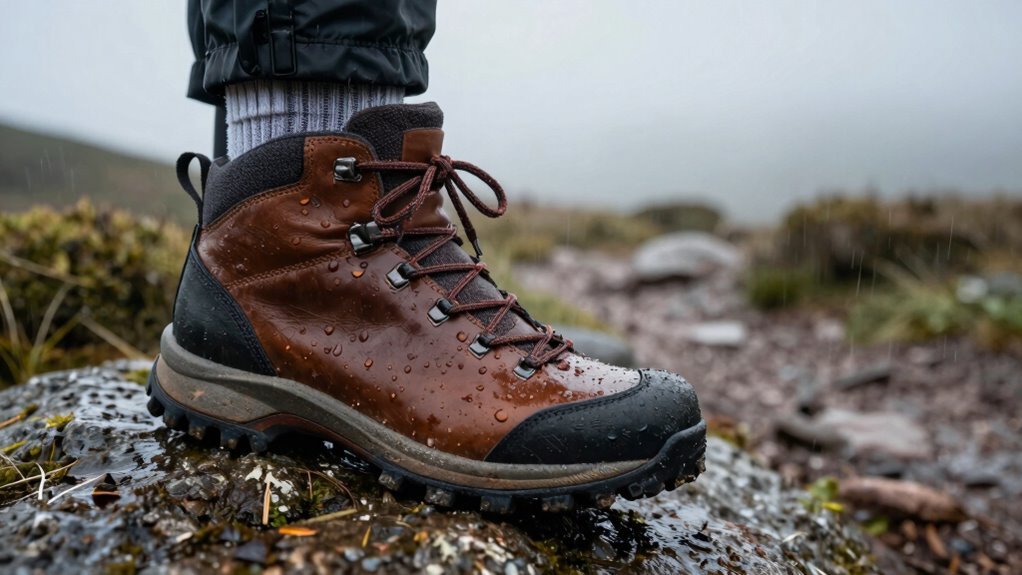
Even if your boots stay dry, your feet can still feel like they’re swimming—unless you’re wearing moisture-wicking socks.
These smart socks pull sweat away from your skin and send it to the outer layer, where it can evaporate fast.
Thanks to high-performance fibers like merino wool, polyester, or alpaca, they keep your feet dry, cozy, and blister-free—no more soggy cotton disasters!
Merino wool absorbs loads of moisture without feeling wet, fights stink, and even insulates when damp.
You’ll stay cool in heat, warm in cold, and never deal with clammy toes.
Plus, built-in airflow zones boost breathability where you need it most.
Say goodbye to hot spots and fungal mischief after long days on wet trails.
Alpaca fans, rejoice—its hollow fibers wick even better!
With these socks on, your boots won’t just work—they’ll thrive, no matter the weather.
Merino wool’s natural crimp creates air pockets that enhance insulation while remaining lightweight, helping maintain thermal balance in changing conditions. (natural crimp)
Happy hiking, dry feet ahead!
Use Gaiters to Block Mud and Water Entry
You’ve got your trusty hiking boots, your moisture-wicking socks are locked in, but don’t forget the unsung hero that keeps muck and splashes at bay—gaiters.
They block mud, rocks, sand, and sneaky sticks from slithering into your shoes, so you avoid gritty blisters and unplanned trail stops.
Made from quick-dry nylon with DWR coating, they shrug off rain and puddles like a pro.
YKK zippers make them easy to slip on, even with soggy boots.
A proper fit seals snug around your shoe and lower leg—no gaps, no gushes of water, no “oops” moments in deep mud.
Mid-length ones work great with most boots, handling brush and rocky scrambles without sagging.
Whether you’re rock hopping across streams or plowing through slush, gaiters keep your feet dry, warm, and way happier.
They’re your boots’ best muddy-day buddy—because nobody likes squishing when they shouldn’t.
Clean Your Boots After Every Wet Hike
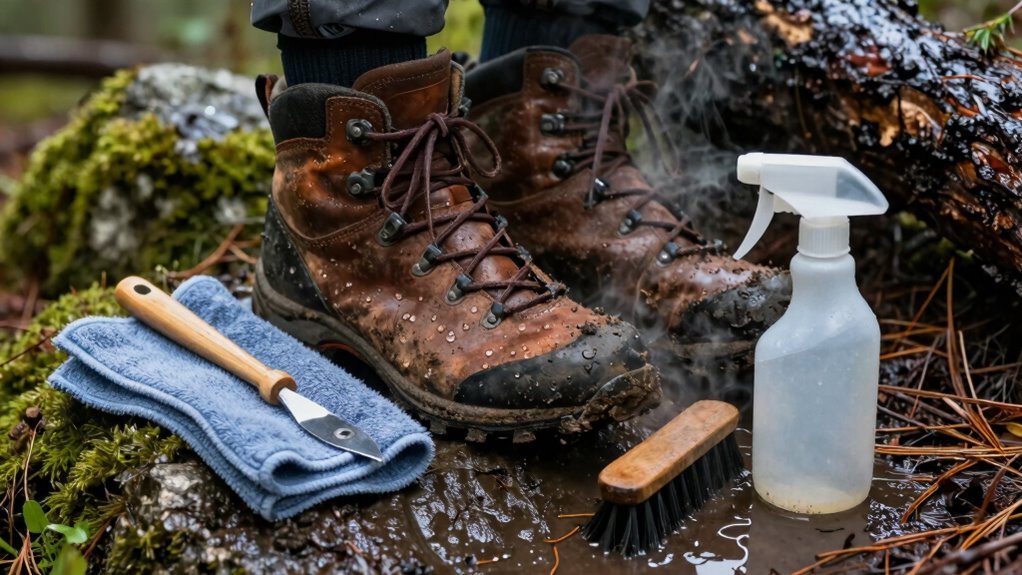
After splashing through streams, squelching across muddy trails, or trudging in steady rain, your hiking boots deserve some serious TLC—because letting gunk harden into armor isn’t part of the adventure.
Shake out loose mud and give your boots a good whack to dislodge pebbles—you’ll save your floors and keep traction sharp.
Grab a brush and scrub the soles before dirt turns into concrete.
Rip out the laces and insoles too; they’re hiding sweat and bacteria in dark, damp corners.
Rinse with lukewarm water—not hot—then wipe down with a soft cloth.
Tackle grime with a hiking-specific cleaner like Nikwax, avoiding harsh soaps that wreck waterproof layers.
Give seams and creases extra scrub love.
If mold shows up, mix water and vinegar to scare it away.
Clean now, and your boots will thank you later—one less trailside betrayal!
Dry Boots Properly to Prevent Damage and Odors
When soggy boots start staging a stink revolt, you’ll want to act fast—because nobody signs up for smelly surprises on the next hike.
Pull out the insoles and laces to open things up, then stuff the insides with crumpled newspaper or paper towels—they’ll suck up moisture like a sponge.
Swap them out every few hours for fresh ones, especially if they’re soaked.
Set your boots near a fan (bonus points if it’s on a wire rack over a towel) so air flows through without baking the material.
A purpose-built boot dryer works faster—just an hour or two and you’re golden.
Keep them in a cool, airy spot out of direct sun, preferably upside down for max airflow.
Check often; damp spots mean bacteria are partying in there.
Dry completely before storing, and you’ll keep both odors and damage far, far away.
Your future feet will thank you.
Avoid Direct Heat When Drying Wet Footwear
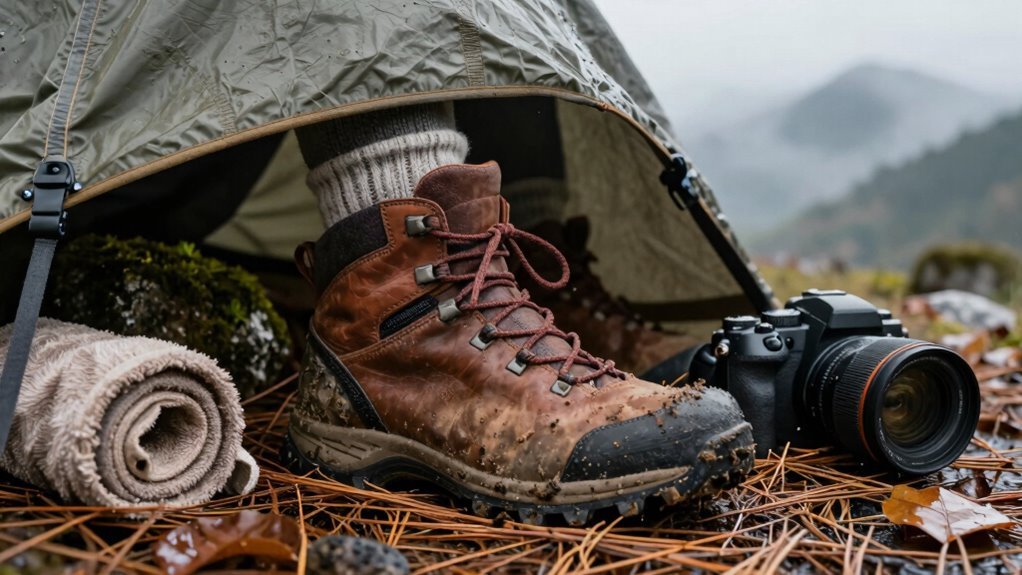
- 🔥 Heat weakens glue—your boot might fall apart like a bad sandwich
- 🐍 Leather cracks—no one wants boots that look like a dried-up riverbed
- 🌀 Soles warp & membranes fry—ruining waterproofing and comfort
Instead, let them air-dry like a chill weekend vibe: room temperature, good airflow, and patience. Yes, it takes a day or two—but your boots will thank you with years of loyal service. Think of it as a spa treatment, not a microwave meal!
Reapply Waterproofing After Cleaning
Giving your boots a little post-cleaning TLC isn’t just satisfying—it’s the secret to keeping them brave against downpours and muddy trails.
Right after cleaning, while they’re still slightly damp, is prime time to reapply waterproofing—wet leather soaks it up better!
If they’re drying out, wrap them in a wet towel for a few hours.
Match your product to your boot: wax for full-grain leather, spray for synthetics, and special formulas for nubuck.
Hold the can 6–12 inches away, hit every seam and crease, then wipe off excess.
Let it sit, and add a second coat if needed.
Reapply yearly, or more if water stops beading.
Think of it like sunscreen for boots—regular touch-ups keep them shielded and ready.
Store Boots in a Dry, Ventilated Space
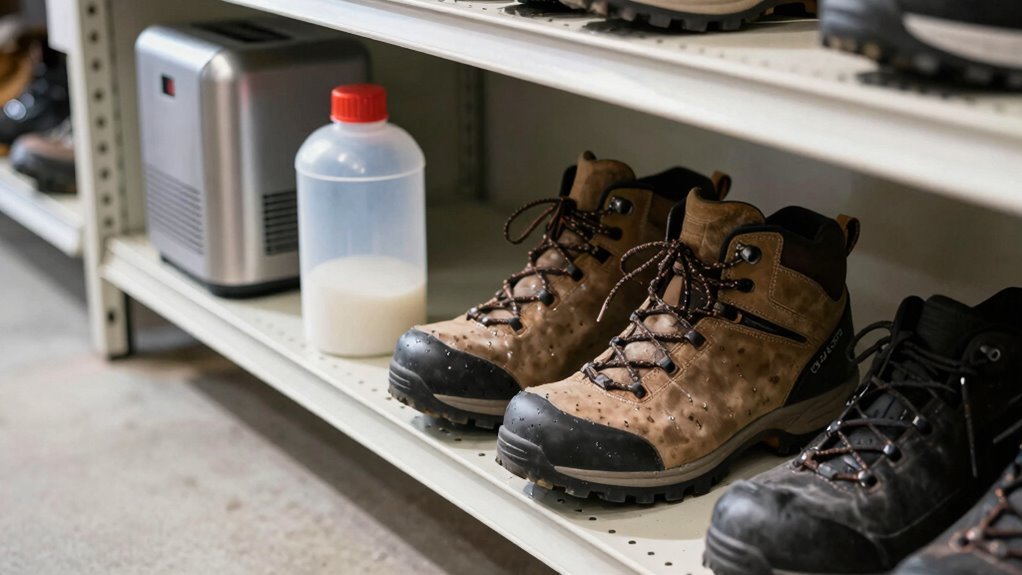
Even if you’ve just conquered a muddy mountain trail, don’t let your hiking boots become victims of a soggy afterlife—tossing them in a dark corner won’t cut it.
Give your boots the VIP treatment they deserve by storing them in a dry, well-ventilated space.
Heat and humidity are your boot’s worst enemies, turning tough trail warriors into cracked, moldy shadows of their former selves.
Keep them happy with these simple steps:
- Let boots dry completely before storing—no sneaky dampness hiding inside!
- Slip them into breathable cloth bags or leave them on a rack where air can flow freely.
- Toss in some bicarb soda or use boot trees to fight moisture and keep their shape.
Choose a cool, shaded spot away from the garage or basement drama. Your boots will thank you when adventure calls again—fresh, ready, and stink-free!
Inspect and Maintain Laces, Soles, and Seams
While your boots may have braved rain, mud, and rocky scrambles, it’s what you do *after* the hike that keeps them battle-ready—especially when it comes to the little things like laces, soles, and seams.
Check your laces regularly—they fray easily and hate wet weather almost as much as you do.
Swap them out if they look rough, and match the original type so your fit stays snug.
Give those soles a good scrub to kick out caked mud and pebbles; trust me, your boots will grip better and won’t smuggle invasive seeds home.
Inspect seams closely—water sneaks in there first—and reapply waterproofing if moisture stops beading.
Keep outsoles clean, seams sealed, and laces strong, and your boots won’t bail on you when the trail turns into a slippery circus.
Stay dry, stay safe, and keep stomping with confidence!
Frequently Asked Questions
Can I Use Regular Shoe Polish on Hiking Boots?
Yeah, you can use regular shoe polish on hiking boots, but only if they’re leather and you’re careful.
Pick a color that matches, slap on a thin coat in circles, then let it dry.
Buff it to a happy shine with a brush.
Just don’t go overboard—too much gunk clogs the leather.
And hey, skip the washing machine, unless you want boots that cry in the rain.
How Often Should I Replace My Hiking Boots?
You should replace your hiking boots every 500 to 1,000 miles—think of them like sneakers for your soul, they can’t carry your dreams if they’re falling apart.
Tough terrain?
You’ll swap them sooner.
Watch for worn treads, sore feet, or sagging soles.
If they’re limping, it’s time.
Don’t wait for a full blowout—your ankles will thank you later.
Stay light, stay bouncy, and keep adventuring!
Are Leather Boots Better Than Synthetic for Rain?
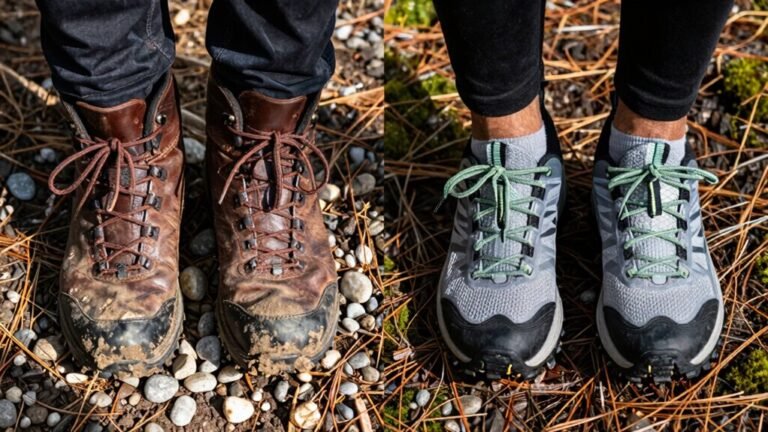
Yeah, leather boots are way better than synthetic for rain.
They naturally shrug off water, even when the coating wears off, while synthetics often leak once their coating fades.
You can wax leather to boost protection, and it lasts years in wet trails.
Sure, they’re slow to dry, but they won’t quit on you mid-downpour like flimsy synthetics might.
Think of them as your trusty rainforest battle tanks—clunky? Maybe.
Unstoppable? Absolutely.
Do Waterproof Boots Need Breaking in Before Use?
Yes, you absolutely need to break in waterproof boots before hitting the trail.
They might feel stiff at first, but skipping the break-in means blisters and sore feet are way more likely.
Even with great tech, your boots still need time to mold to your feet.
Wear them around the house, take short walks, and let them flex.
Trust me, your feet will thank you later—no one wants soggy socks and angry blisters on day one!
Can I Machine Wash My Hiking Boots?
No, you can’t machine wash your hiking boots—don’t even think about it!
Tossing them in is like sending them to boot boot camp, minus the survival skills.
The drum beats them up, heat melts glue, and soap ruins waterproof magic.
Stick to hand cleaning: wipe, scrub gently, and air dry.
Your boots will thank you by lasting longer, smelling better, and staying tough when the trail turns messy.
Save the washer for socks, not your soles!
Conclusion
You’ve got this! Keep your boots happy and they’ll carry you through puddles, mud, and even a surprise monsoon—okay, maybe not a *real* monsoon, but it’ll feel like one. Waterproof boots, smart care, and a little love go a long way. Dry them right, treat ‘em well, and they’ll outlast every soggy trail you tackle. Stay dry, stay happy, and let your boots do the heavy (mud-covered) lifting!
References
- https://runrepeat.com/guides/best-waterproof-hiking-shoes
- https://northsideusa.com/blogs/news/how-to-choose-waterproof-hiking-boots-for-muddy-trails
- https://www.dickssportinggoods.com/a/hiking-boots-for-wet-conditions-0baz00a.html
- https://www.switchbacktravel.com/best-waterproof-hiking-boots
- https://www.rei.com/learn/expert-advice/the-best-hiking-boots.html
- https://www.gore-tex.com/blog/what-makes-waterproof-hiking-boots-waterproof
- https://www.outdoorgearlab.com/topics/shoes-and-boots/best-hiking-boots
- https://www.rei.com/learn/expert-advice/hiking-boots.html
- https://www.rei.com/learn/expert-advice/boots-waterproofing.html
- https://www.switchbacktravel.com/info/waterproof-hiking-shoes