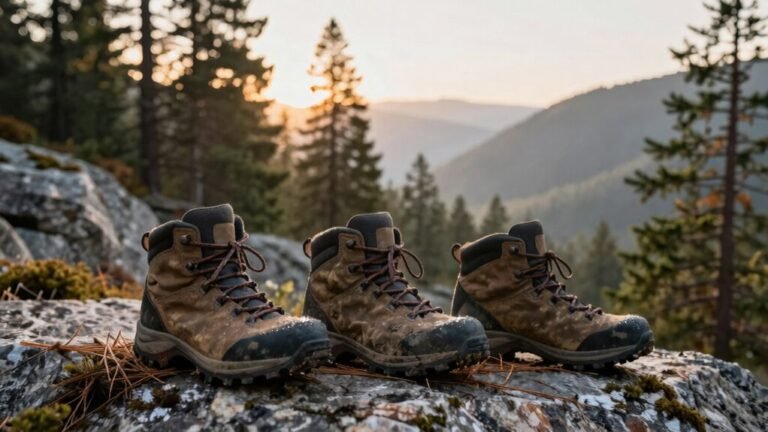
Quick Tips for Hiking Boots
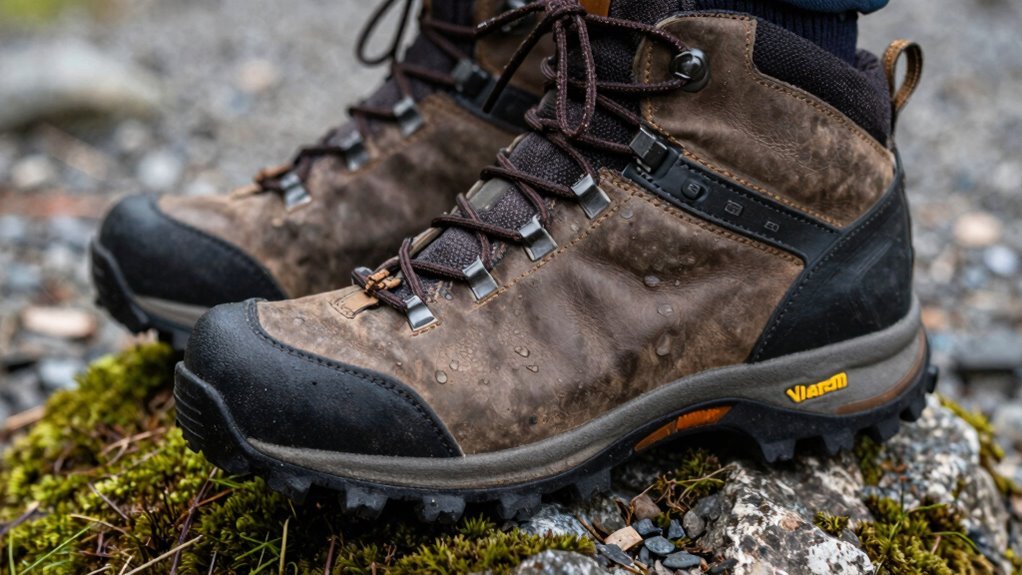
Break in your hiking boots before hitting the trail to ensure comfort and prevent blisters. Wear them around the house with socks, take short walks, and stuff them with towels to help loosen stiff areas.
Get the fit just right—your toes should have room to move, the width should feel snug, and the heel should stay securely in place. A proper fit in your hiking boots is essential for long-term comfort and performance on the trail.
Waterproof your hiking boots regularly to keep moisture out and prevent soggy feet on wet terrain. Choose soles with treads suited to your typical landscape, whether rocky paths or muddy trails.
Always clean your hiking boots after each adventure to remove dirt and extend their life. Proper care keeps them in top condition and ready for your next outdoor challenge.
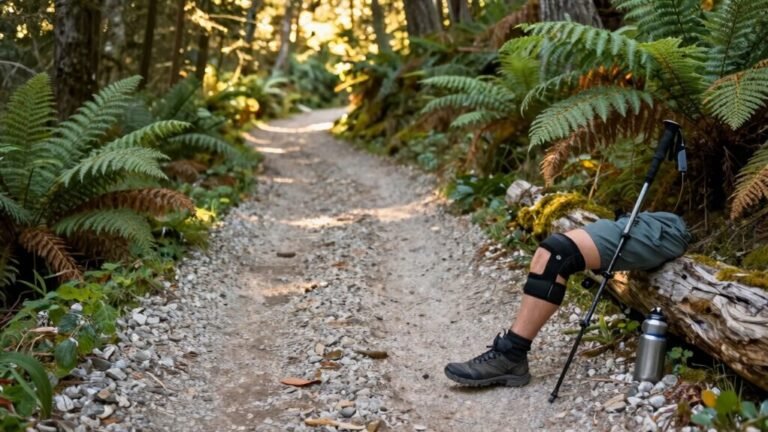
Break Them In Before Hitting the Trail
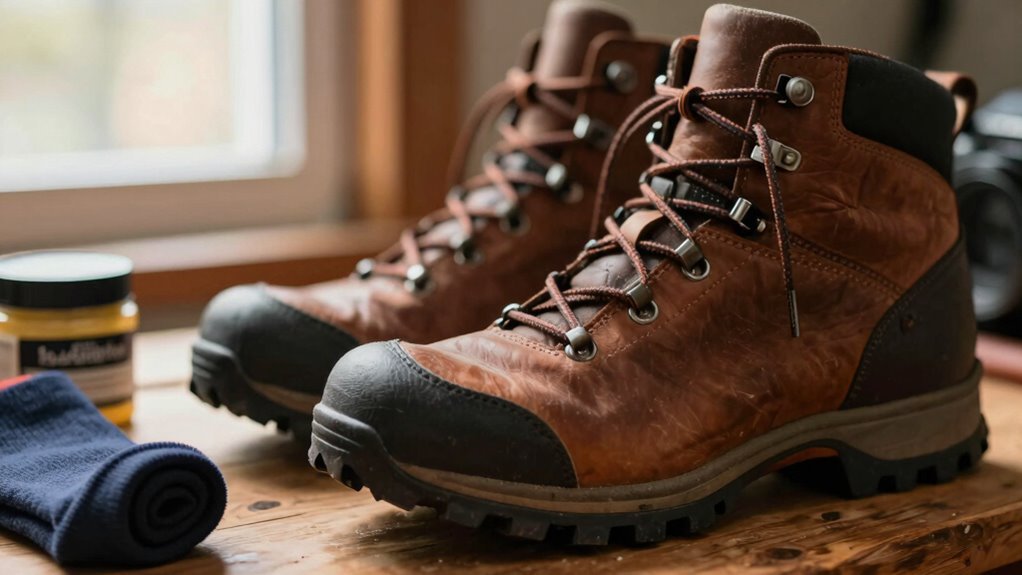
Even if you’re itching to hit the trail, take a beat and break in your hiking boots first—your feet will thank you later.
Think of it like training a puppy: they won’t behave perfectly on day one.
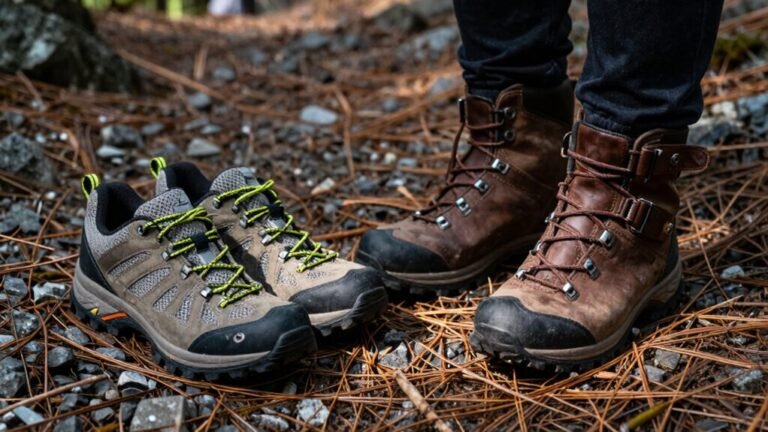
Synthetic boots? A few short hikes and they’re trail-ready.
But if you’ve got leather—especially full-grain—roll up your sleeves; you’re in for two weeks or more.
Wear them at home while cooking, watching TV, or even ironing (yes, your socks count).
Walk the block, climb stairs, stuff them with towels overnight—little moves loosen stiff spots.
Gradually ramp up mileage, starting with 50 to 80 easy ones.
Keep an eye out for hot spots—your heels aren’t fans of surprise friction.
And remember, nobody wins a medal for hiking in blistered feet.
Take it slow, let calluses build naturally, and your boots will hug your feet like your favorite pair of jeans.
Promise.
You can save on your next pair during the Annual Winter Sale with up to 40% off select styles.
Find the Perfect Fit for All-Day Comfort
Ever wonder why your feet feel like they’re throwing a protest halfway through a hike?
It’s probably because your boots don’t fit right.
For all-day comfort, dial in the details like a pro.
Here’s how:
- Toe Space: Leave a thumb’s width between your longest toe and the boot end—no curling toes or black toenails allowed!
- Width Fit: Snug across the ball of your foot? Check. No pinching, no sliding—just happy feet.
- Heel Hold: Your heel should stay put, with just enough wiggle room (think two fingers at the back).
- Flex Point: Make sure the boot bends where your foot does—arch support isn’t optional.
Stand up, lace ’em tight, and walk around.
If it feels off now, it’ll scream later.
Get it right, and your boots will be your trail BFFs!
Try them on in the evening fit check to account for natural foot swelling after a long day.
Keep Your Boots Waterproofed Regularly
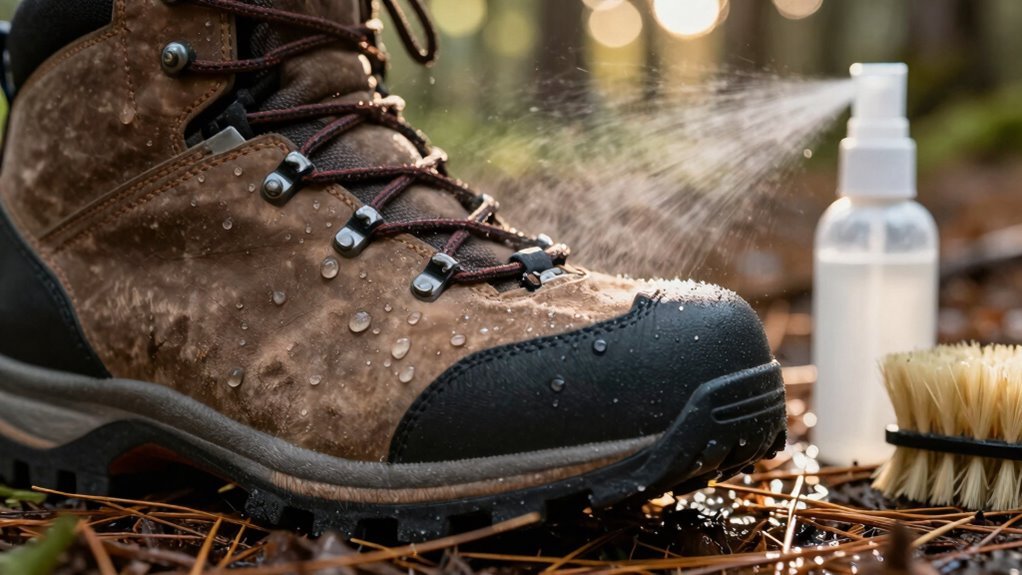
You’ve got your boots fitting like a dream, so now let’s make sure they keep up their end of the deal when the trail turns muddy or rain shows up uninvited.
If water stops beading and soaks in like a sponge, it’s time to act—your DWR coat is toast.
Start by cleaning them well; nobody likes waterproofing over last weekend’s mud pie.
Once dry, choose your weapon: sprays for quick wins, wax or beeswax for heavy-duty defense, or lanolin for a natural touch.
Apply sprays evenly from 8–12 inches away, or rub in waxes and warm them gently to sink deep.
Don’t forget a second coat for backup!
Avoid membranes, and always let boots dry naturally—no heaters; we’re not baking cookies.
Reapply monthly or after wet hikes.
Test with a splash—if it beads, you’re golden.
Your feet will thank you, and hey, dry socks are the real trail luxury.
Avoid wax-based options if you plan to resole your boots later, as wax residue impairs adhesive bonding.
Match the Tread to Your Terrain
Step into the wild with the right sole underfoot, and suddenly every trail feels like it’s on your side.
Don’t let your boots betray you—match your tread to the terrain like a pro.
Here’s how:
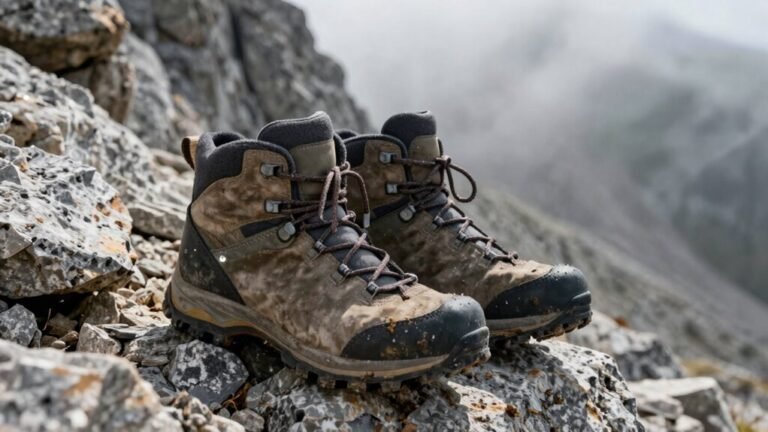
- Rocky paths? Grab stiff boots with aggressive Vibram lugs and toe caps—your feet will thank you when you’re scrambling over boulders like a mountain goat.
- Moderate trails? Mid-cut boots with grippy, flexible soles handle roots and rocks without breaking a sweat—or your stride.
- Wet or muddy ground? Choose widely spaced lugs and sticky rubber; nothing says “I’ve got this” like staying upright in a slippery mess.
- Sandy desert hikes? Lightweight, sand-shedding soles keep things cool and comfy, so you’re not stomping around like a soggy ton of bricks.
Pick smart, tread right, and let the trail do the talking.
Maintain Support With Proper Care
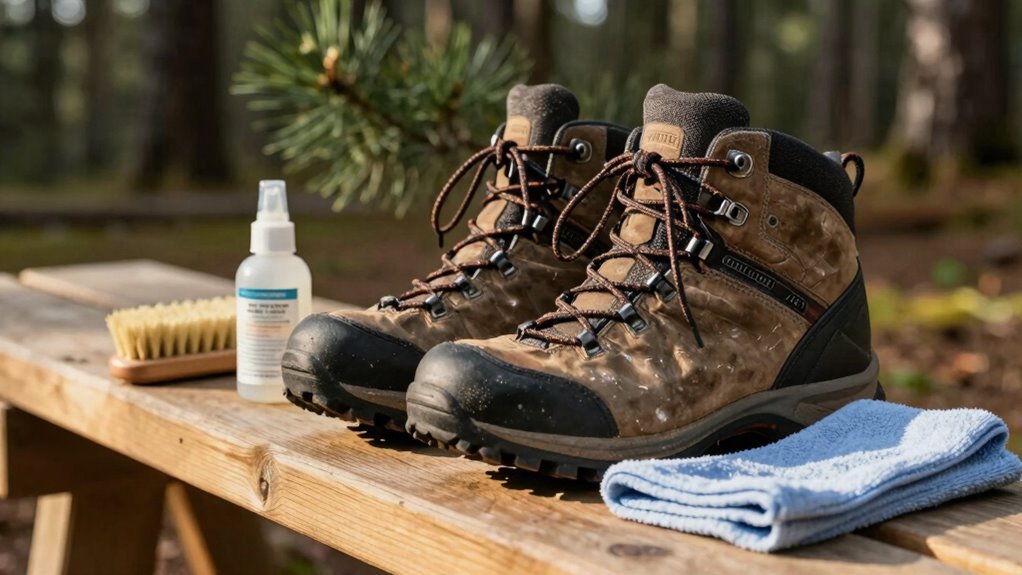
Taking care of your hiking boots isn’t just smart—it’s the secret handshake of serious trail lovers who want their gear to last.
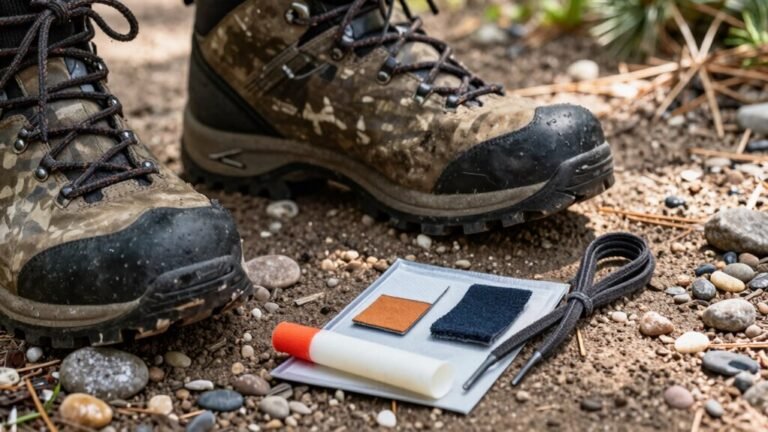
After each hike, give your boots some love: rinse off mud, tap out debris, and brush those soles clean—nobody wants to spread sneaky trail hitchhikers.
Always air dry them away from heaters (yes, even your enthusiastic radiator), and yank out the laces and insoles for full airflow.
When they’re slightly damp, spray on waterproofing—just like sunscreen, but for soles and seams.
Full-grain leather? Condition it every few hikes to keep it strong, not saggy.
And hey, skip the mink oil unless you enjoy floppy boots.
Match your cleaners and conditioners to your boot’s material, because one size definitely doesn’t fit all.
Treat your boots right, and they’ll literally have your back—well, your feet—on every adventure.
Frequently Asked Questions
Can I Wear Hiking Boots for Everyday Use?
Yes, you can wear hiking boots every day—they’ve got great support and grip, plus they handle all kinds of weather.
Just break ’em in slow so your feet don’t pay the price.
They’re tough but kinda heavy, and your soles might overheat on hot pavement.
Swap in breathable styles if you walk a lot, and skip them for sprinting—you’re not racing elk, right?
Pick versatile, lighter pairs and your boots’ll crush both trails and sidewalks with ease.
How Do I Clean Smelly Hiking Boots?
You clean smelly hiking boots by tackling odor at the source—90% of stink comes from bacteria thriving in moisture.
Start by handwashing with soap and water, then zap bugs with a vinegar-water spray.
Slip in baking soda overnight, and hey presto, fresh boots by morning!
If they still rebel, give insoles a tea bag spa day.
Your nose will thank you—promise!
Are Leather Boots Better Than Synthetic Ones?
Leather boots aren’t *better* than synthetic ones—they’re just different, like comparing trail mix to gummy bears.
You’ll love leather for its durability and breathability, plus it molds to your feet.
But synthetics are way lighter and comfy right away, saving your legs on long hikes.
If you hate breaking in boots, go synthetic.
If you want ’em to last decades, choose leather.
It’s all about what fits *your* adventures best.
How Often Should I Replace Hiking Boots?
You should replace your hiking boots every 500 to 1,000 miles, depending on how often you hit the trail.
If you’re clocking 10 miles a week, they’ll last one to two years.
But if you’re out daily, swap them every 6–8 months.
Watch for worn soles, lost cushioning, or cracked leather—your feet will thank you.
And hey, don’t wait until they’re flapping like fish—ouch!
Can I Machine Wash My Hiking Boots?
No, you don’t want to toss your hiking boots in the wash—trust me, it’s a one-way ticket to sole separation city.
The drum beats them up, heat melts the glue, and next thing you know, they’re falling apart like a bad joke.
Skip the machine drama.
Instead, give them a spa day: hand wash with mild soap, scrub gently, and let them air dry.
They’ll thank you with longer life and better hikes.
Conclusion
You break ’em in so they don’t break you, find the fit that feels like a high-five for your feet, and waterproof them like you’re protecting gold. Yet somehow, you still step in mud—because of course you do. Matching treads to terrain helps, unless you’re showboating on flat paths. And sure, care keeps support solid, but let’s be real: your boots survive more drama than your phone. Hiking magic? Totally overrated. (But you’ll do it anyway.)
References
- https://www.columbia.com/breaking-in-hiking-boots.html
- https://www.mammut.com/us/en/stories-guides/how-to-break-in-hiking-boots-your-ultimate-guide-to-avoiding-blisters
- https://bootworld.com/blogs/advantage/how-to-break-in-hiking-boots-a-complete-guide
- https://northsideusa.com/blogs/news/breaking-in-new-hiking-boots-comfort-tips
- https://www.lowa.co.uk/blogs/news/how-to-break-in-your-hiking-boots
- https://meindlusa.com/blogs/meindl-blog/breaking-in-your-boots
- https://www.thenorthface.com/en-us/approach/breaking-in-your-new-hiking-boots
- https://www.nortiv8.com/blogs/news/how-should-hiking-boots-fit
- https://stories.hanwag.com/en/hiking-boot-sizing-4-top-tips-for-a-perfect-fit/
- https://masterfitinc.com/how-to-get-a-good-fit-for-hiking-boots/