Troubleshooting Trail Runners on the Trail
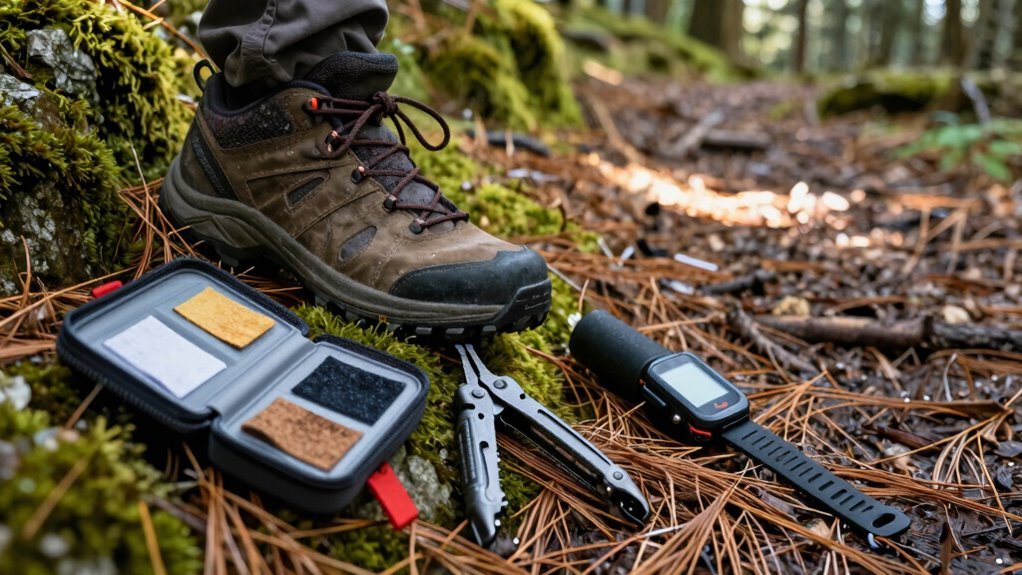
You’re flying on the trail when—ouch—a hot spot flares, or the path vanishes. No panic! Trail runners know that quick thinking and preparation keep you moving safely forward.
Stop, assess, and fix fast: tape that blister before it turns into a full-blown issue, retrace your steps to familiar ground, or add layers as skies turn moody. Stretch out cramps, sip water strategically, and patch gear with supplies from your pack.
Stay light on your feet, sharp in your head, and ready for a laugh when things go sideways. Because every stumble’s a trail tale in the making, and you’ve got more tricks where that came from.
Dealing With Blisters and Hot Spots Mid-Run
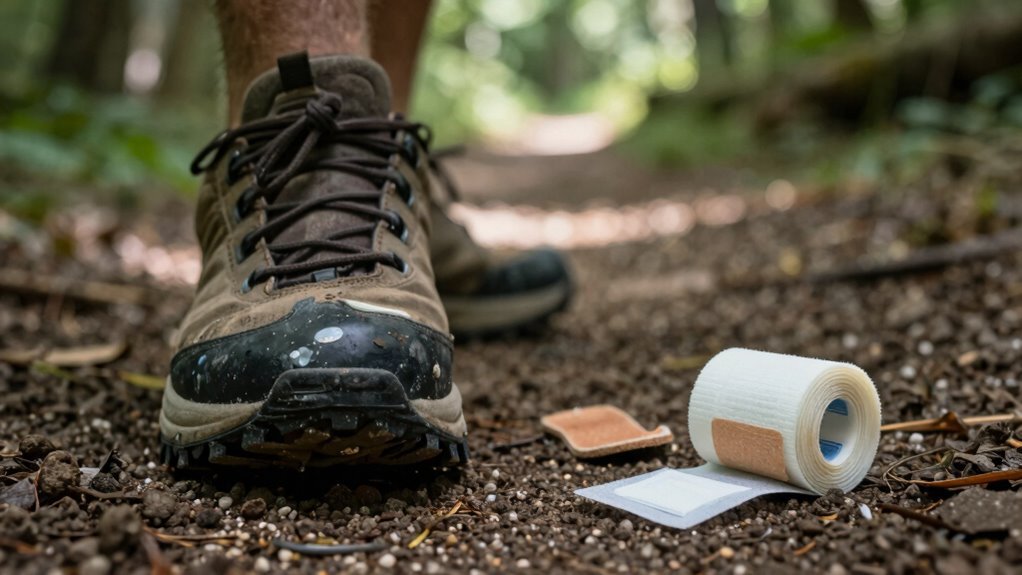
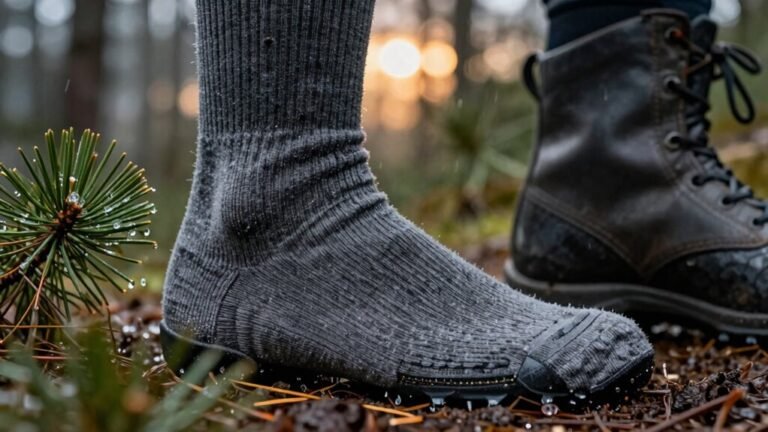
Ever wonder why your feet start screaming halfway through a trail run? That hot spot you ignored? Yeah, it’s screaming for attention.
Don’t wait—stop, peel off your sock, and check the trouble zone.
Clean it, dry it, and slap on leukotape or KT tape like it’s a superhero bandage.
Use tincture of benzoin first so it sticks like glue, even when you’re sweating buckets.
If a blister pops up, drain it gently with a clean needle (no drama, just precision), keep the skin roof intact, then cover it with moleskin or a blister patch.
Secure it with tape, overlapping the edges.
Carry a tiny kit: leukotape, alcohol pads, benzoin, and a trusty blade.
Your future self will high-five you later.
And hey, next time—socks that wick, not soak, and zero cotton.
Your feet aren’t sponges!
Fluid inside blisters is serum that cushions tissue during healing, helping protect the damaged area as your body works to repair itself.
Navigating When You’ve Lost the Trail
So your feet are blister-free and happy, but now the trail’s gone—vanished like your motivation on a Monday morning.
Don’t panic!
Start by stopping and scanning the land—look for hills, rivers, or ridges that match your map.
If the creek you were following isn’t where it should be, you’ve likely drifted off-course.
Orient your map using landmarks or your phone’s compass, then take a bearing on a distant, clear feature like a peak or tree line.
Trust contour lines; they’ll show you valleys, saddles, and steep spots you can use as clues.
If you’re unsure, retrace your steps until things look familiar.
Use trail apps like Gaia GPS as helpers, but remember, they’re not perfect.
Smartphones die, signals fade—carry a real map and learn to read it.
The land’s talking—listen closely, and you’ll find your way again, no drama.
Carry the map in hand so you can quickly recheck your position without breaking rhythm, especially during fast sections or races (in hand).
Handling Sudden Weather Changes
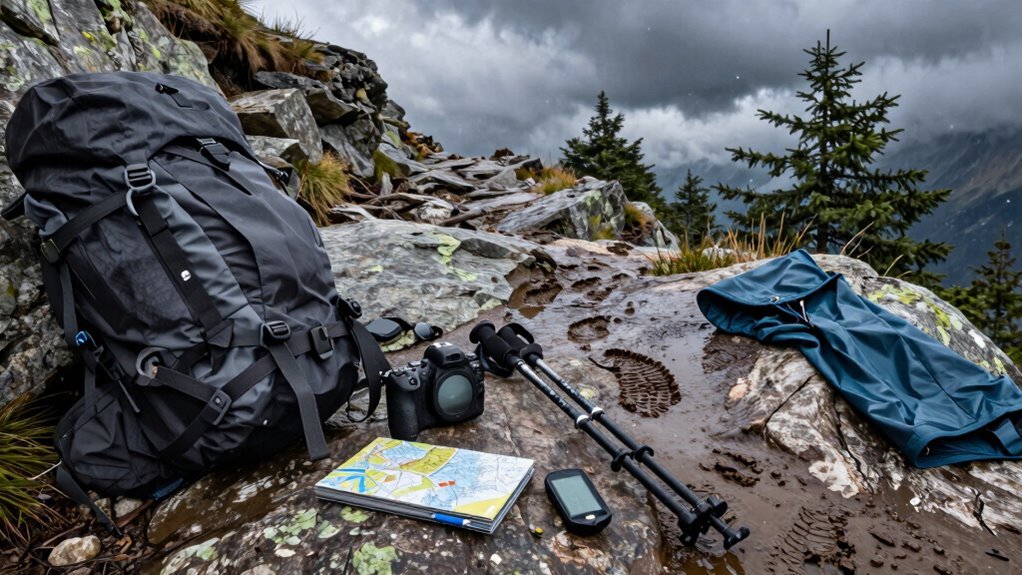
When the sky turns moody and the wind starts whispering warnings through the trees, you’ll want to act fast—because weather on the trail can shift faster than your playlist on shuffle.
You checked the forecast, packed layers, and told someone your plans, so you’re ready.
If clouds darken or the wind bites, don’t wait—add a jacket or grab shelter now, not “in a minute.”
Lightning? Get off ridges and away from trees.
Feet soaked? Wring out socks fast—wet feet can chill you quicker than a polar plunge.
If it turns nasty, chuck your run goal and head back.
Stay warm, stay dry, stay smart.
And hey, if you’re stuck, snack, hydrate, and laugh it off—mud showers are free exfoliants, right?
Just keep your core cozy, your head clear, and your sense of humor drier than your socks.
Protect your core and hands with appropriate clothing and layering.
Fixing Gear Failures on the Go
Snap, rip, or crunch—gear fails when you least expect it, and suddenly you’re staring down a broken strap, a split shoe, or a zipper that’s gone rogue.
No panic—tighten that backpack strap with a safety pin or tie it off using utility cord.
If your trekking pole snaps, trim a sturdy branch as a backup; carbon’s fancy, but nature’s free.
Shoe blowing out? Smear on shoe goo or tape up the tear with Tenacious Tape—works like duct tape magic.
Zippers? Clean and lube ‘em before trips so they don’t bail mid-downpour.
Carry a mini repair kit with super glue, dental floss, and extra buckles; these tiny heroes save big days.
A ripped hip belt? Sew it or reroute weight ’til you’re back in civilization.
Gear breaks, sure, but you’re tougher, craftier, and never caught completely off guard—especially when you’ve got floss strong enough to stitch a survival story.
Managing Cramps and Muscle Fatigue
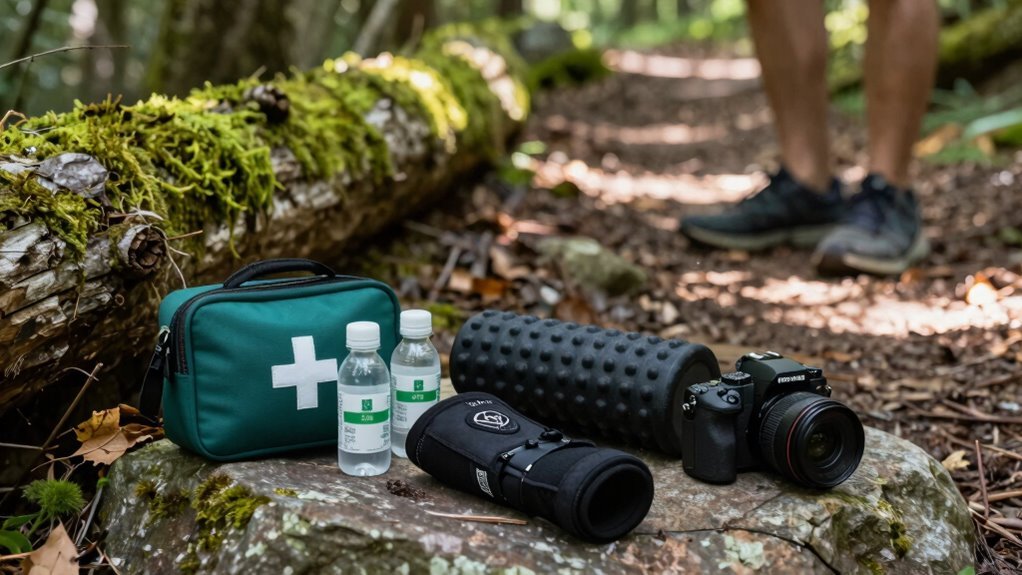
Ever had your calf lock up mid-stride like it’s staging a rebellion?
Yeah, cramps are no joke—especially when uneven trail terrain pushes your muscles past their limit.
But don’t panic! You can fight back fast and keep moving.
- Stop and stretch it out: Gently pull your foot back to loosen a cramped calf—hold it for 30 seconds and breathe.
- Switch on the opposite muscle: Flex your quads to tell a screaming hamstring to chill out.
- Massage and ease tension: Rub the knot to wake up sleepy muscles and invite blood flow back in.
- Slow down, don’t stop: Dial back your pace to reset your muscles’ rhythm without quitting the trail.
Cramps often come from overdoing it too soon or skipping trail-specific prep.
Train smart, listen to your body, and remember: even rebels can be reasoned with—just show ‘em who’s boss.
Staying Hydrated and Fueled During Long Runs
Sweat pouring down your brow, heart pounding in rhythm with your strides—your body’s working hard out there, and it needs fuel to keep the fire burning.
For runs under 90 minutes, water’s enough, especially if you started hydrated—skip the handheld and go light.
Longer? Add electrolytes and carbs to your bottle; your muscles will thank you.
Aim for 20–24 ounces per hour, sipping every 15 minutes—no chugging like a camel at an oasis.
On hot days, boost sodium to 500–800 mg per liter; sweat rates vary, so know your body.
Weigh yourself before and after runs—every pound lost equals 16 ounces of sweat.
Replace about half during the run.
Cold or hot, humidity or altitude, adjust smartly.
Thirst helps, but pair it with a plan.
Stay sharp, stay fueled, and hey—nobody ever bonked while laughing, so keep smiling between sips!
Frequently Asked Questions
What Should I Do if I Encounter a Wild Animal?
Stop running, stay calm, and don’t turn your back.
Stand tall, wave your arms, and shout loudly to look big and bold—wildlife respects confidence!
Back away slowly while keeping eyes on the animal.
Carry bear spray ready, and use it if needed.
Never feed or sneak up on critters; they’re not fans of surprise visits.
You’re a guest in their home, so be cool, stay safe, and keep the adventure fun—for you *and* the raccoons.
How Do I Handle Needing to Use the Bathroom Mid-Run?
You gotta go? No problem—just find a private spot 200 feet from water and trails, like behind bushes or rocks.
Dig a 6-inch hole for poop, or scuff the ground for pee.
Squat low, keep your shorts clean, and always pack out toilet paper.
Use hand sanitizer right after.
Pro tip: a pee rag saves waste and avoids chafing.
Nature calls, but you’ve got this down!
Is It Safe to Run Alone on Remote Trails?
Yeah, you can safely run solo on remote trails—if you’re smart about it.
Sure, stats show risks like hypothermia or falls, but hey, you’re tougher than a trail mix granola bar.
Bring a phone, tell someone your route, and pack extra layers.
Most runners feel safer in the wild than on city streets.
Just don’t let overconfidence be your only running buddy.
Stay sharp, stay ready, and you’ll crush it—safely.
What Do I Do if My Phone Dies on the Trail?
You stay calm, first off—no panic allowed! Check your battery health before you even hit the trail, and if it’s below 80%, swap it or pack a 10400 mAh charger.
Keep your phone asleep, not off, and use text over calls.
When it dies? Use your watch for GPS, save power, and remember: even a dead phone can’t ruin your adventure if you’ve got smarts *and* a sense of humor!
How Can I Prevent Nausea During Long Trail Runs?
You keep nausea at bay by treating your stomach like a finicky campfire—feed it often, but not too much.
Sip water steadily, pair gels with fluids, and skip the greasy snacks.
Nibble every 20–30 minutes, not hourly, and save the burritos for the finish line.
Use ice, slow down on climbs, and breathe deep—your gut will thank you, no drama, just happy trails.
Conclusion
Remember that time your shoe disintegrated at mile nine? Yeah, we’ve all been there. Trail running’s like a choose-your-own-adventure book—sometimes you pick wrong, but the story keeps going. With these tips, you’re not just surviving the trail, you’re thriving on it. Blisters, storms, wrong turns? Just plot twists. Keep moving, stay light, and laugh when you faceplant—adventure’s supposed to be messy, not perfect.
References
- https://www.thesfmarathon.com/blog/2025/12/20/blisters-what-are-they-why-are-they-and-how-to-treat-them-foot-clinic/
- https://www.trailrunnermag.com/training/how-to-treat-and-prevent-trail-running-blisters/
- https://trainright.com/running-blisters-prevention-treatment-and-healing/
- https://www.trailgroove.com/blogs/entry/323-hiking-blister-prevention-treatment-and-care/
- https://www.sixmoondesigns.com/blogs/newsletter/the-blister-queens-guide-to-treating-blisters-while-trekking-by-raquel-mogado
- https://www.irunfar.com/trail-first-aid-blister-prevention-and-care
- https://trailrunner.com/trail-news/how-to-fix-your-trail-running-blisters/
- https://www.racingtheplanet.com/the-runner-s-guide-to-preventing-and-treating-blisters
- https://www.raw-adventures.co.uk/blog/mountain-navigation-for-runners/
- https://www.injinji.com/blog/trail-running-navigation-tips-from-team-injinji