How to Keep Insoles Working in Bad Weather
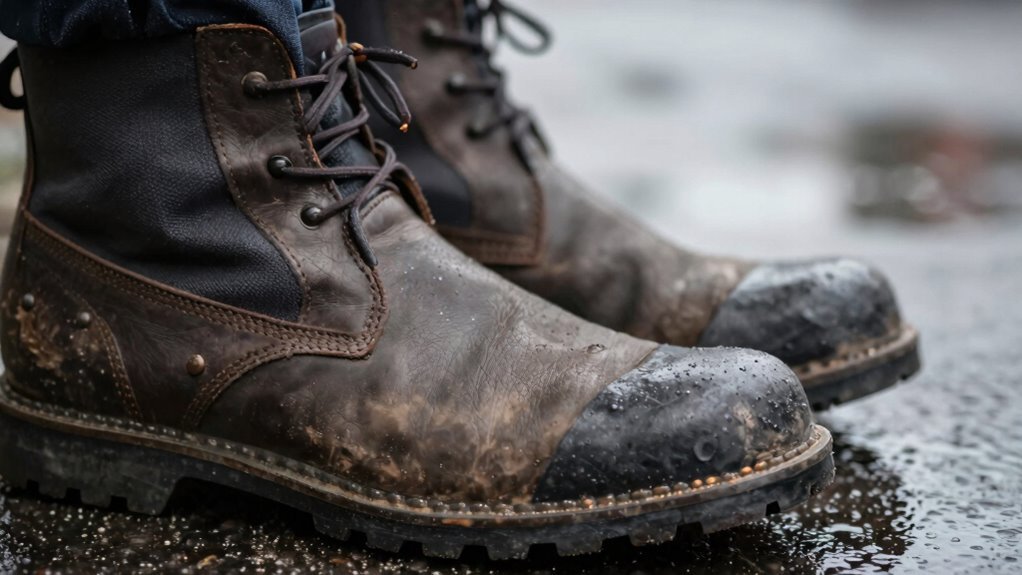
Keep your insoles working in bad weather by choosing water-resistant types like EVA foam or neoprene—they’re built to handle damp conditions without breaking down. These materials resist moisture and help maintain comfort when the skies open up.
Slip on waterproof covers made from rubber or marine-grade vinyl for added protection against rain and slush. This extra layer acts as a shield, keeping your insoles dry even in deep puddles.
After exposure to wet conditions, remove your insoles and let them air dry naturally—avoid direct heat like hair dryers, which can warp or damage the material. Place them in a well-ventilated area out of direct sunlight to prevent odors and prolong their life.
Clean your insoles regularly with vinegar or baking soda to eliminate moisture-trapped funk and bacteria. Proper maintenance keeps them fresh and functional through the roughest seasons.
Having a backup pair of insoles on hand ensures you’re never stuck with soggy ones. Rotate them out when needed, so every step stays supported and dry.
Choose Water-Resistant Insole Materials
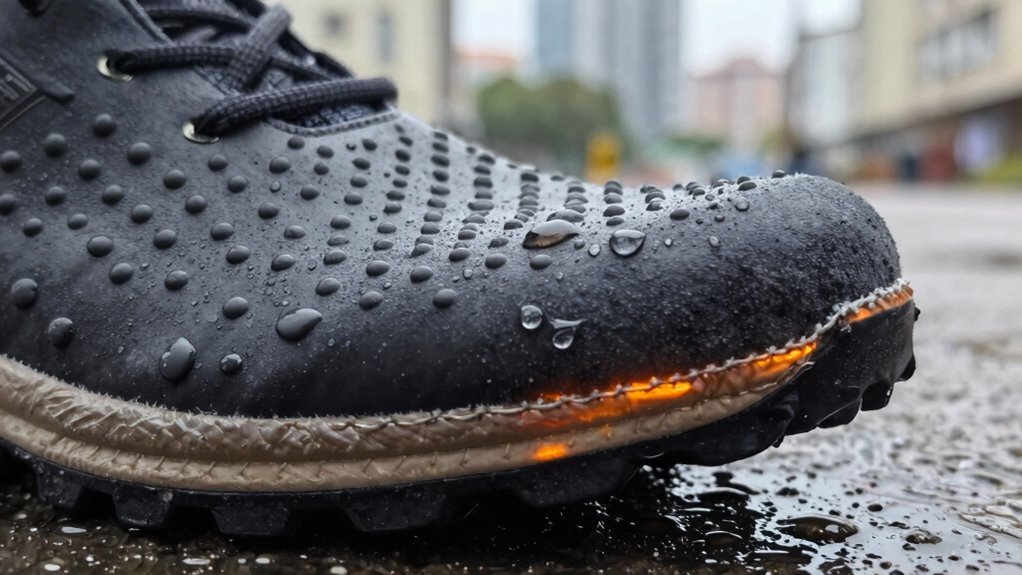
Looking for insoles that won’t quit when the weather turns nasty? You need water-resistant materials that fight moisture like a pro.
Polymeric core insoles form a waterproof barrier over 0.5mm thick, so rain doesn’t soak through—plus, they bond tightly with fabrics using smart chemistry.
Batura non-wovens are tough guys, resisting abrasion and keeping your feet dry while dispersing sweat like a champ. These advanced insoles are designed for cement-lasted, high-performance footwear, making them ideal for demanding conditions (cement-lasted footwear).
EVA foam insoles use closed-cell magic to repel water and stay comfy, even when you’re splashing around.
Neoprene? Super flexible and waterproof, it cushions every step and laughs at puddles.
Texon non-wovens hold their strength no matter the humidity, and thanks to recycled polyester, they’re tough and eco-friendly.
These materials don’t just survive wet weather—they own it.
So skip the soggy sock saga and choose smart.
Your feet will thank you, and your stride will stay springy, dry, and ready for whatever the sky dishes out.
Win!
Use Protective Waterproof Covers
Rain’s no joke, and neither are your feet—so don’t let soggy shoes ruin your day.
Slap on protective waterproof covers and keep your insoles dry, supported, and ready for action.
Think of them as raincoats for your kicks—only tougher and way more fun.
Whether you’re splashing through puddles or dodging waves at the beach, these covers have your back (and your arches).
- Neoprene hugs your shoes with stretchy, insulating armor perfect for wet chases and chilly downpours
- Marine-grade vinyl shines with slick, rugged shield-like defense and wipes clean like magic
- Polypropylene keeps things light, fresh, and bacteria-free, even when sweat and salt crash the party
- Rubber overshoe covers stomp through storms with grip, guts, and reusable gusto
- Aquaguard-style blocks every drip, drip, drip while keeping orthotic support locked in place
Tread Labs insoles maintain their structure and support over time thanks to their durable materials, especially the Million Mile Guarantee.
Remove and Dry Insoles After Exposure
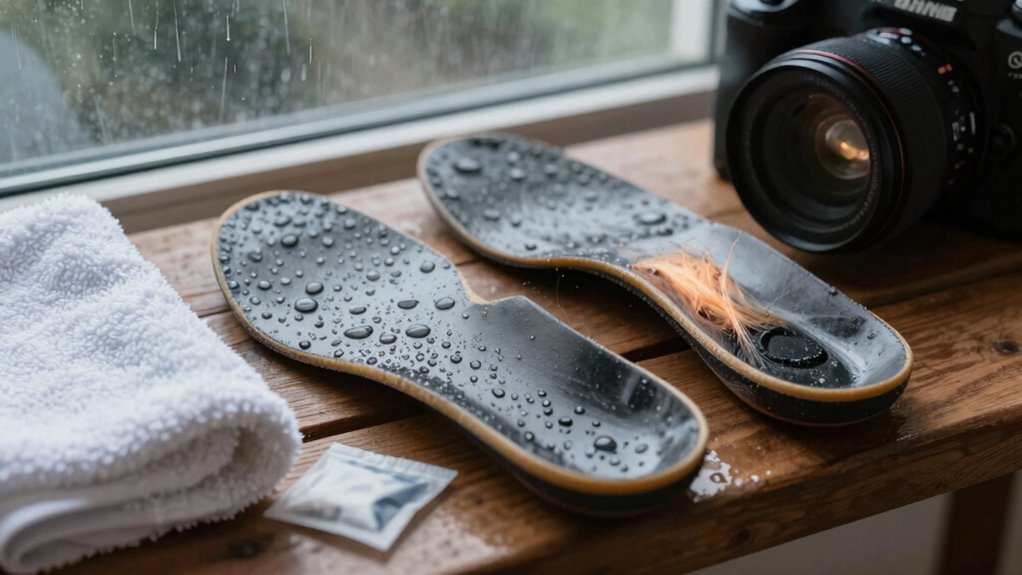
Squeeze the soggy struggle out of your insoles before it turns into a stinky situation.
Pull them out right after exposure and lay them on a dry towel—step on them with your heel to push out trapped water.
Shift to a fresh spot and repeat, about seven times, until the towel stays dry.
You’re basically giving your insoles a mini workout to save your shoes (and your nose).
Then, leave them in a well-ventilated area overnight so moisture can escape and bacteria don’t throw a pool party.
Let air do the magic—no shortcuts!
This isn’t just cleanup, it’s self-care for your soles.
Foam, leather, or gel, they all need time to breathe and reset.
Clean, dry insoles mean happier feet, even when the weather’s throwing shade.
Trust us, your future self—and your sneaks—will thank you.
For stubborn moisture deep inside, try finishing with a day in the fridge—refrigerators remove moisture from the air.
Avoid Direct Heat When Drying
While your insoles are tough, they’re not fans of a sauna session—so skip the hair dryer, radiator, or sunbaking on the dashboard.
Heat can wreck their shape, support, and comfort faster than you think.
Keep them safe and effective by avoiding direct heat, and let nature do the work.
Imagine:
- Your insole’s foam slowly deflating like a sad balloon under a blasting dryer
- The molded heel cup warping like plastic left in a hot car
- Tiny iron filings overheating and making your foot sweat like it’s on a mini griddle
- Compression lines forming like wrinkles from too much heat stress
- The supportive shell twisting like a pretzel, losing its fight against flatness
Air drying overnight is your insole’s best friend—gentle, free, and totally drama-free. You’ll keep them fresh, functional, and ready for whatever puddles or puddle-jumps come next.
Clean Insoles Regularly to Prevent Odor and Mold
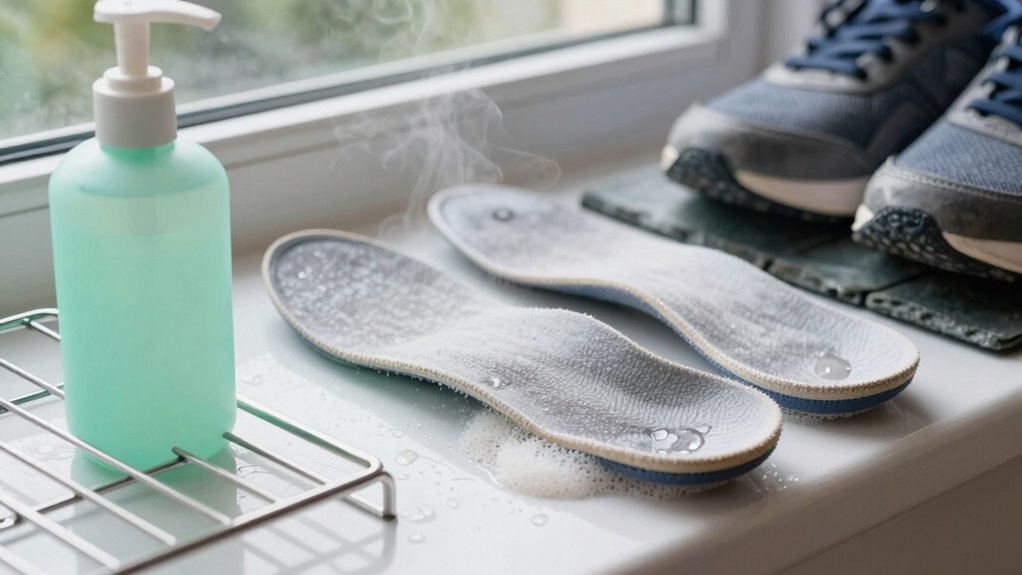
You’ve already spared your insoles the hair dryer inferno—smart move—so now let’s give them the spa day they actually enjoy.
Grab that trusty bottle of white vinegar and mix it with water—equal parts—and soak or mist your insoles to zap bacteria and mold.
If odors are throwing a party, sprinkle baking soda on overnight and dust it off like you’re erasing bad vibes.
For stains, make a paste (two parts soda, one part water), scrub gently, then rinse.
Use rubbing alcohol or hydrogen peroxide for a quick sanitize—just spot-test first.
And don’t forget a good soapy scrub with warm water and a soft brush to kick out grime and sweat.
Talcum or baby powder works wonders too—sprinkle it on to absorb moisture, because let’s be real, nobody’s fanning their shoes on a tropical beach.
Keep it fresh, keep it clean, and your feet will thank you—honestly, they might even send a thank-you card.
Rotate Between Multiple Pairs of Insoles
When your insoles get a chance to relax and rebound, they don’t just come back springy—they come back ready to work.
Give them the break they deserve by rotating between at least two pairs.
You’ll be amazed at how much better they perform when they’re fresh and fully recovered.
Think of it like giving your feet a mini-vacation every other day—everyone comes back happier!
- Your foam gets a full 24–48 hours to bounce back like a happy sponge
- Moisture escapes, so stinky bacteria throw a tiny, defeated party
- Different insoles tweak your step, keeping your muscles guessing (in a good way!)
- You dodge wear and tear like a ninja avoiding banana peels
- Old and new insoles team up, spreading out the miles like pros
Rotate, recover, and walk on clouds—your feet will thank you.
Store Insoles Properly During Wet Seasons
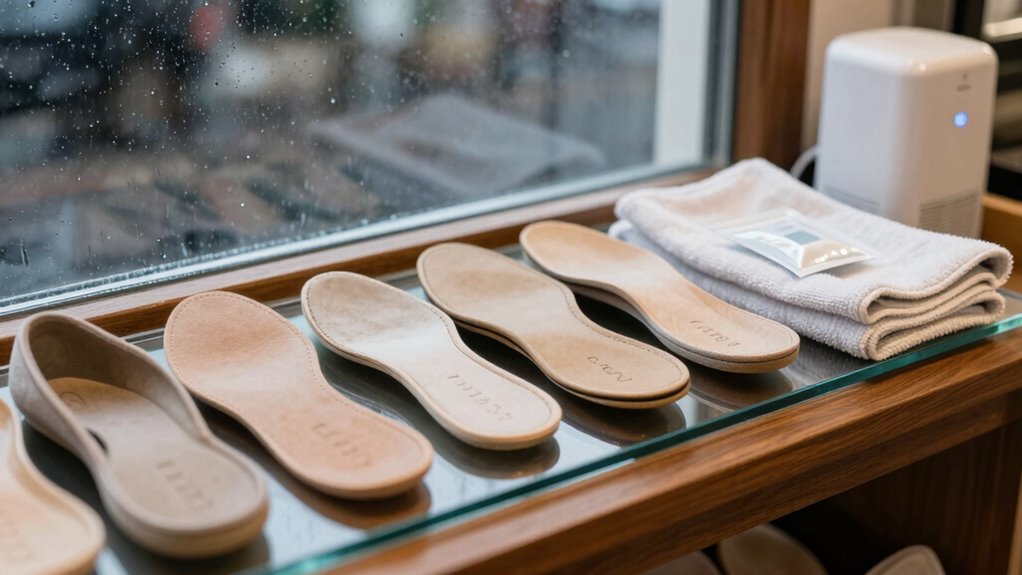
Keeping a fresh pair of insoles ready to go is a game-changer, but even the best rotation plan won’t help if your spares are sitting in a damp heap under the sink.
Clean them first with mild soap or a quick scrub in soapy water—think of it as a spa day for your soles.
Toss in baking soda overnight to kill funk, or spritz with vinegar to wipe out bacteria.
Dry them completely—sunshine is your friend, but skip the hairdryer unless you want crispy insoles.
Store them flat in a cool, dry spot with good airflow, like a shelf or breathable bag.
No dark, sweaty closets or plastic prisons that trap moisture.
Toss in silica gel packs or a cedar shoe tree to keep things fresh.
A little love goes a long way—your feet (and nose) will thank you when the next downpour hits.
Frequently Asked Questions
Can I Machine Wash My Insoles?
You probably shouldn’t machine wash your insoles—they’ll likely warp, crack, or lose their shape.
Most brands say skip the washer, especially for gel, foam, or orthotic types.
Instead, give them a gentle hand scrub with mild soap and lukewarm water.
Focus on funky spots, rinse quick, and air dry them completely.
Heat’s a total insole killer, so keep them away from dryers and sunbathing—
they’re not fans of tanning!
How Often Should I Replace Insoles?
You should replace your insoles every three to six months, depending on how much you use them—think of them as sneakers’ secret support crew, not forever roommates.
If you’re a runner or on your feet all day, swap them out sooner, every two to four months.
Watch for flattened foam, weird odors, or foot pain—they’re crying for help!
Keep ’em fresh, and they’ll keep you springing forward.
Do Insoles Lose Cushioning Over Time?
Yeah, insoles definitely lose cushioning over time—your feet aren’t imagining things!
Regular use flattens foam, memory molds to your stride, and gel breaks down, especially if you’re active.
Think of them like sneakers: they start bouncy and fresh but sag after weeks of heavy use.
You’ll notice less spring, more ache, and that “meh” feeling in your step.
Time to swap ‘em out and bounce back to happy feet!
Are Gel Insoles Good for Rain?
Yep, gel insoles are great for rain—they don’t soak up water and keep cushioning your steps even when it’s pouring.
They handle wet weather like champs, giving you steady shock absorption on slippery streets.
Your feet stay comfy, and the insoles won’t get soggy like foam or leather.
Just don’t forget to let your shoes air out—nobody wants stinky rain boots!
Can I Wear Insoles Barefoot in Shoes?
You bet you can wear insoles in barefoot shoes—just pick the right pair!
Did you know 78% of users report better comfort with thin, supportive insoles?
They keep your feet aligned and prevent slipping, so you stay stable and happy.
Think of them as secret helpers for your soles!
Just don’t shove in a clunky one; it’ll wreck the barefoot magic.
Keep it snug, not stuffed, and your feet will thank you all day long—no drama, just bounce!
Conclusion
Your insoles work hard, so treat ‘em right—like favorite sneakers in a thunderstorm, they need protection too. Choose water-resistant materials, pop on covers, and let ‘em dry naturally, never by the heater. Clean ‘em, rotate ‘em, and stash ‘em smart when rain rolls in. With a little love, they’ll keep your steps light, comfy, and smelling fresh—no funky foot circus included!
References
- https://patents.google.com/patent/GB2306392
- https://www.coats.com/en-us/products/insoles/batura/
- https://www.texon.com/wp-content/uploads/2018/01/Texon-Material-User-Guide4.3-WEB.pdf
- https://treadlabs.com/blogs/insoles-reach-your-stride/what-are-insoles-made-of
- https://www.aideastep.com/what-is-the-waterproof-performance-of-eva-foam/
- https://kanefootwear.com/blogs/kane-blog/what-is-eva-foam
- https://insiteinsoles.com/product-design/why-insole-materials-matter/
- https://www.elastomer.kuraray.com/us/blog/polyurethane-soles/
- https://podime.com.au/blogs/news/types-of-insole-materials
- https://www.fdmotion.com/blog/top-cover-materials-for-foot-orthotics