1 Best Budget Hiking Boots That Still Crush Every Trail
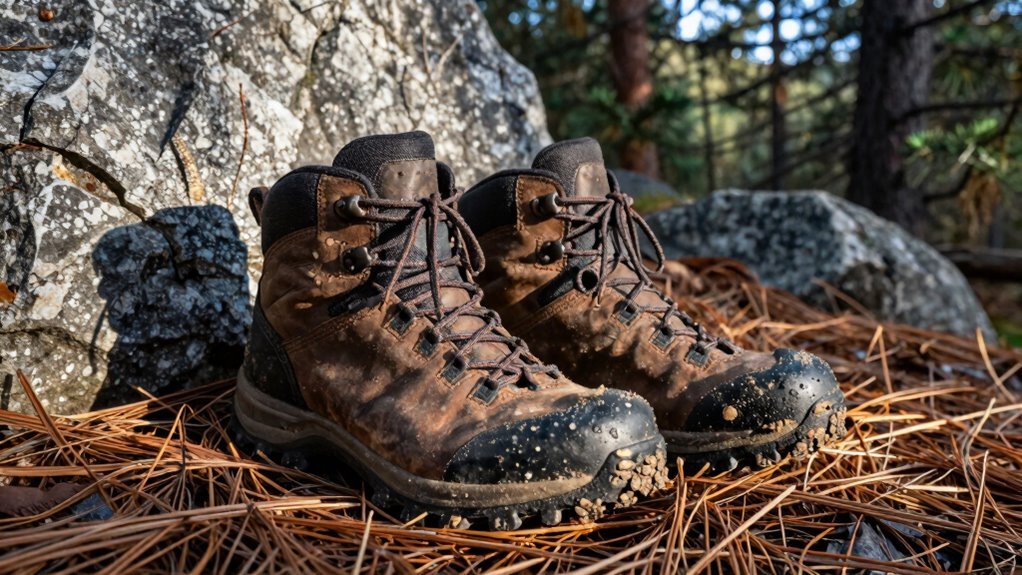
A single footprint can tell you everything—depth reveals cushioning, edge grip hints at traction, and wear patterns expose weaknesses you didn’t know your hikes had.
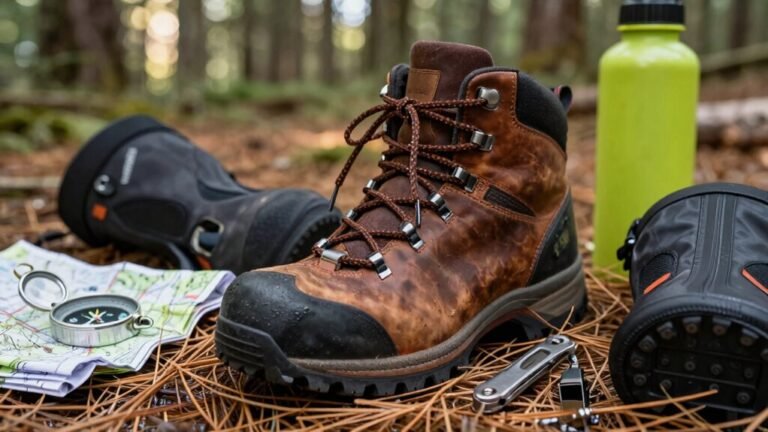
You want the best budget hiking boots tough enough for 10-mile treks on rocky switchbacks yet light enough not to drag you down by mile five, right?
Waterproofing that actually works—sealed seams, 600g Thinsulate—keeps your feet dry in wet conditions.
Meanwhile, 4.5mm lugs claw into slick roots and uneven terrain, delivering grip most budget hiking boots simply ignore.
So why do so few deliver on both performance and value?
| NORTIV 8 Men’s Waterproof Hiking Boots | Budget-Friendly Pick | Waterproofing: 4-hour waterproofing | Terrain Suitability: Various hiking terrains | Weight Design: Lightweight | VIEW LATEST PRICE | Read Our Analysis |
More Details on Our Top Picks
NORTIV 8 Men’s Waterproof Hiking Boots
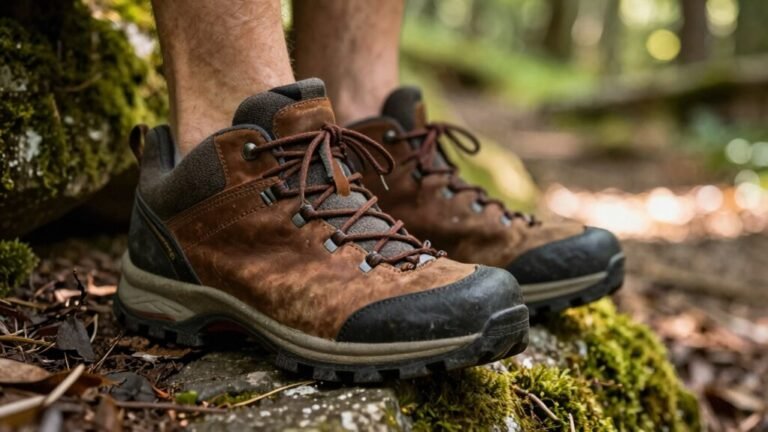
If you’re after a pair of budget hiking boots that don’t skimp on protection or comfort—especially for long hikes where your feet stay dry for up to four hours thanks to certified waterproofing—then the NORTIV 8 Men’s Waterproof Hiking Boots might just be your best bet.
You get a debris-blocking tongue wing and rubber toe cap, so trail junk stays out, while the heel bridge and snug ankle support keep your foot stable on rocky or uneven terrain. The EVA mesh insole cushions each step, and the slip-resistant outsole grips wet rocks or muddy inclines—pretty solid for lightweight mountaineering leather.
Sure, they’re not for extreme alpine climbs, but for day hikes across varied landscapes? They’re tough, capable, and won’t drain your wallet.
- Waterproofing:4-hour waterproofing
- Terrain Suitability:Various hiking terrains
- Weight Design:Lightweight
- Ankle Support:Enhanced ankle protection
- Outsole Type:Slip-resistant
- Upper Material:Mountaineering leather
- Additional Feature:4-hour waterproofing guarantee
- Additional Feature:Debris-blocking tongue wing
- Additional Feature:Rubber toe cap protection
Factors to Consider When Choosing Budget Hiking Boots
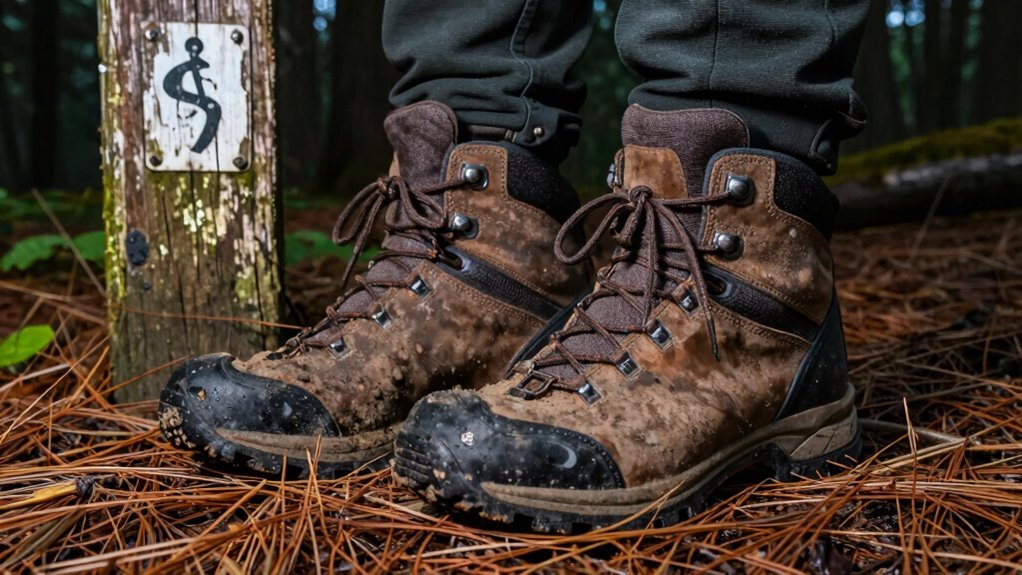
You’ll want to weigh waterproofing performance—especially if you’re hiking in wet climates where membranes like TPU or eVent keep feet dry 80–90% of the time—against breathability, since even budget boots can trap heat on long climbs. How well the fit and comfort stack up matters just as much, because a boot that pinches or slips, even one with decent EVA midsoles (around 20mm thick), can ruin a 5-mile trek fast—have you ever broken in a pair only to realize the heel cup’s too shallow? Don’t overlook durability and materials, traction and stability, or ankle support level either; split-grain leather with TPR overlays lasts about 300–500 trail miles, aggressive lugs (4–5mm deep) bite into mud, and mid-cut designs offer moderate roll prevention without locking you down like a high-end model might.
Waterproofing Performance
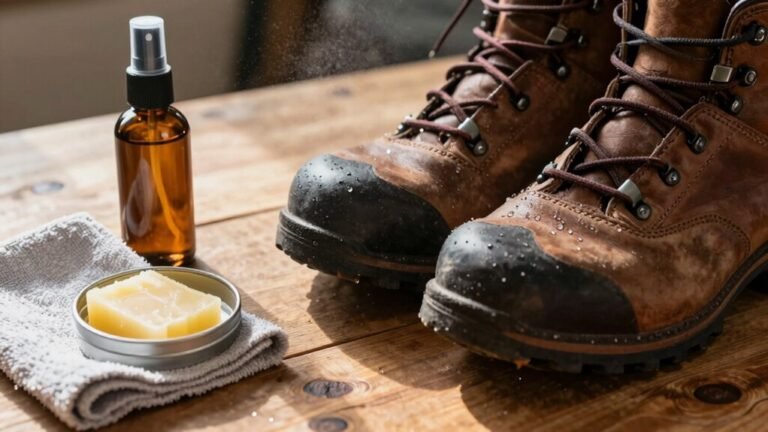
How long will your feet actually stay dry when the trail turns soggy? Many budget hiking boots claim waterproofing for up to four hours—plenty for short, muddy hikes or sudden downpours.
Pushing past that mark risks damp socks, especially in standing water or persistent rain. That 4-hour window isn’t set in stone.
Factors like water depth, temperature, and how often you’re stepping in and out of wet zones can shorten the effective time. Boots with sealed seams and water-resistant uppers (like full-grain leather or treated synthetics) do better.
Even high-quality materials aren’t immune to saturation over time. Real-world wear also matters.
After months of hiking, scuffs, flexing, and improper cleaning can compromise the waterproof layer, no matter the label. So, while budget boots can handle damp conditions, don’t expect them to beat high-end models in a swamp marathon.
Just know their limits and plan accordingly.
Fit and Comfort
Why do so many budget hiking boots leave you with blisters after just a few miles? Because they skimp on fit—your heel slips, your toes cram, and friction takes over.
You need a snug heel lock paired with a roomier toe box—about a thumb’s width clearance—to avoid pressure on descents. A cushioned outsole, ideally with EVA foam or molded midsoles (often 18–22mm thick), absorbs shock on rocky paths.
Padded ankle collars and flexible uppers cradle your foot without pinching. Don’t overlook the lacing system: secure, even tension prevents hot spots and keeps your foot stable during switchbacks or side-hilling.
Even the best budget boots need a 3–5 mile break-in period—wear them around town first so the materials mold to your foot, not your skin. Comfort isn’t luxury—it’s function.
Durability and Materials
Durability starts with smart material choices—ones that don’t crumble after three trail miles or get shredded by sharp granite. You’ll want full-grain leather or tough synthetics for the upper; they resist abrasion from rocks and brush far better than flimsy fabrics.
Look for rubber outsoles with lugs over 4mm deep—they’ll outlast shallow treads when you’re grinding over scree or root systems. Reinforced toe caps and heel counters are non-negotiable; they take impacts without folding and reduce stress wear where boots usually fail.
Stitching matters too: double-stitched or Goodyear-welted joints last longer than glued-only construction and can often be resoled. Waterproof membranes like TPU or eVent, or DWR treatments, help by blocking moisture that weakens fibers over time.
Sure, budget boots won’t last 1,000 miles like premium pairs—but with these features, you’ll easily hit 300+. That’s solid value, right?
Traction and Stability
You’ve already picked a boot that can handle scrapes, moisture, and miles — now make sure it doesn’t slip out from under you when the trail turns slick or rocky. Look for a slip-resistant outsole, ideally with rubber rated for wet rocks — because nobody enjoys an unexpected slide into a stream.
Deep, multidirectional lugs (think 4–5mm) bite into mud, gravel, and loose soil, giving you grip where cheaper soles often quit. A rigid heel counter stabilizes your foot on uneven terrain, while a snug upper keeps debris out — because nothing kills traction like a pebble dancing under your arch.
Pair that with a responsive midsole, one that cushions without mushiness, and you’ll maintain footing mile after mile. Sure, budget boots won’t match premium lug patterns exactly — but with the right design, they’ll keep you upright when the trail says otherwise.
Ankle Support Level
How much ankle support do you really need—especially when your boot budget’s tighter than your calf stretch? If you’re tackling rocky descents or uneven terrain, mid-to-high-cut boots give you noticeably more stability by locking your ankle into a firm, reinforced collar—think of it like a gentle brace that minimizes roll.
A secure lacing system with multiple eyelets lets you fine-tune the fit, especially around the ankle, so you’re not wobbling side-to-side. Look for features like a structured heel counter, a stiff midsole, or even internal shanks—these aren’t just buzzwords; they reduce fatigue over long miles.
Sure, low-cut models are lighter and cheaper, but on technical trails, they can leave you prone to twists. For budget boots, don’t sacrifice ankle structure for style—prioritize a well-built collar and solid heel lock.
It’s not magic, just smart design that keeps you upright without blowing your budget.
Frequently Asked Questions
Can I Use Budget Hiking Boots for Backpacking?
Yes, you can use budget hiking boots for backpacking if they fit well and support your load. Just break them in first, stick to shorter trips, and check for wear. They won’t last as long as pricier ones, but they’ll get you through most trails just fine.
Are Budget Hiking Boots Suitable for Wide Feet?
Yes, you can find budget hiking boots that fit wide feet—just look for models with wide width options or brands known for roomy toe boxes. You won’t sacrifice comfort or performance on the trail.
Do Budget Hiking Boots Require a Break-In Period?
Yeah, you’ll need to break ’em in—don’t expect Roman sandal comfort right away. Wear ’em around the house first, then short walks. They’ll soften up, hug your feet better, and stop rubbing blisters. Give ’em time, and you’re good to go.
How Long Do Budget Hiking Boots Typically Last?
They usually last 300–500 miles, depending on how often you wear them and the terrain. You’ll see wear on the outsole and midsole first, and they’ll lose support faster if you hike heavily or on rough trails.
Can I Resole Budget Hiking Boots When Worn Out?
Yes, you can resole budget hiking boots when they wear out. Just check if the uppers are still solid. Most cobblers can handle it, and it’s a smart way to extend their life without buying new ones right away.
Conclusion
So, you’ve got waterproof seams, a 4.5 mm lug pattern gripping slick rock, and a midsole that won’t quit after 10 miles—still, you’re paying under $90. Is it *perfect*? Maybe not, but for swamp mud, loose scree, and weekend-long treks, how much more do you realistically need from a budget boot that actually performs?