Troubleshooting Insoles on the Trail
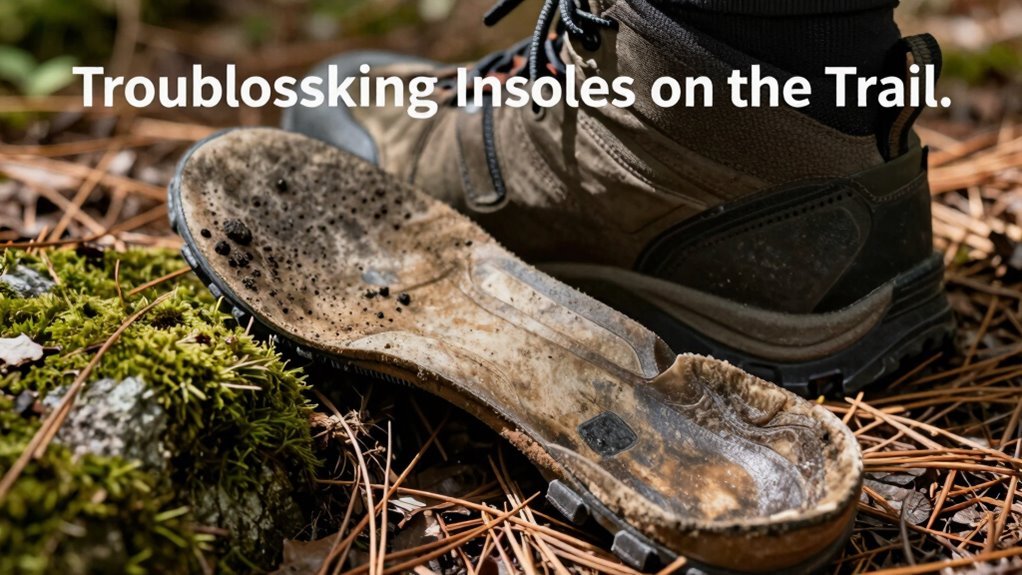
You’re hiking, and suddenly your insoles are doing the cha-cha inside your boots—annoying, right? Insoles on the trail can slip, bunch, or flatten due to sweat, loose fits, or worn cushioning just when you need support most.
Trim them to fit your boots precisely, or replace them with grippy models featuring moisture-wicking covers. Swapping in firmer, supportive insoles can also restore stability and comfort on long hikes.
Keep your insoles fresh and properly fitted, and your feet will thank you. Stick around, and you’ll discover even smarter fixes to keep every step smooth and stable.
Insoles Slipping Inside Your Boots
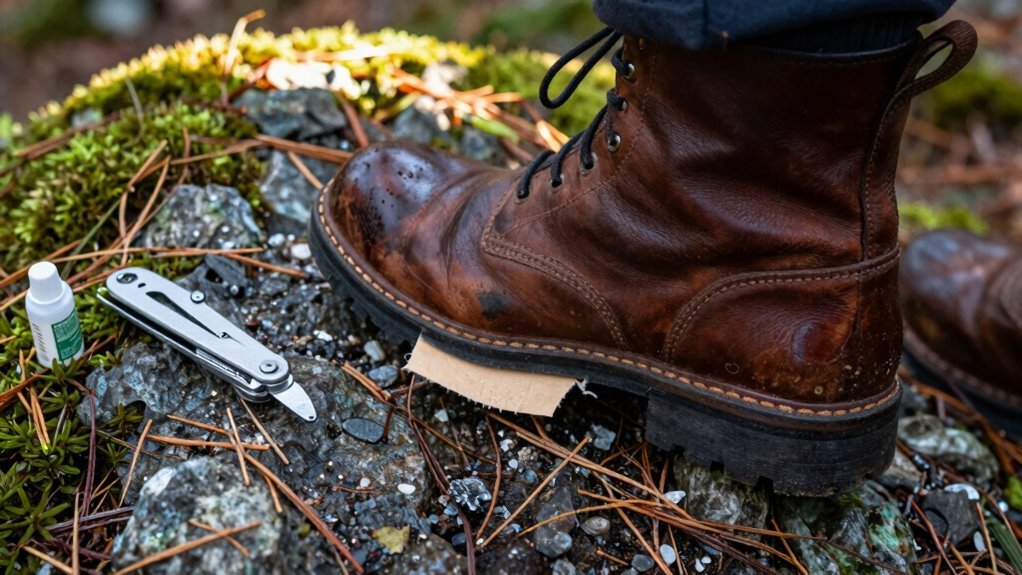
Ever wonder why your insoles are doing the cha-cha inside your boots halfway up the trail?
It’s not just your imagination—slippage happens when there’s not enough grip between your insole and the footbed.
Sweat makes it worse by turning things slippery, like a water slide for your foot’s foundation.
If your boots are too big or your heels are narrow, that extra wiggle room means your insole’s free to slide.
Even worn-out boots stretch over time, letting your insole party on without you.
Horizontal forces during walking or running can also shift the insole, especially if the shoe lacks proper lockdown, due to (friction or pressure transfer).
But don’t panic!
The fix starts long before the trailhead.
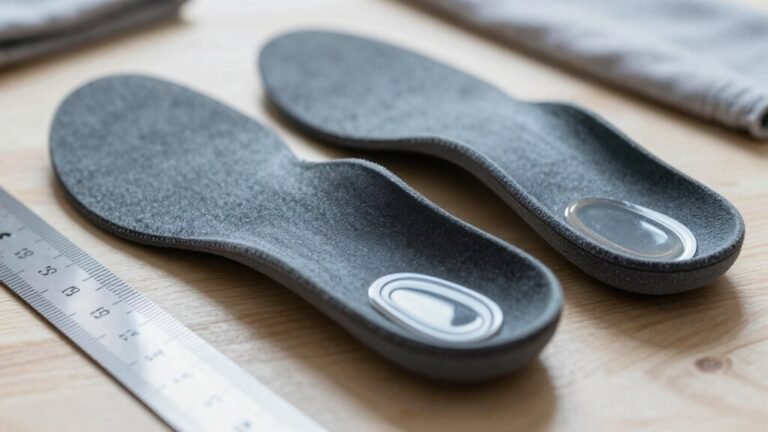
Choose insoles with deep heel cups or sticky backs, and make sure they fit snugly—trim them if needed.
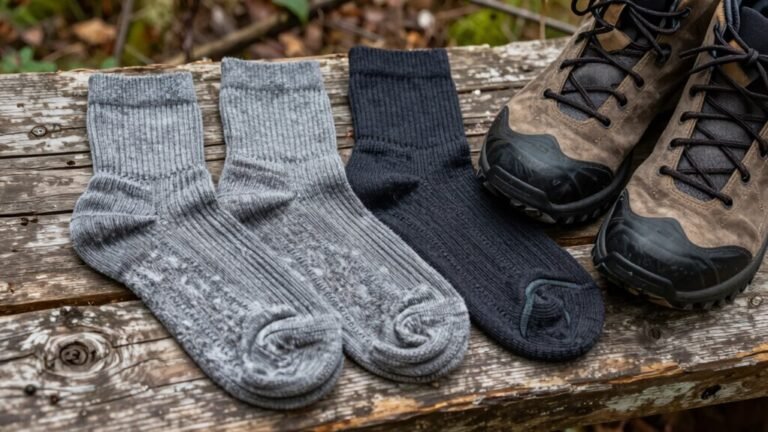
Wear moisture-wicking socks, and trust us, even in summer, a thin pair keeps things grippy.
Your insoles should stay put, so you can focus on the views, not your waltzing footbed.
Bunching or Creasing Underfoot
You’ve got a handle on insoles sliding around like they’re at a dance-off, but what about when they start folding up under your toes like a crumpled napkin?
Bunching usually means your insole’s too big, too soft, or soaked from sweat or river crossings.
Thick, floppy materials crease easily, especially in flexible shoes with weak heel pockets.
That wad under your arch isn’t just annoying—it throws off your step and invites hotspots.
Don’t let flimsy or worn-out insoles ruin your rhythm. Trim oversized ones to fit snugly, or swap in supportive models like Superfeet Trailblazers.
Use double-sided tape or Velcro to keep them locked down.
Choose moisture-wicking socks and dry your insoles during breaks.
A secure, well-fitted insole stays flat, not folded like trail trash.
Keep it smooth, stay steady, and let your feet crush miles—not napkins.
Incorrect sizing and fit can lead to persistent bunching, so ensure your insole matches your shoe’s dimensions and your foot’s shape for lasting comfort.
Loss of Arch Support Mid-Hike
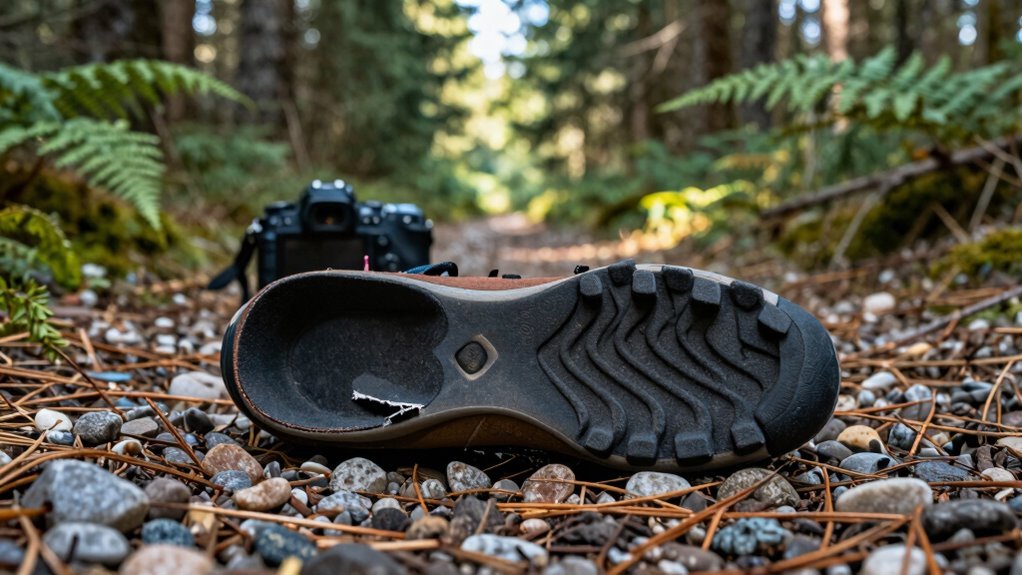
When the trail starts kicking your arches to the curb, you’ll feel it fast—sharp heel jabs, tired feet, and legs screaming like they’ve been duped into a workout they didn’t sign up for.
That sinking feeling? Probably your insoles giving up mid-hike.
Added pack weight, rocky terrain, and worn-out cushioning all team up to flatten support when you need it most.
If your feet start tingling or your calves are working overtime, your arches are crying for help.
Flattening or overpronating feet throw your whole body out of whack—knees, hips, even your back might protest.
Stock insoles often can’t keep up, especially if they don’t match your arch type.
Support degrades faster in materials like EVA, which compress over time and reduce arch support.
Save your soles: go for supportive aftermarket inserts or custom orthotics with a deep heel cup.
Pair them with stability shoes, check for wear, and keep your arch game strong—because nobody likes a flat hike.
Excessive Moisture and Odor Buildup
Your arches may have held strong, but now there’s another trail foe creeping in—soggy, stinky insoles.
Sweat builds up fast on long hikes, and without moisture-wicking topsheets, your insoles become bacteria buffets.
Non-breathable materials trap heat and funk, turning your boots into a smelly science experiment.
Yikes!
But don’t panic—smart picks fight back.
Look for antimicrobial treatments and open-cell foam that dry quickly and resist odor, like Currex HIKEPRO or SOLE Active.
They team up with moisture-wicking socks to keep feet fresh, not funky.
Toss in a Superfeet Hike Support with its Moisturewick cover, and you’ve got a freshness powerhouse.
Avoid trap-happy picks like PowerStep Pinnacle or Vivobarefoot Thermal—great for warmth, terrible for breathability.
Air out your gear nightly, and skip factory insoles; they’re basically odor welcome mats.
Stay dry, stay fresh, and let your boots breathe easy—your nose will thank you.
Incompatibility With Your Hiking Boot Fit
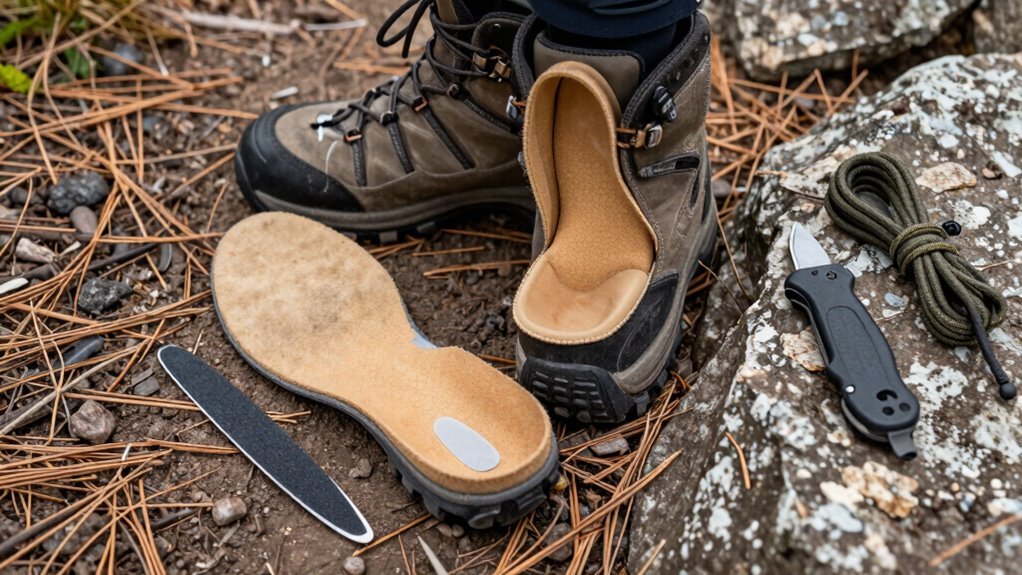
While your hiking boots might feel like a fortress for your feet, slipping in the wrong insoles can turn that stronghold into a slippery, uncomfortable mess.
You’re not just fighting blisters—you’re battling poor alignment, slippage, or even foot earthquakes with every step.
If the insole’s too big, it bunches; too small, and it shifts like a rogue floorboard.
High-volume boots need high-volume support, especially with thick socks and heavy loads.
Trim-to-fit models help, but only if you match your arch—low, medium, high, or sky-high—perfectly.
Rigid insoles like Superfeet rock in some boots but cramp others.
And let’s be real: tossing in a trail runner’s cushy EVA pad won’t cut it on rugged terrain.
Test them standing, walk around, squat—yes, squat!—and make sure everything stays put.
A bad fit now means pain later.
Your boot’s interior deserves a co-pilot that fits like it belongs.
Worn-Out Cushioning Over Time
A few months into your hiking adventure, that once-plush cushion under your foot might feel more like a pancake than support.
You’ve been putting in the miles, and your insoles are showing it.
Foam flattens fast—usually in 4–8 months—while EVA ones give out around 300–500 miles.
Even tough cork lasts only a year or two.
Every step, sweat, and sunbeam breaks them down, leaving you with cracked, thin, or smelly pads.
Ever squish your insole and it doesn’t bounce back? That’s it—game over.
Without cushioning, your joints take a beating, and soreness creeps in like an uninvited trail buddy.
It’s like walking barefoot on a rock… with extra drama.
Don’t wait for pain to sound the alarm!
Check for creases, thin spots, or funky smells.
Swap them regularly—your feet, knees, and back will thank you on every mile.
Pressure Points and Hot Spots Development
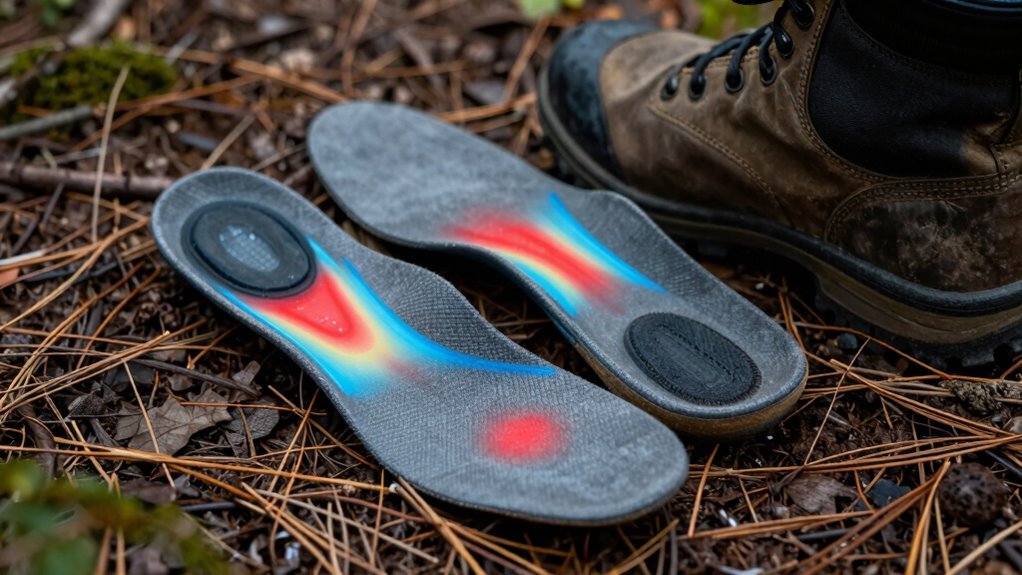
That squishy give in your insoles isn’t just about comfort—it’s your first line of defense against the sneaky villains of long hikes: pressure points and hot spots.
When your insoles shift or feel too stiff, friction starts roasting your skin like a campfire marshmallow—warm, tender, and one step from blister city.
Moisture-wicking socks and blister pads are your best friends here.
Hard insole edges or poor arch support? They’ll poke and prod, especially if you’ve got flat feet or an awkward gait.
Tight shoes, wrinkly socks, or stiff leather make things worse—ouch!
Hiking on pavement or rocky trails with rigid boots cranks up forefoot pressure fast.
Watch for heel slip or numb toes—they’re waving red flags.
Tune your setup like a pro DJ: smooth, balanced, and blister-free.
Your feet will thank you with miles of happy trails!
Frequently Asked Questions
Can I Trim My Insoles to Fit Smaller Boots?
Yes, you can trim your insoles to fit smaller boots—just use the size markings on the back as your guide.
Grab some scissors and snip carefully, starting with a half size up so you’ve got room to adjust.
It’s like a custom fit made easy, minus the magic shoe elves.
Trimming boosts comfort, cuts slip, and keeps your feet happy on rugged trails.
Are Aftermarket Insoles Worth the Investment?
Yeah, aftermarket insoles are totally worth it—if your feet ache or your boots feel meh.
They boost comfort, support your arches, and save your knees on long hikes.
Think of them as shock absorbers with a loyalty program for your feet.
Sure, they cost a few bucks, but happy feet mean more miles, fewer grumbles, and way less “ouch” at the trail’s end.
Your soles will thank you—promise!
How Do I Clean Insoles Without Damaging Them?
You clean insoles without damaging them by hand, gently—never toss them in the washer!
In fact, 80% of ruined insoles meet their end through machine washing.
Use mild soap and warm water, grab a soft brush, and scrub in circles, focusing on stinky spots.
Rinse lightly, dab dry with a towel, then air-dry overnight—never use direct heat.
Pro tip: they’ll smell better than your gym socks if you sprinkle baking soda before bed!
Do Insoles Expire if Not Used?
Yeah, insoles can expire even if you don’t use them—kind of sneaky, right?
Heat, humidity, and sunlight sneakily break down foam, gel, or cork over time.
Store them in a cool, dry spot, away from the sun, and they’ll stay springy and fresh much longer.
Think of it like keeping cookies from going stale—proper storage is key.
Your future feet will thank you!
Can I Use Multiple Insoles for Extra Cushioning?
No, you can’t use multiple insoles for extra cushioning—sorry, comfort rebel!
Stacking them might sound like a cozy idea, but it wreckstoe space, messes with your boot’s safety fit, and turns your trusty kicks into toe crushers.
Plus, your heels’ll rub, your balance’ll wobble, and static buildup could zap you like a sneaky office door.
One insole’s the golden rule—safe, snug, and spark-free!
Conclusion
Think of your boots as a dragon’s lair—cozy, rugged, and full of adventure. Your insoles? That’s your trusty squire, always supporting, never quitting. When they slip or sag, it’s like the squire tripping over their own cloak—annoying, but fixable! Tackle each hiccup fast, and you’ll both conquer the trail in harmony, with laughter, fewer foot gremlins, and way more high-fives from nature.
References
- https://barefootrunreview.com/insoles-shifting-in-your-shoes-heres-why-and-how-to-fix-it/
- https://www.youtube.com/watch?v=v2SbBY37QkM
- https://www.superfeet.com/collections/hiking
- https://forums.tetongravity.com/home/forum/gear-buy-sell/tech-talk/128192-modifying-hiking-boots-to-get-a-snugger-heel-fit
- https://rokslide.com/forums/threads/boot-heel-slipping.392384/
- https://insiteinsoles.com/health-and-wellness/can-insoles-hurt-your-feet/
- https://www.bergdpm.com/blog/the-definitive-guide-for-stopping-heel-pain-in-hikers.cfm
- https://www.caminodesantiago.me/community/threads/insoles-causing-heel-slippage.88613/
- https://treadlabs.com/blogs/insoles-reach-your-stride/how-do-you-keep-your-insoles-from-sliding-in-your-shoes
- https://www.footsurgeon.com/blog/3-signs-your-foot-orthotics-dont-fit-right.cfm