How to Keep Hiking Shoes Working in Bad Weather
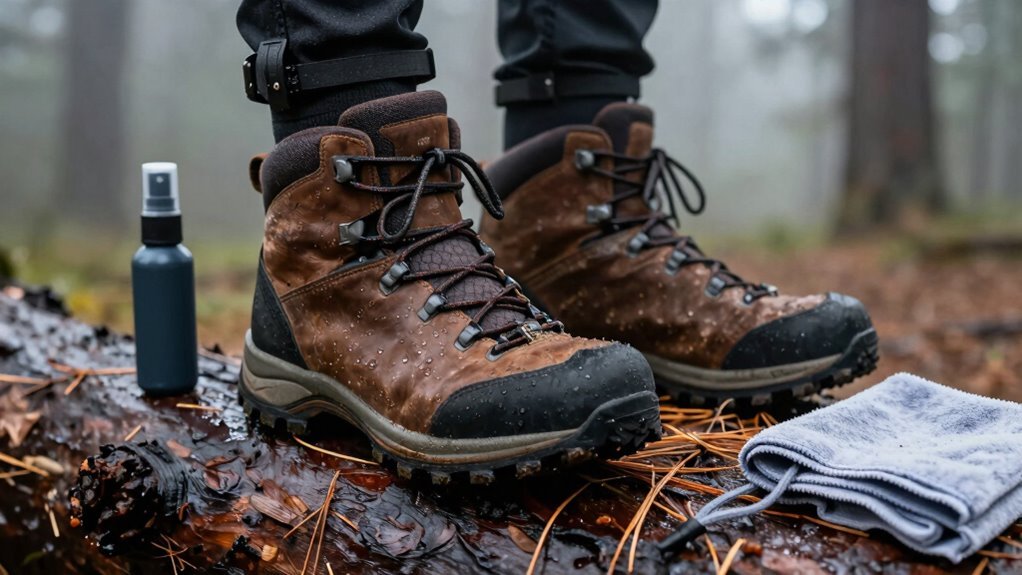
Keep your hiking shoes tough in bad weather by choosing waterproof materials like Gore-Tex or full-grain leather—they laugh at puddles. These materials are essential for maintaining performance and comfort when tackling wet trails, ensuring your hiking shoes stay reliable in harsh conditions.
Clean mud and gunk off after every hike to preserve the material and prevent damage. Reapply waterproofing every few months to maintain a strong moisture barrier.
Let your hiking shoes dry naturally, away from direct heat like radiators, to avoid warping or cracking. Store them in a cool, airy spot to prevent mold and odor buildup.
Rotate pairs when possible so they stay springy and ready for your next adventure. Treat your hiking shoes well, and they’ll carry you through every soggy trail—there’s even more to keep them trail-perfect.
Choose the Right Materials for Wet and Muddy Conditions
Ever wonder why your feet stay dry while trudging through puddles and mud?
That’s no accident—it’s smart material science working for you.
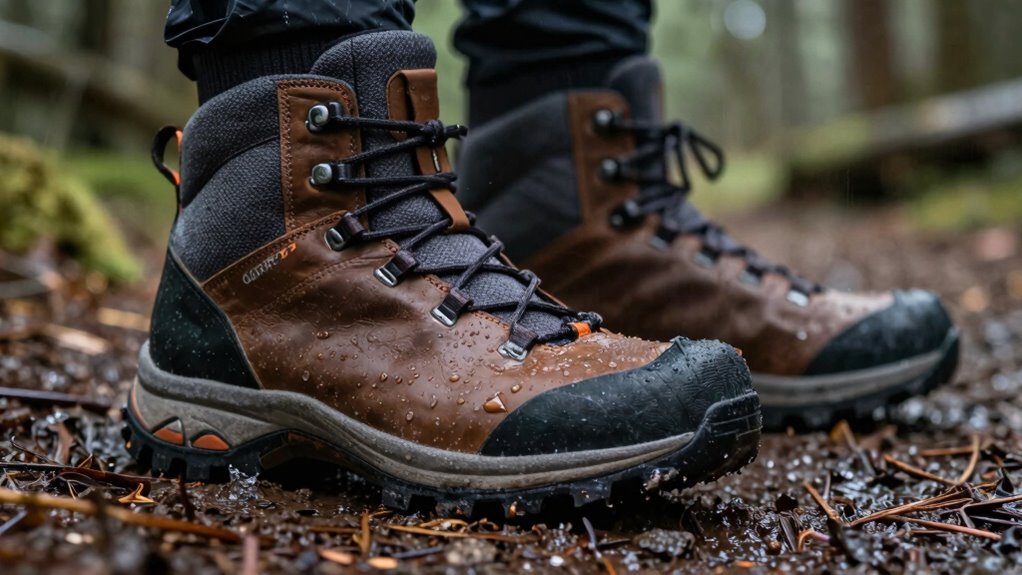
Pick boots with Gore-Tex, eVent, or Sympatex membranes, and you’ve got a waterproof shield that still lets sweat escape.
Prefer something budget-friendly? PU-coated membranes handle humid rain like a champ.
Full-grain leather naturally resists water, especially when treated, while nubuck stays tough on muddy trails.
If you like lighter kicks, synthetics dry fast and break in easy, especially when paired with recycled polyester or nylon mesh.
Don’t forget seam sealing—it plugs weak spots so water can’t sneak in.
Gusseted tongues? They’re the unsung heroes keeping puddles out of your lace zone.
And with Vibram or VertiGrip outsoles, you’ll grip slick ground like a pro.
Choose right, and even a swamp won’t slow you down—now that’s something to leap into with both boots!
anti-clog designs help maintain traction by preventing mud from building up on the outsole.
Clean Your Shoes After Every Hike
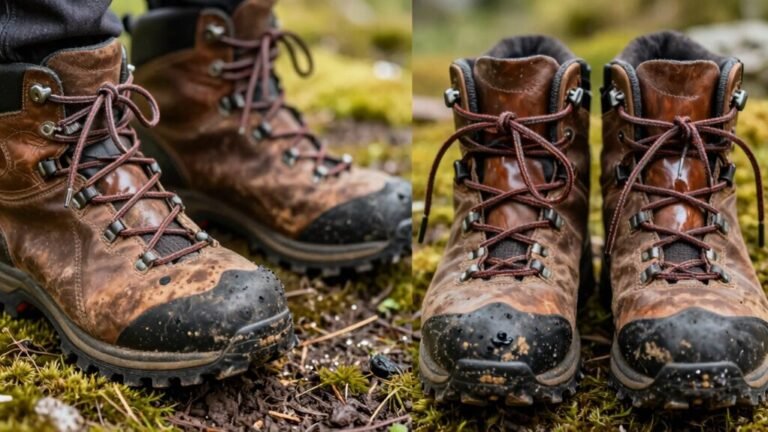
Right after every hike, you’ve gotta kick the habit of letting muddy boots just sit and sulk in the corner—because yes, they’re tired, but so is their ability to protect you if you don’t clean them.
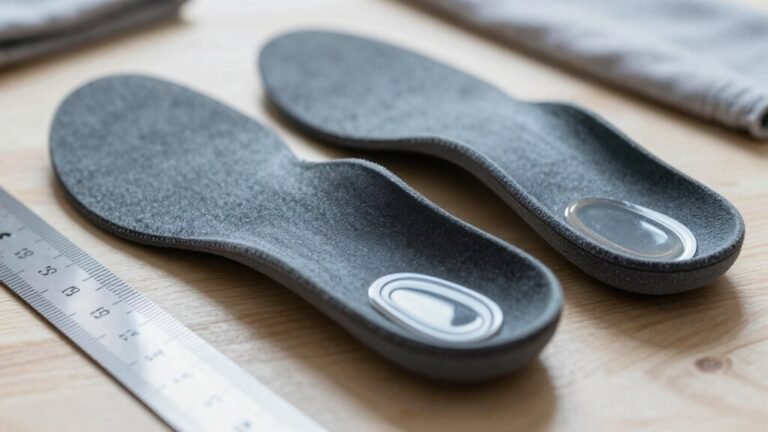
Start by yanking out the laces and insoles so you can scrub behind the scenes where grime loves to hide.
Give your soles a good whack—seriously, knock out stones and packed mud to keep your grip sharp and stop hitchhiking weeds from invading new trails.
Give your shoes a solid rinse with lukewarm water, then massage in some Nikwax or mild soap with a soft brush.
Avoid anything harsh—no dish detergents or solvents—they’ll wreck the waterproof magic.
Clean the insides gently with a sponge, not a brush, and let everything air-dry away from heat.
Using Nikwax Footwear Cleaning Gel ensures a deep clean while preserving the breathable membrane and prepping your shoes for effective re-waterproofing.
Your boots will thank you by lasting way longer—and smelling a whole lot better.
Reapply Waterproofing Treatments Regularly
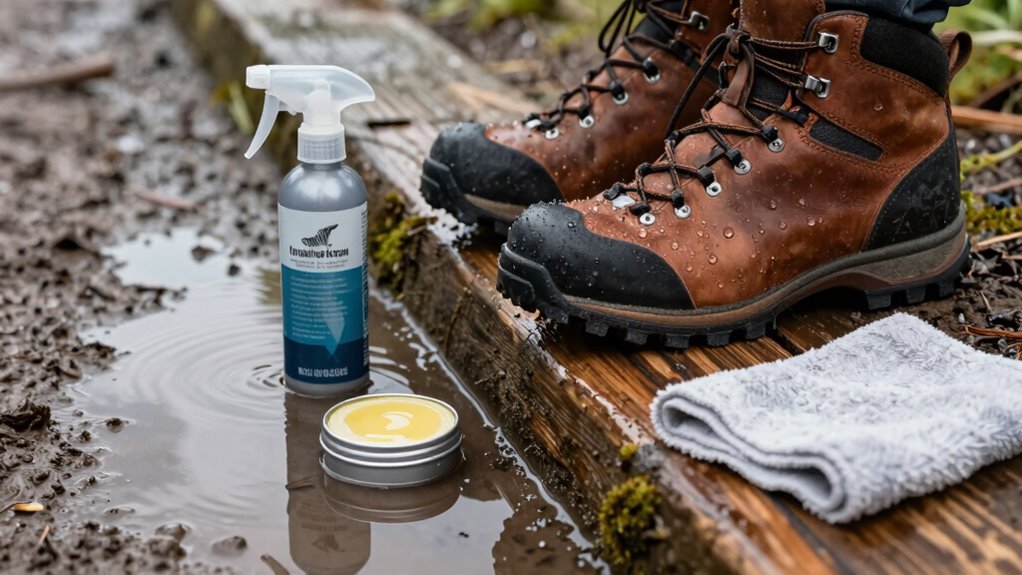
Keeping your boots ready for wet trails means staying on top of waterproofing like a hiker chasing first light on the trail.
Don’t wait until your socks get soggy—by then, it’s too late!
You’ve cleaned your shoes, now lock in that protection before moisture sneaks in.
Think of waterproofing like sunscreen for your boots: regular reapplication keeps them safe from the elements.
- Reapply every 2–3 months, or every few weeks if you’re hitting muddy trails hard.
- Watch for water no longer beading up—when it soaks in, it’s time to treat.
- Use the right product for your material: leather, suede, or synthetic all have needs.
- Apply lightly and often—it works better than slathering it on once a year.
When the outer material starts to darken and feel damp, you’re seeing wetting out, a clear sign the DWR protection has worn off.
Your boots will thank you with dry feet and many more miles.
Store Your Footwear Properly in Cold Weather
You’ve sealed in that waterproofing like a pro, so now let’s make sure your boots stay happy when the thermometer drops.
Clean off mud and shake out snow before tucking them away—your future self will thank you.
Let them dry completely (no mold parties, please!) and stash them in a cool, dry spot with good airflow—think attic, not damp basement.
Keep them out of direct sunlight, unless you want sad, faded footwear fashion.
Use breathable fabric bags or boxes with ventilation so they can breathe easy.
Stuff them loosely with newspaper or tissue to wick moisture and hold their shape—no saggy boots on your watch!
For extra credit, pop a hot water bottle in a sock inside overnight to keep them toasty and flexible.
And no, your sleeping bag’s not just for you—your boots appreciate the warmth too.
Treat them right, and they’ll love you back through every frosty step.
Rotate Shoes to Extend Their Lifespan
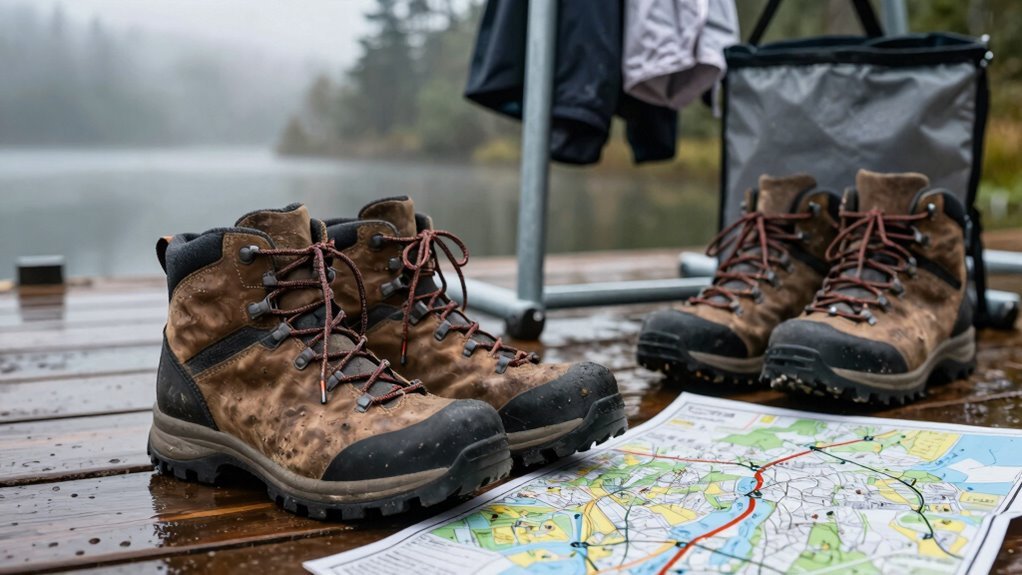
Swap out your shoes like you’d swap stories around a campfire—regularly and with good reason.
Rotating pairs keeps them springy, strong, and ready for mud, snow, or slop.
- Let foam recover: Give midsoles 24–48 hours to bounce back—squished shoes can’t protect your feet.
- Spread the wear: Alternating extends life, so your boots last longer than your worst weather forecast.
- Dodge injuries: Switching cushion levels reduces strain—your knees and tendons will thank you.
- Track mileage: Aim for 300–500 miles per pair, then shift worn ones to light duty.
Think of it like giving your shoes a mini-vacation—rested, refreshed, and raring to go.
Two pairs aren’t a luxury, they’re a smart hiker’s secret weapon.
Keep your kicks happy, and they’ll keep carrying you through the muck for miles to come.
Frequently Asked Questions
Can I Use Regular Soap to Clean Hiking Shoes?
No, you shouldn’t use regular soap on hiking shoes—it’s too harsh and can wreck the waterproof layer, break down adhesives, and leave behind gunk that messes up future treatments.
Instead, grab a specialized cleaner like Nikwax or a mild, neutral soap.
Mix with lukewarm water, scrub gently with a soft brush, then rinse well.
Your shoes will stay happy, healthy, and ready for every muddy, rainy adventure you throw at them—no drama!
How Do I Know if My Shoes Need Re-Waterproofing?
You know it’s time to re-waterproof when water stops beading up and soaks into the fabric instead—like your boots are sipping rain!
If they feel damp inside after puddles or drizzle, that’s a red flag.
Check for stains, dry spots, or cracked leather too.
Oh, and if your shoes look thirsty, they probably are—give ’em a refresh before they start swimming!
Are Leather Hiking Shoes Better for Wet Weather?
Yeah, leather hiking shoes are great for wet weather—you’re in good hands there.
They’re tough, water-resistant, and age beautifully, like a trusty raincoat that gets better with wear.
When paired with Gore-Tex or B- Dry, they keep your feet dry without sweating buckets.
Just clean ‘em and re-waterproof now and then, and they’ll laugh at puddles, mud, and surprise downpours like it’s all part of the adventure.
What’s the Best Way to Dry Wet Hiking Shoes?
You’re gonna love this—90% of hikers dry their boots wrong!
The best way to dry wet hiking shoes?
Stuff ’em with crumpled newspaper, it pulls moisture out fast.
Swap the paper every few hours, loosen the laces, and pop in the insoles separately.
Keep ’em in a breezy spot overnight—no heaters!
Trust me, your socks’ll thank you later.
Who knew paper could be this heroic?
Do Gaiters Help Keep My Shoes Dry in Mud?
Yeah, gaiters totally keep your shoes dry in mud—they’re like bouncers for your boots, kicking mud, rocks, and gunk to the curb.
You’ll stomp through puddles and slog through muck without sloshing around inside.
Plus, your socks stay clean and dry, which means fewer blisters and no more grumbling every mile.
Honestly, once you try them, you’ll wonder how you ever hiked without these little heroes strapped to your ankles.
Conclusion
So, you love trudging through mud like a swamp monster? Fantastic! Just don’t expect your shoes to survive a raindrop unless you actually clean them—wild concept, right? Waterproofing wears off, storage matters, and rotating kicks is smarter than marrying one pair. Treat ’em right, and they’ll keep your feet dry, comfy, and smelling only mildly like old socks. Hiking hero? Start with your soles. They’re basically your tiny, dependable life coaches—with better tread.
References
- https://northsideusa.com/blogs/news/how-to-choose-waterproof-hiking-boots-for-muddy-trails
- https://www.llbean.com/buy/shoes-for-mud
- https://hikemuch.com/hiking-with-wet-feet/
- https://www.farmstore.com/blog/fall-boot-guide-best-western-boots-wet-muddy-conditions
- https://www.rei.com/learn/expert-advice/hiking-boots.html
- https://backpackinglight.com/forums/topic/mud-hiking-backpacking-tips-needed-plus-shoes/
- https://www.outdoorgearlab.com/topics/shoes-and-boots/best-hiking-shoes
- https://obozfootwear.com/en-us/community/how-to-keep-them-clean-and-make-them-last
- https://bearfoottheory.com/how-to-clean-hiking-boots/
- https://www.keenfootwear.com/blogs/keen-blog/shoe-care-tips-hiking-shoes-boots