Troubleshooting Keeping Gear Dry on the Trail
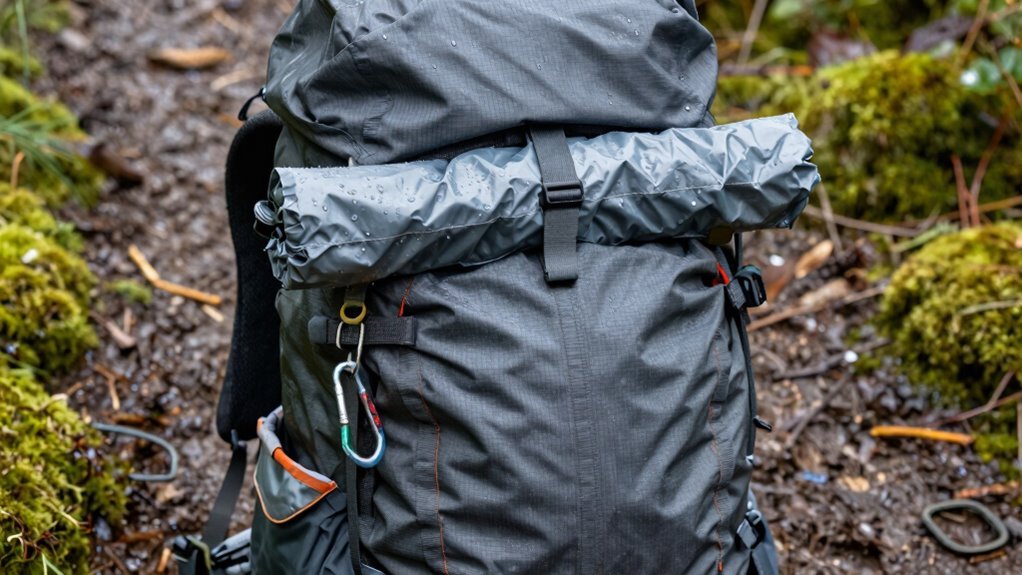
Keeping gear dry on the trail is crucial for a successful hike. Tuck your essentials in a Nylofume sack or Dyneema liner, roll it tightly, and store it deep inside your pack to protect against moisture.
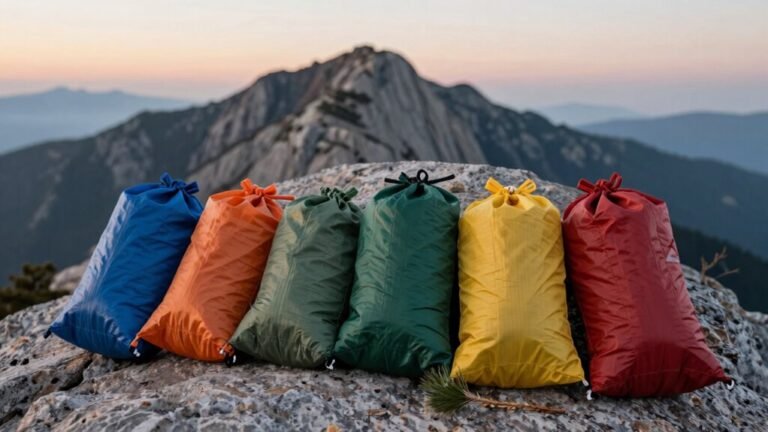
Slip your phone and passport into colorful dry bags—soggy cash is *not* a mood. Seal electronics with nail polish or silica gel like a pro to ensure they stay dry and functional.
Pitch camp in elevated areas under tree cover, with your tarp snug to shed water. This helps keep your shelter and gear dry during rain.
When crossing rivers, place your pack on your head, not your back, to avoid submerging it. This simple switch keeps your gear dry on the trail even when wading through water.
If gear gets soaked, don’t panic—use sun, warm rocks, and a tight clothesline to dry everything quickly. You’ll love the trick with the rainfly…
Choosing the Right Waterproof Pack Liner
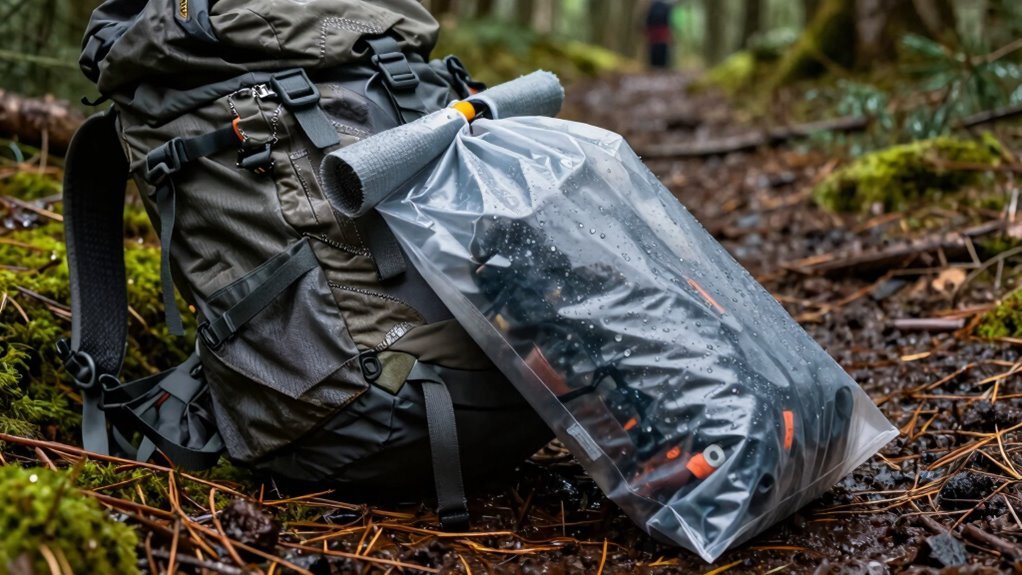
When you’re miles from the trailhead and the sky opens up, you’ll be glad you picked the right pack liner—because soggy socks and damp sleeping bags are nobody’s idea of fun.
You’ve got options: go ultralight with Hyperlite’s DCF sack, tough and trim at just 2.1 oz, or try Nylofume’s magic film—lighter than trash bags, clearer, and actually durable.
Need visibility? Gossamer’s transparent liner lets you spot gear fast, though it’s best for lighter loads.
For big packs up to 70L, Nylofume fits snug and won’t weigh you down—only 0.9 oz!
Roll-top seals add serious protection, especially with PU-coated nylon that laughs at 10,000mm of water pressure.
Sure, Hefty bags save cash, but they won’t survive trail abuse like these pro picks.
Pick smart, stay dry, and keep your tent snacks crispy—because nobody packs a backup marshmallow.
Some pack liners can double as emergency bivy shelters, with Hefty White Trash Compactor Bags being noted for their durability in cold-weather bivouacs.
Sealing Electronics Against Moisture
Keeping your gadgets alive in the wild means outsmarting damp trails, sudden downpours, and sweaty pack interiors—and it starts with smart sealing.
Slap a coat of clear nail polish on circuit boards—it’s quick, cheap, and beats moisture like a pro.
Always clean boards with alcohol before applying any coating to remove flux and prevent long-term corrosion.
Or go pro with PCB spray from Amazon that meets tough industry standards.
For serious protection, dunk sensors in epoxy; just preheat parts first and pour slow to avoid messy floods.
UV-curable soldermask? Shine a flashlight and boom—rock-solid shield.
Toss silica gel in your case (or uncooked rice in a pinch) to suck out humidity like a sponge.
And when disaster strikes, yank the battery, open it up, and let it breathe in a desiccant bath.
Think of it as gadget CPR—your phone will thank you later.
With the right seal, your gear stays drier than a stand-up comedian’s wit.
Packing Strategies to Minimize Water Exposure
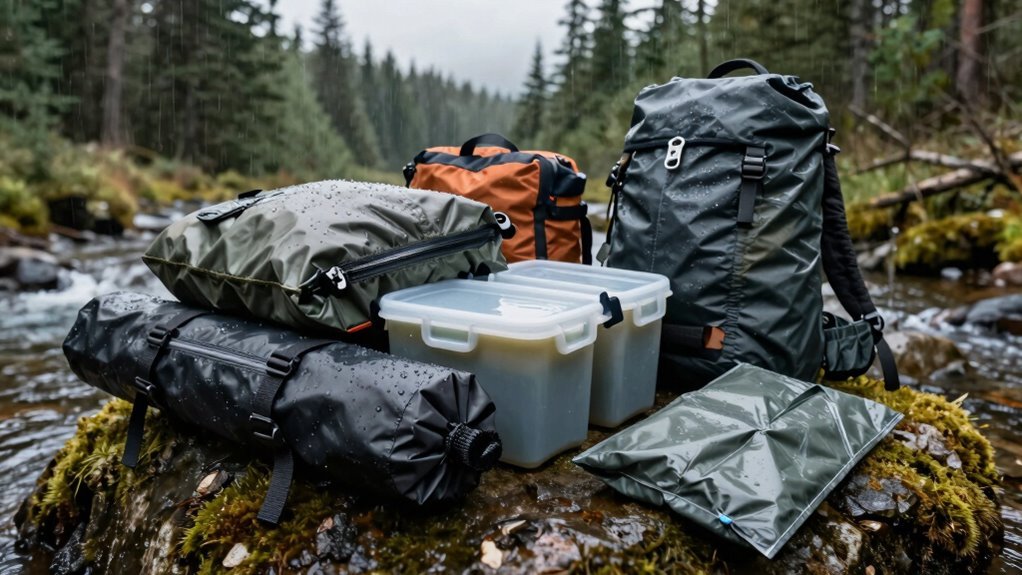
You’ve sealed your electronics like a pro—now let’s make sure the rest of your gear doesn’t turn into a swamp salad halfway through the hike.
Grab a water-resistant Dyneema or Robic Nylon pack, but don’t trust it alone—toss in a liner for backup.
It’s like a raincoat for your stuff: roll it down tight and stash dry gear inside.
Keep your tent or wet items on top of the liner, away from your spare socks (because soggy socks = trail sadness).
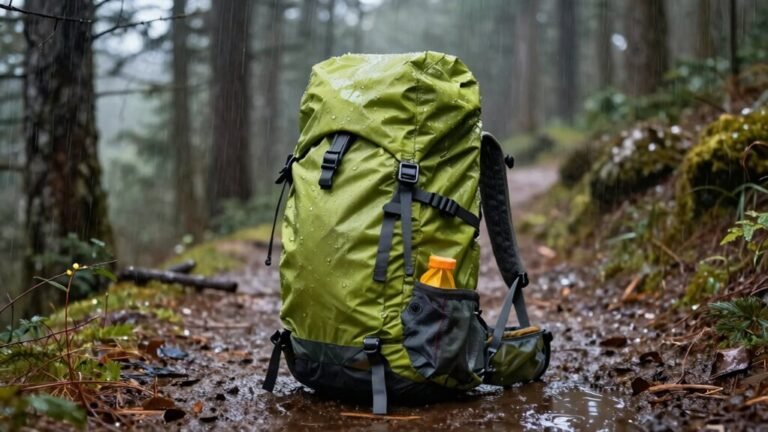
Slap on that rain cover with seams facing down so water drips away, not in.
Tighten loose straps—they’re sneaky rain funnels.
Need extra protection? A quick spritz of Atsko or Nikwax boosts your pack’s armor without killing breathability.
Just check it plays nice with fancy fabrics like GORE-TEX.
Smart packing isn’t magic—just a little prep that keeps your gear dry, your mood high, and your campfire stories happy.
Silicone-based sprays like Atsko Silicone Water Guard offer durable water resistance for non-specialized fabrics.
Using Dry Bags for Critical Gear
Stashing your stuff in dry bags is like giving your gear a VIP pass to stay dry, no matter how wild the weather gets.
You’ve got your phone, cash, and passport?
Toss ’em in a waterproof sack—because soggy memories and ruined ID aren’t part of the adventure.
Electronics, clothes, sleeping bags, and even your snack stash all need their own cozy, dry hideout.
Use colorful dry bags so you’re not fumbling around like a squirrel in a storm.
Need lightweight but tough? Go for TPU or nylon—they laugh in the face of river crossings.
Roll-top seals clamp shut like a clam at bedtime, keeping everything dry even if you take an unexpected swim.
Whether you’re kayaking, hiking in monsoon mode, or just caught in a surprise downpour, your dry bags have your back.
They’re small, smart, and seriously hardworking—kind of like tiny superheroes for your stuff.
Reinforcing Seams and Zippers on Backpacks
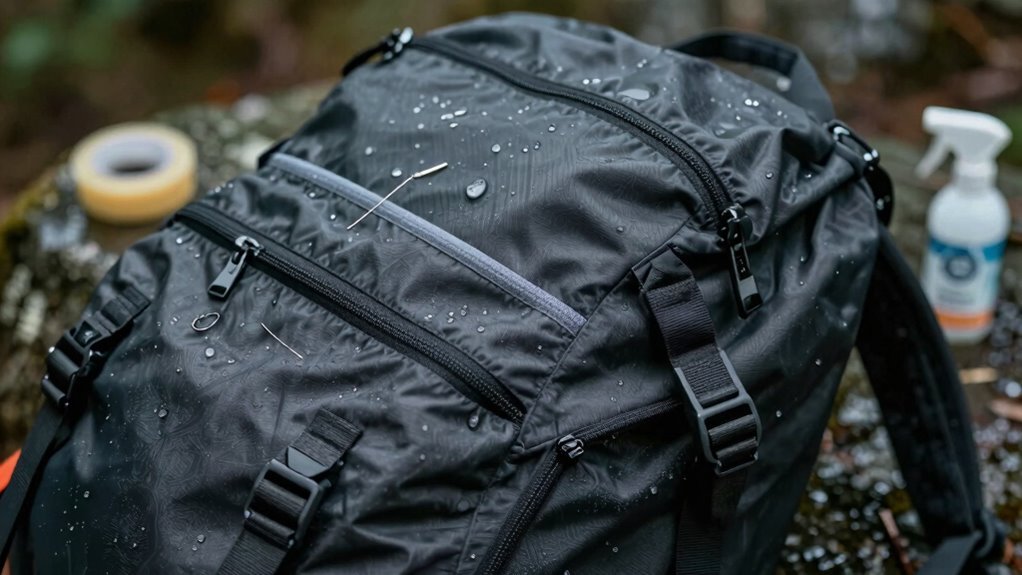
Grab your needle and thread—your backpack’s seams and zippers are begging for a little TLC before your next muddy scramble or river splash.
Seal those silnylon seams with Gear-Aid Seam-Grip+Sil mixed with a touch of paint thinner—it’s like giving your pack a raincoat!
Use flat felled seams or double-stitch stress points with heavy 69 nylon thread and a size 100 needle for muscle where it counts.
Bar tack high-stress zones like strap anchors and zipper ends—those little zigzags are superheroes in disguise.
Reinforce zippers with extra seam allowance and glue the ends; stitches alone just don’t cut it when you’re waist-deep in a river.
Patch small rips with Tenacious Tape or sew on scrap fabric patches (fold the edges, don’t let them party like frayed hems).
Add webbing strips near weak spots and box-stitch buckle attachments.
Boom—your pack’s tougher than a two-dollar steak and ready to laugh in the face of puddles.
Setting Up Camp to Keep Gear Dry
While the rain might be dancing on the leaves above, a smart camp setup keeps your gear cozy and bone-dry—starting with where you plant your tent.
Pick high ground with natural tree cover, avoid gullies, and angle the door away from the wind so rain doesn’t sneak in.
Then, follow these steps to stay dry all night:
- Lay a tarp under your tent, letting it peek out by 6–12 inches all around—like a raincoat hood shielding your floor.
- Stake the tarp tight so water runs off fast, not pools like a tiny backyard pond.
- Pitch your rainfly snug and tight, with seams pointing downward like shingles on a cozy cottage.
- Store gear in waterproof bags, and stash packs on foam pads—because soggy socks are *never* a good trail souvenir.
Boom—dry camp, happy you.
Handling River Crossings Without Soaking Your Pack
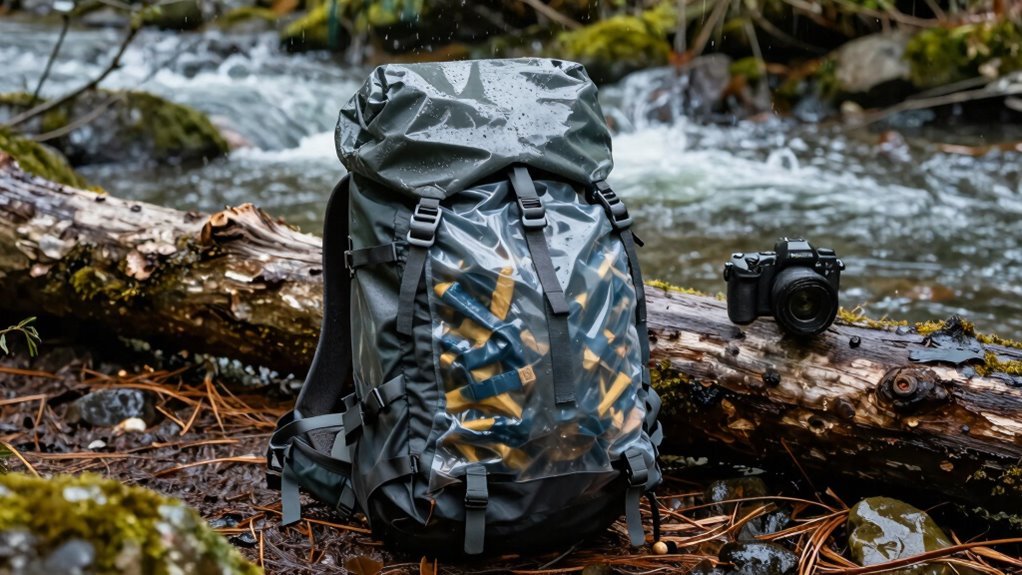
You’ve nailed the perfect camp setup, keeping your gear dry through the night—even when the storm rolls in like an uninvited guest.
Now, rivers. Don’t panic.
Unbuckle those pack straps—you’ll thank yourself if you take a tumble.
Keep boots on; slippery rocks love surprising hikers barefoot.
Face upstream, shuffle sideways like a crab, and use trekking poles (baskets off!) for balance.
Pick slow, shallow spots, not the raging chute that looks like a water park gone wrong.
Angle downstream—fighting the whole current stinks.
Cross with your crew in a triangle, tallest upstream, holding waists or pack straps.
No swimming with your pack!
If needed, float it on your inflated pad like a raft.
Stash fire starters up top for dryness.
And skip the Crocs—nobody trusts flip-flops with a 40-pound load.
Stay smart, stay dry, and cross like a pro.
Drying Gear When Shelter Isn’t Available
When the skies clear and you’ve dodged rain all afternoon, now’s your chance to play drying ninja with your damp gear—no shelter needed.
Turn that soggy mess into sun-catching art with these clever tricks:
- Squeeze clothes like a stress ball, twisting and rubbing to kickstart evaporation with friction heat.
- Hang a paracord clothesline between trees—damp shirt flapping in the breeze? Yes, please.
- Drape socks and base layers over sunbaked rocks or your backpack while hiking—nature’s dryer rack.
- Toss small items clipped to your pack with carabiners so wind zips through them on the move.
Keep things off the damp ground, catch every ray, and let airflow do the heavy lifting.
With a little ingenuity and a dash of trail magic, your gear’ll dry faster than your sense of humor at a bad campfire joke.
Maintaining Waterproof Coatings on Outdoor Gear
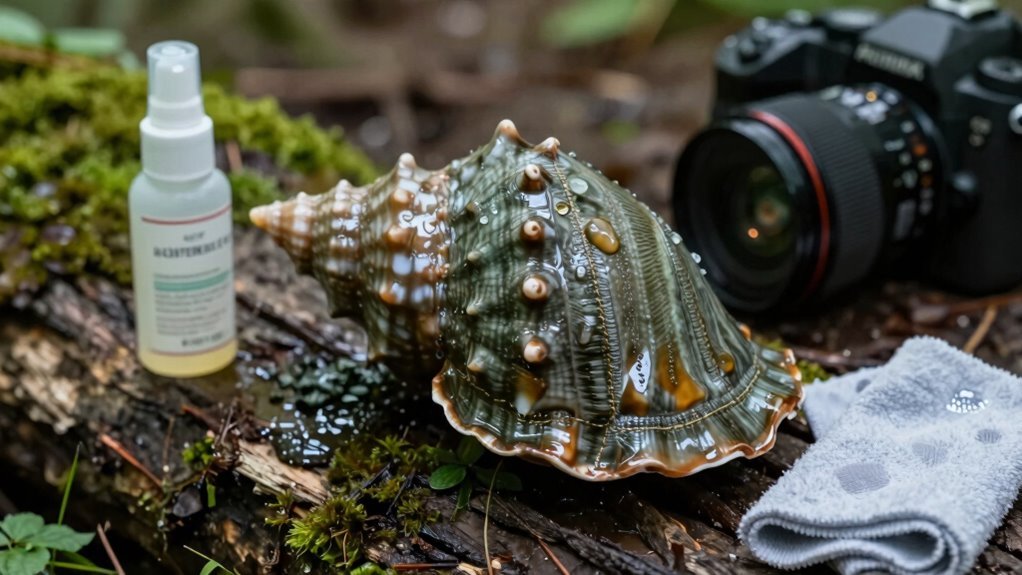
So you’ve outsmarted the drizzle and turned your damp gear into sun-warmed, breeze-dried triumphs—nice work, trail ninja. Now, keep that magic going by maintaining your gear’s waterproof coatings like a pro. If water stops beading up, it’s time to act—clean first with a technical wash to ditch grime and old residue.
For jackets or tents, use Nikwax or Revivex: toss shells in the wash with TX.Direct, or spray high-wear zones like shoulders and hips. Don’t forget your boots—treat ’em yearly.
Heavy use? Plan annual refreshes. Air dry or tumble with heat, but wait up to 48 hours for full cure.
If beads still stall, re-clean, switch methods, or seal seams with Seam Grip. A little love keeps you dry, breathes easy, and ready for the next soggy scramble. Waterproof wisdom? Stay slick, stay dry, stay smiling.
Frequently Asked Questions
How Do I Dry Wet Gear Overnight in Cold Weather?
You tuck small, damp items like socks and gloves right into your sleeping bag—they’ll dry by morning and warm your feet too!
Wear slightly wet clothes if you’re in a synthetic bag; they’ll steal no warmth.
Slide gear under your sleeping pad for gentle heat from below.
Just don’t sneak wet stuff into a down bag—unless you want a flat, soggy mess tomorrow.
Smart, huh?
Can I Use Trash Bags as Pack Liners in a Pinch?
You can use regular trash bags as pack liners in a pinch, but they’re riskier than trash compactor bags.
They tear easier and might let water in when packed tight.
If it’s all you’ve got, double up and avoid sharp gear.
Just don’t expect them to survive a week on rough trails.
Pro tip: skip the scented kind—your socks shouldn’t smell like lavender.
Compactor bags are worth grabbing later—they’re tougher, cheaper, and keep your stuff truly dry.
What’s the Best Way to Store Damp Gear After a Hike?
Think of your gear like a happy campfire—cool it down before tucking it away.
You *never* stuff damp stuff in bins or bags, ’cause that’s a fast track to mold city.
Instead, you hang it up, spread it out, and let it breathe in a dry, covered spot—like your tent in grandma’s garage or sleeping bag on the shower rod.
A damp tent? Set it up at home for a day or two.
You’ve got this!
Are Waterproof Backpacks Worth the Extra Cost?
Yeah, waterproof backpacks are totally worth the extra cost if you’re always caught in downpours or trekking through wild weather.
They keep your gear bone-dry, save you from replacing soaked electronics or clothes, and modern ones won’t weigh you down.
Think of them as insurance—with style.
Sure, they’re pricier, but one soaked backpack disaster?
Priceless.
You’ll hike happier, drier, and way more confident.
How Often Should I Reapply Waterproofing Treatments to Gear?
You should reapply waterproofing when you notice water soaking in instead of beading up—don’t wait for a monsoon to test it!
For most gear, yearly reapplication works if you’re out there often.
Heavy use? Think annual or even biannual touch-ups.
Boots love a boost before big hikes, and rain jackets hate greasy sunscreen.
Keep ’em clean, revive the DWR, and your gear’ll shrug off rain like a duck with swagger.
Conclusion
You’re not just hiking—you’re waging war on water, and every drop fears you. With the right tricks, your gear stays drier than a comedian’s wit at a desert picnic. Pack smart, seal like a sushi master, and laugh as storms surrender. Stay bold, stay dry, and let soggy surprises meet their doom. The trail? Conquered. Wet socks? Never heard of ’em.
References
- https://sectionhiker.com/5-backpack-liners-compared/
- https://www.garagegrowngear.com/blogs/gear-gab/best-pack-liner-for-ultralight-backpacking
- https://www.litesmith.com/nylofume-pack-liner-bags/
- https://vancharlioutdoor.com/blog/how-to-choose-the-llining-material-for-outdoor-backpacks/
- https://www.youtube.com/watch?v=MW_OnVx2yyM
- https://backpackinglight.com/forums/topic/waterproof-pack-liner/
- https://www.youtube.com/watch?v=IRo-NPnakqk
- https://www.rei.com/learn/expert-advice/sleeping-bag-liners.html
- https://thecavepearlproject.org/2023/03/17/waterproofing-your-electronics-project/
- https://www.arkcorporation.us/blogs/news/16800172-how-to-protect-your-electronics-from-water-while-camping