How to Keep Your Pack Dry in Heavy Rain
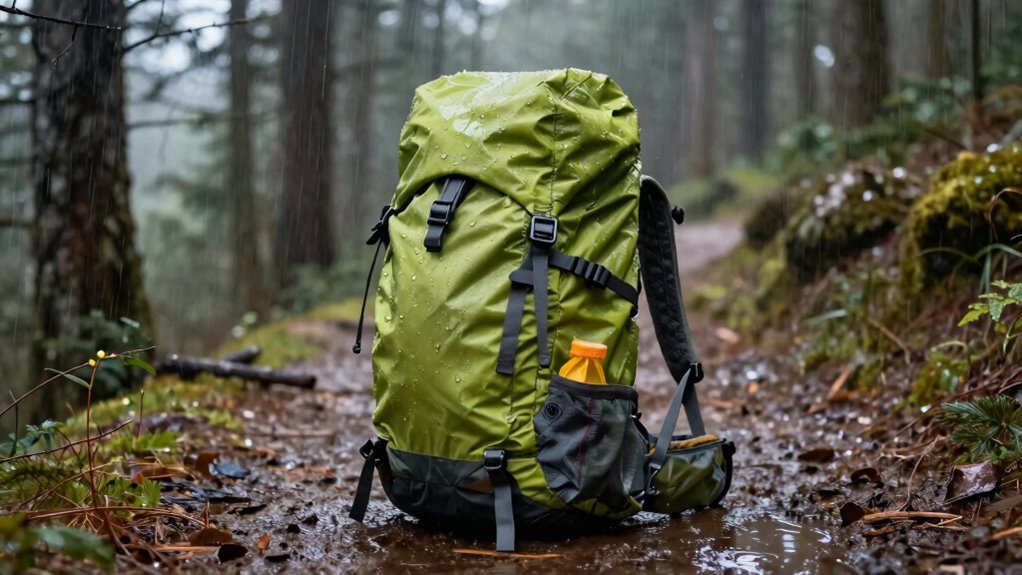
Toss a waterproof pack cover over your bag the second the skies turn gray—this simple step keeps your gear dry in heavy rain. These covers slip on fast and are essential for fending off a sudden downpour.
Slide a liner inside, such as a trash bag or polycro sheet, to add another layer of protection. This double-duty barrier ensures your pack stays dry even during prolonged exposure to heavy rain.
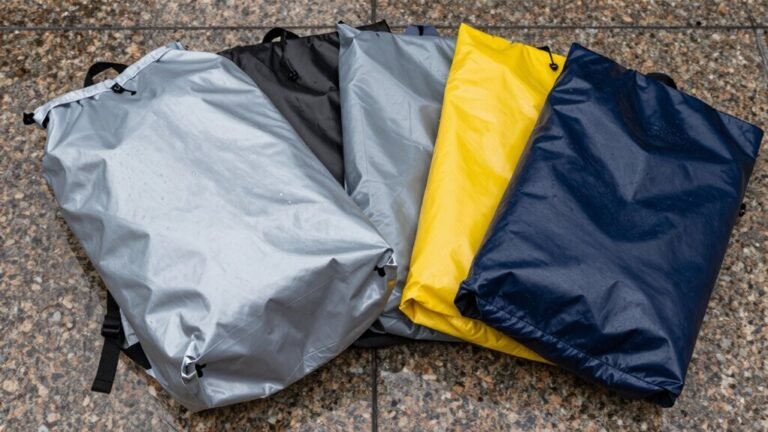
Stash gear in color-coded dry bags and roll them tightly to seal out water like a submarine. This method not only keeps contents dry but also makes organization effortless.
Pack heavy items low and centered for better balance, while keeping essentials in the top compartment. When you stop moving, let everything breathe to prevent condensation buildup inside your pack. And hey, there’s a clever twist most people forget…
Use a Waterproof Pack Cover
If you’ve ever scrambled to zip up your backpack as rain starts pouring, you know how quickly things can go from “I’ve got this” to “why is my sandwich swimming?”
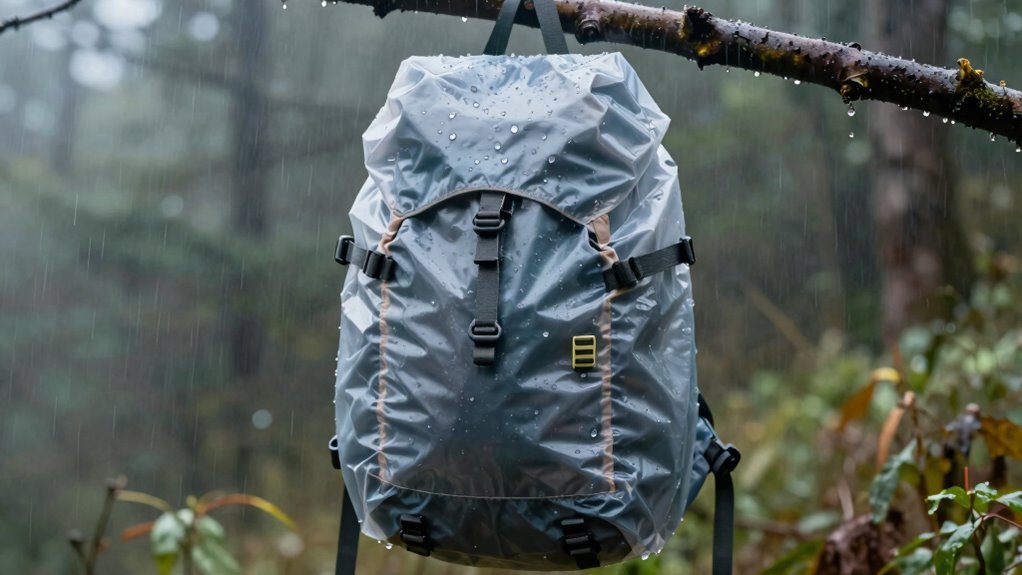
A waterproof pack cover is your pack’s best friend when the skies open up, and slipping one on is as easy as throwing a raincoat over your gear.
You’ve got options—go for coated ripstop polyester or tough tarpaulin if you want durability, or splurge on lightweight X-Pac for tear resistance and eco-friendly EcoPak if you’re planet-conscious.
Just slide it over your pack, snug the elastic cord, and let hook-and-loop straps lock it down tight.
Grommet holes keep water from pooling, while welded seams and DWR finishes fight off downpours.
Sure, it’s not breathable—so foggy gear happens—but it’ll keep your stuff dry, no rewetting required.
Store it in its tiny 9×7-inch pouch and you’re good to go.
Made with recycled plastic bottles, RPET covers offer an eco-conscious choice without sacrificing water resistance.
Rain? You’ve got this.
Line the Interior With a Pack Liner
You’ve zipped on your pack cover and braved the storm like a pro, but what if the rain finds sneaky ways in through seams or damp ground soaks the base?
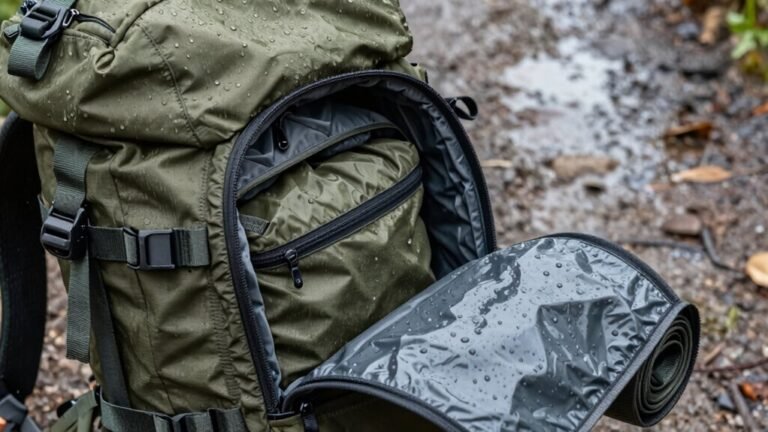
Time to line your pack’s interior with a liner—it’s like giving your gear a waterproof onesie.
Just pop a polycro sheet or trash bag inside before loading up, roll it closed like a burrito, and boom: total protection.
It blocks rain, spills, even river crossings, keeping your down sleeping bag happy and dry.
Lightweight and cheap, it’s a no-brainer backup even if you’ve got a fancy pack.
Sure, it won’t save your external pockets or look stylish, but who cares when your clothes stay dry?
Think of it as insurance—you hope you don’t need it, but you’ll high-five yourself if things get soggy.
Even if your pack soaks up about 11.0 oz of weight from rain, the liner keeps what matters dry.
Easy, smart, and kinda fun.
Now go laugh at the rain.
Choose a Rainproof Backpack Design
How’s your gear holding up when the sky opens up and the downpour hits?
If you’re still wrestling with a soggy backpack, it’s time to level up your design game.
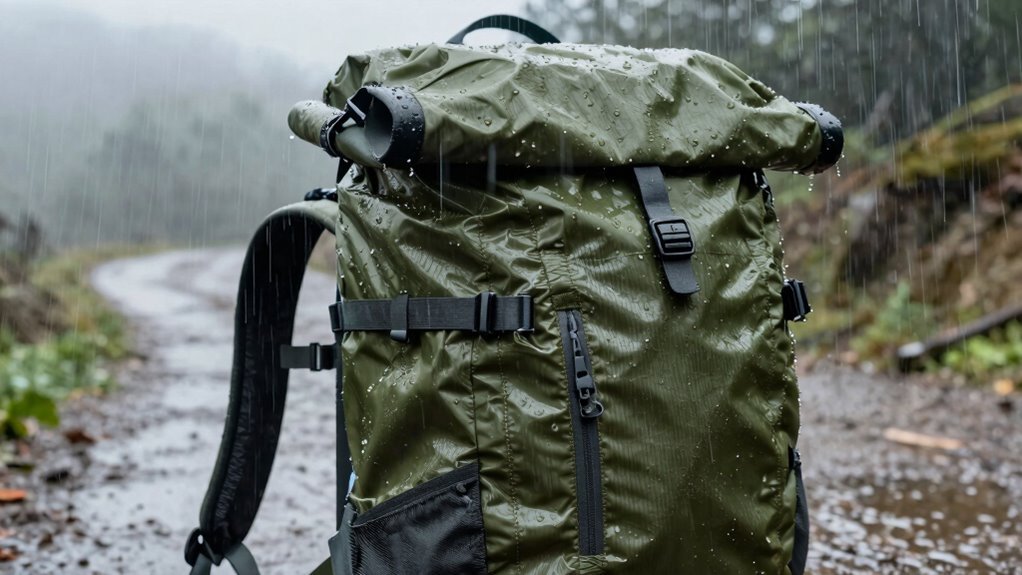
Grab a pack made from waterproof fabrics like PVC-coated nylon or TPU—materials that laugh in the face of rain.
Look for welded seams, not stitched ones; heat-sealed bonds keep water from sneaking in.
A roll-top closure? Yes, please!
It’s like rolling up a burrito that even a monsoon can’t ruin.
Off-center zippers and Aquaguard coatings add extra armor against leaks.
Smart touches like magnetic snaps and zipper guards keep things tight and tidy.
Plus, comfy straps and ventilated backs mean you won’t sweat buckets while staying dry.
Durable zippers ensure long-term performance even in relentless wet conditions.
With a truly rainproof design, your pack doesn’t just survive the storm—it thrives in it.
Who knew staying dry could feel this good?
Seal Your Gear in Dry Bags
When rain starts hammering down and your adventure kicks into survival mode, tossing your gear into a dry bag is like giving your stuff a force field against the elements.
These rugged bags, made from tough PVC or coated nylon, laugh in the face of downpours and rocky trails.
Just seal it up, roll it tight, and boom—your phone, snacks, and dry socks stay safe and cozy.
- Roll the top 3–4 times to lock out water; that IP67 rating’s got your back, even in muddy river splashes.
- Pick the right size (5L for keys, 35L for full kits) and color-code ’em like a gear-savvy ninja.
- Toss it in your pack or clip it outside— thanks to welded seams and floating magic, it’ll survive even if it takes a swim.
They’re tough, they’re clever, and yes, your peanut butter sandwich will thank you.
Pack Items Strategically to Minimize Dampness
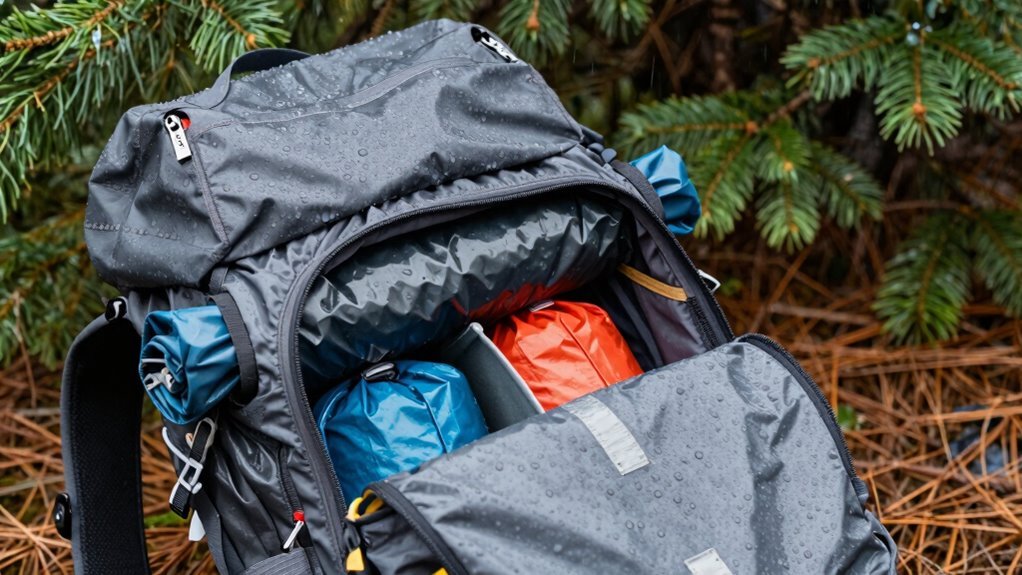
Thinking ahead and packing smart keeps your gear dry and your mood sunny, even when the skies aren’t.
Start by loading heavier items like your food canister at the bottom, close to your spine, so your pack stays balanced and comfy during slippery hikes.
Lighter stuff, like extra layers, goes on top—you’ll thank yourself when you’re fumbling in the rain.
Keep rain gear, snacks, and first aid easy to grab in the top section, because no one wants to play “unpack the whole bag” mid-storm.
Use color-coded and clear Ziplocs so you spot what you need fast, even in a downpour.
Tuck dry clothes in a garbage bag liner—yes, really—and stash valuables in sealed sacks.
Avoid cotton like the plague; it soaks up water faster than a sponge.
Pro tip: save non-essentials for bedtime packing.
Stay dry, stay happy, and let the rain do its worst.
Dry Out Your Pack After Exposure
Shaking off the rain like a soggy dog after a bath, you’ll want to get your pack drying the second you hit camp—because nobody likes sleeping with a damp sleeping bag or putting on clammy clothes the next morning.
Don’t just drop it and walk away—your gear’s still counting on you!
- *Hang your pack high* by its haul loop on a branch or rock to keep it off wet ground and under cover
- *Dump everything out* and spread it wide—sleeping bag, clothes, tent—let ‘em breathe like they’ve been holding their breath all day
- *Use mesh pockets and lines* to air out wet gear, especially that soggy tent, while cooking dinner adds cozy shelter heat
A few smart moves now mean dry starts tomorrow—because misery loves damp company, but your pack doesn’t have to join the club.
Frequently Asked Questions
How Do I Clean a Wet Backpack After Rain?
You pull off the rain cover, unzip everything, and shake out gunk—dirt, leaves, whatever’s lurking.
You wipe down the outside with a damp cloth, then hang it upside down in a breezy spot, away from sunburned fabric (yes, backpacks hate that too).
Once dry, you give it a happy little spritz of water-repellent spray—because soggy packs are sad packs.
Can I Use Trash Bags as Pack Liners?
Yes, you can absolutely use trash bags as pack liners—they’re a budget superhero hiding in plain sight!
Grab heavy-duty or compactor bags, slide one inside your pack first, and dump your gear in.
They’ll keep your stuff drier than a desert in a downpour, weigh next to nothing, and cost less than your morning coffee.
Toss in a second for backup—because hey, even superheroes wear seatbelts.
Does a Waterproof Cover Work in Pouring Rain?
Yeah, a waterproof cover works great in pouring rain—just don’t expect magic.
It’ll shield your pack’s main compartment like a slick raincoat, keeping most water out, especially if it’s seam-taped and made of polyester or tough nylon.
But rain still sneaks in through straps and seams, so your pack might sponge up moisture there.
Think of the cover as your first line of defense, not a force field—pair it with a liner and you’re golden.
Are Dry Bags Safe for Electronics?
No, dry bags aren’t totally safe for electronics—roll-top seals can leak when submerged, and condensation builds up inside, even if no water gets in.
But hey, don’t panic!
Double-bag your gadgets for backup protection, toss in a silica pack to fight moisture, or better yet, grab a TPU waterproof case.
They’re like fortresses for your phone—truly submersible, fun to use, and way more reliable when the downpour hits.
How Tight Should a Pack Cover Fit?
It should fit snug like your favorite hoodie—tight enough to hug every curve but not strangle your pack.
You want zero gaps where rain sneaks in, so cinch that drawstring tight at the base and let elastic edges do their magic.
Loose? It’ll flap in the wind like a sail.
Get it right, and you’ll laugh at downpours while your gear stays cozy and dry inside.
Conclusion
You’ve braved the downpour and kept your pack dry—nice work! Sure, some might say, “Why bother? A little rain never hurt anyone,” but soggy socks and damp sleeping bags tell a different story. With a cover, liner, and smart packing, you’re golden. Dry gear means happier hikes, plus, admit it: wringing out a waterlogged backpack is *not* the adventure you signed up for. Stay sharp, stay dry, and keep smiling through the storm!
References
- https://www.dawnjoint.com/comprehensive-guide-waterproof-bag-materials/
- https://backpackies.com/blog/waterproof-backpack-guide
- https://www.imprintnow.com/guides/how-to-waterproof-a-backpack-for-outdoor-usage
- https://www.paccana.com/featured/backpack-fabrics
- https://www.rothco.com/product/rothco-waterproof-backpack-cover
- https://dutchwaregear.com/product-category/fabrics/fabric-type/waterproof/
- https://lonepeakpacks.com/blogs/post/stay-dry-everything-you-need-to-know-about-rain-covers-for-your-outdoor-gear
- https://backpackinglight.com/forums/topic/49136/
- https://www.ultralightnerd.com/index.php/2025/03/20/pack-liners-vs-rain-covers/
- https://www.gossamergear.com/blogs/our-blog/pack-liners-vs-pack-covers