How to Keep Keeping Gear Dry Working in Bad Weather
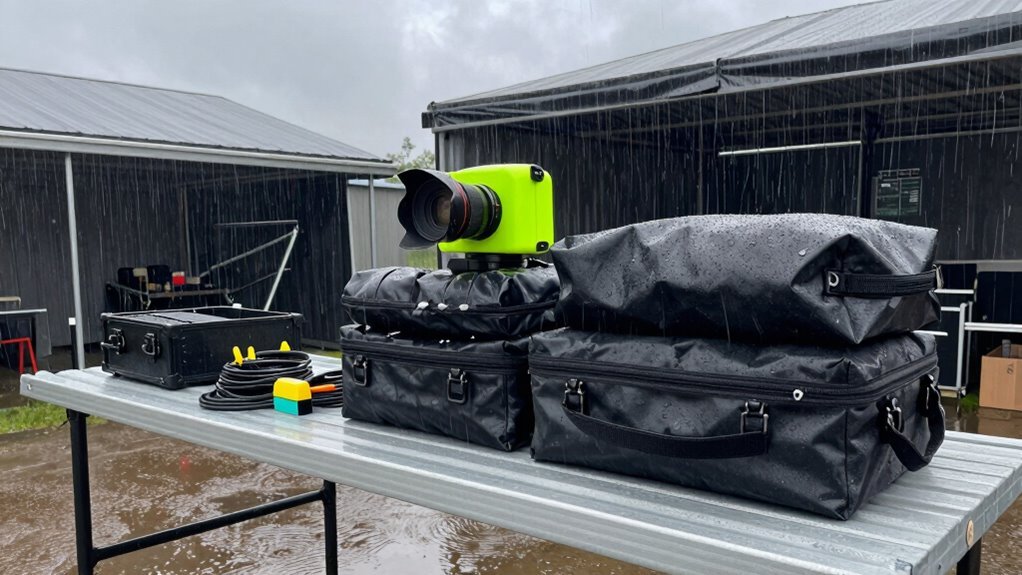
To keep your gear dry working in bad weather, stash it in waterproof dry sacks with roll-top seals. These reliable containers float and won’t fail when the sky opens up.
Slide electronics into rugged cases with silicone gaskets to protect against moisture. Pack desiccants to absorb lingering humidity—they work like tiny water ninjas.
Use heavy-duty tarps to elevate your gear off soggy ground and prevent water exposure. This simple setup adds a critical layer of protection.
Wear quick-dry clothes that resist rain and maintain comfort. Layer smart to stay dry and let your gear live to fight another muddy day.
Choose Waterproof Bags and Dry Sacks
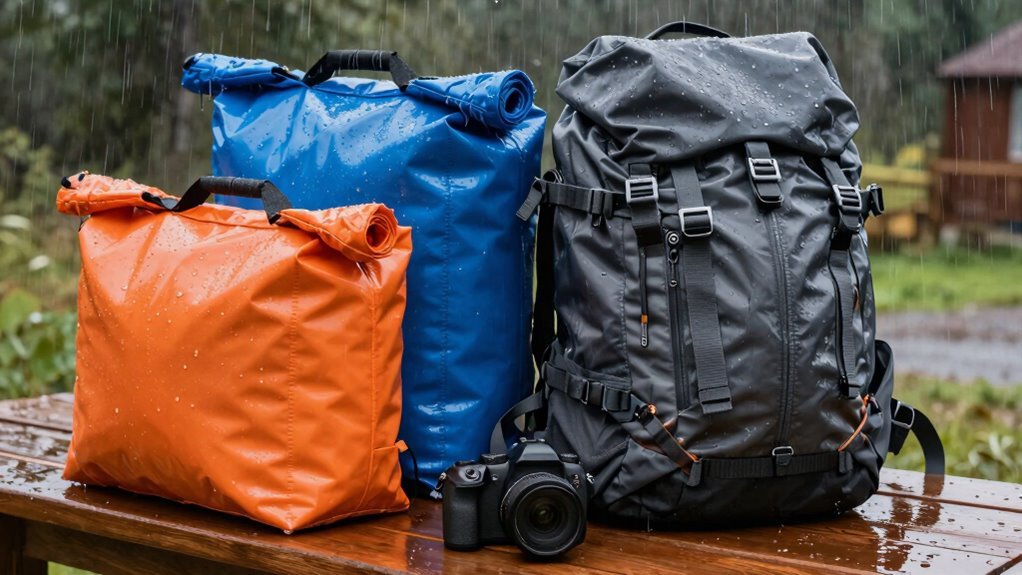
How do you keep your gear bone-dry when the skies open up and your pack takes on splash after splash? You grab waterproof bags and dry sacks, of course!
These aren’t just fancy ziplocks—they’re built tough with materials like 420D ripstop nylon laminated to TPU film, shrugging off downpours with a 10,000mm hydrostatic head.
You roll the top a few times, clip the buckle, and boom—your phone, map, or favorite socks stay dry even in a kayak spill.
They come in sizes from 1 to 35 liters, so whether you’re stashing a snack or a sleeping bag, there’s a fit.
And get this—they weigh as little as 0.9 oz!
Plus, they float, resist tears, and laugh at abrasion.
You’ll love how easy they’re to pack, patch, and toss around.
Honestly, not using one is like bringing a marshmallow to a rainstorm—adorable, but doomed.
They feature 40-denier silnyl fabric, making them ultralight yet highly effective at keeping gear dry.
Use Heavy-Duty Tarps and Shelter Systems
When the sky turns angry and rain starts pelting down like popcorn from a busted ceiling, you’ll want a fortress that won’t quit—and that’s where heavy-duty tarps and shelter systems shine.
Grab a 14×14 mesh, 3-ply tarp with 20 mil thickness; it’s tough enough to laugh at storms.
Made from vinyl, HDPE, or silicone-coated polyester, these tarps shrug off UV rays, tears, and even mildew like champs.
With aluminum grommets every 18 inches and reinforced corners, they stay put even in a wrestling match with the wind.
Need a custom fit? They come in sizes from 5×7 to 100×100 feet—perfect for boats, trucks, or that DIY backyard shelter.
Arctic flexibility means they won’t crack in the cold, and UV coatings keep them strong under sunburns.
Whether you’re camping, building, or just playing defense against the weather, these tarps don’t just cover—they conquer.
These tarps feature a waterproof design that ensures your gear stays completely dry even in the heaviest downpours.
Stay dry, stay smart, and let the storm throw its worst.
Seal Electronics in Waterproof Cases
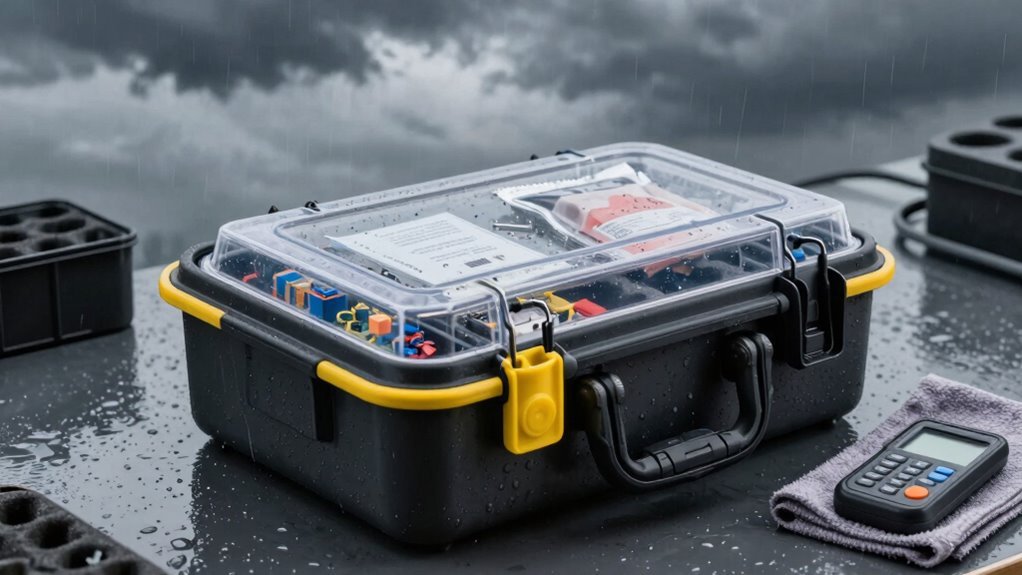
Locking your gadgets in waterproof cases is like giving them a bulletproof raincoat—stylish, tough, and ready for anything Mother Nature throws their way.
You’ll want cases with IP67 or IP68 ratings—we laugh at rain, dunking, and even full submersion.
Some survive 60 meters deep, like GoPro’s tough little home!
Look for ones made from rugged polycarbonate or ABS; they’re light, strong, and sun-proof thanks to UV-resistant ASA.
A solid silicone gasket and screw-down lid keep water out, while GORE-TEX valves balance pressure so your case won’t implode on a mountain trip.
Inside, pick custom foam or padded dividers to stop gear from bouncing like popcorn.
These cases handle floods, snow, and clumsy drops—perfect for boats, storms, or that accidental lake picnic.
With NEMA 6P protection, even Mother Nature can’t sneak in.
Your phone, radio, or tablet stays dry, happy, and working hard—just like you.
They’re built with an IP67 rating, ensuring complete protection against dust and temporary immersion in water.
Invest in Weather-Resistant Tool Storage
You’ve sealed your gadgets in armor that laughs at downpours—now let’s give your tools the same VIP treatment.
Grab a weather-resistant tool box, and stop worrying when storms roll in.
These bad boys, like ATB’s top-mount drawers or RC’s vertical lockers, laugh at rain with sealed seams and automotive-grade gaskets.
Aluminum or steel, they’re tough, rust-resistant, and built to last.
Need to move fast? Job Boxes have forklift slots—because who’s got time to wrestle gear in the mud?
Portable champs like the Tool Vault XL or Montezuma’s pro boxes keep tools dry and organized, wherever you roll.
Even Klein’s stackable MODbox laughs off drops and downpours.
Metal, plastic, or hybrid, they all say one thing: water stays out.
Lock ‘em up—thanks to WEATHER GUARD and Snap-on’s fortress-style security—and sleep easy knowing your tools are safe, dry, and ready to rock.
Layer Moisture Barriers in Your Pack
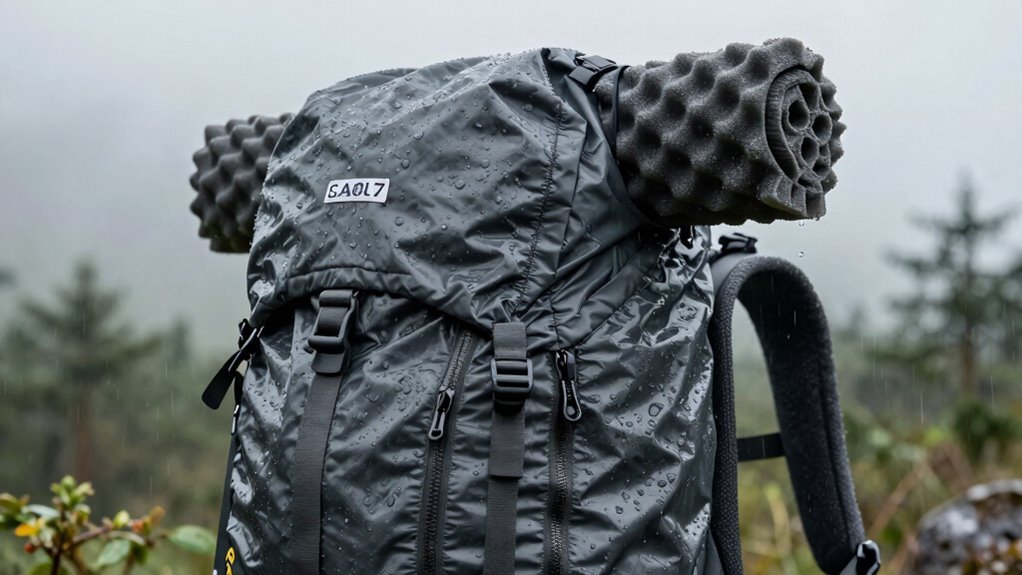
Staying dry isn’t just about dodging puddles—it’s about outsmarting moisture at every level.
Layer moisture barriers in your pack like a pro, and your gear stays fresh no matter how wet it gets outside.
Think of your pack as a fortress, with each barrier blocking sneaky dampness like a bouncer at a door.
You’ve got options to keep things bone-dry and working hard for you:
- Slide gear into VBL-lined pockets—they repel sweat and rain like a superhero’s cape.
- Wrap electronics in aluminized barrier bags—puncture-proof, waterproof, and slick as a spaceship.
- Use welded-seam dry sacks—no stitch holes means no surprise puddles in your pack.
- Convert VBL limbs into sausage-style storage—stuff ‘em full, cinch with elastic, and laugh at leaks.
Your stuff stays dry, you stay happy—moisture doesn’t stand a chance.
Dry Gear Regularly During Extended Work
Hanging your gear out to dry is like giving your soaked socks a standing ovation after a hard day in the rain—finally, they get to breathe!
Set up a quick clothesline and let the wind do its magic—nature’s hair dryer.
Use a fan or portable line on your balcony to keep air moving, especially when skies are gray.
Spread out your tent, sleeping bag, boots, and pack with space between them so dampness doesn’t throw a surprise party.
Tightly bunched gear traps moisture, and mold hates a well-ventilated space as much as you do.
In bad weather, pop everything in a garage or under cover with a drying rack.
For faster results, try a GearDryer or PODAB cabinet—they blast air right where it’s needed and can dry your full kit in under an hour.
Drying fully keeps stink and damage away, so your gear stays happy, healthy, and ready for the next downpour.
Pack Items in Individual Waterproof Wraps
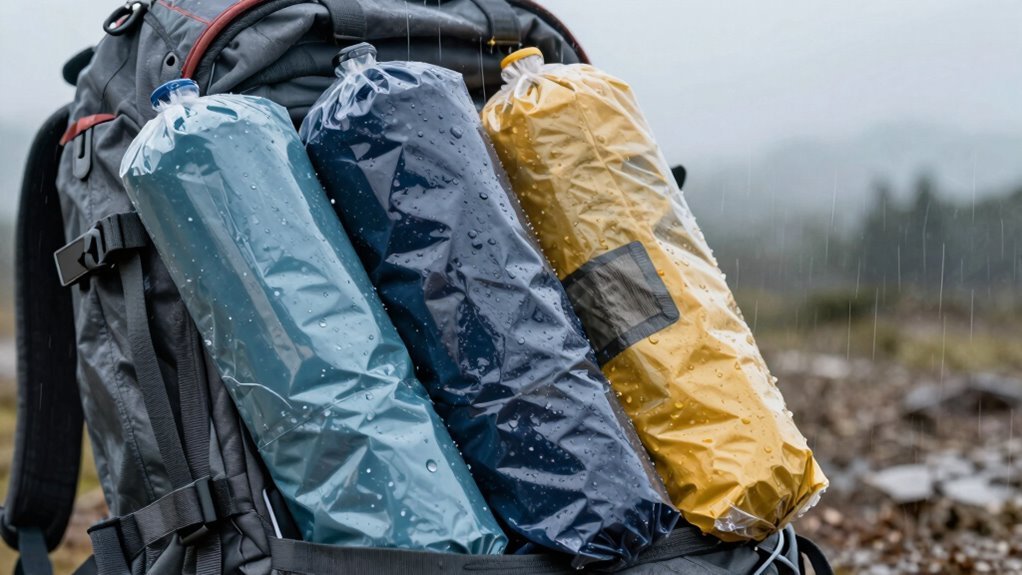
Once your gear’s had a chance to air out and breathe, it’s time to think about keeping it dry before the next downpour hits.
Because nobody enjoys unwrapping a soggy sleeping bag or fishing a waterlogged phone out of their pack. Wrap each item like it’s a precious burrito in its own waterproof casing, and you’ll stay stress-free when the skies open up. Here’s how to nail it:
- Slide electronics into hard-shell cases with snug rubber seals—they laugh at rain and even survive accidental swims.
- Stuff clothes and sleeping bags into roll-top dry bags, squeeze out extra air, and roll tight like a burrito at happy hour.
- Tuck cables and first aid kits into small waterproof wraps so they don’t turn into tangled sad noodles.
- Pop sensitive gear into anti-static bags inside foam-lined cases—you’re basically giving them a moisture-proof hug.
Elevate Gear Off Wet Ground Surfaces
Even if the rain’s coming down like it’s got a grudge, you can still keep your gear high and dry—because letting your precious supplies soak in a murky puddle is basically camping’s version of leaving your phone in a toilet.
Pick high ground or a slight slope, and avoid dips where water pools like a mini lake.
Lay a tarp *under* your tent—but keep it smaller than the footprint so rain doesn’t collect on the edges.
Dig a shallow trench around your site to channel water away, piling the dirt into a tiny berm to block splashes.
Use cots or platforms to lift gear off the ground, or go full squirrel and hang everything in a hammock setup.
When you suspend your sleep and stash your stuff under a tarp, puddles won’t stand a chance.
Elevation isn’t just smart—it’s your ticket to dry socks and peace of mind.
Use Desiccants and Moisture Absorbers
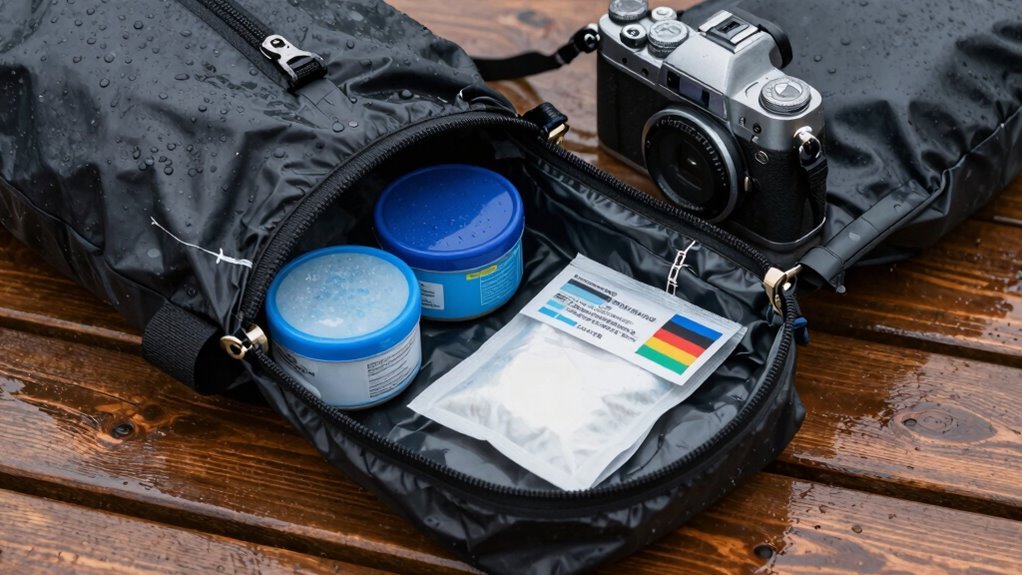
How’s your gear holding up when the air feels like a damp sponge?
Don’t let moisture win—fight back with desiccants and moisture absorbers.
These tiny warriors soak up humidity before it ruins your stuff.
Think of them as bouncers for your backpack, kicking out damp before it crashes the party.
- Toss calcium chloride pouches in your gear bin—they’ll drink twice their weight in water vapor.
- Slide molecular sieve packets into camera cases to guard delicate electronics like a humidity ninja.
- Stash silica gel in your spice stash or dry food bags to keep everything crisp and critter-free.
- Pop a desiccant in your shoe box and banish soggy socks forever—your feet will thank you.
Just seal them in airtight spaces.
Avoid leaving them out too long, and boom—your gear stays dry, happy, and ready for action.
Wear Quick-Dry, Water-Resistant Clothing
Dressing smart for the weather starts with slipping into gear that fights back against the wet.
You want quick-dry clothes—they ditch 90% of water weight in under 30 minutes and keep you light, not soggy.
These fabrics pull sweat away from your skin and blast it into the air, thanks to sneaky tech like hydrophilic insides and water-hating outer layers.
Think polyester, nylon, or smart blends with spandex for stretch—plus cool weaves that let air flow.
They’re tough, won’t sag when wet, and laugh at wrinkles and shrinking.
Pair them with water-resistant outer layers—hello, Gore-Tex!—that block rain but let vapor escape.
With low RET values, they breathe easy even when it’s steamy out.
You stay dry, comfy, and smell better (no swamp-sock syndrome).
Just toss them in the wash—low maintenance and adventure-ready.
Rain or sweat, your clothes have your back.
Who knew staying dry could feel this easy?
Frequently Asked Questions
How Do I Dry Soaked Gear Without Electricity?
You squeeze out soaked gear by hand, then wrap it in dry towels—add a paper towel layer for extra moisture pull.
Plop it on a rack with space around each piece so air moves freely.
Hang it near a sunny window, balcony, or steamy shower pipe for warmth.
Use gear ties to secure items outside, even in light wind.
Sun and breeze do the rest—no plug needed!
Can I Use Trash Bags as Waterproof Liners?
Yes, you can use trash bags as waterproof liners—they’re a savvy, simple solution!
Slide your stuff inside, seal it tight, and splash-proof protection kicks in.
They’re light, cheap, and cheerful, shielding gear like a champ.
Sure, they’re not indestructible, but a quick duct tape touch-up fixes tears.
Think of them as your pack’s personal poncho—silly, sturdy, and seriously smart when showers strike.
What’s the Best Way to Store Wet Gear Overnight?
You hang your wet gear in a well-ventilated spot, like a breezy porch or garage, and let it breathe overnight.
Keep it off the floor, fluffed up, with zippers and pockets wide open so air sneaks into every nook.
Skip the dryer—it’s a waterproof coating killer!
If it smells like damp dog, add a fan for backup.
And hey, your gear’s tough, but even superheroes need to dry out before their next mission!
Are Waterproof Sprays Effective for Tool Protection?
Yes, you can trust waterproof sprays to shield your tools—they block water, resist grime, and fight rust like a pro.
You spray, you protect, you conquer the elements.
They’re tough on trouble but easy on your gear.
Just reapply now and then, especially after washing.
Think of it as a raincoat for your wrenches—because nobody wants a soggy screwdriver.
Stay dry, stay sharp, and let the storms come.
How Often Should I Replace Desiccant Packs?
You should replace silica gel packs every 3 to 5 reuses—you’ll know it’s time when they feel dusty or the beads won’t change color after baking.
Clay desiccants? Toss ’em after one go; they’re not team players.
Watch for squishy packets, discoloration, or melted seams—hello, damp disaster!
If your gear’s playing moisture marco-polo, swap those packs fast.
Trust us, your tools will thank you with a dry, happy dance.
Conclusion
You might think all this prep is overkill, but just one soaked toolkit ruins your day. Trust us—waterproof bags, dry sacks, and a trusty tarp make life easier. Seal gadgets tight, stash desiccants in your pack, and keep gear off muddy ground. Oh, and quick-dry clothes? Game-changer. Stay dry, stay sharp, and laugh when the rain starts—you’re ready for it. After all, nobody respects a soggy hero.
References
- https://superiorpaddling.com/product-review-outdoor-research-ultralight-dry-sacks/
- https://www.acrartex.com/products/acr-dry-bag-lightweight-waterproof-buoyant-compact-for-outdoor-adventures/
- https://www.granitegear.com/drysacks.html
- https://seatosummit.com/blogs/adventure-tips/choosing-the-correct-dry-bag
- https://sectionhiker.com/outdoor-products-roll-top-dry-sacks-review/
- https://www.rei.com/c/dry-bags
- https://www.outdoorgearlab.com/topics/paddling/best-dry-bag
- https://outdoorproducts.com/products/all-purpose-dry-sacks
- https://a1tarps.com/tarps/poly-tarps/super-heavy-duty-poly-tarps/
- https://china-tarp.com/heavy-duty-tarps/