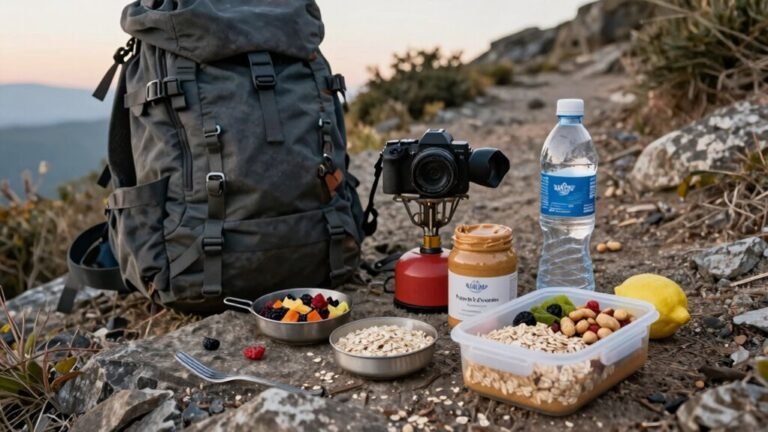
Beginner Guide to Packing a Backpack
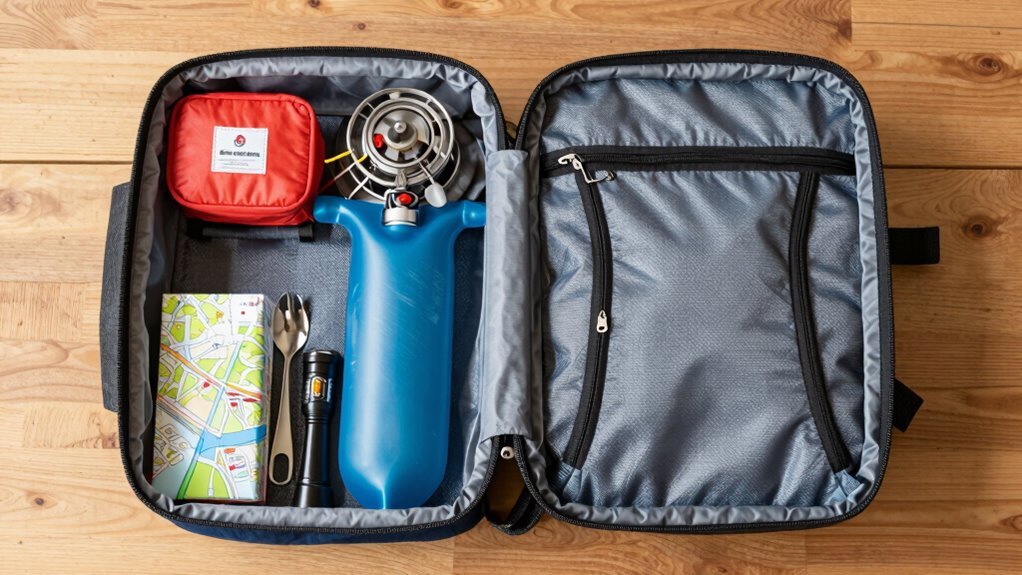
Pack light and smart when packing a backpack—start with sturdy shoes, quick-dry clothes, and a rain jacket, even if the sky’s blue. Keep your pack under 20% of your body weight to stay comfortable on the trail.
Load heavy gear close to your back to maintain balance and improve posture. This helps distribute weight evenly and reduces strain during long hikes.
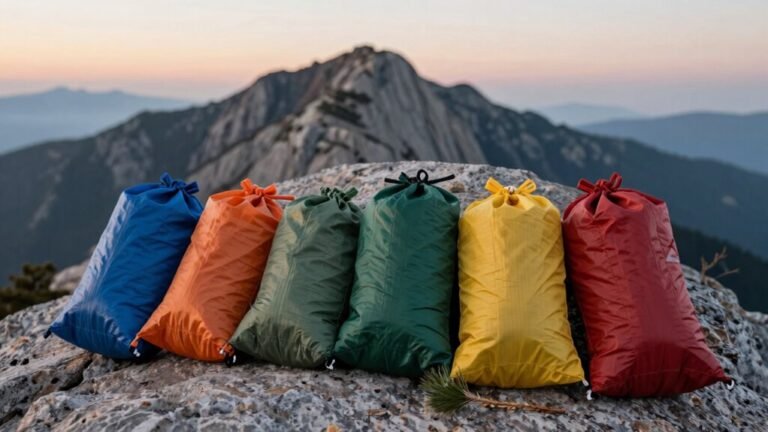
Use pockets and color-coded sacks to stay organized inside your backpack. This makes it easy to find essentials without unpacking everything.
Stash snacks, map, and phone in accessible spots for quick reach. These items should be within easy reach to keep energy up and navigation simple.
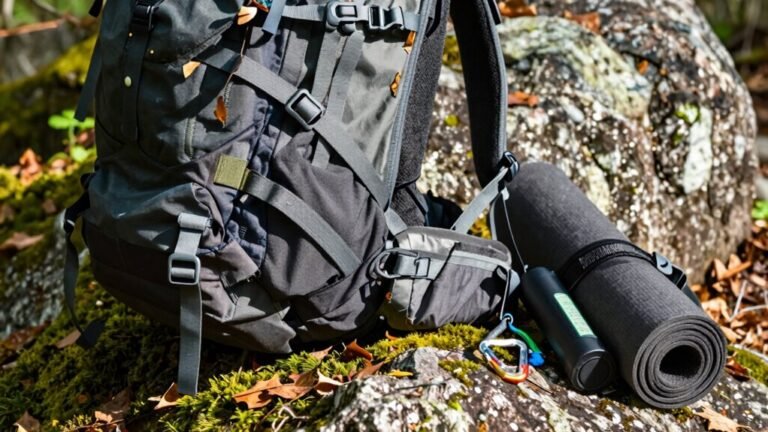
Tie on trekking poles and pop a headlamp in your hip belt—because yes, you *might* hike like a squirrel, but now you’ll hike ready. There’s a slick system to make every trail feel like home.
Essential Gear Checklist for Day Hikes
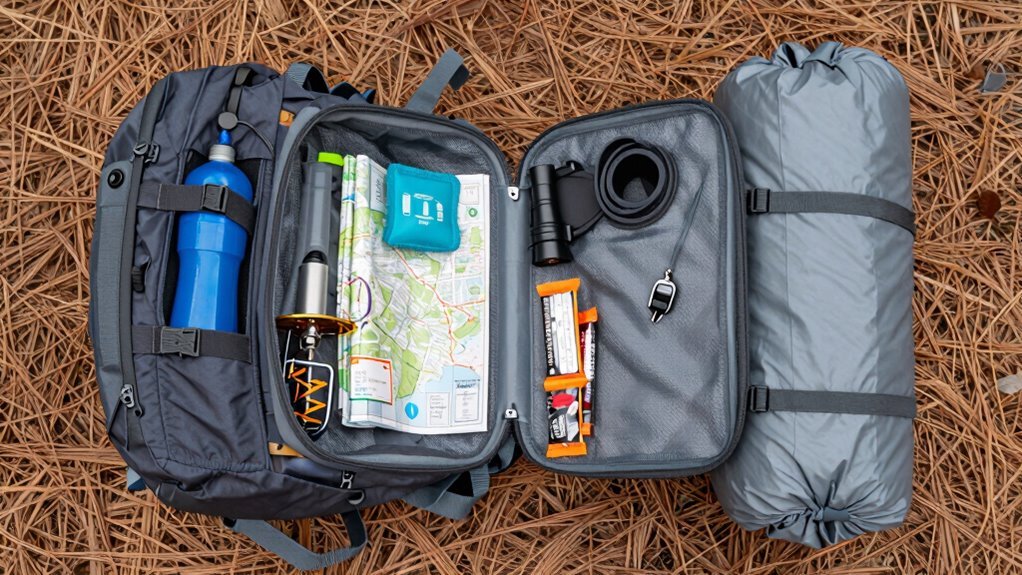
You’re gonna want to start with the basics: your feet and clothes.
Good hiking shoes or boots keep your feet dry and supported, while wool or synthetic socks fight blisters and stay warm, even when damp.
Choose pants, shorts, or base layers that move with you and dry fast—no soggy jeans!
Toss in a rain jacket or poncho for surprise showers, and don’t forget a sun shirt, hat, or neck gaiter to dodge UV rays.
Your pack should be a comfy 20–30 liters, with space for water (2–3 liters, at least!), a filter or treatment, and a liner to keep everything dry.
Bring a map, compass, or GPS so you don’t play “lost hiker.”
Pack a headlamp, whistle, and first aid kit—because “oops” happens.
And hey, sunscreen, snacks, and toilet paper? Non-negotiable.
Trust me, your future muddy, hungry, sunburned self will thank you.
The Salomon X Ultra 5 GTX offers well-rounded performance for a variety of trails.
How to Distribute Weight for Maximum Comfort
Now that you’ve got your gear list sorted and everything ready to go, it’s time to think about how you’re packing it all in.
Keep your pack weight under 20% of your body—so if you weigh 150 pounds, stick to 30 pounds or less.
Start lighter if you’re new; your back will thank you later.
Load the heaviest stuff—like food and your tent—close to your spine, right between your shoulder blades.
This keeps the weight centered and makes climbing hills way easier.
Tuck your sleeping bag at the bottom since it’s light and you won’t need it midday.
Top pockets are prime real estate for snacks and rain gear—hello, convenience!
Snug the hip belt around your hips (not your waist!) so it carries 60–80% of the weight.
Use those load-lifter straps to form a 45-degree angle and say goodbye to saggy-pack syndrome.
For internal frame packs, always position heavy items near the back panel to maintain balance and stability, as centered weight distribution does.
Best Practices for Organizing Your Pack
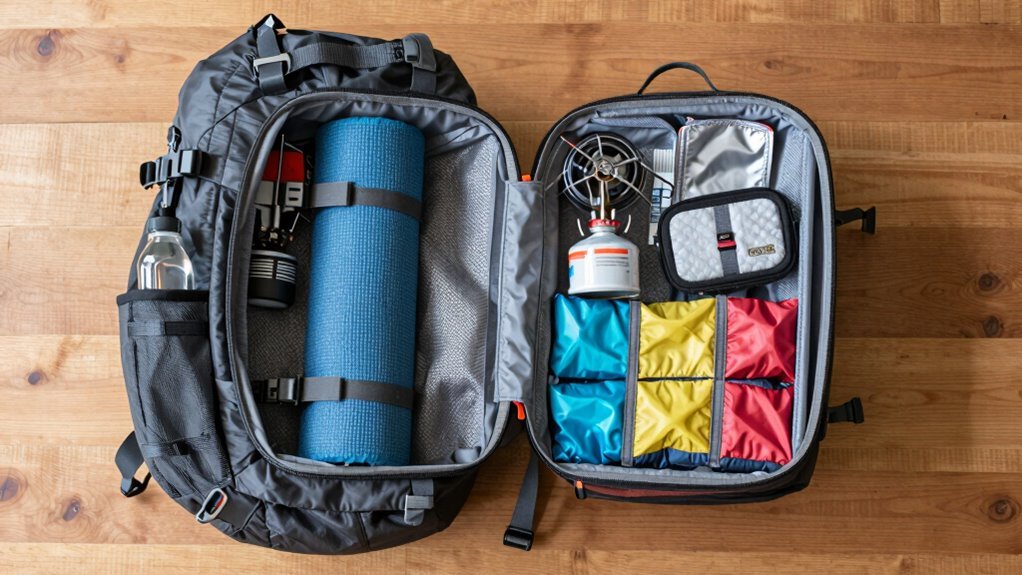
Where do your trail mix and phone end up when you’re rummaging one-handed on the trail? Lost at the bottom, right?
Don’t let your pack become a black hole.
Start by picking a backpack that fits your trip—too big, and stuff disappears; too small, and it’s a wrestling match.
Go for one with pockets: side ones for water, a top zip for quick-grab stuff, and a tech sleeve for gadgets.
Lay everything out the night before—trust us, that extra sweater isn’t “just in case,” it’s dead weight.
Use packing cubes for clothes and pouches for odds and ends like keys or charger cables.
Keep essentials in the same spot every time so muscle memory kicks in.
Shake it! Literally—give your packed bag a jiggle to catch loose items.
A little prep means less fumbling and more snacking.
Smart packing? It’s the trail magic you can actually control.
The Knack Pack’s expandable compartment lets you carry more without switching bags.
Tips for Packing Clothing and Rain Gear
Even if the sky looks clear, toss in that rain jacket—weather’s got a sneaky way of ruining plans when you least expect it.
Pack your rain pants too, or go ultralight with a rain kilt; either way, stay dry from waist to knee.
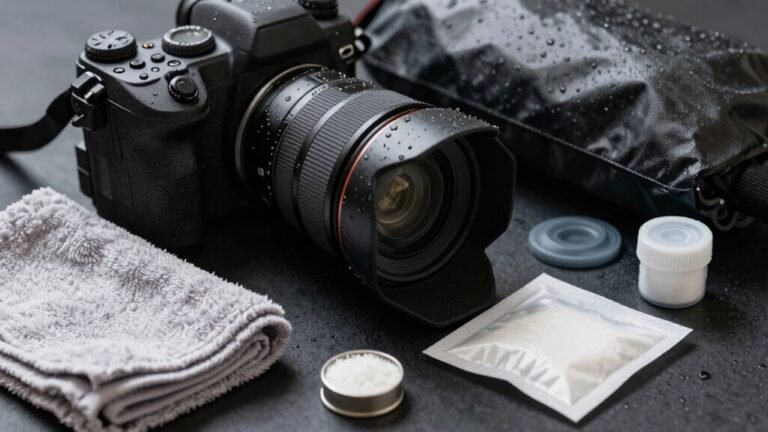
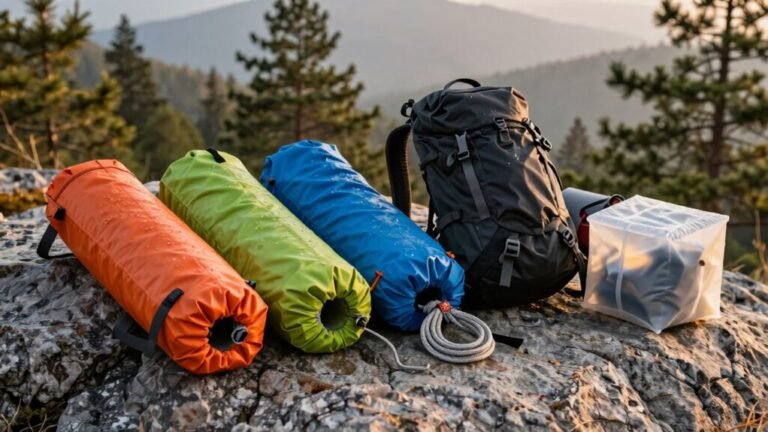
Use dry bags or trash-compactor liners inside your pack to block moisture—think of them as bunkers for your gear.
Avoid cotton like the plague—it turns into a cold, soggy mess.
Instead, roll with wool, polyester, or nylon clothes that dry fast and wick sweat.
Layer smart: quick-dry base, insulating mid, and rain shell on top.
Stash dry clothes for camp—they’ll save your sleep (and sanity).
Don’t forget spare socks and undies; soggy feet mean blisters, and nobody likes grumpy hiker feet.
Toss in a mini towel, check your rainwear’s DWR, and maybe pack a rain hat with a brim—because soggy glasses ruin the view.
Stay dry, stay warm, and keep smiling!
Securing Items for Easy Trail Access
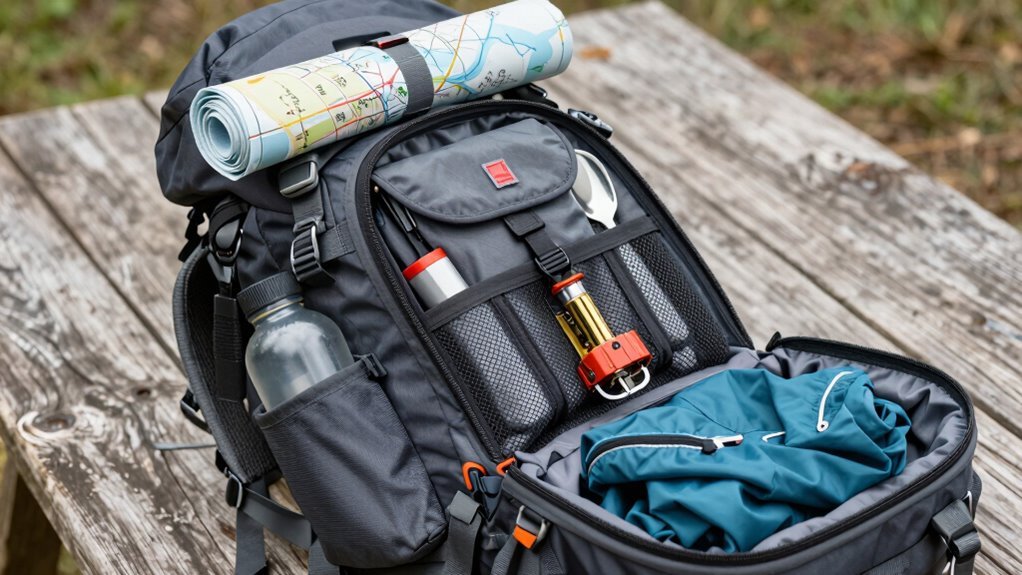
You’ve got your rain jacket tucked in and your socks dry, but what good’s all that prep if you’re fumbling through your pack like a raccoon in a campsite every time you need a snack or your map?
Save yourself the hassle—keep snacks, your phone, and the map in top or outer pockets for quick grabs.
Slide rain gear and first aid into side or front pouches so you don’t unpack mid-storm.
Attach trekking poles externally and stash a headlamp or water bottle in your hip belt—genius, right?
Use front pockets for daily food rations so you’re not digging for dinner.
Organize with color-coded stuff sacks or ditty bags, and trust the zone system: heavy stuff in the middle, essentials up top.
When everything has its place, you’re not just packing smart—you’re trail-ready, snack-happy, and totally unbothered.
Frequently Asked Questions
How Heavy Should My Backpack Be for a Day Hike?
Your pack should weigh no more than 10% of your body weight—so if you’re 70kg, keep it under 7kg.
That’s about the weight of a big bag of sugar, not a toddler!
Stick to essentials: water, snacks, layers, and a first-aid kit.
Lighter loads keep you nimble and happy on the trail.
You’ll hike faster, tire less, and have way more fun dodging puddles like a pro.
Can I Pack Food at the Bottom of My Bag?
No, you shouldn’t pack food at the bottom of your bag—it’s prime real estate for bulky, soft gear like sleeping bags.
Keep food higher up, especially meals you’ll need first, so you’re not digging around like a raccoon at midnight.
Place heavier food near your back and between your shoulders for better balance.
Save the bottom for items you won’t need until camp.
Your back will thank you!
Should I Pack My Water Bladder Before or After Other Items?
We should pack your water bladder before stuffing in other gear—80% of hikers who do it this way avoid the “hydration headache” later.
Slipping it in first keeps things smooth, secure, and leak-free.
You’ll laugh less at trailside faceplants when your hose isn’t tangled.
Get that reservoir settled, route the tube, then load up.
Trust me, future-you will be way happier at the water source.
Is It Okay to Hang a Jacket Outside My Backpack?
Yeah, you can totally hang a jacket outside your backpack—it’s quick and keeps it handy when the weather turns.
Just zip it up and clip it to the outside loops or straps.
It saves space inside and lets you grab it fast.
Just don’t overdo it, or you’ll look like a gear piñata.
And make sure it’s secured—nobody wants their favorite jacket snagging on a tree branch mid-hike!
Do I Need to Waterproof Each Item Individually?
No, you don’t need to waterproof each item like wrapping tacos in tin foil—your backpack’s defense is your first shield.
Use a dry bag or liner inside, spritz the outer fabric with a quick spray-on treatment, and seam seal any sneaky entry points.
Toss in a trash compactor bag for laughs and extra luck.
Combine methods, and you’re basically a weather-proof wizard—ready for surprise storms without turning your socks into sponges.
Conclusion
You’ve packed smart, balanced your load, and tucked essentials within reach—now the trail’s practically calling your name! Think of your backpack as a trusty sidekick, snug on your shoulders like a high-five that lasts all day. With everything in its place, you’re ready to crush those miles, dodge surprise puddles, and laugh at rogue pinecones. Adventure’s waiting, and hey, if nature gives you rain? Your jacket’s right there—just like Mom always said!
References
- https://www.switchbacktravel.com/info/day-hiking-checklist
- https://www.seeingsam.com/top-essentials-for-a-day-hike/
- https://www.the-hungry-hiker.com/2025/07/07/what-to-bring-for-a-day-hike-how-i-pack-my-pack-2025-guide/
- https://appalachiantrail.org/experience/hike-the-trail/day-hiking-backpacking/day-hike-checklist/
- https://www.thepackablelife.com/hiking/gear/what-to-bring-on-a-hike
- https://bearfoottheory.com/day-hiking-essentials/
- https://travelwithwes.com/post/beginners-day-hike-checklist-guide
- https://www.nps.gov/articles/10essentials.htm
- https://lighthikinggear.com/blogs/hiking/the-ultimate-guide-to-backpack-weight-distribution
- https://www.sunnysports.com/blog/essential-guide-to-backpack-weight-distribution-for-effortless-hike/