Quick Tips for Keeping Gear Dry
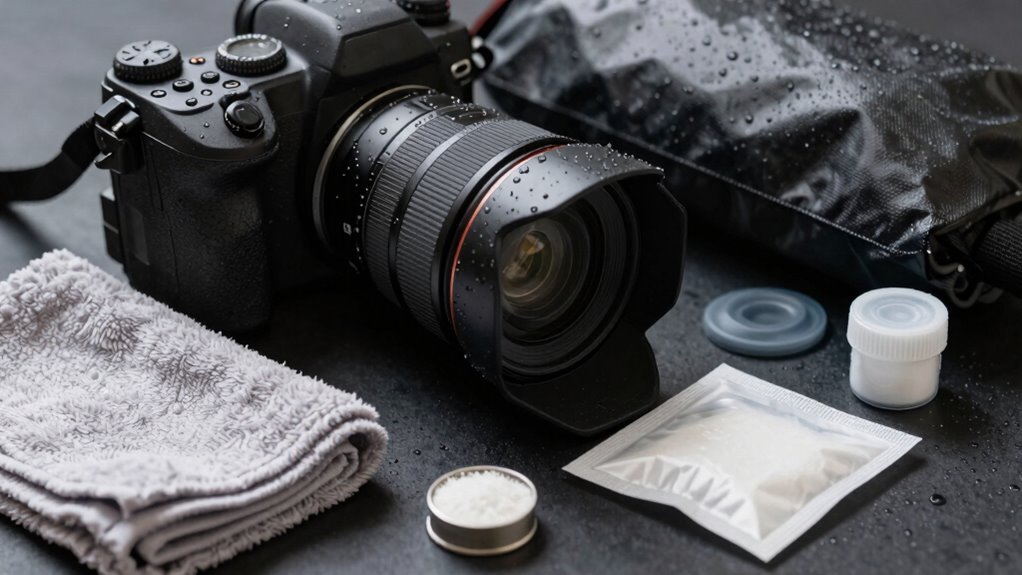
Keep your gear dry by stashing essentials in heavy-duty PVC bags and sealing electronics in waterproof pouches—think of it as a burrito of safety. These simple steps ensure your valuable items stay protected from moisture.
Line your pack with a trash bag for a budget-friendly moisture shield and use dry sacks for added protection. Pack smart by avoiding overstuffing, which can compromise seal integrity.
Toss dry clothes at the bottom of your pack to create a barrier against dampness. Keep your gear dry by organizing items strategically within sealed compartments.
Pop on a waterproof cover or use a built-in rain hood when storms roll in. This extra layer helps keep your gear dry even in heavy downpours.
Dry gear fast at camp by airing it out in the wind—wind beats sun every time. Oh, and that soggy sock saga? You’re about to rewrite it.
Use Heavy-Duty Plastic Bags for Key Items
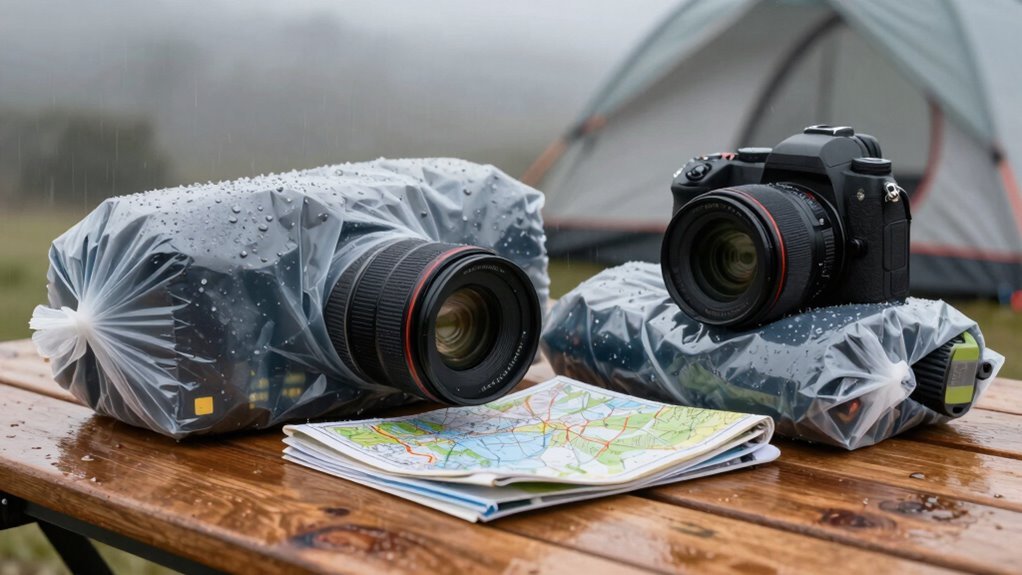
One smart move? Grab heavy-duty plastic bags to protect your must-stay-dry essentials.
You know that favorite hoodie, spare socks, or your phone?
Toss ’em in a rugged, waterproof bag and breathe easy when rain pours or waves splash.
These aren’t flimsy grocery bags—think 500D PVC-coated polyester or tough 180 GSM polypropylene, built to laugh in the face of leaks.
With sealed seams and roll-top closures, water doesn’t stand a chance.
Need quick access? Zipper designs wrap around like a security hug.
Whether you’re kayaking through rapids or camping in a downpour, your gear stays dry and happy.
Plus, they’re super light, pack tight, and come in fun sizes—10L to 30L—so there’s one for every adventure.
Heavy-duty construction ensures long-lasting use even in the toughest conditions.
Trust us, your future sog-free self will high-five you.
Stay dry, stay smart, and keep smiling—mud’s optional, misery isn’t.
Pack a Waterproof Backpack Cover
Staying dry just got easier—meet your backpack’s new best friend: the waterproof pack cover.
It’s a lightweight, external shield that keeps rain and moisture from sneaking into your pack, especially when your bag’s seams and zippers aren’t fully waterproof.
You don’t need a fancy backpack—just pull on this snug cover and go.
Whether you’re hiking in a downpour or scrambling through wet brush, it’s got your gear covered—literally.
- Ultra-light 30D Ultra-Sil fabric packs small and weighs next to nothing—perfect when every ounce counts
- Hydrostatic head over 2000mm means serious waterproof performance, not just water resistance
- Seam-free design eliminates leaks, so your electronics, clothes, and snacks stay dry, not soggy
It’s like an umbrella for your pack—only way more reliable.
Don’t get caught with a swampy sleeping bag again!
Available in four sizes to fit packs from 15 to 95 liters.
Line Your Pack With a Trash Bag
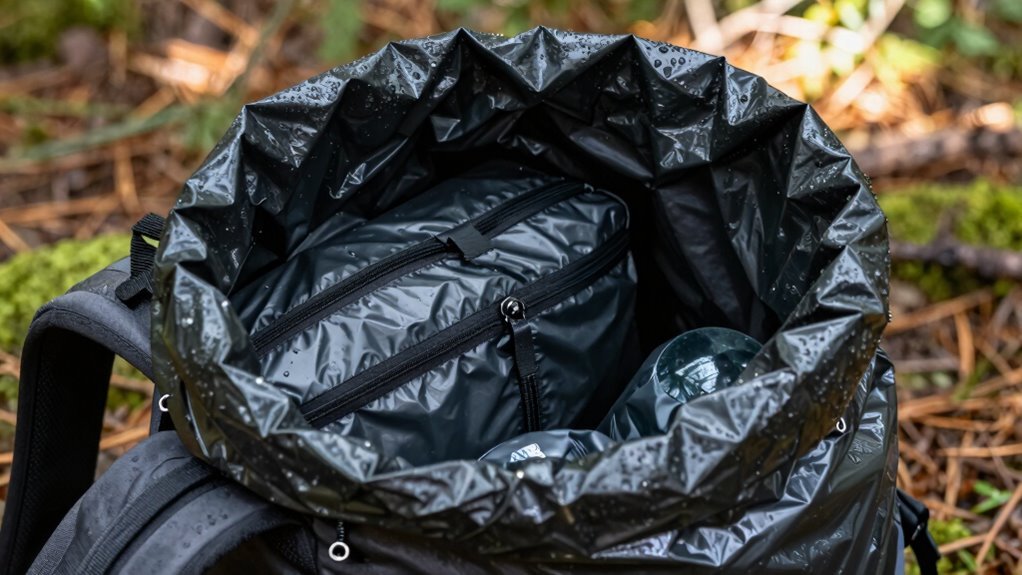
You’ve got your backpack covered—literally—with a weatherproof shell, but what’s happening inside matters just as much.
Line your pack with a 20-gallon Brute Super Tuff trash compactor bag—it’s tough, cheap, and crazy effective.
These heavy-duty bags shrug off rain, snow, and even weeks of Tasmanian downpours.
Just stuff the bag inside your pack, leave the top open, and toss in your gear.
No need for stuff sacks—pack loosely, even around bulky items like bear canisters.
It blocks water sneaking through zippers and seams better than most rain covers, and it’s lighter and cheaper than dry sacks.
Seriously, it’s like a dry bag that costs less than your granola bar.
Replace it once a year or if it rips, but honestly, one might last years.
If you’re extra cautious, double-line it—one for your sleep system, one for clothes.
Simple, smart, and kinda genius.
Heaviest items should be centered near your back to maintain balance, which helps stabilize the load and reduce strain—especially important when using a lined pack that keeps gear from shifting centered on back.
Store Electronics in Sealable Dry Pouches
Keeping your electronics safe from moisture starts with a simple but mighty move: sealing them up tight.
Pop your devices into sealable dry pouches, and you’re already winning the battle against soggy circuits.
These bad boys—especially Moisture Barrier Bags with their aluminum armor—block water, static, and even surprise splash attacks.
For extra credit, toss in a silica gel pack (yes, that little “do not eat” treasure from your gadget box).
Double-bag it like a burrito of safety, and boom—your phone, camera, or prized circuit board stays drier than a stand-up comedian’s wit.
- Use resealable poly bags for quick, durable, repeatable protection
- Add desiccants to absorb sneaky ambient moisture before it causes trouble
- Vacuum-seal with a humidity card to monitor dryness like a pro
Choose a Backpack With Built-In Rain Protection
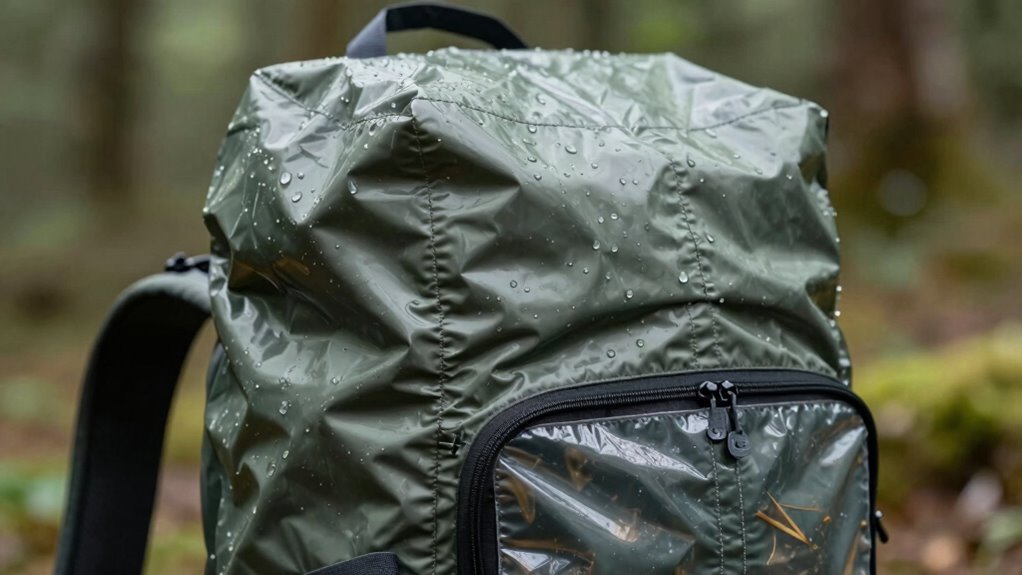
Ever wonder how pro hikers keep their gear bone-dry when the skies open up? You don’t need magic—just a backpack with built-in rain protection. Look for packs made with PU-coated nylon or TPU-backed fabric; they laugh in the face of downpours.
A built-in rain cover, stored in its own pocket, snaps over your pack in seconds—no scrambling for gear.
Waterproof zippers and welded seams? They’re the unsung heroes, blocking sneaky water entry.
Rolltop closures add extra defense, while zipper guards keep rain from hitchhiking inside.
Multiple waterproof compartments keep your snacks, map, and gadgets safe (yes, even your phone).
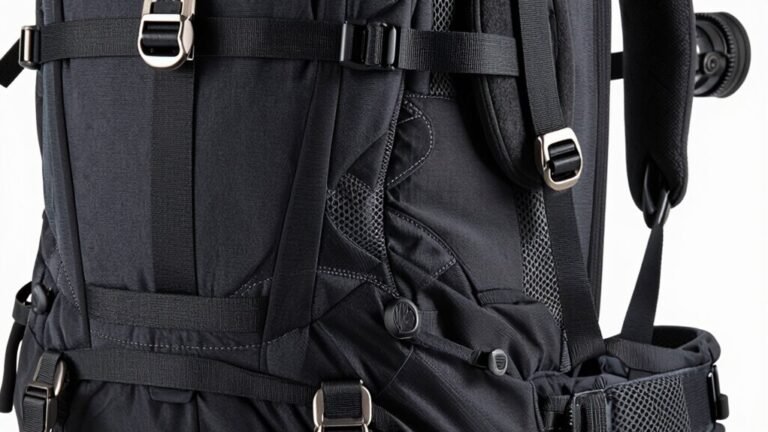
Breathable mesh back panels stop you from sweating buckets, and adjustable straps keep everything snug and secure.
With removable metal poles and internal bracing, your pack won’t sag like a wet noodle.
Ready for rain? Your backpack is.
Place Dry Clothes at the Bottom of Your Pack
Slide your dry clothes right into the bottom of your pack like you’re tucking them into a cozy, waterproof bunker—because let’s face it, soggy socks at the end of a long hike are a tragedy no one deserves.
Not only does this keep your essentials dry, but it also helps balance your load so you’re not wobbling like a penguin on ice.
The bottom’s the sweet spot: it’s stable, sheltered, and rarely exposed to rain sneaking in from the top.
- Store mid-weight items like sleeping pads and dry clothes together to protect both from compression and moisture.
- Keep less frequently used gear low so you’re not constantly opening the pack and letting damp air in.
- Use the natural padding of your pack’s base to shield dry layers and boost comfort on rough trails.
Dry clothes at the bottom? Yes, please—your future self will high-five you.
Utilize Dry Sacks for Organizing Gear
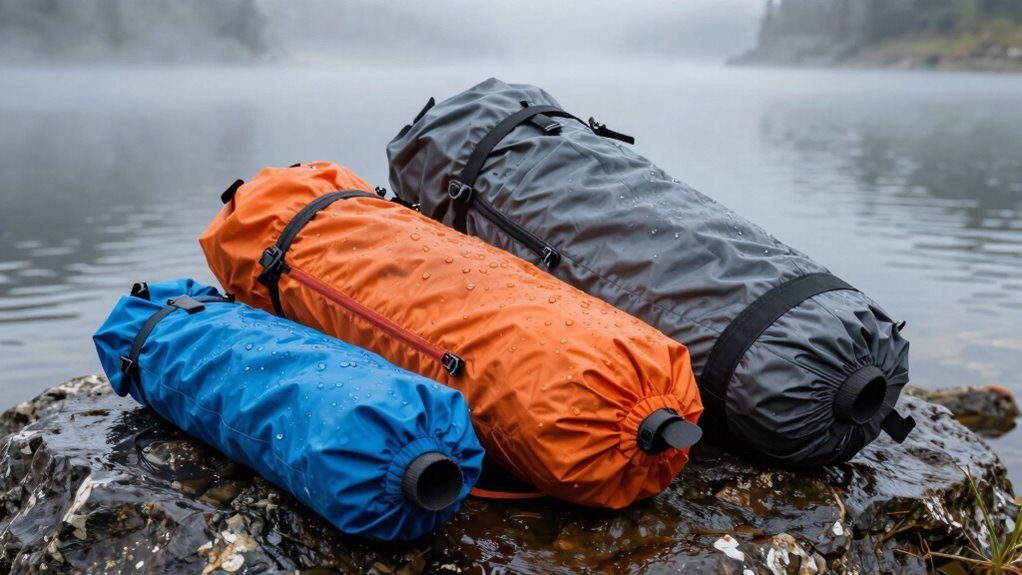
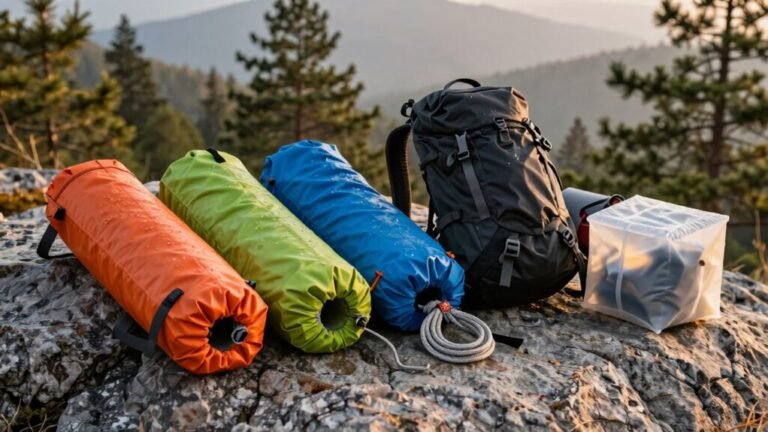
Think of dry sacks as your gear’s personal bodyguards—tough, reliable, and always on duty. Made from durable vinyl, PVC, or nylon, they shrug off sharp rocks, mud, and even angry downpours without breaking a sweat.
Just roll the top a few times and snap the buckle—boom, watertight seal! Need to save space? Squeeze out the air; models like eVac sacks even let air escape while keeping water out.
Got a leaky repair buckle? Swap it in two minutes with a screwdriver—no drama. Use different sizes to stash snacks, electronics, or that favorite hoodie, and toss ’em in your pack with confidence.
D-rings let you clip them to bikes or boats like you’re arming a mini arsenal. Multiple compartments mean your granola bar won’t get soggy next to your toothbrush—crisis averted!
Organizing gear’s never been this fun—or this dry.
Avoid Overpacking to Maintain Waterproof Integrity
When you cram your dry bag like it’s the last suitcase before liftoff, you’re not just playing gear Tetris—you’re risking the very seal that keeps everything safe and dry.
Overpacking crushes the top closure, leaving too little room to roll and seal properly, which can turn your “waterproof” bag into a water welcome mat.
Even top-tier materials can’t save you if the seal fails.
Keep your gear truly protected by respecting the bag’s limits.
You can avoid disaster by:
- Leaving space for at least three tight rolls at the top.
- Checking for gaps or bulges in the closure after packing.
- Remembering: a full bag isn’t a smart bag—overstuffing breaks waterproof promises.
Stay dry, not dicey—your phone, food, and favorite socks will thank you!
Dry Out Gear as Soon as You Reach Camp
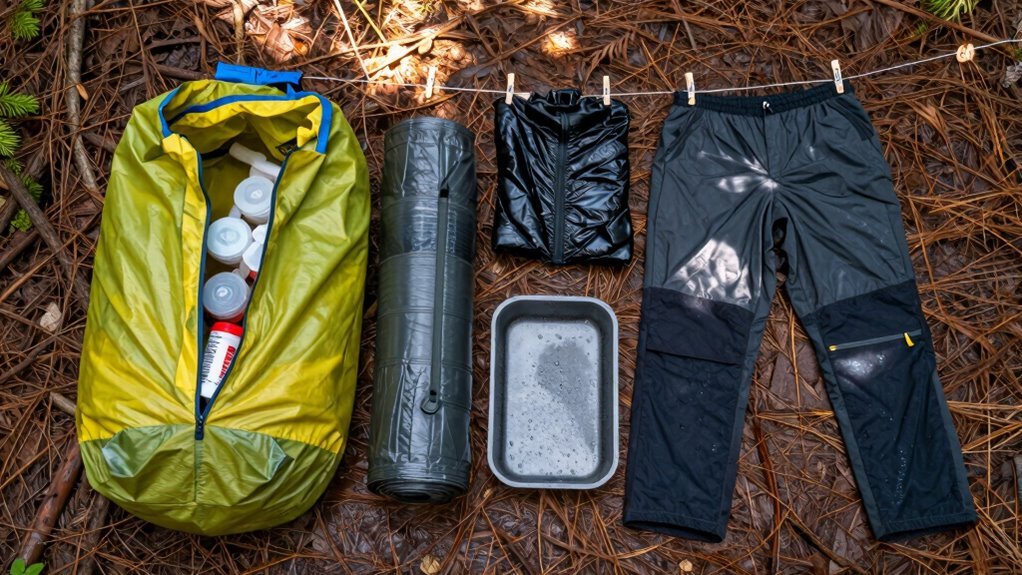
You’ve protected your gear from river splashes and sudden downpours with a well-packed dry bag—awesome.
Now, don’t just toss it in the tent and call it a day.
Squeeze out excess moisture first—twist those clothes like you’re wringing out a soaked sponge.
It cuts drying time dramatically.
Give each item a quick rub between your palms; friction is your friend here.
Then, set up a makeshift clothesline between trees or toss them over a sunny rock—breezy spots work even better than warm ones.
Wind beats heat!
If rain threatens, throw up a cheap blue tarp ($7 well spent!) to keep things sheltered.
Inside the tent? Rig a paracord line, clip socks and gloves with safety pins, and crack a window for airflow—but only after towel-drying first.
And hey, if you’re near the fire, stay upwind and keep synthetics far from flames.
Dry smart, sleep cozy.
Your gear (and future self) will thank you.
Frequently Asked Questions
Can I Use Regular Ziplock Bags Instead of Dry Pouches?
No, you can’t rely on regular Ziplock bags like you can dry pouches—they’ll probably leak when you need them most.
Sure, they might survive a quick splash, but toss them in water, and your stuff’s soaked.
Dry pouches laugh at puddles, rain, and even dives, while Ziplocks quit early.
Save the bags for snacks, not your phone or cash—unless you enjoy wringing out soggy socks and regretting life choices.
How Do I Dry a Soaked Backpack While Traveling?
You’re not doomed if your backpack takes a swim—start by wringing it out hard.
then toss it in a dry towel and twist to soak up moisture.
You’ve got airflow on your side, so hang it upside down outside, stuff pockets open, and let wind and sun do the magic.
Sneak it into your sleeping bag at night—hey, body heat counts!
Shake it out daily to free trapped water, and laugh when a puddle pours from a secret corner.
You’ve got this.
Are Waterproof Backpack Covers Worth the Extra Weight?
Yeah, they’re worth it—you’ll keep most of your gear dry with barely any added weight.
Think of it like an umbrella for your pack: sure, a little wetness sneaks in, but your clothes won’t slosh around like laundry.
That 11-ounce soaked pack? Heavier than any cover!
Toss one on, stay dry, and hike happy.
Plus, looking like a neon safety cone isn’t the worst thing—rain or shine!
What’s the Best Way to Pack Wet Gear After Use?
You roll that wet gear tightly, wring it out first—nobody likes packing soggy surprises.
Toss it in a waterproof bag or a trusty trash bag liner, then stash it outside your pack for airflow.
Use a mesh sack if you’ve got one, keeps things from getting swampy.
And hey, your sleeping bag’s begging you—keep it dry, or you’ll freeze like a popsicle.
Smart packing keeps everything happy.
Do Dry Sacks Float if Dropped in Water?
Yeah, your dry sack’s got your back—even if you drop it in water, it’ll float like a duck on a pond.
Trap some air inside, seal it tight with a solid roll-top closure, and it’ll bob on the surface like a champ.
Just remember, no air means no float, so don’t squash all the puff out.
Test it beforehand—no surprises when you’re out there!
Conclusion
So, you *could* risk soggy socks, a phone that doubles as a paperweight, and a backpack full of wet bandaids—*or* you could, I don’t know, actually try a plastic bag? Wrap it, line it, sack it, seal it. Dry gear isn’t magic, just basic adulting with flair. Treat your stuff right, and maybe, just maybe, your sandwich won’t taste like creek water. Victory tastes like dry gummies, my friend. Now go forth, stay dry, and snack proudly.
References
- https://www.campingmoon.com/collections/camping-gear-storage-bags
- https://seatosummit.com/collections/dry-bags
- https://www.sosproducts.com/Waterproof-Bags-Pouches-s/2048.htm
- https://www.walmart.com/ip/Mainstays-Clear-Storage-Bag-20-Gallon/13490768675
- https://theraingame.com/blogs/news/large-waterproof-storage-bags-the-ultimate-guide-by-raingame
- https://www.homedepot.com/p/DURASACK-20-Gal-Heavy-Duty-Moving-and-Storage-Bag-Grey-Polypropylene-4-Pack-WP-MOVG/328622037
- https://seatosummit.com/products/ultra-sil-pack-cover
- https://backpackies.com/blog/waterproof-backpack-guide
- https://www.dawnjoint.com/comprehensive-guide-waterproof-bag-materials/
- https://www.imprintnow.com/guides/how-to-waterproof-a-backpack-for-outdoor-usage