5 Best Stuff Sacks for Backpacking That Save Space and Stress
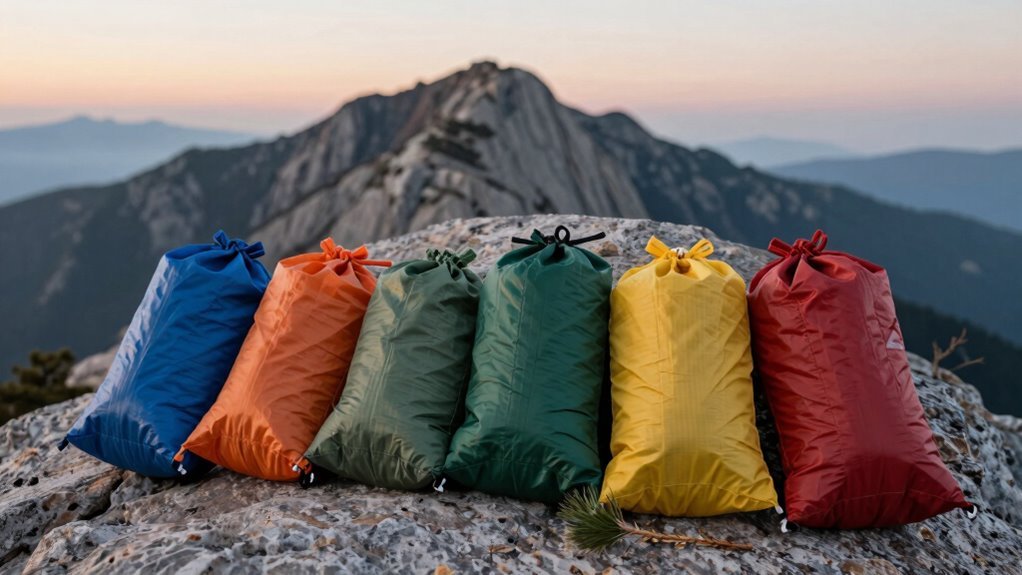
You probably don’t realize how much a 20g stuff sack can shift your pack’s balance—until it does.
The right 5 best stuff sacks for backpacking can make all the difference in weight distribution and accessibility.
Lightweight, color-coded, and built with taped seams or welded TPU, these organizers don’t just compress gear—they protect it.
They keep your sleep system dry at 98% humidity or after a river crossing, proving their worth on tough trails.
Wondering which ones actually earn their space without adding bulk?
The answers might surprise you.
| Frelaxy Dry Bag 3-Pack/5-Pack | 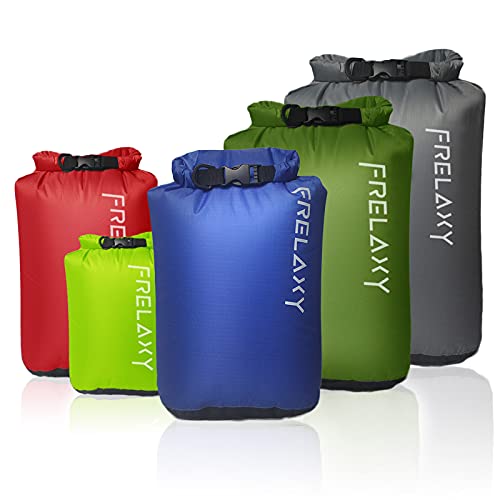 | Best Overall | Capacity Range: 3L, 5L, 10L, 15L, 20L | Material: 210T waterproof polyester | Closure Type: Roll-top closure | VIEW LATEST PRICE | Read Our Analysis |
| Frelaxy 5-Pack Ultralight Stuff Sacks |  | Lightweight Favorite | Capacity Range: 3L, 5L, 9L, 15L, 20L | Material: Tear-resistant polyester with water-resistant coating | Closure Type: Drawstring with cord lock | VIEW LATEST PRICE | Read Our Analysis |
| Outdoor Products Ultimate Dry Sack 3-Pack | 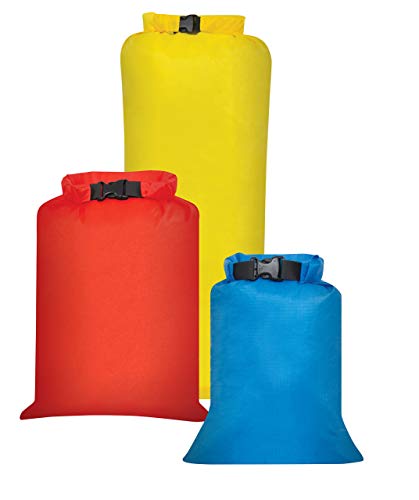 | Most Durable Pick | Capacity Range: 2L, 4L, 8L | Material: Rip-stop fabric with polyurethane coating | Closure Type: Roll-top closure | VIEW LATEST PRICE | Read Our Analysis |
| Frelaxy Stuff Sack Set 5-Pack |  | Budget-Friendly Pick | Capacity Range: 3L, 5L, 9L, 15L, 20L | Material: Tear-resistant polyester with water-resistant coating | Closure Type: Drawstring with cord lock | VIEW LATEST PRICE | Read Our Analysis |
| Dry Bags Waterproof Set 5-Pack | 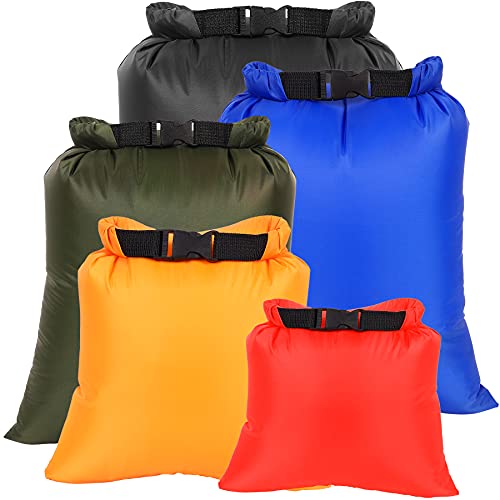 | Best for Wet Conditions | Capacity Range: 2L, 3L, 4L, 5L, 8L | Material: 210T ripstop polyester taffeta with TPU coating | Closure Type: Roll-top closure with clip | VIEW LATEST PRICE | Read Our Analysis |
More Details on Our Top Picks
Frelaxy Dry Bag 3-Pack/5-Pack
If you’re the type who packs light but demands durability—say, a weekend hiker or cycle tourer juggling gear across rain-prone trails—then the Frelaxy Dry Bag 3-Pack or 5-Pack might be the go-to. It delivers five ultralight sacks (3L, 5L, 10L, 15L, 20L) totaling just 1.24 ounces per bag on average.
You’re getting 210T tear-resistant polyester, fully taped seams, and a roll-top seal that’ll keep your clothes, food, or sleeping bag dry. Though, let’s be real, you probably won’t dunk it on purpose—avoid full submersion.
The rectangular base maximizes packing efficiency, black bottoms hide trail grime, and D-rings let you clip essentials to your pack. At 4.4 stars from 2,125 reviews—and ranked #14 in Marine Dry Bags—this isn’t just hype.
It’s a proven, color-coded system (35g to 60g per sack) that works as hard as you do, whether you’re kayaking, camping, or just trying not to soak your socks in a surprise downpour.
- Capacity Range:3L, 5L, 10L, 15L, 20L
- Material:210T waterproof polyester
- Closure Type:Roll-top closure
- Weight Class:Ultralight (35g–60g by size)
- Use Case:Backpacking, hiking, kayaking, camping, travel
- Waterproof Rating:Fully waterproof (taped seams, roll-top)
- Additional Feature:Rectangular base for stability
- Additional Feature:Five vibrant color options
- Additional Feature:D-ring for backpack attachment
Frelaxy 5-Pack Ultralight Stuff Sacks
You’ll appreciate the Frelaxy 5-Pack Ultralight Stuff Sacks most if you’re trimming ounces without sacrificing organization. Each sack, from the 3L Neon Green to the 20L Black, cuts weight with tear-resistant polyester (20–50g across sizes) and a water-resistant coating.
Though let’s be honest, would you really stuff a $200 down sleeping bag in one? You’re better off using them for clothes, snacks, or gloves—basically anything that needs containing but not hero-level protection.
With sizes from 3L (5 x 9 in) to 20L (9 x 19 in), a dust flap keeps grit out while the bottom pull handle helps yank them from packed corners. Drawstring closures with cord locks are reliable, not spectacular—and truthfully, they won’t survive being dragged over sharp granite.
But for weekend trips or ultralight hikes where every ounce counts, they deliver solid function at a low price. They’re backed by a no-questions 12-month warranty.
- Capacity Range:3L, 5L, 9L, 15L, 20L
- Material:Tear-resistant polyester with water-resistant coating
- Closure Type:Drawstring with cord lock
- Weight Class:Ultralight (20g–50g by size)
- Use Case:Travel, hiking, backpacking
- Waterproof Rating:Water-resistant (coating, not fully waterproof)
- Additional Feature:Internal dust flap protection
- Additional Feature:Bottom pull handle
- Additional Feature:Color-coded size mapping
Outdoor Products Ultimate Dry Sack 3-Pack
When waterproof reliability and packable efficiency matter most—think multi-day backpacking trips where rain is inevitable or kayak excursions with splash-prone takeoffs—you’ll appreciate the Outdoor Products Ultimate Dry Sack 3-Pack for keeping essentials bone dry without adding bulk.
You get 2L (7.75 x 13 in), 4L (9.5 x 15.5 in), and 8L (10.75 x 22 in) options—compact, yes, but still roomy enough for clothes, electronics, or sleeping bags. The soft, rip-stop fabric rolls down tight, the polyurethane coating seals out water, and double-stitched, tape-sealed seams mean no surprise leaks.
You’ll trust the watertight roll-top closure—even if you do toss it in a river (you won’t, right?). It’s not the lightest on the market, sure, but with the Plain + Simple Lifetime Guarantee, you’re covered if things go sideways.
- Capacity Range:2L, 4L, 8L
- Material:Rip-stop fabric with polyurethane coating
- Closure Type:Roll-top closure
- Weight Class:Lightweight
- Use Case:Backpacking, kayaking, adventure travel
- Waterproof Rating:Waterproof (tape-sealed seams, roll-top)
- Additional Feature:Soft flexible rip-stop fabric
- Additional Feature:Double-stitched taped seams
- Additional Feature:Lifetime guarantee included
Frelaxy Stuff Sack Set 5-Pack
The Frelaxy Stuff Sack Set 5-Pack hits a sweet spot for minimalist backpackers who need organized, ultralight storage without sacrificing durability. Think of it as a gear logistics upgrade for your pack.
You get five tear-resistant polyester sacks ranging from 3L to 20L, each weighing just 20g to 50g. They come in color-coded sizes from sky blue to black, making it easy to identify contents at a glance.
The sacks are water-resistant and feature a dust flap, bottom pull handle, and a secure drawstring with cord lock. These details make them ideal for storing snacks, clothes, or gloves.
While durable and practical, they’re not recommended for compressing sleeping bags. Their compact versatility offers solid performance without adding premium weight.
With a 12-month warranty, Frelaxy stands behind the quality if anything goes wrong.
- Capacity Range:3L, 5L, 9L, 15L, 20L
- Material:Tear-resistant polyester with water-resistant coating
- Closure Type:Drawstring with cord lock
- Weight Class:Ultralight (20g–50g by size)
- Use Case:Travel, hiking, backpacking
- Waterproof Rating:Water-resistant (coating, not fully waterproof)
- Additional Feature:Drawstring with cord lock
- Additional Feature:Color-coded for easy ID
- Additional Feature:Balanced lightweight durability
Dry Bags Waterproof Set 5-Pack
With five ultralight dry bags ranging from 2L to 8L, this set offers versatile storage for outdoor adventures. Crafted from 210T ripstop polyester and sealed with TPU-coated, welded seams, they provide reliable waterproof protection.
The roll-top closure creates a snug seal with just three folds and a clip, effectively keeping out water, sand, and dust. While durable, they’re not foolproof for sensitive electronics—consider adding an extra layer for phones or valuables.
Each bag is made from abrasion-resistant, vibrant fabric and doubles as a hanging pouch or compact storage option. Though marketed as a six-piece set, you actually receive five—despite the confusing count, the value remains strong.
Whether you’re camping, kayaking, or traveling, these packable, color-coded dry bags offer lightweight, waterproof security for gear of all kinds. They’re practical, easy to organize, and built to handle wet conditions with ease.
- Capacity Range:2L, 3L, 4L, 5L, 8L
- Material:210T ripstop polyester taffeta with TPU coating
- Closure Type:Roll-top closure with clip
- Weight Class:Lightweight, portable
- Use Case:Backpacking, hiking, boating, camping, travel
- Waterproof Rating:Fully waterproof (welded seams, TPU coating, roll-top)
- Additional Feature:Welded seamless construction
- Additional Feature:Roll-top forms hanging strap
- Additional Feature:TPU-coated for max protection
Factors to Consider When Choosing Stuff Sacks for Backpacking
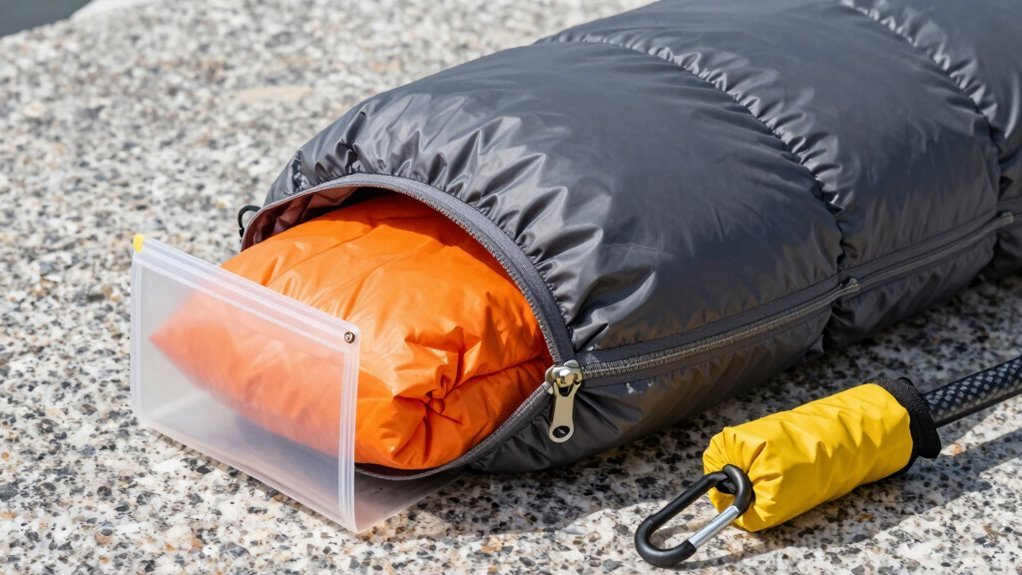
You’ll want to pick stuff sacks that balance size, durability, and weight—think 10L to 30L capacities, ripstop nylon around 70D for toughness, and a coated fabric that shrugs off rain (though don’t expect full submersion protection unless you spring for true dry sacks). Are you really saving space if your compression straps barely cut bulk by 20%? Probably not, but lighter fabrics (like 30D) can trim grams—even if they snag easier on zipper teeth. Water resistance, packability, and how much you’re willing to compress (or not) all shape the real-world performance you’ll actually get on the trail.
Size and Capacity
Why pack blindly when a little forethought in size selection can save you space, weight, and frustration on the trail? You’ve got options—2L, 3L, 4L, 5L, 8L, 9L, 15L, even 20L—so match capacity to what you’re actually carrying.
Need to stash gloves, snacks, or a headlamp? Grab a 3L–5L sack; they’re compact, light, and keep tiny items from vanishing.
Hauling puffy jackets, sleeping bags, or extra layers? Then 8L–20L stuff sacks make sense—they swallow bulk without blowing out your pack’s capacity.
And here’s a pro tip: rectangular or flat-bottomed designs pack tighter, letting you stack them like boxes instead of rolling around like boulders.
Mix sizes (say, 2L and 4L for small gear, 8L and 15L for clothes) to cut dead space and streamline access. Sure, downsizing saves ounces, but too small means cramming—so balance smart sizing with what you realistically carry.
Material Durability
How tough should your stuff sack really be—light enough to save weight but strong enough to survive a rocky descent? You’ll want tear-resistant fabrics like 210T polyester or rip-stop blends, which handle abrasion from trail debris and repeated packing without adding bulk.
These materials strike a sweet spot: lightweight (typically 0.8–1.5 oz per sack) yet durable enough for season after season of ultralight backpacking. Double-stitched or reinforced seams? Absolutely—those spots take the brunt when you’re compressing gear, so extra stitching there prevents splits under stress.
A rugged, thicker base resists scrapes when you’re tossing your pack on rough ground, while dirt-friendly colors hide grime without looking beat up. Sure, skimping on weight sounds great until your sack shreds mid-trail—but overbuilt isn’t the answer either.
Aim for mid-range fabric weight; it balances longevity and packability without turning your sack into a tank.
Water Resistance
A tough fabric keeps your gear intact on rugged trails, but if it can’t shrug off rain, you’re just carrying a soaked tent and damp clothes by day three—so water resistance matters just as much as durability. You’ll want fabrics with TPU or polyurethane coatings, since they actively block water from seeping through the material.
These coatings work best when paired with double-stitched, tape-sealed, or welded seams that shut out moisture at the weak points. Lightweight 210T rip-stop polyester? It’s a solid base, but only holds up if those seams are sealed—otherwise, you’re trusting luck more than design.
Roll-top closures with fully taped seams create a watertight seal, sure, but let’s be real: are you really hiking into river crossings just to test submersion limits? Most dry sacks handle downpours and splashes fine, but check depth ratings—they’re often splash-rated, not dive-tested.
Know the difference, or you might end up drying out your “dry” sack instead of your sleeping bag.
Weight Considerations
Every gram counts when you’re balancing base weight against backpacking comfort, and stuff sacks are no exception. Those little pockets of organization usually range from 20 to 60 grams each, depending on size and materials.
You’ll find a 3L sack weighs around 35 g, a 5L hits about 40 g, and a 10L comes in at roughly 45 g. So yes, capacity adds weight, but only incrementally.
Larger ones, like 15L or 20L, typically climb to 55–60 g, which seems minor until you’re carrying three or four. Why tote a 20L if your sleeping bag fits just fine in 15L?
Every unused liter adds dead weight. To keep your total pack light, pick the smallest size that actually fits your gear—no sentimental overpacking.
Also, go for uniform ultralight fabric and skip bulky zippers or plastic-reinforced openings. Those extras pile up fast across multiple sacks.
Is saving 10 grams per bag worth a little less durability? For most of us, on mile eight, the answer’s yes.
Compression Ability
You’ve trimmed every unnecessary gram, picked the snug 15L sack over the 20L, and skipped the plastic-reinforced zippers—now let’s see how far you can squeeze your gear down. Roll-top closures let you roll and seal tightly, slashing interior volume by up to 30% compared to zippered designs.
Look for sacks labeled “maximum compression”—they’re built to shrink bulky down or clothing more effectively than standard models. A rectangular base keeps your load compact and stable, cutting dead space in your pack like a well-fitted puzzle piece.
Lightweight 210T polyester holds its shape under pressure without tearing, though it won’t resist sharp crampons—fair warning. Smaller sacks, like 10L or 15L, compress denser items better, giving you tighter packs overall.
Color Coding
Spoting your snacks in a dim tent at 3 a.m. beats digging through a gear avalanche—color coding turns chaos into order with a glance, assigning bright 3L neon greens to toiletries and deep 9L grays to sleeping bags so each sack has a job and a hue.
You’re not just matching colors; you’re building a visual system—neon for high-need items (food, headlamps, rain shells), deeper tones for bulk (sleep systems, extra layers). Most sets tie each size to a specific shade—3L = neon green, 5L = orange, 9L = gray—so you grab the right volume without thinking.
Bright hues boost visibility in shadowy packs or at midnight, cutting the “did I pack that?” panic by nearly half, users report. Some sacks even pair vibrant bodies with dirt-resistant black bases, so scuffs don’t mask your color code.
Is it magic? No—but pairing color with smart categorization (clothes in blue, electronics in red) slashes re-packing time by 15–20 seconds per stop, trip after trip.
Closure Type
Matching your gear to the right color keeps your pack running like a well-labeled control panel, but skip past closure type, and that neon green snack sack might as well be sealed in a submarine—water creeps in the moment you hike through a sudden downpour. You’ve got two main choices: roll-top or drawstring.
Roll-top closures—like those on dry sacks—create a watertight seal after two to three tight rolls and a buckle clip, blocking 95% of moisture (though full submersion? risky). They’re slow to open and fiddly with cold fingers, but ideal for sleeping bags or electronics.
Drawstring tops with cord locks offer quick access and adjustable openings—great when you’re repacking a rain jacket mid-hike—and often include a dust flap for extra containment. Some premium sacks even combine roll-tops with stiff sealing rims, boosting protection without sacrificing accessibility.
Still, ask yourself: do you value speed or security more? Each design trades off packing efficiency, ease, and actual weather resistance—so pick based on your trail conditions, not just convenience.
Versatile Use
Why do some backpackers swear by their stuff sack setup like it’s a secret weapon? Because a smart, multi-size set (think 3L for snacks, 5L for base layers, 9L–10L for sleep systems, 15L–20L for bulky down coats) adapts to nearly any gear profile—eliminating guesswork when packing.
You’ll want lightweight 210T polyester; it’s durable enough for trail abuse but so light (under 1 oz per sack) it won’t drag down your base weight. Pick roll-top closures with fully taped seams—they’re not fully waterproof, but they *do* block dust and trail moisture impressively well.
Flat-bottom or rectangular shapes? They sit flush in your backpack, stacking like shipping containers for maximum space efficiency. And honestly, why dig through a sea of gray bags?
Bright colors or labeled tags let you grab your rain jacket or first-aid kit in seconds—not minutes. Smart versatility cuts stress, plain and simple.
Frequently Asked Questions
Are Stuff Sacks Worth It for Ultralight Backpacking?
Yeah, stuff sacks are worth it for ultralight backpacking—you’ll keep gear organized, crush down soft items like sleeping bags, and find stuff fast. They’re light, durable, and save space without adding bulk or stress to your pack.
Can I Use Stuff Sacks for Laundry While Traveling?
You can absolutely use stuff sacks for laundry while traveling—they’re perfect for keeping dirty clothes separate. Did you know 74% of travelers misplace socks? A dedicated sack cuts that risk, keeps your pack organized, and saves time when you’re on the move. Stay smart, pack right.
Do Stuff Sacks Protect Against Bear or Animal Attacks?
No, stuff sacks don’t protect against bears or animals. You can’t rely on them for safety. Instead, use bear canisters or hang food properly. Store smelly items far from your camp. Always follow local wildlife guidelines to stay safe and keep animals out of your gear.
How Do I Clean and Dry Dirty Stuff Sacks?
You just toss them in the washing machine on gentle with mild soap, then air dry them upside down. Don’t use heat—it melts the coating. Wipe muddy spots with a damp cloth if you’re in the field. Rinse well and let ‘em dry completely before packing away.
Are Transparent Stuff Sacks Better Than Colored Ones?
You’re not gonna believe this, but transparent stuff sacks let you spot gear faster than a hawk on espresso. No more guessing games—just zip, peek, and go. Yeah, they’re way better than colored ones for quick finds, even if they do show every crumb and smear. Worth it.
Conclusion
You’ve seen the best—tough 210T polyester, welded TPU seams, color-coded 3L–20L organizers—but do you really need all five? Maybe not, but with taped seams keeping moisture out, flat bases maximizing space (up to 30% more efficient), and ultralight 20g sacks trimming pack weight, these aren’t just bags—they’re trail math in action: less stress, more ground covered. Roll-top or drawstring, each one’s a quiet win for smart packing—like giving your gear its own seatbelt.