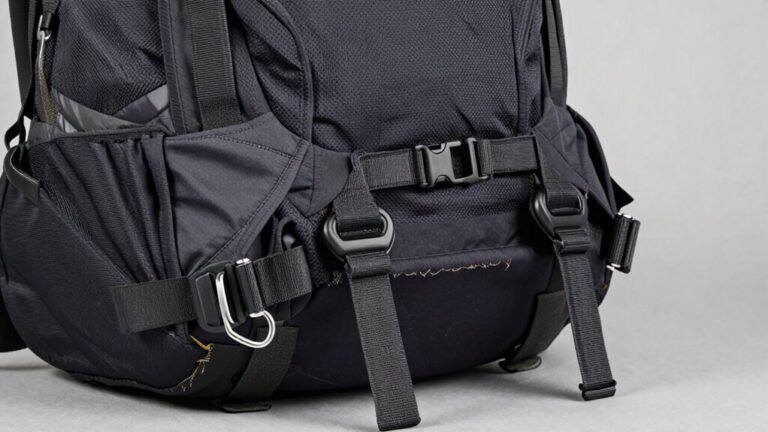
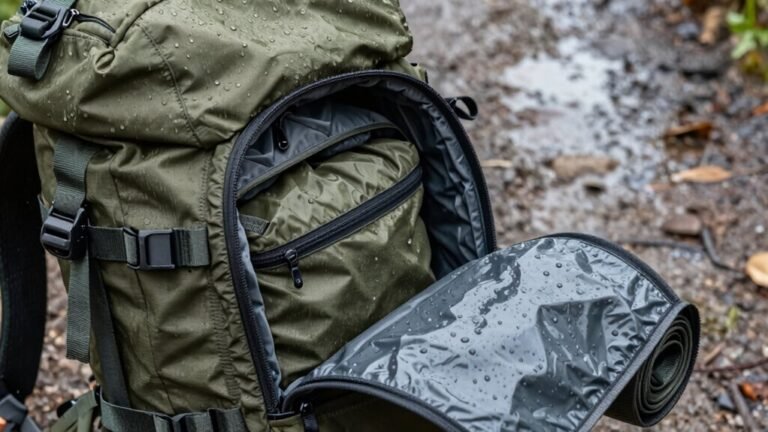
Do You Really Need Pack Fit?
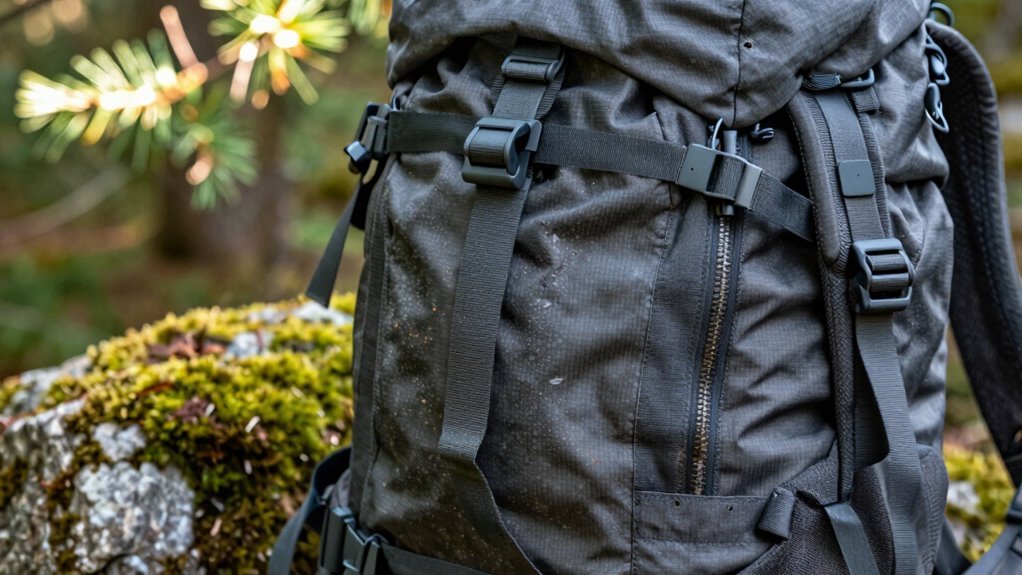
Yeah, you really do need a good pack fit—your back will thank you after mile three. If your hips aren’t happily carrying most of the load and your shoulders are screaming, something’s off.
A proper pack fit means no bouncing, swaying, or awkward hiking postures that make you look like a confused flamingo. Get it right, and your pack feels like it’s floating.
You really do need pack fit that aligns with your body’s natural shape and hiking style. Stick around—you’ll discover how to nail that perfect fit without the headache.
What Exactly Is Pack Fit?
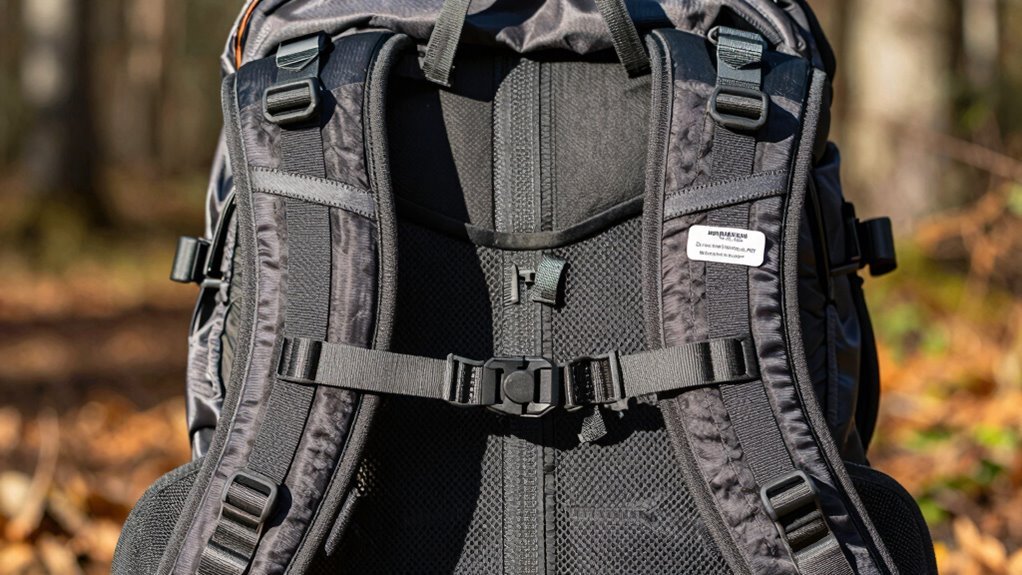
Ever wonder why some packs feel like they’re hugging you right, while others dig in and throw you off balance?
That’s all about pack fit—and it’s way more than just slapping on a random size.
Your torso length, not your height, decides what fits, so you measure from your neck to your hip bones (yep, that bony ridge at your waist).
Get that right, and the pack transfers weight to your hips where it belongs—80% lands there, thanks to a hipbelt snug over your iliac crest.
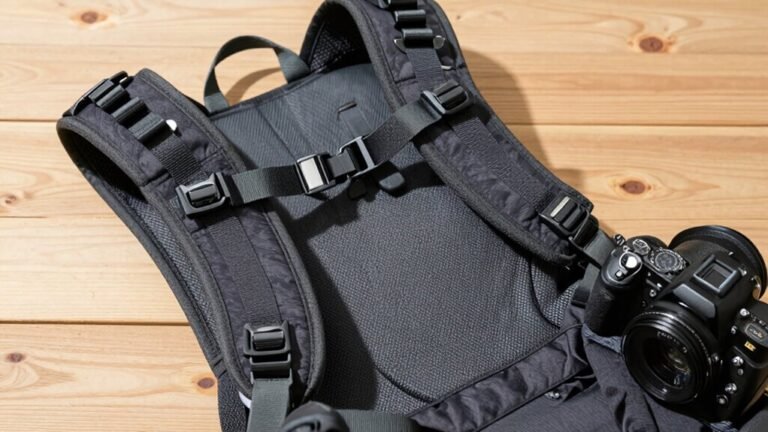
Shoulder straps? They’re sidekicks, not stars, hugging your shoulders without digging.
Then you’ve got load lifters angling back at 45 degrees and a sternum strap just below your collarbones—team players keeping everything stable.
Internal frames hug your back, and narrow or wide?
That depends on your adventure.
Try it with 15–20 pounds loaded—you’ll feel the difference fast.
A properly sized pack ensures you’re using the right torso length sizing for your body, which varies by manufacturer and gender.
How Pack Fit Impacts Comfort on the Trail
- Hip belt snug on hip bones: shifts weight off shoulders, prevents bouncing and sores.
- Balanced load centering: stops swaying and keeps you stable on steep trails.
- Proper torso alignment: maintains posture, so you don’t end up hunched like a troll.
- Even muscle use: spreads effort, so no single body part quits early from exhaustion.
A well-fitting pack ensures the torso length matches your body, allowing shoulder straps to lie flat and eliminating pressure points during long hikes.
You’ll hike longer, laugh more, and actually want to do it again.
When a Perfect Fit Matters Most
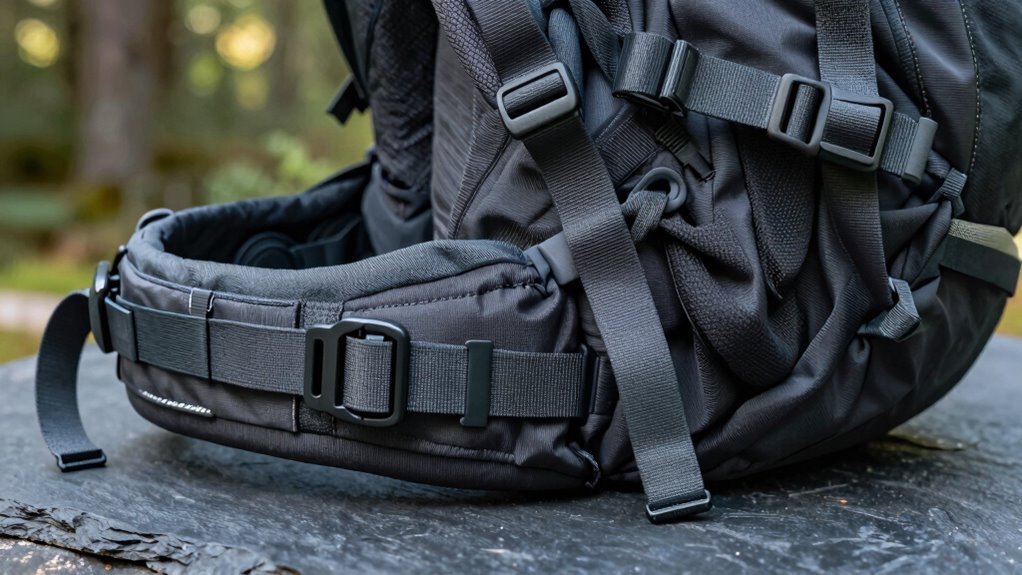
What happens when your pack fits like it was made just for you?
You carry heavy loads for days without your shoulders screaming, and your hips happily take 80-90% of the weight—just like soldiers hauling 60-70% of their body mass.
On long trips, especially with a 50L+ pack full of food and winter gear, a perfect fit keeps you moving strong.
Proper sizing means your torso and hips are measured right, so the pack transfers weight efficiently and doesn’t leave you swaying like a penguin.
Adjustable suspensions help, and women-specific or smaller models? They’re lifesavers if you’re not built like a linebacker.
A well-tuned pack keeps your posture normal, even under 20% of your body weight, so you hike longer, smile more, and avoid turning into a grumpy, sore mess.
Proper fit transfers ~80% of weight to hips/lower body, making it easier to maintain balance and endurance over rugged terrain.
Trust us, your back will thank you—maybe even send a postcard.
Signs Your Backpack Doesn’t Fit Right
- Shoulder straps gap widely, or they dig in because you’d to loosen the hipbelt just to make them fit.
- The hipbelt slides below your hip bones, letting the pack droop like a sad puppet.
- Your shoulder pockets sit high or behind your shoulders, a dead giveaway of a mismatched torso length.
- The pack sways, bounces, or pulls backward with every step, like it’s auditioning for a dance-off.
If any of these sound familiar, your pack’s size might be all wrong—time for a proper fit check!
The Risks of Ignoring Torso Length and Hip Support
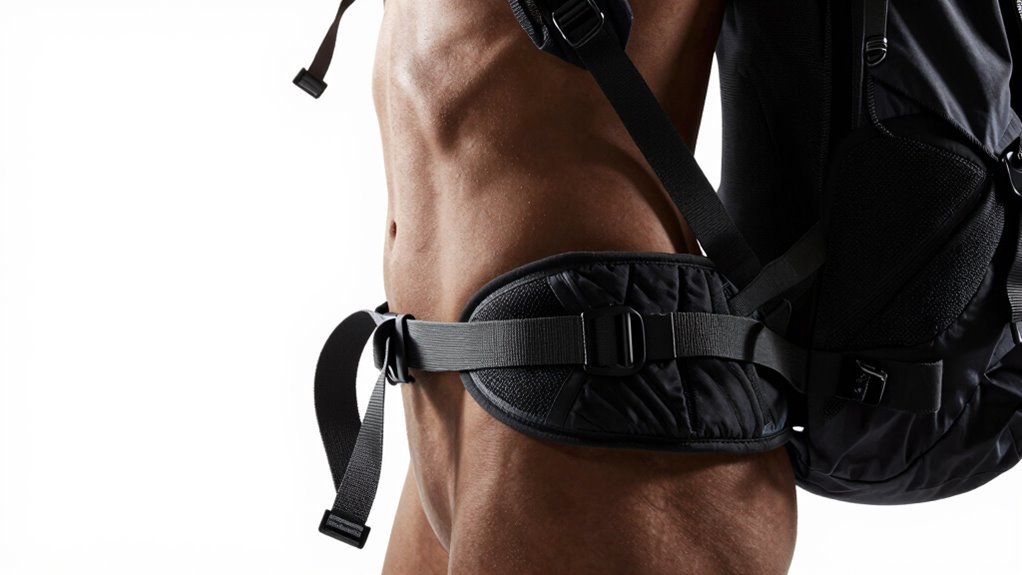
When your backpack doesn’t hug your body just right, it’s not just annoying—it’s practically setting you up for a comedy of errors on the trail.
If the torso length’s off, you’ll feel it fast—straps dig in, the pack bounces like a loose kangaroo, or it rides up every time you step.
That yolk sitting above your neck bone? Big red flag.
And if your hip belt’s not snug on your iliac crest, guess what? Eighty percent of the weight stays on your shoulders, not your hips where it belongs.
You’re left lugging it on your belly button, screaming for relief.
Short packs strain, long ones sway, and unadjusted load lifters turn your trek into torture.
Over time, this isn’t just uncomfortable—it risks real injuries.
Ignoring fit means ignoring your comfort, stability, and long-term happiness on the trail.
Don’t wrestle your backpack—let it work *with* you!
When You Can Skip Custom Fitting
Even if your pack isn’t tailor-made, you can still hit the trail with confidence—especially if you’re keeping things light and smart.
You don’t always need custom fitting to crush your hike like a pro.
As long as your load stays reasonable and your fitness is solid, off-the-rack packs work just fine.
Think of it like wearing sneakers: not every pair needs orthotics to get you where you’re going.
And hey, your back will thank you when you’re not lugging around a pack full of “just-in-case” gear.
Here’s when you can skip the custom hassle:
- Your pack stays under 20% of your body weight
- You’re tackling shorter trips (under 24 hours)
- You’ve trained with similar loads and terrain
- You choose a well-designed, adjustable standard pack
Tips for Finding the Right Fit Without Overcomplicating It
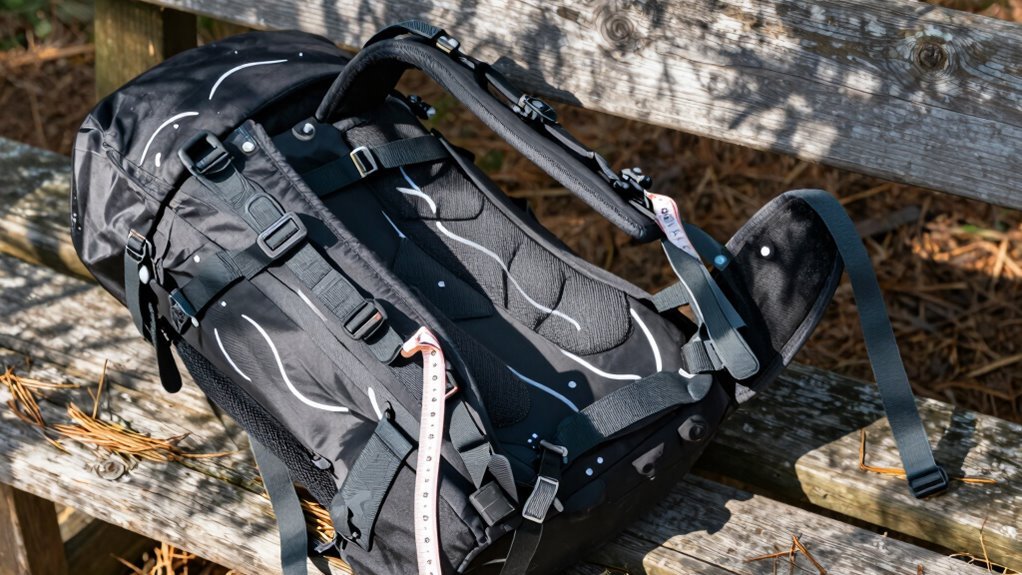
Skip the stress—finding the right pack fit doesn’t need a PhD or a fitting room full of strangers staring at your torso.
Start by measuring your torso from the bump on your neck to the top of your hips—size depends on that, not your height.
Pop on a pack and tighten the hip belt so it sits snugly on your hips, not your waist; it should carry most of the weight.
Adjust shoulder straps so the pack hugs your back like a cozy backpack hug—top at your neck, bottom at your hips.
Check that weight feels balanced, not pulling you backward or digging in.
Look for padded hips and lumbar support to save your spine, especially if you’re carrying more than 10% of your weight.
And hey, if you stand tall without wobbling like a penguin, you’ve nailed it!
Frequently Asked Questions
Can I Use the Same Pack for Hiking and Traveling?
Yeah, you can totally use one pack for both—life’s easier with a trusty hybrid!
Grab a versatile backpack that’s comfy on trails and slick in transit.
You’ll want decent hip support for hikes and easy access for airports.
Some packs even hide straps so airlines don’t fuss.
Sure, it’s a compromise, but hey, you’re adventurous—you’ll rock it with style and one less bag to lose!
Are Hydration Packs Less Comfortable for Long Hikes?
No, hydration packs aren’t less comfortable for long hikes—you’ll love how they hug your back and move with you.
You’ll stay cool thanks to breathable mesh, and the weight sits snug, not saggy.
Sure, a full bladder’s heavy, but smart design spreads the load so you barely notice.
You’re hands-free, hydrated, and hiking happier—kind of like a backpack that *gets* you.
Do I Need Different Packs for Winter and Summer?
Nah, you don’t *need* two packs—one solid backpack handles both seasons with smart tweaks.
You compress summer gear easy, but winter?
That bulky sleeping bag and extra layers test your squeeze skills.
Swap in removable lids for 8L more, toss on snowshoe straps, and boom—winter-ready.
You adjust, layer, and pack smarter, not harder.
One pack, two seasons, endless trails—and no, your wallet won’t flee in fear.
Is It Worth Buying Used Backpacks With Good Fit?
You bet it’s worth buying used backpacks with a great fit!
You save serious cash, avoid trashing the planet, and still get a reliable bag—especially if you check stitching, zippers, and straps.
Online resale gives solid condition info and returns, so you’re not rolling the dice.
It’s like thrift-store roulette, but with way better odds—and way more style.
Win-win? Absolutely!
How Often Should I Replace My Well-Fitting Backpack?
You replace it only when seams fray, straps sag, or zippers quit—don’t rush it just because your buddy did.
Your well-fitting backpack stays with you for years, like a trusty sidekick that knows your back better than your doctor.
Fix what breaks, air it out, and keep adventuring.
Only swap it out when it’s truly toast—otherwise, you’re just giving cash to landfill fairy tales.
Conclusion
You don’t need a PhD to fit a pack, but getting it right sure beats a blistery, back-aching hike. Yeah, maybe your buddy swears by that one-size-fits-all deal, but don’t let that fool you. When your hips stay happy and your shoulders don’t scream, you’ll actually enjoy the trail—imagine that! Skip the guesswork, tweak the straps, and boom: hiking just got way more fun.
References
- https://www.rei.com/learn/expert-advice/backpack.html
- https://sectionhiker.com/how-to-fit-a-backpack/
- https://www.youtube.com/watch?v=0SGiGZlppMM
- https://www.adirondackhub.com/story/2015/05/correct-pack-fitting
- https://www.score-outdoors.com/2025/04/24/how-to-size-fit-a-backpacking-pack/
- https://atompacks.co.uk/blogs/how-to/checking-the-fit
- https://www.rei.com/learn/expert-advice/backpacks-adjusting-fit.html
- https://australianhiker.com.au/advice/how-to-pack-a-backpack-a-beginners-guide/
- https://bearfoottheory.com/hiking-daypack-fitting-guide/
- https://lighthikinggear.com/blogs/hiking/balancing-health-the-impact-of-balance-pockets-on-hikers-well-being