Backpack Weight Targets for New Backpackers
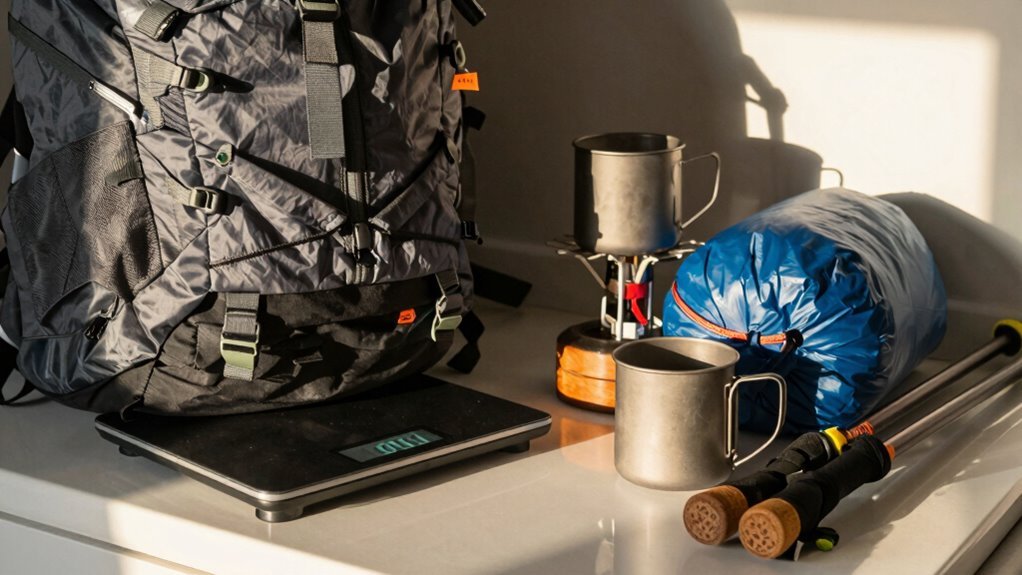
Keep your base weight around 12–15 pounds, not the 30+ newbies often start with—your back will thank you. Backpack weight targets for new backpackers should focus on minimizing load without sacrificing safety or comfort.
Ditch the kitchen sink, skip the cotton hoodie, and stop packing for every “what if.” Stick to the essentials: shelter, sleep, pack. You’re hiking, not moving in.
Eat light but calorie-dense food, and remember, water’s heavy—carry only what you need. Every ounce saved feels like cheating gravity.
Wondering how to cut weight without freezing or starving? There’s a smarter way, and it’s easier than you think.
Understanding Base Weight and What It Includes
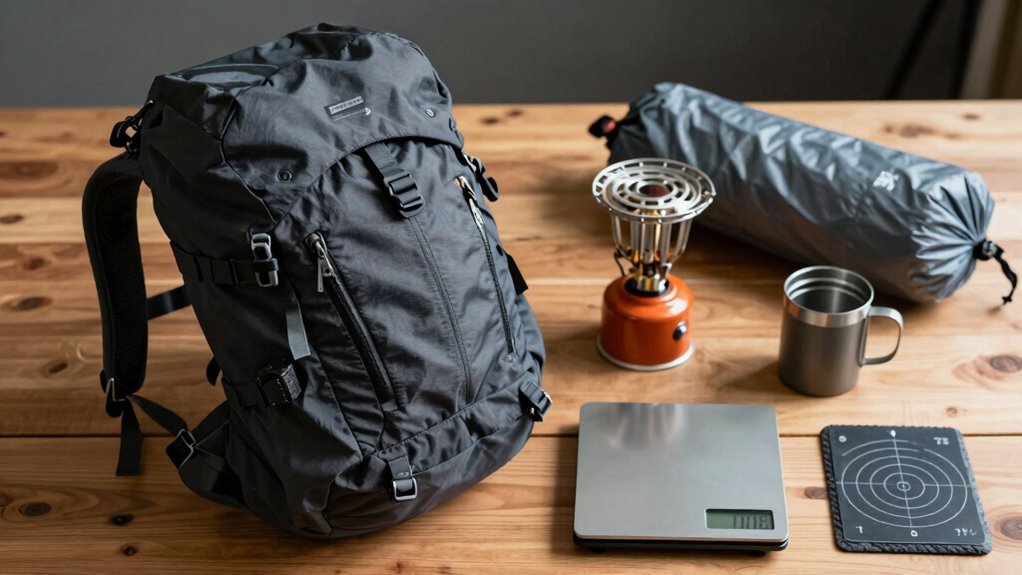
Ever wonder how much your pack really *needs* to weigh? Spoiler: it’s less than you think!
Your base weight is the heart of your load—the gear that stays constant trip after trip.
You’re talking tent, sleeping bag, backpack, stove, water filter, and hiking clothes.
No food, no water, no fuel—those don’t count here, even if your snacks *are* half the pack.
This number gives you a solid benchmark, like a fitness tracker for your backpack.
It’s the same on day one and day seven, making it perfect for comparing trips or showing off your gear wins.
Think of it as your backpack’s “boring but important” foundation.
Lighten this core, and everything gets easier.
So grab your scale—yes, *now*—and weigh everything except the munchies and water.
You’ve got this!
A lighter base weight improves hike feasibility over long distances by reducing physical strain and increasing efficiency.
How Your Fitness Level Affects Pack Weight
When you’re tearing up the trail with a loaded pack, your fitness level isn’t just a nice-to-have—it’s your secret power move.
You might carry the same gear as someone else, but your strength, stamina, and conditioning decide how轻松 it feels.
Think of your body like a tuned engine—the better it runs, the more it can handle.
- Fit legs and core? You’ll breeze through 30 pounds like it’s nothing.
- New to hiking? Stick to 10–20% of your weight to avoid turning into a grumpy turtle.
- Strong hikers tolerate heavier loads without injury—weak ones strain even at 25%.
- The fitter you are, the more weight you can pack without paying for it later.
- Train ahead of time and you’ll hike faster, recover quicker, and actually enjoy the views.
- Your body’s ready—give it the credit (and training) it deserves.
Staying below 35% of body weight significantly reduces injury risk and fatigue on rugged terrain.
The Role of Trip Duration in Weight Planning
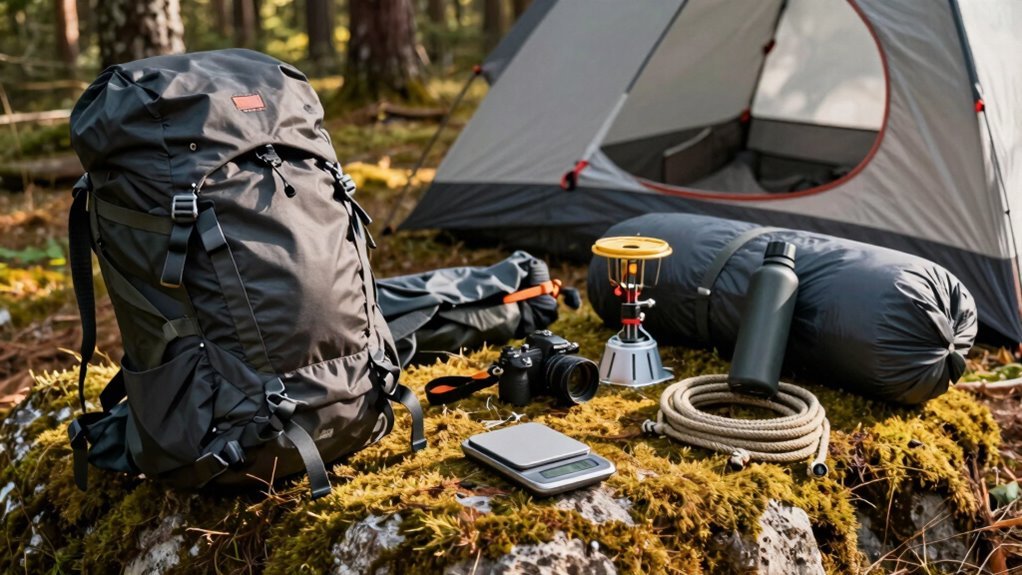
Your fitness sets the foundation, but how long you’re out there shapes the real pack weight game.
Short trips? You’ve got wiggle room—carry that cozy camp chair or extra snacks, no sweat.
Keep it under 10% of your body weight for day hikes, or 20–25 pounds total if you’re just starting.
But when you’re out for days, every extra ounce fights back.
Food adds up fast—think 2 pounds per day—and soon your pack’s groaning.
Long hikes mean smarter choices: lighter gear, calorie-dense meals, and staying under 20% of your body weight.
A 40-pound load might work for a weekend, but not week three of a long trek.
Heavy packs slow you down, tire you out, and turn joy into grunt work.
Endurance can decline after about 3–4 hours of walking, especially as fatigue sets in over multiple days.
Plan smart, laugh at the struggle, and let trip length be your weight coach—because nobody wants to hike like a pack mule.
Essential Gear That Adds Up Fast
While you’re out there chasing sunsets and scrambling up trails, don’t let your gear turn into an unexpected weightlifting session.
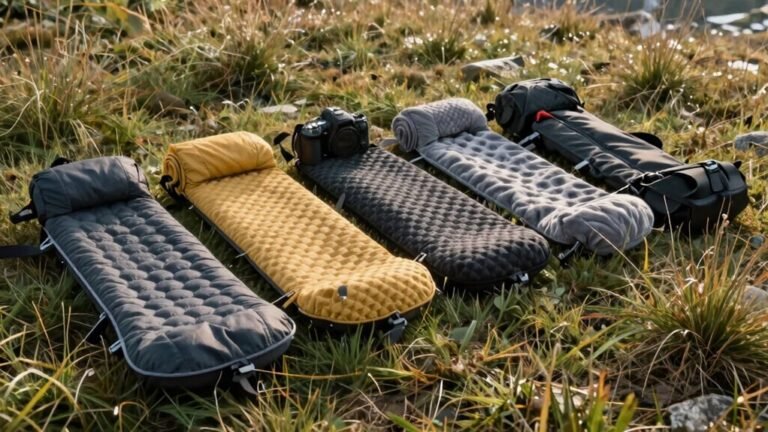
That tent, sleeping bag, and backpack—the “Big Three”—add up fast, often making up the heaviest part of your load.
Even your clothes and cooking setup sneak in extra ounces.
But hey, it’s not just about shaving weight—it’s about smart choices.
Here’s what quietly piles on the pounds:
- Your backpack and sleep system together can hit over 4 pounds
- That cozy down jacket and rain shell? Over 1.5 pounds right there
- A standard tent often weighs 2–3 pounds—no joke
- Your stove, pot, and spork may seem tiny, but they’re still precious ounces
- Even your phone, headlamp, and repair kit chip away at your goal
Every ounce counts when you’re the one carrying it.
Food: How Much to Carry and Where It Counts
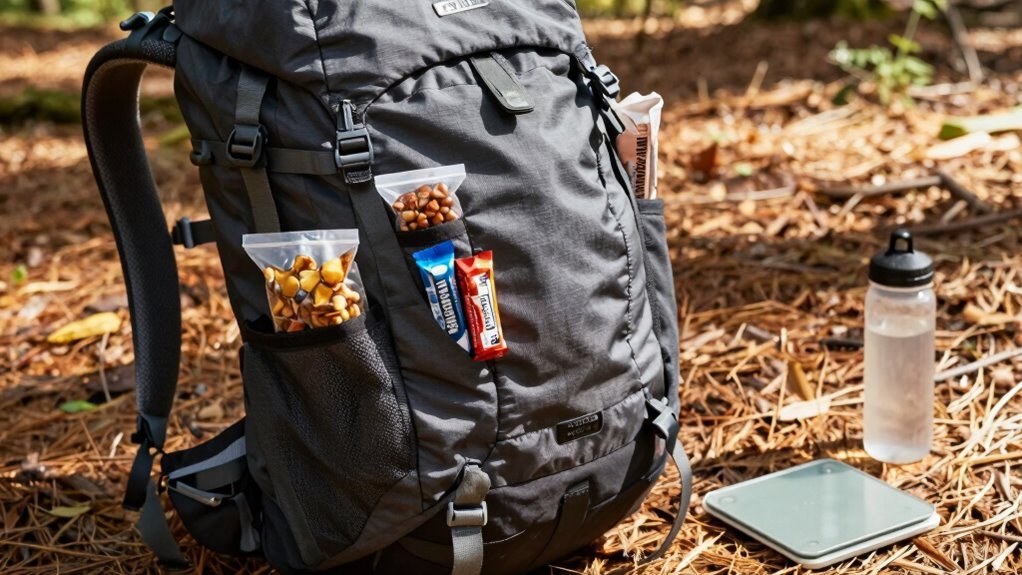
How do you fuel a trail adventure without turning your pack into a grocery cart? You’re burning 3,400–4,900 calories daily, so each bite needs to pack a punch.
Aim for 1.5–2 pounds of food per day—ultralight hikers even hit 1.75 on average.
That’s about 2,500–4,500 calories, depending on your miles and elevation.
Choose calorie-dense foods: nuts, peanut butter, cheese, olive oil—fat’s your friend at 9 calories per gram!
A balanced 30% fat mix gives you 2,500 calories per pound, but skew higher to save weight.
Sample day: oatmeal, jerky, trail mix, and chili with string cheese might hit 3,700 calories in just 28 ounces.
Lighten load and cost by swapping snacks with high-calorie upgrades.
Your stomach will thank you, and your legs will too—no need to haul a pantry when you can eat smart.
Water Carrying Strategies and Weight Trade-Offs
When you’re out on the trail, water’s non-negotiable—but lugging around a mini swimming pool isn’t the answer either.
You need smart strategies to stay hydrated without wrecking your back.
Here’s how to handle it like a pro:
- Start with at least 2 liters of capacity, even if water looks plentiful
- Use a mix of bladders for sipping and bottles for backup—flexibility rules
- In hot weather? Carry 6–8 liters—you’ll sweat through it fast
- “Camel up” at every source so you’re not hauling extra weight uphill
- Collapse empty soft flasks or bags—they disappear when empty, saving space and ounces
Planning beats thirst, especially in dry stretches or deserts where water’s scarcer than Wi-Fi. Match your system to the terrain, stay nimble, and remember: no one ever high-fived their backpack for being heavy. Keep it light, keep it smart, and let your water plan flow.
Fuel Needs Based on Cooking Style and Weather
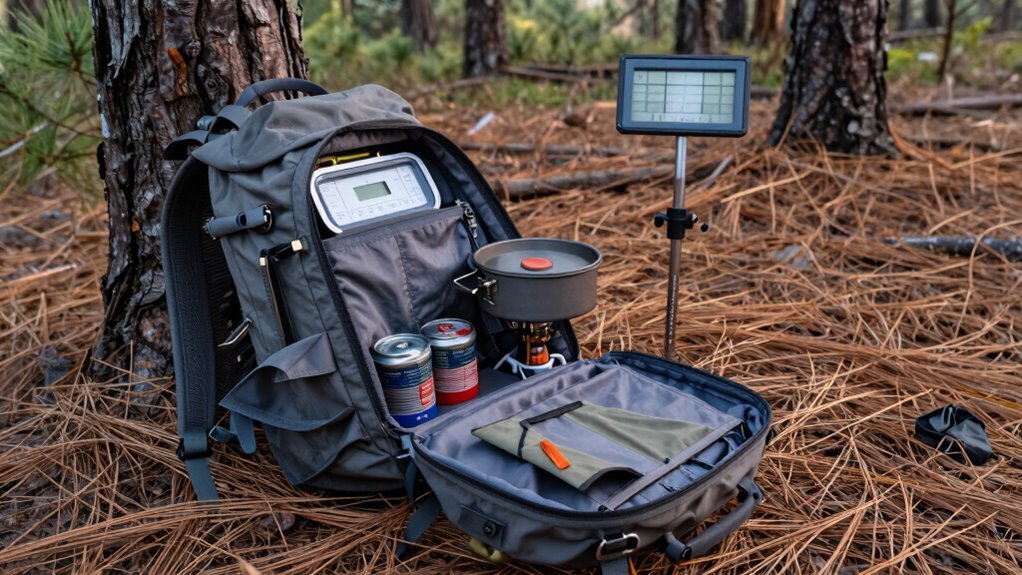
If you’re planning to eat anything better than cold beans straight from the can, you’d better think about how your cooking style and the weather team up to shape your fuel needs—because nobody wants to shiver through a frozen burrito just because they ran out of gas.
A full fuel canister weighs about 7 ounces, but you’ll burn through it faster in cold weather, where boiling water takes longer and hot meals become daily necessities.
If you’re using a Jetboil, you’re in luck—those little stoves sip fuel like tea.
But crank up the cooking frequency or face freezing temps, and you’ll need extra canisters.
Insulated pots help, and multi-fuel stoves might be worth it for winter trips.
Remember, fuel weight counts toward your total pack load—even if it burns off as you go.
Plan smart, cook warm, and never let dinner turn into an ice cube.
Choosing a Lightweight Backpack That Fits
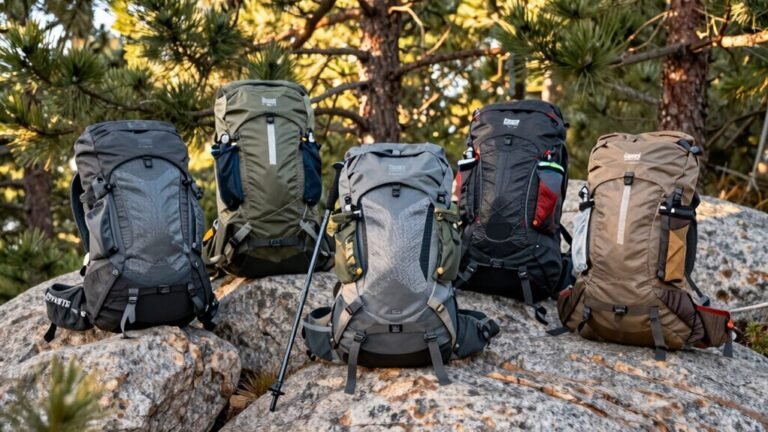
- Pick a pack from lightweight brands like Hyperlite or Z-Packs
- if you’re aiming for a base weight under 25 lbs
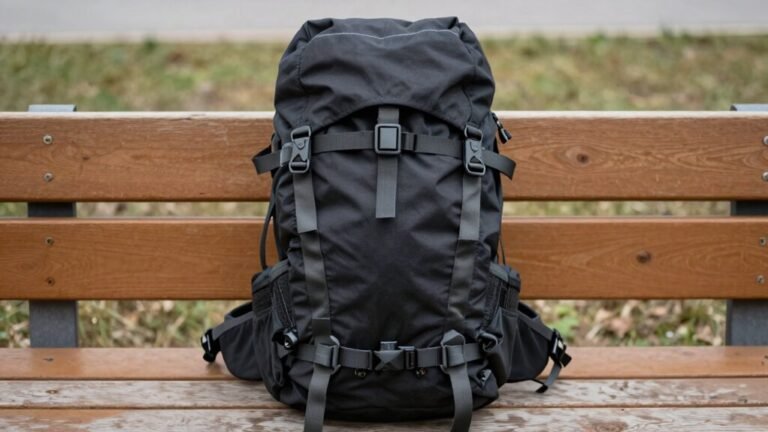
- Make sure the hip belt sits snug on your hips—
- it should carry most of the weight, not your shoulders
- Try on packs with weight inside;
- walk around, twist, and bend like you’re on the trail
- Avoid oversized packs that tempt you to fill every pocket
- (we see you, overpackers!)
- Match your pack size to your trip length and terrain—
- no need for a 70L beast on a weekend stroll
- Fit beats flash every time—your back will thank you.
Tips for Trimming Weight Without Sacrificing Safety
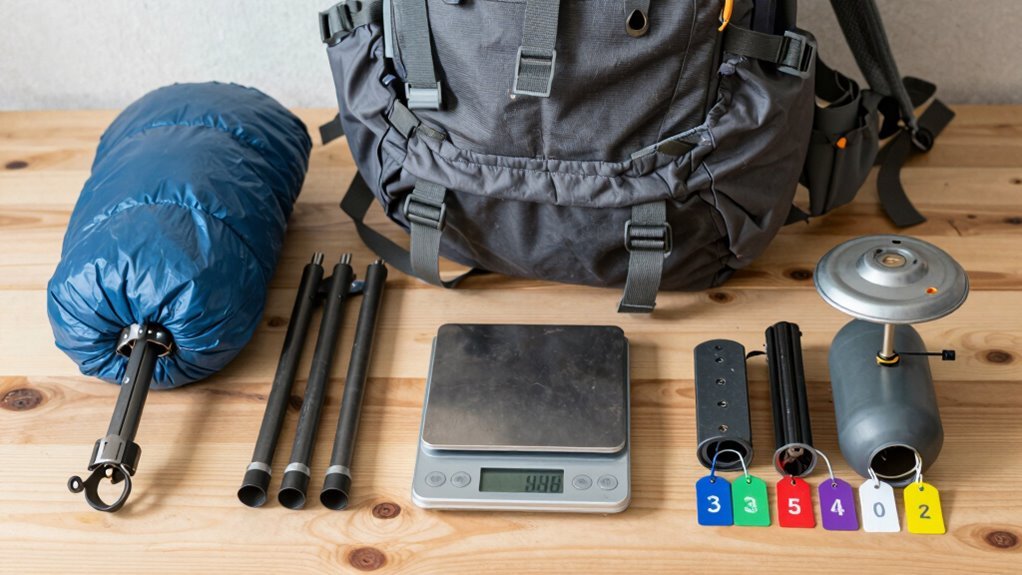
Though your backpack might feel like a carry-on from the fashion show of “Who Packing What,” it’s time to treat it like a survival-sleek machine—because lighter steps mean happier trails.
Cut the fluff: leave extra shirts, camp shoes, and that blow-up pillow at home.
Wear trail runners instead of clunky boots and save 1.5 lbs like magic.
Use your puffy jacket as a pillow and stash snacks in a fanny pack to ease the load.
Carry just two quarts of water unless the trail says otherwise, and chug at streams to cut weight.
Aim for a sleep setup under 8 lbs, pack one outfit (yes, really), and snap pics of maps instead of lugging paper.
Weigh everything—you’ll find easy wins.
Ditch dry bags if your pack’s liner works.
Research the trail so you only bring what matters.
Safety stays, silliness goes.
Every ounce saved feels like wings on your feet.
Adjusting Your Load After Your First Few Trips
Alright, you’ve trimmed the fat and sent that blow-up pillow packing—now let’s talk about what really happens when your boots hit the trail and reality sets in.
Your first few trips are like a gear truth-teller—suddenly, that “light” 35-pound pack feels like a backpack full of bricks.
Good news? You’ll fine-tune it fast.
- Ditch what you didn’t use—base weight drops from 35 to 12 lbs for a reason.
- Try shakedown hikes to test load comfort before the long haul.
- Train smart: start light, add 10% weekly, and peak two weeks pre-trip.
- Target 25–30 lbs loaded, or 20% of your body weight for thru-hikes.
- Weigh everything—your scale is your secret weapon.
Your pack’s not a suitcase—it’s a finely tuned trail machine.
And lighter feels way better on mile eight.
Frequently Asked Questions
Is a Heavier Pack Okay for Short Day Hikes?
You can carry a heavier pack on short day hikes, but you really shouldn’t—it’s like wearing a backpack full of bricks just for fun.
Stick to 10% of your weight or less, so a 150-pounder caps at 15 pounds.
Lighter loads mean more fun, less ache, and way more “I crushed it!” energy.
Your knees will thank you later—honestly, they’re already sending thanks.
Should I Weigh My Pack Before or After Packing?
You weigh your pack after packing—every sock, snack, and water bottle in place—so you know the real deal before hitting the trail.
Imagine lacing up, hefting that load, and thinking, “Wait, is this all?”
Weigh it stuffed, not sorry!
It’s like surprise math, but for your back.
Pro tip: fill that water bladder first—sneaky weight ninja!
Can I Rent Gear to Reduce Pack Weight?
Yep, you can totally rent gear to lighten your load!
Instead of lugging around your heavy old backpack or bulky tent, grab sleek, ultralight rentals made for comfort and performance.
You’ll hike easier, sleep better, and laugh when others gasp under their overstuffed packs.
Plus, you’re saving cash and the planet—one rented sleeping bag at a time.
Win-win!
Do Trekking Poles Count Toward My Pack Weight?
Yeah, trekking poles usually count in your pack weight, but here’s the twist—you’re holding them, not carrying them in your bag.
So many hikers ditch ’em from the base weight total.
It’s like wearing a hat; it’s on you, but not *in* you.
Light carbon ones save nearly half a pound, too—bonus points if you wave ’em like wizard staffs on the trail!
How Does Altitude Affect What I Can Carry?
Altitude hits you hard, and you feel every extra pound.
Your lungs work overtime, your heart races, and your legs scream louder than at sea level.
Even fit hikers drop 5–10 lbs from their pack because, up high, 30 lbs can feel like 45.
Steep trails? Loose rocks? Now it’s a workout with a side of drama.
Go lighter, move faster, and keep the adventure fun—your body will thank you!
Conclusion
Start light, learn fast—your back will thank you! You’ll zigzag through trails easier when your pack doesn’t weigh a ton. Remember: “Less is more, and comfort is key.” Swap heavy gear for clever swaps, snack smart, and ditch the kitchen sink. Every ounce counts, but so does fun—don’t skip the chocolate. You’ve got this, trailblazer!
References
- https://faroutguides.com/backpacking-base-weight-calculator/
- https://dutchwaregear.com/2023/03/31/whats-base-weight-and-how-to-lower-it/
- https://wildlandtrekking.com/blog/how-much-should-your-backpack-weigh/
- https://www.gossamergear.com/blogs/our-blog/lightweight-backpacking-conundrum
- https://www.rei.com/learn/expert-advice/backpacking-weight.html
- https://sectionhiker.com/skin-out-weight-in-backpacking/
- https://backpackinglight.com/forums/topic/45040/
- https://www.youtube.com/watch?v=-2r-A85crNM
- https://outdooradventuretraining.com/2025/05/04/packs-pounds-percentages/
- https://www.battlbox.com/blogs/camping/how-heavy-should-a-backpacking-pack-be-finding-the-perfect-balance-for-your-adventures