How to Use Bear Canisters the Right Way
Pick a bear canister that matches your trip length—300 cubic inches for a quick overnight, 700 for a week. Packing the right bear canister ensures your food stays secure and doesn’t attract wildlife.
Pack meals in labeled Ziplocs, squeeze out air, and load last-day food first. This efficient packing method makes access easier and keeps your bear canister organized.
Stash the bear canister 100 feet from camp, on flat ground, hidden but accessible. Proper placement reduces the chance of animal encounters.
Keep smelly snacks sealed tight—bears have noses like bloodhounds! Store it right, and you’ll sleep like a log (a safe, well-fed one). There’s more where that came from.
Choose the Right Size for Your Trip Duration
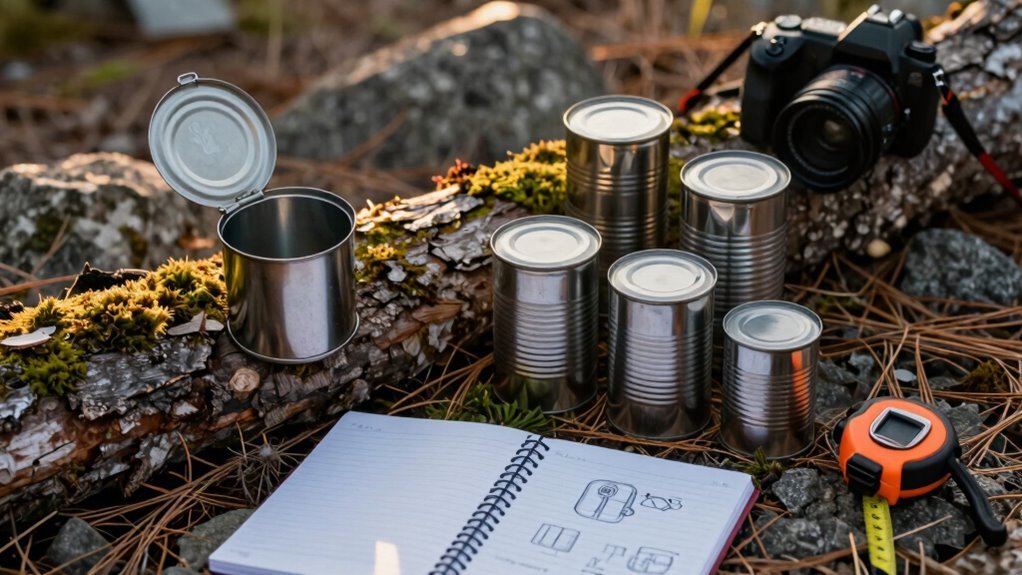
Wondering how much food you can actually stuff into a bear canister? Not much, it turns out—but just enough!
A good rule of thumb: divide the canister’s cubic inches by 100 to estimate how many days of food it holds.
So, a 500 cubic inch model? That’s about 5 days, easy.
And hey, don’t forget—you’ll probably eat your first day’s food before you even need to stash it, so that’s a free bonus day!
For quick overnights, a 300 cubic inch can works fine and keeps weight down.
Hitting the trail for a week? Grab a 700 cubic inch model.
Bigger trips need bigger brains—and bigger canisters.
The Bearikade Expedition, for example, crams in 13 days if you’re a packing ninja.
Just remember, crush those empty wrappers, choose calorie-dense meals, and always test-pack at home.
Your future bear-proof self will thank you—no squished granola bars, we promise!
This estimation method works best with canisters like the Bare Boxer Champ or other popular models designed for efficient packing.
Pack Your Canister Efficiently and Securely
How do you turn a clunky bear canister into a well-oiled food fortress?
Start by ditching bulky packaging—repack meals into labeled Ziploc bags and squish out extra air to save space.
Use clear, food-grade liners to keep smells contained (bears *love* snack drama).
Pack meals in reverse order: last day first, with breakfast at the bottom, lunch in the middle, and dinner on top—like a tasty sandwich stack.
Tuck spices and snacks near the lid for quick grabs.
Load the canister on its side to stack layers like pancakes, and keep it balanced in the center of your pack, resting on your sleeping bag.
Never strap stuff to the outside—bears aren’t pack mules!
As you eat, fill empty spots with clothes or trash to keep your pack stable.
And hey, your canister’s not just a food vault—it’s your backpack’s best buddy.
Treat it right, and it’ll carry you (and your snacks) happy and safe.
Keep it at least 100 ft from camp to avoid attracting bears.
Store It Properly at Night and During Breaks
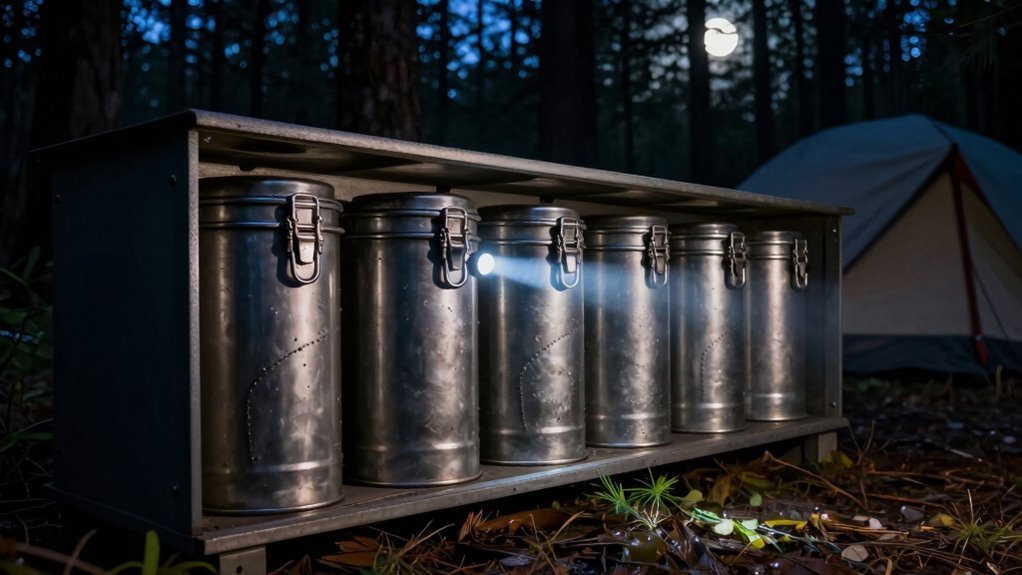
When the sun starts dipping and dinner’s done, don’t just plop your canister near your tent and call it a night—think of it as tucking in your snack security blanket.
Stash it 100 feet from camp, on flat ground, hidden in brush or behind a rock—never near cliffs or water.
Keep it on the ground; bears hate surprises, and so do you.
Tuck every scrap inside—food, wrappers, toothpaste, even that smelly chapstick—then snap it shut tight.
Make sure nothing’s left in your tent, because midnight snack raids aren’t cute.
During the day, stash your canister securely if bears are around, but keep first meals handy in a labeled bag.
Repackage food to save space, and slap on reflective stickers so you don’t play hide-and-seek in the dark.
Smart storage keeps bears wild and your dinner yours.
This rule applies year-round, including winter trips, so always carry your bear canister.
Place It in Compliance With Park Regulations
You’ve locked up your snacks, stashed the canister far from camp, and double-checked that even your minty toothpaste is out of reach—good job, you’re officially bear-proofing like a pro.
But don’t celebrate just yet—now you’ve gotta make sure you’re following the rules of the park you’re in, ’cause nobody wants a surprise fine or a bear at bedtime.
- Check if your park requires IGBC-approved canisters—some, like Grand Teton, won’t accept anything else.
- Look up seasonal rules—Rocky Mountain, for example, only mandates canisters April through October.
- Know trail-specific zones—the PCT through Yosemite? Canister or bust.
- Use the park’s approved list—Yosemite and Olympic each have their own, so don’t assume your gear makes the cut.
Rules keep you safe, so read ’em like your trip depends on it—because it does!
Avoid Scent-Contaminating Mistakes
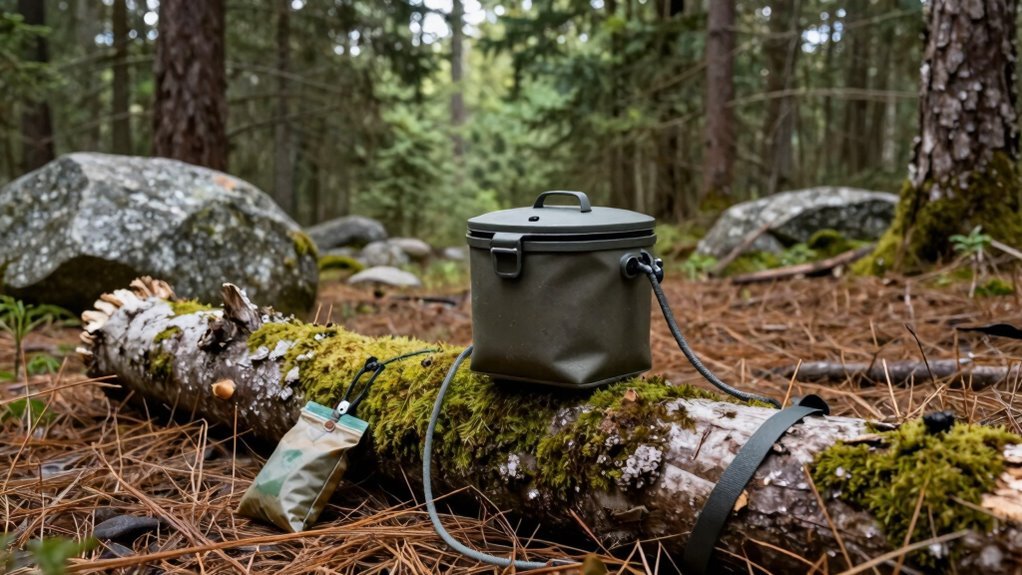
Toss that garlic aioli — seriously, leave it at home — because bears don’t need a five-star dining experience, and you don’t need a midnight kitchen raid.
Instead, repackage meals into resealable bags, squish out the air, and toss them in an odor-proof Opsack inside your canister.
Label everything so you’re not guessing what’s for dinner at 9 p.m.
Skip the bacon and steaks — they scream “dinner bell” to bears.
And yep, that includes toothpaste, sunscreen, and your minty toothbrush.
They’re all going in.
Double-bag anything with DEET to protect your gear and your grub.
Wash your canister after use, scrub your hands, and burn trash when you can.
Even crumbs are sneaky scent bombs.
Remember, the canister’s tough, but smart packing makes it foolproof.
Your backpack shouldn’t smell like a snack — keep it clean, keep it hidden, and keep the bears guessing.
Handle Emergencies and Bear Encounters Calmly
Even if you’ve packed your bear canister like a pro and banished all traces of garlic aioli to the compost bin.
the wild has a way of keeping you on your toes—because bears don’t always read the same safety guides you do.
Stay cool and think fast with these go-to moves:
- Stand your ground and speak firmly—tell the bear “Hey bear, back off” while slowly waving your arms; no screaming, no running (they sprint 35 mph—yikes!).
- Use bear spray early—pull it fast, aim low, and spray a cloud if the bear charges; it works way better than a gun.
- Back away slowly—give the bear space and an escape route; never corner it or block its path.
- Fight hard if attacked—if it’s a surprise or predatory charge, yell, kick, and go for the eyes and nose.
Frequently Asked Questions
Can I Use a Bear Canister for Air Travel?
Yeah, you can totally use a bear canister for air travel—it’s allowed in both carry-on and checked bags.
Just don’t pack bear spray, ’cause TSA really hates that.
The canister might get extra looks since it’s heavy and weird-shaped, but as long as it’s empty, you’re good.
Pro tip: use it as a mini stool on the trail.
Smart, right?
Are Bear Canisters Required in All National Parks?
Not every park throws you to the bears—bear canisters aren’t required everywhere, but many do insist on them where grizzlies or black bears roam.
You’ll need one in Yosemite, Grand Teton, and parts of the Cascades, but skip it in the Smokies where cables do the job.
Always check rules, ’cause they change faster than weather in the mountains, and you don’t want a hungry bear raiding your trail mix!
Do I Need to Hang a Bear Canister if Required by Law?
No, you don’t need to hang a bear canister if it’s required by law—just place it on the ground.
Canisters are designed to stay put, not swing from trees like a piñata.
They’re tough, bear-proof, and rangers want them nearby, sealed tight.
Leave the climbing for the peaks; your dinner’s safe inside.
Just kick it a few feet from your tent and sleep easy—no acrobatics needed!
Can I Share a Bear Canister With My Hiking Partner?
Yeah, you can totally share a bear canister with your hiking buddy—just make sure it’s allowed where you’re headed.
Most places let two people split one if it fits all your food and scented stuff.
Pack smart: heavy items in the middle, balance it in your pack, and stash it 100 feet from camp.
Bears won’t roll it far, so one’s plenty.
Win-win: lighter load, happy bears, and you won’t get fined—or worse, kicked out!
Are Bear-Resistant Bags as Effective as Canisters?
No, bear-resistant bags aren’t as tough as canisters—here’s why:
bears chewed through 60% of non-canister food storage in one study.
You’re way safer with a canister; it’s like a mini fortress.
Bags? More like chew toys with mixed results.
Sure, they’re lighter and squishable, but if you want peace of mind, go hard-sided.
Your snacks stay safe, and you’ll sleep easier, not wondering if Mr. Bear got takeout tonight.
Conclusion
You’ve got this! Did you know black bears can smell food from over a mile away? Yep, your snack stash is basically shouting at them. But with the right-sized canister, packed tight and stored 100 feet from camp, you’re golden. Just follow park rules, keep smells contained, and stay calm if you see a bear. Play it smart, stay safe, and laugh it off—because no one wants a bear stealing their marshmallows!
References
- https://sectionhiker.com/how-many-days-of-food-can-you-pack-in-a-bear-canister-or-ursack/
- https://backpackinglight.com/forums/topic/70167/
- https://www.rei.com/learn/expert-advice/bear-resistant-canisters.html
- https://www.youtube.com/watch?v=LKto-J60fW4
- https://andrewskurka.com/food-bear-canisters-guide-approved-volume-cost/
- https://appalachiantrail.org/experience/hike-the-trail/essential-skills/safety/bears-food-storage/bear-canister-lending-programs/
- https://zpacks.com/blogs/news/everything-you-need-to-know-about-bear-canisters
- https://www.halfwayanywhere.com/trails/pacific-crest-trail/bear-canister-tips-strategies/
- https://sectionhiker.com/how-to-carry-a-bear-canister-faq/
- https://www.youtube.com/watch?v=ZB9g63nwGzw