Common Packing a Backpack Mistakes and Easy Fixes
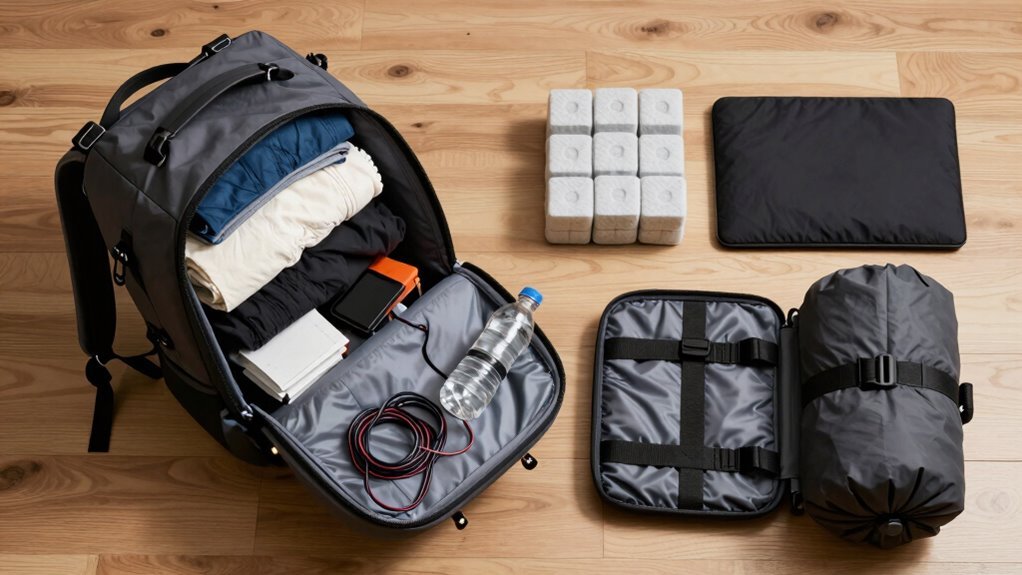
You’re probably lugging around six extra clothes and three pairs of shoes you’ll never wear—trim the fat and roll your clothes to save space. Common packing a backpack mistakes include overloading with unnecessary items, which adds weight and reduces efficiency.
Skip the “just in case” junk and focus on essentials only. Load heavy gear close to your back and use the hip belt to evenly distribute weight, preventing strain and poor posture.
Keep snacks, sunscreen, and rain jackets in easy-to-reach spots for quick access. Tighten compression straps to stabilize the load and maintain balance while walking.
Never skip weighing your pack before heading out. Doing so helps avoid common packing a backpack mistakes that lead to fatigue and discomfort on the trail.
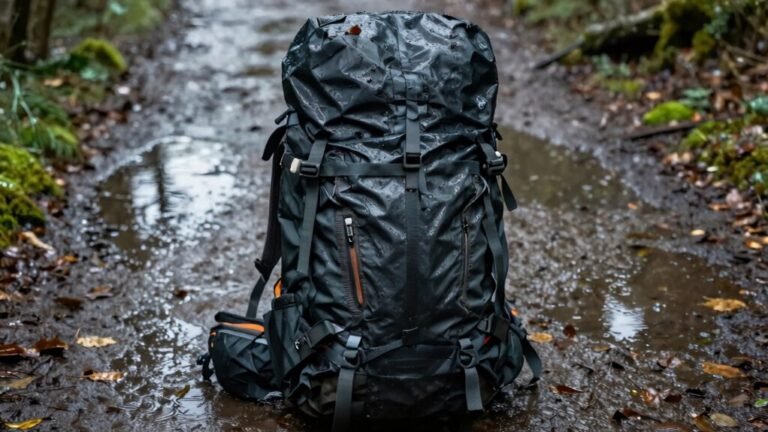
There’s a clever trick with trash bags you’ll definitely want to try—use them as lightweight, waterproof liners for your gear. This simple fix keeps your belongings dry and organized without adding bulk.
Overpacking and Carrying Unnecessary Items
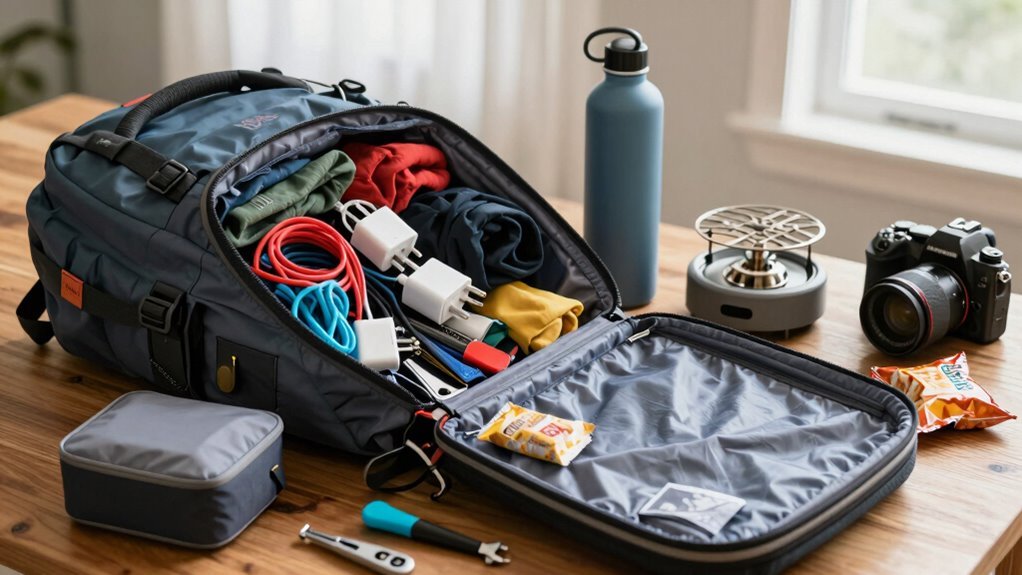
Packing for a trip? You’re not alone if you toss in “just one more thing” — and another, and another.
Over 60% of Brits and 62% of Americans pack way more than they need.
If you’re between 18 and 24, there’s a 75% chance you’re overpacking.
Women tend to bring extra shoes (three pairs too many!) and makeup, while men sneak in extra books and gadgets.
You might even be stuffing in six unnecessary clothing items without realizing it.
Cities like Leeds and Belfast top the charts for overpackers — guilty as charged?
The good news? Fixing this is easy.
Make a list and check it thrice, roll clothes to save space, and skip filling that last gap with “just in case” shirts.
Your backpack — and your back — will thank you.
Stop packing your whole closet and start traveling lighter!
Up to one-third pack less than 24 hours before travel, leading to rushed, less thoughtful packing choices.
Ignoring Weight Distribution Principles
Ever wonder why your backpack feels like it’s trying to wrestle you into the dirt halfway through your hike? It’s probably because you’re ignoring weight distribution. When you don’t balance your load, your body pays the price—achy shoulders, sore back, and wobbly steps become your new normal. Skip the hip belt? Big mistake. It’s meant to carry 60–80% of the weight, not your poor shoulders. Keep heavy stuff close to your back and centered, so your pack doesn’t pull you backward like a cartoon anvil. Uneven sides twist your posture, making you walk like a leaning tower. And shoving gear randomly wastes space and time—especially when you’re digging for snacks. Fix it: load smart, balance left and right, and let your hips do their job. A well-distributed pack doesn’t just feel better—it makes you move like a trail pro, not a pack mule. Proper weight distribution contributes to a healthy posture and prevents long-term strain, so always prioritize balanced weight.
Placing Heavy Items Too High or Too Low
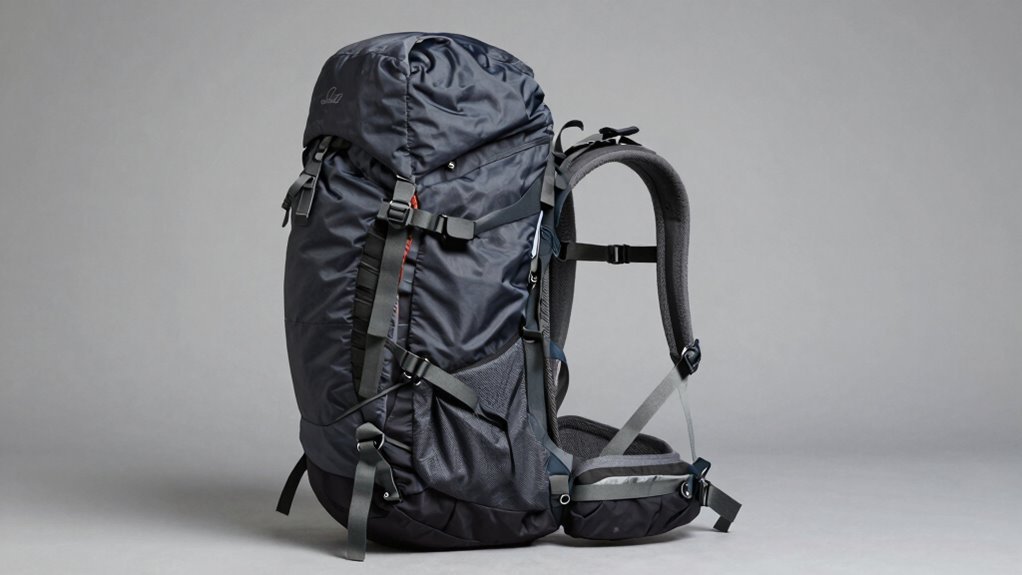
If your backpack feels like it’s staging a rebellion every time you take a step, you might be guilty of letting heavy items drift too far up or down.
When you stash heavy gear high, it pulls you backward like an invisible troll yanking your shoulders. Place it too low, and you’ll lean forward like a confused penguin, straining your core and wobbling on uneven trails.
Either way, your balance suffers and fatigue sneaks in fast.
The sweet spot? Keep dense items—like food, fuel, or your water bladder—centered against your back, between your hip bones and shoulder blades.
This keeps the weight over your hips, not your shoulders, so you stay upright and steady.
Pack smart: build a firm core first, then cushion it with lighter stuff.
Your back will thank you, and hey—walking uphill might even feel fun!
This alignment supports a full-body stress test requiring coordinated muscle engagement to maintain proper posture and reduce injury risk.
Forgetting to Use Compression Straps
When your backpack puffs out like an overinflated balloon, wobbling with every step, you’re probably skipping a game-changer: the compression straps.
Those little bands on the sides? They’re not just decorations!
Tighten them and watch your pack shrink up to 55%, turning a bloated beast into a sleek sidekick.
Without them, gear shifts around like a sack of potatoes, pulling you off balance and wearing you out fast.
You’ll strain your back, lose energy, and feel every bump on the trail.
But here’s the magic: compression brings weight closer to your body, improves balance, and keeps everything snug.
It’s like giving your pack a big hug!
Plus, you can strap bulky gear—sleeping bags, pads, even snowshoes—right on the outside.
Don’t leave home without tightening down—your shoulders will thank you, and your hike will feel lighter, smoother, and way more fun.
Storing Frequently Needed Items in Hard-to-Reach Places
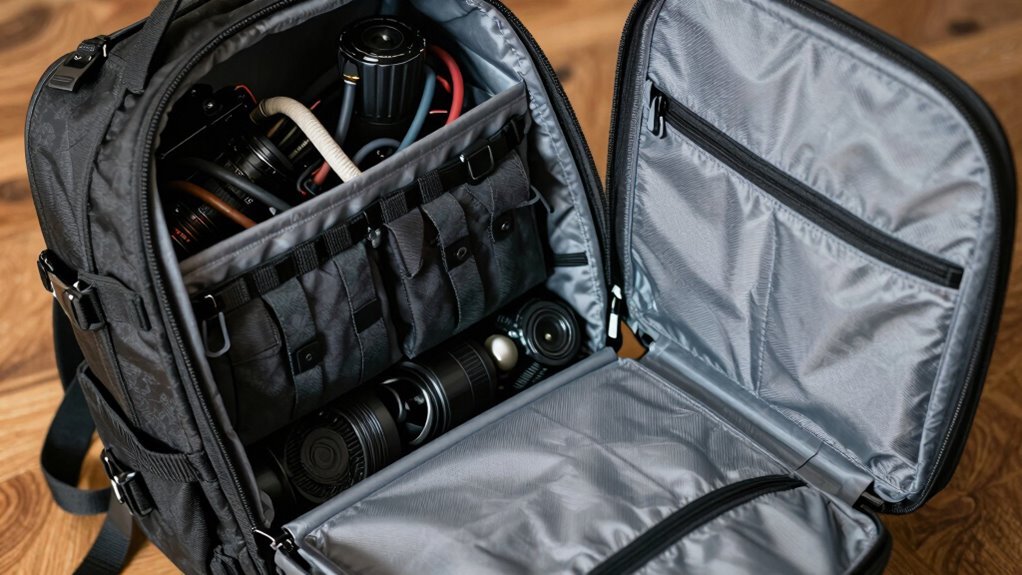
You just tightened your compression straps and now your pack sits snug against your back, riding smooth like it was made for your spine—great job!
But if your phone’s buried under socks or your keys are doing a disappearing act, let’s fix that fast.
Stop tossing daily essentials into deep, dark corners like they’re going into witness protection.
Keep your phone, wallet, and charger in the front pocket or a side caddy—think of it as their VIP lounge.
Use the front compartment for your laptop, the middle for pens, the back for books.
Slide water bottles into side pockets, not the abyss.
Store each item in the same spot every day—your muscle memory will thank you.
Quick access means no more frantic digging during class changes.
Make life easier: front and center for the things you use, not forgotten at the bottom like last year’s snacks.
Not Securing Loose Items Inside the Pack
Letting loose items rattle around in your pack? That’s like inviting chaos on your hike.
Shifting gear throws off balance, makes your pack sway, and turns a smooth trail into a wrestling match.
Every step jostles things lower or to the sides, messing with your center of gravity—especially on steep or rocky paths.
Plus, air gaps waste space and kill efficiency.
But here’s the fix: pack smart and snug.
Fill empty pockets with soft items like clothes or sleeping pads to lock everything in place.
Use just a few small stuff sacks for essentials or wet gear—don’t overdo it.
Line your bag with a trash bag for waterproofing without the slide.
Pack heavier stuff close to your back and near the top.
When you’re done, give your pack a shake—if it holds firm, you’ve nailed it.
Secure, stable, and ready to roll!
Wearing the Backpack Incorrectly
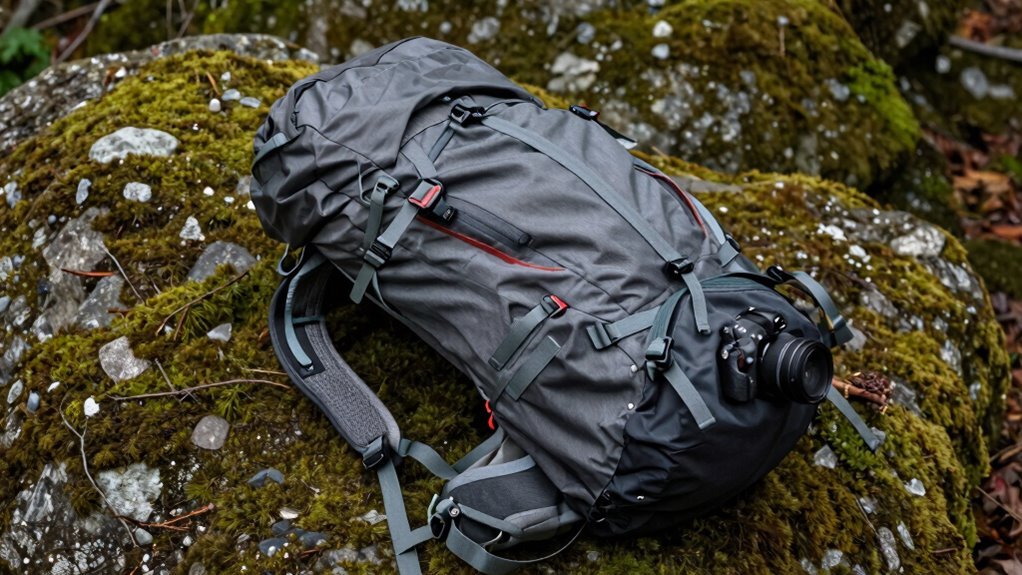
While your backpack might look ready to hit the trail, wearing it wrong can turn a fun hike into a wobbly, achy mess—like showing up to a dance battle in muddy boots.
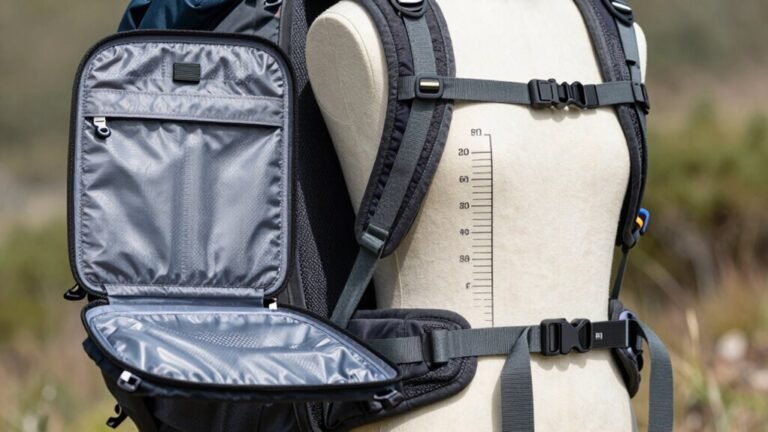
- Slide that hip belt up so the padding hugs your hip bones, not your waist—keeps weight off your shoulders
- Tighten shoulder straps till the pack rides high on your back, not sagging onto your behind
- Buckle the sternum strap last and snug—not tight—to balance the load without squeezing your lungs
- Tug those load lifters at the top; they pull the pack close and stop it from wobbling like jelly on a plate
Get these right, and you’ll strut down the trail like you’ve got springs in your step, not a sack of bricks.
Neglecting External Attachment Points
Ever wonder why your pack feels like a tangled jungle gym by mile five? You’re probably ignoring all those handy loops and straps built right into your backpack.
Daisy chains, D-rings, and gear loops aren’t just decoration—they’re secret storage hacks! Skip them, and you’ll end up strapping heavy sleeping pads to the bottom, making your pack bounce like a kangaroo on espresso.
Keep bulky stuff low and you’ll throw off your balance, strain your back, and fight instability with every step.
Instead, secure heavy gear around your mid-back, close to your spine, using load lifters and stabilizer straps.
Wet tent or muddy boots? Use external tie-outs to keep the mess outside.
And for pete’s sake, stop letting branches snag your gear—smart attachments mean fewer surprises.
Use your pack’s features, and you’ll hike smoother, lighter, and way more confidently.
Failing to Pack Essentials in an Accessible Pocket
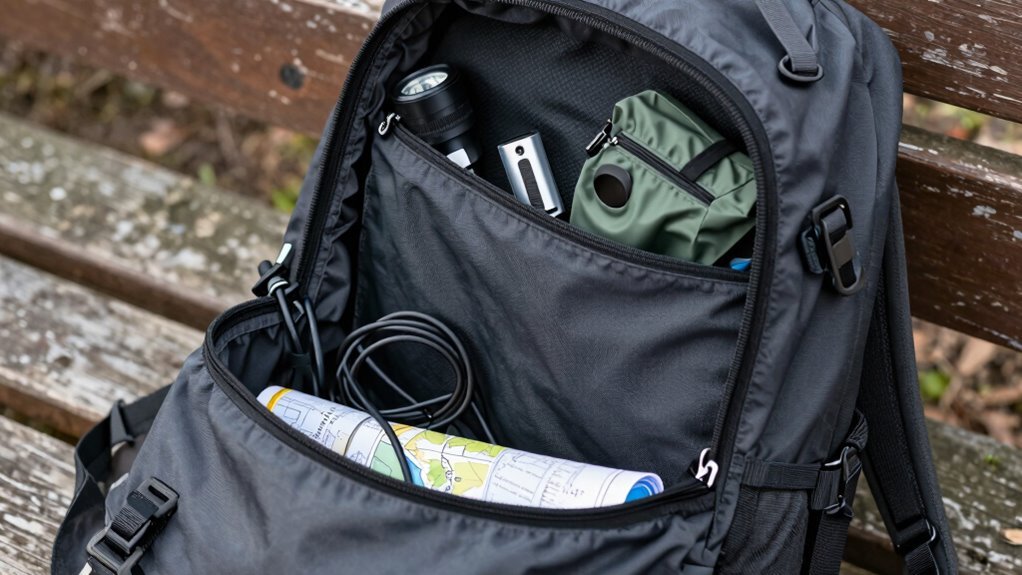
You’ve strapped down every loose end and tamed the jungle gym—great job!
But if you’re digging through your pack like it’s a game of “find the snack,” you’re missing a key trick: accessible pockets are your BFF.
Stop burying essentials under socks and freeze-dried meals!
Keep the stuff you need fast, *fast*.
- Slide your water bottle into a side pocket—hydration shouldn’t be a treasure hunt
- Tuck maps, sunscreen, and bug spray in zippered outer pockets—hello, quick grabs!
- Store your bio break kit and camera where you won’t miss ‘em (yes, even mid-hike)
- Use shoulder strap holders or chest pockets for phones or headlamps—game changer!
Stop over-packing the main zone and let those exterior pockets work for you
Your future self will high-five you when it’s raining and your raincoat isn’t buried six layers deep.
Smart access = less fuss, more fun!
Skipping a Pre-Departure Weight Check
How’s your pack feeling—like a feather or a freight train?
If it’s closer to a moving truck, you’re not alone—most kids carry way more than they should.
Skipping a pre-departure weight check is a super common mistake, but it’s an easy fix.
Did you know the average backpack weighs 13.5% of a child’s body weight? That’s over the safe 10–15% limit!
Too much weight stresses your back, neck, and shoulders, leading to aches or even long-term damage.
But here’s the good news: just step on a scale with your pack, do a quick math trick (multiply your weight by 0.15), and boom—you’ve got your max limit.
Aim for that number and adjust if needed.
Your back will thank you later—no one wants to walk around like a hunched-over turtle!
Frequently Asked Questions
How Do I Choose the Right Backpack Size?
You pick the right backpack size by matching it to your torso, not your height—measure from your neck bump to your hip bones.
Grab a pack that fits your adventure: 15–24L for daily errands, 24–35L for weekend trips, up to 45L for carry-ons.
Slap it on, tighten the hipbelt—it should hug just above your hips.
If it wobbles like a wobbly tooth, try another.
Fun, right?
Can I Wash My Backpack in a Machine?
You can toss your backpack in the wash, but don’t throw caution to the wind—check the care label first.
Use cold water and a gentle cycle, like you’re tip-toeing through a sleeping dragon’s cave.
Toss it in a mesh bag, skip the bleach, and never, ever use hot water.
When it’s done, air-dry it like it’s sunbathing in the shade—your backpack’ll thank you with years of loyal service.
What’s the Best Way to Store a Packed Backpack?
You’re best off storing your packed backpack upright on a shelf or hook, where it stays dry and won’t slump.
Keep it away from damp basements or hot sunbeams—you wouldn’t bake your shoes, right?
Give it breathing room, not a suffocating closet hug.
Toss in a moisture absorber, like silica gel, and air it out monthly.
Think of it as a tiny backpack spa day—keeps it fresh, ready, and grinning for your next adventure!
How Often Should I Replace My Backpack?
You should replace your backpack every 1.5 to 2.5 years—think of it like upgrading your phone, but way less dramatic.
If straps fray, zippers quit, or it’s held together by hope and safety pins, it’s time.
Daily wear adds up fast, especially with heavy books and chaotic hallways.
But hey, if it’s still sturdy, keep it rolling!
Just don’t let a sagging pack ruin your posture or style.
Are Frameless Backpacks Good for Heavy Loads?
No, frameless backpacks aren’t great for heavy loads—you’ll feel every extra pound digging into your shoulders.
They’re light and nimble, sure, but once you go past 20 pounds, your hips miss out on support.
Think of it like carrying groceries in a tote bag—fine for a little, torture on long hauls.
Stick to lighter loads, or grab a framed pack that’ll actually help you carry the weight comfortably.
Conclusion
You’ve packed light, but your back screams heavy, so smart packing wins every time. Balance weight like a seesaw, not a sidecar—hip belt snug, straps tuned. Toss junk from the deep void; stash snacks and maps where fingers find them fast. Clip gear outside, not just for looks—save space, stay sleek. Check weight before you trek, not when you’re bent like a question mark. Pack right, hike happy, and laugh, because nobody wants a wardrobe malfunction on a hill.
References
- https://www.cabidigitallibrary.org/do/10.5555/collection-news-66256/full/
- https://www.prioritypass.com/blog/2019/overpacking-is-real-heres-how-to-avoid-it
- https://files.eric.ed.gov/fulltext/EJ1468860.pdf
- https://www.bu.edu/articles/2012/what-every-student-should-know-about-backpacks/
- https://www.jianglidabag.com/data-backed-when-did-backpacks-become-popular-for-school-3-key-trends-for-2025-buyers/
- https://spinalandsportscare.com/wp-content/uploads/2014/07/Association-of-Backpack-Use-and-Back-Pain-in-Adolescents.pdf
- https://woosir.com/blogs/articles/how-to-maintain-proper-weight-distribution-with-a-backpack-duffle-bag
- https://www.youtube.com/watch?v=u2weHhTSw3s
- https://www.switchbacktravel.com/info/how-to-pack-backpack
- https://www.sunnysports.com/blog/essential-guide-to-backpack-weight-distribution-for-effortless-hike/