Hydration Checklist for Your Next Hike
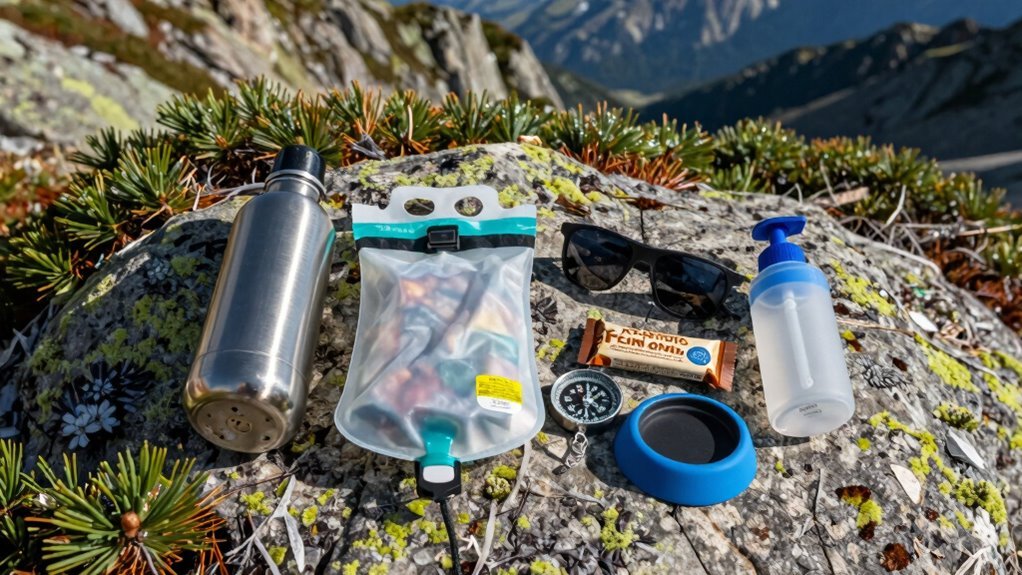
Bring enough water—about 2 liters for a four-hour hike—to stay properly hydrated on the trail. Pack more if conditions are hot, steep, or dry, as hydration is essential for peak performance.
Use a lightweight hydration bladder like HydraPak or CamelBak for easy sipping while you walk. Always carry a water filter or purification tablets to safely refill from natural sources.
Toss in electrolytes after 45 minutes to maintain balance, especially in demanding conditions. Skip dehydrating drinks like coffee and soda before and during your hike.
Set a watch alarm to drink every 20 minutes and stay ahead of thirst. Your brain, muscles, and mood will perform better when you prioritize consistent hydration.
Know Your Water Needs by Duration and Terrain
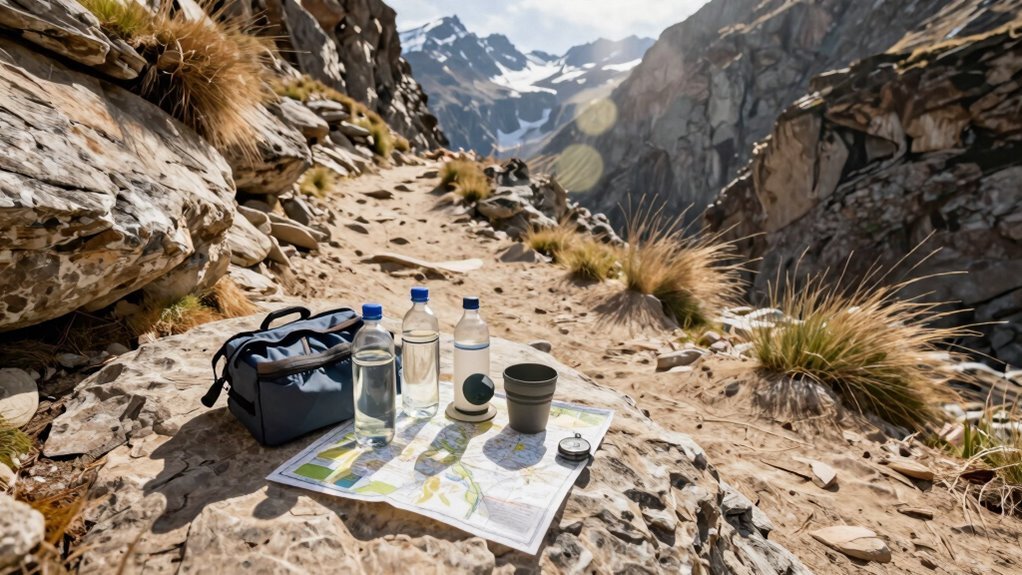
Ever wonder how much water you really need when hitting the trail?
For a moderate four-hour hike, you’ll want about 2 liters—roughly half a liter each hour.
But if it’s hot or you’re tackling steep climbs, you’ve gotta up that amount fast.
Sweating more on a rugged mountain path or carrying a heavy pack? Add extra water—your body will thank you.
In desert heat, you could need a full liter per hour, totaling 6–8 liters for a long day out.
And don’t forget pre-hike prep: drink 17–20 ounces two hours before starting.
Terrain and temperature change everything—what works on flat trails won’t cut it uphill in 90-degree heat.
You’re not just hiking; you’re hydrating smart.
Listen to your body, adjust on the fly, and remember: no one ever high-fived a dehydration headache.
Stay cool, stay wet, and keep moving!
Monitoring urine color helps ensure you’re drinking enough throughout the day.
Choose the Right Hydration System for Your Hike
You’ve got your water needs dialed in based on how long you’re hiking and what kind of terrain you’re tackling—now it’s time to pick the right way to carry all that water.
Don’t let leaks, slow sips, or bulky gear ruin your flow.
Choose a system that fits your style, climate, and pack.
- Go lightweight with the HydraPak Contour 2L—it’s only 5 ounces and squishes down fast
- Want ease? The CamelBak Crux has a quick-fill screw top and 20% faster flow, so you’re sipping, not waiting
- On a budget? Cherainti’s $15 bladder fits snug in most packs and won’t drain your wallet
- Hiking in cold weather? Grab the insulated HydraPak HydraSleeve—your sips stay liquid, not slush!
- It can be turned inside out for easy cleaning, helping prevent mold and lingering tastes.
Pack Emergency Water Purification Methods
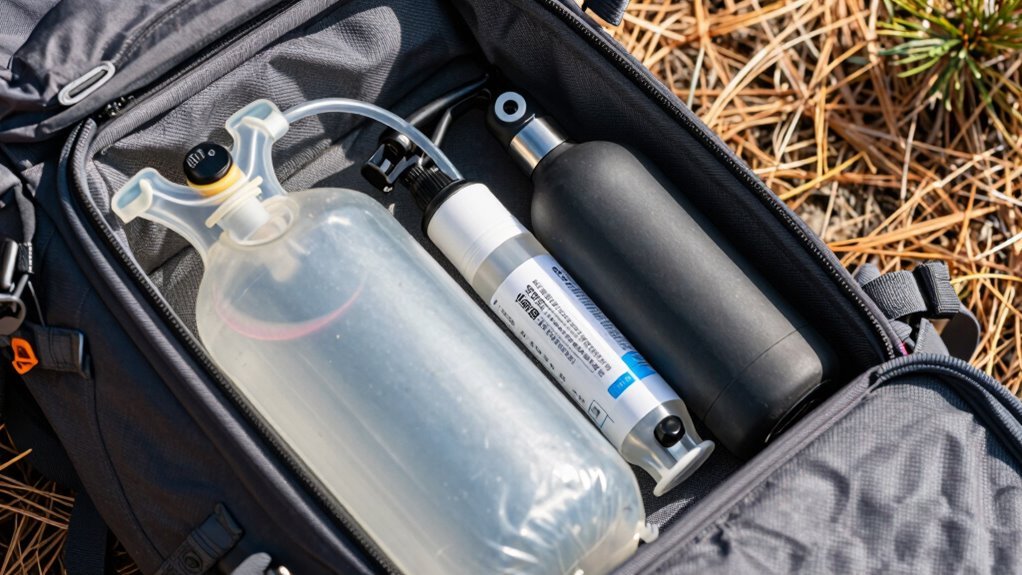
When the trail throws a curveball and your water runs low, don’t panic—be ready with a backup plan that turns sketchy streams into safe sips.
Boil water for a minute (or three if you’re high up) to nuke germs—no filter needed, just a pot and a flame.
Pack a portable filter like the Sawyer Squeeze; it’s light, fast, and screws right onto your bottle.
Just watch for clogs and keep it clean on both ends.
Got no gear? Drop in chemical tablets—Aquamira or Aquatabs work fast and taste better than iodine, which can be iffy in cloudy water.
UV pens zap bugs with light but need batteries and clear water.
And hey, if you’re truly desperate, leave a clear bottle in the sun—but don’t bet your stomach on it.
Mix methods when you can: filter first, then zap or treat.
Your future self will thank you—trust us, nobody wants the squirts on a ridge mile from nowhere.
The Micro Squeeze is lighter than the full-size Squeeze, making it a top choice for hikers focused on minimizing pack weight.
Mark Reliable Water Sources on Your Route
Where will you find your next drink when the trail’s got you thirsty and your bottle’s running dry? Don’t wing it—plan ahead and mark reliable water sources like a pro. Use these tricks to stay hydrated without guessing:
- Check trail maps, apps, and websites like pctwater.com—you’d be surprised how much real hikers share
- Call rangers or stewards for the latest scoop; sometimes the creek’s a trickle or already dried up
- Look for springs high up near ridges—cleaner, colder, and less likely to host hungry giardia parties
- Scout valleys and dips where water gathers, but skip spots near farms or stagnant puddles wearing algae hats
You’ve got this! A little prep means fewer “dehydration dramas” and more trailside sipping with confidence.
Flavor Your Water to Encourage Drinking
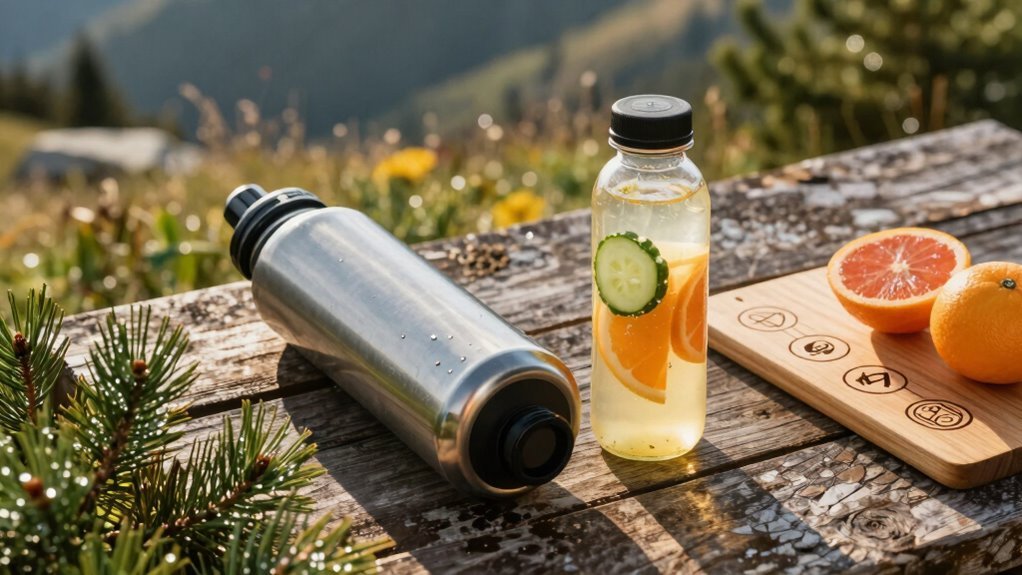
Though plain water gets the job done, a splash of flavor might be the secret weapon your hydration game’s been missing.
You’re way more likely to drink up when your water tastes like lemon-ginger zest or cucumber-mint cool, not like a stale trail puddle.
And don’t worry—flavored water with real, organic ingredients stays over 99% water, so you’re still hydrating like a pro.
Plus, natural sweetness from sources like maple syrup means no artificial junk or gut troubles.
Many options pack in electrolytes, potassium, and B vitamins to keep your muscles happy and energy steady on long climbs.
Skip the neon-colored powders with mystery ingredients—short lists with actual fruit are your best bet.
Whether you use lightweight powders or grab a ready-to-drink bottle, flavored water makes sipping fun, so you’ll drink more without even thinking.
Hydration just got a serious upgrade—cheers to that!
Monitor Your Hydration With Urine Color
You’ve got your flavored water bottle clipped to your pack and your taste buds happy—nice work—
but don’t forget the real MVP of hydration: your bathroom breaks.
Peeking before you hike out gives you a quick, surprisingly accurate clue about your fluid levels.
Here’s what to watch for:
- Pale straw or light yellow? Perfect! You’re hydrated and ready to crush the trail.
- Medium to dark yellow? Your body’s begging for water—sip now, not later.
- Amber or honey-colored? Uh-oh, you’re dehydrated; chug water like it’s your job.
- Clear with no color? Easy there—slowing down prevents overhydration and awkward sodium shortages.
Urine color’s about 90% reliable, but remember: beets, meds, or that pre-hike coffee can trick you.
Use it as a fun, fast check—not the final word.
Stay smart, stay balanced, and let your pee tell the tale!
Bring Electrolyte Replacements for Long Trails
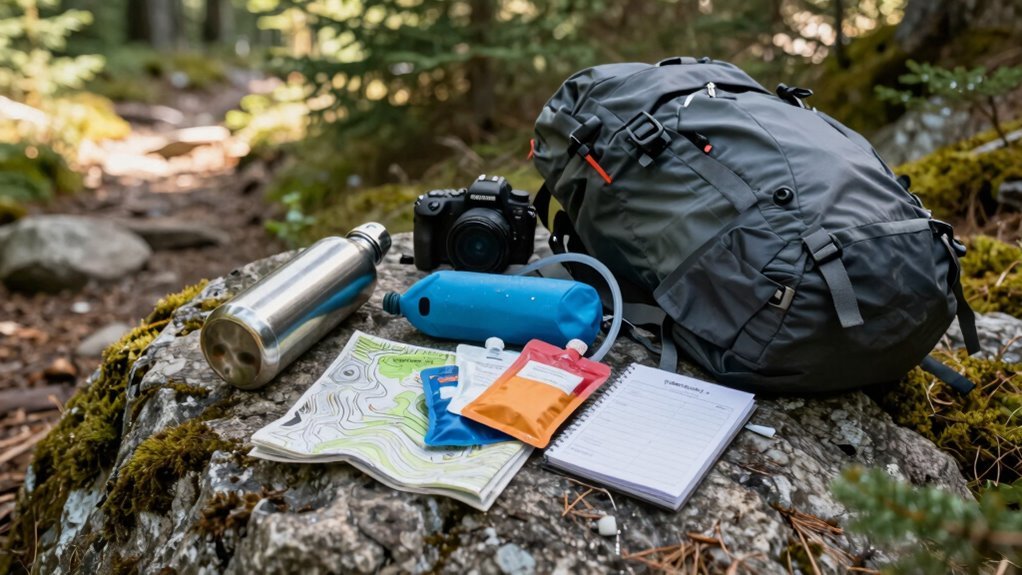
When sweat starts dripping down your back and your water bottle’s already half gone, that’s your cue—electrolytes are on the clock.
You’re losing sodium, potassium, and even a bit of magnesium with every drop, and skipping replacements can leave you sluggish, crampy, or worse—short of breath halfway up a hill.
Don’t wait until you’re wobbling like a tired noodle; start replenishing after 45 minutes of grinding effort.
For hikes over an hour, especially in heat, toss in a SaltStick, chug a balanced sports drink, or mix a powder like Skratch Labs right into your bottle.
Gels and chews work too—just wash them down with water.
You don’t need a science degree to get it right: replace what you lose, not more.
Too much salt? That’s a one-way ticket to bloating town.
Stay smart, stay salty, and keep crushing those long trails like the hiking hero you are.
Avoid Dehydrating Beverages Before and During
While that morning latte might feel like a non-negotiable, saving it for after your hike is one of the easiest ways to stay ahead of dehydration.
You’re better off skipping drinks that sneakily drain fluids, especially when you’ll be sweating it out on the trail. Play it smart with what you sip—your body will thank you later.
- Hold off on coffee and strong tea—they’re diuretics, making you pee more, especially in heat.
- Skip sugary sports drinks straight from the bottle; their high sugar content can slow hydration.
- Avoid alcohol before hiking—even if beer isn’t *totally* dehydrating, it still messes with fluid balance.
- Choose water or diluted electrolyte mixes—they hydrate without the pee-inducing side effects.
Your pack’s lighter when you leave the lattes behind—plus, who needs caffeine jitters on an uphill scramble?
Set a Reminder to Drink at Regular Intervals
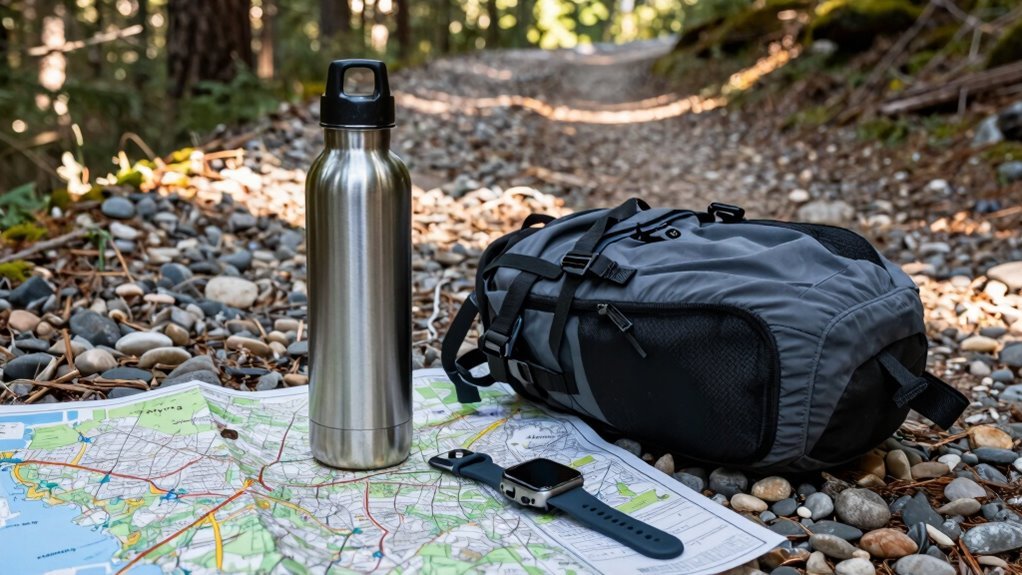
Ditching the coffee is great, but staying hydrated means more than just what you leave behind—it’s about building smart habits on the trail.
You’ve packed water, but will you remember to drink it?
Set a timer or use a hydration app to buzz every 15–20 minutes—your phone or watch makes the perfect nagging buddy.
Sip 5–8 ounces each time; small gulps beat chugging later.
This keeps your body absorbing fluids fast and helps you avoid that “I’m so thirsty I could drink a river” panic.
No more waiting until your mouth feels like the Sahara.
Plus, steady sipping means fewer pit stops and steady energy.
Slip a reusable bottle in your pack or go hands-free with a bladder—easy access wins every time.
Your brain, muscles, and mood will thank you, especially when the trail gets tough.
Stay ahead of thirst, and hike like a hydrated pro!
Adjust for Weather and Altitude Changes
Since the air up high’s drier than a popcorn fart, you’re losing more water just breathing—yep, every gasp zaps moisture faster than a desert wind.
Hike in the cold or climb a mountain and your hydration needs soar, even if you don’t feel thirsty. Don’t let the chill fool you—dehydration sneaks up fast when the air’s thin and your body’s working overtime.
- Breathe harder at altitude? You’re losing water with every exhale—no sweat needed.
- Cold weather numbs your thirst, but your body still craves fluids.
- Aim for 4–6 liters a day, and add extra electrolytes to stay balanced.
- Check your urine—if it’s darker than lemonade, you’re behind the curve.
Drink up, stay sharp, and keep your energy high—your brain and muscles will thank you when the trail gets steep.
Frequently Asked Questions
Can I Reuse Plastic Bottles for Hiking Hydration?
Yeah, you can reuse plastic bottles for hiking, but don’t push it too long. Wash them well with soap and swap them out every week or two—especially if they’re scratched or warped. Reusing them saves cash and trees, but cracked bottles leak microplastics faster than a sieve. Try using ones made from safer plastics like #2, #4, or #5. Or hey, go wild and grab a reusable steel bottle—your body (and the planet) will thank you!
How Do I Clean My Hydration Bladder After a Hike?
You clean your hydration bladder right after your hike, don’t wait! First, take it apart—bladder, hose, bite valve—all of it.
Give it a quick rinse with warm water, then fill it with a cleaning mix like baking soda or a cleaning tablet.
Swish it around, let it soak a bit, then scrub gently if needed.
Rinse well, hang it upside down to dry, and you’re golden—hello, fresh bladder!
Is It Safe to Drink From a Stream Without Filtering?
No, you shouldn’t drink from a stream without filtering—it’s a gamble your stomach won’t thank you for.
Even crisp, babbling water can hide tiny nasties like giardia or bacteria from animal waste.
You might get lucky, but why risk diarrhea miles from a bathroom?
Toss a lightweight filter in your pack; it’s cheap insurance.
Stay safe, stay hydrated, and let your taste test wait till you’re back at a tap!
Do I Need to Hydrate on Short, Easy Hikes?
Yes, you do need to hydrate on short, easy hikes—you’re walking, sweating, and breathing, not just sightseeing!
Drink before you’re thirsty, sip every 15–20 minutes, and pack at least 750 ml for a 3-mile trek.
Thirst isn’t a backup alarm; it’s a check engine light.
Stay ahead of it, keep your energy up, and save “I’m parched!” drama for bad reality TV, not your trail time.
Can Overhydration Be Dangerous During a Long Hike?
Yeah, overhydration can actually be dangerous on long hikes—you might feel like a camel, but chugging too much water without salty snacks can drop your sodium levels fast.
You could end up confused, nauseous, or worse.
Your kidneys can’t keep up if you’re guzzling more than a liter per hour, so sip smart, eat salty food, and maybe skip the water challenge.
Stay clever, not sloppy!
Conclusion
You’ve got this, trail champ! Staying hydrated isn’t just smart—it’s your secret weapon for killer views and zero cramps. Remember, water tastes better with a splash of flavor, and yes, your phone can remind you to sip before you get thirsty (trust us, your future self will high-five you). Tackle that trail, crush those climbs, and keep sipping like the hiking rockstar you are!
References
- https://www.fsguides.com/staying-hydrated-when-hiking-in-the-desert-southwest
- https://www.backpacker.com/survival/how-to-stay-hydrated-and-treat-dehydration/
- https://myoutdoorbasecamp.com/how-much-water-to-bring-while-backpacking-hiking/
- https://nonormal.com/blogs/news/managing-water-resources-on-a-day-hike
- https://www.battlbox.com/blogs/camping/how-much-water-should-i-carry-backpacking-a-comprehensive-guide-to-hydration
- https://hikingnewzealand.com/blog/how-much-water-to-take-on-a-hike
- https://www.rei.com/learn/expert-advice/hydrate.html
- https://www.cleverhiker.com/hiking/best-hydration-bladders/
- https://www.outdoorgearlab.com/topics/camping-and-hiking/best-hydration-bladder
- https://www.switchbacktravel.com/best-hydration-bladders