Do You Really Need Hydration?
You absolutely need hydration—your brain, muscles, and organs run on it like a phone runs on battery. Without proper hydration, your body can’t function efficiently.
Skip it, and you’ll feel tired, foggy, or cranky, even if you don’t realize why. Thirst is your body’s alarm, but by then, you’re already a bit parched.
Sip water throughout the day and watch how much better you feel. And hey, your morning coffee? It counts!
The Science of Hydration and Your Body
Ever wonder why you feel foggy or sluggish after skipping water all morning?
That’s your brain tapping out—mild dehydration drops your focus, memory, and reaction time fast.
When you lose just 2% of your body’s water, attention wavers and concentration tanks.
You mightn’t even realize how thirsty you are, but your cells are shriveling slightly, signaling your brain to conserve fluids.
Blood thickens, your heart works harder, and oxygen flow dips—hello, fatigue!
But guzzle some water, and boom: alertness spikes, even if you weren’t parched.
Thirsty folks perk up fast, though overzealous sipping won’t turn you into a genius.
Sweat more? You’re losing electrolytes and heat tolerance drops like a bad habit.
Stay hydrated, and your body cools efficiently, thinks clearly, and keeps energy humming.
It’s not magic—it’s science.
And honestly, water’s the ultimate life hack.
Thirst is the primary driver for fluid intake.(thirst is the primary driver)
How Much Fluid Do You Actually Need?
So, how much fluid does your body really need to keep running like a well-oiled machine? Well, it depends—you’re not one-size-fits-all, and neither is hydration.
If you’re an adult man, aim for about 13 cups (104 oz); women, shoot for 9 cups (72 oz), according to experts.
But some groups suggest more—up to 15.5 cups for men and 11.5 for women, including what you get from food (about 20%).
Kids need less, obviously—4 to 11 cups depending on age—while pregnant or breastfeeding women need a boost.
You also lose more in heat, during workouts, or at high altitudes, so drink up when life turns sweaty.
All fluids count—yes, even that tea or sparkling water—but skip the sugar bombs.
Build a habit: sip when you wake, with meals, and after busting a move.
Listen to your body—it’s smarter than a rigid rule.
About 20% of total water intake comes from water-rich foods like fruits and vegetables.
Signs You’re Not Drinking Enough
When your body’s running low on fluids, it doesn’t just sit quietly—it sends you signals, loud and clear, like a tiny internal alarm system that really wouldn’t mind a glass of water, please. You feel thirsty, right? That’s your first clue—your mouth goes dry, lips crack, and your pee turns dark yellow, maybe even smells strong.
If you’re only peeing once or twice a day, that’s a red flag. You might feel tired, dizzy when standing, or get a grumpy little headache.
Muscle cramps? Irritability? Yep, dehydration’s knocking.
Skin loses bounce—if you pinch it, it snaps back slow, like lazy taffy.
In babies, sunken eyes or a dry diaper spell trouble.
Severe cases bring rapid heartbeat, confusion, or fainting.
But hey, don’t wait—by the time you’re parched, you’re already behind. Keep sipping, stay bright, and let your body thank you with energy and sparkle. Fluid loss from sweating heavily during exercise or in hot weather can quickly lead to dehydration if not balanced with enough fluid intake.
Can You Drink Too Much Water?
Could your water bottle be working a little too hard? Yeah, it’s possible—chugging water isn’t always better.
Drink too much, and you might edge into water intoxication, where your cells swell and electrolytes plummet.
You might feel tired, nauseous, or notice you’re peeing way more than usual—like, over 10 times a day.
Your head might ache, your stomach bloat, and your muscles cramp or twitch like they’ve had too much coffee.
As things worsen, confusion, drowsiness, or even personality shifts can sneak in—your brain’s literally squished from too much fluid.
In scary cases, seizures, unconsciousness, or worse can happen fast—remember that radio contest tragedy?
Even Brooke Shields had a seizure from overdoing H2O.
So, don’t laugh—your kidneys aren’t tiny superheroes.
Balance is key, and your body will thank you for sipping, not guzzling.
Hydration Myths That Keep Circulating
Chugging water like it’s your job might sound heroic, but hold up—your body doesn’t need a flood to stay happy.
That “8 glasses a day” rule? Totally made up—your needs depend on activity, weather, and body size.
Thirst isn’t your enemy; yes, it means you’re slightly dehydrated, but for most, it’s a reliable cue.
And no, you don’t *only* hydrate with water—foods like watermelon and cucumbers count too!
Coffee and tea? They help, despite old myths.
But watch out: chugging liters won’t supercharge you, and in rare cases, it can backfire (hello, hyponatremia!).
Sports drinks and coconut water sound healthy, but unless you’re sprinting marathons, they’re often just sugary overkill.
Stick to water, eat juicy fruits, and trust your thirst—it’s smarter than the myths make it seem.
Hydration’s simple when you skip the hype.
Foods That Help You Stay Hydrated
Ever wonder how to quench your thirst and fuel your body at the same time? You’re in luck—your fridge is full of hydrating heroes! Nosh on watermelon (91% water!) or cucumbers (a whopping 96%) for a crisp, cool splash of hydration with bonus electrolytes.
Craving sweetness? Grab strawberries, pineapple, or juicy grapes—they’re packed with water, fiber, and antioxidants.
Veggie lovers, rejoice: lettuce, celery, and tomatoes are mostly water but bring big flavor and nutrients like potassium and vitamin A.
Don’t sleep on zucchini, kiwi, or oranges either—they hydrate while giving you energy and immune support.
And yes, spinach and bell peppers are hydrating rock stars too.
Even foods like yogurt, sweet potatoes, and chia seeds help maintain fluid balance.
Blend a smoothie with spinach, banana, and yogurt or sip a cool cucumber-lime drink—delicious, fun, and your body will thank you.
Who knew staying hydrated could taste this good?
Caffeinated Drinks and Hydration: The Truth
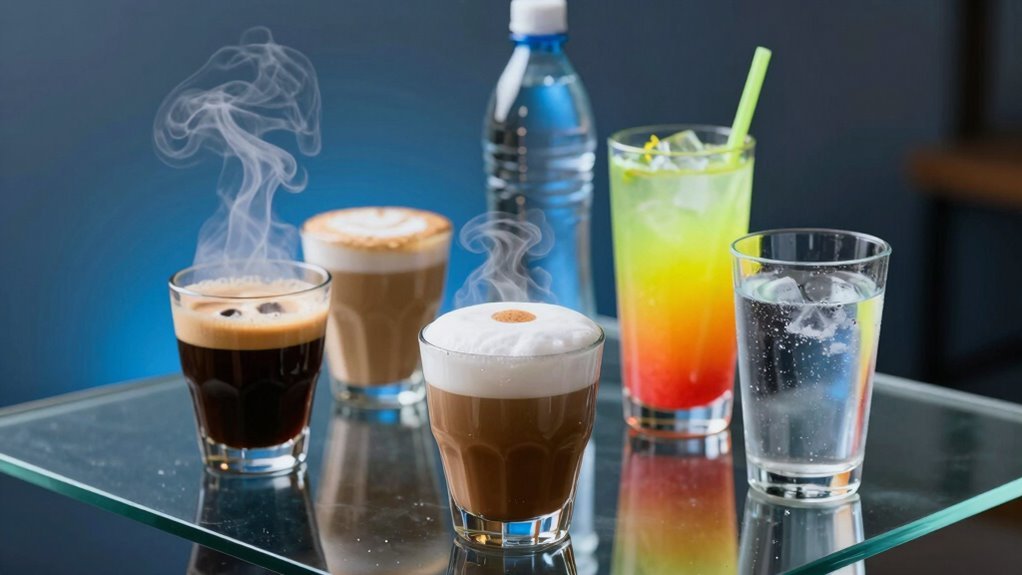
So, does your morning coffee sabotage your hydration?
Nope — not even close.
You’ve probably heard caffeine dehydrates you, but science says otherwise.
Unless you’re chugging 10 espressos at once, your coffee and tea contribute to your fluid intake just like water.
Research shows drinking coffee daily doesn’t change your hydration levels — total body water, urine output, everything stays balanced.
Sure, caffeine can have a mild diuretic effect, but your body adapts if you drink it regularly, making the effect practically a non-issue.
Habitual sippers retain fluids just as well as water drinkers.
Even during workouts, caffeine won’t leave you parched.
So go ahead, enjoy that latte — it’s not stealing your hydration, it’s helping it.
Your cup’s half full, not half empty!
Adjusting Hydration for Climate and Activity
You might drink your daily coffee without worry, but once you step outside, things heat up—literally.
In hot climates, you’re sweating up to a litre per hour, and your body may crave up to 12 litres a day—yes, really!
High humidity tricks your body into sweating more while cooling less, so you’ve gotta stay ahead of the game.
When it’s cold, don’t be fooled—dry air steals moisture with every breath, and bulky clothes hide sweat like ninjas.
Thirst might ditch you, but dehydration increases hypothermia risk.
At altitude, breathing zaps more water, and hypoxia teams up with dryness to wreck your energy.
Exercise? Of course, you need extra fluids—1–3 cups per hour—and electrolytes after hard efforts.
Whether hiking a mountain or power-walking in humidity, your body’s begging you: sip smart, stay cool, and keep that hydration game strong.
Who knew water could be this exciting?
Frequently Asked Questions
Is Sparkling Water as Hydrating as Plain Water?
Yes, sparkling water is just as hydrating as plain water—you’re doing your body a solid either way.
Bubbles don’t mess with hydration; they just add flair.
Studies show both keep you equally quenched, and sometimes sparkling’s zing makes you feel more satisfied.
Pro tip: skip the citrus-flavored kinds if you’re worried about tooth enamel.
Drink what you enjoy—hydration’s a breeze when it tastes this good!
Does Drinking Water Help With Weight Loss?
Yeah, drinking water can actually help you lose weight—studies show swapping just one sugary drink a day for water slashes calories without leaving you hungry.
You’ll feel fuller, too, especially if you chug two glasses before meals—it’s been proven to cut food intake by 22%.
And hey, who knew? Your stomach’s stretch sensors double as sneaky appetite busters. Cheers to that!
Can Dehydration Cause Headaches or Migraines?
Yes, dehydration can definitely cause headaches or migraines.
You’re losing fluids faster than you’re replacing them, and your brain notices—fast.
It shrinks a bit, pulls on nerves, and boom: headache city.
You might feel dizzy, tired, or as grumpy as a cat in a bath.
Drink water, and often, you’ll feel better in minutes.
Stay hydrated, stay happy—your brain’s begging you!
Do Children Need Different Hydration Than Adults?
Yeah, kids need way more hydration than adults—it’s like their bodies are running a marathon while yours is just walking.
With higher water content and faster losses, they’re thirstier than a goldfish in a desert.
You’ve got to keep them sipping, especially since even a little dehydration hits their focus harder than a pop quiz before recess.
Make water fun, not a chore, and watch them thrive!
Is It Possible to Be Overhydrated From Sports Drinks?
Yep, you can absolutely overhydrate from sports drinks—it’s sneaky!
Chugging them nonstop dilutes your sodium, and boom: headaches, nausea, or worse.
They’re not magical potions, just water with a splash of salt and sugar.
Down too many, and you’re risking hyponatremia, especially during long races.
Trust your thirst, buddy—it’s smarter than you think.
Less gulping, more sipping.
Your body will thank you!
Conclusion
So, do you really need hydration? Well, unless you’re secretly a cactus, yes—please drink water. Your brain, muscles, and that weirdly loud stomach growl? All begging for fluids. Skip it, and you’ll feel like a wilted lettuce leaf in a heatwave. Chug too much, though, and congrats—you’ve achieved pee-powered superhydration. Balance is key, detective. Now go grab a glass, you magnificent, slightly sweaty human.
References
- https://pmc.ncbi.nlm.nih.gov/articles/PMC6356561/
- https://pmc.ncbi.nlm.nih.gov/articles/PMC2908954/
- https://www.physiology.org/publications/news/the-physiologist-magazine/2021/july/the-science-of-hydration
- https://www.ncoa.org/article/10-reasons-why-hydration-is-important/
- https://magazine.medlineplus.gov/article/h20-for-healthy-aging
- https://www.ucsf.edu/news/2024/11/428961/drinking-plenty-water-benefits
- https://hsph.harvard.edu/news/the-importance-of-hydration/
- https://www.mayoclinic.org/healthy-lifestyle/nutrition-and-healthy-eating/in-depth/water/art-20044256
- https://health.ucdavis.edu/blog/good-food/why-its-important-for-you-to-drink-water-and-stay-hydrated/2022/07
- https://nutritionsource.hsph.harvard.edu/water/