Quick Tips for Packing a Backpack
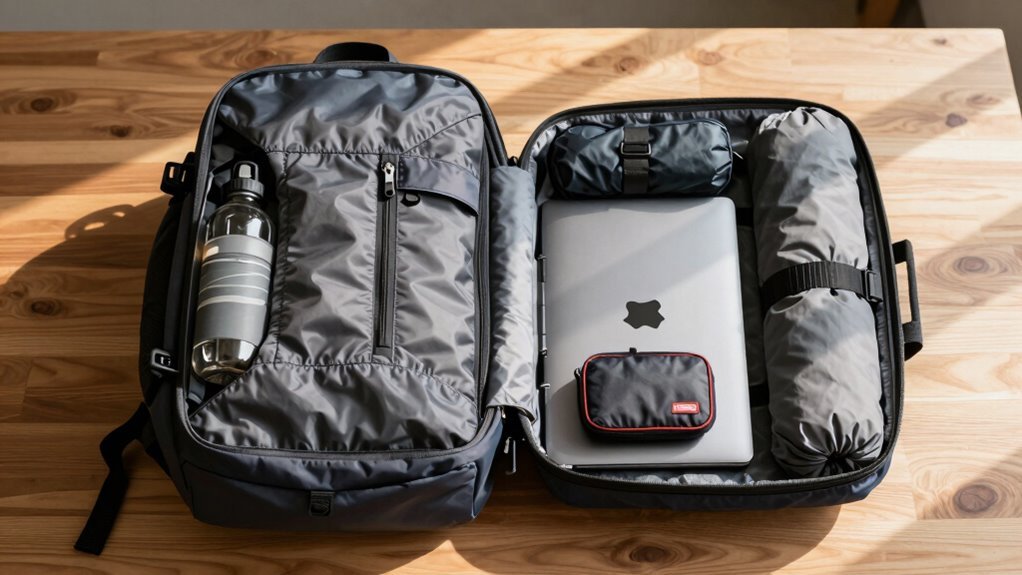
Pick the right pack for your adventure—frameless for light loads, internal frame for heavy hauls. Choosing the right backpack ensures comfort and balance on the trail.
Stick heavy gear like food and stoves close to your back so it balances well and won’t wreck your hips. This weight distribution helps your backpack work *with* you, not against you.
Slide snacks, rain jackets, and maps where you can grab them fast. Use pockets and cubes to tame the chaos inside.
Keep your phone, keys, and headlamp in a cozy, quick-draw spot. Easy access to essentials makes every mile smoother.
Tighten those straps to shift weight off your shoulders and stay comfy mile after mile. Pack smart, move lighter, and discover how much better your trips feel with a well-packed backpack.
Choose the Right Backpack for Your Needs
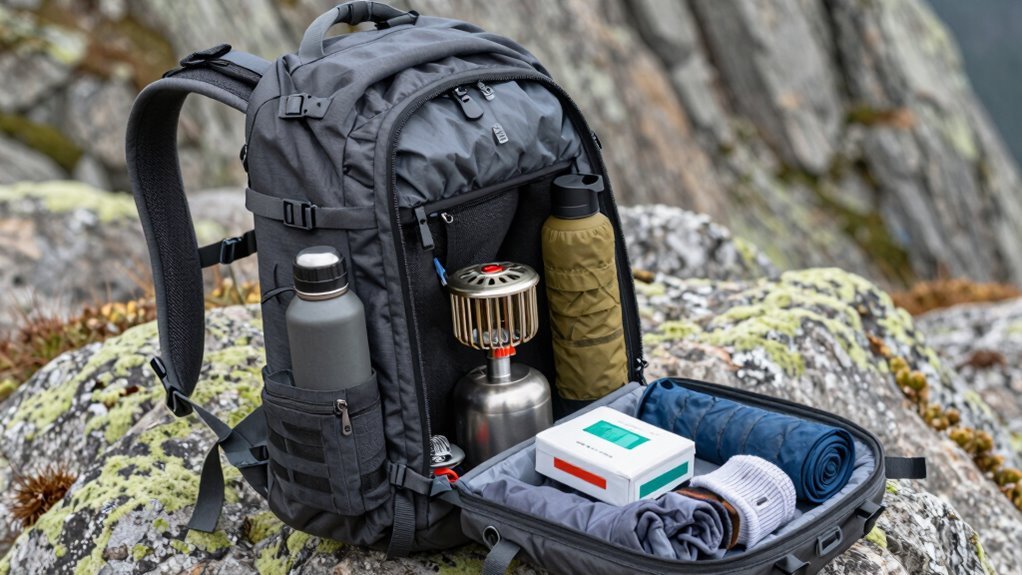
What’s the secret to a blissful hike or a stress-free commute?
You’re gonna love this: it all starts with picking the right backpack.
If you’re hauling heavy gear on rough trails, grab an internal frame pack—it hugs your back and keeps you steady.
For lighter adventures, a frameless pack like the Gossamer Gear Kumo saves weight and keeps things nimble.
Commuting? A sleek daypack with a laptop sleeve’s got your back—literally.
Weekend getaway? A weekender backpack opens like a suitcase, making packing way more fun.
Technical daypacks even sneak in water bladders and stretchy pockets for trail snacks (because hangry hikers are no fun).
With cool features like ventilated backs and hipbelt phone pockets, your pack isn’t just carrying gear—it’s upgrading your life.
Choose smart, and every trip feels like a breeze!
Frameless packs are great for light loads under 10 kg, where loading technique becomes key to maintaining comfort and balance.
Pack Heavier Items Close to Your Back
Hauling heavy gear like a pro starts with smart placement—stick those weighty items snug against your back, right in the core zone where balance meets comfort.
This keeps your center of gravity low and stable, so you won’t wobble like a penguin on ice.
When heavy stuff sits close to your spine, your hips carry the load (like nature intended), and your back stays happy.
No more sagging pack or feeling top-heavy on steep trails—just smooth, confident strides.
Keep these four essentials in the core zone:
- Food storage bags
- Cooking stove and fuel bottle
- Heavy snack stash (trail mix = treasure)
- Metal utensils or compact pot
You’ll hike smarter, avoid face-plants downhill, and show that mountain who’s boss—without sweating like you’re carrying a backpack full of bowling balls.
Include your bear canister in the core zone to maintain balance and protect your food from wildlife.
Organize by Frequency of Use
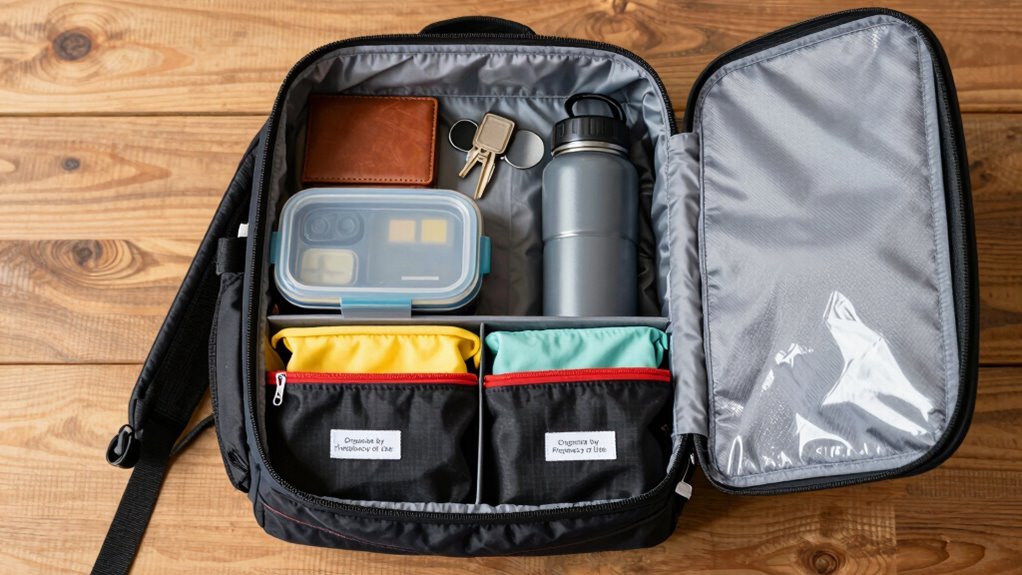
Ever wonder how the pros grab their rain jacket in three seconds flat while you’re still digging through your pack like it’s a tangled treasure chest?
You can too—just organize by frequency of use.
Keep rain jackets, snacks, and navigation tools near the top where you can reach them fast.
Toss your sleeping bag and extra food to the bottom since you won’t need them until camp.
Use exterior pockets wisely: water bottles in the sides, maps up front, gloves in the lid.
Need your headlamp every night? Keep it in an easy-access spot.
Frequent items should only take one zipper pull—no hunting through stuff sacks!
Return things to the same spot daily so muscle memory kicks in.
Test layouts on short hikes and tweak what feels slow.
A smart system means less fumbling, more trail time.
Pack it once, find it fast—every time!
Place heaviest items close to your back and centered to maintain balance, as improper weight distribution can shift your center of gravity.
Use Compartments to Maximize Space
You’ve got your go-to items right where you can grab them, just like we talked about—rain jacket at the top, snacks within reach, headlamp where you won’t fumble for it in the dark.
Now let’s get smart with compartments to really maximize that space.
Packing cubes and pouches aren’t just fancy extras—they’re game-changers.
Here’s how to use them like a pro:
- Packing cubes for clothes – compress and save tons of room
- Padded sleeves for laptops – keep tech safe and snug
- Zippered pouches for toiletries – no more mystery leaks
- Divided organizers for cables and tiny gear – because nobody’s got time to untangle chaos
Sort by type, tuck into labeled or color-coded spots, and suddenly your backpack’s got its own GPS.
Everything’s got a home, so nothing gets lost in backpack purgatory.
You’ll pack faster, unpack easier, and actually enjoy opening your bag.
Who knew organization could feel this satisfying?
Keep Quick-Access Items Within Reach
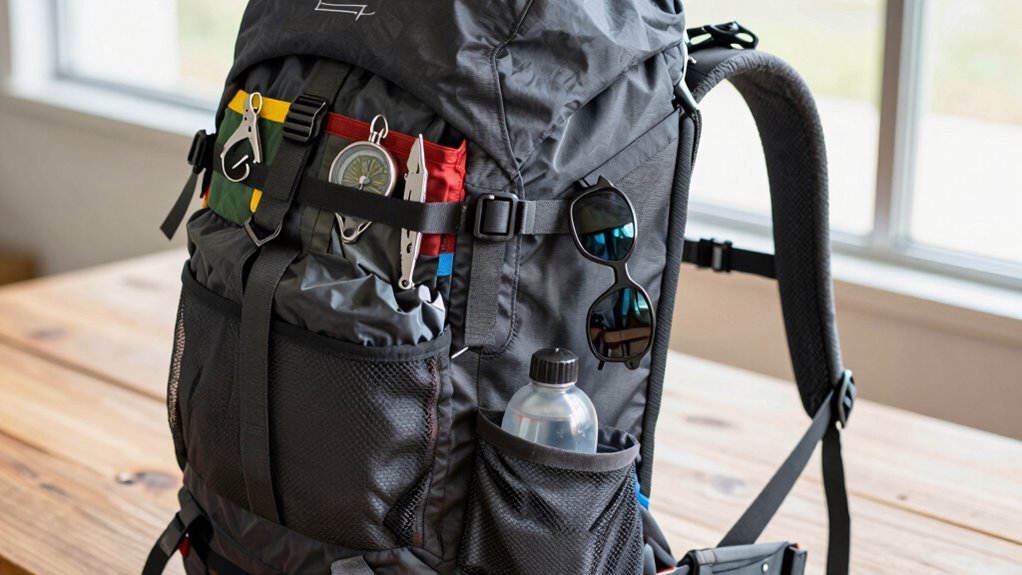
Why dig through every nook when the one thing you need—a granola bar, your phone, or that all-important water bottle—is buried under half your gear? Don’t make life harder—keep essentials where you can grab them fast.
Toss your phone, keys, and wallet in top or exterior pockets so they’re always within reach.
Use labeled pouches or cubes for snacks, first aid, or your headlamp—group them by how often you’ll need them.
That rain jacket? Top zone, front and center.
Snacks? Side pocket, ready to fuel your next adventure.
Even your water bottle deserves a cozy spot on the strap—freeing up space for other quick-grab wins.
Think of your pack like a well-organized junk drawer, but way cooler.
When everything’s easy to find, you spend less time fussing and more time exploring.
Smart access means no more frantic unpacking—just grab, go, and grin.
Balance Weight to Prevent Strain
Now that your go-to gear is easy to grab, let’s talk about how you’re packing the rest—because a backpack loaded like a bag of bowling balls isn’t doing your back any favors. Keep it balanced and your spine will say thanks.
Heavier stuff? Tuck it close to your back and near the center—right where your spine likes it. Use compartments to keep things from sliding around like roller derby stars. And hey, even if you’re strong, don’t haul more than 10–15% of your body weight (yes, that means a 100-pound student tops out at 10–15 pounds).
To nail proper load balance:
- Pack heaviest items closest to your back
- Center weight vertically in the pack
- Use both shoulder straps—no more single-strap swagger
- Fasten chest and waist straps to shift load off shoulders
Your back’s gonna feel way better—and you’ll walk taller, too!
Avoid Overpacking With a Checklist
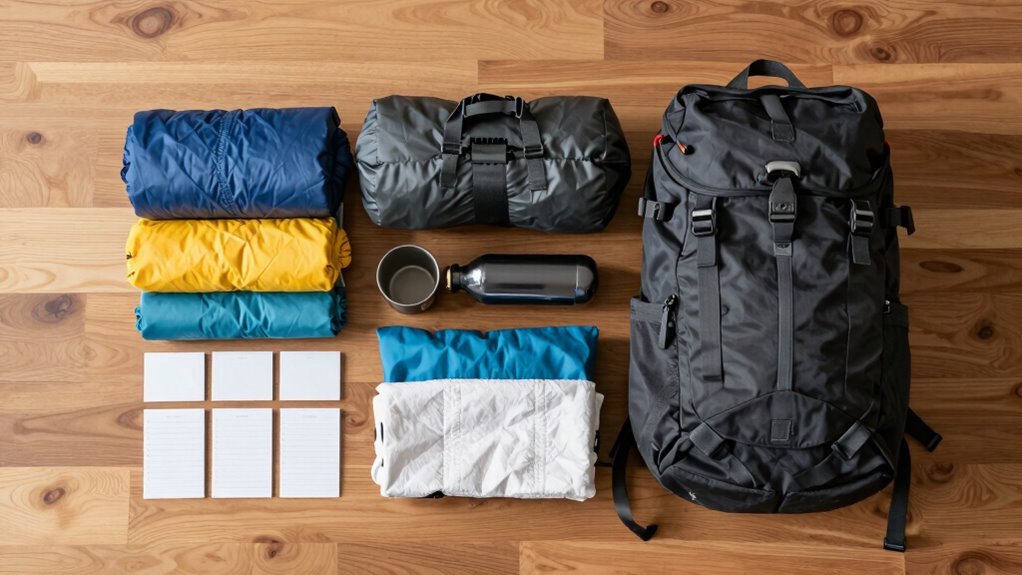
Ever wondered how some hikers zoom up trails with light packs while you’re lugging what feels like a mini fridge on your back? The secret’s out: they use a checklist.
Stick to the essentials and skip the extras that sneak in like uninvited guests.
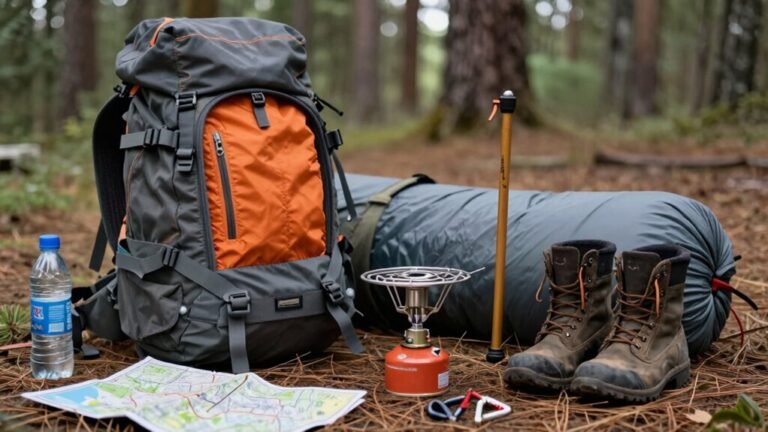
Pack the Big 4—shelter, sleep system, pack, and insulation—and nothing more.
Limit clothes to basics: two socks, two undies, and layers that pull double duty.
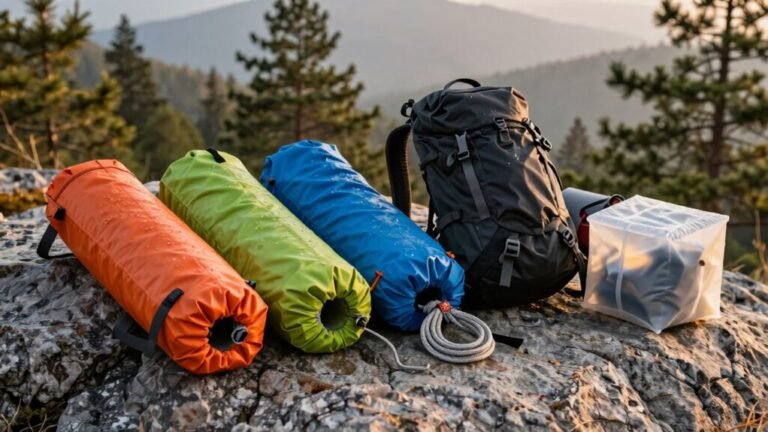
Use waterproof sacks to stay dry and organized.
Your hygiene kit? Tiny toothbrush, hand sanitizer, trowel, and biodegradable soap—no full-sized shampoo bottles!
Skip makeup, cologne, and that camp chair “just in case.”
Cook simple: stove, fuel, one pot, bear-safe food storage.
Leave glass and gadgets behind.
A smart checklist keeps your pack light, nimble, and way more fun to carry.
Happy trails!
Frequently Asked Questions
How Much Does a Loaded Backpack Typically Weigh?
Your loaded backpack typically weighs 30 to 50 pounds, depending on trip length and gear.
For a 3-day trip, you’re likely carrying 40–45 pounds, which is normal for casual backpackers.
Just make sure it doesn’t exceed 20% of your body weight—so if you weigh 150 pounds, stick to 30 pounds max.
Pack smart, lighten the load, and your back will thank you later!
Can I Pack Food Without It Spilling?
Yes, you can pack food without it spilling—it’s totally doable!
Use leakproof containers with tight silicone seals to lock in liquids, and portion oils in travel Nalgene bottles with screw caps.
Wrap chapatis in foil for extra protection, and fold snack bags snugly to keep crumbs happy.
Pack thick curries, not watery ones, and chuck heavier items at the bottom.
Voilà—lunch stays put and mess stays zero!
Is It Okay to Carry a Water Bottle Externally?
Yes, you *bet* you can carry a water bottle externally—why hide it when you can keep it front and center?
Tuck it in a chest pocket or clip it with a bungee, and suddenly hydrating’s as easy as taking a breath.
It’s secure, balanced, and totally spill-proof, even when you’re scrambling uphill like a caffeinated goat.
Plus, you’ll look *ridiculously* prepared.
Who wouldn’t want that?
Should I Pack Electronics in a Separate Bag?
You bet you should pack your electronics in a separate bag—or at least section them off!
It keeps your laptop safe, organized, and way less likely to take a nosedive into your socks.
Toss them in a padded tech pouch or use those nifty compartments in your backpack.
Your gadgets will thank you when they’re not bouncing around like popcorn.
Plus, security lines? Super easy when you’re not fumbling to dig out your laptop.
Smart, simple, and seriously stress-saving!
Do I Need a Rain Cover for My Backpack?
Yeah, you do need a rain cover—68% of backpackers get caught in surprise storms, so don’t be the one cursing soggy socks at 2 a.m.
It keeps your gear dry, adds zero bulk, and slides on fast.
Sure, it won’t help if you dunk your pack in a creek, but for rain?
Spot on.
Think of it like an umbrella for your backpack—small price to pay when Mother Nature forgets her manners.
Conclusion
Think of your backpack as a backpacking dragon: feed it heavy boulders close to its spine, stash snacks in easy-reach pockets, and never let it grow too fat to fly. You’ve packed smart, balanced the load, and kept chaos in check—now you’re ready to soar. Adventure’s waiting, and your trusty dragon’s got your back. Who knew being a wizard of organization could be this fun?
References
- https://www.thehikinglife.com/gear/backpack/
- https://backpackies.com/blog/types-of-backpacks
- https://www.calpaktravel.com/pages/types-of-backpacks-for-travel
- https://www.rei.com/learn/expert-advice/backpack.html
- https://ilequipment.com/pages/backpack-comparison-chart
- https://www.awaytravel.com/pages/compare-backpacks
- https://carlfriedrik.com/magazine/types-of-backpacks
- https://www.pbteen.com/tips-and-ideas/back-to-school/15-Types-of-Backpacks-A-Guide-to-Different-Backpack-Styles/
- https://www.rei.com/learn/expert-advice/loading-backpack.html
- https://backpackinglight.com/comfort-vs-weight-gear-guidance-for-aging-older-backpackers/