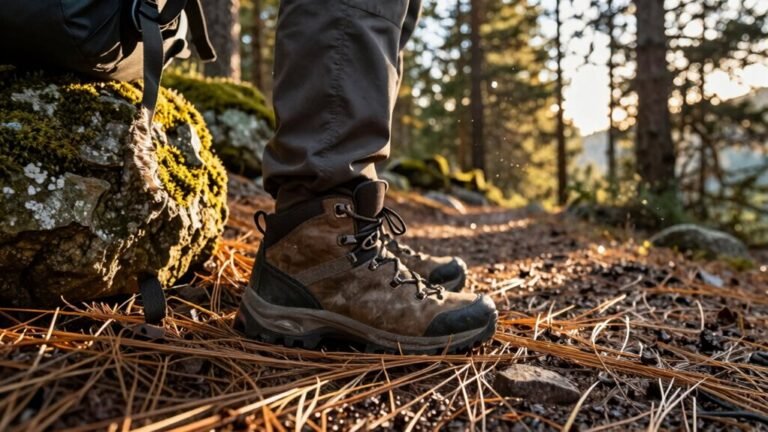
Keeping Gear Dry Vs Boots: Which Should You Pick?
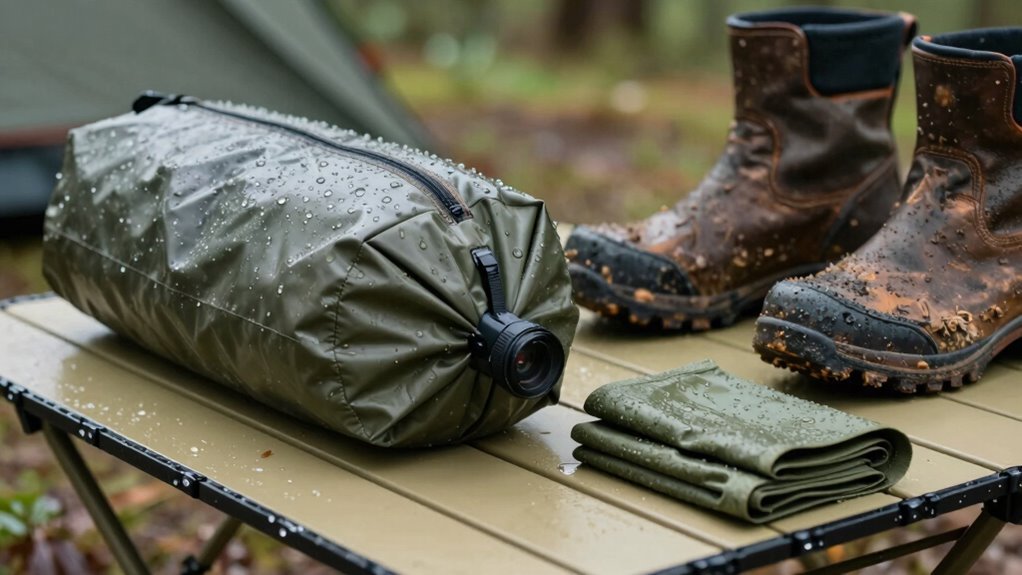
You want dry feet, not swampy socks, so choosing the right footwear matters. When deciding between breathable trail runners and waterproof boots, consider your environment—keeping gear dry starts with the right shoe choice.
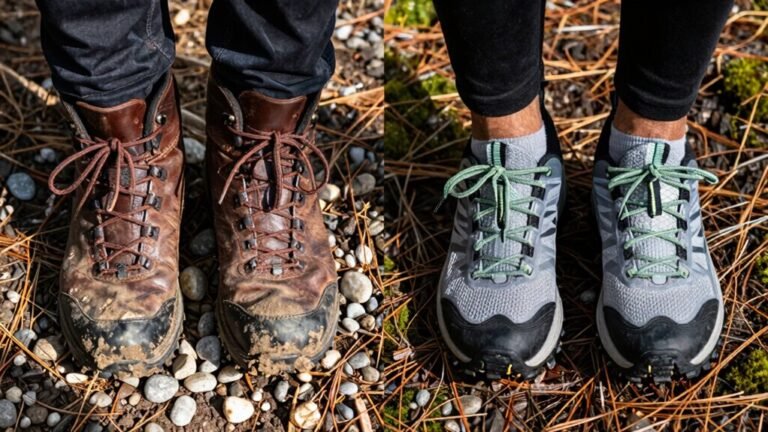
For hot days and light hikes, pick breathable trail runners. They keep your feet cool and comfortable while preventing overheating on dry, easy trails.
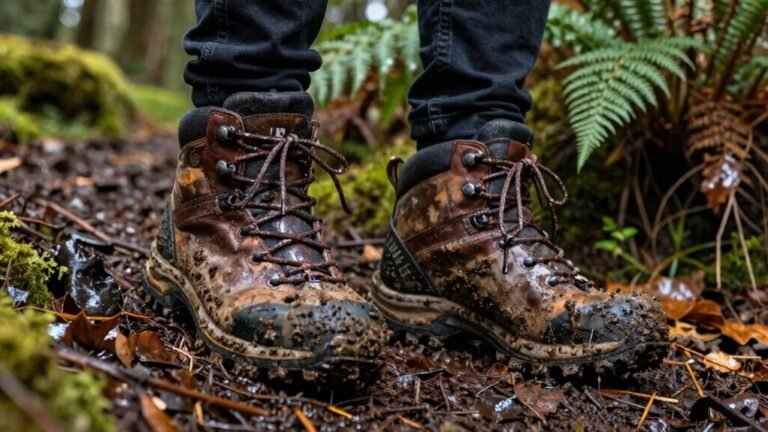
But when puddles, snow, or rugged terrain hit, go for waterproof boots. They’re designed to keep your feet dry in wet, muddy, or slippery conditions.
Just remember: even the best waterproof boots can turn into sweat saunas. Pair smart footwear choices with moisture-wicking socks to keep your feet dry and comfortable no matter the trail.
Understanding the Difference Between Dry Gear and Waterproof Boots
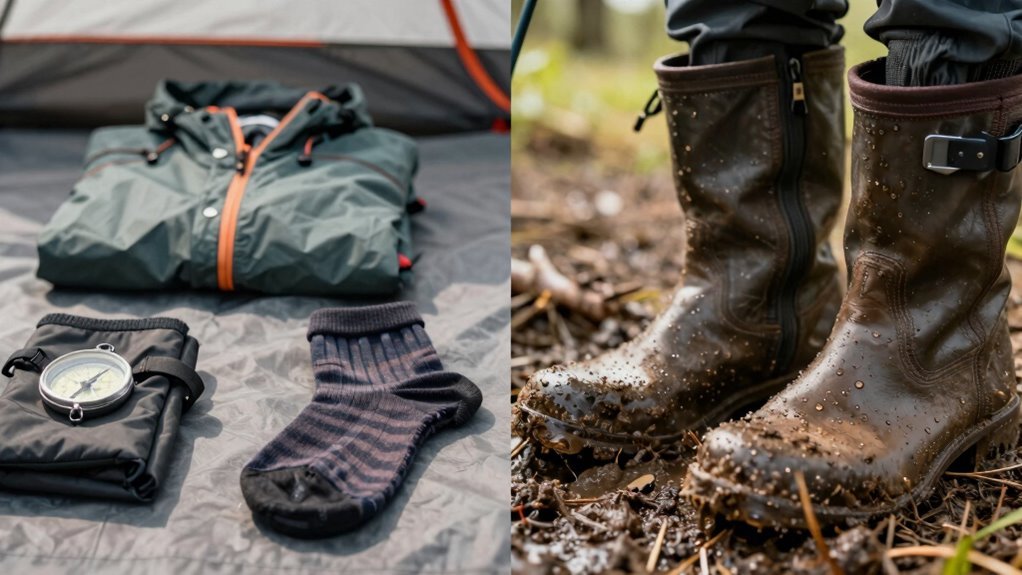
Staying dry on the trail isn’t just about comfort—it’s your ticket to happy feet and warm toes, especially when the path turns soggy.
Dry gear, like waterproof socks or gaiters, works with breathable fabrics and membranes (think GORE-TEX) to keep moisture out while letting sweat escape.
You stay dry from the outside *and* inside, which is a big win on long hikes.
Waterproof boots, though? They’re tanks—great against puddles and snow, but they trap sweat like a sauna.
You might dodge creek water, but your feet could still swim in their own moisture.
Dry gear keeps you nimble and fresh in mild wetness, while boots dig in for icy, soaked adventures.
One’s a nimble dancer, the other’s a tough lifeguard.
Pick your trail superhero wisely—your socks will thank you.
It’s okay to have wet feet, especially when another crossing is likely, because wet feet realities mean careful, deliberate fording is often safer than risky rock hopping.
How Waterproof Boots Handle External Moisture
When the trail turns into a swamp or you’re caught in a downpour, waterproof boots step up like a trusty raincoat for your feet—only tougher.
They use smart membrane tech, like GORE-TEX or B-DRY, to block rain and puddles while still letting sweat vapor escape.
Tiny sealed seams keep out water at every stitch, so mud, snow, and creek crossings don’t stand a chance.
Add a DWR coating, and water beads up like it’s doing the cha-cha before rolling off.
Full-grain leather? That’s nature’s bouncer, shrugging off moisture like it’s nothing.
These boots laugh at downpours, shrug off muck, and keep your socks Sahara-dry—even when you stomp through every puddle just because you can.
Sure, you’ll need to reapply that water-repellent finish eventually, but hey, no armor’s perfect.
Your feet stay dry, happy, and ready for whatever Mother Nature throws down.
This level of protection is especially critical for larger foot sizes, where increased surface area and more seams raise the risk of water infiltration.
The Hidden Problem of Sweat Inside Waterproof Footwear
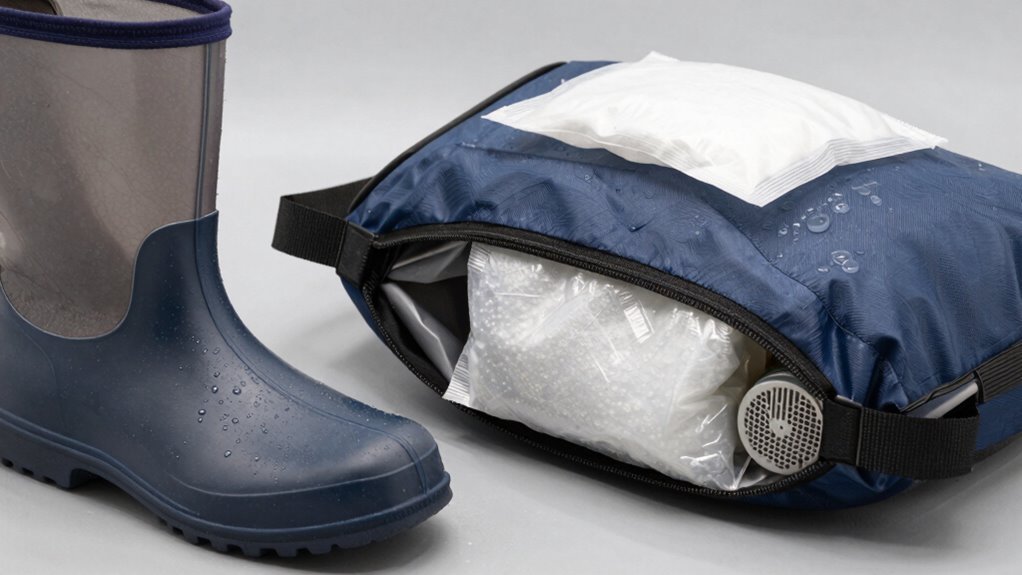
Sweating buckets inside your boots might sound like a sign you’re working hard, and hey, maybe you are—but when that moisture’s trapped like a sauna session gone rogue, it’s not exactly a badge of honor.
Your feet sweat like crazy, second only to armpits (gross, right?), and waterproof membranes like Gore-Tex can’t keep up. They let *some* vapor out, but during long hikes or in hot weather, sweat wins every time.
Add mud, damage, or clogged pores, and breathability tanks fast. Tight fits and poor airflow make things worse, turning your boot into a clammy cave.
That dampness isn’t just annoying—it breeds blisters, stink, and fungus faster than you can say “foot jail.” Even in dry heat, waterproof boots trap heat, making sweat evaporate and condense right back inside. Material buildup from dirt, oil, and mud clogs microscopic pores, further reducing the boot’s ability to release moisture.
Benefits of Moisture-Wicking Socks and Base Layers
Think of your socks and base layers as your skin’s backup crew—working hard behind the scenes so your feet don’t end up swimming in their own sweat.
They pull moisture away, letting it evaporate fast, so you stay dry even when you’re hiking hard.
Wool blends? They’re champs, soaking up way more sweat than basic synthetics. Plus, they keep your microclimate comfy and steady.
Less sweat on skin means fewer blisters and major irritation—especially in tight boots.
Slide on a silk liner, and friction drops even more.
Merino wool socks feel soft, breathe well, and won’t itch, while flatlock seams prevent chafing.
You’ll stay cooler when it’s hot, warmer when it’s cold—no soggy socks here.
And bonus: odor stays low, circulation gets a boost, and alpaca layers keep you fresh.
Honestly, your feet will thank you.
When Dry Gear Outperforms Water-Resistant Boots
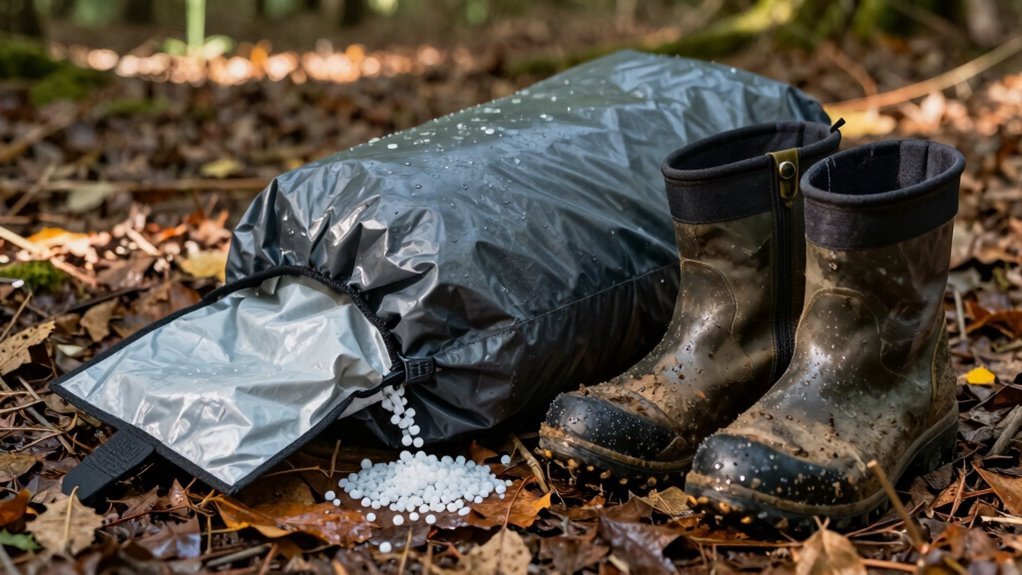
While your boots might claim to be fortress-proof against rain, they can leave your feet soaked from the inside out—thanks to all that sweat with no escape.
That’s when dry gear truly wins.
If you’re hiking under a hot sun or pushing hard on a summer trail, breathable clothing and moisture-wicking layers keep you cool and dry faster than any clunky waterproof boot.
Without heavy membranes, water-resistant boots breathe better, dry quicker, and weigh less—so you move easier.
They handle light rain just fine, but it’s when sweat builds up that dry gear shines.
Think of it like this: your feet aren’t submarines—they don’t need airtight seals!
Let air flow, sweat escape, and comfort soar.
In moderate weather, where waterproof boots steam up like a sauna, your smart, dry gear choice keeps you nimble, light, and actually happy on your feet.
The Role of Breathability in Foot Comfort
You’ve probably felt it—your feet cooking inside your boots, like little saunas strapped to your legs. Sweat builds up, socks get soggy, and suddenly you’re one step away from blisters or even trench foot—no fun at all.
But breathable boots? They’re game-changers. Mesh panels and wicking linings let air flow, keeping your feet cool and dry, whether you’re hiking steamy Northeast trails or powering through Pacific Northwest summers.
Materials like GORE-TEX or eVent even balance waterproofing with breathability, so post-creek crossings don’t leave you squishing.
In winter, they help heat escape instead of turning your boots into snow saunas.
Plus, comfy tech like OrthoLite footbeds and CloudTec soles team up with ventilation to fight odor and fatigue.
Your feet stay fresh, cool, and happy—no more guessing if your boots are hiking or steaming your toes!
Weight and Durability: Gear vs. Boots Comparison
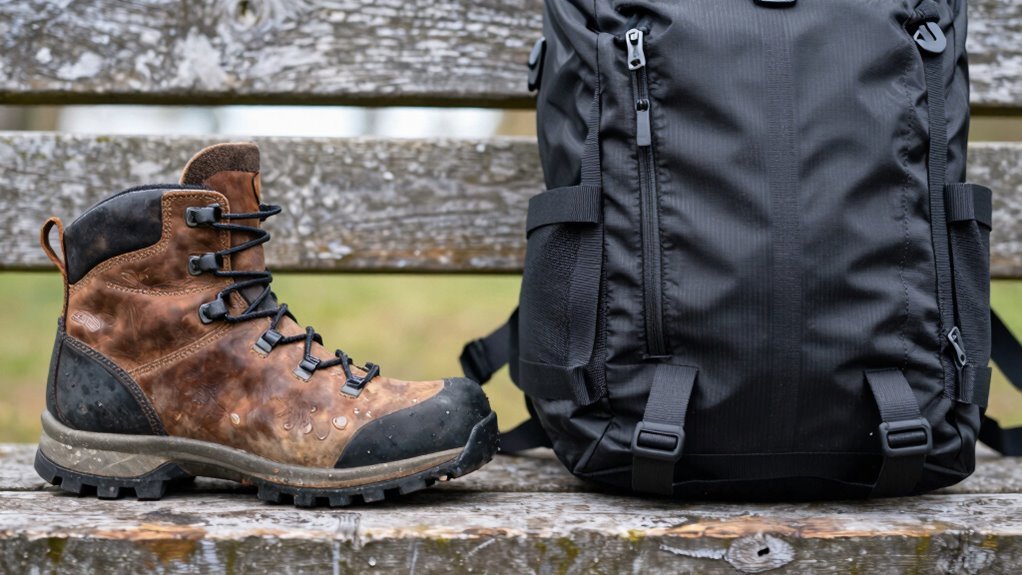
When you’re clocking miles down the trail, every ounce counts—literally.
Swap heavy boots for lighter gear, and you’ll feel like you’ve got springs in your step.
A pound on your feet equals five on your back, so those 5-pound hiking boots? That’s like lugging around 25 extra pounds—yikes!
Lighter footwear, like trail runners, can save up to 40% in weight, slashing fatigue and boosting stamina.
Sure, heavy-duty boots last over 1,000 miles and handle rugged terrain like champs, but they’ll drag you down.
Lightweight shoes may only hit 500 miles, but they’re perfect for quick, dry hikes.
Think of it this way: durable boots are the tanks of the trail—tough but slow, while light gear is the sprinter—nimble and fast.
Match your choice to your adventure, and you’ll tread easier, longer, and with way more fun.
Adapting to Changing Weather Conditions on the Trail
If the weather’s got a mind of its own—and let’s be honest, it usually does—your footwear better keep up.
When the sun blazes, breathable hiking shoes let your feet breathe easy, reducing sweat and blister battles.
They dry fast if splashed, keeping you comfy across deserts, coasts, or alpine zones.
But when rain rolls in, waterproof boots with Gore-Tex step up, shrugging off puddles and mud like a champ.
Need snow?
Mid-cut insulated boots lock in warmth and block slush, while gaiters add extra armor.
For mixed conditions, try hybrids—water-resistant uppers with smart layering—or pair trail runners with Gore-Tex socks.
On steep, icy slopes, stiff boots with crampon welts win every time.
You’re not just walking—you’re adapting, improvising, and staying one step ahead.
Maintenance Requirements for Long-Term Dryness
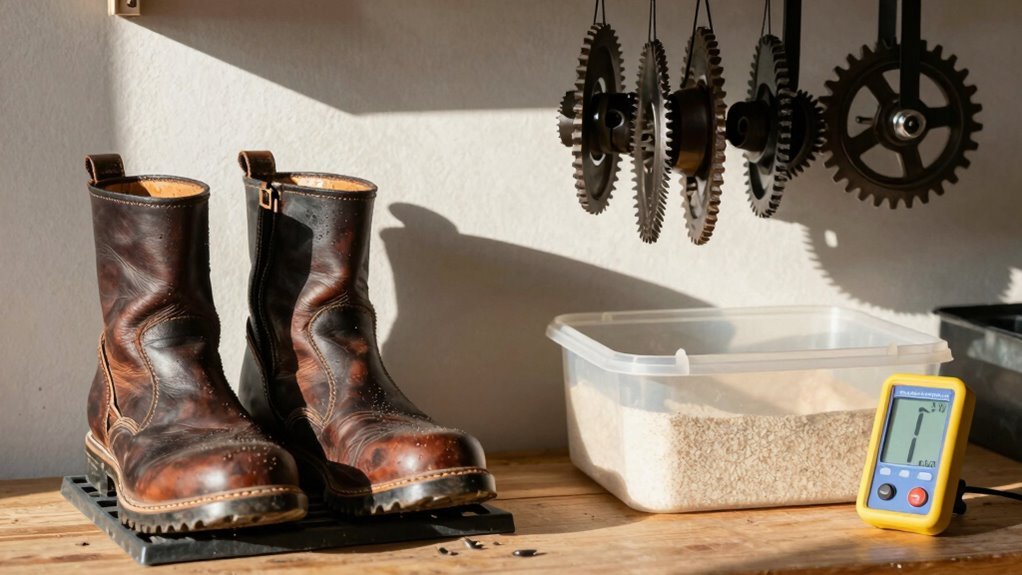
Usually, your boots start strong, shrugging off rain and mud like a pro—but that slick water-beading magic doesn’t last forever.
Dirt, sweat, and trail grime gunk up the outer fabric, killing breathability even if the Gore-Tex liner’s still solid.
You’ve gotta clean them first—grab a gentle cleaner like Cobbler’s Choice or a dab of saddle soap (but go easy, or you’ll ghost your colors!).
Once they’re fresh, reactivate that DWR with a water-based product like Nikwax Fabric and Leather Proof.
Spray it on, let it dry, and boom—rain rolls right off again.
For nubuck or suede, hit ‘em with Nikwax Nubuck and Suede Proof.
And don’t forget: a little Venetian Shoe Cream every few months keeps leather happy and water-hating.
Test your work with a quick spritz of water—if it beads, you’re golden; if it soaks, time to re-treat.
Keep on top of it, and your boots’ll stay dry, breathable, and trail-ready for years.
Real-World Scenarios: Choosing the Right Approach
You’ve kept your boots in top shape with regular cleaning and fresh DWR treatments—now it’s time to match that slick, dry performance to the adventure ahead.
Hitting snowy trails? Grab waterproof boots—they lock out cold, snow, and wet like a cozy, dry fortress.
For summer hikes, breathable shoes are your sweat-fighting sidekick, letting heat escape so your feet don’t turn into steamy furnaces.
Splashing through streams? Waterproof wins again—no soggy socks, even when you dunk.
Caught in a surprise drizzle? A water-resistant pair handles light rain without turning your feet into saunas.
Pushing hard on a mixed-terrain trek? Go non-waterproof: they breathe better and dry fast, keeping blisters at bay.
Think of your boots like outfits—match ‘em to the weather and terrain.
Pick smart, stay dry, and let your feet thank you later—because happy feet mean happier trails!
Frequently Asked Questions
Can I Wear Regular Socks With Waterproof Boots?
You *can* wear regular socks with waterproof boots, but you really shouldn’t.
They’ll trap sweat, leave your feet soggy, and likely give you blisters—ouch!
Thin cotton? It’s a moisture magnet and won’t cushion your steps.
Instead, grab moisture-wicking wool or synthetic socks.
They keep your feet dry, cozy, and happy, even when it’s pouring.
Think of it as giving your feet a high-five instead of a wet handshake!
Do Dry Gear Systems Work in Desert Climates?
Yeah, dry gear systems can work in the desert, but you’ve gotta be smart about it.
They keep your stuff safe from sand and sweat, sure, but traps heat if you’re not careful.
Pair them with breathable fabrics so you don’t cook in your pack.
Just remember—staying dry inside matters more than outside.
Think smart layers, timing, and shade.
You’ll laugh your way through dunes without turning into a sweaty burrito.
Stay cool, not cozy!
Are Waterproof Boots Suitable for Summer Hiking?
Yes, waterproof boots can work for summer hiking, but you’ve gotta pick wisely.
They keep your feet dry in streams and sudden downpours, which is awesome, but some trap heat like a sauna.
Look for ones with mesh panels or Breeze tech—they let steam escape so your feet don’t turn into sweaty popcorn.
Lightweight models like the Scarpa Rush Mid 2 or Hoka Anacapa 2 GTX?
Total summer champs.
How Often Should I Reproof My Dry Gear?
You should reproof your dry gear every 2–3 years with average use, or sooner if you spot water soaking in instead of beading up—kind of like when your eyebrows get soggy in the rain.
After a solid wash, toss it in the dryer for 20–30 minutes; heat wakes up the DWR magic.
If you’re out weekly, boost protection each season. Keep it clean, keep it beading, and your gear’ll stay happy, dry, and ready for adventure.
Is It Safe to Machine Wash Moisture-Wicking Base Layers?
Yes, you can safely machine wash moisture-wicking base layers—just treat them right!
Turn them inside out, use cool to warm water, and grab a tech-friendly detergent like BaseWash.
Skip the fabric softener—it clogs the fibers and ruins the wicking magic.
Toss them in a mesh bag to avoid snags, and always air dry.
Boom! Fresh, high-performing gear ready to rock your next adventure—no stink, all function.
Conclusion
Think of your feet as campfires—they need air to stay happy, not trapped steam. Waterproof boots shield you from puddles, but they can turn your socks into saunas. Sometimes, dry gear with great airflow beats soggy boots any day. Pair smart layers with breathable footwear, and you’ve got a winning combo. Stay light, stay dry, and let your feet dance through every trail twist—because nobody likes squelchy socks!
References
- https://backpackinglight.com/forums/topic/50269/
- https://www.overlookboots.com/blogs/boots/waterproof-vs-water-resistant-vs-water-repellent-boots-what-is-the-difference
- https://www.alpenglowgear.com/blogs/adventureawaits/waterproof-vs-breathable-hiking-shoes-which-is-bes/
- https://peaceoutfittersaz.com/the-great-debate-waterproof-and-non-waterproof-shoes/
- https://www.youtube.com/watch?v=hKGdZ-1cZrA
- https://www.rei.com/learn/expert-advice/hiking-boots.html
- https://xlfeet.com/blog/waterproof-vs-water-resistant-boots
- https://www.justinboots.com/en/waterproof-work-boots/
- https://www.redwingshoes.com/mens/work/waterproof/
- https://www.jcrew.com/buy/water-resistant-boots-0ajz00a