Troubleshooting Hydration on the Trail
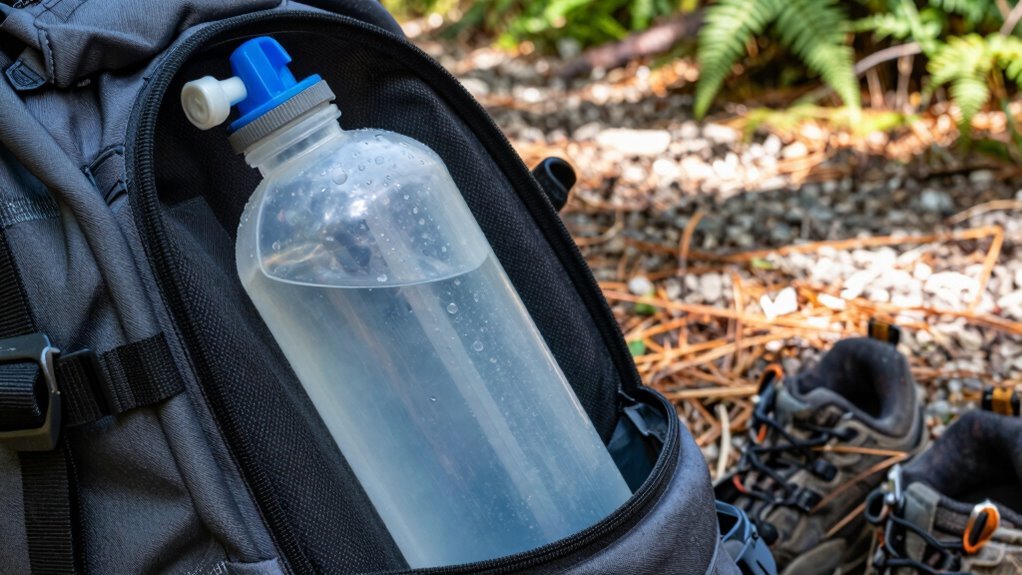
You’re sweating buckets but your water tastes funky and your hose is clogged—don’t freak out. Check for dry mouth or dark pee as dehydration clues, since staying hydrated on the trail is critical for performance and safety.
Backflush your filter with a quick pump-shake-squeeze to clear blockages. If you’re still having issues with flow, inspect the tube and nozzle for debris.
Sip rainwater or dew if you’re stranded and running low. Toss in a flavor tab to make hydration more appealing and crush a vitamin C pill to neutralize iodine taste.
Always rinse your hydration system after hikes. Keeping it clean prevents mold and ensures your system works properly the next time you need it.
Recognizing the Signs of Dehydration
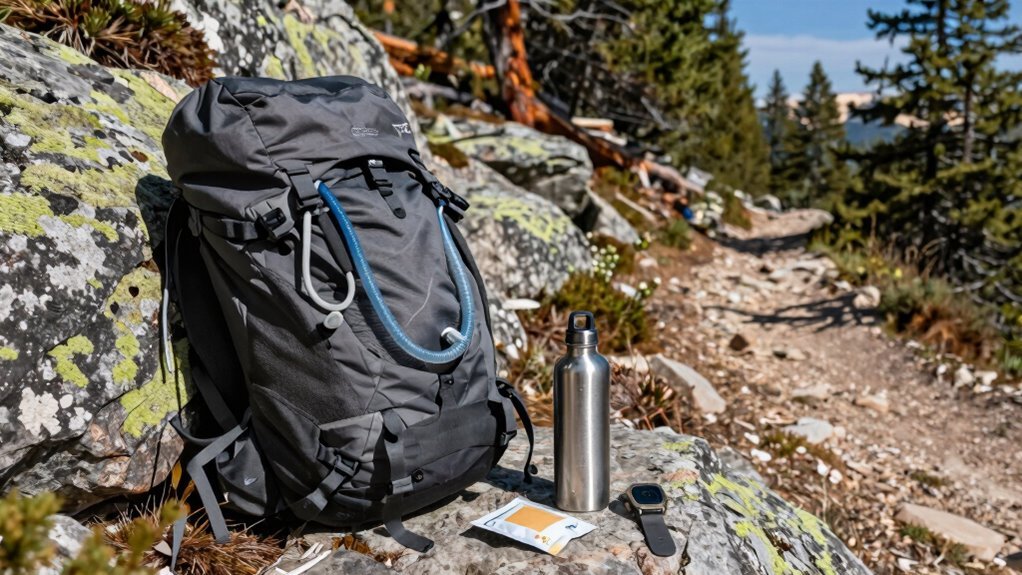
Ever wonder why that trail snack suddenly seems unappealing halfway through your hike? It’s not just trail fatigue—your body’s waving a red flag. That dry mouth, sticky tongue, and thirst you’ve been ignoring? Yep, you’re already dehydrated.
Check your pee—if it’s darker than lemonade, you’re running low. Not peeing every couple of hours? That’s another clue.
You might feel sluggish, headachy, or oddly irritable (sorry, trail buddies!). These aren’t just “bad day” vibes—they’re your body begging for water.
Dizziness, muscle cramps, or nausea? Now you’re in moderate territory. And if you’re stumbling, confused, or not sweating despite the heat? Whoa—stop, shade up, and hydrate fast.
Severe dehydration slows your whole system, and heatstroke is no joke. Pay attention, laugh at your “I’m fine!” denial, and sip early, sip often.
Your body relies on water for essential bodily functions, so staying ahead of thirst keeps your hike safe and enjoyable. Your hike (and snacks) will taste way better when you’re hydrated.
Clearing a Clogged Water Filter
Give that sputtering water filter a second wind—because nobody’s got time for a flow rate slower than a snail on a siesta.
When your filter clogs, quick action keeps your flow strong and your hike happy.
Most filters just need a simple reset, not a rescue mission.
- Backflush with a syringe or hose to blast gunk backward and revive flow fast.
- Shake a full reservoir (like with Platypus or Katadyn BeFree) to jostle loose crud.
- For MSR TrailShot, pump, shake, then squeeze out the gunk—like a mini science experiment.
- Pre-filter murky water with a bandanna to keep your filter from working overtime.
- Sanitize with diluted bleach before storage to stop yucky microbes from throwing a party.
- Always store your filter properly to prevent damage, especially avoiding freezing temperatures that can ruin hollow fiber elements.
Finding and Treating Emergency Water Sources
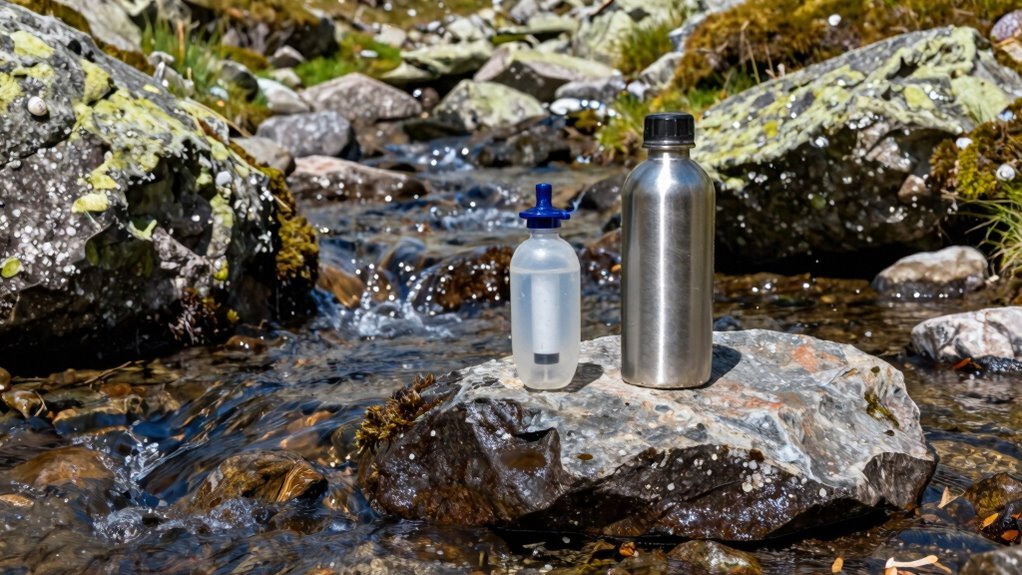
When you’re deep in the backcountry and your water bottle runs dry, knowing where to look can turn a tough spot into a triumph—because nature’s full of hidden water sources, and you’ve got the know-how to find them. Head downhill or follow animal trails; green vegetation and bug buzz usually mean water’s near. Spot a damp patch? Dig a shallow hole and let groundwater seep in. Rain coming? Catch it with a tarp or leaf funnel. Dew on grass at dawn? Wipe it with a bandana and wring it out—nature’s free sip! Found water? Awesome, but never skip boiling it for at least a minute (three if you’re high up). Strain muddy water through cloth first, then heat it—your stomach will thank you. Remember, murky ponds and pee-soaked soil aren’t meal tickets. Stay smart, stay safe, and keep sipping your way to survival—because dehydration’s a beast, but you’re smarter than it is. You can even trap moisture from plants using a plastic bag over leafy branches, where transpiration collects water overnight.
Improving the Taste of Treated Water
Why does your water sometimes taste like a swimming pool took a wrong turn?
Because chemical treatments like iodine or chlorine get the job done, but they also leave behind a funky aftertaste.
Luckily, you’ve got options to make it taste less like a chemistry experiment and more like something you’d actually enjoy sipping on the trail.
- Drop in a flavor or electrolyte packet—boom, tastier and more replenishing
- Crush a vitamin C tablet to erase that iodine tang fast
- Use a carbon filter like the Aquamira Frontier Pro to scrub out weird tastes and odors
- Try chlorine dioxide drops—they purify without the harsh taste or color
- Mix one treated liter with mineral water for a revitalizing flavor boost
Stay hydrated, not horrified—your taste buds will thank you!
Preventing Hydration System Failures
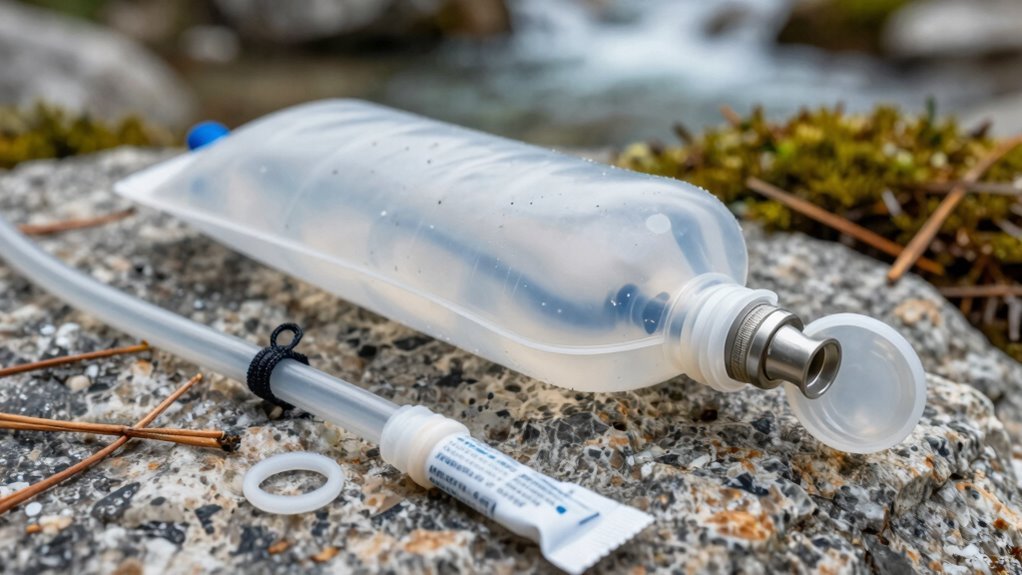
Keeping your hydration system happy means you stay happy—think of it as a long-term relationship that thrives on regular check-ins and a little TLC.
Clean and dry your bladder after every use—nobody likes stinky gear.
Soak it overnight in vinegar or lemon juice before big trips to keep gunk at bay.
After drinking, blow water back into the bladder to clear the tube—yes, it’s a party trick, but it works.
Store it fully dry to avoid mold throwing a rave inside.
Tubes are failure-prone, so give them extra love.
In cold weather, tuck hoses under layers or use a winterizer kit—frozen valves are drama you don’t need.
Warm water in the bladder at night? Smart.
Bury it in snow? Genius.
Add electrolytes to lower the freezing point.
Drain filters completely and sleep with them—they’ll stay toasty in your bag.
Your pack isn’t just carrying water; it’s holding your lifeline.
Treat it right, and it’ll never bail on you.
Frequently Asked Questions
How Much Water Should I Drink per Hour While Hiking?
You should drink about half a liter every hour, but hey, Mother Nature doesn’t clock in at 9—so crank it up to a full liter if it’s scorching or you’re hauling uphill.
Sip every 10-15 minutes, like a camel with a schedule.
Cool day? Slow down a bit.
Want to avoid turning into a dehydrated prune? Then keep that water flowing, champ!
Can I Reuse Boiled Water for Cooking After Treating It?
Yes, you can absolutely reuse boiled water for cooking—it’s safe and smart!
Once it cools, those nasty germs are gone for good, so go ahead and whip up your trail pasta or oatmeal.
You’re already using fuel to boil, so why not double-duty it?
It saves time, slashes fuel use, and keeps dinner deliciously safe.
Just store it in a clean container, and boom—efficient backcountry chef, you!
Is Drinking From a Glacier Safe Without Filtration?
No, you can’t drink from a glacier safely without filtration—looks are deceiving!
That crystal-clear meltwater might carry bugs like giardia, bacteria, or even microplastics.
Just because it sparkles doesn’t mean it’s safe, like trusting a wolf in sheep’s clothing.
Always filter, purify, or boil it first.
Your stomach will thank you later—nobody wants a backcountry bathroom emergency!
Stay smart, stay hydrated, and keep adventuring!
Do Hydration Packs Affect Backpack Balance on Steep Climbs?
Yeah, hydration packs can totally mess with your balance on steep climbs if you’re not careful—especially with a full 2.5L bladder bouncing around like a loose bowling ball.
But here’s the cool part: packs with balance pockets and secure bladders reduce wobble by up to 40%, so you’ll feel way more stable.
Keep the weight centered, use magnetic clips, and you’ll hike smoother, safer.
and with way less faceplant risk—your back’ll thank you!
Can I Bring Electrolyte Tablets on a Plane in Checked Luggage?
Yes, you can totally toss your electrolyte tablets in your checked luggage—no worries there.
They’re travel-friendly, won’t make a mess, and avoid any hassle at security.
Just keep them sealed or in a resealable bag to stay organized.
TSA gives them a green light, and so does checked baggage.
Pack them there, and you’re golden.
Easy, breezy, hydration made simple—like packing snacks, but smarter!
Conclusion
You’ve probably heard that thirst means you’re already dehydrated—true! But don’t panic. Stay sharp, sip often, and trust your gear—just give it a little love. Clogged filter? Shake it out. Bad-tasting water? Add a flavor drop or two. Remember, even squirrels know to drink before they’re parched. Keep your system clean, your bottle full, and your trail days happy. Hydration’s not magic—it’s just smart, fun, and totally doable.
References
- https://lighthikinggear.com/blogs/news/why-dehydration-is-a-hikers-worst-enemy
- https://www.broadmooroutfitters.com/hiking-dehydration-and-heat-stroke-how-to-recognize-and-treat-symptoms/
- https://www.backpacker.com/survival/how-to-stay-hydrated-and-treat-dehydration/
- https://americanhiking.org/dehydration/
- https://www.fsguides.com/staying-hydrated-when-hiking-in-the-desert-southwest
- https://www.davidonearth.com/blog/know-the-signs-of-dehydration-and-low-electrolytes-while-hiking
- https://www.onedayhike.org/training/firstaid/dehydration.html
- https://marquemedical.com/hiking-and-dehydration-by-lindsey-burt/
- https://threepeakscare.com/dehydration-dangers/
- https://www.trailgroove.com/blogs/entry/219-hollow-fiber-backpacking-water-filter-care-maintenance/