How Much Water to Carry on a Day Hike
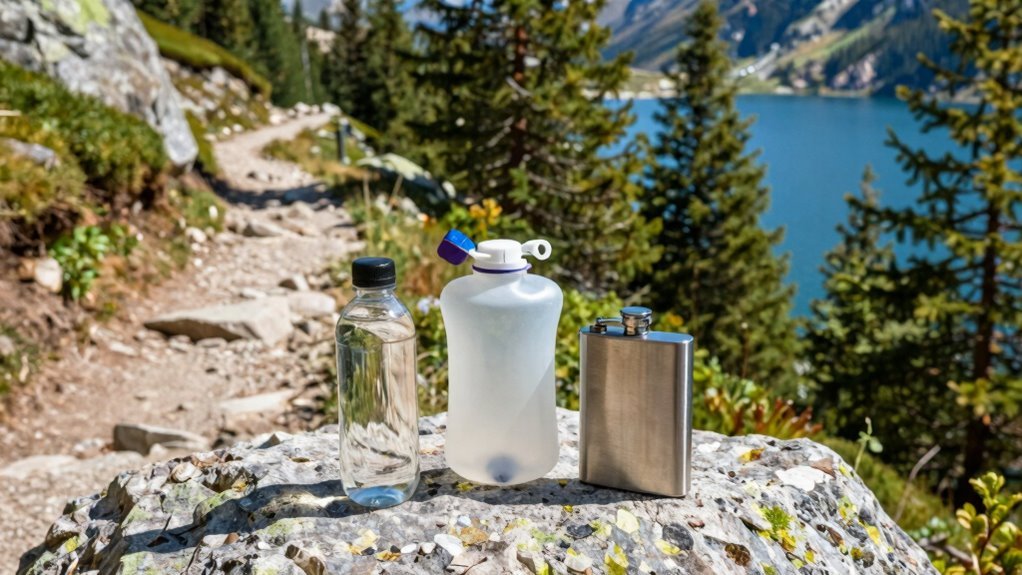
You’ll need 2 to 4 liters of water on a day hike, depending on heat, trail steepness, and your pace. The amount of water to carry on a day hike is critical, especially in extreme conditions like deserts or high elevations where sweat loss increases.
Humid air, heavy gear, and dry mountain winds accelerate dehydration. Sip water early and often to stay ahead of fluid loss.
Dark urine is a sign you’re already behind on hydration. Replenish consistently and monitor your body’s signals.
Carry water smartly using a hydration bladder or sturdy bottles. Plan your route to include reliable refill spots.
Always treat water from natural sources before drinking. Clean, safe hydration keeps you strong to the summit.
Understanding Your Body’s Hydration Needs
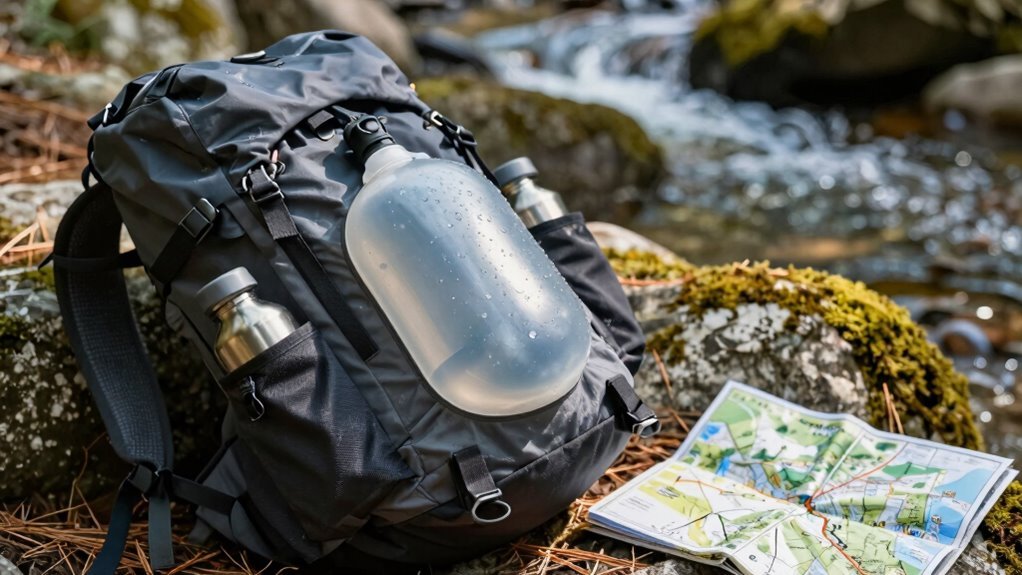
Ever wonder why water is such a big deal for your body?
Well, you’re practically made of it—about 60% as an adult, and your muscles and kidneys are nearly 80% water!
Even your bones need it, holding onto 31%.
It’s not just filling space—water keeps your temperature steady, powers your cells, flushes out waste, and cushions joints like nature’s perfect shock absorber.
Without enough, your whole system runs on fumes—like a car without coolant.
You lose 8–12 cups daily just breathing, sweating, and going to the bathroom (yes, even that counts!).
And in hot weather or during a tough hike, you can lose up to 2 liters of sweat per hour.
Yikes!
Staying hydrated isn’t just smart—it’s essential for feeling strong, sharp, and ready to crush any trail.
About 20% of total water intake comes from water-rich foods like fruits and vegetables.
Factors That Influence Water Requirements
How much water should you actually bring on your hike?
It depends!
The longer your trek, the more you’ll need—aim for about a liter every two hours.
A quick 1–2 hour stroll? Grab 16–20 oz.
Hitting 6–8 hours? Pack 2.5 to 4 liters—maybe even more if it’s steep or you’re hauling a heavy pack.
Tough trails with big climbs ramp up your effort, making you sweat more, and high altitude packs a sneaky punch even when it’s cool.
No water sources around? You’ve gotta carry it all—plan on a liter per 5 miles.
And face it, you’re not a camel (unless that’s your trail name), so if you sweat buckets or are a bigger guy (70kg male), drink 500ml every half hour.
Ladies (60kg), 400–500ml works.
When in doubt, overpack—better than sucking on an empty bladder!
Start hydrating one to two hours before the hike to ensure your body is already balanced and ready for physical effort.
Weather Conditions and Their Impact on Hydration
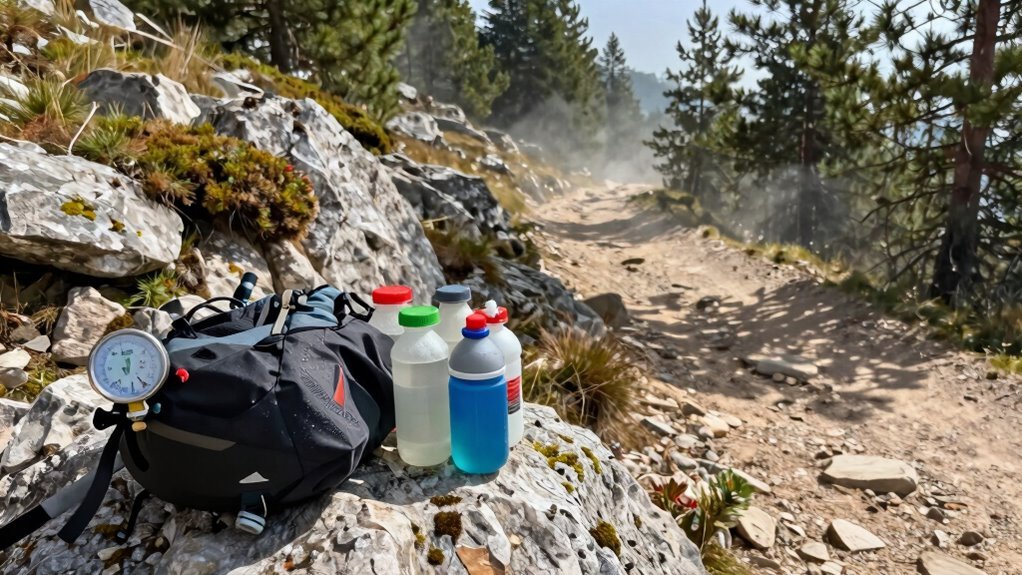
You’ve already figured out how trail length and pack weight shape your water needs, but what about the sky’s mood?
Whether it’s blazing sun, biting cold, or desert-dry wind, weather plays hydration referee—sometimes sneaky, always serious.
- In heat, you can lose 60 oz per hour; sip at least 20 oz hourly—cool water wins every time.
- Dry air? You’re sweating like crazy without even knowing it—aim for a quart (32 oz) per hour in places like Utah’s high desert.
- Cold tricks you—thirst fades, but you’re still losing water fast; warm fluids in insulated bottles keep you sipping and safe.
Wind sweeps sweat away fast, fooling you into thinking you’re fine—until you’re not.
Dehydration hits fast, bringing headaches, fatigue, or worse.
At higher altitudes, temperature declines ~8°C per kilometer, making cold exposure more intense and increasing respiratory water loss.
Play smart: pre-hydrate, sip often, and remember—your brain thinks better when you’re not a raisin!
Adjusting for Trail Difficulty and Elevation Gain
When the trail starts climbing like it’s training for a mountain marathon, your water bottle better be ready to work just as hard as your legs.
Steep inclines and rocky scrambles mean you’ll burn through water twice as fast—up to a liter per hour in hot, tough conditions.
For every 3,000 feet gained, add a liter to your daily needs because high altitudes sneakily dehydrate you, even if you don’t feel thirsty.
Hiking above 10,000 feet? Aim for 3–4 liters daily.
A moderate 6-hour hike might need 2.5–4 liters, but if it’s strenuous, bump that to 4–5.
Pack two bottles or a jug and hydration reservoir so you’re not lugging one heavy load.
Sip half to a full cup every 30–45 minutes—your body will thank you when the trail stops laughing at your fitness.
How Backpack Weight Affects Water Consumption
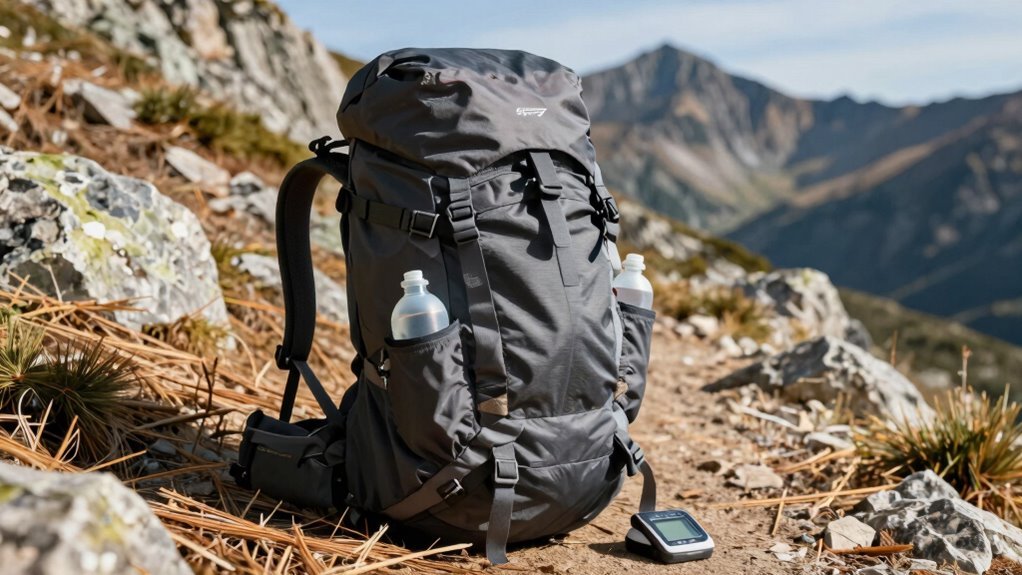
Though your backpack mightn’t win a beauty contest, its weight sure knows how to throw a wrench in your hydration game—especially when every liter of water adds over two pounds to that already groaning pack.
Heavy loads hike up your effort, making you sweat more and guzzle water faster.
You’re not just carrying water—you’re hauling a thirsty workout buddy.
To keep things smart and light:
A 35-pound pack can drain half a liter per hour from you, so don’t skimp—plan wisely, drink regularly, and let your pack work for you, not against you.
Signs You’re Not Drinking Enough Water
Ever wonder why that trail seems twice as tough all of a sudden?
That headache creeping in?
It’s your body waving a tiny red flag—dehydration’s knocking.
You’re thirsty, your mouth feels dry, and your energy’s nosediving like a squirrel on a steep slope.
Pee a dark amber?
That’s your first big clue—water’s running low.
Don’t wait!
Dizziness, nausea, or irritability means you’re slipping into mild dehydration.
You’ll feel sluggish, foggy, maybe even a little grumpy—because yes, water keeps your brain happy too.
Cramps, flushed skin, or a racing heart?
Uh-oh, things are getting real.
No sweat in the heat?
That’s a danger zone.
Watch for confusion or fainting—serious alarms.
Keep your cool: sip early, pee pale, skip the coffee, and hydrate before you even hit the trail.
Your adventure’s only as strong as your water game!
Tips for Efficiently Carrying Water on the Trail
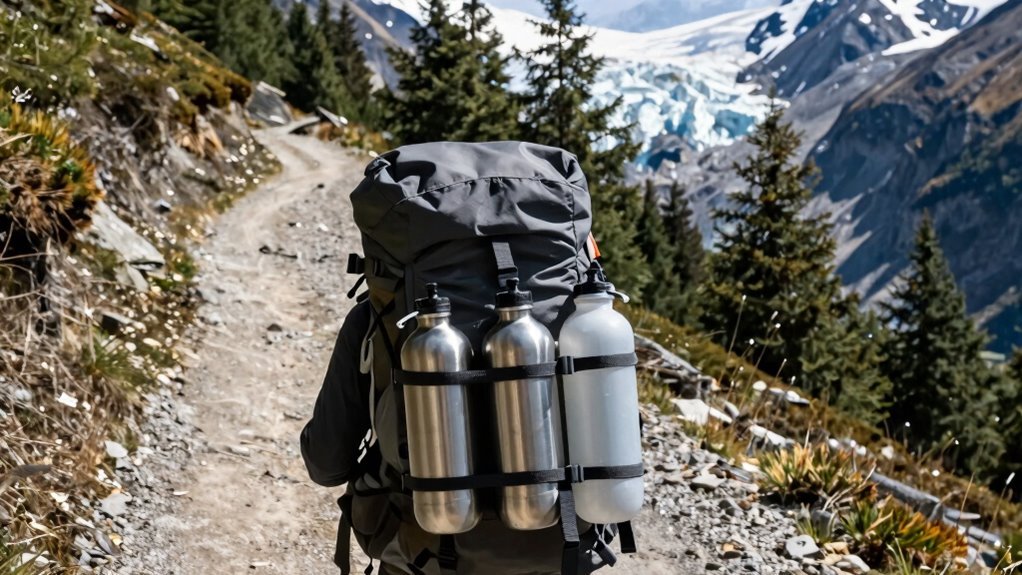
Since hitting the trail with a sloshing backpack isn’t exactly a dream, it’s smart to stash your water where it’s handy and won’t throw off your balance.
Keep your hydration close, convenient, and ready to sip—because nobody wants to play contortionist just to drink. Here’s how to do it right:
- Slide a hydration bladder against your back for even weight and easy sipping through the tube—plus, that shoulder strap hose is basically your hydration coach.
- Use smart bottles in stretchy side pockets; Nalgene or Smartwater with a Sawyer Squeeze means durable, filter-friendly, no-spill access in seconds.
- Toss in a collapsible silicone bag when you need extra liters—it squishes flat when empty, saving space and adding serious water-hauling power without the bulk.
Your pack will thank you, your back won’t rebel, and hey, you might even remember to drink enough this time.
Win-win-win.
Finding Reliable Water Sources Along the Route
Hunting down water sources on the trail is part adventure, part survival hack—and way more fun when you know where to look.
You’ve got apps, maps, and guidebooks; use ’em like a trail-savvy detective.
Check for rivers, springs, or even cleverly placed water tanks like on the Larapinta Trail.
In deserts, rock pockets called tinajas might hold water—or just dust bunnies after a dry spell.
Stick to valleys and low spots since water flows downhill, even above treeline.
Flowing streams? Gold.
Calm pools? Okay, if they look clean.
Some sources, like the Merced River on Mist Trail, are reliable champs.
Others, like pools in Boot Canyon, depend on last week’s rain.
Always check the season—dry summer turns creeks into sandy ribbons.
When in doubt, carry enough to make it to the next solid source.
Your future thirsty self will high-five you.
Water Purification Methods for Natural Sources
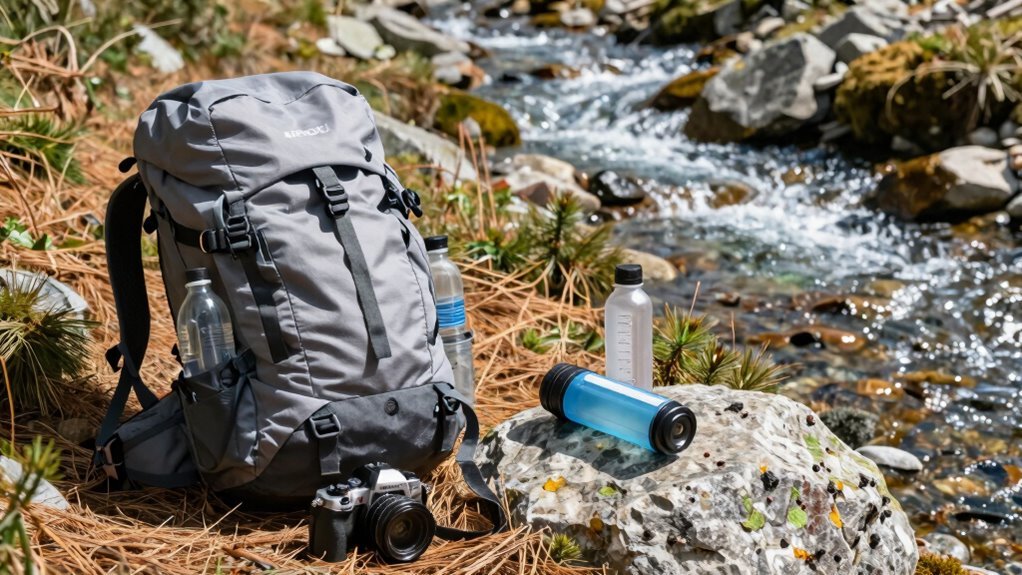
When you’ve found a glistening stream or a promising seep, don’t take a sip yet—nature’s water looks pure but can pack a gut-punch of bugs and bacteria.
You’ve got smarter ways to drink safely without hauling gallons. Pick a method that fits your pace, group size, and trail style:
- Pump & gravity filters (like Sawyer or Platypus): Great for on-the-move or camp filtering; fast, reliable, and group-friendly.
- Chemical treatments (Aquamira, iodine): Lightweight champs—you treat water while hiking, but brace for taste and wait times.
- Boiling or UV (SteriPen): Boil for a minute (three up high), or zap with UV light—super effective, though UV needs batteries and clear water.
Each has quirks, but all beat a stomach revolt. Pair your pick with a smart carry strategy, and you’re golden—hydrated, happy, and hassle-free on the trail.
Frequently Asked Questions
Can I Bring Flavored Drinks Instead of Plain Water?
Yeah, you can totally bring flavored drinks instead of plain water!
They keep things fun with tasty sips like salted lime or berry punch, and they actually help you stay hydrated with electrolytes.
Just don’t ditch water completely—mix in plain H2O to avoid flavor fatigue.
Use drink mixes, drops, or fizzy tabs to jazz it up, stay energized, and make hydration something you’ll actually look forward to.
Cheers to happy trails and tasty sips!
Should I Drink Water Even if I’M Not Thirsty?
Yes, you absolutely should drink water even when you’re not thirsty—your body’s thirst alarm is basically asleep at the wheel!
By the time you feel thirsty, you’re already dehydrated, which can zap your energy, fog your brain, and turn your hike into a grumpy slog.
Sip regularly, stay sharp, and keep that trail party going strong—think of water as your hike’s secret superpower!
Is It Safe to Drink From Streams Without Filtering?
No, you shouldn’t drink from streams without filtering—ever.
That crystal-clear water might be hiding nasty bugs like giardia that’ll turn your hike into a bathroom emergency.
Think of it as nature’s prank: looks pure, but your stomach’s gonna hate you.
Even if you’re feeling adventurous, skip the gamble.
Treat every drop, every time.
Your gut will thank you, and hey, you’ll stay on trail instead of behind a bush.
Stay smart, stay hydrated, and keep smiling!
How Often Should I Clean My Water Storage Containers?
You should clean your water containers regularly—don’t worry, it’s easier than cleaning your water bottle after a week-old smoothie!
Drain and scrub them, then disinfect with a few drops of bleach per gallon.
Light tanks or sunny spots? Clean every few months.
Dark, shady tanks? Once every two years works.
After camping? Wash it out right away.
And hey, your water will taste fresher, we promise—no soggy gym sock flavor!
What Are the Risks of Drinking Too Much Water?
You can actually get sick from drinking too much water—it dilutes your body’s sodium and causes hyponatremia.
You’ll feel nauseous, headachy, or confused, and yeah, it’s as scary as it sounds.
It’s easy to mistake it for dehydration, but chugging more water makes it worse.
So don’t gulp mindlessly—your cells are begging you to chill.
Balance fluids with salty snacks, and let thirst be your guide.
Stay smart, stay hydrated, and keep hiking happy!
Conclusion
You’ve got this—just like a cactus needs water to thrive, so do you out on the trail. Pack smart, sip often, and never wait until you’re parched. Remember, “an ounce of prevention is worth a pound of cure,” especially when you’re miles from home! Whether you’re climbing uphill or cruising through shade, keep your bottle handy, stay refreshed, and enjoy every drop. Hiking’s way more fun when you’re not thirsty!
References
- https://nutritionsource.hsph.harvard.edu/water/
- https://pmc.ncbi.nlm.nih.gov/articles/PMC2908954/
- https://www.mayoclinichealthsystem.org/hometown-health/speaking-of-health/water-essential-to-your-body-video
- https://www.cdc.gov/nutrition/php/data-research/fast-facts-water-consumption.html
- https://www.mayoclinic.org/healthy-lifestyle/nutrition-and-healthy-eating/in-depth/water/art-20044256
- https://fitwell.recreation.ucla.edu/file/4c9d4e78-8cef-4818-be6c-f5f0082d0a97
- https://www.mdanderson.org/cancerwise/how-much-water-should-you-drink-a-day.h00-159778812.html
- https://www.usgs.gov/water-science-school/science/water-you-water-and-human-body
- https://samhealth.org/news/how-much-fluid-does-your-body-need/
- https://www.yeti.com/blog/how-much-water-for-a-day-hike.html