Do You Really Need Hiking Socks?
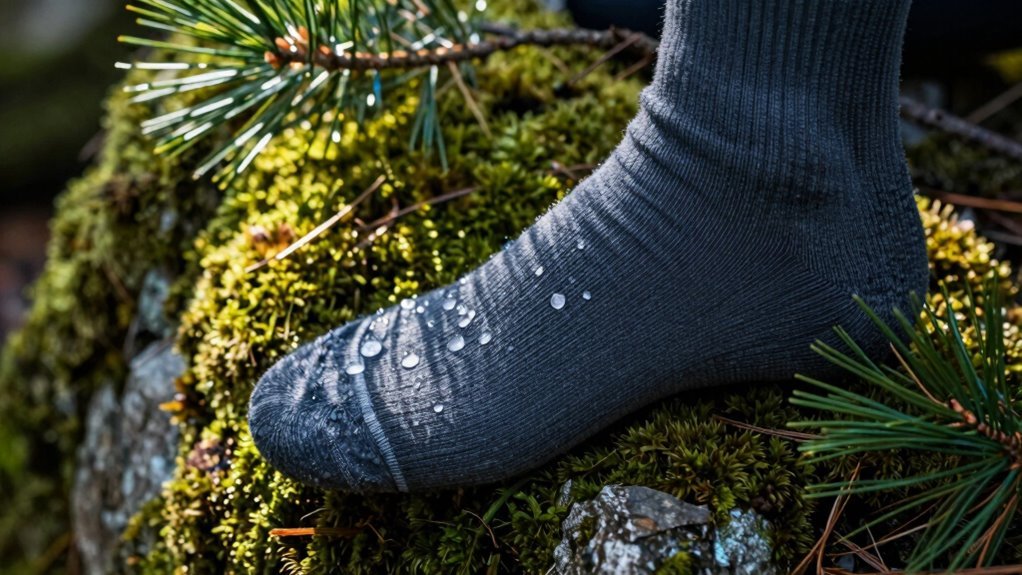
You sweat, your feet get wet, and cotton just makes it worse—hiking socks fight back. They wick moisture like tiny superheroes, keeping your feet dry and comfortable on the trail. Without proper performance wear, even short hikes can turn painful.
Hiking socks keep blisters at bay with smart cushioning and seamless designs. They grip your skin so nothing slips, reducing friction that leads to hot spots. Think of them as shock absorbers with a dry sense of humor.
Your regular socks? They’re on vacation. When it comes to long-term comfort and foot protection, nothing beats the engineered support of quality hiking socks.
The Science Behind Moisture-Wicking Fabrics
Ever wonder how your socks stay dry when your feet are working overtime on the trail?
It’s all about smart fabric science, not magic.
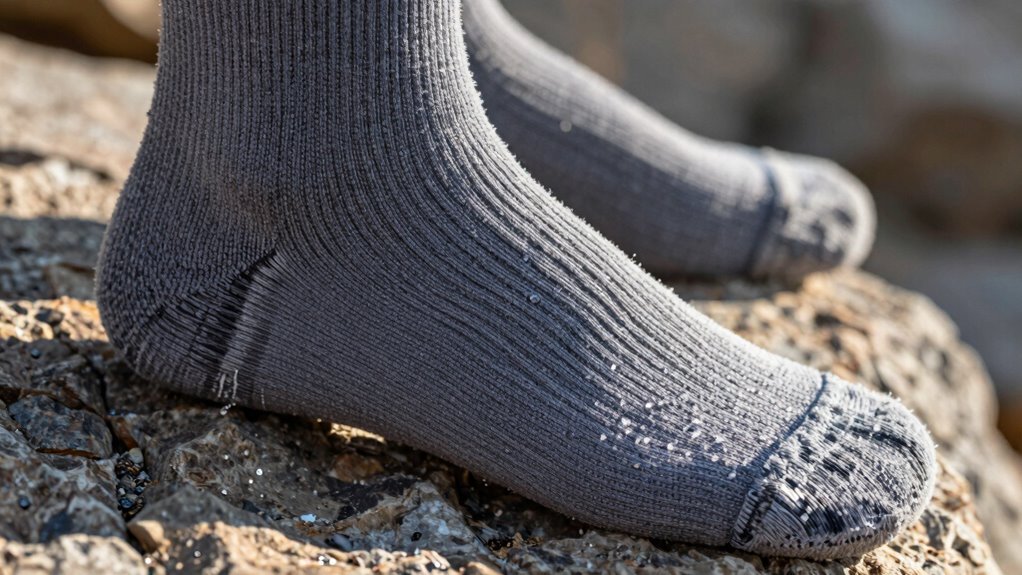
Your merino wool socks have a hydrophobic outer layer that shrugs off moisture, while the inner core quietly absorbs up to 30% of their weight in water—without feeling wet.
Those crimped fibers? They’re not just cozy—they create tiny air channels that let your feet breathe.
Synthetics like Coolmax use capillary action to move sweat to the surface, where it evaporates fast.
Alpaca fibers, with their semi-hollow cores, wick even quicker than merino.
And unlike cotton, which turns into a soggy mess, these materials keep moisture under control.
Whether natural or synthetic, the best hiking socks actively manage sweat so you don’t end up with swamp feet.
Merino wool continues to insulate even when wet, making it ideal for changing conditions wet trail conditions still keep feet drier.
Who knew your socks were working this hard for you?
How Hiking Socks Prevent Blisters and Hot Spots
Your feet are tough, but even the hardiest hikers know that blisters can turn a dream trail into a limping nightmare.
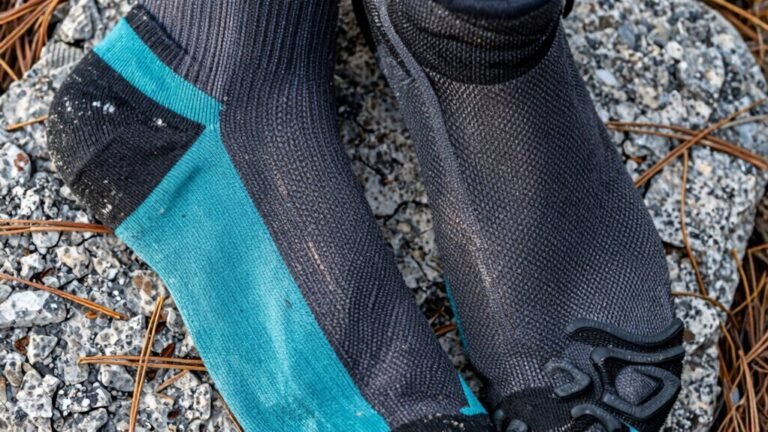
Good hiking socks fight back with smart tech—like silicone inner layers that stick to your skin, not your boot, so friction happens where it won’t hurt.
With individual toe slots, your toes stay separated and stop playing footsie (and rubbing raw).
Merino wool wraps them in soft在玩家中 while wicking sweat, because damp skin slips and slides way too easily.
And let’s be real—no one wants cotton socks squishing around like wet paper towels.
Instead, moisture-wicking materials keep things dry, reducing friction before hot spots start.
Double-layer designs or liner socks add extra protection, letting layers slide against each other instead of your skin.
It’s like having a tiny bodyguard for each blister-prone zone—smart, sneaky, and totally worth the hype.
This approach works because the friction reduction layer minimizes shear between the skin and sock, effectively preventing blisters before they start.
Cushioning and Support: What Everyday Socks Lack
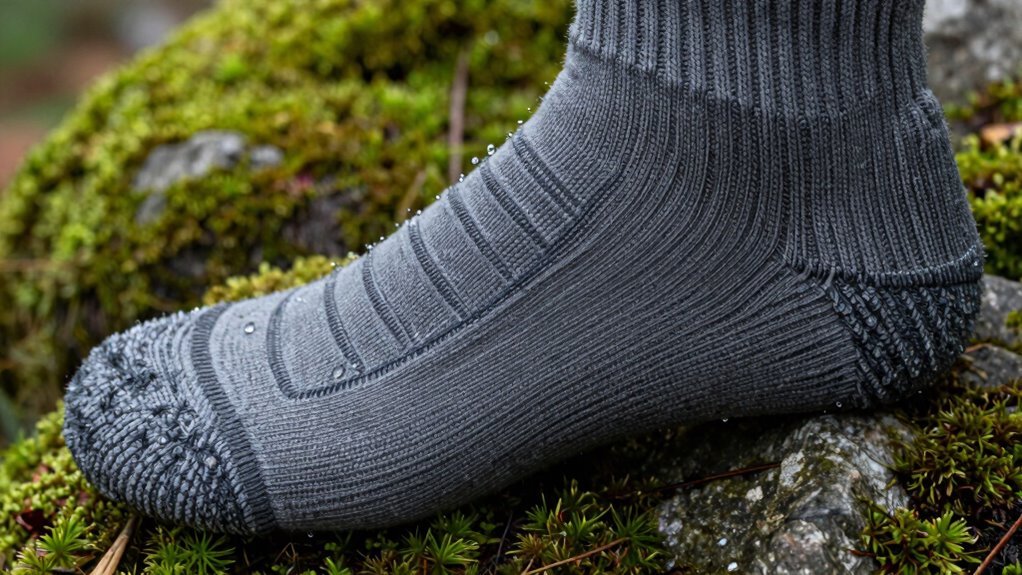
While everyday socks might get you through a walk to the mailbox, they’re no match for the pounding your feet take on a rugged trail.
You’ll quickly notice the lack of padding—regular socks skimp on cushioning in the heel and ball, leaving you feeling every rock and root.
Hiking socks, on the other hand, pack extra thickness right where you need it, absorbing shock like tiny trampolines for your feet.
They’ve got reinforced heels, toes, and soles that laugh in the face of rough terrain.
Meanwhile, your trusty cotton socks wear out fast, turn thin, and feel like sandpaper after a few miles.
They also skip arch support entirely, so your feet sag like a tired hammock.
Without it, fatigue creeps in fast.
Hiking socks cushion your journey from start to finish—because let’s face it, your feet deserve the upgrade.
Hiking socks often feature built-in arch support, helping maintain proper foot alignment over long distances.
The Role of Fit and Compression in Foot Comfort
- Your feet feel lighter, even after miles
- Swelling sneaks away before it starts
- Muscles stay fresh, not fried
- Every step feels more stable and sure
- You recover faster—hello, back-to-back hikes!
When Regular Socks Might Actually Suffice
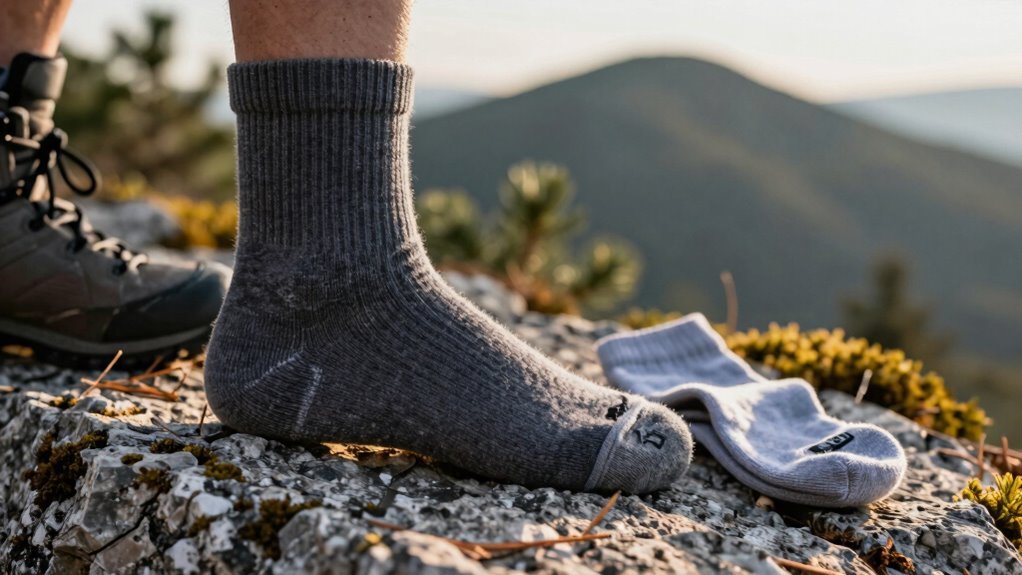
Sure, fancy hiking socks have their time and place—but let’s be real, you don’t need a full tactical gear drop for a stroll that barely dents your daily step count.
If you’re out for under two hours on smooth, flat trails, your regular socks will do just fine.
They’ve got light cushioning, breathable fabric, and crew heights that protect your ankles in basic hiking shoes—no drama.
On groomed paths without roots or rocks, cotton or acrylic blends keep debris out and comfort in.
Warm day? Low-cut, lightweight socks breathe well and won’t bake your feet.
Even as liners under thicker socks, they add comfort without bulk.
For casual walks that feel like errands with scenery, save the high-performance gear.
Your everyday socks are tougher than you think—affordable, snug, and totally up for short, sweet adventures.
Who knew?
Frequently Asked Questions
Can Hiking Socks Help With Sweaty Feet in Hot Weather?
Yeah, hiking socks can definitely help with sweaty feet in hot weather.
They wick moisture fast, so your feet stay dry and happy.
Merino wool or synthetic blends keep sweat under control while letting air flow.
Thick doesn’t mean sticky—these socks absorb and release moisture better than thin ones.
Plus, mesh panels and snug fits stop hot spots before they start.
Your feet won’t just survive the heat—they’ll thrive.
Are Merino Wool Socks Worth the Higher Price?
Think of merino socks as your feet’s personal bodyguards—they’re worth every extra dollar.
You stay dry, you stay comfy, and stink? Forget about it.
They handle sweat like champs, shrug off blisters, and keep you cozy whether it’s hot or freezing.
Yeah, they cost more, but they last longer, too—so you’re actually saving cash.
Plus, your feet will throw you a party.
Seriously, it’s like cloud walking.
How Often Should I Replace My Hiking Socks?
You should replace your hiking socks every 3 to 6 months if you’re hitting the trails regularly.
Tough hikes, sweat, and friction wear them out fast.
Watch for holes, sagging, or funky smells—even if they look fine, performance might’ve tanked.
Think of them like trail running shoes: out of steam before they fall apart.
Rotate pairs, treat ‘em right, and your feet’ll thank you mile after happy mile.
Do I Need Different Socks for Summer and Winter Hikes?
You absolutely need different socks for summer and winter hikes—choosing wrong is like putting snow tires on a beach cruiser.
Summer calls for lightweight, breathable merino or cotton blends that wick sweat and keep feet cool.
Winter demands thick, insulating wool that traps warmth like a cozy hug.
Matching socks to the season boosts comfort, prevents blisters, and keeps stinky feet at bay—because nobody wants foot funk louder than a foghorn.
Are Seamless Hiking Socks Better for Preventing Blisters?
Yeah, seamless hiking socks are way better at stopping blisters—you skip the itchy seams that rub and wreck your feet.
They glide over your skin, especially with flat toe closures and smart stitching that stays out of the way.
Add moisture-wicking fabric and a snug fit, and your feet stay dry, cool, and blister-free.
It’s like giving your toes a first-class ticket—minus the drama of foot blisters on the trail.
Conclusion
You’ve seen the science, and here’s a fun fact: hikers wearing moisture-wicking socks report 60% fewer blisters—yes, your feet stay drier and happier! Regular socks just can’t keep up when trails get tough. So, do you *need* hiking socks? For long hikes, tricky terrain, or sweaty soles—they’re a total game-changer. Think of them as tiny bodyguards for your feet. Your future self, strolling blister-free, will thank you!
References
- https://darntough.com/blogs/the-alternate-stitch/merino-wool-makes-best-moisture-wicking-socks
- https://amoandoak.se/blogs/your-socks-guide-amo-oak/are-wool-socks-breathable-the-science-behind-moisture-wicking-wool
- https://swiftwick.com/blogs/news/what-is-moisture-wicking-and-how-does-it-work
- https://surisocks.com/blogs/news/complete-guide-to-moisture-wicking-socks
- https://flaxsox.com/The-Science-Behind-Moisture-Wicking-Socks-p717294416
- https://refrigiwear.com/blog/the-science-behind-moisture-wicking-socks/
- https://www.llbean.com/buy/moisture-wicking-socks-for-walking
- https://www.rei.com/c/hiking-socks/f/f-moisture-wicking
- https://www.armaskin.com/blogs/armaskin/do-blister-resistant-socks-work
- https://thetrek.co/my-secret-weapon-against-blisters-on-trail-hiking-in-toe-socks/