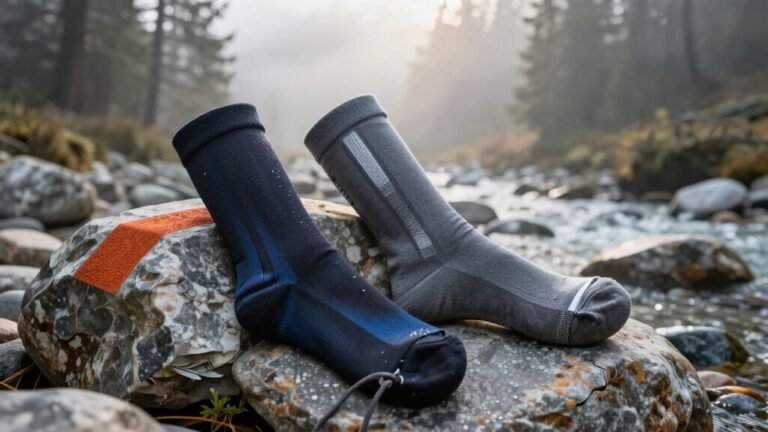
Trail Runners Checklist for Your Next Hike
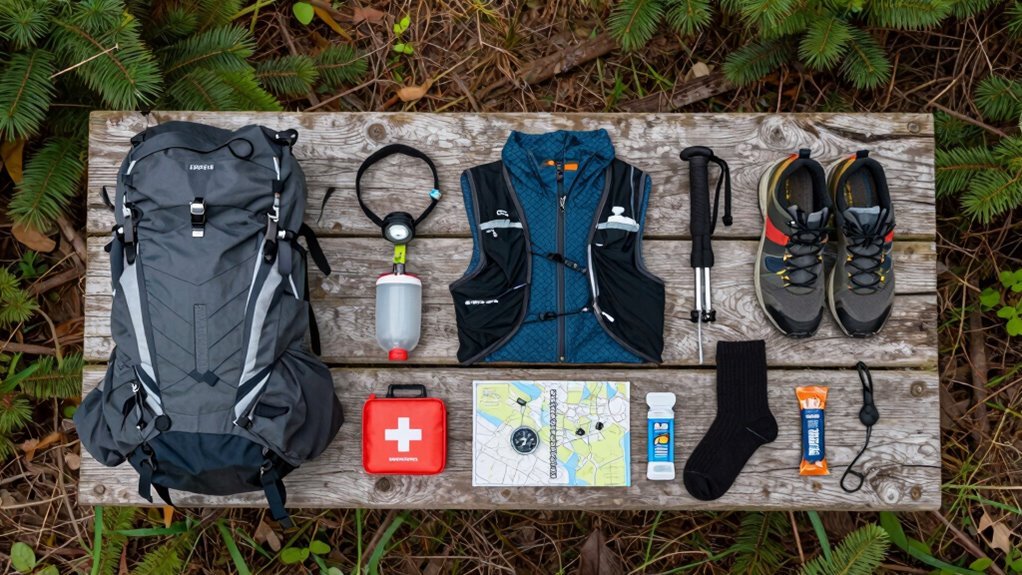
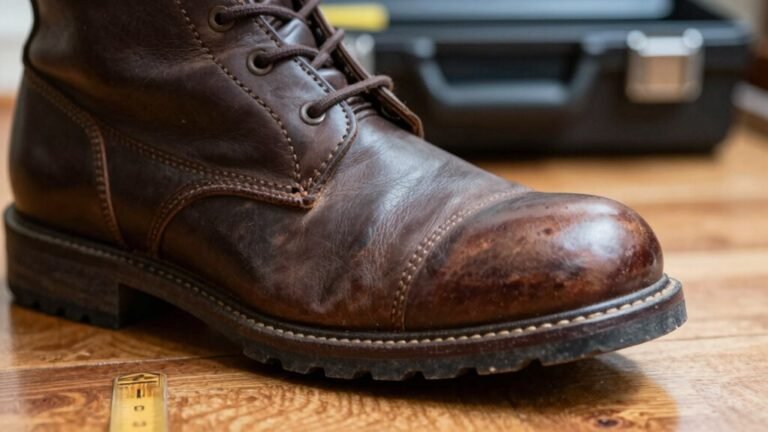
Lace up your trail runners—like Speedcross 6s with grippy lugs—and get ready for rugged terrain. Wearing the right trail runners ensures stability and grip on uneven paths.
Ditch the cotton t-shirt, buddy, and choose moisture-wicking gear instead. This type of clothing keeps you dry and comfortable during long hikes.
Pack a lightweight vest with water, snacks, and a map—because getting lost is only fun in stories. Always include a compass and a whistle for safety.
Don’t forget sunscreen and a compact rain layer—you can’t trust mountain weather. Conditions change fast, so preparation is key.
Tell someone your plans before hitting the trail. Carry a satellite messenger for emergencies, so help is always within reach. Stay ready, stay safe, and let’s keep the adventure going.
Choose the Right Trail Running Shoes
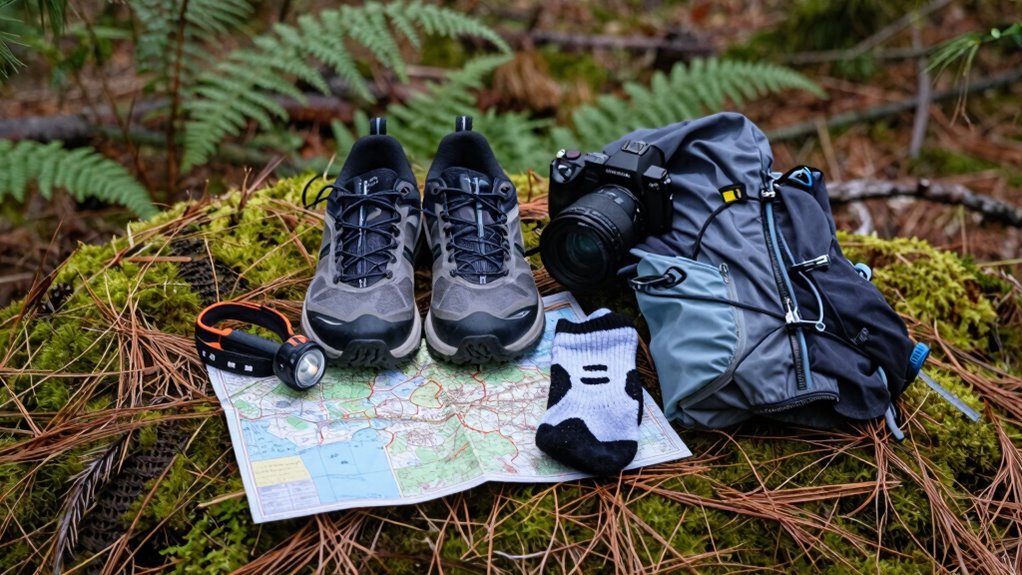
What if your next trail run could feel lighter, grippier, and way more fun—just by lacing up the right shoes?
You’ve got options, and picking the perfect pair isn’t just about looks (though that helps).
Need grip on slick roots or mud? Grab Salomon Speedcross 6 with its aggressive 6mm lugs—think trail shark teeth.
HOKA Speedgoat 6’s 5mm lugs chew through steep, slimy slopes like they’re nothing.
Love floating over rocks? Look for rock plates in Saucony Xodus Ultra 4 or cushiony dual-layer PEBA in HOKA Tecton X 3.
Want room to splay? Altra and Topo offer wide toe boxes—your piggies will thank you.
And if you hate slippery surprises, Vibram or Contagrip soles are your best buds.
The right shoe turns “meh” into “heck yes!”—so don’t wing it, your feet are calling the specs. With the ZoomX bouncy foam in the Nike Zegama 2, you get a plush, responsive ride that delivers exceptional energy return on technical terrain.
Wear Moisture-Wicking Clothing
You’ve nailed the perfect trail shoes—snug, grippy, and ready to chew up roots and rocks—so now let’s talk about what’s hugging the rest of you.
Moisture-wicking clothing isn’t just comfy—it’s your sweat’s best (and most responsible) friend. It pulls moisture off your skin, spreads it across the fabric, and lets it evaporate fast, so you stay cool, dry, and chafe-free, even when the trail heats up. This process, known as moisture wicking, is essential for keeping your skin dry and comfortable during extended physical activity.
No more soggy cotton clinging like a damp dishrag—yuck! Instead, breathable synthetics like polyester or Merino wool keep things light, airy, and stink-resistant.
- Stays dry to prevent irritation and blisters
- Regulates temperature whether it’s sweltering or chilly
- Keeps you light and nimble without soggy, heavy fabric
Your skin will thank you—and so will your pace.
Pack a Hydration System
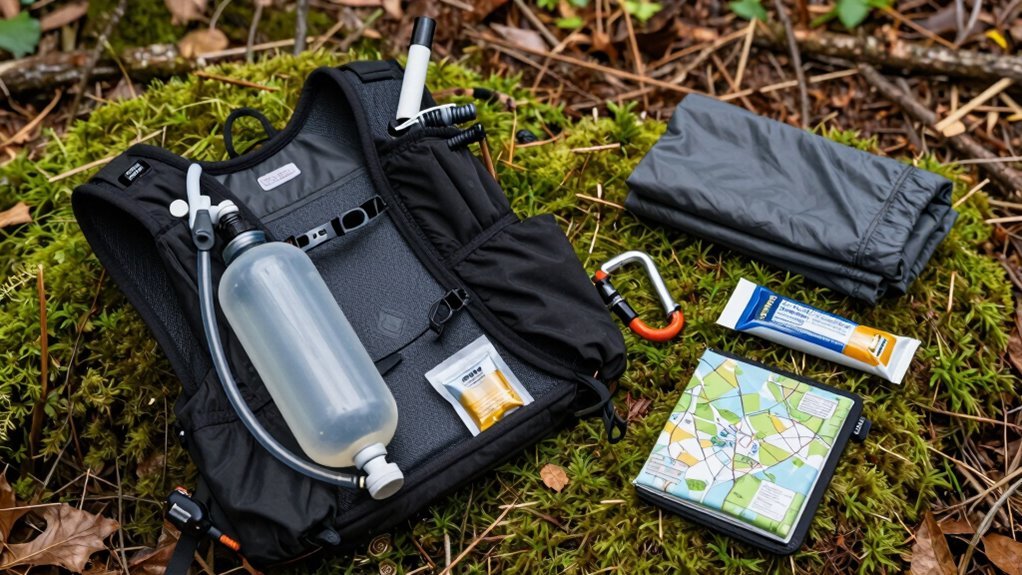
How’s your body supposed to keep up when the trail’s racing ahead?
You’ve gotta stay hydrated, and the right system makes all the difference.
Toss on a hydration vest like the Nathan VaporAir or Salomon Adv Skin—they hold 1–3 liters and stash your gear, too.
Need less? Grab a handheld or waist belt with soft flasks that won’t bounce or dig in.
These nifty bottles collapse as you drink, so nothing sloshes around.
Bladders are great for hands-free sipping, though it’s harder to see how much you’ve left—just sip often!
Toss in electrolyte tabs to keep cramps at bay when the sun’s blazing.
Plus, most packs have pockets for your phone, keys, or gels.
With breathable fabric, snug straps, and easy-access bottles, staying hydrated feels effortless—so go ahead, outrun that hill!
Running vest packs sit higher on the back and balance weight across the body.
Bring High-Energy Snacks
You just nailed hydration, but without the right fuel, even the slickest vest won’t keep your legs from turning into parked stumps.
Keep your engine humming with snacks that pack a punch—think fast carbs, smart fats, and a dash of fun.
Bananas, dates, and peanut butter are your holy trinity: quick energy, rich fuel, and long-lasting power, all wrapped in nature’s own packaging.
- Bananas: nature’s energy gel, easy on the stomach
- Dates: sticky, sweet, and loaded with trail-torching carbs
- Peanut butter: a protein-packed powerhouse for the long haul
Toss in salty pretzels or a squeeze of pickle juice to replace lost electrolytes. And if you’re craving store-bought ease, grab a Honey Stinger waffle—delicious, chewable, and perfect for on-the-go crunch. Your stomach (and thighs) will thank you.
Use a Lightweight Backpack
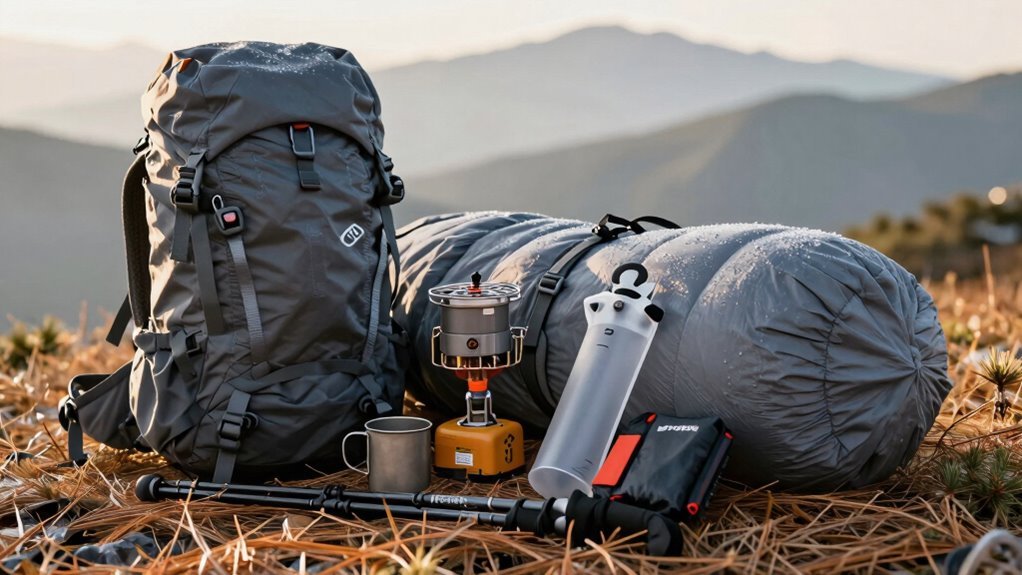
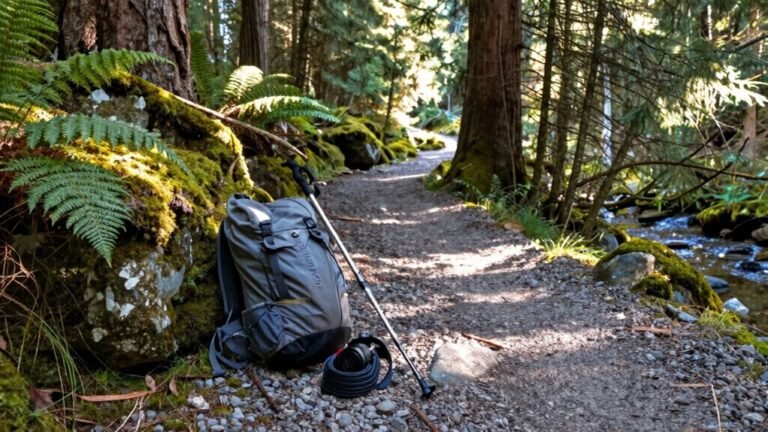
A good backpack doesn’t just carry your gear—it keeps up with you, mile after bouncing mile.
You want something light, like under a pound, so you’re not lugging around a brick.
Think ultralight materials like Dyneema or stretchy, snug fabrics that hug your body like a high-five that won’t quit.
Frameless designs and contoured fits mean no wobble, even when you’re darting over rocks or splashing through streams.
Vest-style straps stay put, and padded hip belts shift weight where it belongs—off your shoulders, onto your hips.
Need water? Snacks? Phone? Pockets on the straps and sides keep it all in reach without breaking stride.
These packs breathe too, thanks to mesh panels and airflow magic, so you won’t sweat like you’re marinating.
From quick runs to longer hauls, 18 to 50 liters covers it all—and hey, less weight just means you can sneak in an extra snack. Win!
Carry a First Aid Kit
- Blister tape and moleskin to stop friction before it stages a revolt
- Antiseptic wipes and gauze for cleaning and covering cuts fast
- Tweezers, gloves, and a trusty antihistamine for splinters or stings
Be the hero of your own adventure—who needs a rescue when you’ve got backup in your pack?
Navigate With a Map and Compass
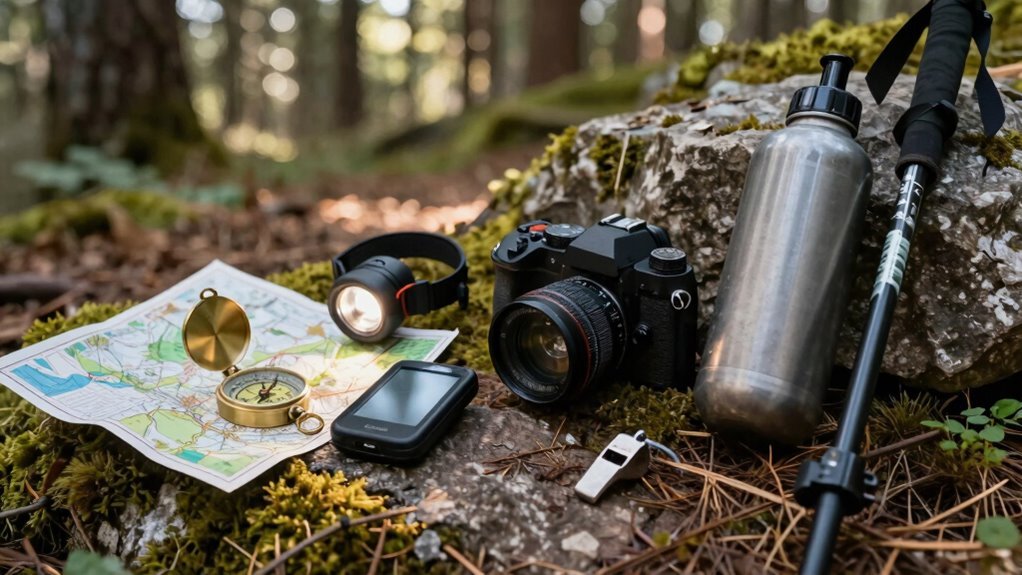
Even if you’ve got blister tape ready to wage war on runaway friction, nothing beats knowing exactly where you’re when the trail gets tricky—enter the dynamic duo of navigation: your map and compass.
Pop the cap off your trusty baseplate compass—its rotating bezel and clear edges make life easy.
Lay it on the map, line up the direction of travel arrow toward north, and twist the housing until the orienting arrow hugs the magnetic needle.
Turn the whole setup together until north’s really north.
Spot a landmark? Take a bearing: aim, twist the bezel, and lock it in.
Hold the compass flat, spin your body, and follow that arrow like it’s pointing to snacks.
Use two or three landmarks for triangulation—your “I’m lost” panic drops to zero.
Don’t forget magnetic declination—tweak it like a pro.
Practice on friendly trails first.
Confidence? Now you’ve got it.
Protect Yourself From the Sun
You’re practically chasing the sun when you hit the trails at dawn or dusk, so why not suit up like a pro who’s in on the secret?
Sun protection isn’t just sunscreen—it’s your whole outfit.
Slip into UPF 50+ gear that blocks 98% of UV rays, like lightweight hoodies or moisture-wicking tanks that keep you cool, not crispy.
Top it off with a wide-brim hat or trusty visor to shield your face and fend off bugs (because nobody likes a sweaty mosquito snack).
Don’t forget sunglasses—polarized, nonslip frames cut glare so you’re not squinting like a confused mole.
Slather on SPF 30+, reapply often, and thank your future self later—sunburned ears aren’t a good look.
Prepare for Weather Changes
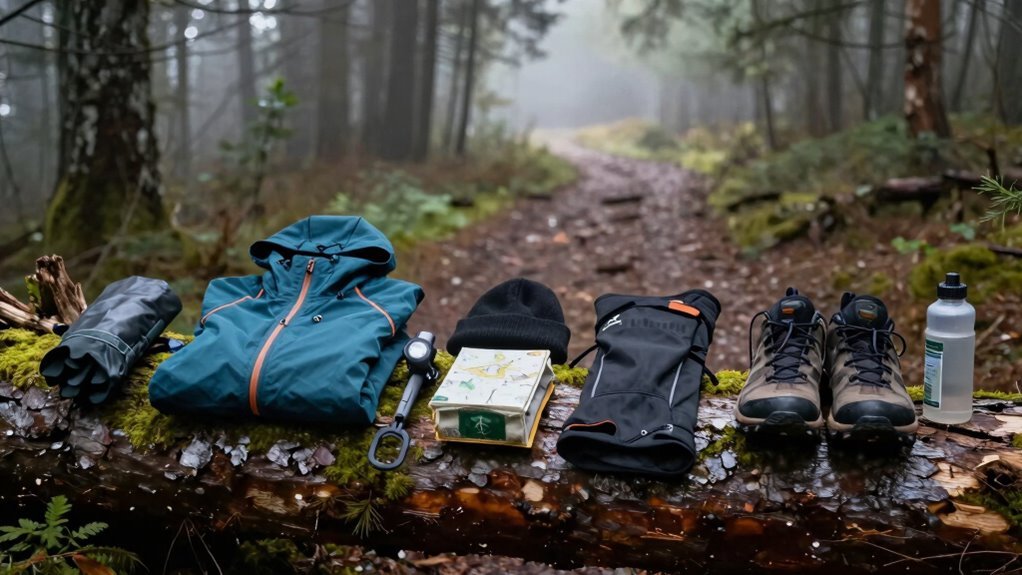
Ever wonder how trail runners stay cozy when the sky suddenly turns moody?
You do it with smart layering—start with a moisture-wicking base, add a breathable fleece midlayer, then cap it with a wind- and water-resistant shell (but skip the swampy full waterproof).
Dress 15–20 degrees warmer than it feels now—your body heat will catch up.
Toss in an extra puffy jacket, just in case Mother Nature throws a tantrum.
Keep your head happy with a wicking hat or fleece headband, and don’t forget a neck gaiter—your neck hates wind too.
Hands? They’re heat-loss champs, so pack liner gloves or mittens with wind shells.
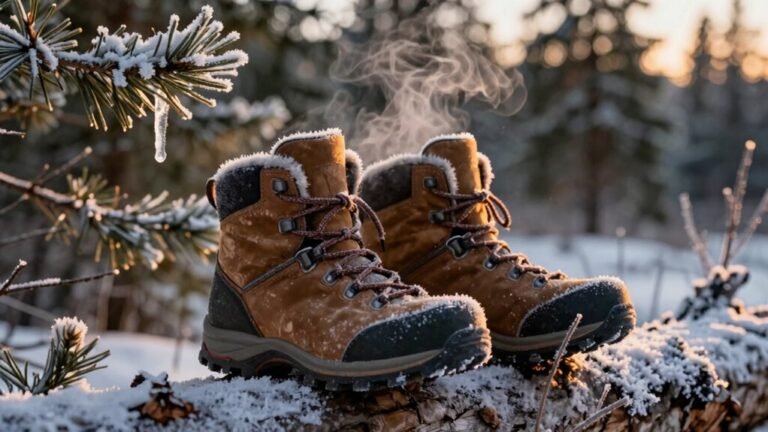
Add traction like microspikes for icy surprises, and stash thicker socks under gaiters.
Stay breathable, stay dry, and remember: only amateurs scoff at packing “just one more layer.”
You’re ready for anything—bring on the bluster!
Have an Emergency Communication Plan
Don’t wait for a misstep or sudden storm to figure out how to call for help—map out your emergency communication plan before you hit the trail.
Let someone know when you leave, where you’re going, and when you’ll be back—no guessing games if you’re overdue.
Set check-in times, and pick reliable gear like satellite messengers or phones that actually text rescuers with your GPS dot.
If things go sideways, three whistle blasts (blow, pause, repeat) scream “I’m here!” to searchers, while signal fires or flares grab distant attention.
- Share your full plan with a trusted buddy
- Carry a two-way device that sends location and messages
- Use the PACE method (Primary, Alternate, Contingency, Emergency) for backup options
No heroics—just smart, fun hikes with a lifeline in your pocket.
Frequently Asked Questions
How Do I Prevent Blisters During Long Trail Runs?
You prevent blisters by treating your feet like VIPs—start with broken-in trail shoes that fit snug but not tight, so your toes wiggle freely.
Wear moisture-wicking socks (never cotton!) and change ‘em fast if they get damp.
Slather on Bodyglide at hot spots, pop tape on trouble zones early, and laugh when your feet squelch—it means you’re doing trail life right!
What Should I Do if I Encounter Wildlife on the Trail?
You stop, stay calm, and give wildlife space like you’re dodging a surprise pop quiz—no sudden moves!
If a bear shows up, talk nicely and back away slow.
See a mountain lion? Get big, get loud, don’t play dead.
Snakes? Just step back and let it buzz in peace.
Elk charging? Hide behind a tree like it’s hide-and-seek.
Stay cool, stay safe, and remember: you’re a guest in their hood!
Is It Safe to Hike Alone as a Beginner Trail Runner?
You’re safer hiking alone than you think, but it’s still risky for a beginner.
Trails aren’t crime zones—nature’s the real challenge.
You’re way more likely to twist an ankle than meet a madman.
Still, cold, falls, or getting lost can sneak up fast.
Gear up, tell someone your plan, carry a tracker, and maybe bring a buddy at first—adventure smart, not just hard!
How Can I Improve My Uphill Running Stamina?
You wanna climb like a mountain goat on espresso?
Build uphill stamina by mixing hill repeats—4 to 5 hard scrambles up a steep slope—with strength work like squats and step-ups.
Add short, fiery strides to fire up those quads, and don’t be shy about power hiking, even if it feels like “cheating.”
Strong glutes and calves make climbs feel lighter, and hey, who said you can’t talk sweet nothings to yourself mid-hill?
Are Trail Running Shoes Suitable for Hiking on Rocky Terrain?
Yeah, trail running shoes can handle rocky terrain, but only if you’re light on your feet and not hauling a heavy pack.
They’ve got grippy lugs and sticky rubber that bite into rock, plus nimble soles so you can hop like a mountain goat—though you might curse a sharp stone now and then.
Just stick to moderate scrambles, not boulder fields, unless you enjoy surprises—like sore toes or sudden existential questions about footwear choices.
Conclusion
You’re not just lacing up shoes, you’re strapping on adventure—like a squirrel with a GPS and better snacks. Pack smart, dress right, and keep that sunshine and storms guessing. You’ve got snacks, water, and a plan, so go crush that trail like the mountain-moving champ you are. Adventure’s waiting, and it’s wearing hiking boots. Now get out there!
References
- https://runrepeat.com/guides/best-trail-running-shoes
- https://www.irunfar.com/best-trail-running-shoes
- https://www.runnersworld.com/gear/a22115120/best-trail-running-shoes/
- https://www.adventurealan.com/best-hiking-shoes/
- https://believeintherun.com/shoe-reviews/the-best-trail-running-shoes-2025/
- https://runninglabstore.com/pages/best-trail-shoes-2025
- https://www.outdoorgearlab.com/topics/shoes-and-boots/best-trail-running-shoes
- https://www.rei.com/learn/expert-advice/trail-running-shoes.html
- https://rununited.com/blog/5-key-features-to-look-for-when-choosing-trail-running-shoes/
- https://theoutdoorsoul.net/the-benefits-of-moisture-wicking-clothing-for-summer-hiking/