How to Pick Hiking Shoes for Bunions
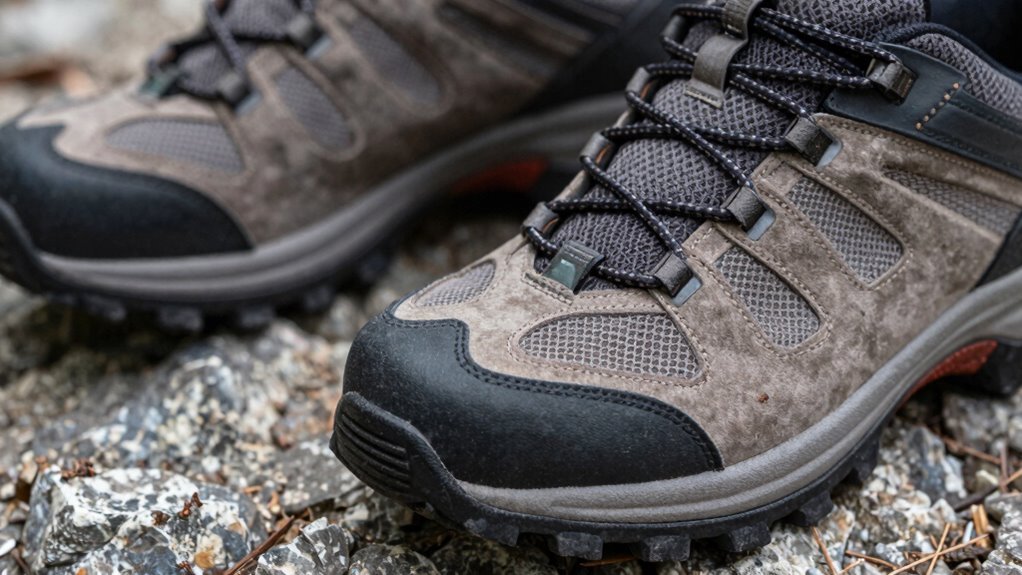
When picking hiking shoes for bunions, prioritize comfort and proper fit to avoid pain. Look for a wide toe box that allows your toes to spread out naturally, reducing pressure on the bunion joint.
Choose shoes made from soft, flexible materials that conform to your foot without causing irritation. This helps prevent friction and discomfort during long hikes.
Adjustable laces or straps let you customize the fit and relieve tightness around the bunion area. Make sure you can fine-tune the closure system for a secure, yet comfortable feel.
Test the shoes on rocky or uneven terrain to assess both comfort and grip. Ensuring support and stability helps protect your feet on challenging trails.
Your hiking shoes for bunions should feel supportive from the first step. With the right pair, you’ll enjoy the trail without foot fatigue.
Understand Your Foot Structure and Bunion Needs
Ever wondered why your feet scream “uncle” every time you tie up your hiking boots?
Well, it’s likely your bunions throwing a tantrum.
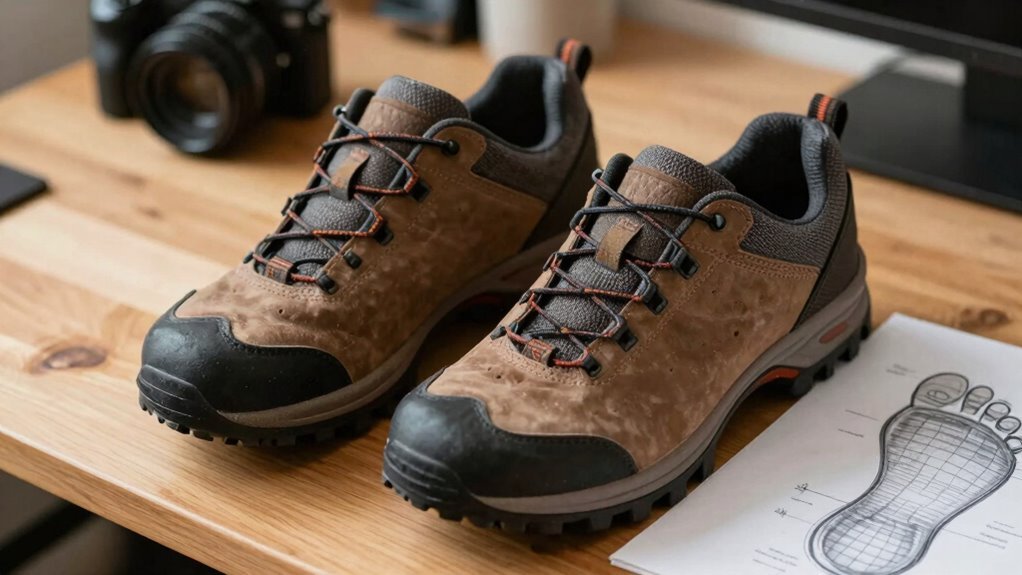
That bony bump on the inside of your foot? It’s your big toe joint rebelling—thanks to the metatarsal bone drifting inward and the toe leaning toward its neighbor.
Over time, this shift causes redness, swelling, and stiffness, especially when your boot presses down.
You might even notice corns or calluses popping up from the squeeze.
If you’ve got flat feet, overpronation, or just inherited wonky arches, you’re more prone to this foot drama.
The good news? Bunions develop in stages—mild, moderate, severe—so catching them early means you can take action.
Understanding your foot’s unique story helps you pick hiking shoes that don’t add insult to injury.
Think smart, hike happy!
This misalignment happens at the MTP joint, the largest toe joint and the primary site where bunions form.
Prioritize a Wide Toe Box for Comfort
That wide toe box isn’t just a nice-to-have—it’s your bunion’s best friend on the trail.
It gives your toes room to splay naturally, reducing pressure and keeping your bunion from screaming in pain.
You’ll love how it lets your feet move the way nature intended, no more cramped toes or awkward pinching.
A roomy, full-width design means even swelling on long hikes won’t spell disaster.
Plus, you’ll enjoy better balance—splayed toes act like little tripods, keeping you steady on rocky paths.
It’s not just comfy; it helps prevent issues like ingrown toenails or knee pain down the line.
Think of it as a pressure-free zone for your bunion, where every step feels lighter.
Your feet will thank you, especially when you’re miles in.
Trust us, a wide toe box isn’t luxury—it’s trail survival with flair.
Reduces nerve compression that can aggravate related foot conditions during extended wear.
Choose Soft, Flexible Upper Materials
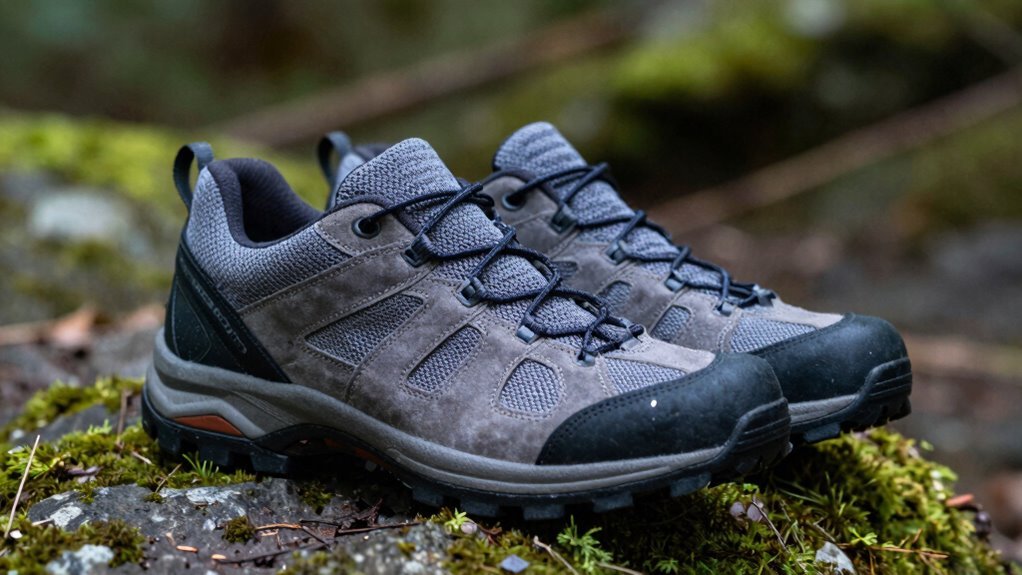
- Soft leather or suede hugs your foot like your favorite jacket
- Stretchy neoprene or fabric gives your bunion room to groove
- Seam-free insides mean no friction, just smooth vibes
- Breathable materials keep things cool and dry, even on long treks
These shoes adapt to *you*, not the other way around—less pain, more trail magic.
Your feet (and bunions) will thank you when you’re ankle-deep in adventure, not agony.
Soft, stretchable uppers help reduce irritation and conform to your foot’s shape, providing a roomy toe box that prevents pressure on the bunion area.
Look for Adjustable Fit Features
How does it feel to lace up and know your shoes actually work *with* your feet instead of fighting them?
Pretty great, right?
Adjustable fit features let you take control of comfort, especially when bunions are in the mix.
Use traditional laces to tweak tightness along the whole foot, or loosen just the top to ease bunion pressure.
Quick-lace systems? Super handy when you’re mid-hike and need a fast fix.
Love Velcro? Hook-and-loop straps, like on the Angela model, let you dial in the fit without all the bending.
Buckles are cool too—they offer solid support and adjust as your feet swell.
And don’t sleep on stretch panels in Betty or Annie models; they give your bunion room to breathe.
Combine laces with straps for a custom hug on every trail.
When your shoes fit right, even rocky paths feel doable.
Who knew comfort could be this adjustable—and this fun?
Test for Support and Stability on Rugged Terrain
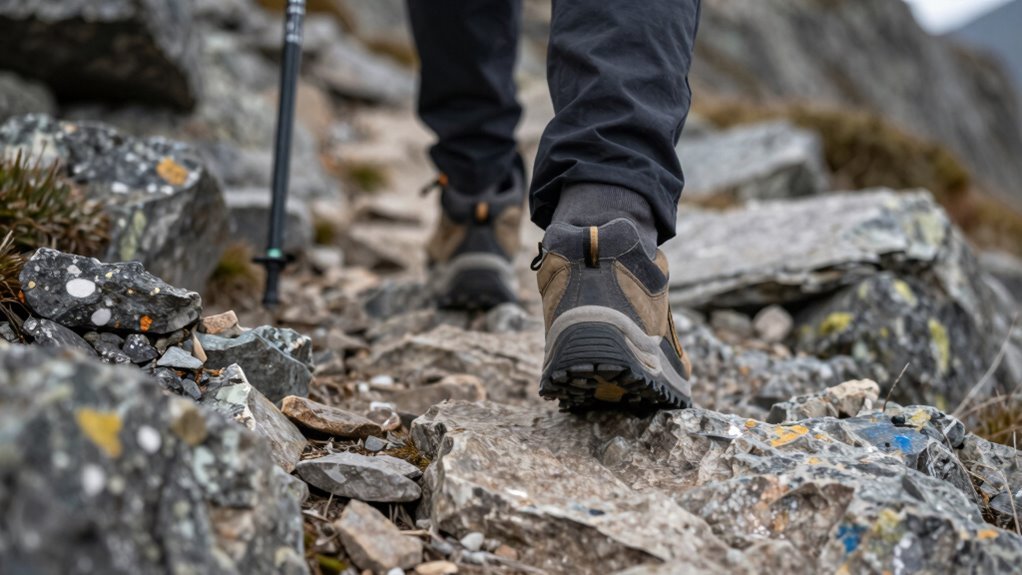
You’ve got your laces snug and your feet feeling good—now it’s time to see how your hiking shoes stand up when the trail gets tough.
Don’t just walk on flat ground—take them for a real test. Climb a rocky slope, step across loose gravel, and twist through roots like you’re dodging bunion-themed bad luck.
See how your feet hold up when things get wild.
- Stomp on uneven ground to check if your arch support keeps everything aligned—no wobbling like a wobbly camper.
- Twist your foot side to side to feel if the heel counter locks your foot in place—no slipping, no blisters, just smooth moves.
- Walk downhill sharply to test midfoot stability—your shoe shouldn’t feel like it’s hosting a foot party.
- Jump a little (yes, really!) to feel cushioning and shock absorption—your bunions will thank you for the soft landing.
Frequently Asked Questions
Can I Wear Orthotics With Hiking Shoes for Bunions?
Yes, you can absolutely wear orthotics with hiking shoes for bunions!
Just grab a pair with removable insoles and a wide toe box—your feet will thank you.
Brands like New Balance, HOKA, and Orthofeet are happy to play nice with custom inserts.
Extra depth, flexible uppers, and shock-absorbing soles make trail adventures comfy, not crunchy.
Think of it as a spa day for your feet—on a mountain!
Are There Specific Brands Better for Bunion Relief?
Oh, you *think* all hiking shoes hate your bunions? Surprise—they don’t! Brands like Hanwag and Propét actually design for your rebellious big toe. You’ll love the extra room, stretchy panels, and toe boxes that don’t pinch.
Altra, Lems, and Vivobarefoot give your feet space to splay naturally, while Salomon and Merrell offer wide widths too. You’re not just hiking—you’re finally free, one happy step at a time.
How Often Should I Replace My Bunion-Friendly Hiking Shoes?
You should replace your bunion-friendly hiking shoes every 300–500 miles or every 6–8 months, even if they look okay.
Trails beat them up in sneaky ways, so check for squished midsoles, worn lugs, or stiff insoles.
If they’re not bouncing back or your bunions ache more, it’s time.
Think of your shoes like avocados—still green outside but mushy inside? Toss ’em!
Fresh kicks keep your feet happy and hiking fun.
Can Hiking Worsen My Bunion Condition?
Yes, hiking can worsen your bunion if you’re not careful — narrow shoes, steep descents, and rocky trails all add pressure, rub the joint raw, and turn your trek into a tender tango.
But hey, don’t hang up your boots just yet! With smart choices — like wider shoes, shorter paths, and frequent foot breaks — you’ll keep adventuring comfortably, pain in check, and smiles on mile after mile.
Do Wider Shoes Help Prevent Bunions From Getting Worse?
Yeah, wider shoes can definitely help keep your bunions from getting worse—think of them as giving your toes a roomy little apartment instead of cramming them in a closet.
They reduce pressure, let your feet move naturally, and slow down any further misalignment.
You’re not stopping the bunion entirely, but you’re throwing your feet a comfort party with extra space, cushioning, and fewer ouch moments.
Win-win!
Conclusion
You’ve got this! Picking hiking shoes with bunions is like finding the perfect dance partner—one that moves with you, not against you. Grab a pair with a wide toe box, soft materials, and a snug, adjustable fit. They’ll hug your feet without squishing your toes. Step onto the trail confidently, knowing comfort and adventure go hand in hand. Happy hiking—your feet will thank you!
References
- https://orthoinfo.aaos.org/en/diseases–conditions/bunions/
- https://allianceortho.com/what-does-a-bunion-look-like/
- https://www.stcloudfootankle.com/practice_areas/bunions.cfm
- https://www.tusseyfootankle.com/blog/what-puts-you-most-at-risk-of-developing-bunions
- https://www.rushortho.com/specialties-services/foot-ankle/bunions-symptoms-causes-treatments/
- https://www.foothealthfacts.org/conditions/bunions
- https://www.mayoclinic.org/diseases-conditions/bunions/symptoms-causes/syc-20354799
- https://my.clevelandclinic.org/health/diseases/14386-bunions-hallux-valgus
- https://www.newportfootcare.com/bunions
- https://thefitville.com/blogs/blog/shoes-with-roomy-toe-box-your-must-have-travel-footwear