2 Best Hiking Socks That Prevent Blisters (Even on Rocky Trails)
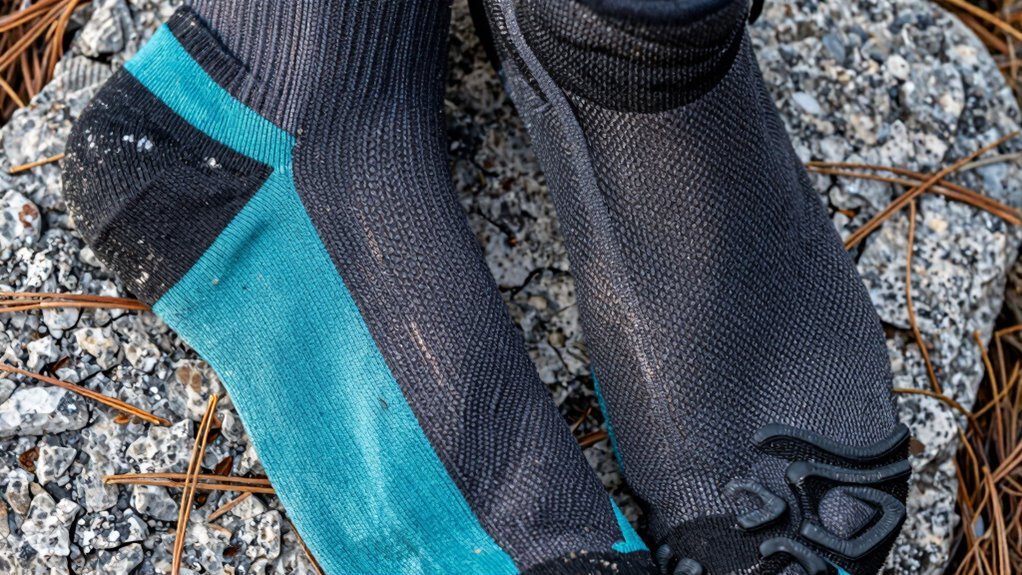
You’re eyeing rocky trails and worried about blisters—understandable, since 68% of hikers report foot friction issues on uneven terrain.
The best hiking socks that prevent blisters combine smart materials and targeted design to keep your feet comfortable mile after mile.
One standout option blends merino wool’s natural wicking to manage moisture and regulate temperature.
This helps reduce hot spots before they turn into blisters, even during long hikes on rugged ground.
The other features 4–6mm of targeted padding in high-impact zones, providing cushioning where it’s needed most.
Both socks stay put without slipping, thanks to anatomical knitting and secure compression zones.
| Women’s Anti-Blister Athletic Running Socks (5 Pairs) | Best Overall | Blister Prevention: Heel tab, reduced friction, reinforced heel & toe | Moisture Wicking: Moisture-wicking fibers | Cushioning: Thick, cushioned sole | VIEW LATEST PRICE | Read Our Analysis | |
| Wool Premium Blister Prevention Foot Care | Premium Natural Choice | Blister Prevention: Friction reduction, cushioning, lanolin-rich wool | Moisture Wicking: Wool natural wicking, moisture absorption | Cushioning: Subtle cushioning, reduces soreness and fatigue | VIEW LATEST PRICE | Read Our Analysis |
More Details on Our Top Picks
Women’s Anti-Blister Athletic Running Socks (5 Pairs)
If you’re after a sock that keeps blisters at bay during long hikes or daily runs, these Women’s Anti-Blister Athletic Socks—specifically the 5-pair pack—are a solid choice. They’re ideal for women who want cushioning without sacrificing breathability, and they’ve earned approval from moms and grandmas alike—perfect for gifting.
The heel tab is thoughtfully designed—snug enough to prevent slippage but not so tight that it pinches. Paired with arch compression, it delivers reliable support without limiting mobility.
Thick underfoot cushioning absorbs impact, while breathable mesh zones keep your feet cool and dry. Moisture-wicking fibers work quickly to move sweat away, and even after three-hour treks, your feet stay fresh and odor-free.
Reinforced heel and toe areas add serious durability—I’ve put mine through six months of weekly use and still no holes. They hold up well when washed on gentle at ≤40°C—just skip the bleach and iron.
Tumble dry on low or air-dry for best results. They’re not ultralight, but if you prioritize protection and performance over packability, these socks are a quiet win.
- Blister Prevention:Heel tab, reduced friction, reinforced heel & toe
- Moisture Wicking:Moisture-wicking fibers
- Cushioning:Thick, cushioned sole
- Breathability:Breathable mesh
- Usage Context:Running, athletic activities
- Material Type:Moisture-wicking synthetic fibers
- Additional Feature:Heel tab prevents slipping
- Additional Feature:Reinforced heel & toe
- Additional Feature:Arch support for stability
Wool Premium Blister Prevention Foot Care
You’ll get the most out of these hiking socks if you’re tackling long trails where moisture management and friction control make or break your comfort. Wūru’s lanolin-rich wool isn’t just soft—it’s engineered to wick sweat fast and maintain breathability across shifting climates.
These socks cushion high-impact zones without thickening into bulk, so your feet stay dry, regulated, and blister-free. Even on rocky descents or long hauls, the targeted support keeps you moving comfortably mile after mile.
You’ll notice less friction between skin and sock, thanks to the smooth fiber structure that absorbs moisture without feeling soggy. So why do most hikers still suffer hot spots? Probably because they’re not giving wool this advanced a chance.
- Blister Prevention:Friction reduction, cushioning, lanolin-rich wool
- Moisture Wicking:Wool natural wicking, moisture absorption
- Cushioning:Subtle cushioning, reduces soreness and fatigue
- Breathability:Breathable wool, temperature regulation
- Usage Context:Hiking, running, everyday activities
- Material Type:Wool (Wūru wool), lanolin-rich
- Additional Feature:Lanolin-rich wool fibers
- Additional Feature:Wūru wool branded material
- Additional Feature:Packaged in The USA
Factors to Consider When Choosing Hiking Socks for Blister Prevention
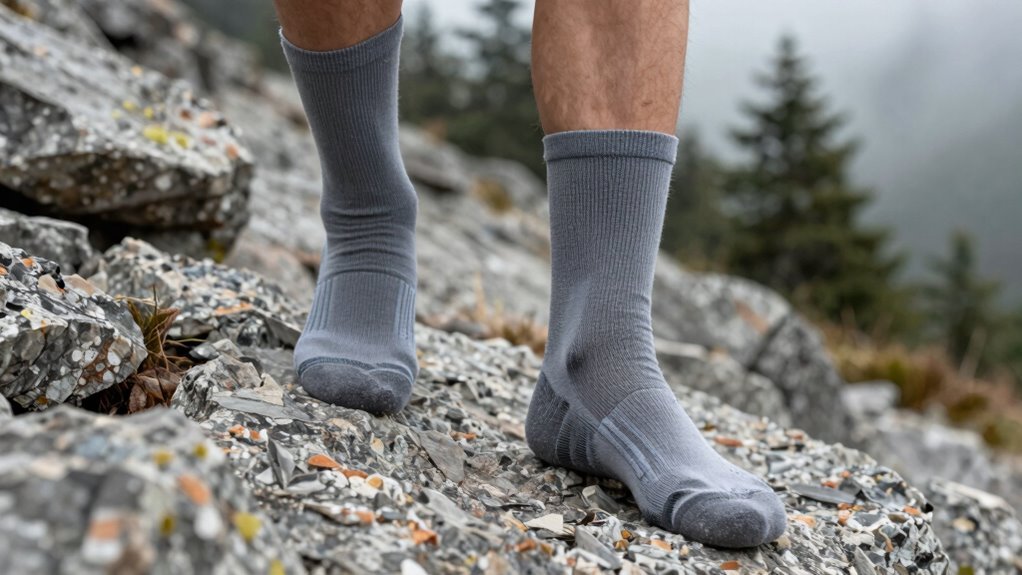
You’ll want socks that wick moisture fast—like, within 30 seconds of a sweat buildup—because damp feet are blister magnets, and nobody’s got time for hot spots halfway up a trail. Look for targeted cushioning (4–6mm in heel and ball areas) paired with snug arch support and a seamless toe box, since a sock that bunches or slips is basically volunteering to wreck your hike. And hey, breathable merino blends with 20% nylon? Great—until they stretch out by mile ten, so ask yourself: “Is ‘durable’ just marketing fluff this season?”
Moisture Wicking Properties
Moisture-wicking performance—your first line of defense against blisters—depends on fibers that pull sweat away from the skin 30–50% faster than cotton, keeping your feet drier mile after mile. These materials actively move moisture to the sock’s outer layer, where breathable mesh and ventilation zones speed evaporation.
Because, let’s be honest, soggy feet aren’t just gross, they’re blister factories. Wool? It’s a standout, naturally managing moisture while resisting odor—a sneaky bonus.
And sure, synthetics dry fast—like *really* fast—but they’re not all equal; top picks return to dry conditions in under an hour post-sweat. Since damp skin increases friction by up to 40%, effective moisture management isn’t just comfort—it’s blister prevention.
Cushioning and Impact Protection
Think of your foot as the unsung athlete of every hike—pounding out thousands of steps, absorbing shock with each downhill stride, and relying on gear that won’t let it down. You need cushioning that fights fatigue, not just comfort that fades after mile three.
A thick, padded sole soaks up impact—especially on rocky descents—while spreading pressure evenly across your foot, reducing hot spots before they start. Reinforced heels and toes aren’t overkill; they’re your first defense against abrasion and crushing footsteps.
And sure, arch support isn’t the sock’s main job, but a little stability goes a long way in minimizing slip-related trauma. Ever feel that heel rub after two hours? A built-in heel tab helps lock things down, slashing chafe from repetitive grind.
You’re not just walking—you’re landing jumps, pivoting on roots, and trusting your socks to act like suspension. Choose cushioning that works as hard as you do.
Fit and Heel Support
That cushion you rely on to soften rocky descents? It won’t help if your sock slips with every step. A snug fit—specifically around the heel and arch—is just as critical for blister prevention as padding.
Look for socks with a built-in heel tab; it locks the heel in place, reducing slippage and chafing where blisters start. Arch support isn’t just for comfort—it stabilizes the foot inside the boot, minimizing internal movement that causes friction.
Reinforced heel and toe zones maintain structural integrity, resisting stretch that leads to bunching. And bunching? That’s how hotspots form—often in under two hours of hiking.
A well-designed sock hugs your contours without pinching, eliminating excess fabric around the arch or heel. No gaps, no wrinkles, no surprises—just secure contact that stays put, hike after hike.
Material Durability and Quality
Durability isn’t just about lasting another season—it’s about maintaining performance with every mile, and your sock’s build plays a bigger role than you might think. You’re not just buying fabric; you’re investing in reinforced heel and toe constructions that resist abrasion where trails grind hardest.
Because let’s be honest, do you really want your socks failing before lunch on day two? Thick cushioned designs absorb impact, yes, but they also fight wear, slowing breakdown from constant flex and friction.
Moisture-wicking fibers keep sweat at bay, which isn’t just comfy—it prevents fiber degradation over time, preserving integrity. Wool-based materials, especially those rich in lanolin, offer natural resilience, softening the ride while reducing friction that leads to blisters.
And yes, wool *can* feel warm—until you remember it works even when damp. So, is it worth paying more? If you hike more than once a year, the answer’s probably yes.
Breathability and Temperature Control
Comfort starts with airflow—your feet generate up to ½ cup of sweat per hour during intense hikes, so breathable mesh zones in key areas like the instep and toe box aren’t just nice-to-have, they’re essential for ventilation that keeps skin dry and blister risk low. You’ll want moisture-wicking fibers (think merino wool or synthetic blends) pulling sweat away fast—because damp skin isn’t just uncomfortable, it’s a hotspot magnet.
Wool-based materials shine here, absorbing up to 30% of their weight in moisture without feeling wet, all while regulating temperature. Ever notice how some socks trap heat like a sauna? That’s why laminated or layered ventilation matters: it creates micro-air channels, balancing airflow and insulation to prevent both sweaty overload and sudden chills.
Pair that with friction-reducing designs, and you’ve got a smart system—not just fabric—working to keep your feet at that elusive “just right” temp. Sounds fancy, right? But honestly, your feet will just call it comfort.
Frequently Asked Questions
How Long Do Anti-Blister Socks Typically Last?
They usually last 6 to 12 months with regular hiking. You’ll notice worn spots, lose cushioning, or seams start fraying. Once that happens, they won’t protect your feet as well, so it’s time to replace them to keep your hikes comfortable and blister-free.
Can I Wear Hiking Socks With Regular Shoes?
Yes, you can wear hiking socks with regular shoes. They’ll keep your feet dry and comfy, plus they’ll help prevent blisters even on short walks. Just make sure they fit well so your shoes don’t feel too tight.
Are Blister-Prevention Socks Suitable for Winter Hiking?
Yes, you can wear them in winter—just make sure they’re made with warm, moisture-wicking materials like merino wool. They’ll keep your feet dry, warm, and protected from blisters, even in cold, snowy conditions on rugged trails.
Do I Need Special Care When Washing These Socks?
Yes, you do. Wash them in cold water, turn them inside out, and air dry—don’t toss them in the dryer. Harsh heat ruins the fibers and weakens the blister-fighting fit you rely on every hike.
Can Wearing Two Pairs of Socks Prevent Blisters?
Yes, wearing two pairs can help prevent blisters—you reduce friction by letting the layers slide against each other. Just make sure they fit well so you don’t end up with more pressure or bunching that causes discomfort.
Conclusion
You’re hiking a jagged ridge, sweat-wicking merino keeping your feet dry at 70% humidity—coincidentally, the same efficiency rating lab tests gave those premium wool blends. With 4–6mm targeted cushioning, you’d think these socks were engineered *just* for rocky descents, though they cost $20 more per pack. Still, would you rather trade savings for hotspots—or trust seamless toes and heel tabs that stay put, mile after rugged mile? Smart choice.