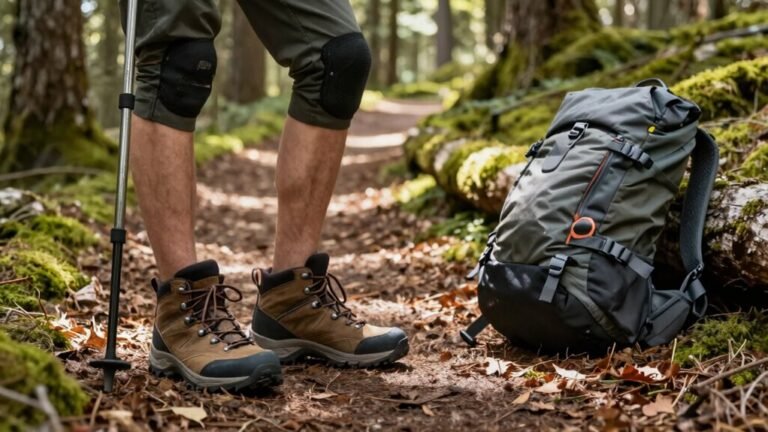
Hiking Socks Checklist for Your Next Hike
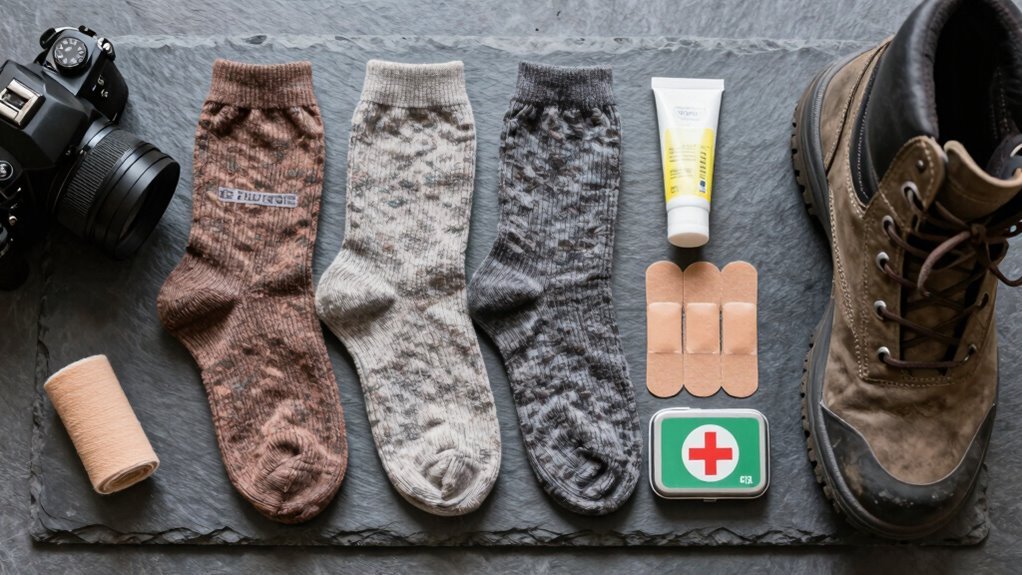
Ditch the cotton and grab merino wool or synthetic blends to keep your feet dry and stink-free. These materials are essential for any hiking socks checklist, as they wick moisture and prevent odor buildup during long treks.
Pick cushioning based on your trail—light for breezy walks, heavy for rocky paths. Matching the right level of padding ensures comfort and protection on varying terrain.
Match sock height to your boots and terrain, and guarantee a snug fit to minimize friction. Go for seamless toes to avoid blisters, a key factor in maintaining foot health on the trail.
Layer up with liner socks in tough conditions for added moisture control and blister prevention. This extra step can make a big difference on long or rugged hikes.
When holes appear or smells stick around, it’s time to say goodbye—your feet deserve better. Regularly inspect your hiking socks and replace them as needed to stay comfortable and safe.
Understand the Difference Between Hiking Socks and Regular Socks
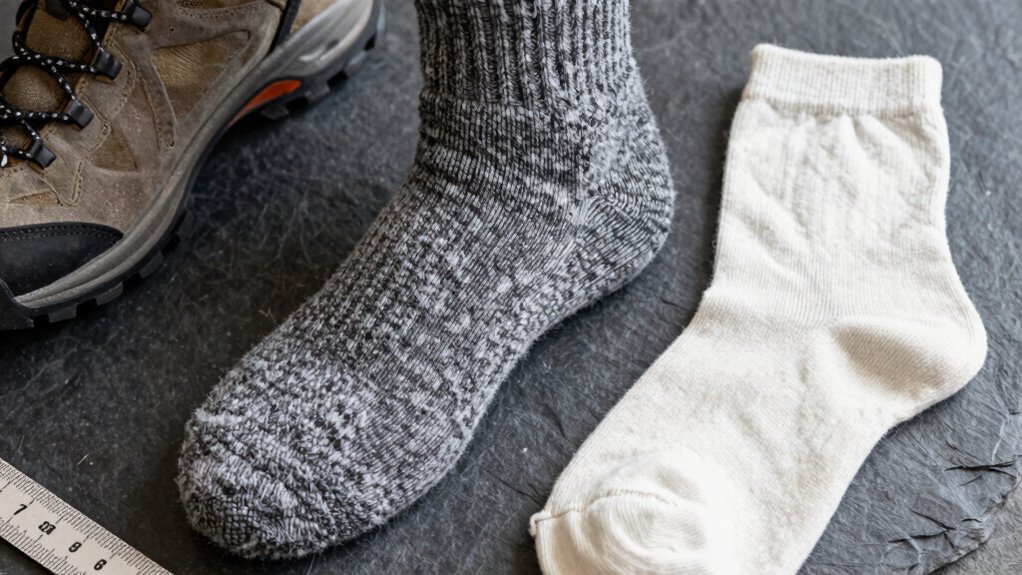
While your everyday cotton socks might work just fine for walking the dog or lounging around the house, they’re no match for the wild ride that’s hiking.
You need serious cushioning where it counts—under your heels, across your soles, and around your toes—to handle rocks, roots, and relentless uphill climbs.
Hiking socks pack extra padding to fight fatigue, while regular socks feel flimsy and wear thin fast.
Plus, they’ve got reinforced heels and seamless toes to stop blisters before they start.
Think of them as body armor for your feet.
And unlike cotton socks that turn into soggy messes, hiking socks actually work with your boots to support, protect, and keep you moving strong—all day, all trail, no drama.
They’re often made with merino wool or synthetic blends to manage moisture and maintain warmth in tough conditions.
Choose the Right Material for Moisture Management
You wouldn’t wear flip-flops on a mountain trail, so why trust your feet to socks that can’t keep up? Damp socks aren’t just gross—they’re blister bait.
Choose merino wool for its magic touch: it wicks moisture, fights stink, and keeps you warm even when wet.
It’s perfect for cold or changing weather, and it won’t leave you cold after a stream splash.
If you’re hiking in blazing heat or humid zones, go synthetic—polyester and nylon dry fast, handle sweat like a champ, and resist wear from rough trails.
Blends? Even better.
A sock with 60%+ merino mixed with synthetic fibers gives you odor control, durability, and quick drying—plus, the in-the-trenches testing shows merino blends are proven by ruckers for reliability on long, tough missions.
Skip cotton—it traps moisture and screams “hello, blisters!”
For soggy trails or long hauls, merino’s your cozy MVP; for speed hikes in the sweltering sun, synthetics rule.
Your feet will stay dry, happy, and ready for every mile.
Evaluate Cushioning Levels for Your Trail Conditions
What’s the secret to happy feet mile after mile?
Picking the right cushioning for your trail conditions—because no one wants sore toes or sweaty blisters.
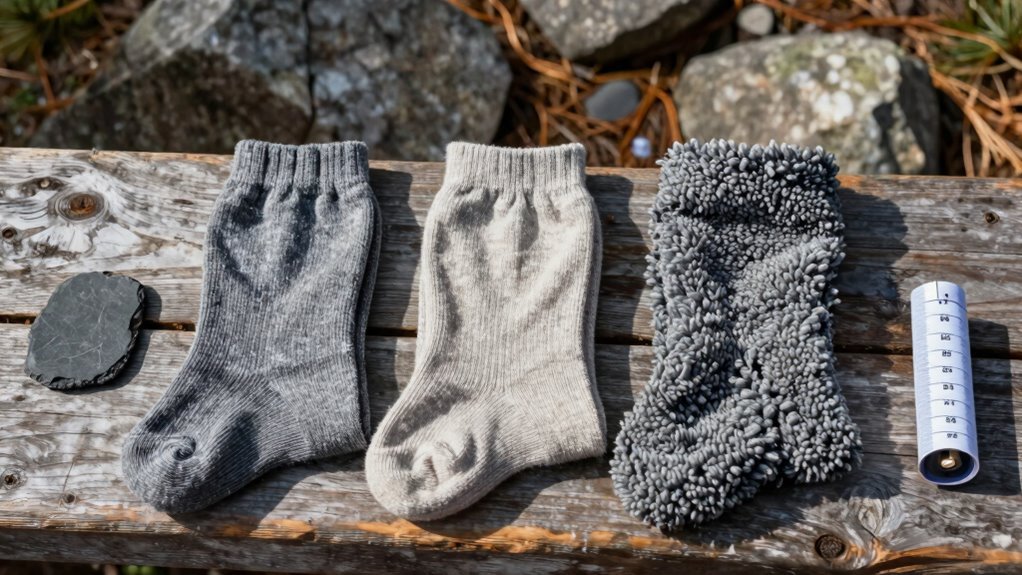
Light cushioning keeps things cool and snug on short, breezy hikes.
If you’re out all day over mixed terrain, medium’s your sweet spot—plush enough to cushion impact, but not too toasty.
Hauling a heavy pack over rocky paths? Go heavy-duty for extra shock absorption and warmth.
And for smart protection without bulk, targeted padding hits high-wear zones just right.
Your next pair might already be in your drawer—many everyday socks now feature Light Cushion for versatile comfort across activities.
Match your sock to your mission:
- Trail intensity – Easy path or rugged climb?
- Weather & terrain – Hot and smooth, or cold and chunky?
- Boot type & load – Light sneakers or beefy boots with a full pack?
Your feet will thank you—with fewer aches, less slippage, and way more fun. Now that’s a step in the right direction!
Consider the Impact of Sock Height on Protection and Comfort
Now that you’ve nailed down the cushioning your trail adventures call for, let’s pull up your socks—literally.
Sock height isn’t just style—it’s about smart protection and comfort.
Hiking in light sneakers on a sunny day? Ankle socks keep things breezy.
Going for quarter-height? You’ll block pebbles and get a snug fit without bulk.
For most hikes, crew-length is your go-to—hitting mid-calf, they pair perfectly with mid-cut boots and guard against scrapes and fatigue.
Think of them as your trusty trail sidekick.
Facing rugged paths or freezing temps? Knee-highs wrap your legs in extra armor and warmth, ideal for mountaineering or multi-day scrambles.
Match your sock to your boot, terrain, and weather—your legs will thank you.
Go too low, and you’re begging for grit in your shoes; too high, and you might overheat.
Find the sweet spot—because happy feet mean happier trails!
Find the Perfect Fit to Prevent Blisters
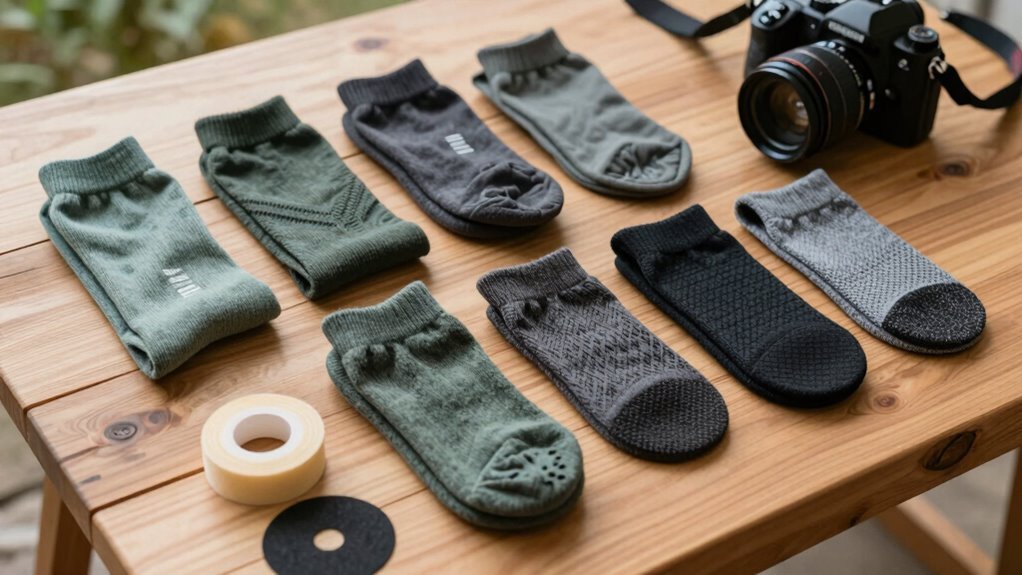
Slipping into the right socks feels like a high-five for your feet—finally, comfort that means business.
You’ve got places to go and blisters to avoid, so sock fit is no joke.
A snug, precise fit keeps your foot secure, reduces friction, and turns rough trails into smooth sailing.
Don’t wing it—your toes will thank you later.
Here’s what locks in the perfect fit:
- Match your foot size exactly—no guesstimates. Loose socks slip, tight ones pinch.
- Test socks with your boots—walk around, squat, even stair-hop to confirm everything stays put.
- Check for bunching or sagging—if your socks droop like sad socks on a Monday, they’re done for.
Merino wool or COOLMAX® keeps things dry, while targeted cushioning hugs heels and toes just right. With the right thickness and a fit that stays put, you’re not just hiking—you’re gliding.
Pay Attention to Seam Placement and Smoothness
Feeling every pebble underfoot?
It mightn’t be the trail—it could be your sock seams.
Those bulky, rigid lines, especially across the toes, rub sensitive skin and cause blisters fast.
Don’t let rough seams turn your adventure into a waddle.
Instead, go for socks with flat or hand-linked seams that lie smooth like a second skin.
Seamless toes and heels mean no pressure points, less friction, and way more comfort on long hikes.
Turn socks inside out before buying—check that the seams are flat, tight, and flexible.
Look for seamless reinforcements in high-stress zones; they boost durability without the ache.
Avoid fake “seamless” styles that still bunch up.
Real seamless construction, especially in the toe and heel, keeps things slick and irritation-free.
Your feet will thank you when they’re dancing over roots instead of screaming with every step.
Smooth seams? Yes, please!
Layer Smart With Liner and Outer Sock Combinations
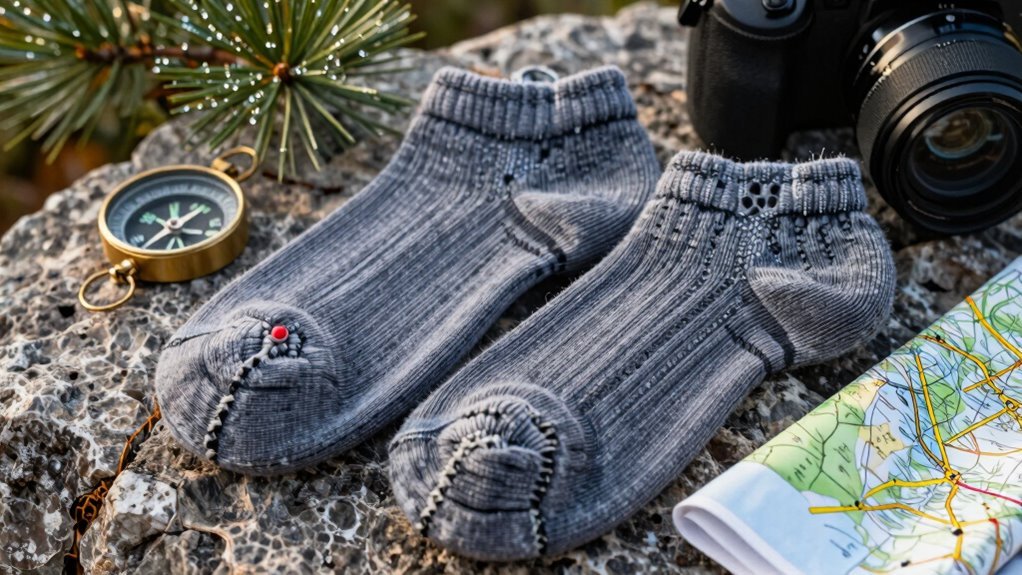
Step into your next hike with a sock strategy that’s smarter than a squirrel stashing nuts for winter—try pairing a liner sock with a rugged outer sock.
You’ll slash blisters and boost comfort by letting friction happen between layers, not your skin.
The snug liner hugs your foot like a second skin, wicking moisture while the cushioned outer sock takes the abuse.
Together, they’re a dream team for long trails and tough terrain.
Here’s why this combo crushes it:
- Liner socks reduce hotspots by moving rub zones away from your skin.
- Outer socks add padding, warmth, and durability where you need it most.
- Smart pairings like Coolmax liners with Merino wool outsers keep feet dry and happy.
Tight fit? Check. Heel aligned? Check. Now go bounce down that trail like your feet are on a cloud.
Match Socks to Weather and Seasonal Demands
Ever wonder why your feet feel like they’re hosting a swamp party in summer or turning into ice blocks in winter?
That’s your socks crying for help!
Match them to the season, and your hikes instantly feel better.
For hot weather, grab lightweight socks with fine merino or synthetics—they wick sweat fast and keep blisters at bay.
Warm days? Midweight socks with medium cushioning and moisture control have your back.
When winter hits, go heavyweight—thick wool or synthetic blends trap warmth, even when damp.
Don’t forget waterproof socks with merino linings when rain or snow strikes; they block wet while letting sweat escape.
Avoid cotton like a blister-inducing villain—no one needs soggy socks.
Whether you’re trail running in 30°C or trekking through snow, your perfect sock combo exists.
Pick smart, stay comfy, and let your feet enjoy the adventure as much as you do!
Know When to Replace Worn-Out Hiking Socks
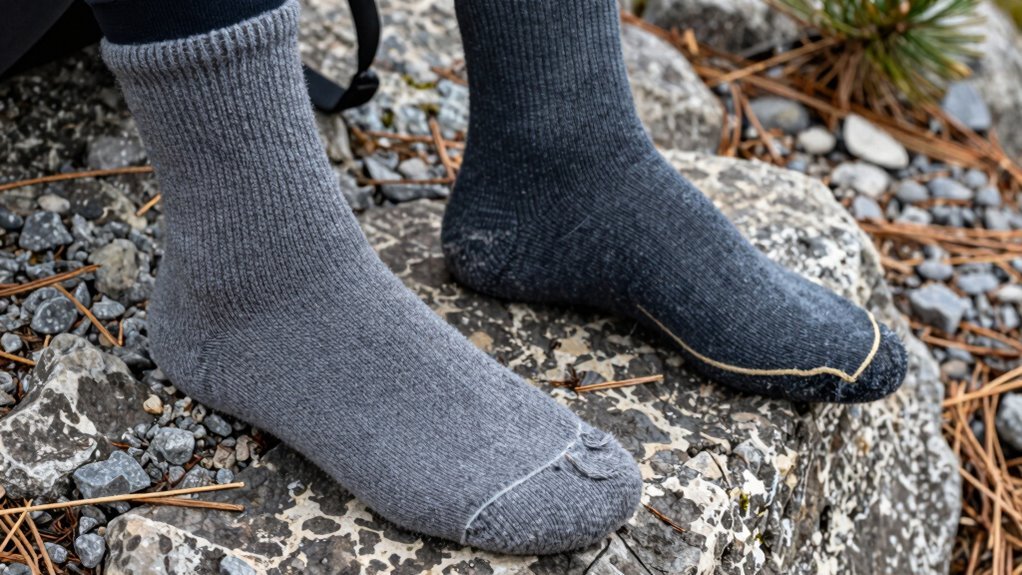
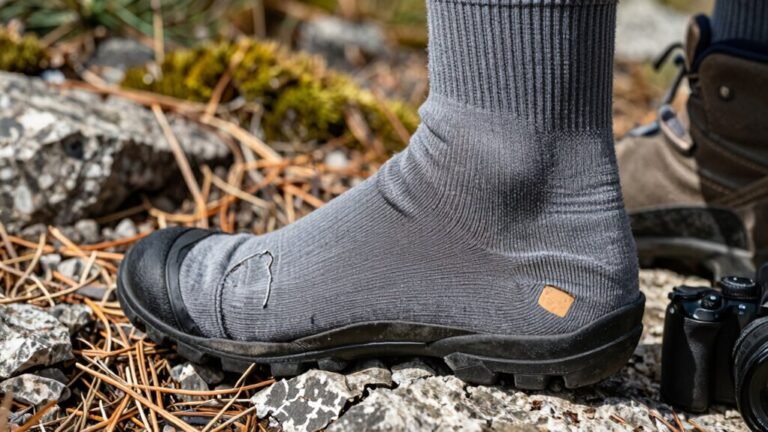
How often do you check your hiking socks for wear and tear—before they turn into glorified dishrags with holes in all the wrong places? Don’t wait until your toes peek through like they’re waving goodbye!
Replace your socks when they’ve lost their mojo.
Look out for these red flags:
- Visible holes or thin, see-through spots in the heel or toe—your skin shouldn’t be part of the design.
- Sagging, slipping, or stretched-out fabric that bunches up with every step—no one likes sock blisters.
- Smells that survive washing—if your socks could talk, they’d probably tell horror stories.
Even high-quality wool socks have a shelf life, so don’t get sentimental.
Toss them after 12–18 months of serious trail use.
Fresh socks mean happy feet, better cushioning, and fewer surprises on the trail.
Your next hike will thank you—no stink lines included!
Frequently Asked Questions
Can I Wear Hiking Socks With Casual Shoes?
You bet you can wear hiking socks with casual shoes—they’ve got your back when it comes to comfort and style.
They fight sweat, ditch blisters, and cushion every step, all while looking low-key cool.
Whether you’re rocking sneakers or slip-ons, these socks blend function with flair.
Plus, let’s be real—your feet will thank you way more than they do your old cotton ones.
Who knew adventure-ready gear doubled as daily foot magic?
Are Expensive Hiking Socks Worth the Price?
Yes, they’re worth it—if you actually hike.
Think about it: one $30 pair lasts years, while cheap socks quit after three months.
You’re not just buying fabric, you’re buying blister-free feet, moisture control, and a lifetime warranty.
Darn Tough will replace them forever—even if you wear them to shreds.
Save dollars long-term, skip the sock graveyard, and let your feet hike happily ever after.
Comfort? Priceless.
Do Hiking Socks Need to Be Broken In?
Yeah, hiking socks do need a little break-in, but don’t sweat it—you won’t need weeks like with boots.
Slip ‘em on for a few shorter hikes first, let ‘em squish and stretch to your feet.
Merino wool? Super chill, barely needs breaking in.
Just avoid cotton like a soggy sandwich.
Test them out, keep your feet dry, and you’ll be blister-free and grinning on the trail in no time—socks and feet becoming besties faster than you’d think!
Should I Wear Hiking Socks Year-Round?
Yes, you should wear hiking socks year-round—they’re like your feet’s best friends, ready for any adventure.
Merino wool keeps you cozy in snow and cool in heat, wicking sweat like a champ.
They fight stink, prevent blisters, and laugh at long trails.
Lightweight in summer, snug in winter, they adapt better than a chameleon in a rainbow.
Your feet won’t just thank you—they’ll throw a happy dance.
Can I Hand-Wash My Hiking Socks?
You can totally hand-wash your hiking socks—and you should!
Just grab some lukewarm water (around 30°C—think “warm bath,” not “scalding tea”) and a gentle, wool-safe detergent.
Turn those socks inside out, give ’em a 10–15 minute soak, then swirl them like you’re conducting a tiny, soapy symphony.
Rinse well, press out water with a towel (no wringing—they’re not spaghetti!), and lay ’em flat to dry.
Easy, eco-friendly, and your socks will thank you!
Conclusion
You’ve picked your socks, but the real test? That first rocky ascent when your feet start talking back. Will they thank you—or stage a mutiny? Blister-free trails await, but one loose seam or damp wool could spell trouble. Think smart: dry feet, snug fit, the right cushion. Your boots might carry you, but your socks decide the adventure. Don’t let them ruin the story before the best part even begins.
References
- https://www.sockgeek.com/blogs/news/hiking-socks-vs-running-socks-whats-the-difference
- https://lebent.com/blogs/news/trail-socks-versus-running-socks
- https://ecosox.com/blog/do-hiking-socks-make-a-difference/
- https://grip6.com/blogs/grip6-blog/crew-socks-vs-ankle-socks-which-is-best-for-your-outdoor-adventures
- https://darntough.com/blogs/the-alternate-stitch/why-you-should-wear-hiking-socks
- https://www.rei.com/learn/expert-advice/backpacking-socks.html
- https://hollowsocks.com/blogs/news/dos-donts-of-hiking-socks
- https://mudgear.com/blogs/news/merino-vs-synthetic-which-hiking-sock-wins
- https://www.heatholders.com/blogs/wow/best-material-for-midweight-socks-choosing-the-right-fabric
- https://mountaineerjourney.com/blog/best-hiking-socks