How to Choose Hydration
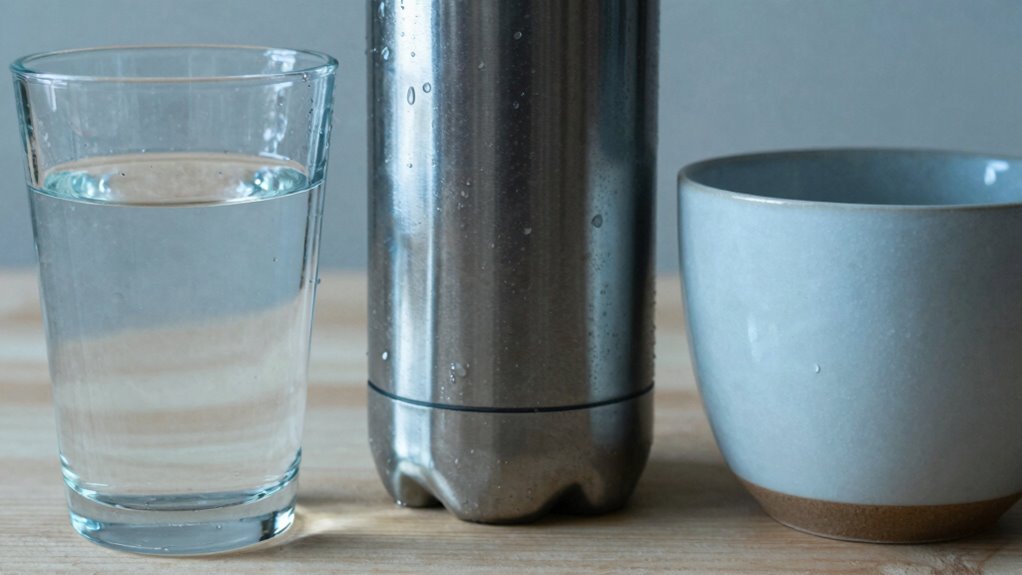
You’ve got choices—make every sip count when you choose hydration. Match your water to your day: need fuel? Add a pinch of electrolytes.
Sweating buckets? Reach for sodium and potassium to bounce back fast. Check your tap or bottle source—clean water’s non-negotiable for proper hydration.
Snack on water-rich cucumbers or melon for a juicy boost. Keep it cool, keep it close, and aim for pale yellow—your body’s happy dance.
Thirsty? That’s already late! There’s a smarter way to stay on top of your game when you choose hydration.
Understanding Your Daily Hydration Needs
Ever wonder how much water you really need to drink each day?
Well, it depends—really!
For you, guy, most experts suggest around 13 cups (that’s 104 ounces) daily, but some say up to 15.5 cups if you’re active or roasting in the sun.
Ladies, aim for about 9 to 11.5 cups, with breastfeeding bumping you up to 13.
Kids need less—4 to 8 cups, depending on age—while teens gulp down 8 to 11.
You lose roughly 2 liters daily just living, breathing, and sweating, especially if you’re flying (yep, 1.5 liters in 3 hours!).
About 20% of your water comes from food, so snacks like cucumbers or oranges help.
Thirst is your body’s alarm, but don’t ignore it—dark urine means you’re playing dehydration roulette.
Aim for pale yellow—think lemonade, not apple juice.
Staying consistently hydrated supports energy and mood.
Evaluating Water Quality and Source
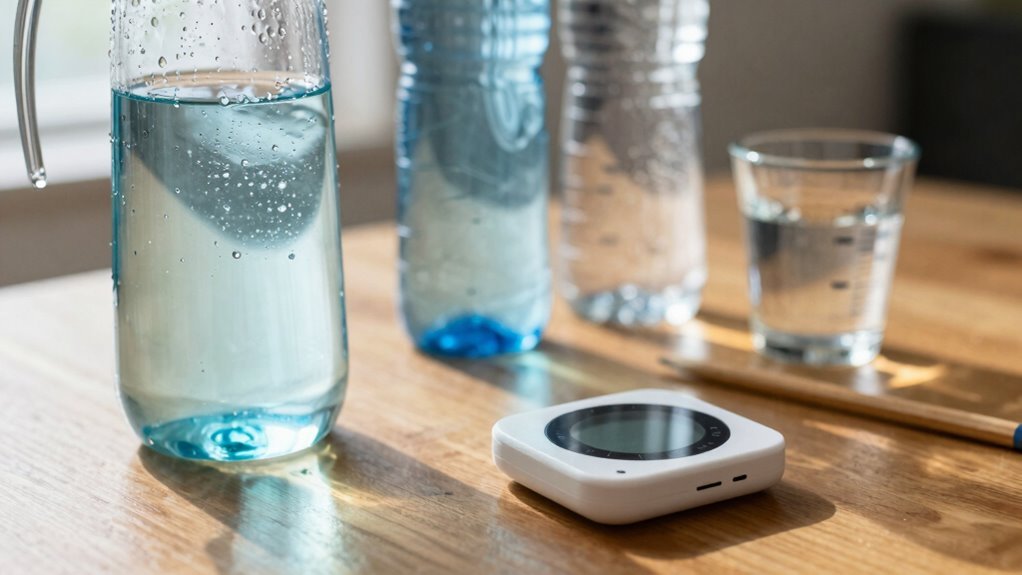
What’s lurking in your water glass?
You might be sipping more than just H₂O.
Check for coliform bacteria and nitrates—especially if you’re on well water—since they’re sneaky signs of contamination that can make you or your baby sick.
And hey, those “forever chemicals” called PFAS? They don’t break down, so test wisely.
Grab a state-certified lab to run checks annually: coliforms, nitrates, pH, and total dissolved solids don’t lie.
Think of it like a wellness check-up, but for your faucet.
Use EPA-approved methods like ion chromatography or LC/MS/MS—they sound sci-fi, but they’re the real deal.
High TDS? That’s scaling city.
Low pH? Hello, corroded pipes.
Clean water isn’t just about taste—it’s about safety.
Play detective: your tap’s got a story.
Find it before it starts telling tall tales.
These advanced tests follow standards developed by ASTM water testing standards.
Matching Hydration to Your Activity Level
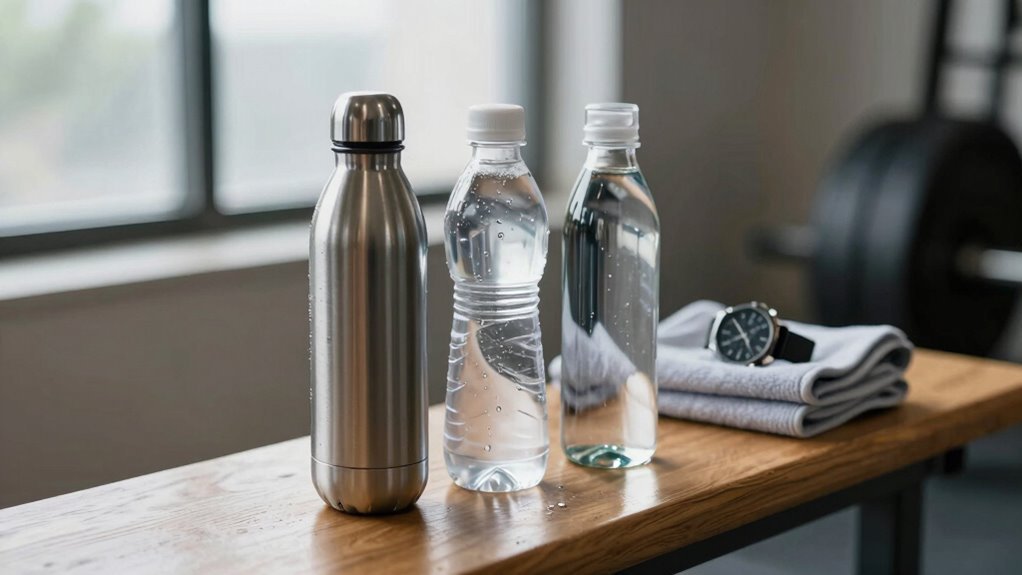
Now that you’ve got the scoop on what’s in your water, it’s time to talk about how much you’re actually drinking—especially when you’re on the move.
Your activity level plays a huge role in how much fluid you need, so don’t just sip aimlessly like your goldfish.
Whether you’re lounging or lunging, tailor your intake to match the action.
- Before you sweat: Drink 16–24 oz two hours prior, plus 7–10 oz shortly before starting.
- During the grind: Sip 4–8 oz every 15–20 minutes—more if you’re going hard.
- After the burn: Replace each lost pound with 16–24 oz; weighing yourself helps nail it.
- Daily baseline: Active men and women need up to 4.5 liters—yes, that’s a lot of sipping!
Stay ahead of thirst, not chasing it. Your body will thank you—no drama, just hydration that hits the mark.
Starting exercise while dehydrated can impair performance and increase health risks.
Considering Climate and Environmental Factors
Feeling the heat—or maybe the dry breeze that sneaks up on you like a sneaky snack thief?
Humid days make sweating less effective, so you lose salts fast—grab sports drinks and sip often.
In dry climates, moisture zips off your skin and breath without warning; drink more, even if you’re not soaked in sweat.
Pack in water-rich snacks like cucumber or watermelon and use a cool insulated bottle to keep things appealing.
When it’s hot, don’t wait—pre-hydrate, then gulp 8 ounces every 15–20 minutes.
Aim for at least an ounce per pound of body weight if you’re active, but skip chugging more than 48 ounces per hour.
In cold weather, your thirst fades like a shy turtle, so sip warm tea, broth, or room-temp water.
Your body loves you for it.
Choosing the Right Electrolyte Balance
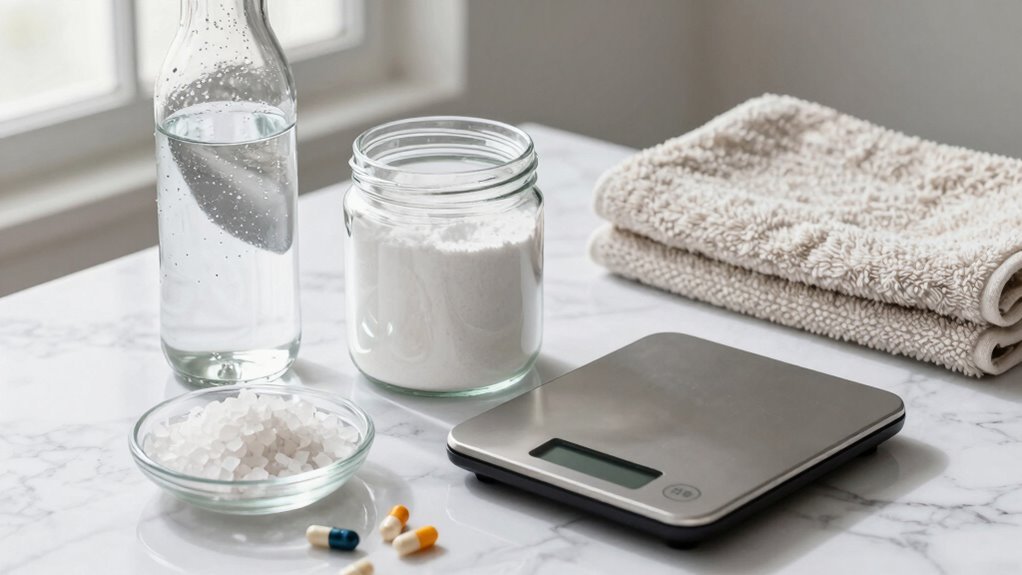
How do you keep your body bouncing back when sweat steals the good stuff?
You grab the right electrolyte balance, of course!
Your body craves sodium—not too little, not too much—to hold onto water and keep cells happy.
Just 27–52 mmol of sodium beats plain water for better hydration, and adding potassium helps replace what you lose when you’re sweating buckets.
Drinks with balanced electrolytes stick around longer, boosting your BHI (that’s Beverage Hydration Index, your hydration report card!).
- Sodium helps your body retain fluids fast, especially after sweating or illness
- Potassium + sodium combos improve hydration by 12–15% over water alone
- Magnesium and other electrolytes matter too—they’re team players!
- Too much water without electrolytes? You might flush out what you need!
Listen to your thirst, but give your body the bonus squad it deserves.
Navigating Flavored and Enhanced Waters
You’ve nailed the art of replenishing what sweat takes with the right mix of electrolytes, and now it’s time to spice things up—literally.
Flavored and enhanced waters make hydration fun, not fancy.
You’ve got options: fruit-infused, sparkling, vitamin-packed, even adaptogenic blends that sound like they’re from a wellness fairy tale.
Brands like Hint and Bai keep it simple—zero or low sugar, real essences, no guilt.
Craving bubbles? Try Spindrift’s real-juice fizz or Sanzo’s tangy yuzu.
Want perks? hellowater adds gut-friendly prebiotics, while Essentia amps up alkalinity.
And hey, if you’re chasing calm, CBD or adaptogens might be your splash of zen.
Watch for sneaky sugar—check labels like a hydration detective.
With scent tech and aluminum bottles, it’s never been easier (or cooler) to drink smart.
So go ahead, stir in some flavor—your taste buds *and* body will thank you.
Hydration just got a playful upgrade.
Building a Sustainable Hydration Routine
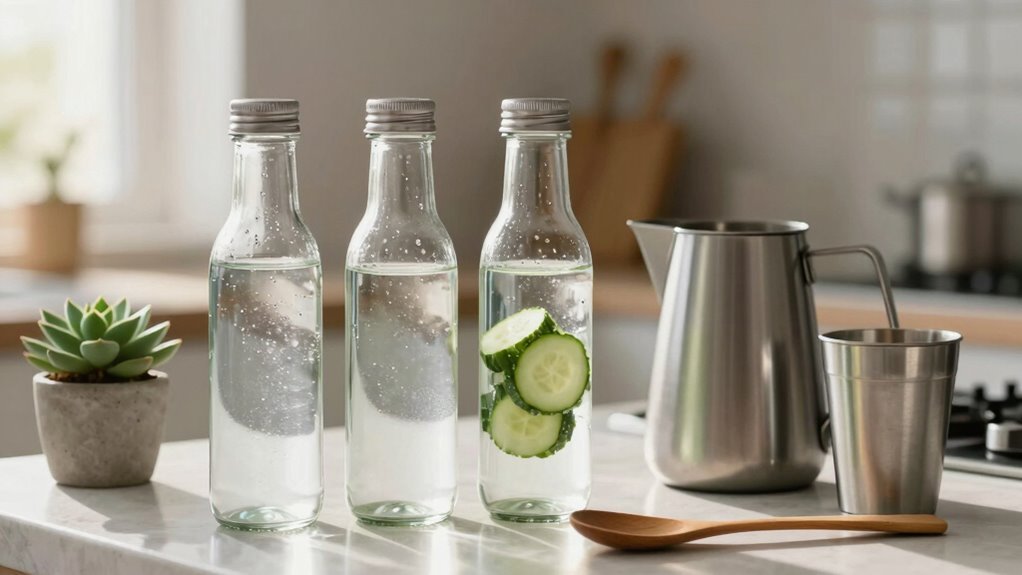
What if the secret to feeling brighter, sharper, and just plain better started with something as simple as a glass of water—repeated a few times a day?
You’ve got the power to build a hydration habit that sticks, and it’s easier than you think.
Start strong with a morning glass—47% of people do, and they’re onto something.
Keep that momentum with tools like smart bottles or friendly phone pings that say, “Hey, drink up!”
Snack on juicy fruits and ditch sugary drinks; your body—and waistline—will thank you.
Over time, you’ll notice more energy, clearer skin, and fewer headaches.
Hydration isn’t a chore; it’s your daily boost of awesome.
- Set a daily goal: ~15.5 cups (men) or 11.5 cups (women)
- Drink water first thing in the morning for a fresh start
- Use apps or bottles that track and remind you to sip
- Eat water-rich foods like cucumber, oranges, and watermelon
Frequently Asked Questions
Can I Drink Too Much Water?
Yeah, you can totally drink too much water—fun fact, it’s possible to overdo something that’s usually good for you.
Chug more than your kidneys can handle, and you’ll risk hyponatremia, where your blood sodium nosedives.
That can swell your cells, especially brain ones—no bueno.
Early signs? Nausea, headache, or confusion.
In extreme cases: seizures or worse.
So yeah, keep sipping, but don’t go chugging a gallon in an hour like it’s a contest.
Your body will thank you.
Does Coffee Dehydrate You?
Nope, coffee won’t dry you out like a desert mirage—especially if you drink it regularly.
You’re sipping hydration, not losing it.
Studies show your body handles coffee like water when you’re used to caffeine.
Down a few cups?
No sweat.
As long as you’re not chugging espresso like it’s air, you’re good.
Is Bottled Water Safer Than Tap?
Nope, bottled water’s not safer than tap—you’re better off skipping the pricey stuff.
Tap water’s held to tougher standards, tested way more often, and any issues get reported fast.
Bottled? It’s often just repackaged tap with plastic particles and spotty oversight.
You’re not dodging danger by choosing bottles; you’re hauling around a less transparent, costlier option.
Stick with filtered tap, save cash, and hydrate like a pro—your body and wallet will thank you!
How Often Should I Drink Water?
You should sip water steadily throughout the day—don’t wait until you’re parched!
Start with a glass at sunrise, hydrate every few hours, and toss in tasty twists like lemon or cucumber.
Thirsty? That’s your body’s fun alarm saying, “Hey, I need H2O!”
Laugh at dry mouth—it’s just your body being dramatic.
Keep a bottle close, and let consistent sipping keep you feeling strong, sharp, and splendidly refreshed.
Does Drinking Water Help With Weight Loss?
Yeah, drinking water can actually help you lose weight—it’s not just hype!
You feel fuller, eat less, and give your metabolism a little boost.
Gulping two cups before meals? Smart move—it curbs your appetite.
Just don’t expect magic; it works best when you swap sugary drinks for water.
Stay consistent, stay hydrated, and hey, maybe skip the midnight snack while you’re at it!
Conclusion
You’re like a smartphone—awesome when charged, but a glitchy mess when you’re drained. Staying hydrated keeps your body’s signals strong, just like Wi-Fi! One hiker forgot his water bottle and bonked hard—like a buffering video. Don’t be that guy! Toss in a pinch of electrolytes, sip steadily, and match your drink to sweat, sun, or silliness. Boom: you’re powered, perky, and ready to crush the day!
References
- https://nutritionsource.hsph.harvard.edu/water/
- https://www.geisinger.org/health-and-wellness/wellness-articles/2023/02/22/18/15/how-much-water-to-drink-per-day
- https://www.mayoclinichealthsystem.org/hometown-health/speaking-of-health/tips-for-drinking-more-water
- https://www.eatright.org/health/essential-nutrients/water/how-much-water-do-you-need
- https://www.betterhealth.vic.gov.au/health/healthyliving/water-a-vital-nutrient
- https://health.clevelandclinic.org/how-much-water-do-you-need-daily
- https://pubmed.ncbi.nlm.nih.gov/20356431/
- https://www.nhs.uk/live-well/eat-well/food-guidelines-and-food-labels/water-drinks-nutrition/
- https://www.cdc.gov/healthy-weight-growth/water-healthy-drinks/index.html
- https://store.astm.org/products-services/standards-and-publications/standards/water-testing-standards.html