Bear Canisters Checklist for Your Next Hike
When planning your next hike, choosing the right bear canister is essential for safety and compliance. Pick a bear canister that fits your food and meets park rules—IGBC-approved models are required in places like Yosemite or Grand Teton, while soft sacks like Ursack are permitted only where regulations allow.
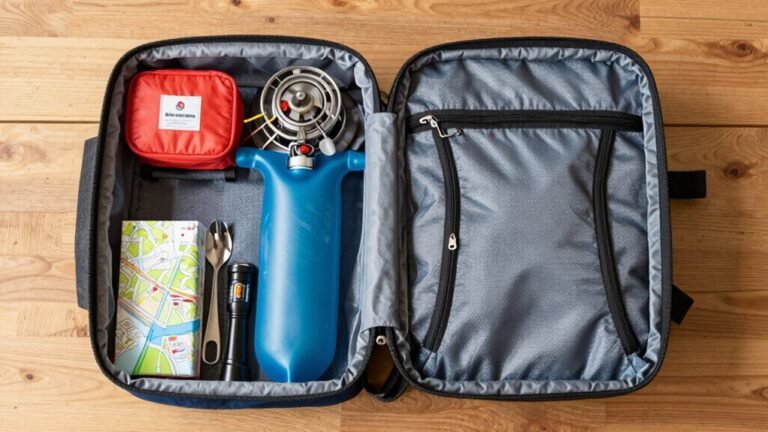
Pack all smelly items securely inside your bear canister, including meals, trash, toothpaste, and scented toiletries like deodorant. Using an Opsak liner inside adds an extra layer of odor protection to help keep bears away.
Store the bear canister at least 100 feet from your campsite, placing it downwind on flat, stable ground away from trees or cliff edges. Keep it shut tight at all times and never leave food or snacks outside—it could turn your trip into a midnight bear buffet. There’s more where that came from.
Choose the Right Bear Canister for Your Trip
Ever wonder how to keep your snacks safe from curious bears without turning your backpack into a portable gym?
You’ve got options.
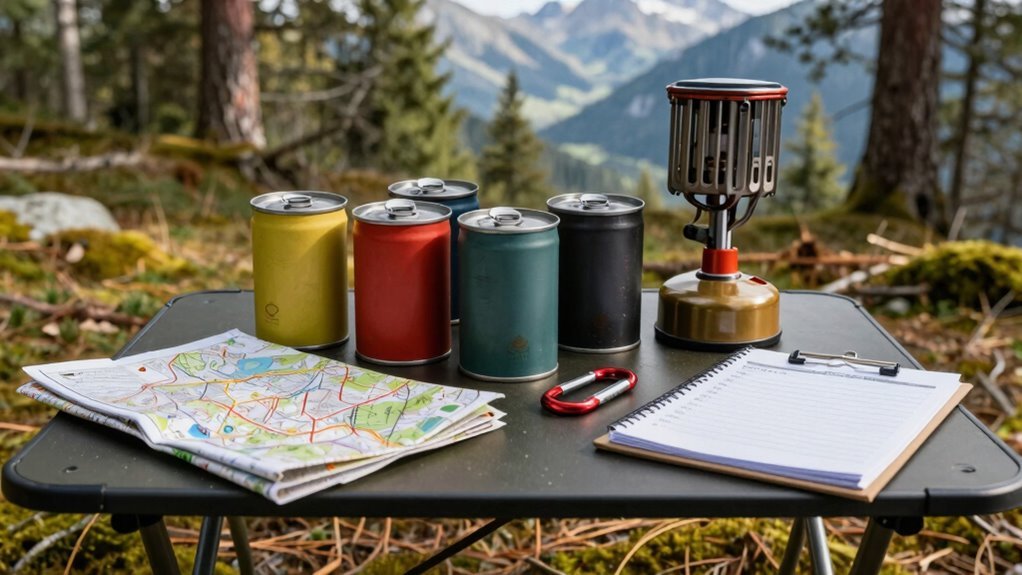
If you’re hauling food for a week or more, grab a BearVault BV500—it’s 2.2 pounds but holds up to 9 days’ worth of grub.
Its clear body lets you see your stash without cracking it open, and the dimpled surface makes it easier to grip and strap on.
Love saving weight?
Try the soft-sided Ursack Major with Kevlar strength, but don’t skip the OPSak liner—it’s a must.
Sure, bears might crush it, but it’s trail-legal on routes like the Long Trail.
For the best bang for your buck, REI’s Traverse balances cost, weight, and space just right.
Whether you’re after toughness, lightness, or value, there’s a canister that fits your hike—and keeps dinner from becoming bear brunch.
The Grubcan Carbon 6.6 offers ultralight performance thanks to its carbon fiber and Kevlar construction, making it ideal for long-distance hikers prioritizing weight savings.
Check Park Regulations and Required Models
Before you hit the trail, take a minute to check the rules—because no one wants a surprise visit from a park ranger or, worse, a bear with a taste for trail mix.
Not all parks play by the same rules: Yosemite demands IGBC-approved canisters everywhere, while Sequoia and Kings Canyon only require them in certain zones.
In Rocky Mountain, you’ll need a crush-resistant or hard-sided model from April to October.
Grand Teton? Only IGBC-approved hard-sided cans, especially above treeline where hanging food is a no-go.
And don’t even think about bringing your Ursack to Yosemite or Grand Teton—it’s a hard no.
Check if your gear meets IGBC standards, and remember, some forests like Desolation Wilderness and Lake Tahoe Basin have zero tolerance.
A quick check now saves you a long walk back to the trailhead—or a scary midnight snack session with a curious bruin.
Counterbalancing may be allowed in some areas, but it’s considered a delaying tactic by wildlife officials and is not permitted in parks like Yosemite.
Pack Only Bear-Wise Food and Scents
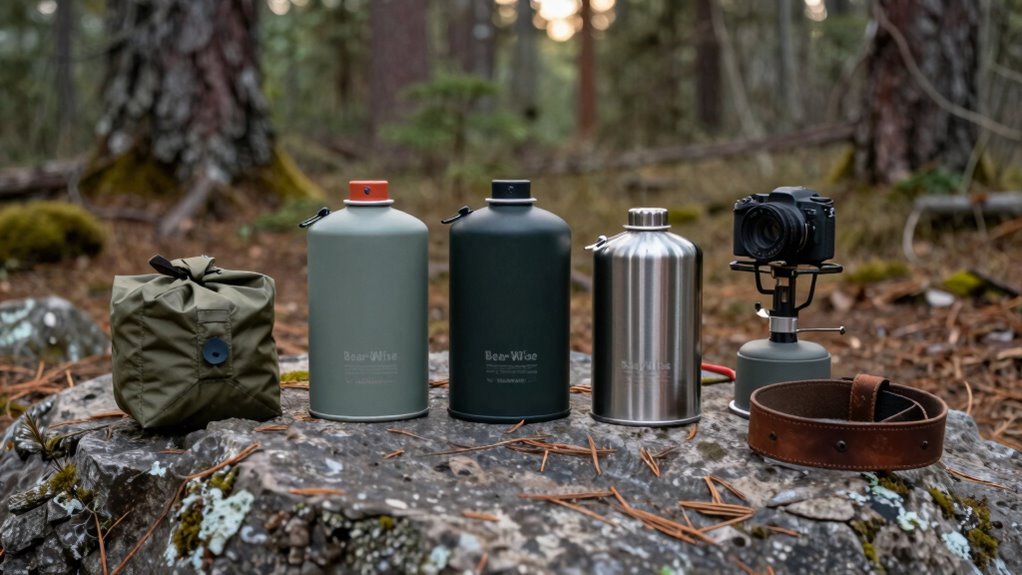
While bears mightn’t be picky eaters, you sure should be when it comes to what you bring on the trail—because that granola bar you toss in your pack could be a five-star meal for a curious black bear with a nose stronger than your morning coffee.
Pack only bear-wise food and scents by stashing *everything* smelly—food, toothpaste, trash, even tampons—in your canister the second you make camp.
Bears, raccoons, and snack-obsessed jays can sniff out lunch from miles away.
Go for compact, calorie-packed grub like trail mix or dehydrated soup, and repackage meals to save space.
Use odor-proof bags like OpSak inside the canister—extra insurance and great for organization.
Remember, your first day’s snacks can stay out, but everything else goes in.
Keep it tight, keep it sealed, and keep the wildlife wild—no 3 a.m. pantry raids on your watch!
All but 70 miles of the Pacific Northwest Trail fall within black bear habitat.
Secure Your Canister During Meal Prep and Storage
When you’re itching to chow down after a long stretch on the trail, it’s tempting to plop your bear canister right by the tent and call it a day—but hold up!
Keep your dinner (and your safety) in check with these smart moves:
1. Set up a kitchen 100 yards downwind**** from camp—this keeps hungry bears far from your sleeping bag and snacks.
2. Park your canister on open ground, away from cliffs or trees, so bears can’t roll it or stash it. No ropes, no rocks, no drama.
No ropes, no rocks, no drama.
3. Never wander off mid-meal—even for “just a sec”—because bears sprint faster than your side-hill scramble.
Stick to this routine, and you’ll dodge surprise dinner guests.
Plus, you’ll sleep better knowing your jerky isn’t becoming someone else’s midnight snack.
Stay sharp, stay hungry (but not *that* kind of hungry), and keep that canister secure!
Store Properly to Avoid Attracting Wildlife
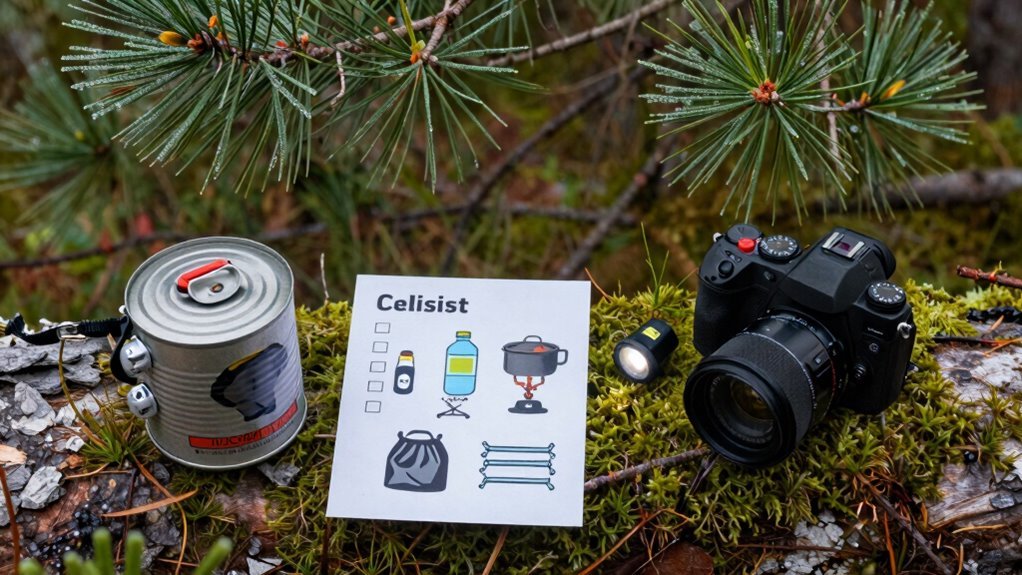
You’ve made it—dinner’s packed, fire’s out, and your bear canister’s ready for duty.
Now, don’t just plop it down near your tent and call it a night—bears have noses like bloodhounds on a snack mission!
Place your canister at least 100 feet from camp, sleeping, and cooking zones, forming a 200-foot triangle for smart separation.
Keep it on level ground, away from cliffs or lakes, and hide it in brush or behind a rock—camouflage wins here.
Never hang it; leave it on the ground.
Toss in *everything* smelly: food, trash, toothpaste, deodorant, even that bug spray you love.
Dirty spoon? In it goes.
Repackage meals tightly to save space and squish out air.
Pro tip: make it glow at night with reflective stickers so you don’t trip searching for breakfast.
Play it smart, sleep easy, and let the bears keep wandering—preferably far from your snacks!
Frequently Asked Questions
Can I Share a Bear Canister With My Hiking Partner?
No, you can’t share a bear canister with your hiking partner—each person needs their own.
Rangers require one per hiker, and skipping it risks a $5,000 fine.
Plus, balancing it in your pack keeps your back happy.
Storing food solo also stops bears from linking camps to snacks.
Sure, it’s another item, but think of it as your personal dinner guardian.
Stay safe, stay legal, and keep the bears guessing!
Are Bear Canisters Necessary in Winter Months?
Yeah, you’ll want a bear canister in winter—bears aren’t all hibernating like fuzzy vacationers!
They’re prowling lower elevations, sniffing out snacks, even in snow.
Skipping one? That’s like leaving your lunch unattended at a picnic with raccoons.
Canisters keep both you and curious critters safe, plus, they’re required in spots like Desolation and Yosemite.
Smart storage = happy trails and no surprise dinner guests!
Do Bear Canisters Protect Against Other Animals Like Raccoons?
Yeah, bear canisters absolutely protect against raccoons—you’re not fooling them, but those clever bandits can’t crack these tough containers.
With their chew-proof walls and tight-sealing lids, raccoons claw, poke, and give up fast.
Plus, the locks baffle even Houdini-level critters.
You’ll sleep easy knowing your snacks are safe, and honestly, it’s kind of hilarious watching them fail.
Peace of mind, laughs included.
How Do I Clean My Bear Canister After a Trip?
You clean your bear canister right after your trip by dumping all trash and scraps—don’t let that leftover chili party inside!
Rinse it with hot water, wipe it down with unscented, biodegradable soap, then give it a good air dry, lid off.
For stubborn smells, try a quick oil soak, then wash again.
Keep critters guessing and your canister fresh—it’ll thank you on your next adventure!
Can I Bring a Bear Canister on a Plane?
Yeah, you can totally bring a bear canister on a plane—it’s like a titanium lunchbox that’s welcome in your checked bag.
Just don’t pack bear spray, unless you fancy a TSA surprise.
Airlines give the thumbs-up to canisters, but those chunky, dense cylinders might raise eyebrows at security.
Pack it snugly, label it, and let it ride like the quiet, odor-proof hero it is—no snacks for sneaky bears, even at 30,000 feet!
Conclusion
You packed the snacks, the map, the drama—but forgot the bear canister? Perfect. Now you’re starring in *Dinner & a Show: Wildlife Edition*. Smash those marshmallows into the approved can, snap it shut like you mean it, and sleep knowing Bambi’s cousin won’t raid your tent. Follow the rules, chuck the cologne (yes, even your “fresh morning” body spray), and store smart. Sweet dreams—may your night be wild… just not *that* kind of wild.
References
- https://www.cleverhiker.com/backpacking/best-bear-canisters/
- https://wildlandtrekking.com/blog/choosing-the-best-bear-cannister/
- https://trailtopeak.com/2015/09/06/gear-review-bear-canister-faceoff-the-bearvault-bv500-vs-the-garcia/
- https://www.greenmountainclub.org/bear-can-options/
- https://trailove.com/pages/articles/bear-canisters
- https://andrewskurka.com/food-bear-canisters-guide-approved-volume-cost/
- https://www.rei.com/learn/expert-advice/bear-resistant-canisters.html
- https://zpacks.com/blogs/news/everything-you-need-to-know-about-bear-canisters
- https://www.halfwayanywhere.com/trails/pacific-crest-trail/pct-bear-canister-requirements/
- https://queticosuperior.org/everything-you-need-to-know-about-the-new-bwca-food-storage-order/