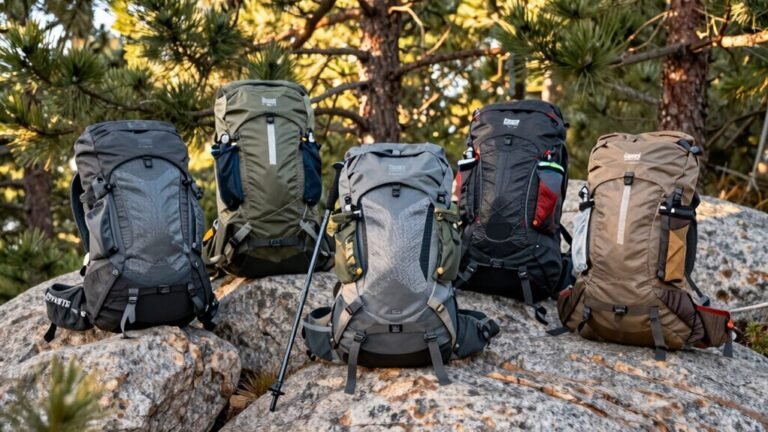
How to Keep Packing a Backpack Working in Bad Weather
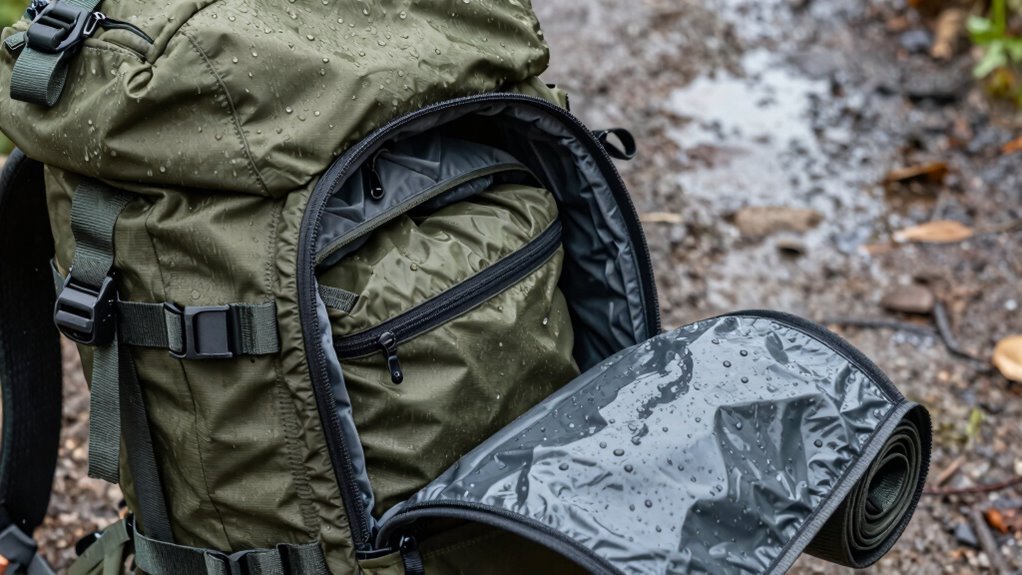
Keep your backpack game strong in bad weather by starting with a tough, weather-resistant pack made from materials like X-Pac or Dyneema. This foundation ensures your backpack can withstand rain, snow, and mud without failing.
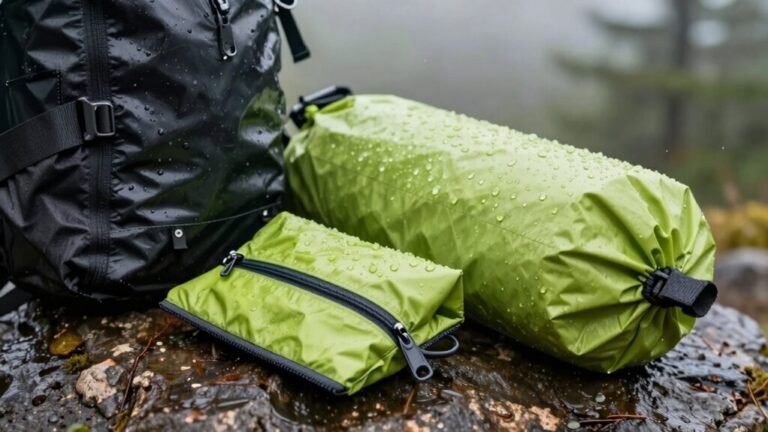
Toss on a snug rain cover—it’s like a raincoat for your pack—and seal gear inside dry bags or trash compactor liners for armor-level protection. These layers are crucial for keeping your belongings dry during extended exposure to bad weather.
Use waterproof organizers and pack smart by placing heavy items low for better balance. Always keep quick-dry clothes handy so you can stay comfortable when conditions turn soggy.
Your socks will thank you later if you keep them dry from the start. Simple prep now saves discomfort later, especially when you discover the full trick list.
Choose a Weather-Resistant Backpack Material
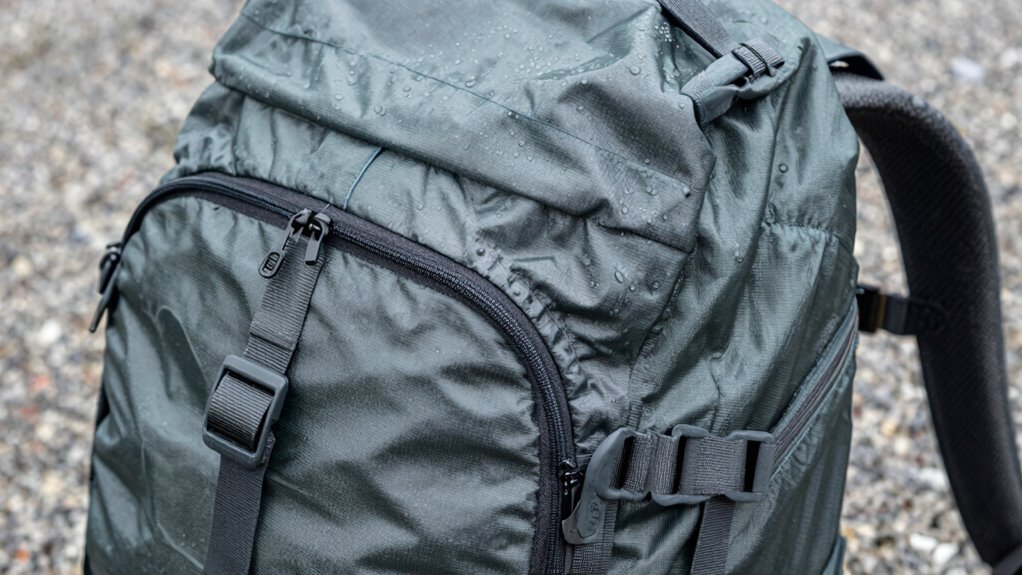
Picking the right backpack material for wet weather isn’t just smart—it’s your first line of defense against soggy socks and ruined textbooks.
You want a fabric that laughs in the face of rain, and materials like X-Pac VX21 or Dyneema are total superheroes—lightweight, tough, and waterproof straight through.
PVC and tarpaulin? They’re the raincoats of backpacks—bulky but unbeatable when storms hit hard.
If you’re eco-minded, EcoPak’s got your back with recycled toughness and a sleek matte finish.
For everyday downpours, 420D Spectron or PU/TPU laminates flex without failing, keeping your gear dry and your pack feeling springy.
Even ballistic nylon with a DWR coating shrugs off drizzle like “Not today, water!”
Just remember: treated fabrics resist, but true waterproof fabrics defeat rain.
Cordura offers exceptional abrasion and tear resistance, making it ideal for enduring harsh weather and rugged use over time.
Invest in a Properly Fitted Rain Cover
Shielding your pack from a surprise downpour just got way easier with a trusty rain cover in your corner.
You slide it on like a backpack raincoat—stretching snugly over the top, sides, and bottom—keeping your gear dry when the sky opens up.
Made from coated polyester, these covers repel water like a duck’s back, shrugging off rain, snow, and even dust.
They’re not magic (your straps might still get soggy), but they work awesome in tough weather.
Pick one that fits your pack’s size—say, 20–40L—and goes on fast without fuss.
Look for bright colors like lime yellow so you stay visible when clouds roll in.
Most come with a pocket to stash the cover when it’s sunny, so you’ll never lose it.
Sure, it won’t save your pack if you plunge into a river, but for sudden storms? It’s your pack’s best friend.
Smart, simple, and totally worth it.
Enhanced Visibility Options help ensure you remain visible and safe during low-light conditions caused by stormy weather.
Use Dry Bags for Maximum Protection
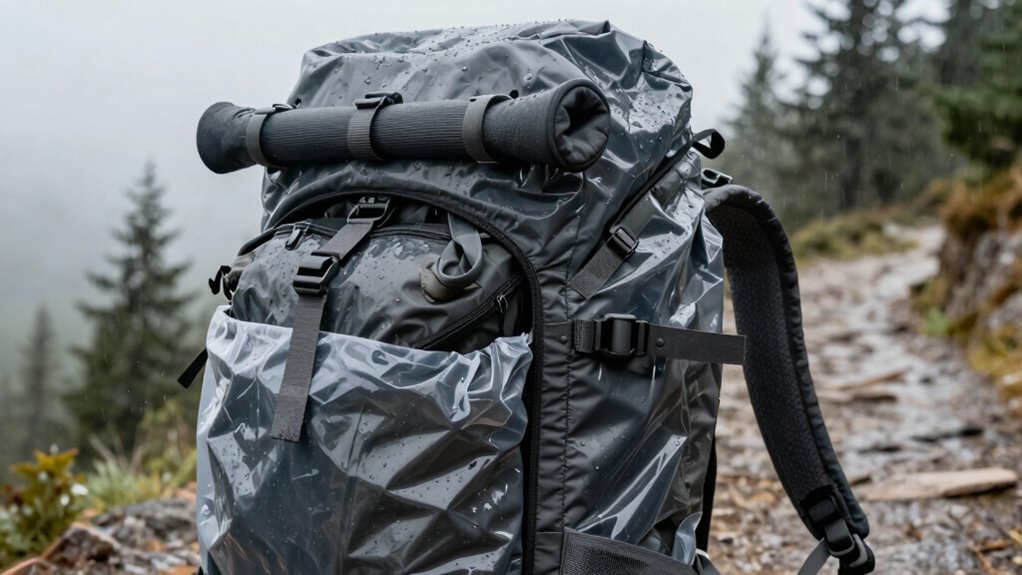
You’ve got your rain cover on, but let’s be real—when the clouds burst, you want your stuff *staying* dry, not just hoping it’ll survive.
That’s where dry bags come in, your secret weapon against soggy gear.
Made from tough 500D PVC, they’re built to handle splashes, downpours, or even full dips in a river—yes, they float if you drop them!
Use the roll-top seal: fold it over a few times, squeeze out extra air, and snap the buckle.
Boom—watertight.
Pack electronics, clothes, or snacks in separate bags so nothing gets ruined.
Got wet boots? Toss ’em in one to keep the rest of your pack clean.
They’re perfect for kayaking, hiking, or even biking through sudden storms.
Plus, they resist mold and wear like champs.
Think of them as armor for your gear—durable, smart, and honestly, a little heroic.
They’re available in various sizes and styles to fit any adventure.
Line Your Pack With a Trash Compactor Bag
Toss out the flimsy trash bags and grab a rugged trash compactor liner—your backpack just got a battle-ready upgrade. You’d be shocked how well this cheap trick works: it blocks water sneaking through zippers and seams, keeping your gear bone-dry, even in downpours or a surprise swim.
Think of it as a dry sack built right into your pack. The thick material shrugs off sharp sporks, rocks, and rough handling, lasting seasons with zero tears.
At just $1–$2 a pop, you could buy a lifetime supply for less than a fancy rain cover. And trust us, it’s way more reliable—no flapping fabric letting water seep in.
Line your pack, roll the top tight, and go. It’s lightweight, packs down small, and lets you ditch bulky waterproof stuff sacks.
Plus, it doubles as an odor barrier when you’re dodging critters. Seriously, for less than a latte, you’ve got a waterproof fortress.
Now *that’s* smart backpacking.
Pack Items in Waterproof Organizers
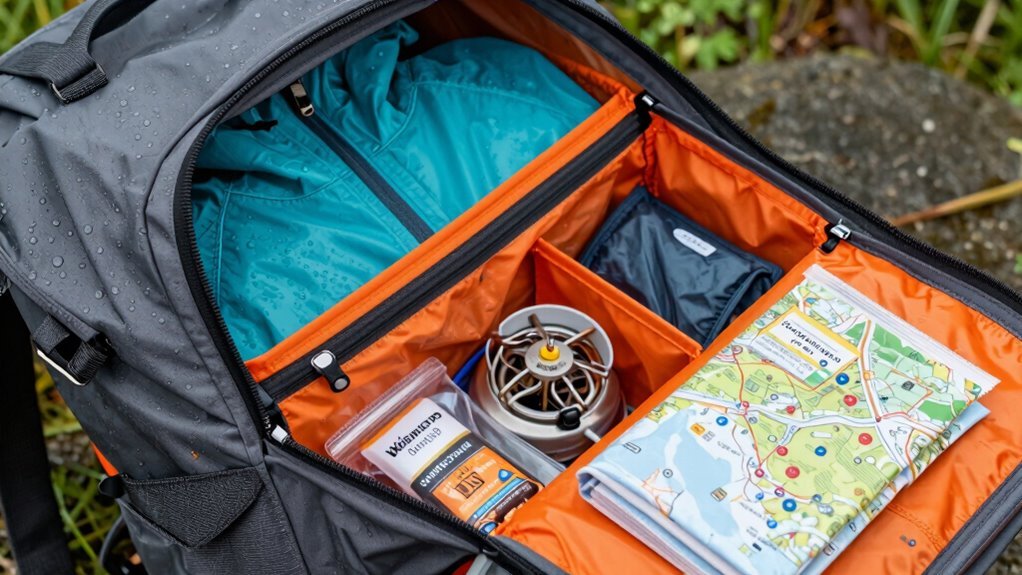
Rolling up your gear in waterproof organizers isn’t just smart—it’s like giving your backpack a high-five for staying dry.
Use lightweight dry sacks for clothes and snacks, or grab heavy-duty roll-top bags for serious sogginess.
They come in fun colors, so you can toss in a red one for rain gear and a blue one for sleeping stuff—easy to find, fun to pack.
Coated nylon or siliconised fabric keeps things light and tough, while sealed seams block sneaky water.
Need small items safe? Toss your phone or wallet in a waterproof pouch—snug, secure, and splash-proof.
Just don’t expect them to survive underwater dives; most aren’t meant for underwater exploring (unless you’re a backpack-carrying mermaid).
Squeeze out air before rolling the top shut, and snap that clip closed.
With gusseted bottoms, they even stand up like little tents.
Pack smart, stay dry, and let your backpack do a happy dance in the downpour.
Seal Electronics in Reusable Silicone Bags
Silicone bags are about to become your backpack’s new best friend—especially when it comes to keeping your electronics safe from surprise downpours or rogue waves at the beach.
Just slide your phone, charger, or earbuds inside, squeeze out the air, and roll the top shut—boom, it’s sealed.
The airtight zipper lock and thick, durable silicone keep water, sand, and dust out like a pro.
Made from food-grade, BPA-free platinum silicone, these bags won’t degrade or leach nasties, and they can handle crazy temps from -40°C to 230°C—so yes, your gadgets are safe whether you’re skiing or baking on a tropical shore.
They’re leakproof, reusable forever, and even dishwasher- and microwave-safe (though we don’t recommend cooking your phone).
Use them for passports, wet swimwear, or angry toiletries that love to explode.
With flexible shapes and splayed openings, they’re a cinch to load and pack—your backpack just got a serious upgrade.
Opt for Top-Loading Packs With Roll-Top Closures
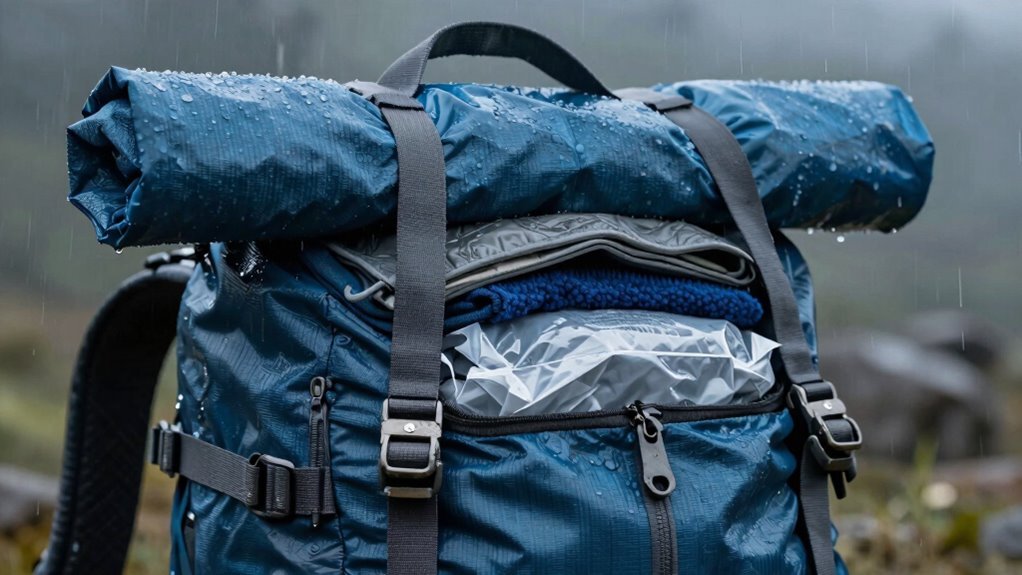
Choosing a backpack that can brave the elements starts with a smart move—going for a top-loader with a roll-top closure, because let’s be honest, nobody enjoys soggy socks or a surprise water feature in their lunch.
The roll-top seal locks out rain, splashes, and even full dips in puddles—your gear stays dry, no drama.
Need more space?
Unroll a bit for up to 4 extra liters.
Packing light?
Roll it down and compress the load.
It opens wide, so you’re not blindly digging like it’s a treasure hunt gone wrong.
Bright linings and smart pockets keep things visible and organized.
Plus, the compression straps and G-Hook keep it all snug and sleek, while fewer straps mean less snag on trails or trains.
It’s secure, comfy on your back, and honestly, just smarter all around—like a dry bag and backpack had a genius kid.
Pack Strategically to Minimize Water Exposure
When the sky decides to dump rain at the worst possible moment, you’ll want your backpack packed like a pro—because nobody’s got time for soggy gear and sad, damp socks.
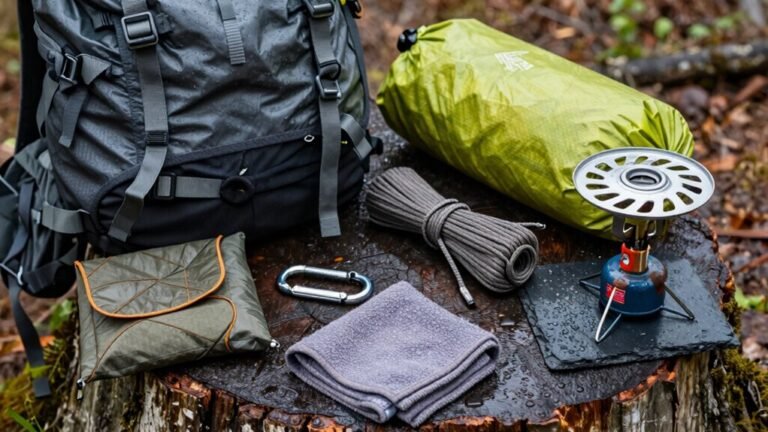
Start by stuffing mid-weight items like sleeping bags and padded clothes at the bottom—they’ll cushion the load and stay dry.
Toss your rain jacket in a side pocket so it’s grab-ready when clouds roll in fast.
Keep electronics and headlamps sealed in dry bags; trust us, a wet phone kills the vibe.
Wrap your sleeping bag in a trash bag or dry sack—wet insulation is basically a cold hug.
Use smaller plastic bags to group gear; they’re like tiny force fields against rain.
Slide a trash-compactor liner inside your pack for backup protection, or slap on a rain cover (or a DIY trash bag one).
And hey, skip the cotton—wear synthetics or wool that won’t turn into wet rags.
Quick-dry socks? Pack extras.
Your feet will thank you.
Dry Out Gear After a Wet Journey
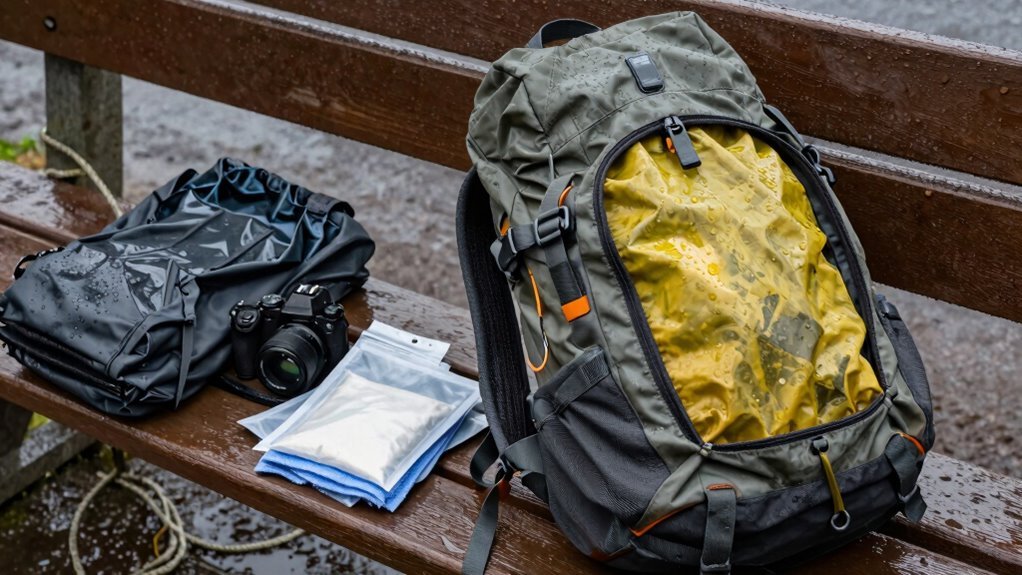
Squeezing the day’s downpour out of your gear feels a little like wringing victory from the jaws of defeat—twist those wet clothes tight and watch the water run free.
You’ll slash drying time fast, especially if you repeat it for soaked sleeping bags or heavy jackets.
Next, grab a dry towel, wrap your gear, and let it soak up moisture like a sponge—20 minutes works wonders.
Then hang everything where the breeze hits: toss a line between trees, drape it over sun-warmed rocks, or lay it on your tent roof.
Sunlight loves synthetic insulation—it dries way faster than down.
If you’re stuck inside, open the tent flaps, hang small stuff like socks, and stash wet clothes in a vestibule bag overnight.
Just don’t drip on your sleeping pad—it’s bad luck.
When you get home, unpack everything immediately.
Hang it all up, fan out the tent, and let it breathe.
Trust me, your future self will thank you when mold doesn’t throw a surprise party in your pack.
Maintain Your Pack’s Water-Repellent Coating
Keeping your backpack shedding rain like a duck’s back isn’t magic—it’s maintenance.
Your pack’s DWR coating is the hero that keeps water beading up and rolling off, but it wears down over time.
Dirt, oils, and trail grit gunk it up, so regular checkups keep it in top shape.
Don’t wait for soggy straps to act—stay ahead of the storm.
- Test monthly by sprinkling water: if it beads, you’re good; if it soaks, it’s time to treat.
- Clean right with tech-specific wash (not your laundry detergent!) to clear gunk without residue.
- Reapply every 1–3 years, or more if you’re a trail junkie—focus on shoulders, base, and hip belt.
A little upkeep means your pack laughs at downpours. Think of it as spa day—for water resistance!
Frequently Asked Questions
Can I Use a Regular Trash Bag Instead of a Trash Compactor Bag?
No, you can’t use a regular trash bag instead of a trash compactor bag if you’re tackling tough conditions.
They’re thinner and tear way too easily when stuffed tight.
Compactor bags? They’re tough little warriors—thicker, stretchier, and built to handle serious squish.
Sure, a regular bag might survive a light hike, but when rain, mud, and tight packing strike, it’ll quit on you.
Trust the compactor bag—it’s got your back, literally!
How Do I Repair a Torn Rain Cover in the Field?
You grab that trusty repair tape and slap it over the tear—inside and out—for instant armor against the rain.
Yep, it’s like a bandage for your backpack, and it works great!
Just smooth it down, avoid wrinkles, and you’re back in the wild, unstoppable.
It’ll hold tight till you’re home, where a proper fix waits.
Adventure on, hero—your pack’s got your back, literally.
Are Waterproof Zippers Worth the Extra Cost?
Yeah, waterproof zippers are totally worth the extra dough.
They keep your gear bone-dry, even in sideways rain, so you won’t be wringing out your socks at lunch.
Sure, they cost more, but they last longer and laugh in the face of downpours.
Think of them as a raincoat for your stuff—because soggy snacks? Nobody’s into that.
Will My Backpack Float if It Falls in Water?
Yep, your backpack might actually float—especially if it’s fully waterproof and sealed tight, trapping air inside like a balloon.
Here’s the fun part: models with a 10,000 mm hydrostatic head can handle serious pressure without leaking, so they often stay afloat.
Just don’t overload it or forget to roll the top closed.
Otherwise, you’ll be chasing a sinking backpack like a sad pool noodle.
How Often Should I Reapply the Water-Repellent Coating?
You should reapply the water-repellent coating every 3 to 6 months, or even monthly if you’re hiking hard and fast through brush and rain.
Check for water beading—if it soaks in, it’s time.
High-use spots like straps and the bottom wear quicker, so give ’em extra love.
When in doubt, a quick spray keeps your pack happy, dry, and grinning like a raincoat on a muggy day.
Conclusion
You’ve got this, rain or shine! With a slick rain cover, dry bags, and a trusty trash compactor liner, your pack stays drier than a knight’s armor in a thunderstorm. Pack smart, roll those tops tight, and give your gear some love post-hike. A quick reapply of water-repellent spray keeps the storm at bay. Honestly, you’ll laugh at puddles, stomp through mud, and still find your socks dry—magic? Nah, just backpacking wisdom from the future, wrapped in common sense.
References
- https://www.herefh.com/blog/the-best-backpack-materials
- https://www.sfbags.com/blogs/news/waterproof-vs-water-resistant-bag-which-to-choose
- https://backpackies.com/blog/waterproof-backpack-guide
- https://www.logotech.com/blog/post/the-ultimate-guide-to-backpack-fabrics
- https://www.tombihn.com/blogs/main/best-waterproof-fabrics-for-rainy-weather
- https://instinctbackpack.com/en-us/blogs/materials/how-to-choose-your-backpack
- https://polycoresolutions.com/blogs/blog/a-guide-to-high-performance-backpack-materials
- https://www.divebombindustries.com/blogs/news/discover-the-benefits-of-using-waterproof-backpacks
- https://backpackinglight.com/forums/topic/49136/
- https://riderbagusa.com/blogs/news/everything-you-need-to-know-about-waterproof-backpack-covers