1 Best Wide Toe Box Hiking Shoes for All-Day Trail Comfort
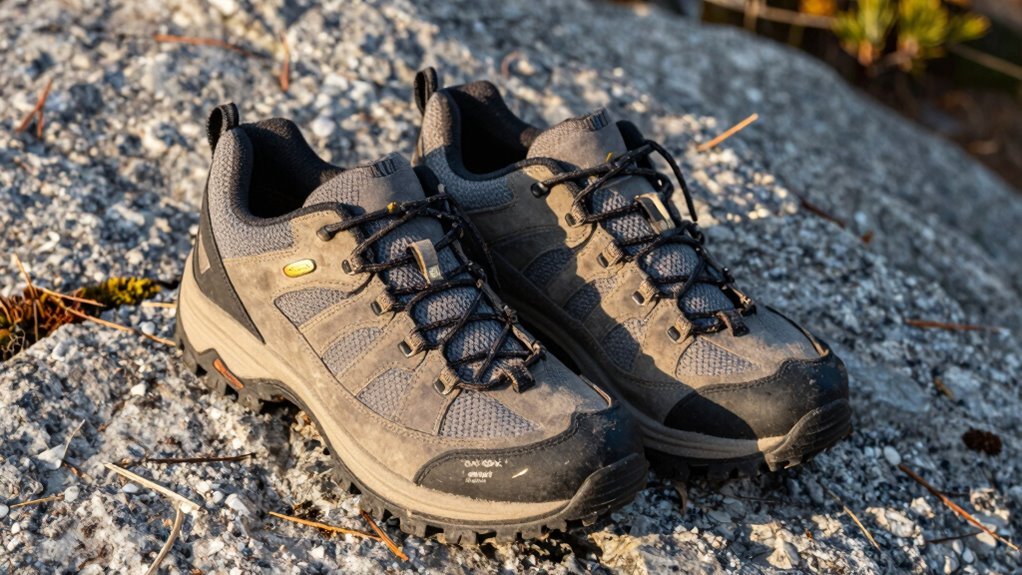
You’re eyeing the Skechers Men’s Respected-Boswell Mids for long trail days — and why not?
With a 1.2-inch wider forefoot than average mid-tops, these best wide toe box hiking shoes promise exceptional toe-splay comfort on extended hikes.
Premium leather and a water-repellent finish add durability and protection in changing conditions.
The Air-Cooled Memory Foam insole enhances breathability and cushioning underfoot.
Paired with a Goodyear outsole, the shoe suggests solid hiking performance even on rough terrain.
Yet somewhere, a skeptic is still lacing up, questioning if comfort compromises capability.
| Skechers Men’s Respected-Boswell Mid Top Leather Moc Toe Sneakers |  | Best Overall | Upper Material: Leather and synthetic | Closure Type: Lace-up | Insole Technology: Memory Foam | VIEW LATEST PRICE | Read Our Analysis |
More Details on Our Top Picks
Skechers Men’s Respected-Boswell Mid Top Leather Moc Toe Sneakers
If you’re after a rugged-yet-refined option with a roomier forefoot—say, about 1.2 inches wider than standard mid-tops—then these Skechers Men’s Respected-Boswell Mid Tops might just be your sweet spot, especially if you value comfort over technical trail performance.
You get a premium leather and synthetic upper that’s water-repellent—practical for drizzle but not full-downpour warfare—paired with a traditional lace-up for a secure fit.
The Air-Cooled Memory Foam insole and Goga Mat Arch cushioning keep your feet supported and ventilated over 8+ hours of wear.
Sure, the Goodyear Performance Outsole offers solid durability and stability, but let’s be real—will you summit a scree slope in these? Doubtful.
They’re better suited for city strolls, weekend errands, or light trails where style matters as much as function.
- Upper Material:Leather and synthetic
- Closure Type:Lace-up
- Insole Technology:Memory Foam
- Arch Support:Goga Mat cushioning
- Outsole Type:Goodyear Performance
- Water Resistance:Water-repellent
- Additional Feature:Relaxed Fit design
- Additional Feature:Moc toe styling
- Additional Feature:Goodyear Performance Outsole
Factors to Consider When Choosing Wide Toe Box Hiking Shoes
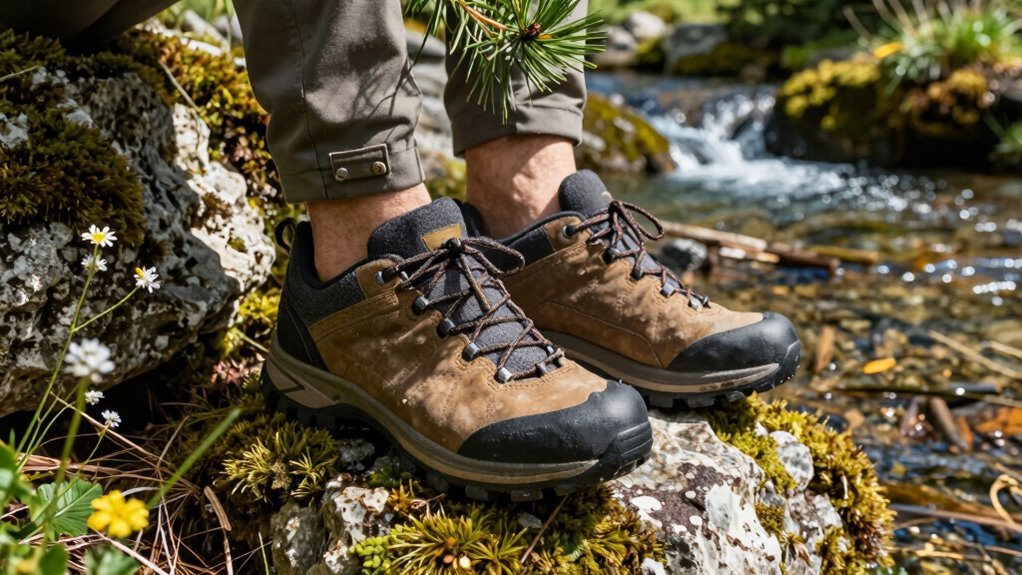
You’ll want to check the fit and comfort first—nobody wants hotspots after just 30 minutes on the trail, especially if you’re tackling a 10-mile loop with 1,500 feet of elevation gain. Make sure the toe box width gives your big toe at least ½ inch of space without letting your foot slide sideways, and don’t overlook the arch support level, since underpronators need about 15–20% firmer cushioning than neutral runners. Can a flexible sole really handle jagged granite and muddy switchbacks? Test the shoe’s bend at the ball—ideally it should flex within 10 degrees of your natural stride—while keeping an eye on material durability, like full-grain leather or 1,000-denier nylon, if you’re brushing through thorns or scree.
Fit and Comfort
Width alone doesn’t guarantee comfort—your foot needs room to splay naturally during weight transfer, especially on rocky descents or side slopes with up to 15% grade shifts. That’s why toes often feel cramped even in shoes labeled “wide.”
Cushioned insoles and responsive midsole padding (with at least 6mm compression zones) help reduce foot fatigue during hikes lasting 5+ hours. These features absorb impact and support your foot through long, demanding terrain.
An adjustable lacing system lets you fine-tune forefoot snugness and lock the heel securely in place. This prevents slipping, which means no hotspots and no blisters.
Look for uppers made with a bit of stretch, like TPU-weave or knit hybrids, that cradle your foot without pinching. These materials adapt to your foot’s shape while maintaining support.
Don’t overlook arch support tailored to your gait—too little leads to aching, while too much makes your foot feel boxed in. Paired with solid heel lockdown, proper arch support delivers stable, all-day comfort—without the drama.
Toe Box Width
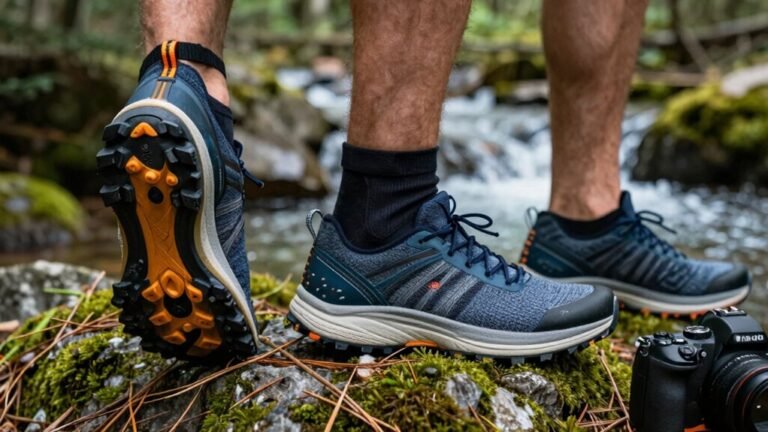
How much room do your toes really need in a hiking shoe? You’ll want a toe box wide enough to let your toes splay—naturally spreading up to 5 mm with each step—without pinching across the big toe joint or bunions, especially when wearing thick hiking socks.
Look for models labeled “wide” or with a visibly broader forefoot to avoid crowding; don’t assume standard widths will cut it. Aim for about 10–12 mm of space beyond your longest toe when standing—this accounts for swelling that can increase foot volume by up to 5% during long hikes.
That wiggle room provides comfort without slipping, even on descents. If you’re switching from regular to wide, consider sizing up a half size to maintain proper volume, and double-check that lacing doesn’t squeeze the forefoot when tightened.
Arch Support Level
Ever wonder why your midfoot starts to drag halfway through a long trail? Flat or low arch support in wide toe box shoes can let your foot collapse inward—overpronation kicks in, zapping energy and stirring discomfort.
You need structured support, not just cushioning: look for moderate to high arch profiles that cradle your foot’s natural curve, especially across the full width, so stability doesn’t fade when the trail gets steep. Built-in molded EVA or PU insoles beat flat foam—they maintain shape mile after mile (critical past hour six).
Many models feature removable footbeds, letting you swap in custom orthotics if your arches run high or pesky plantar fascia flares up. Just don’t assume wide toe boxes mean compromised support—top designs integrate heel-to-midfoot lockup so your foot stays aligned, not flopping like a loose rudder.
Shoe Flexibility
Think your wide-toe-box hikers need to be stiff to handle rugged terrain? Not necessarily—forefoot flexibility actually enhances comfort and natural movement, especially when you’re logging miles.
Look for pronounced flex grooves in the outsole; they let the toe area bend smoothly with your stride, which matters more in wider toe boxes where material tension can restrict motion. Softer uppers—like knit or thin leather—help too, adapting to your foot’s shape and allowing the whole shoe to flex freely.
A well-designed last for wide toes reduces internal resistance during push-off, while segmented midsole plates or flex zones add targeted give near the ball of your foot—without wobbling in the midfoot. Just avoid overly rigid midsoles or excessive stack height (over 30mm), since they can block toe splay and feel clunky.
Aim for balanced support that bends where your foot does.
Material Durability
You’ve probably noticed how a flexible forefoot keeps your wide-toe-box hikers feeling natural on long trails, but that bend shouldn’t come at the expense of toughness. After all, what good is a shoe that moves beautifully if it falls apart after 100 miles?
You’ll want uppers made from full-grain leather, nubuck, or abrasion-resistant textiles, preferably with reinforced overlays that guard against scuffs and tears—especially where the wide toe box stretches. Look for rubber randing or a molded toe cap; they take the hit when you kick rocks, which you *will* do.
Stitching in the toe area should be tight and reinforced, because that’s where flex weakens seams over time. Outsoles made with high-abrasion rubber (like Vibram’s 400-series compounds) and deep lugs (5mm+) hold up far longer on rough terrain.
While waterproof membranes (think Gore-Tex) help prevent moisture damage, they can wear out in 6–12 months with heavy use—so weigh breathability against longevity.
Traction Performance
How does your foot stay secure when the trail turns slick and uneven—especially with a wide toe box that shifts how weight distributes across the out -sole? You’ll want deep, multi-directional lugs (ranging 12–5 mm) to bite into loose dirt and mud, rather than shallow, uniform tread that slips when the going gets sloppy.
Aggressive, directional lugs help you power uphill, while pronounced braking blocks keep you stable on descents—because let’s be honest, nobody nails perfect footing on wet roots. Sticky rubber compounds stay pliable in cold or wet weather, boosting grip on slick rock, though they tend to wear faster on rough terrain.
Harder rubber lasts longer but sacrifices some grip, so it’s a trade-off. Look for siping and full-contact outsole designs: they boost surface contact on rugged ground, helping your wide-foot-friendly shoe hold steady—because confidence on trail isn’t just comfort, it’s traction you can trust.
Weight Considerations
Why do your hiking shoes suddenly feel like they’re packing extra baggage when you switch to a wide toe box? Because they probably are—most hiking shoes weigh 1.3 to 2.5 pounds per pair, and wider models often run heavier thanks to added volume and reinforced uppers.
That extra mass, especially up front, can throw off your stride and wear you down faster on long hikes. It can also mess with balance on rocky trails.
Materials that boost durability or support in the toe area—like thicker rubber outsoles or denser midsole foams—add protection but also pounds. Over 10 miles, even a few extra ounces per shoe can mean noticeable fatigue.
If lightweight performance matters to you (and let’s be honest, it does), compare builds carefully: check midsole foam density, outsole thickness, and upper materials. You’ll want a shoe that doesn’t sacrifice agility for width—because trail comfort shouldn’t feel like a burden.
Weather Resistance
That extra ounce or two from a wider, more supportive build might already be on your mind—but what about the weather? You’ll want shoes with a waterproof or water-repellent membrane, like Gore-Tex or eVent, plus sealed seams to block water during rain or when splashing through shallow puddles.
A breathable layer helps too—it keeps outside moisture out while allowing sweat vapor to escape, so your feet won’t feel swampy after an hour. Look for DWR-treated uppers; they shed water fast, reduce surface soak, and help maintain grip on slick terrain.
Check the hydrostatic head rating: 10,000mm or higher means solid protection during long, steady downpours. And don’t overlook the outsole—deep, multidirectional lugs with sticky rubber compounds deliver traction on wet rock and mud.
Just make sure the wide toe box doesn’t mess with the forefoot seal—your dryness depends on it.
Frequently Asked Questions
Can I Use Wide Toe Box Hiking Shoes for Running?
You can use wide toe box hiking shoes for running, but they’re heavier and less cushioned than running shoes. They won’t give you the support or bounce you need on longer runs, so you’ll feel the difference fast.
Are Wide Toe Box Shoes Good for Flat Feet?
Yes, they’re good for flat feet. You’re giving your arches room to breathe, letting stability find its rhythm like roots grounding a tree. You’ll reduce pressure, support natural movement, and keep comfort steady on long treks—perfect for your stride.
Do Wide Toe Box Shoes Prevent Toenail Damage?
Yes, they do. You’ll keep your toes spread out and protected, so you’re less likely to smash or rub them on long descents. That means fewer bruised or lost toenails when you’re hiking tough trails.
How Do I Clean Wide Toe Box Hiking Shoes?
You scrub them like a second skin, rinsing off grime with mild soap and a soft brush. You air-dry them away from heat, keeping the shape intact—because caring for your shoes is really caring for your journey’s rhythm.
Do Wide Toe Box Shoes Run True to Size?
They usually run true to size, but you should always check the brand’s fit guide. You might need a half size up for toe room or a different width. Try them on with hiking socks to be sure they fit right before hitting the trail.
Conclusion
You’re not just buying shoes—you’re investing in miles, moments, and the quiet relief of toes that finally have room to breathe (1.2 inches wider, to be exact). The Skechers Boswell sneakers strike a rare balance: durable enough for rocky descents, soft enough for day seven of a thru-hike. Could they handle extreme alpine terrain? Maybe not—but for most trails, they’re the steady, supportive companion you’ll reach for again and again.