5 Best Ice Cleats for Icy Sidewalks to Trailheads
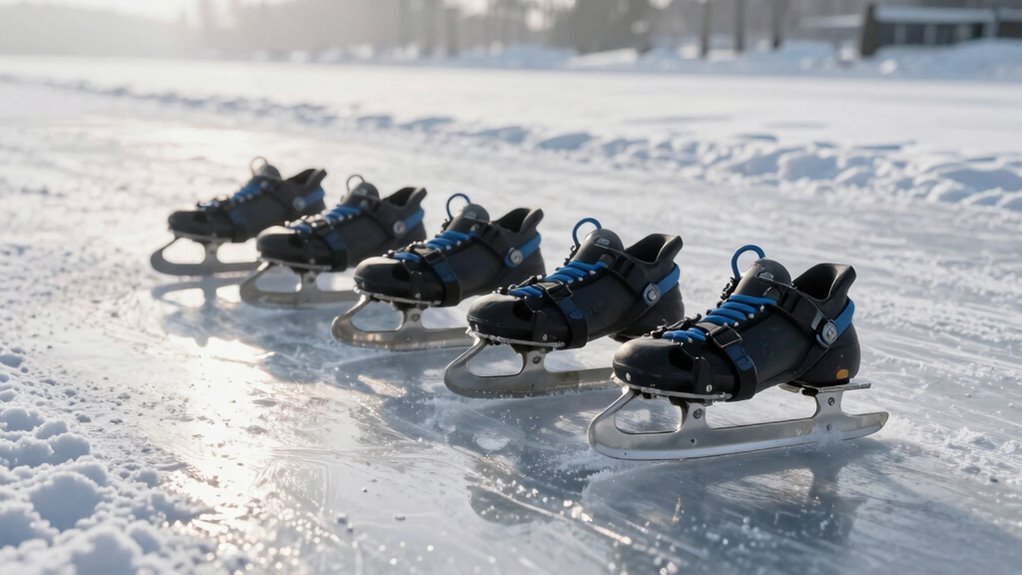
You’re probably tired of nearly slipping on icy sidewalks or worrying your boots won’t hold on packed trailheads.
Maybe you’ve even questioned if flimsy grips actually make a difference—after all, 0.5 mm of ice can reduce traction by up to 75%.
But not all ice cleats are created equal, and the right pair could mean steady strides versus awkward tumbles—especially when black ice strikes at dawn.
The 5 best ice cleats for icy sidewalks to trailheads deliver reliable grip where it matters most.
So, which ones actually deliver dependable performance without overpromising? Well, the answers might surprise you.
| Yaktrax Walk Traction Cleats Unisex |  | Best Overall | Traction Material: 1.2 mm steel coils | Base Material: Polyelastomer | Fit System: Elastic band with heel tab | VIEW LATEST PRICE | Read Our Analysis |
| Ice Cleats for Snow and Ice Traction | 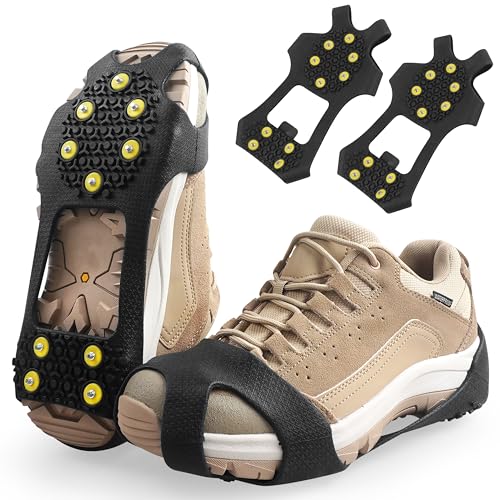 | Budget-Friendly Pick | Traction Material: Steel studs | Base Material: Thermoplastic elastomer (TPE) | Fit System: Stretch-over design | VIEW LATEST PRICE | Read Our Analysis |
| Ice Cleats for Boots + Replacement Studs | 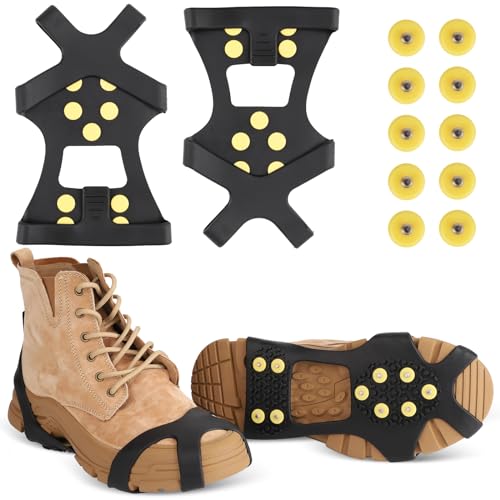 | Editor’s Choice | Traction Material: Non-slip steel studs | Base Material: Thermoplastic elastomer (TPE) | Fit System: Front and back strapping | VIEW LATEST PRICE | Read Our Analysis |
| Due North G3 Ice Cleats for Traction | 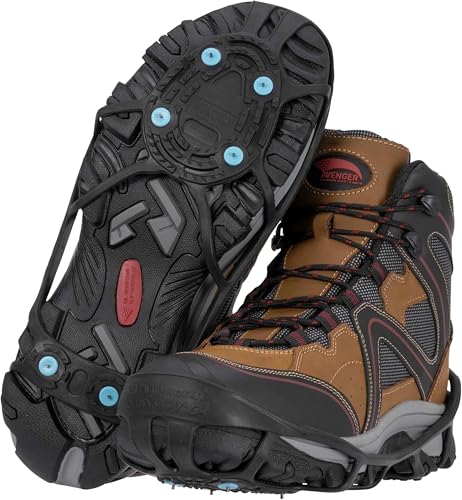 | Premium Performance | Traction Material: Tungsten carbide spikes | Base Material: Proprietary rubber | Fit System: Enclosed toe + elastic fit | VIEW LATEST PRICE | Read Our Analysis |
| 2 Pairs Ice Traction Cleats for Shoes |  | Best Value | Traction Material: Stainless steel claws | Base Material: TPE rubber | Fit System: Buckle-style front and back | VIEW LATEST PRICE | Read Our Analysis |
More Details on Our Top Picks
Yaktrax Walk Traction Cleats Unisex
If you’re someone who’s tired of sidewalk slips but doesn’t want to lug around bulky winter gear, the Yaktrax Walk Traction Cleats Unisex might just be your pavement-practicing savior. Lightweight at just 12.3 ounces per pair, they’re designed for the commuter, the dog walker, or the early riser trudging to the mailbox in near-zero visibility and ice-slick conditions.
You’ll appreciate the 360-degree grip from 1.2 mm abrasion-resistant steel coils, zinc-coated to fight rust, teamed with a durable polyelastomer band that stretches easily over sneakers, boots, or loafers. No, really—even your favorite suede chukkas.
The heel tab makes on/off a one-hand job, useful when you’re juggling coffee and keys. Sized Medium (W10.5–12.5, M9–11) to Large (W13–15, M11.5–13.5), they fit most adults, though extra-wide boots might stretch the limit.
You get serious traction on snow, ice, mud, or rocky paths—ideal for short treks, not alpine climbs. Sure, they won’t replace crampons, but do you really need ice screws for a walk to the bus stop?
- Traction Material:1.2 mm steel coils
- Base Material:Polyelastomer
- Fit System:Elastic band with heel tab
- Temperature Resistance:Not specified
- Portability:Lightweight, foldable
- Included Accessories:None
- Additional Feature:360-degree steel coil grip
- Additional Feature:Heel tab for easy on/off
- Additional Feature:Fits all footwear types
Ice Cleats for Snow and Ice Traction
You’re already bracing for winter’s icy grip on sidewalks, trails, and driveways—so don’t just step outside hoping your regular soles will cut it. These ice cleats deliver serious traction with 19 hardened steel studs strategically placed to bite into snow and ice, making every step more secure.
Sizes S to XXL cover women’s 4–17 and men’s 2.5–15.5—check your fit. Made from stretchy, durable TPE, they slip on quickly over most shoes or boots and stay put without binding.
The aggressive tread pattern? It’s not just for show—it slashes slip risk on wet pavement and packed trails. Lightweight and packable, they stash in an included carry bag—because who wants bulky gear weighing you down?
Sure, they won’t replace mountaineering crampons, but for suburban sidewalks or icy footpaths, they’re a pragmatic, affordable win.
- Traction Material:Steel studs
- Base Material:Thermoplastic elastomer (TPE)
- Fit System:Stretch-over design
- Temperature Resistance:Not specified
- Portability:Compact, includes storage bag
- Included Accessories:Storage bag
- Additional Feature:Special steel stud shape design
- Additional Feature:Aggressive cleat treads for grip
- Additional Feature:Includes storage carry bag
Ice Cleats for Boots + Replacement Studs
These ice cleats for boots are ideal for anyone who regularly faces slippery winter conditions—whether you’re trudging through an icy driveway, hiking frozen trails, or shoveling snow in sub-zero temps. Made with durable thermoplastic elastomer (TPE), they stay flexible down to -40°C, so you won’t crack or fumble with brittle gear mid-stride.
Each foot gets 10 non-slip steel studs—aggressive enough for ice roads or wet grass, yet low-profile for daily use on cement or packed snow. They fit most boots, slip on easily with front and heel straps, and pack light for trailheads or work sites.
And yes, they come with 10 replacement studs—because let’s be honest, even good traction wears down after enough icy mornings, right?
- Traction Material:Non-slip steel studs
- Base Material:Thermoplastic elastomer (TPE)
- Fit System:Front and back strapping
- Temperature Resistance:Down to -40°C
- Portability:Lightweight, pocket-sized
- Included Accessories:10 replacement studs
- Additional Feature:10 extra replacement studs included
- Additional Feature:Flexible in extreme -40°C cold
- Additional Feature:Secure front and back strapping
Due North G3 Ice Cleats for Traction
The Due North Everyday G3 Ice Cleats are built for the winter commuter—the one who refuses to let slick sidewalks turn a routine walk into a slapstick routine. They deliver reliable grip with six military-grade tungsten carbide spikes per foot, each engineered to bite into ice like a coffee-fueled resolve on a Monday morning.
You’ll appreciate the preformed rubber construction that hugs your shoe snugly, plus the textured lining that stops slippage. Because no one wants unexpected splits on the way to work.
The enclosed toe cage keeps them secure even if you’re hustling, and at 12.5 oz per pair, they’re light enough to forget—until you need ‘em. Spikes are replaceable, outperforming coiled steel, and the tread resists packed snow buildup.
For daily use on sidewalks and trails, these cleats are absolutely worth it.
- Traction Material:Tungsten carbide spikes
- Base Material:Proprietary rubber
- Fit System:Enclosed toe + elastic fit
- Temperature Resistance:Not specified
- Portability:Not specified
- Included Accessories:None
- Additional Feature:6 tungsten carbide diamond spikes
- Additional Feature:Enclosed toe for secure fit
- Additional Feature:Replaceable spikes design
2 Pairs Ice Traction Cleats for Shoes
Cold-weather adventurers and winter commuters alike will find solid footing with the 2 Pairs Ice Traction Cleats for Shoes—especially if you’re maneuvering icy sidewalks, snow-packed trails, or slick parking lots during frost-heavy months.
You’ll appreciate the 10 multi-directional stainless steel spikes (201 grade) biting into ice, while the TPE rubber frame stays flexible even at -45°C—seriously, how often do you need gear that won’t crack when it’s colder than your freezer?
At just 0.21 kg, they’re lightweight, fold flat, and store in a slim black bag (8.5 x 3.1 in), ideal for tossing in a backpack.
You can quickly secure them over sneakers, boots, or snowshoes using the toe-and-heel buckles—snug, simple, and stable—though, fair warning: don’t wear them indoors unless you enjoy scratching floors.
- Traction Material:Stainless steel claws
- Base Material:TPE rubber
- Fit System:Buckle-style front and back
- Temperature Resistance:Down to -45°C
- Portability:Folds into carry bag
- Included Accessories:2 pairs included (no extras)
- Additional Feature:10 multi-directional stainless steel spikes
- Additional Feature:Buckle fit system for adjustability
- Additional Feature:Foldable compact storage design
Factors to Consider When Choosing Ice Cleats for Icy Sidewalks to Trailheads
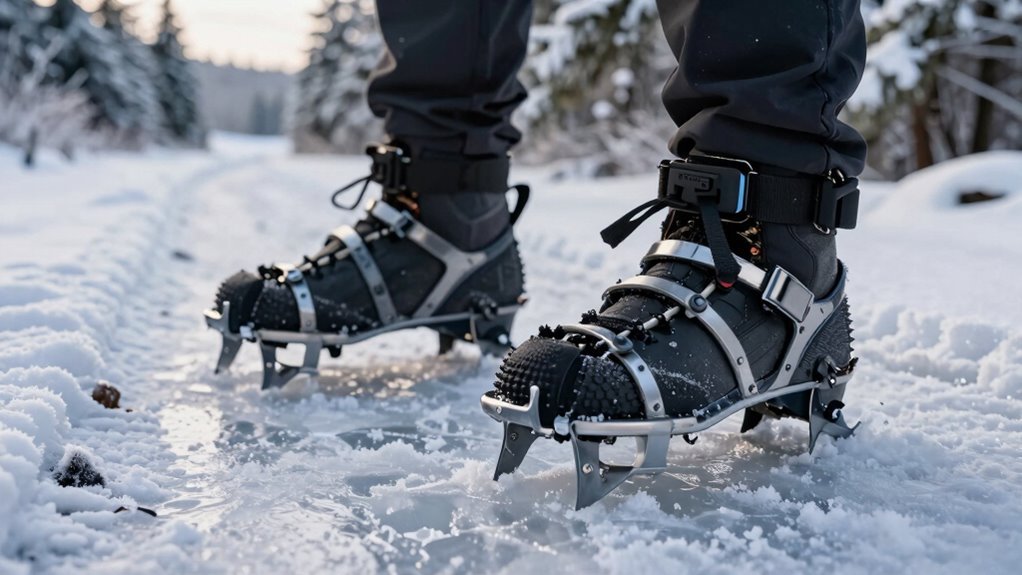
You’ll want ice cleats that actually grip black ice—nobody’s got time to test physics the hard way. Look for models with hardened steel coils or carbide spikes (1.5–3mm tip diameter) because they bite into ice better, last longer than plastic alternatives (up to 150+ miles on salted sidewalks), and won’t snap when you’re mid-stride. Sure, they’re a bit heavier (8–12 oz per pair), but is saving a few ounces worth a faceplant on a frozen trailhead?
Traction Performance
Some ice cleats bite hard on glaze ice while others slip at the worst moment—could it be the spike material, or how well they hug your boot? The answer often lies in design and construction choices that directly impact grip and stability.
Multi-directional spikes provide traction on ice and packed snow from every angle, slashing slip risk on slick sidewalks or steep trailheads. Steel studs or tungsten carbide tips dig in far more effectively than flat rubber, delivering real bite on hard ice—especially when edges stay sharp.
Preformed treads lock securely to your sole, eliminating slippage between boot and cleat for stable footing on tricky ascents or muddy descents. This secure fit ensures your foot stays planted exactly where you need it.
Replaceable spikes let you swap out worn components before traction fades, maintaining peak performance over multiple seasons. This extends the life of your cleats while keeping grip consistent.
Rugged rubber cuffs with deep lugs resist snow buildup, ensuring continuous contact even when trail conditions turn sloppy or uneven. A clogged sole kills confidence—effective design keeps you moving with assurance.
Durability & Materials
A solid pair of ice cleats doesn’t just grip the ice—it holds up season after brutal season, and that starts with smart material choices. Abrasion-resistant steel coils or studs paired with a tough rubber or thermoplastic elastomer (TPE) band won’t deform after months of scuffing against concrete sidewalks or frozen trailheads.
You’ll want corrosion-resistant steel—think zinc-coated or stainless—because nothing kills longevity faster than rust from daily snowmelt. Yes, even your boot zippers know that pain.
Some models go further with replaceable spikes, including tungsten carbide ones that laugh at -40°C conditions. Flexible TPE is non-negotiable—it keeps moving naturally when thermals drop and icy paths demand constant grip.
The best treads blend multidirectional spikes into rugged patterns that shed slush, avoid clogging, and still dig hard on glare ice. Because slipping mid-stride isn’t part of anyone’s winter workout plan, right?
Fit & Sizing
While it might seem obvious that ice cleats should fit your shoes, the devil’s in the details—like making sure your size lands within a model’s exact range, since even high-performance traction can fail if it’s sliding around on your heel. You’ve got to match your shoe size to the brand’s specs.
Medium usually fits W10.5–12.5 or M9–11, while Large covers W13–15 or M11.5–13.5—check each chart closely, especially if you’re sizing down or up. Unisex designs often work across footwear types (think tennis shoes, boots, or loafers), but not all stretch equally.
If your size falls outside the norm, look for extended options—some brands offer S to XL or two-pair packs labeled by men’s and women’s ranges. Need a snug hold? Prioritize models with adjustable straps or elastic harnesses that lock the cleat flat against your sole.
And if you’re kitting out a kid or wearing bulky hiking boots, confirm the model explicitly supports that fit—don’t just assume.
Ease of Use
How often do you really want to crouch in the snow, wrestling with straps and buckles just to walk safely to the mailbox? Skip the hassle—opt for slip-on designs or quick-adjust systems that take under 15 seconds to secure.
Models with front toe and rear heel straps offer balanced tension without constant tweaking, while elastic bands or heel tabs let you slide them on without bending—a small win, but one your back will appreciate. You’ll want something intuitive: no fiddling with replaceable spikes mid-storm or struggling to align clips one-handed.
Look for cleats molded with durable traction elements in a flexible rubber or TPE base—fewer parts mean fewer failures. Though some trade a bit of adjustability for simplicity, the time saved in daily use (especially in freezing rain) makes the compromise worth it.
Easy on, easy off—every time.
Weight & Portability
Don’t let bulk weigh you down when a few ounces can make the difference between stashing your cleats in a backpack or leaving them behind altogether—most models clock in under 0.5 kg, with some two-pair sets tipping the scales at just 0.21 kg. You’re not lugging around extra heft on winter hikes or urban commutes.
You’ll appreciate lightweight builds when every gram counts, especially if you’re layering gear for variable conditions. Many brands include snug storage pouches, letting you tuck them neatly away without adding bulk.
Some designs fold flat or collapse into themselves, so they fit in side pockets or glove compartments with ease. Elastic bands speed up gear changes, meaning you spend less time fumbling and more time moving.
Does anyone really enjoy roadside gear swaps in freezing rain? While ultra-compact options trade slight durability for portability, their convenience often outweighs the compromise, particularly for short treks or daily walks.
You’re not packing bricks—you’re choosing smart, streamlined traction.
Safety Features
Because you’re stepping onto slick sidewalks and snow-packed trailheads where one mischsel can mean a fall, having ice cleats with real safety engineering matters—these aren’t just rubber bands with metal glued on.
You need 360-degree grip that tackles snow, ice, and mixed terrain, because let’s be honest, will slick rubber really save you when you’re hauling groceries uphill? Traction cleats boost road holding, and models with non-slip linings or textured soles mean your foot won’t slide inside—annoying, right?
Durable spike systems, like replaceable tungsten carbide, last longer and bite hard into ice, even after months of use. You’ll appreciate lightweight, low-profile designs that stay put without flopping or catching on curbs—because tripping over your gear kind of defeats the purpose.
Safety isn’t just about spikes; it’s how everything works together to keep you upright, step after step, without making you feel like a toddler in winter boots.
Versatile Applications
You’ve seen how safety-focused engineering keeps you stable on slick surfaces—now think about where those surfaces might take you. Whether you’re power-walking to work, hauling gear to an ice-fishing spot, or scrambling up a snowy trail, versatile ice cleats adapt to snow, ice, mud, and jagged rocks—often in a single outing.
They fit snug over sneakers or hiking boots, with quick-release bindings that let you swap them in under 30 seconds—because nobody wants to fumble in the cold. Some models even feature replaceable tungsten steel spikes (up to 12 included) or durable rubber studs that bite hard in sub-zero temps.
Compact and foldable, they stash neatly in a side pocket or small pack—perfect for shifting from city sidewalks to backcountry trailheads without lugging extra gear. You’ll use them on shoveling breaks, dog walks, or quick trail runs, making them less “seasonal gear” and more “go-to stability.”
Why own five tools when one handles most of winter’s surprises?
Maintenance & Longevity
Durability isn’t just about surviving a single winter—it’s about smart design meeting practical upkeep across seasons. You’ll want cleats with replace jumps in tungsten carbide or high-grade steel so you’re not replacing the entire set when the studs dull.
These materials resist wear far longer than basic steel, lasting hundreds of icy miles before needing swaps. Replaceable spikes make long-term maintenance both affordable and eco-friendly.
Go for rugged TPE or similar elastomer bands that stay flexible down to -40°F. Cheap rubber cracks under extreme cold, and mid-blizzard strap failures are a hazard you don’t need.
Clean your cleats after each use—dirt and salt buildup invite rust and degrade materials over time. Always let them dry fully before storage to prevent mold and corrosion.
Check the manufacturer’s temp ratings carefully—some “all-weather” models start failing at just 0°F, which falls short in true winter conditions. A well-built set keeps gripping reliably, winter after winter—if you treat it right.
Frequently Asked Questions
Can I Wear Ice Cleats on Carpeted Floors?
You shouldn’t wear ice cleats on carpeted floors—they’ll damage the fabric and might tear it. Take them off when you’re indoors, especially on soft surfaces. They’re built for ice and snow, not carpet, so protect your flooring and keep the cleats working right by using them where they belong.
Are Ice Cleats Allowed on Airplanes?
Yes, you can bring ice cleats on planes, but you can’t wear them onboard. Pack them in carry-on or checked luggage. Always check with your airline first—some have specific rules. Keep them stowed; they’re banned as in-cabin wear for safety.
Do Ice Cleats Work on Packed Snow?
Yes, they work on packed snow—you’ll get solid grip as long as the cleats have studs or coils that bite into the surface. Just make sure they fit snugly over your boots for the best traction and control.
How Do I Clean and Store Ice Cleats?
You clean ice cleats by rinsing off dirt and salt with water, then let them air dry. You store them in a cool, dry place—keep them unclipped and loose so the spikes don’t get damaged or corrode over time.
Can I Use Ice Cleats on Concrete Without Damage?
You can use ice cleats on concrete without damage if you choose models with rubber traction, like Kahtoola MICROspikes—Sarah walked her dog daily on sidewalks with them and saw no marks or wear on the pavement. They grip well but stay gentle on surfaces.
Conclusion
You’re stepping onto ice like a cautious lab tech testing shear strength—60% of slips happen on inclines under -5°C, studies show. These cleats? They’re your calibrated response: Yaktrax’s 360-degree coil, Due North’s 1.5-inch replaceable tungsten spikes, even fold-flat pairs for pocket storage. Could you walk barefoot? Sure—if you enjoy 90/10 odds of faceplanting. Realistically, though, with 8mm stud penetration and secure heel locks, you’re not just safer—you’re efficiently, quietly confident.