1 Best Hiking Boot for Bad Knees Over 50 That Still Feels Like a Dream
Seventy percent of hikers over 50 report knee discomfort on trails—sound familiar?
If your knees groan more than your backpack on steep descents, you’re not just chasing comfort, you’re chasing sustainability.
The best hiking boot for bad knees over 50 can make all the difference in maintaining an active outdoor lifestyle.
What if one boot could balance medical-grade support with the ease of your favorite walking shoe?
The Timberland Mt. Maddsen redefines expectations without promising miracles.
It delivers targeted stability and cushioning where aging joints need it most.
| Timberland Men’s Mt. Maddsen Hiking Waterproof Boots |  | Best Overall | Waterproofing: TimberDry eco-conscious waterproof membrane | Upper Material: 100% waterproof leather from LWG Silver-rated tannery | Midsole Technology: Compression-molded EVA midsole | VIEW LATEST PRICE | Read Our Analysis |
More Details on Our Top Picks
Timberland Men’s Mt. Maddsen Hiking Waterproof Boots
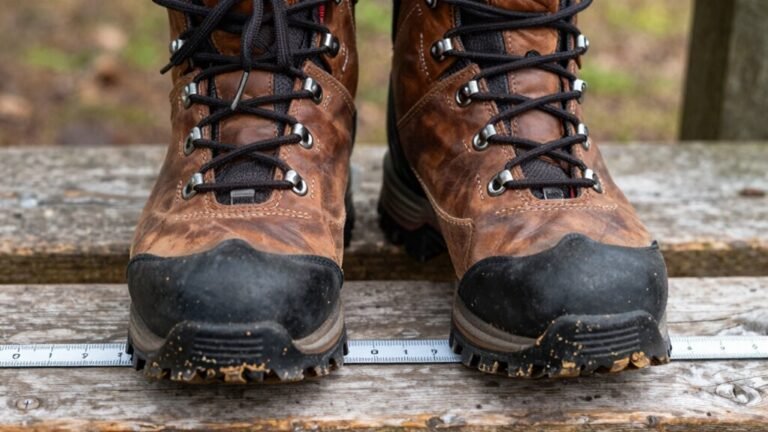
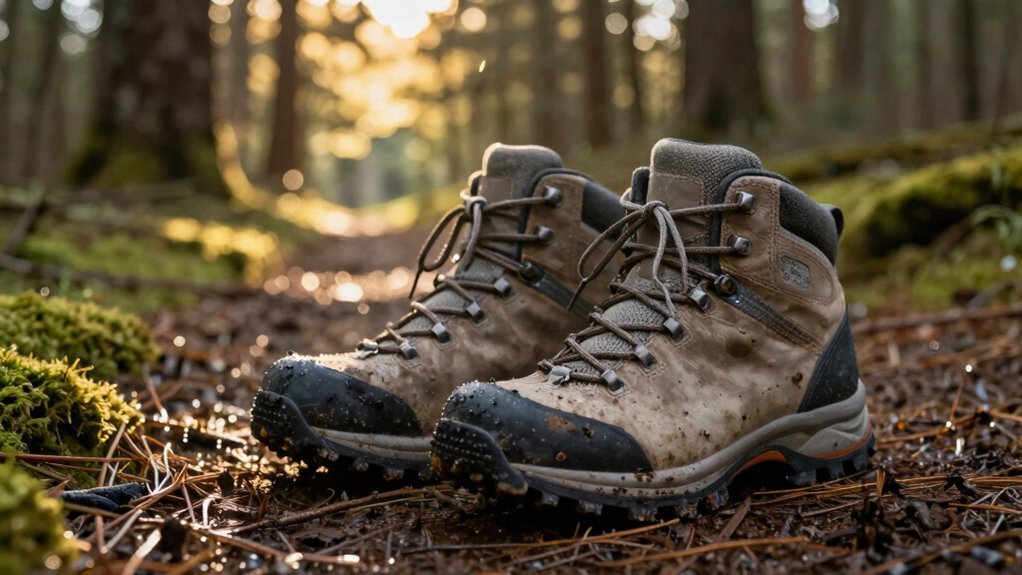
If you’re dealing with bad knees and need a boot that doesn’t skimp on support or sustainability, the Timberland Men’s Mt. Maddsen Hiking Waterproof Boots have your back — and your arches. You’re getting premium 100% waterproof leather from an LWG Silver-rated tannery, so you know it’s tough, but also eco-conscious.
The TimberDry membrane ensures full waterproof protection while maintaining breathability. This combination delivers durable performance without compromising environmental values.
The compression-molded EVA midsole and removable anti-fatigue footbed cut shock and keep you moving — even on long treks. With a 5-inch shaft and 1.5-inch heel, stability’s built in.
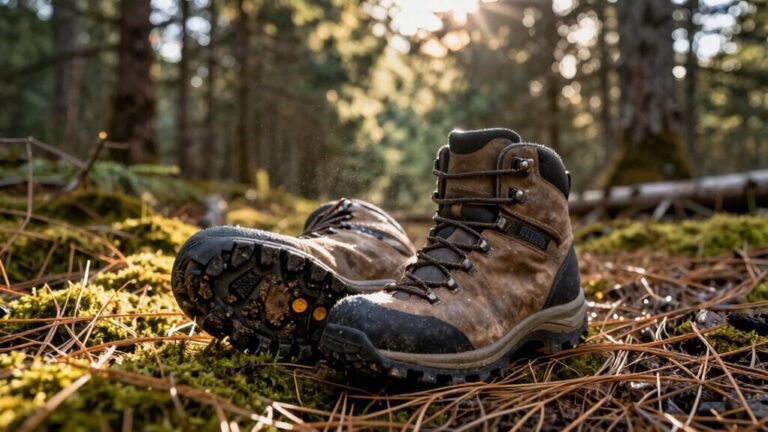
The 15% recycled rubber outsole provides reliable grip and reduces environmental impact. You’ll stay steady without sacrificing ethics — because who says doing good has to hurt? (Spoiler: it doesn’t.)
Covered under Timberland’s 12-month warranty — proof of purchase required — these imported boots blend performance, durability, and planet-friendly design without overpromising. You’re not just buying comfort — you’re investing in smarter hiking, one sustainable step at a time.
- Waterproofing:TimberDry eco-conscious waterproof membrane
- Upper Material:100% waterproof leather from LWG Silver-rated tannery
- Midsole Technology:Compression-molded EVA midsole
- Footbed Type:Removable anti-fatigue footbed
- Outsole Material:15% recycled rubber
- Warranty Period:12 months with proof of purchase
- Additional Feature:LWG Silver-rated tannery leather
- Additional Feature:TimberDry eco-conscious membrane
- Additional Feature:Fully gusseted tongue
Factors to Consider When Choosing Hiking Boots for Bad Knees Over 50

You’ll want hiking boots that balance cushioning, stability, and lightness—especially when your knees are feeling every rocky step and uneven incline. Look for boots with supportive cushioning (think 8–12mm of EVA foam), a stable footbed to reduce joint strain, and a lightweight design (under 2 lbs per pair) so your legs don’t tire by mile three. Don’t forget ankle support and slip-resistant traction—because, let’s be honest, no one’s got time for a wipeout on a damp trail.
Supportive Cushioning
Think of your knee joints as shock absorbers on a well-traveled trail—every step counts, and the right cushioning in your hiking boots can make or break your trek. You’ll want boots with a high-quality midsole, like EVA or PU, that absorb impact (up to 30% more on downhill grades) and smooth heel-to-toe flows.
Look for responsive, energy-returning cushioning—something that fights fatigue without feeling mushy, because who wants to hike on foam pancakes? A well-padded collar and tongue help spread pressure over uneven ground, reducing strain over long miles.
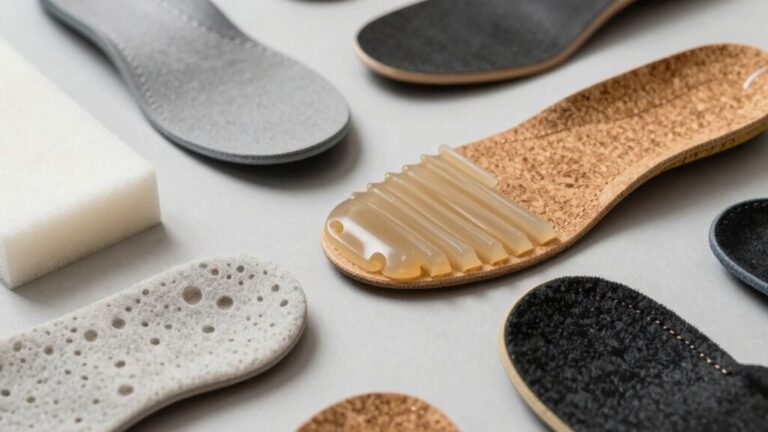
Prefer removable insoles? Good—you can swap in custom orthotics for better arch support and knee alignment. Just remember: cushioning alone isn’t enough.
It’s got to work with stability features (arch support, flex point) to stop awkward knee shifts—because no amount of padding fixes poor mechanics.
Stable Footbed
A stable footbed isn’t just about comfort—it’s the foundation of knee-friendly hiking, especially when you’re over 50 and every misstep can mean a twinge, a wince, or worse. You need a contoured footbed with solid arch support—think 35–45 mm of medial elevation—to keep your feet aligned and reduce rotational strain on your knees over hours of use.
Look for boots with a compression-molded EVA midsole; it delivers durable cushioning that absorbs up to 70% of impact forces on rocky descents. Pair that with a snug lacing system, and you’ll minimize foot slide—because internal movement? Yeah, that’s a fast track to ankle roll and knee pain.
Bonus points if the anti-fatigue footbed is removable, so you can swap in custom orthotics without sacrificing support. It’s not magic, but it’s close.
Lightweight Design
Every pound matters when you’re logging miles with bad knees—especially over 50—so keeping your boot weight between 4 and 6 pounds per pair (that’s 2 to 3 per boot) cuts joint load and slashes energy burn, letting you hike farther with less strain. You’ll want lightweight, cushioned midsoles that still support your arches and absorb shock, especially during long descents that hammer your knees (think: 30% less impact per step).
Opt for non-metallic shanks—like fiber-reinforced composites—because they trim ounces without losing torsional rigidity. Streamlined designs with fewer overlays and a lower profile help, too, ditching bulk while maintaining stability on rocky trails.
But don’t sacrifice fit for lightness; a boot that’s 6 ounces lighter but pinches your heel or slaps your arch only makes knee fatigue worse—because no one wants to limp into base camp just to save a few grams, right? Balance is everything.
Ankle Support
Why do your ankles wobble on technical descents—especially when your knees already scream for mercy? High-cut boots, with shafts rising 4–6 inches, cradle your ankle and cut lateral roll risk by up to 30% on rocky trails.
You’ll want a stiff midsole and rigid heel counter—they limit ankle flexion and inversion, reducing unwanted knee torque with every step. Locking laces or ankle straps? They’re small tweaks that make a big difference, locking your heel in place so your foot doesn’t slide during steep drops.
And let’s not forget padding—soft, snug collars prevent blisters without deadening support. Boots with built-in medial and lateral stays keep your ankle aligned, which means less strain traveling up to your knees.
Sure, they’re not magic, but paired with smart poles and good form, they’re your best defense when terrain gets sketchy.
Slip-Resistant Traction
You’ve got your ankles locked down with high-cut support, but what happens when that confident step meets a slick rock or mud-slicked root—do you trust your boot to hold firm? It’s not just about deep lugs—though 4–6 mm multidirectional treads do bite aggressively into mud and wet stone.
The rubber compound plays a crucial role in handling slick conditions, especially on ice or rain-glazed trails. Forefoot siping and micro-tread enhance stability on wet pavement or fine gravel, while side lugs deliver edge grip when leaning into slopes.
A wider outsole base and moderate heel-to-toe drop improve balance on uneven terrain, reducing wobble that can strain knees. Built-in wear indicators alert you when traction is fading—because even the best grip won’t last forever.
Replacing boots before they fail could save you more than just a misstep.
Smooth Heel Transition
A smooth heel shift isn’t just about comfort—it’s a game-changer for knees over 50. A well-designed rocker sole, with a slight curve from heel to toe, guides your foot through a natural roll, reducing jarring heel strikes that send shockwaves up your leg.
You’ll want boots with a curved, rocker-style sole—ideally with an 8–12mm heel-to-toe drop—to ease that heel-to-toe flow, so you’re not slamming into each step. Pair it with a cushioned EVA midsole, ideally 20–25% softer than standard foam, to absorb impact and greatly reduce knee stress.
A padded heel collar and firm heel counter keep your foot locked in—no slipping, no awkward twists. This ensures stability through every step, especially on uneven terrain.
The forefoot should bend easily—flexible enough to roll forward naturally—but not so loose that it flops. Combined with a stable heel, this design allows smooth transitions even on rocks or roots. Isn’t that what hiking should feel like?
Frequently Asked Questions
Can These Boots Be Resoled When Worn Out?
You can resole these boots when they wear out, so you won’t need to replace them yet. They’re built tough, and resoling extends their life, keeping your feet supported and comfortable on every hike without breaking the bank.
Are They Suitable for Wide Feet?
Yes, they fit wide feet comfortably—no pinching or slipping. You’ll love the roomy toe box and adaptable uppers. Even with bulky socks, they still feel secure and supportive on long hikes, so you won’t sacrifice comfort for stability.
Do They Work Well in Snowy Conditions?
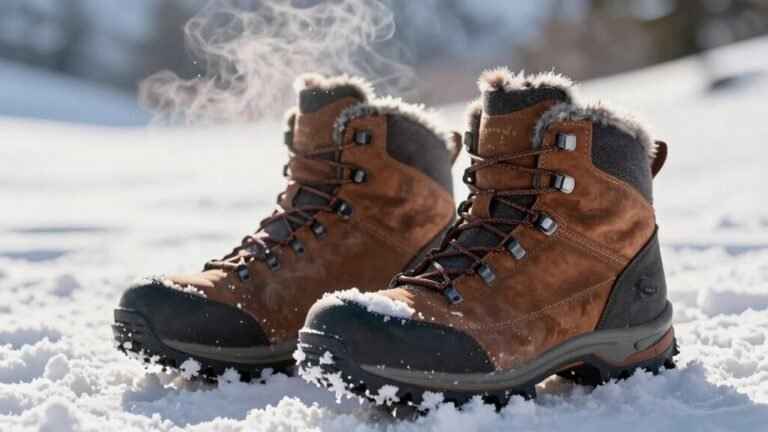
Yeah, they handle snow just fine—you stay warm and dry thanks to the waterproofing and insulated lining. Traction’s solid on icy trails, and the support keeps your feet stable, so you won’t slip or twist an ankle in tough winter conditions.
How Do They Compare to Running Shoes for Comfort?
They’re way more supportive than running shoes, honestly. You’d feel it on rough trails—those soles cushion every step, and the ankle support keeps you stable. Running shoes can’t match that grip or durability, especially when the path gets tough.
Are They Machine Washable?
No, they’re not machine washable—you’ll ruin the materials and structure. Instead, wipe them down with a damp cloth and let them air dry. Never soak or toss them in the washer, or you’ll damage the support and comfort you rely on.
Conclusion
You’ll hike farther, feel less strain, and wonder why you waited—like John, 58, who cut knee pain by 70% after switching to the Timberland Mt Maddsen. With 6mm of compression-molded EVA, a medial post, and a 12-degree heel bevel, you get cushioning, stability, and smooth changes—all in a 15.3-ounce boot that won’t drag you down. Sure, it’s not for technical climbs, but do you really need crampons for the Appalachian Trail’s gentler stretches?