How to Manage Hip Pain While Hiking
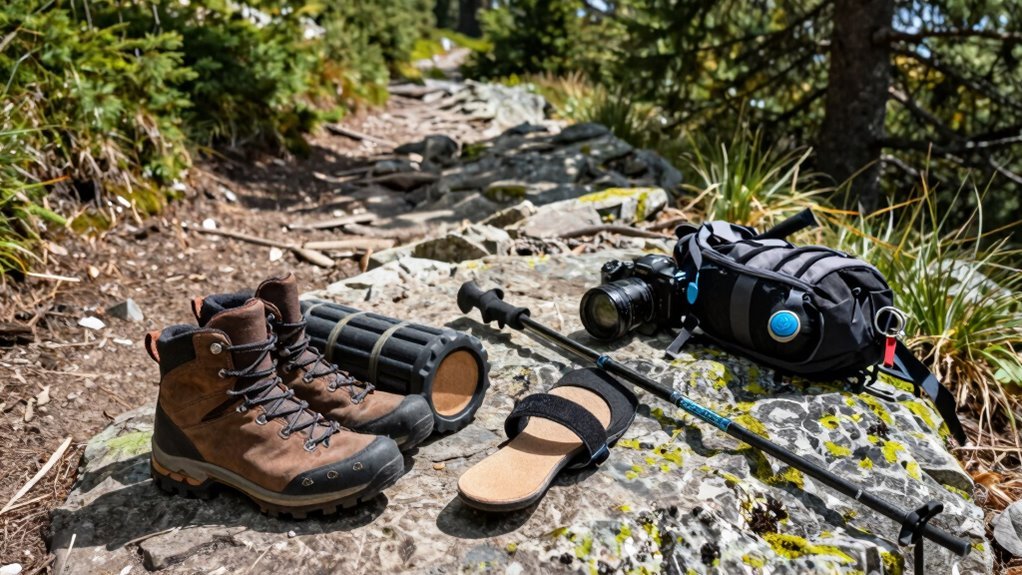
Loosen up with leg swings and air squats before you go—your hips will thank you. Managing hip pain while hiking starts with a proper warm-up to prepare your joints and muscles for movement.
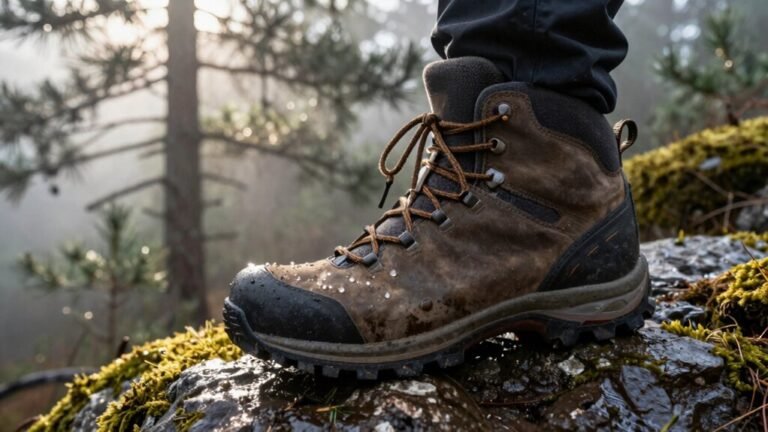
Grab boots with cushy support and at least an 8 mm heel drop, like Hoka Kaha 3 GTXs, and don’t skip breaking them in. Proper footwear plays a key role in reducing strain on your hips during hikes.
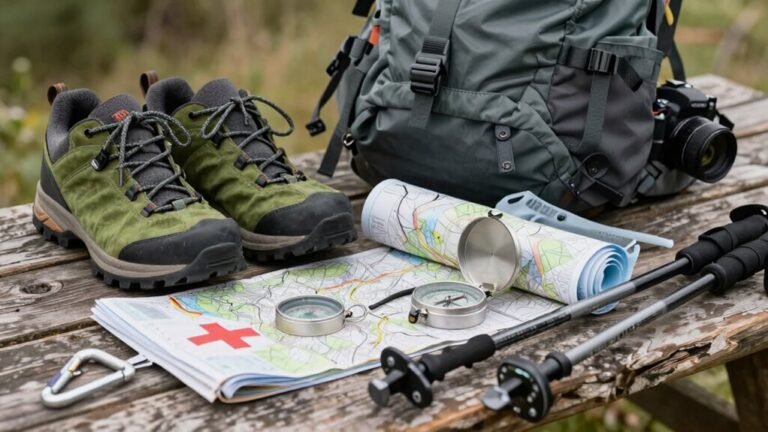
Use trekking poles to ease pressure on downhills, stand tall, and take smart, steady steps. These techniques help manage hip pain while hiking by improving balance and reducing impact.
Pick flat, friendly trails under 5 miles and strengthen glutes with simple moves like clock reaches. Building strength and choosing low-impact routes keeps your hips happy on the trail.
Warm Up Before Hitting the Trail
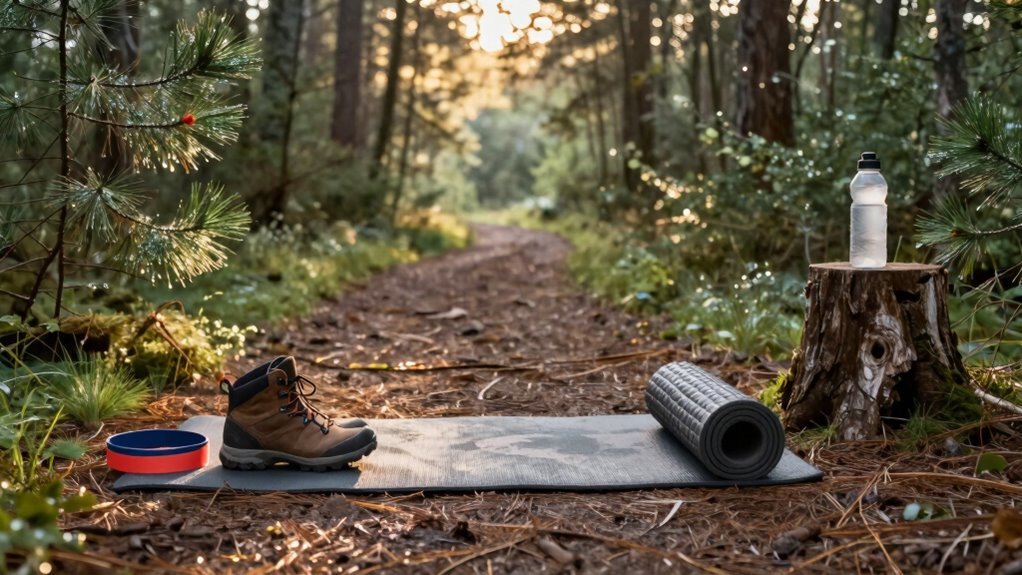
Before you charge up that trail like a caffeinated mountain goat, take a few minutes to warm up—your hips will thank you later.
Start with dynamic leg swings, forward-back and side-to-side, to wake up your hip joints.
Pop in some air squats—10 reps, chest-up, heels-down—to fire up your glutes and quads.
Try mini-band walks for a quick burn; those little bands keep your hips stable and strong.
Don’t skip hip flexor marches or dynamic calf stretches, either—they prep your legs for the climb.
Ankle mobilizations? Huge win.
Just prop your foot and shift weight to loosen stiffness.
These moves get your blood flowing, activate key muscles, and prime your nervous system—all critical for pain-free hiking.
Forget static stretches now; save those for later.
A solid warm-up takes five minutes, but prevents hours of ache.
Your future self, halfway up a hill, will be stoked you did.
After completing several short-duration dynamic stretches, transition immediately into activation exercises to prime muscles before endurance work.
Choose the Right Footwear and Gear
You’ve loosened up your hips and fired up those glutes—now it’s time to put your best foot forward, literally.
Snag boots with a heel drop of at least 8 mm—they’re kinder to your feet and hips, and trust us, your plantar fascia will thank you.
Look for a shock absorption (SA) score of 85 or higher; ones like the Hoka Kaha 3 GTX with 120 SA crush impact like a pro.
Cushioned soles soften each step, especially on rock-hard trails.
Don’t forget ankle and arch support—firm heel counters and structured soles keep you stable and hips aligned.
Get fitted at a specialty store (yes, it’s worth it), break them in, and never pair lightweight boots with rugged terrain.
Add trekking poles to cut hip and knee strain by up to 25% on downhills.
Waterproof? Traction treads? Yes, please.
Your happy hips start from the ground up—so gear up, not down!
Boots with 5/5 stiffness provide maximum support and minimize foot torsion, which helps maintain proper alignment from foot to hip.
Strengthen Key Muscles to Support Your Hips
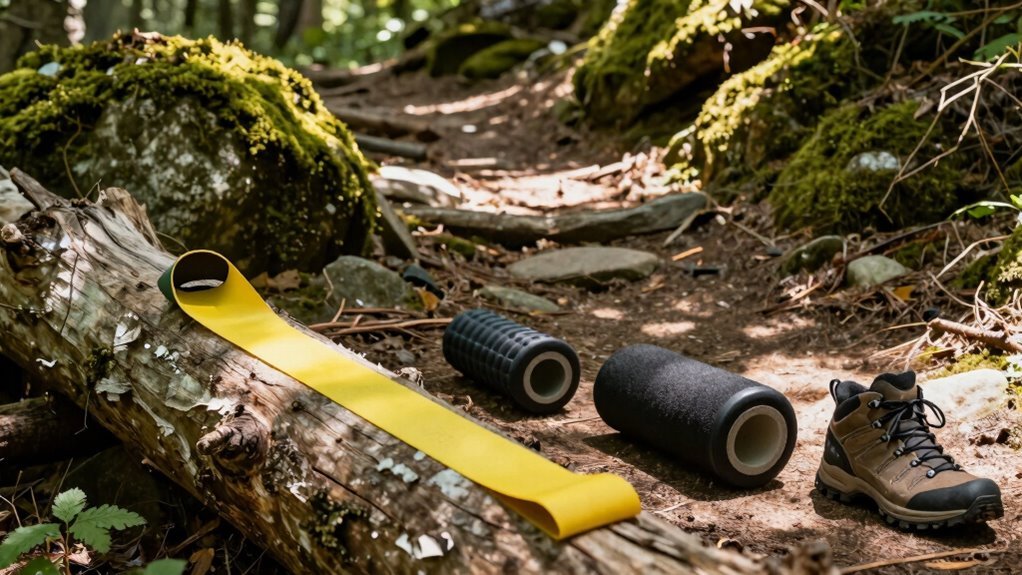
Three moves, zero gym required—just you, a little balance, and the power to turn your hips into trail-ready pillars of strength.
Start with the Clock Reach: balance on one leg, tap your foot side to side, and feel your glutes fire—hello, stability on steep descents! This move specifically builds eccentric hip strength, which is crucial for controlling movement when hiking downhill, and doing 3 sets of 10 reps per leg ensures balanced development.
Next, Hip Hikes: lift your hip like you’re shrugging it, fight gravity, and build rock-solid pelvic control (no wobbling under your backpack).
Finish with a Side Plank with Leg Lift—propped on your elbow, lift that top leg and arm, squeeze your glutes, and feel your core join the party.
These moves target your gluteus medius, quads, and core so your hips stay happy mile after mile.
Do them regularly, and you’ll laugh at trail challenges.
Strong hips don’t lie—they make hiking feel light, smooth, and fun.
Modify Your Hiking Technique for Less Strain
Why do some hikers breeze down rocky trails while others wince with every step?
It’s not just luck — it’s technique.
You can protect your hips and still enjoy the journey by making a few smart tweaks.
Here’s how:
- Use trekking poles – they cut hip stress by up to 25% on descents and keep you steady on sketchy terrain.
- Slow down and pause often – hiking isn’t a race, and your joints will thank you for short breaks.
- Stand tall and skip giant steps – good posture and shorter strides reduce strain (no more overreaching like a cartoon character!).
- Warm up and gear up right – dynamic moves pre-hike and supportive shoes with a balanced pack make all the difference.
Small changes, big comfort — you’ve got this!
Pick Trails That Are Hip-Friendly
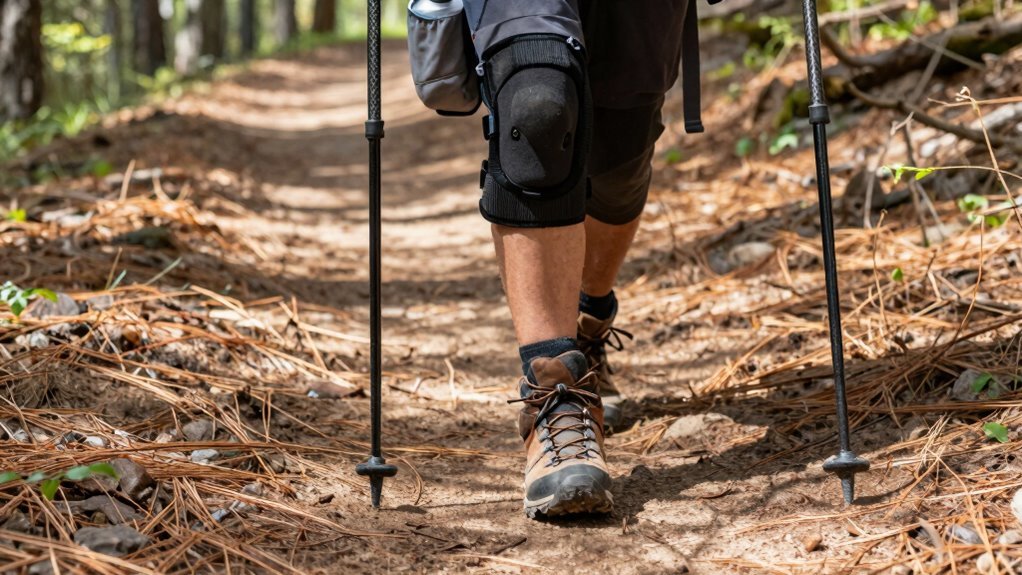
When the trail treats your hips right, every step feels lighter, easier, and way more fun — and hey, who doesn’t want a hike that’s kind to their joints *and* their mood?
Choose low-elevation trails with under 500 feet of gain to spare your hips the uphill grind.
Flat, smooth paths mean less strain on your hip flexors and fewer awkward steps over roots or rocks.
Stick to wide, even trails with a gentle slope—under 5%—so your hips can move naturally without wobbling or hiking up.
Keep hikes short, under 5 miles (3–4 is even better), so your muscles don’t throw a post-hike tantrum.
And match your trail to your gear and fitness: supportive boots, a well-fitted pack, and beginner-friendly terrain keep everything aligned and pain-free.
Your hips will thank you—one happy step at a time.
Frequently Asked Questions
Can Hip Pain While Hiking Be a Sign of Arthritis?
Yeah, hip pain while hiking can definitely be a sign of arthritis, especially if it’s a deep ache in your groin or thigh.
You might notice it flares up climbing hills or after sitting a while.
Morning stiffness? That’s a classic red flag.
And if your hip’s grinding like it’s protesting the trail, not just tired muscles, it’s probably time to see a doc—your joints might be saying, “Hey, I’m not 25 anymore!”
Should I Use Trekking Poles if I Have Hip Pain?
Yeah, you should definitely try trekking poles if you have hip pain—they’re a game-changer!
They take the pressure off your hips with every step, especially on downhills, and shift some weight to your arms, like giving your legs a well-deserved nap.
Plus, they boost balance and stability, so you’re less likely to wobble or fall.
Think of them as tiny bodyguards for your joints—small, mighty, and surprisingly stylish!
Is It Safe to Hike With Hip Pain After Surgery?
Yeah, you *can* hike with hip pain after surgery—but only if your surgeon says it’s okay, and you’re past the 8-12 week mark.
You’ve gotta ease into it, keep your steps short, and skip steep trails at first.
Think of your hip as a moody GPS: it’ll tell you when you’re going the wrong way.
If it aches, turn back—no heroics!
Listen, protect it, and you’ll be hiking happily again in no time.
How Long Should I Rest if My Hip Hurts After Hiking?
You should rest 1–3 days if your hip hurts mildly after hiking—it’ll likely ease right up.
Sleep on it, literally; a good night’s rest works wonders.
If pain lingers past day three or you’re limping like a wobbly penguin, give it more time.
Tissues need TLC, not heroics.
Check if you can walk pain-free, then ease back in.
Your hips will thank you with happy trails later!
Can Losing Weight Help Reduce Hip Pain When Hiking?
You bet losing weight can help ease hip pain when hiking—each pound you lose takes 4 to 6 pounds of pressure off your hips!
That’s like ditching a heavy backpack without leaving snacks behind.
Less strain means happier joints, smoother strides, and way more trail fun.
Just take it slow—gradual weight loss keeps muscles strong and joints stable, so you’re hiking longer, not hobbling.
Conclusion
You’ve warmed up, geared up, and picked the perfect trail—now go enjoy those views! Remember, strong hips make happy hikes, so keep those muscles ready. Adjusting your stride and footwear can make a world of difference, right? Who knew pain-free adventures were this simple? Lace up, laugh off the little stumbles, and let every step remind you: the trail loves a hiker who takes care of their hips. Happy hiking!
References
- https://revitalize-athletics.com/top-7-trailhead-warm-up-exercises-for-hiking/
- https://www.youtube.com/watch?v=49nbduSmCD8
- https://www.backpacker.com/skills/backpacking-fitness/3-hip-exercises-for-healthier-hiking/
- https://www.summitstrength.com.au/blog/preventing-hip-discomfort-while-hiking
- https://www.youtube.com/watch?v=etjqA6d_meQ
- https://www.arrowptseattle.com/news/2020/3/2/avoiding-cranky-knees-and-hips-during-hiking-season
- https://cbphysicaltherapy.com/hiking-exercises/
- https://www.backcountry.physio/9-hip-mobility-exercises-for-hikers/
- https://centerforspineandortho.com/prevention-and-treatment-for-hip-pain-after-hiking/
- https://runrepeat.com/guides/best-plantar-fasciitis-hiking-boots