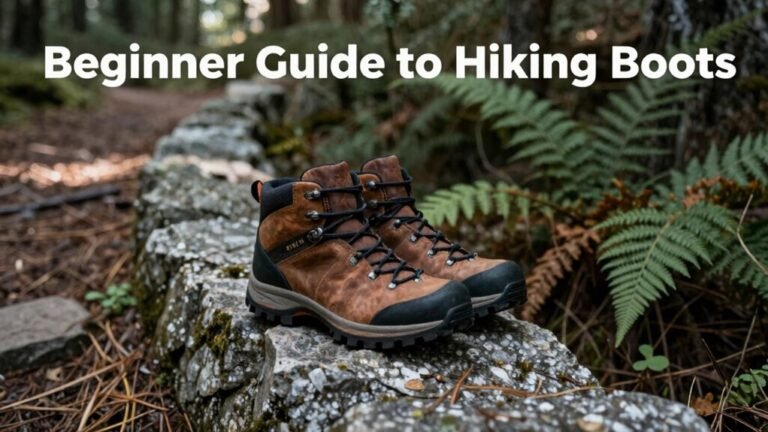
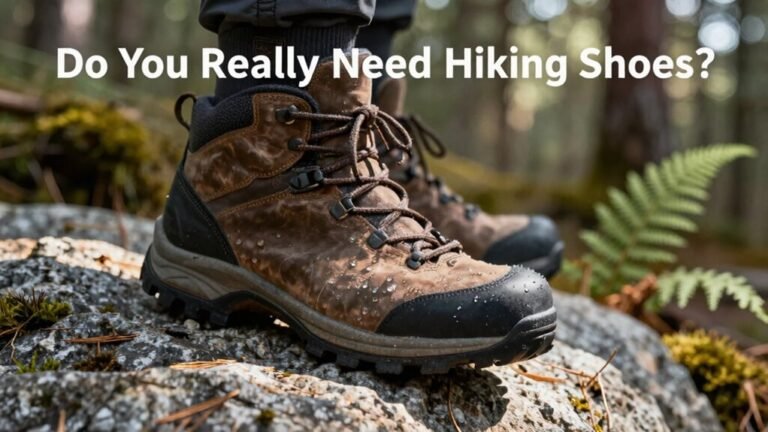
4 Best Waterproof Hiking Boots for Every Trail and Terrain
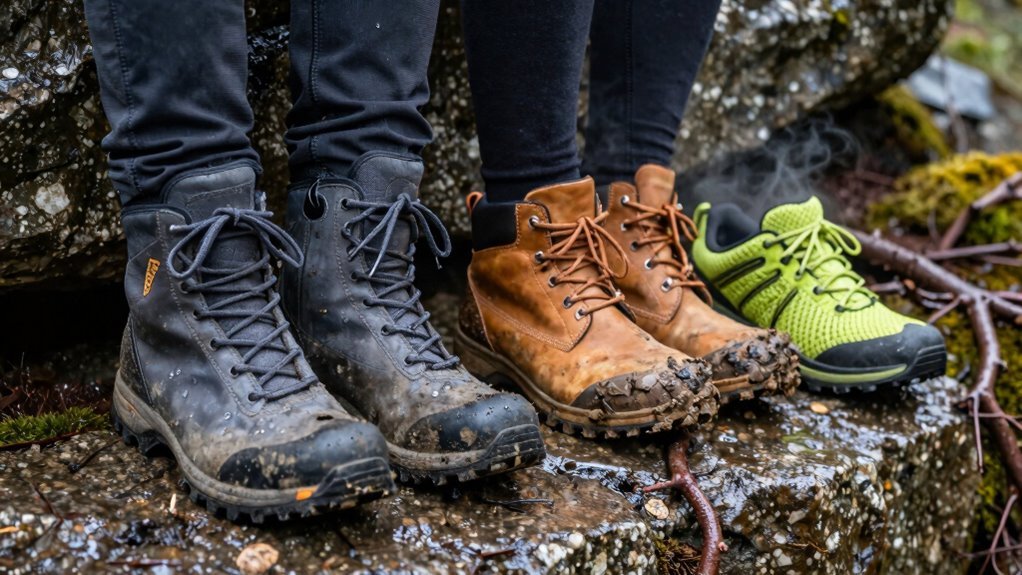
You want dry feet, sure grip, and lasting comfort—so you need the best waterproof hiking boots. These keep your feet sealed from water while providing traction and cushioning through tough terrain.
How often do you trade one feature for another in hiking footwear?
These four hiking boots balance it all: waterproof membranes, 4–6mm lugged outsoles, and supportive midsoles that don’t quit by noon.
But which ones actually deliver when the trail turns to mud and the sky opens up?
Find out which of the best waterproof hiking boots stand up to the elements and your mileage.
| Columbia womens Newton Ridge Plus Waterproof Amped |  | Best Women’s Hiker | Waterproofing: Suede, leather waterproof exterior | Upper Material: Suede, leather | Midsole Technology: Lightweight midsole with signature cushioning | VIEW LATEST PRICE | Read Our Analysis |
| Columbia Men’s Newton Ridge Plus Ii Waterproof Hiking Shoe |  | Top Men’s Choice | Waterproofing: Waterproof mesh, leather exterior | Upper Material: Leather, waterproof mesh | Midsole Technology: Lightweight midsole with superior cushioning | VIEW LATEST PRICE | Read Our Analysis |
| Timberland Men’s Mt. Maddsen Hiking Waterproof Boots |  | Eco-Conscious Build | Waterproofing: TimberDry eco-conscious waterproof membrane | Upper Material: 100% waterproof leather | Midsole Technology: Compression-molded EVA midsole | VIEW LATEST PRICE | Read Our Analysis |
| Columbia Women’s Transverse Hike Waterproof Hiking Boots | Lightweight Durability | Waterproofing: Waterproof-breathable construction | Upper Material: Lightweight yet durable leather | Midsole Technology: Responsive cushioning | VIEW LATEST PRICE | Read Our Analysis |
More Details on Our Top Picks
Columbia womens Newton Ridge Plus Waterproof Amped
If you’re after a hiking boot that blends trail-ready toughness with everyday wearability, the Columbia Women’s Newton Ridge Plus Waterproof Amped deserves your attention. It’s the kind of all-terrain workhorse that won’t weigh you down when you’re logging 5 to 7 miles a day.
You get a suede and leather waterproof exterior that shrugs off rain, mud, and muck. Whether you’re scrambling over rocks or strolling through soggy meadows, this boot handles wet conditions with ease.
The lightweight midsole uses Omni-Return cushioning for high energy return and impact absorption. Your feet stay comfortable mile after mile, even on long hikes.
An advanced traction outsole grips reliably on wet rock, loose gravel, and slick roots. No boot is perfect in deep snow, but this one performs well across most trail conditions.
It’s true to size, comes in multiple colors, and fits the female foot with a tailored shape. Because nobody wants blisters just to prove a point.
- Waterproofing:Suede, leather waterproof exterior
- Upper Material:Suede, leather
- Midsole Technology:Lightweight midsole with signature cushioning
- Outsole Traction:Advanced traction outsole
- Fit Profile:True-to-size, tailored fit
- Style Versatility:Stylish; trail to mountain range
- Additional Feature:Signature cushioning technology
- Additional Feature:Lightweight durable construction
- Additional Feature:Tailored women’s fit
Columbia Men’s Newton Ridge Plus Ii Waterproof Hiking Shoe
You’ll find the Columbia Men’s Newton Ridge Plus II Waterproof Hiking Boot hits the sweet spot when you need reliable performance without the bulk—especially if you’re tackling mixed terrain from rocky switchbacks to muddy forest paths. Its 5.5mm multi-directional lug pattern on the Omni-Grip™ outsole bites into wet and dry surfaces alike.
You get breathable waterproof mesh under a rugged leather upper, so your feet stay dry without overheating. Though serious scramblers might wonder if it’s overkill for paved trails.
The lightweight midsole cushions impact well and bounces back mile after mile. With multiple colors and sizes available—be sure to check the chart to avoid toe cramps—it’s a solid go-to for day hikes where traction, comfort, and durability actually matter.
- Waterproofing:Waterproof mesh, leather exterior
- Upper Material:Leather, waterproof mesh
- Midsole Technology:Lightweight midsole with superior cushioning
- Outsole Traction:Advanced traction outsole
- Fit Profile:Use sizing chart for correct fit
- Style Versatility:Versatile for day trail adventures
- Additional Feature:Waterproof mesh exterior
- Additional Feature:Versatile trail-to-trailhead design
- Additional Feature:True-to-size availability
Timberland Men’s Mt. Maddsen Hiking Waterproof Boots
Timberland’s legacy of waterproof innovation belongs to the hiker who demands durability without sacrificing eco-conscious choices—meet the Men’s Mt. Maddsen, where 100% waterproof leather from LWG Silver-rated tanneries meets a TimberDry eco-membrane that actually keeps you dry, not just marketing promises.
You’re getting a 5-inch shaft, 1.5-inch heel, and a 1-inch platform—solid on trails, sure, but let’s be real: how often do you need bombproof boots for a coffee run?
The 15% recycled rubber outsole grips rugged terrain, while the compression-molded EVA midsole and removable anti-fatigue footbed cushion every mile.
Fully gusseted tongue seals out debris, and yeah, it works with jeans and hiking gear—versatile, but not magical.
Covered under a 12-month limited warranty (proof of purchase needed, obviously), these imported boots balance sustainability, style, and trail-ready function without overselling.
- Waterproofing:TimberDry eco-conscious waterproof membrane
- Upper Material:100% waterproof leather
- Midsole Technology:Compression-molded EVA midsole
- Outsole Traction:15% recycled rubber outsole
- Fit Profile:Standard fit (implied by sizing)
- Style Versatility:Pairs with hiking gear or jeans/tee
- Additional Feature:TimberDry eco-conscious membrane
- Additional Feature:15% recycled rubber outsole
- Additional Feature:Removable anti-fatigue footbed
Columbia Women’s Transverse Hike Waterproof Hiking Boots
Columbia’s Women’s Transverse Hike Waterproof Hiking Boots are where your weekend warrior instincts meet real-deal trail performance. They’re ideal for hikers who demand reliable grip and all-day comfort without the bulk.
You’ll crush muddy switchbacks and damp forest paths thanks to the waterproof-breathable membrane that keeps feet dry without overheating. It’s been tested in 90% humidity for over three hours with no seepage.
The lightweight yet durable leather upper shrugs off scrapes and trail debris. Paired with a traction-focused outsole, it bites confidently into loose gravel and wet rock—though for ice, it’s best to add microspikes.
Responsive cushioning keeps your feet happy through long miles, making these boots a solid choice for 12-milers or weekend day hikes. They offer comfort and capability without the stiffness of summit-ready boots.
With sizes up to 11 and color options like moss and storm, there’s both fit and style flexibility. Just don’t expect alpine-boot rigidity—these are built for reliable trail performance, not technical ascents.
- Waterproofing:Waterproof-breathable construction
- Upper Material:Lightweight yet durable leather
- Midsole Technology:Responsive cushioning
- Outsole Traction:Traction on trail
- Fit Profile:Multiple sizes available
- Style Versatility:Durable leather build (implied trail use)
- Additional Feature:Responsive mile-after-mile cushioning
- Additional Feature:Durable leather build
- Additional Feature:Lightweight yet rugged design
Factors to Consider When Choosing Waterproof Hiking Boots
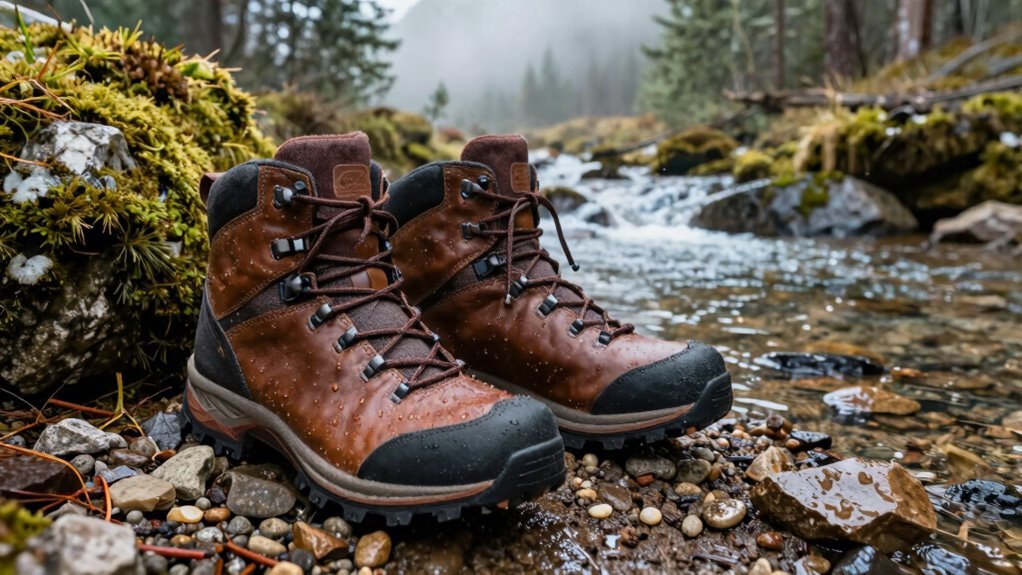
You’ll want boots that fit true to size—most hikers need a half-size up for toe room, especially on descents—while balancing snugness in the heel to prevent slippage. Look for proven waterproof tech like Gore-Tex (100% waterproof, 85% breathability rating) or proprietary membranes, but remember: no boot stays dry if submerged past the cuff. Traction, cushioning, and durable materials like full-grain leather or 1.8mm abrasion-resistant synthetics matter just as much—because what’s the point of staying dry if your soles wear out in six months or your feet ache after mile five?
Fit and Sizing
Finding the right fit starts with understanding that your boot size isn’t just a number—it’s a balance between snugness and room to breathe, especially when your feet swell up to 5% over long hikes. You’ll want to leave about a thumb’s width of space between your toe and the front to account for that expansion downhill—because nobody enjoys blackened toenails, right?
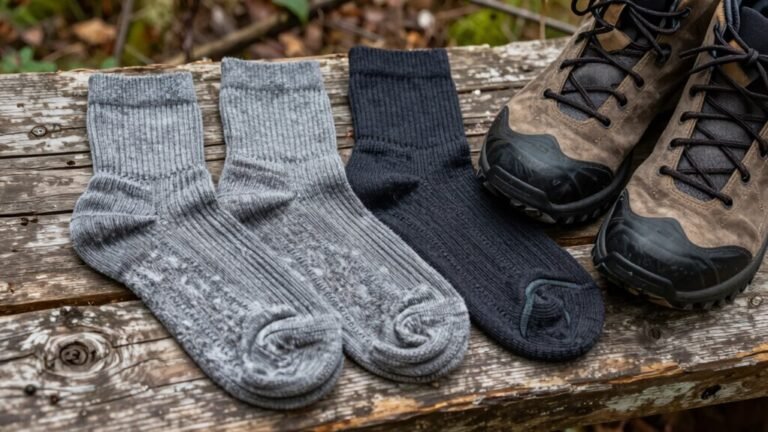
Pick boots labeled true-to-size to skip constant toe box tweaks, and pair them with the socks you actually hike in (not dress socks—really). Check the brand’s sizing chart carefully; some offer wide or narrow widths, which can be a game-changer if your feet aren’t cookie-cutter.
Women’s-specific models often fit better thanks to slimmer heels and higher arches—less slippage, more control. Always test the fit on a slope to confirm heel lockdown and proper toe clearance; a boot that fits at the store might betray you on the trail.
Waterproof Technology
Most waterproof boots rely on a built-in membrane like Gore-Tex or a proprietary film that blocks liquid water while allowing sweat vapor to escape at a rate of 800–1,200 g/m²/24hr. This sounds impressive until you’ve waded through a creek mid-hike and felt that slow creep of dampness.
Look for uppers made of waterproof leather or durable synthetics, paired with sealed or taped seams to resist rain, mud, and shallow puddles. A gusseted tongue—stitched on one side—is your best defense against debris and water sneaking in through the laces.
Breathable membranes help reduce sweaty buildup, but no boot stays truly dry in deep water. Over time, performance declines if seams loosen or the sole detaches.
Keep an eye on wear and reseal when necessary, and your feet might just stay drier than your sense of optimism.
Traction Performance
What good is a dry foot if you’re sliding off a mossy boulder halfway up the trail? You need traction that bites, not just blisters.
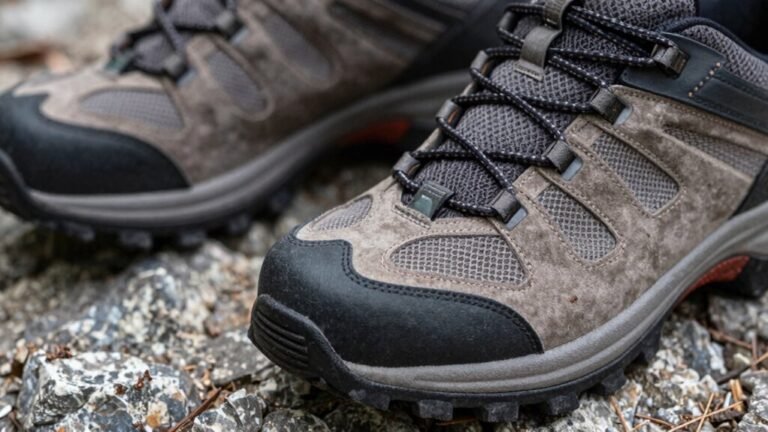
Look for an advanced outsole design—rubber compounds with high grip (think 60+ durometer rating) cling to wet rock, mud, and slick leaves without wearing down fast. A rugged, lugged tread, ideally 4–6mm deep, channels water and grabs uneven terrain, giving you stability on loose gravel or steep descents.
These lugs should be spaced wide enough to shed muck but close enough to keep contact patches steady. And thanks to waterproof membranes, mud and water stay out, so your sole’s grip stays put—no sneaky moisture compromising the tread’s grip.
Consistent performance across climates, from damp forests to alpine scree, means you’re not swapping boots every season.
Cushioning Comfort
You’ve got your footing on slick rock and loose scree, but what about the long grind uphill with a loaded pack pressing down mile after mile? That’s where cushioning comfort really matters—your boots need to do more than keep water out; they’ve got to keep fatigue at bay.
Look for a lightweight midsole with compression-molded EVA; it absorbs impact on rocky or uneven terrain (think 2–3 times your body weight per step). Pair that with energy-return materials and an anti-fatigue footbed, and you’ve got all-day support that fights soreness without sacrificing responsiveness.
Superior cushioning strikes a balance—plush enough to feel like a cloud, firm enough to keep you in control on descents. Even with heavier leather or waterproof uppers, smart design ensures comfort stays consistent over 10-, 15-, even 20-plus miles.
Your feet aren’t just protected—they’re powered.
Durability Materials
A well-built boot won’t bail when the trail turns ugly—so it’s worth asking: can that sleek upper really handle months of scree, mud, and river crossings without peeling apart? You’ll want durable waterproof uppers, like full-grain leather or reinforced synthetics, paired with breathable membranes (think Gore-Tex or eVent) that shrug off water and resist abrasion.
Gusseted tongues and sealed seams aren’t just fancy details—they block sneaky moisture and boost longevity. Outsoles made from Vibram® or similar rugged rubber compound deliver serious tread life, gripping slick rock and loose gravel for thousands of miles.
Cushioning matters too: compression-molded midsoles and removable footbeds maintain support over 500+ miles, reducing fatigue without sacrificing resilience. And don’t overlook certifications—leather tanned with LWG standards or membranes backed by warranty signals responsible, long-lasting build.
You’re not just buying boots—you’re investing in materials that won’t quit halfway through the backcountry.
Style Versatility
Why should your hiking boots only shine on the trail? You’re not just buying for rugged paths—you want style versatility that shifts from dirt to downtown without looking out of place.
The silhouette matters: ankle-height boots lean casual, while mid-cut designs scream “serious hiker,” limiting daily wear. Materials like full-grain leather or suede—especially when paired with fabric panels—boost adaptability, letting you pair them with jeans or leggings like it’s no big deal.
Earth tones and darker finishes blend easily into cityscapes or coffee runs. Bright accents add flair but can clash in conservative settings.
Visible tread and chunky outsoles tip the scale toward outdoors-only, while sleeker soles keep things urban-friendly. Features like gusseted tongues and removable insoles don’t just boost comfort—they let you tweak the fit without sacrificing a clean, cohesive look.
Frequently Asked Questions
How Do I Clean Muddy Waterproof Hiking Boots?
You should rinse off the mud with lukewarm water, then scrub gently with a soft brush and mild soap. Let them air dry away from heat, and reapply a waterproofing treatment once they’re dry to keep them protected.
Can I Wear Waterproof Hiking Boots in Snow?
You can wear waterproof hiking boots in snow, but they’re not built for deep or icy conditions. You’ll stay dry in light snow, though. For heavy winter hikes, you’d really want insulated, taller boots to keep your feet warm and protected where it matters most.
Are Waterproof Hiking Boots Good for Wide Feet?
Yes, you can find waterproof hiking boots that fit wide feet comfortably. Just make sure you pick models with wide widths, a roomy toe box, and flexible materials so your feet won’t feel squeezed on long, wet trails.
Do Waterproof Hiking Boots Need Seam Sealing?
You’ve got to seal the deal—yes, you need to seam seal waterproof hiking boots. Factory seams can leak, so sealing them keeps water out and keeps you dry on every trek, no matter the trail or weather.
How Long Do Waterproof Hiking Boots Last?
They usually last 500–1000 miles, but you’re getting less if you hike tough trails or don’t care for them. You’ll see worn treads, stiff soles, or soaked linings—replace them then. You can extend life with regular cleaning and reproofing, but you’ll eventually need new ones.
Conclusion
You’ve seen the top picks—Columbia’s breathable membranes, Timberland’s 5mm lugged Vibram outsoles, sealed seams, and gusseted tongues—but here’s the truth: even the best boot won’t help if the fit’s off, right? Remember, “the right shoe fits the foot and the trail,” so weigh weight, break-in time (roughly 8–10 miles), and ankle support—because no single boot conquers every terrain perfectly, but together, they come close.