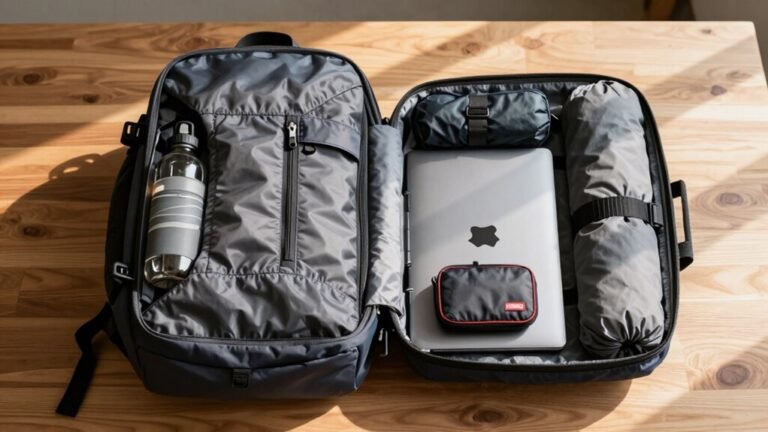
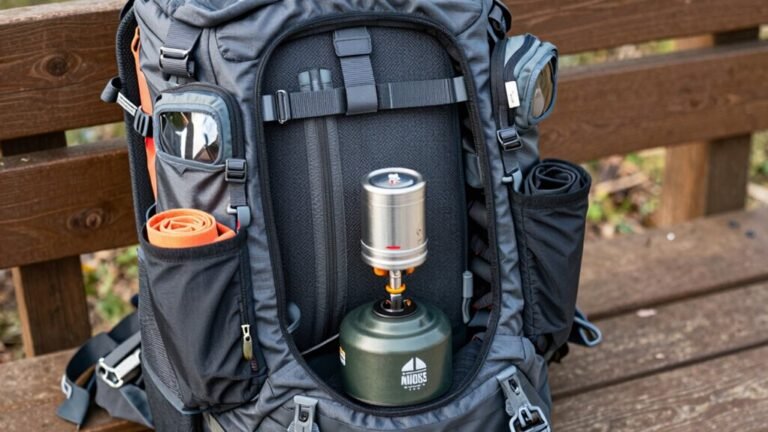
How to Choose Bear Canisters
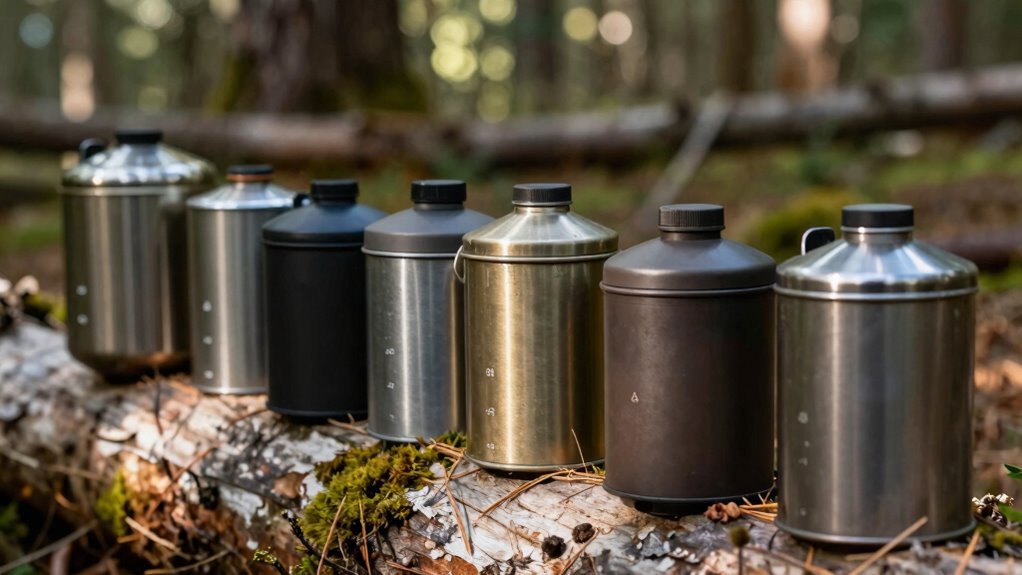
When choosing bear canisters, start by matching the size to your trip length—5 to 7 liters works well for weekend trips, while 11.5 liters is better for weeklong hikes. It’s also important to follow local regulations, such as Yosemite’s year-round bear canister requirement.
Pick a bear canister with a lightweight, pack-friendly shape that fits easily in your backpack without wasting space. Look for models certified by the Interagency Grizzly Bear Committee (IGBC), like BearVault or Garcia, to ensure reliable bear resistance.
Make sure the canister’s lid is easy to open—struggling with it on the trail can be frustrating. Reading real hiker reviews can help you choose a dependable canister, and there are plenty of great options to explore once you know what to look for.
Understand Bear Canister Regulations by Region
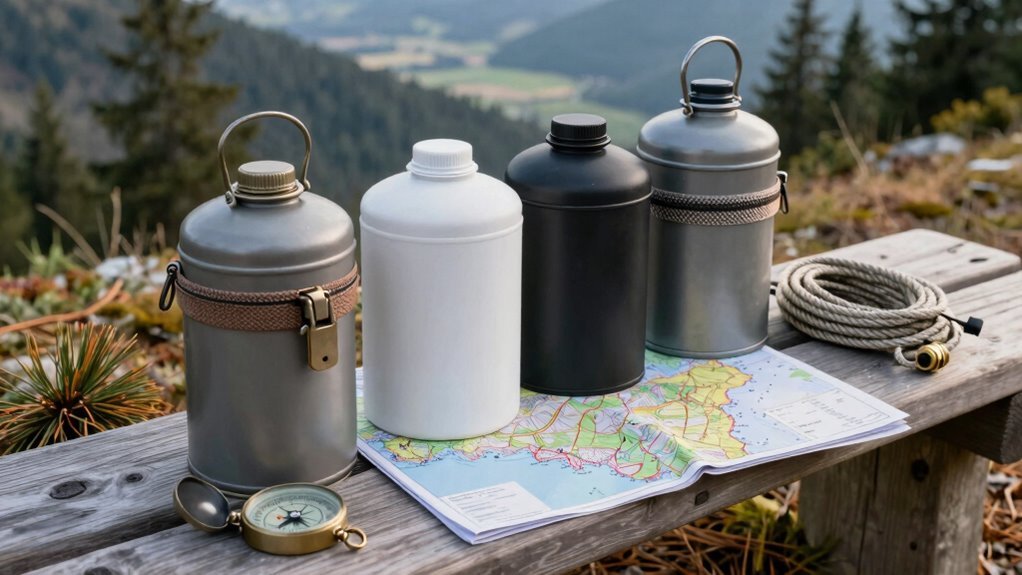
Ever wonder why so many hikers are toting what looks like a mini spaceship into the wilderness? That’s your bear canister—a non-negotiable in many spots across the U.S.
You’ll need one in Yosemite, all year, no exceptions.
Sequoia and Kings Canyon? Yep, May through October.
Even places like Lassen and Desolation Wilderness have strict rules.
Alaska’s Kathai and Kobuk Valley parks require them too, but hey, they’ll let you rent one free—nice, right?
New York’s Adirondacks, Washington’s Mt. Baker-Snoqualmie, and parts of Colorado and Utah also enforce canister rules depending on zone and season.
Skip it, and rangers can fine you up to $5,000—ouch! They might even kick you off the trail.
Better play it safe.
These rules protect you *and* the bears.
Bear canisters are required in treeless areas of Gates of the Arctic and Glacier Bay National Parks in Alaska.
Choose the Right Capacity for Your Trip Length
How much food are you planning to stash in that bear canister, anyway?
A good rule of thumb is that one day’s food takes up about 100 cubic inches—so divide your canister’s capacity by 100 to see how many days it covers.
For weekend trips (1–3 days), a 5- to 7.2-liter model’s perfect—light and just right for solo hikers or climbers napping at the base.
Doing a 4–6-day trek? Grab a 9.3-liter; it’s roomy enough for your feast without weighing you down.
Thru-hiking or packing for a week+? Go big with an 11.5-liter—it holds 7+ days of grub and keeps you bear-safe.
Pre-pack meals at home to avoid a “snack explosion” mid-trail.
And hey, sharing with a buddy? A larger can saves space and stress.
Pick smart, pack tight, and keep those bear manners sharp!
All BearVault canisters share the same 8.7-inch diameter, making pack fit predictable regardless of capacity.
Compare Weight and Portability Features
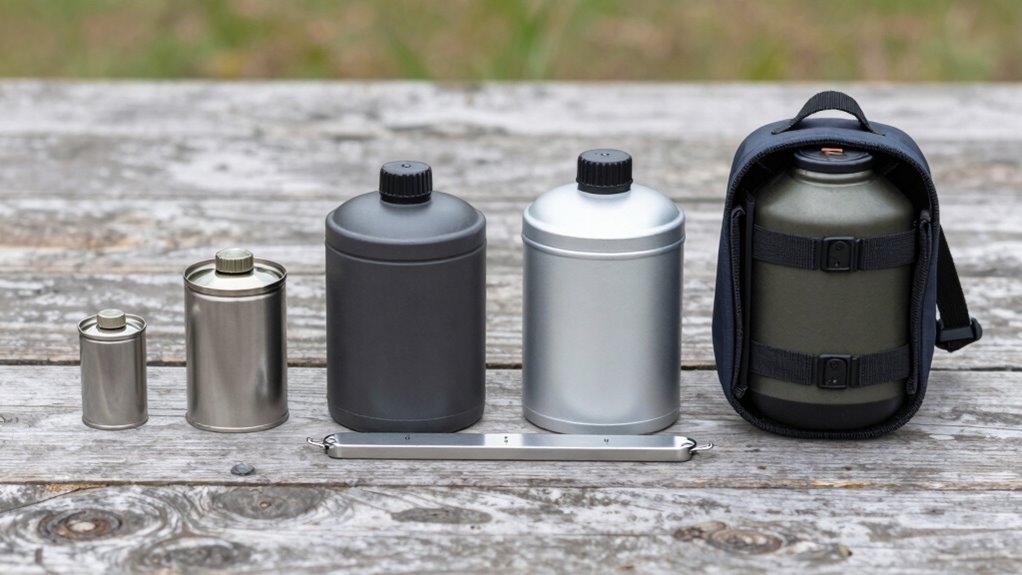
Why lug around a clunky bear canister that weighs you down like a backpack full of rocks? You want protection without the punishment on your shoulders.
Lighter models like the BearVault BV425 or Bearikade Weekender save ounces that add up fast on the trail.
Sure, bigger canisters offer more volume per weight—smart for longer trips—but don’t overlook pack fit. A bulky beast like the Bear Keg might need your whole pack to itself, while sleeker shapes slide in with ease.
Check these out:
- Imagine a shiny, see-through BV500 snug in your pack, light enough to forget—until dinner.
- Picture the slim, carbon-fiber Bearikade Weekender gliding into tight spaces like a trail ninja.
- Visualize strapping a compact BV450 sideways, freeing room like magic for your sleeping bag.
Choose smart, pack light, and hike happy.
The Grubcan Carbon 6.6 sets a new standard for ultralight bear canisters, blending a slim profile with exceptional strength thanks to its carbon fiber and Kevlar construction.
Look for Certified Bear-Resistant Models
When you’re out in bear country, you don’t want to roll the dice on whether your dinner stays yours—so skip the guesswork and grab a canister that’s proven to stand up to curious grizzlies.
Look for IGBC certification, your golden ticket that says, “Yep, real bears tried and failed!”
These canisters are tested with live grizzlies in Montana, so you know they’re tough.
Just because it’s certified doesn’t mean it’s magic—small leaks can happen, and you still gotta use it right.
Always check park rules: places like Glacier, Olympic, and the Adirondacks require them in certain zones.
Brands like BearVault and Grizzly Coolers made the official list, so grab one that’s approved.
Think of it as bear armor for your burritos—your snacks stay safe, and the bears stay wild, not wired on trail mix.
Smart choice, savvy camper!
Evaluate Durability and Impact Resistance
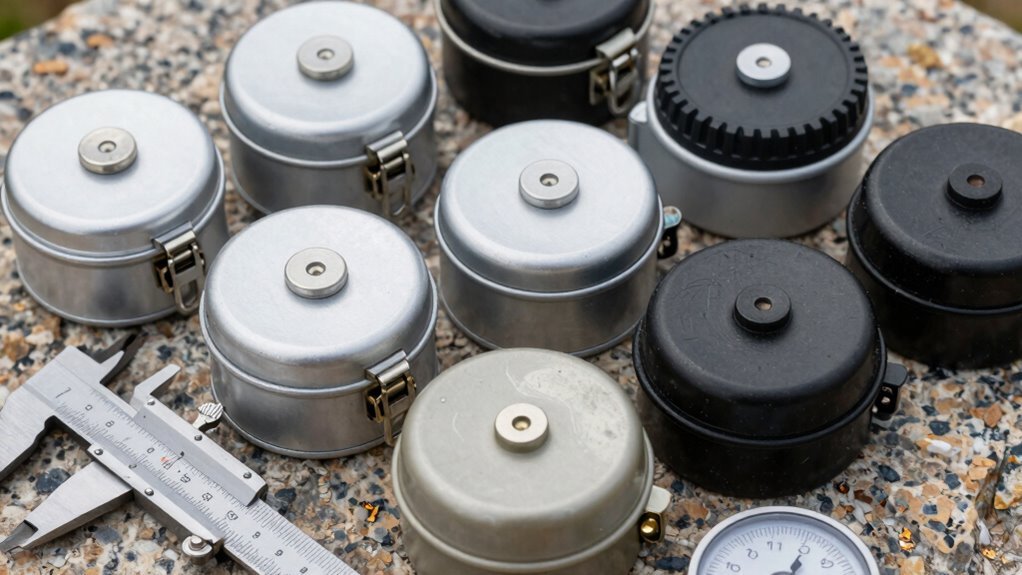
You’ve picked a canister with the IGBC stamp—smart move, that little decal means real grizzlies gave it their best shot and came up empty-handed.
But durability’s not just about bears—it’s dents, drops, and years of trail abuse too.
Your canister must survive a 100-pound weight drop and resist puncture from claw-like pressure.
Plastic breaks down in sun and cold, so replace yours every 5–7 years, and always check for recent certification.
Picture this:
- A grizzly stomping your canister like a soda can—yet it holds.
- A claw poking with over 130 pounds of force—still no hole.
- Freezing nights and blazing days, yet the plastic doesn’t crack.
Your gear’s only as tough as its weakest spot, so choose smart—because out there, second place gets eaten.
Consider Ease of Packing and Lid Design
Even if you’re not stuffing your pack like a burrito at an all-you-can-eat buffet, how you pack your bear canister makes a real difference in comfort and convenience.
You’ll want to slide it down the center of your pack, close to your back, for better balance—nobody likes wobbling like a penguin on ice.
Larger packs (58L+) handle big canisters like the BV500 horizontally, while 48L packs fit it vertically, especially with an extension collar.
The Garcia’s tapered edges sneak easily into tight spaces or even your sleeping bag compartment—clever little thing.
Smaller options like the Bare Boxer fit just about anywhere, giving you freedom to pack like a rebel.
Look for lids that open easily: BearVault’s push-and-twist works smoothly, while Garcia’s tool-needed lid can be a fussy bear.
Flip it upside down to keep rain and curious teeth out.
Smart packing? That’s your trail superpower.
Check for Odor-Control Technology
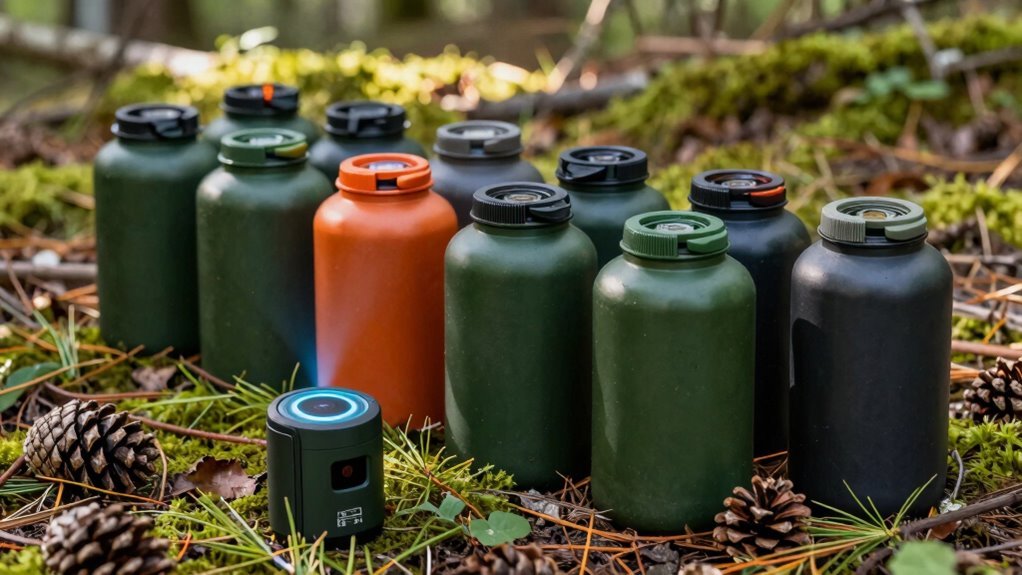
Just because your bear canister snaps shut tight doesn’t mean dinner’s secret is safe from a nose with superhero powers.
Bears can sniff out food through sealed cans, thanks to 600 million scent receptors—way more than your dog or even a bloodhound.
That’s why you’ve gotta fight smell with smarts.
Boost your canister’s defense by using odor-control tech like OPSAKs inside.
They’re not magic, but they cut down scents dramatically, sometimes making bears shrug and wander off.
Pair that with good habits, and you’re golden.
Here’s how to stay one step ahead:
- Slide stinky snacks into an odor-proof sack like a ninja hiding dinner.
- Wash your canister’s outside with bleach wipes—gross smells stay on your hands, not the plastic.
- Imagine a curious bear sniffing near but losing interest—your clean setup just saved the night.
Double up, stay smart, and sleep easy.
Assess Balance and Stability When Stored
Set your bear canister down with care, because where you place it can mean the difference between a peaceful night and a midnight bear inspection.
Keep it at least 100 feet from camp—think 70 big steps, downwind, like you’re hiding snacks from a nosy roommate.
Plonk it on level ground so it won’t roll away like a runaway soda can.
Avoid cliffs and streams; you don’t want Mr. Bear batting it into a river like a soccer ball.
Always leave it on the ground—no tree-hanging drama.
If you’re on a slope, wedge it between rocks or logs, or angle it uphill so it stays put.
Flip it upside-down if rain’s rolling in—keeps the lid sealed and deters chew-happy bears.
And hey, some canisters double as camp stools (rugged multitaskers!).
Just don’t over-tighten the lid—two clicks past stopper’s perfect.
Wake up, grab it, and laugh at any puzzled bear paw prints nearby.
Review User Feedback and Real-World Performance
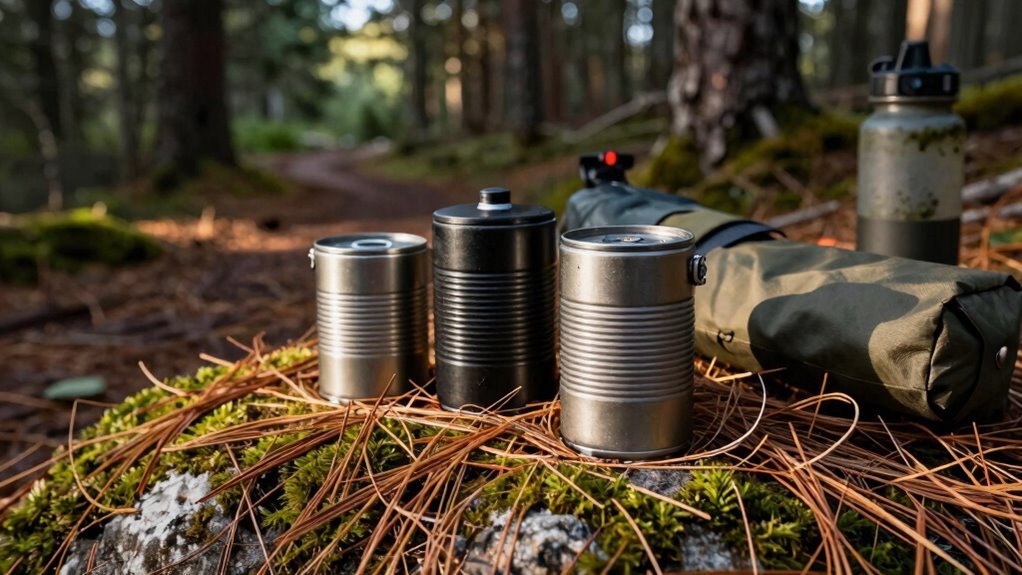
When it comes to real-world performance, your bear canister isn’t just a container—it’s your camp’s bouncer, keeping both snacks and wildlife in their rightful places.
Users love the BearVault BV500’s clear walls—you can spot your chili mix without fumbling open the lid, even after a long stretch on the John Muir Trail.
The Garcia holds its own with tough, scratch-resistant build and a shape bears can’t crack, even if they try.
But watch out—BearVault’s twist lid can be a knuckle-buster when your hands are cold or gloved.
- Picture your BearVault doubling as a camp stool while you sip morning coffee, lid flat and stable beneath you.
- Imagine a hungry bear nudging a Garcia, then giving up, baffled by its smooth, pry-proof shell.
- Visualize stuffing a week’s worth of trail meals into a Counter Assault Bear Keg, packed tight like a Tetris win.
Frequently Asked Questions
Can I Use a Bear Canister for Food Storage in Bear-Free Areas?
You can absolutely use a bear canister in bear-free areas—and you should!
It keeps raccoons, mice, and curious marmots out of your snacks, even where bears don’t roam.
Think of it as a mini fortress for your food.
Plus, it’s lightweight, easy to stash, and saves you from waking up to a wrapper-covered campsite.
Your midnight munchies stay safe, and you get peace of mind—no surprise critter roommates!
Are Bear Canisters Required on International Hiking Trails?
You don’t usually need bear canisters on international hiking trails—most places, like the Tour du Mont Blanc or New Zealand’s Milford Track, don’t have bears at all!
Without furry food thieves around, you can skip the heavy metal lunchbox.
Just check local rules, ’cause every trail’s different.
When in doubt, hang your snacks or use a dry bag.
Easy, lightweight, and way more fun than wrestling a canister uphill!
Do Bear Canisters Protect Against Other Animals Like Raccoons or Rodents?
You bet they do—bear canisters aren’t just for bears, they’re like Fort Knox for your food!
Raccoons can’t crack the latches, rodents can’t chew through the tough shell, and let’s be real, your snacks are safer than a squirrel dodging traffic.
With snug seals and sturdy builds, these bad boys lock out pests hungry for a midnight feast.
Can I Carry a Bear Canister as a Carry-On Item on Planes?
Yes, you can totally bring a bear canister on board—just keep it empty and within size limits.
Airlines like JetBlue allow it if it fits overhead (22x14x9 in) or under the seat (17x13x9 in).
TSA might eyeball it curiously since it’s a dense cylinder, but no liquids inside means less hassle.
Pack your stove too, and skip the bear spray—it’s a no-go in carry-ons.
Easy, right? Adventure awaits!
Is It Safe to Store Toiletries Inside a Bear Canister?
Yes, it’s not only safe, but totally smart to stash your toiletries in a bear canister—coincidentally, that minty toothpaste might as well be gourmet bear candy! You’re locking up scents bears crave, so they don’t crash your camp like uninvited guests.
You keep tubes, balms, and sprays sealed tight, avoid DEET leaks, and voilà—your camp stays drama-free, odor-free, and bear-free. Smart move, smarty pants!
Conclusion
You might worry a bear canister is overkill, but trust us—it’s your campsite’s superhero. Pick the right size, weight, and bear-certified model, and you’re golden. They’re tough, stable, and way smarter than a snack-filled backpack. Plus, nothing says “I love my vacation” like not sharing it with a curious bear. Stay safe, keep your food secure, and adventure on—smarter, lighter, and snack-ready!
References
- https://blog.outdoorherbivore.com/camp-tips/where-bear-canisters-are-mandatory-in-the-us-parks-forest/
- https://www.fs.usda.gov/r05/laketahoebasin/alerts/bear-canisters
- https://bearvault.com/bear-canister-requirements/
- https://dec.ny.gov/nature/animals-fish-plants/black-bear/management/bear-resistant-canisters
- https://www.pcta.org/discover-the-trail/backcountry-basics/food/bear-canister-protecting-your-food/
- https://igbconline.org/be-bear-aware/food-storage/
- https://www.nps.gov/olym/planyourvisit/wilderness-food-storage.htm
- https://appalachiantrail.org/experience/hike-the-trail/essential-skills/safety/bears-food-storage/
- https://www.triplecrownoutfitters.com/page-1
- https://bearvault.com/what-size-bear-canister-do-i-need/