How to Keep Hydration Working in Bad Weather
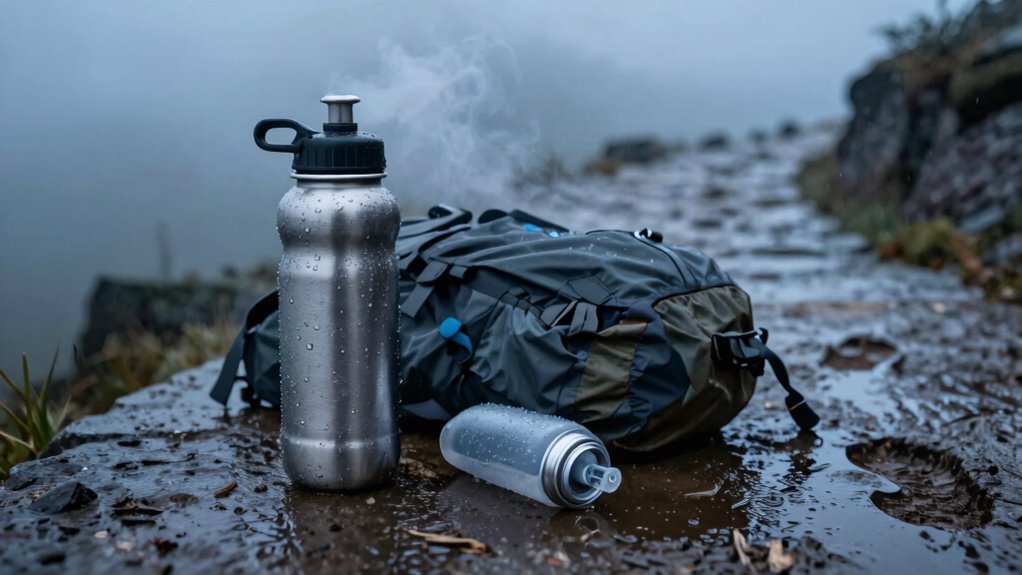
You lose water all day, even in cold weather, so stay on top of hydration by sipping early and often—don’t wait for thirst to kick in. Keeping hydration working in bad weather starts with consistent fluid intake, regardless of temperature.
Bundle up with an insulated hydration vest to protect your water supply from the cold. Keep tubes secured and use insulation sleeves to prevent freezing during outdoor activities.
Watch for sneaky signs of dehydration like dry lips, fatigue, or brain fog, especially when bundled up. Swap dehydrating sodas for water and boost intake with juicy snacks like oranges or cucumbers.
Warm drinks like herbal tea or broth can help maintain hydration without the chill. Staying on top of your fluid needs ensures your body stays resilient when the weather turns ugly.
Understand How Weather Affects Your Hydration Needs
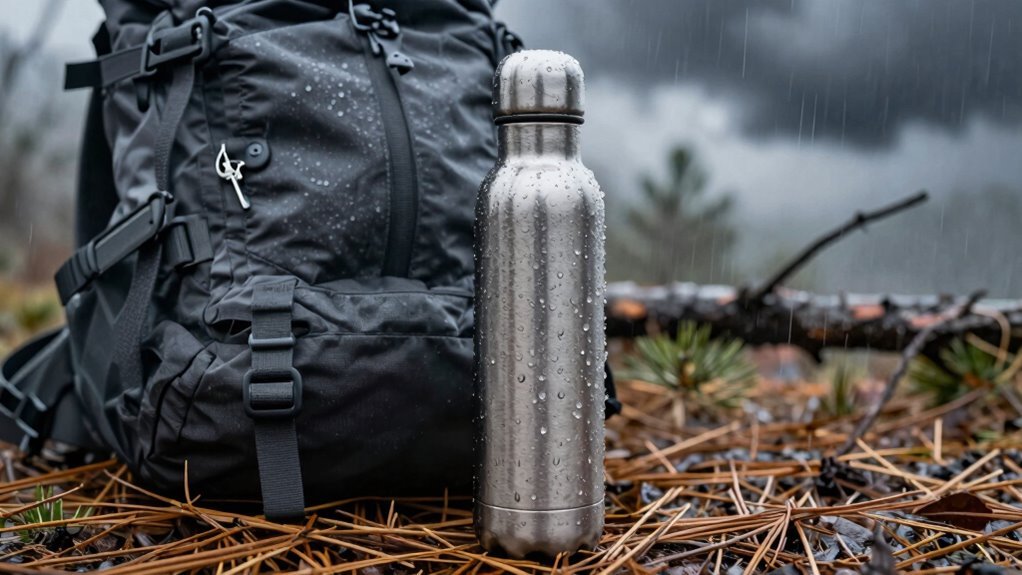
Ever wonder why you’re parched after a winter hike but barely notice it during a sweaty summer afternoon?
That’s because in cold weather, your brain gets tricked—blood shifts to your core, making you feel like you’ve had enough water even as you quietly lose fluids through breath, sweat, and extra peeing.
Meanwhile, summer heat cranks up your sweat, but humidity’s the real sneak attack: when the air’s thick and muggy, sweat won’t evaporate, so you overheat faster and drain your tank.
You’re losing water all day, every day, whether you’re shivering or sweating bullets.
Drink 8 ounces every 15-20 minutes when you’re active, but don’t go overboard—keep it under 48 ounces per hour.
Stay sharp, stay wet, and remember: your body’s always thirsty for a sip, even when it’s not begging.
Proper hydration includes replenishing electrolytes, not just water, especially in hot conditions where higher perspiration rate leads to rapid fluid and electrolyte loss.
Recognize the Hidden Signs of Dehydration in Cold Conditions
You mightn’t feel like you’re sweating on a chilly winter hike, but your body’s still losing moisture—fast.
Breathing in dry, cold air zaps hydration with every breath, and you’re not even noticing.
Watch for sneaky signs: dry mouth, chapped lips, or skin that feels tight and itchy—your body waving a tiny white flag.
If you’re sluggish, foggy, or oddly irritable, that’s dehydration playing mind games.
Headaches and dizziness? That’s your cue to pause and sip.
Dark yellow pee? Uh-oh—time to drink up.
Muscle cramps that won’t quit aren’t just from the cold; they’re a red alert.
And guess what? Your thirst meter freezes more easily than the trail.
So don’t wait to feel parched.
Stay sharp, stay wet, and keep your winter adventures safe—and way more fun.
Persistent throat dryness or itching indicates dehydration, especially as indoor heating reduces air moisture and worsens discomfort throughout the day due to throat dryness & itching.
Choose the Right Hydration Gear for Rain and Snow
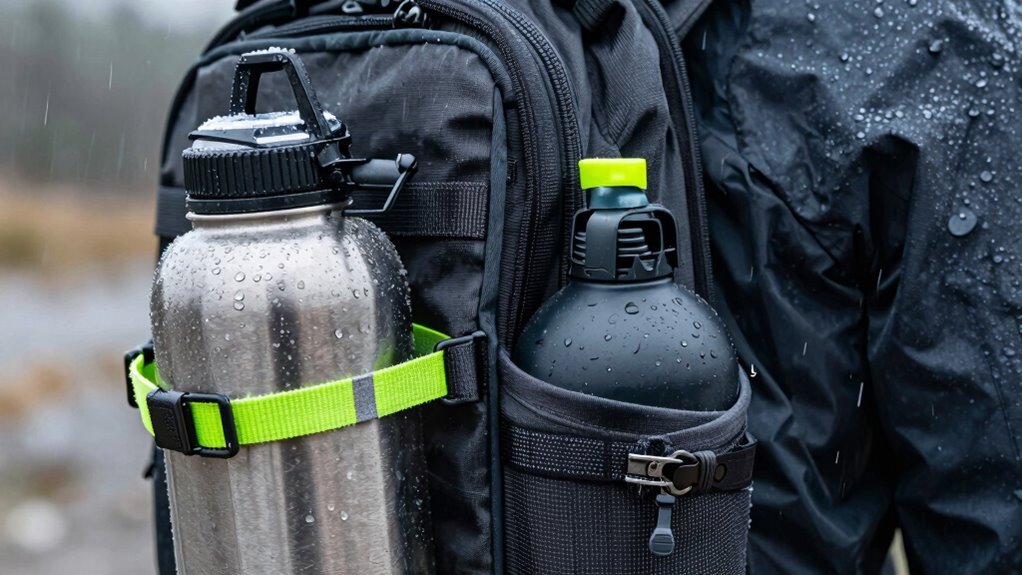
Where do you draw the line between soggy discomfort and staying perfectly hydrated in the rain or snow?
It’s simple: gear up right.
Choose a hydration vest with insulated bladders and tubes—like the Salomon ADV Skin 12 or The North Face Summit Series—to keep water flowing, not freezing.
Insulated hoses shield your sip from icy temps, while sheathed tubes shrug off snow and UV rays like a pro.
Look for smart routing from pack to mouth so tubes stay dry and secure.
Elastic valve holders stop flasks from bouncing in the wet.
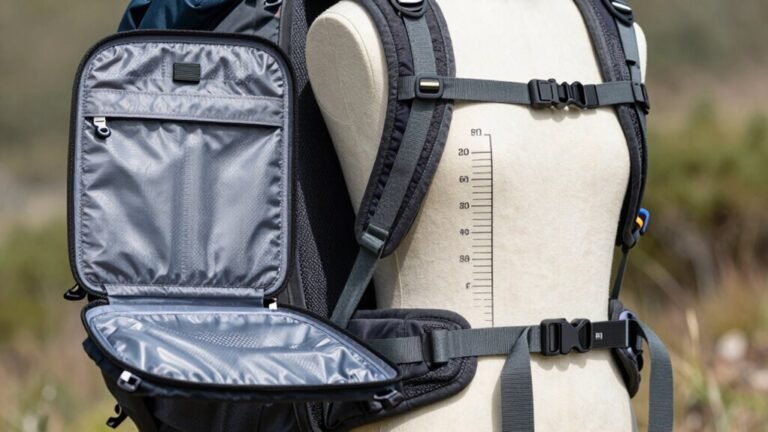
Pick a 10–12 liter vest for long hauls—roomy enough for water, layers, and snacks without turning into a pack mule.
With seven handy pockets, like on the Ultimate Direction Xodus, you’ll grab what you need fast—no fumbling in the sleet.
And thanks to breathable, moisture-wicking fabrics like FlashDry, your vest won’t turn into a soggy sofa.
Storm Valve mouthpiece ensures reliable flow without biting, even in freezing conditions.
Keep Your Water From Freezing in Subzero Temperatures
How do you keep your water flowing when the thermometer plunges below zero?
Easy—keep things toasty!
Set your thermostat above 55°F, even if you’re not home much.
Insulate pipes in drafty spots like basements and crawl spaces, and seal cracks so icy air can’t sneak in.
Leave cabinet doors open under sinks—let that warm air cuddle your pipes.
If it’s brutally cold, let a faucet drip steadily, especially one far from the main valve—moving water won’t freeze, just like your coffee won’t cool if you’re always sipping.
For extra safety, shut off and drain outdoor spigots before winter hits.
If a pipe freezes, thaw it gently with a hair dryer—no torches, unless you want a water geyser show!
Stay smart, stay warm, and keep that flow going—you’ve got this!
Build a Hydration Routine That Works Indoors and Out
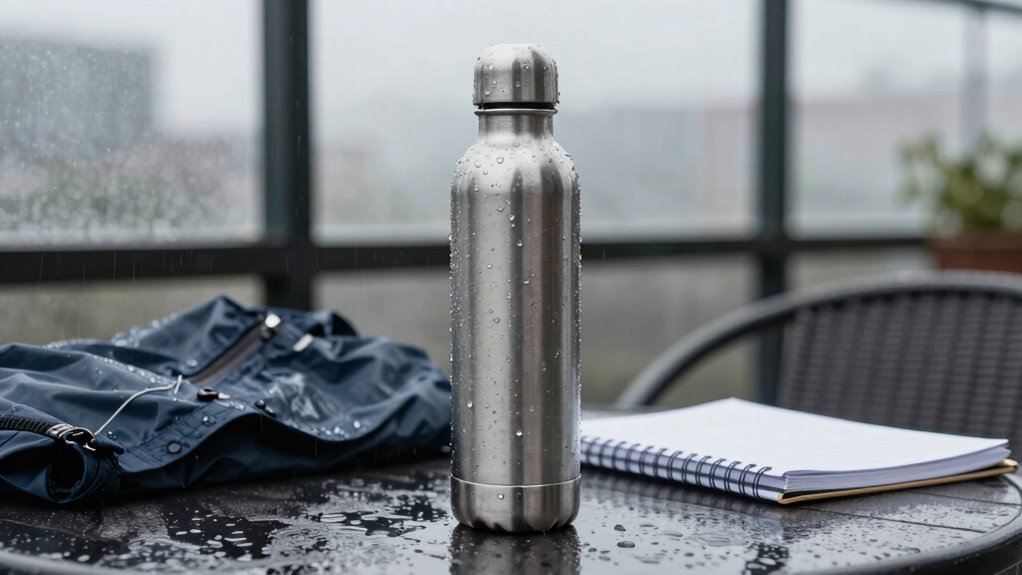
Even when the weather outside is frightful, staying hydrated doesn’t have to be a chore—or a snoozefest.
You’ve got this!
Start by grabbing a smart water bottle or using a hydration app that pings you like a cheerful bestie saying, “Hey, drink up!”
These tools track your sips and tweak goals if it’s blazing hot or bone dry.
Keep that reusable bottle close—on your desk, in your bag, or next to your couch cushion during Netflix binges.
Sip gradually all day; don’t chug like you’re in a race.
Snack on juicy foods like watermelon, cucumbers, or oranges—they’re sneaky hydration heroes.
And hey, skip the soda and extra lattes; they’ll leave you thirsty.
Replace them with water or flavorful mocktails.
Build a routine that flows with your day, rain or shine, snowstorm or heatwave.
Hydration? You’re totally nailing it.
Use Warm Beverages to Stay Hydrated and Comfortable
You’ve nailed your hydration game indoors with smart bottles and juicy snacks, but when frost is nipping at your nose, it’s time to warm things up—literally.
Cold water? Yeah, right—when it’s freezing, sipping something steamy just hits different.
Warm drinks don’t just feel cozy, they actually keep you hydrated by tricking your brain into drinking more—even when you’re not thirsty.
- Tea or cocoa makes hydration delicious, so you sip more without even noticing.
- Hot lemon water wakes up your gut and gives your immune system a high-five.
- Warm fluids reduce shivering, keep your brain sharp, and stop headaches before they start.
Your body loves heat when the weather turns harsh, so grab a mug and let comfort do the work. Who knew staying hydrated could feel this good?
Monitor Fluid Loss During Wet or Windy Activities
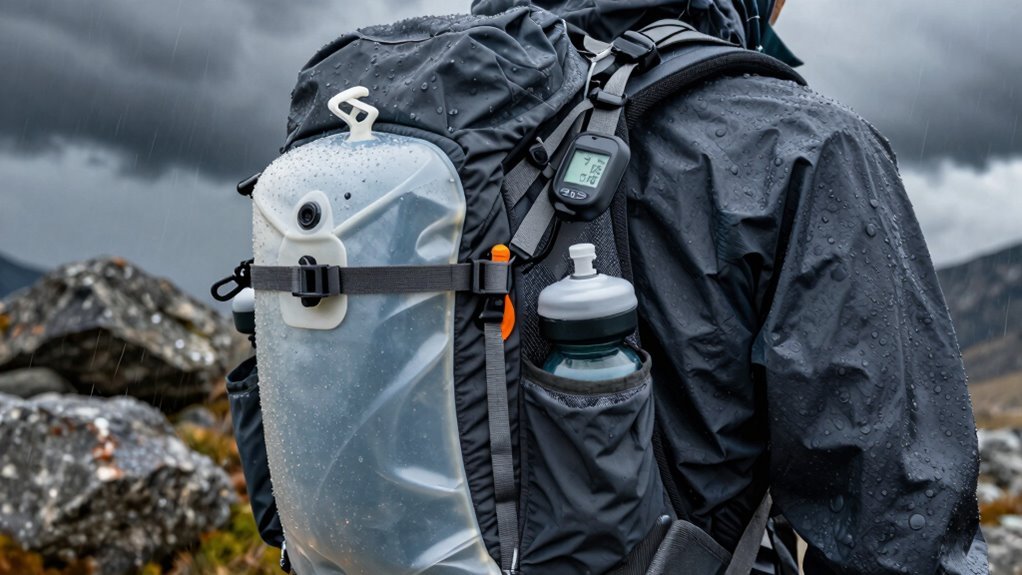
When the wind’s howling and rain’s coming sideways, staying on top of your hydration mightn’t be top of mind—but it should be.
You’re losing fluids faster than you think, even if you’re not sweating buckets.
Sweat hides under wet clothes, and rain messes with post-activity weight checks, so don’t rely on clothing weight—it’s a soggy lie.
Instead, track your body weight before and after workouts (and account for anything you drink).
Wearable sensors can help, using heart rate, skin temp, and sweat clues to guess fluid loss—pretty smart, right?
And hey, breathing hard in cold air?
You’re losing over 11 ounces of water per hour just through breath—talk about invisible loss!
Use WBGT sensors every 15 minutes to read the environment, not just the weatherman.
Pair that with urine color and thirst, stay curious, and keep sipping.
Stay sharp, stay wet (in a good way).
Frequently Asked Questions
Can I Get Dehydrated While Skiing in Cold Weather?
You can absolutely get dehydrated while skiing in cold weather, even if you don’t feel thirsty. Cold air dries out your breath, you sweat more than you realize, and your body dumps extra water through urine. All that adds up fast. You’re losing fluids without noticing, so don’t wait until you’re parched—grab a drink now and keep those gears running smoothly. Stay fueled, stay sharp, and ski like a happy snow yeti!
Does Wearing a Hat Reduce My Hydration Needs?
Yes, wearing a hat can slightly reduce your hydration needs—it’s like giving your body a little break!
By shielding your head, you lose less heat and sweat less, especially in the sun or wind.
That means you’ll likely drink a bit less, but don’t ditch your water bottle yet!
You still lose fluids, and skipping sips leads to trouble.
Think of your hat as a sidekick, not a superhero.
Hydrate like a champ, hat or no hat!
Is Sports Drink Better Than Water in the Rain?
Yeah, sports drink is better than water in the rain—if you’re sweating hard.
Rain might feel cool, but humidity hides sweat loss, and you’re still ditching electrolytes.
A sports drink keeps your body balanced, boosts energy, and makes hydration stick.
Think of it as water with a sidekick.
Water’s great for light workouts, but if you’re grinding in wet heat, grab the sports drink.
Your muscles will high-five you later!
How Often Should I Replace Electrolytes in Snow?
Every hour, you should swap in 1–2 electrolyte capsules while romping in the snow.
Cold keeps you from feeling thirsty, so don’t be fooled—sip fluids and replenish consistently.
Pair water with electrolytes to stay balanced, especially during long sledding sessions or ski runs.
Think of it like snack time for your cells: skip it, and you’ll face a frosty fizzle instead of fun!
Can Dehydration Cause Frostbite More Easily?
Yeah, dehydration can totally make frostbite sneak up on you faster.
You’re not just losing water—you’re slowing blood flow to your fingers and toes, which cold weather already does.
Without enough fluids, your blood gets thick, circulation tanks, and frostbite risks spike.
No thirst? That’s a winter trick.
Your body’s crying for water even when it’s not asking.
Conclusion
You’re not climbing Everest, but cold, wet weather still turns hydration into a sneaky game—like outsmarting a fox in mittens. Keep sipping, gear up smart, and let warm drinks be your cozy sidekick. Frosty temps can’t win if you stay fluid, flexible, and a little playful. Stay loose, stay hydrated, and let every sip be a tiny victory dance against the chill. You’ve got this!
References
- https://www.hydratis.co/en/blogs/blog/climat-et-deshydratation
- https://www.houstonmethodist.org/blog/articles/2025/jul/how-to-stay-hydrated-in-humid-weather/
- https://blog.providence.org/toyourhealthblogs/healthy-hydration-what-you-should-know-about-water
- https://www.uhhospitals.org/blog/articles/2025/11/why-hydration-matters
- https://www.ncbi.nlm.nih.gov/books/NBK232870/
- https://extension.psu.edu/hydration-in-cold-weather/
- https://www.sqwincherindustrial.com/2025/02/15/hydration-challenges-in-cold-weather-what-you-need-to-know/
- https://www.musc.edu/content-hub/News/2022/09/13/Heat-Humidity-and-Hydration
- https://www.cdc.gov/niosh/mining/UserFiles/works/products/training/keepingcool/2017-126_hydration.pdf
- https://erofdallastx.com/blog/symptoms-of-dehydration-in-winter/