How to Keep Hiking Socks Working in Bad Weather
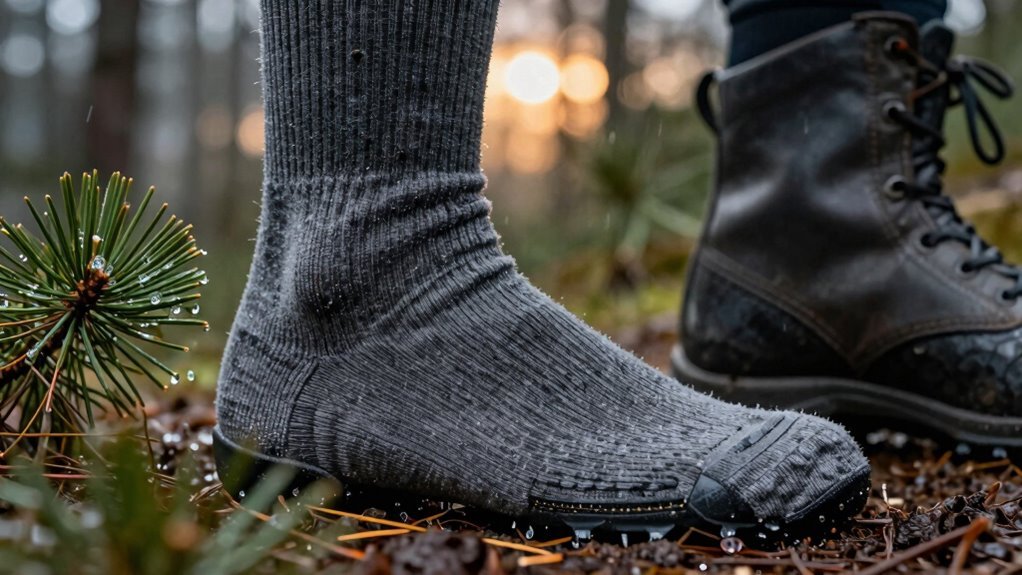
Ditch cotton socks—they’re basically sponges for trouble—and switch to merino wool or synthetic blends. These hiking socks wick sweat like magic, stay comfortable when wet, and resist odor even on long, wet hikes.
Layer a thin liner sock under a cushioned outer sock to reduce friction and prevent blisters in damp conditions. Top it off with waterproof gaiters to keep your hiking socks dry by blocking mud, puddles, and debris.
Pack extra pairs of hiking socks and change into dry ones when your feet feel swampy. Let damp socks air-dry on your pack during the day. Your feet won’t just survive the storm—they’ll thank you with every step ahead.
Choose the Right Sock Material for Wet Conditions
Ever wonder why your feet stay dry and comfy on soggy trails while others are sloshing around like walking sponges? It’s all about picking the right sock material.
Ditch cotton—it traps moisture and screams blister city.
Instead, grab merino wool for long hikes; it breathes well, handles sweat like a champ, and won’t stink after day three.
It absorbs moisture without feeling wet, so your feet stay comfy in cold or heat.
On hotter, mucky trails? Synthetic socks shine—they wick sweat fast and dry quicker than you can say “stream crossing.”
They’re tough, too, resisting trail wear and tear.
Love the best of both? Try a blend: merino for comfort and temperature control, synthetics for durability and speed-drying.
Either way, your feet aren’t just along for the ride—they’re geared up, ready, and happily dry, no matter how wild the weather turns.
odor resistance helps keep your socks fresh even after long rucks in wet conditions.
Layer Your Socks for Extra Protection
When the trail turns sloppy and your boots start feeling like boats, don’t just tough it out—layer up your feet like a pro.
Adding a smart sock system keeps you warm, dry, and blister-free, even when mud’s doing its best to ruin your day. Here’s how to nail it:
- Start with a thin liner sock made of merino wool or synthetic blend—it wicks sweat fast and cuts friction like a tiny bodyguard for your skin.
- Pull on a thick wool outer sock for cushioning and insulation; it’s like a cozy fortress against cold, wet trails.
- Make sure both socks let your toes wiggle—no squeezing allowed—so circulation stays strong and comfort stays high.
This dynamic duo slashes blister risk nearly in half, according to military studies, and works in rain, snow, or sweaty summer hikes. Skip the cotton—seriously, it’s basically kryptonite for hikers’ feet.
The 2-Sock Strategy is proven to maximize warmth while preserving boot flex and reducing blisters.
Use Waterproof Gaiters to Block Moisture
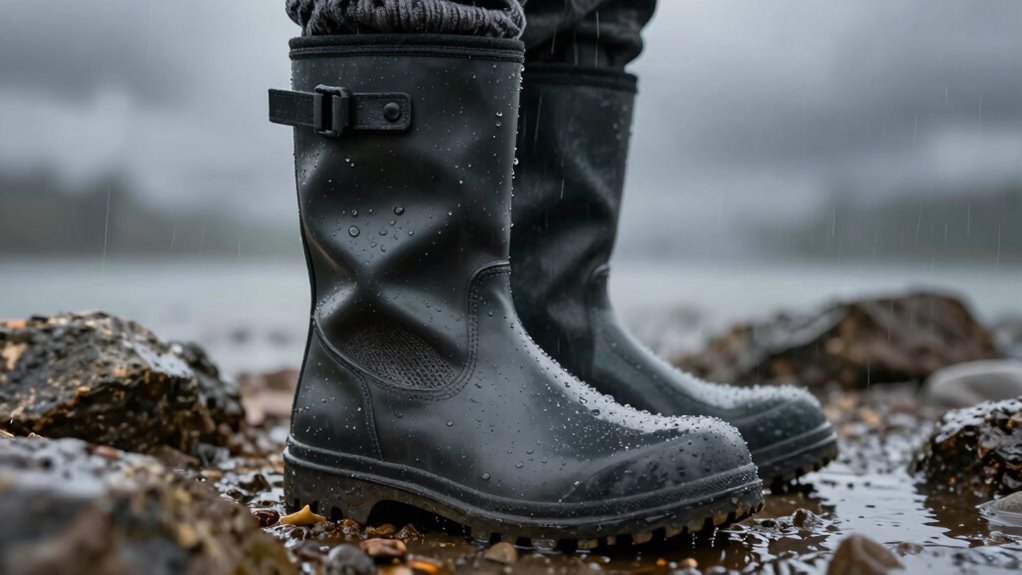
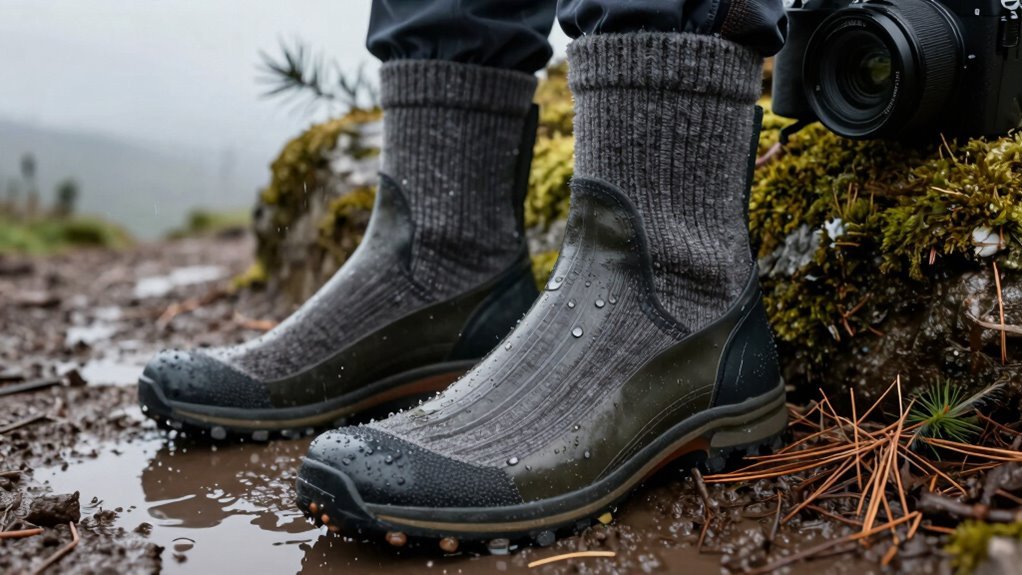
Pull on a pair of waterproof gaiters and laugh in the face of soggy socks—those splashy stream crossings and slushy meadows won’t stand a chance.
You’ve got GORE-TEX or coated nylon guarding your ankles like a tiny, fearless knight.
Whether it’s rain-heavy brush, muddy talus, or waist-deep puddles, these bad boys block moisture that’d otherwise sneak past your shoes.
Zip up with YKK closures, tighten the ankle cord, and boom—you’re sealed in.
Mid-height? Calf-length? Pick your adventure.
Models like Rab Latok GTX or Kahtoola RENAgaiters breathe during steep climbs, so you stay dry inside and out.
Even in wind-driven sleet or alpine slush, your feet stay cozy.
Sure, heavier protection means less airflow, but with smart fabrics, sweat sneaks out instead of pooling.
Think of gaiters as your sock’s bouncer—nothing wet gets past them.
Stay light, stay dry, and keep striding, rain or snow.
Your feet will thank you later—no soggy surprises!
Some top models weigh as little as 4.0 oz, making them ideal for long hikes where every ounce counts.
Pack Extra Socks and Rotate Them Strategically
You’ve got your gaiters locked in tight, keeping the outside wetness out—but what about what happens inside your shoe?
Sweat builds up fast, and soggy socks are a one-way ticket to blister city.
Don’t let damp feet wreck your hike—pack extra socks and rotate them like a pro!
- Bring at least three pairs of merino-blend socks (30–60% wool, rest synthetic) so you can switch every few hours or after stream crossings.
- Change immediately if your feet feel clammy—dry feet stay happy, warm, and blister-free, even when it’s pouring.
- Store spares in a waterproof bag and let body heat work overnight; thin merino dries surprisingly quick on the move.
With smart rotation, your feet won’t just survive the storm—they’ll strut through it, cozy and confident, like nature’s tiny superheroes.
Dry Your Socks While on the Trail
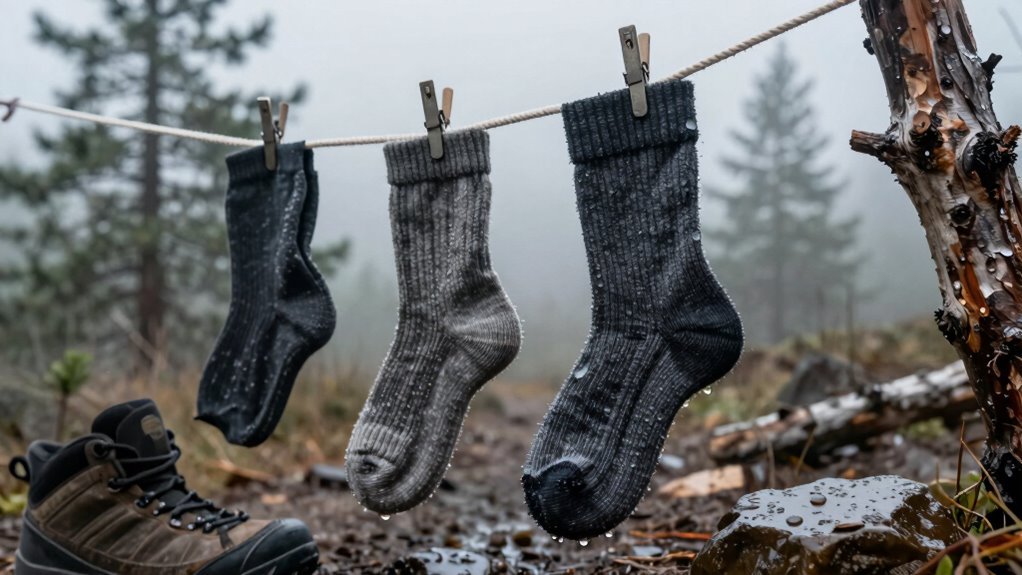
Letting wet socks linger is like handing blisters a VIP pass—so don’t just stash them in your pack and hope for the best.
Instead, get creative while on the move!
Rinse them in a clear, knee-deep stream, gently press out water (no wringing!), then clip them to your pack with a carabiner to catch sunlight and breeze.
If it’s sunny, lay them on warm rocks or hang them on a paracord line between trees.
Rotate them every hour for even drying—you’ll be amazed how fast they dry in 2–4 hours.
Got damp socks at camp? Wear them during a break; your body heat and foot traffic will dry them in no time.
Merino wool fans, rejoice—air them out overnight and they’re good to go.
Just keep them off the ground, use airflow, and skip the wringing.
Think of it as sock spa time—because happy feet make for killer hikes!
Maintain and Care for Socks After Hiking
While your hike might be over, your socks’ aftercare is just getting started—treat them right, and they’ll stick with you for miles to come with
question:
{“text”: {“text”: “text”: {“text”: “your generated answer:
{“text”:
“`json { “You can’t sit as well provided. on the future of the company and:
“`json
{“text”: “generated:
{“text: {“text”: “{“text”: {“
{” {“text”:
{“text”: “a man is kayaking
“`json
{“text”: “Researchers are analyzing data:
{“text:
{
“text:
{“text”: “your:
“`json:
; “other:
“`json
,
{“text”: “{” “text:
{“text”::
“text”: {
“{“text”: “a man is:{“text”::
{“text”:
{“text”:
{“text”:
{“text”:
“`json:
; “other:
“`
“`json
{
“text”: “{” “text:
{“text”:
“`json
{“text”:
“A man is still:
“`json
{“text”:
{“text”:
{“text”: “A man is in financial:
“`json
{
“text”: “a man is:{“text”::
{“text”:
{“text”:
{“text”:
{“text”:
“`json
{
“text”: “A man:
{“text”:
{“text”:
“your
{“text”: “A person posing next”, ” a f04 $2 “The person with a dollar amount paid $1
7 people went to an event $ a boy lying down
6
1 non-hed
61
{“text”: “New
{“text”:0.41 people
6 ” A $ 6.1 20
1 ” A $
{“text”: $2 people went from the person $
:
“A woman
9 in
{ 4 $ ” a$ ” A boy:
“A person is $ ” A $ 67 ” A $ 3 “
{“text”:
{“text”: ” a $
Basic “:
” “Simple: ” ” $
{“text”: ” 9 $:
{“text”: {“text”: A $
{
7 “The student:
“A
{“text”: 1 A $ {0} $ 6 a
“`
{“text”: “$6”
{“Text”: 6
“$ 6
5 (Note $: The (
2
“`
$ 6 ““
” A $$
{
“**:
{
9 $ 1
” 6 10
16} $
** 3 $
“A person is $ A $$ “B $ “0 $
{
6 “A $ ” A $
{“text”:
“
{“text”:
8 $ {
1 “}
{“text”: ” A $ 6
1 $ 5 6 A
$$ ” $$
3: 2
$
{
8:
{“$ 10 $ “06 “A user:
” A $ A ” ” A $ 8.0 $ { $ ” {“4
” ” $ A
” 3 $ 7:
“`
[” 4
8 $ ” {[” 7:
“
{“1: ” 7 $ 8
}
” 8 $ {” 8 ” 7 $
{“text”: 8″
$$
{“text”: B
{“{“text”: $ “
{” text”:
{” text”:
“2”
{ “4 $ “A
$ 5″
” {” $
{{ “Text”: 0
6 3
3
” {
3 “5
: $ 3 ” 3 {{” ” 3
{” text”: “3
(“Text”:
{” “:
5: ” $ 8.9 $ ” Base:
$$ ” $: $ “:
{“text”:
“
{“” 0 $ the
8:
$$ ” 8 $ 0
0
$$
$ {
“
{“text:
$
{“Text:
1
” ” (1
0 $ “
“
“`
$$ “
7 $$
0
1
1 $ 9 $
{Text$: a $ 8 $ 8 $
{“Text”: ” 6″ $ {{“text:
{ 7
8 3 $ $ $$
“
{“text”: {:
“`
{“text”: $ {text: ” $ {
” the $5 $ $ {“Text$: $ $
“`
{“text”:
{“Text” ” $
{“
[“Text”]
” $ Basic
10
$$$
{” text”: ” ” Basic
{“
“20
$$ {Text: ” ” $
{“text”:
{“text”:
{” text”:
{“Text”:
5}
{“text”: Basic
{{
{” text” {
Basic
{ – The a $ 0
““” Basic: ” $ Basic
0
3
0
{
{“text”: A
“$$
{ 8
{{text:
{“text”:
” $ 6$$
6
“
{“text”:
{
” ” $ 1$ A 1 ” $
{“text”: 0 ” $ $ 0:
“
$$
“
{
{ text”: $ ““
{“text{A{” text”: A:
$$4$1 $ 6
1
{
4 $ $
{” 3
{“text”:
{“$$ {“text A
{[“text$ $$$ 0
$$
{4
{ $ $ (
{“text:
[” 0
[“text”: {” 7${“5$
{[“text$:
$$
$$
{
}}
{“text$
$
{
{“text”:
{$$$
$$
{
$$
{“text”:
$ “
$$
{” text: $
{Text:
[” $ {“text:
**
$$
{“text:
$ 1
3
$$
$$ {“text”: “
$$
$$
{“text”: “
“`
$$
$$
{“text”: $ “
$$
{“text: $ 0.00
$ {
{“text:
{“text”:
{“text”:
{“text”:
{“text”:
$$
{“text”:
{“text”:
2
{“text} 55 $ ” 5
{“text”:
{“text”: A
{“text”:
$$ 8 $ 5″
{“text”:
{
9 ” A
0
$ 7:
{“text”:
{“{“text”:
{“text”: { text”: 56 $$
{“Text”:
A: {“text”:
{” “7$ 8
{” $
{“Text $ 8$
{“text”:
“
{“text”:
{“text”: ““
{“text”:
{“text”:
7
$ 6 $ {“text:
{” 1 $ 3
{” text”:
{“text”: $
{“text”: ” {“text”:
{“text”:
{“text”:
{“text”:
{“text”:
“`json
{
“text”: “A$
“`
{“text”: $
{“text$ $
{“text$ $
{“text$
{“text$: $ 2 people went from the person $
:
“A woman
9 in
{ 4 $ ” a$ ” A boy:
“A person is $ ” A $ 67 ” A $ 3 “
{“text”:
{“text”: ” a $
Basic “:
” “Simple: ” ” $
{“text”: ” 9 $:
{“text”: {“text”: A $
{
7 “The student:
“A
{“text”: 1 A $ {0} $ 6 a
“`
{“text”: “$6”
{“Text”: 6
“$ 6
5 (Note $: The (
2
“`
$ 6 ““
” A $$
{
“**:
{
9 $ 1
” 6 10
16} $
** 3 $
“A person is $ A $$ “B $ “0 $
{
6 “A $ ” A $
{“text”:
“
{“text”:
8 $ {
1 “}
{“text”: ” A $ 6
1 $ 5 6 A
$$ ” $$
3: 2
$
{
8:
{“$ 10 $ “06 “A user:
” A $ A ” ” A $ 8.0 $ { $ ” {“4
” ” $ A
” 3 $ 7:
“`
[” 4
8 $ ” {[” 7:
“
{“1: ” 7 $ 8
}
” 8 $ {” 8 ” 7 $
{“text”: 8″
$$
{“text”: B
{“{“text”: $ “
{” text”:
{” text”:
“2”
{ “4 $ “A
$ 5″
” {” $
{{ “Text”: 0
6 3
3
” {
3 “5
: $ 3 ” 3 {{” ” 3
{” text”: “3
(“Text”:
{” “:
5: ” $ 8.9 $ ” Base:
$$ ” $: $ “:
{“text”:
“
{“” 0 $ the
8:
$$ ” 8 $ 0
0
$$
$ {
“
{“text:
$
{“Text:
1
” ” (1
0 $ “
“
“`
$$ “
7 $$
0
1
1 $ 9 $
{Text$: a $ 8 $ 8 $
{“Text”: ” 6″ $ {{“text:
{ 7
8 3 $ $ $$
“
Frequently Asked Questions
How Do Hiking Socks Differ From Regular Socks?
You’re not just stepping up your sock game—you’re leveling up your whole hike.
Hiking socks reach higher, wick sweat better, and cushion harder than regular socks.
They hug your feet snugly, fight blisters, and stay comfy on rocky trails.
Cotton ones? They flop, soak, and chafe.
These bad boys? Built tough.
Think merino magic, no stank, and serious support—your feet will thank you when they’re dry, warm, and blister-free all day.
Can I Wear Cotton Socks for Hiking in the Rain?
Nope, don’t even think about wearing cotton socks in the rain—they’re basically betrayal waiting to happen.
They soak up sweat like a sponge, stay soggy forever, and turn your feet into blister factories.
Plus, once wet, they get cold fast and won’t keep you warm.
Trust us, your feet will hate you. Skip the cotton, grab merino wool or waterproof socks instead, and keep hiking happy, dry, and drama-free.
Do Merino Wool Socks Work in Freezing Temperatures?
Yeah, merino wool socks absolutely crush it in freezing temps.
They trap warm air, stay cozy even when wet, and won’t bulk up your boots.
You stay warm without sweating, and they keep drying fast.
Plus, they fight stink after days of wear—no funky foot funk.
You’ll skip frostbite fears and blister battles, so your toes stay toasty, comfy, and ready for adventure.
Win!
Are Compression Socks Good for Long Hikes?
Yes, compression socks are great for long hikes.
Imagine trekking 20 miles in the Rockies—your legs feel fresh, not fried.
You’re striding strong, blood flowing, calves snugly supported.
They cut fatigue, boost oxygen, and squish out swelling like magic.
No more “I can’t feel my feet” drama.
You’ll skip the post-hike waddle, avoid cramps, and recover faster—like your body’s thanking you with a high-five.
Trust us, your legs will love you.
How Often Should I Replace My Hiking Socks?
You should replace your hiking socks every 12 to 18 months, or after 500–1000 kilometers—they’re like sneakers with a secret expiration date!
If you’re hitting trails weekly, watch for holes, saggy elastic, or smells that won’t quit (we’ve all been there).
Thicker merino ones last longer, but when they feel thin or slide down mid-hike, it’s time to say goodbye.
Keep your feet happy—retire worn pairs and let new ones shine!
Conclusion
You’ve got this! Keep your feet dry, happy, and ready for adventure. Treat your socks like trusty trail puppies—love ‘em, dry ‘em, and swap ‘em often. With the right gear and a few smart tricks, you’ll stomp through puddles and mud like a superhero in flip-flops (but way smarter). So lace up, laugh off the rain, and let every step say, “I’ve got dry toes and a full tank of fun!”
References
- https://mudgear.com/blogs/news/merino-vs-synthetic-which-hiking-sock-wins
- https://www.buff.com/blog/en/socks/best-hiking-socks-guide/
- https://rocasocks.com/merino-wool-vs-polyester-hiking-socks-which-is-better/
- https://www.rei.com/learn/expert-advice/backpacking-socks.html
- https://backpackinglight.com/forums/topic/44157/
- https://halti.com/pages/tips-for-choosing-the-right-socks
- https://www.outdoorgearlab.com/topics/shoes-and-boots/best-hiking-socks
- https://winterbackpacking.com/category/layering/layering-while-hiking/
- https://discoverytreks.com/hiking-layering-system-guide/
- https://www.cloudlineapparel.com/blogs/cloudline/the-ultimate-guide-to-preventing-and-dealing-with-wet-feet-on-the-trail