2 Best Winter Hiking Boots to Conquer Snowy Trails in Comfort
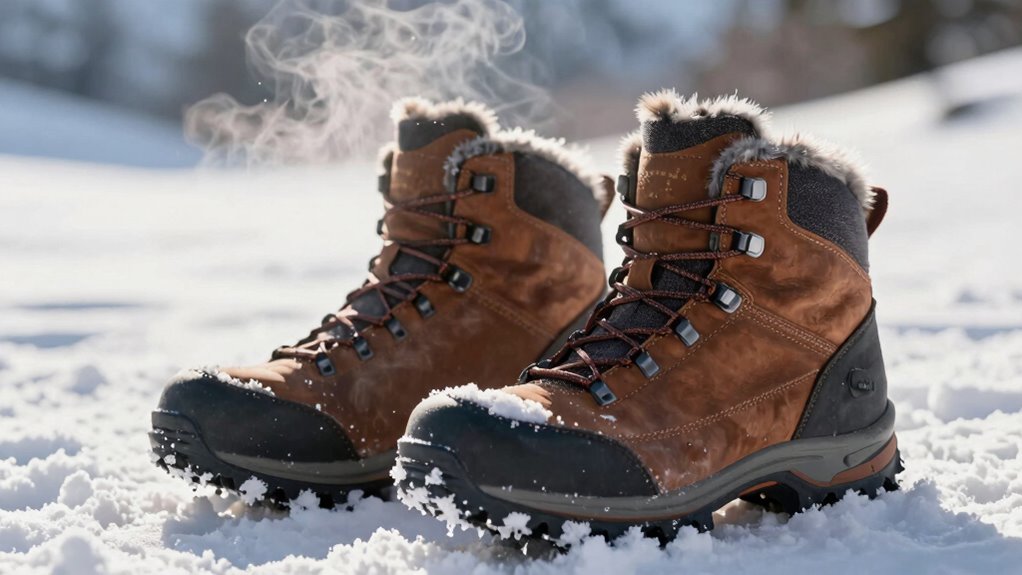
You’ve probably heard that not all winter hiking boots can truly handle mixed snow, ice, and slush—so, is it really possible to find the best winter hiking boots that balance warmth, grip, and agility without turning your feet into bricks?
The Columbia Women’s Newton Ridge Plus and Ice Maiden II suggest yes, blending waterproof uppers, cold-rated insulation (200g), and high-traction outsoles.
But do these top contenders deliver where it counts—on frozen trails, steep ascents, and long miles?
The details on their performance, comfort, and durability might surprise you.
| Columbia womens Newton Ridge Plus Waterproof Amped | 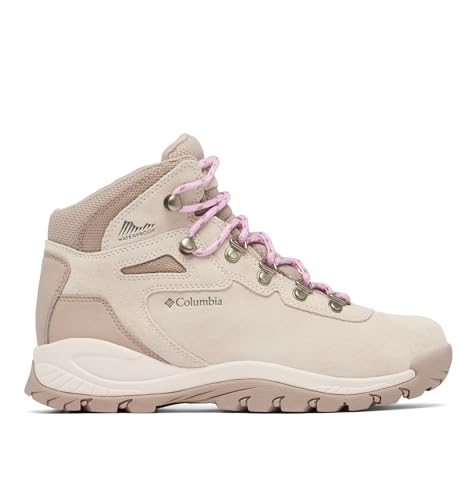 | Best for Trail Performance | Waterproof: Suede, leather waterproof exterior | Traction: Advanced traction outsole | Midsole: Lightweight midsole | VIEW LATEST PRICE | Read Our Analysis |
| Columbia Women’s Ice Maiden II Snow Boots | 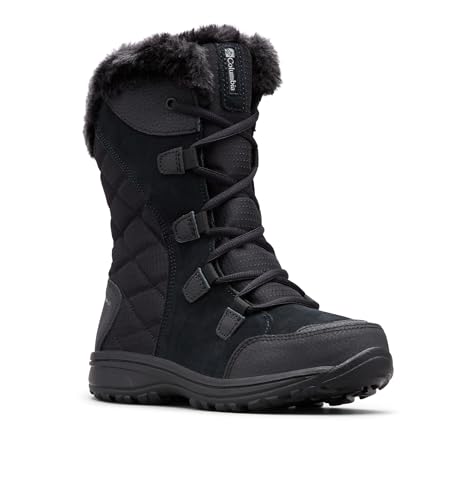 | Top Winter Comfort Pick | Waterproof: Waterproof leather and textile upper | Traction: Omni-Grip non-marking traction rubber | Midsole: Techlite lightweight midsole | VIEW LATEST PRICE | Read Our Analysis |
More Details on Our Top Picks
Columbia womens Newton Ridge Plus Waterproof Amped
If you’re a female hiker tackling rugged trails in wet, wintry conditions, the Columbia Women’s Newton Ridge Plus Waterproof Amped boots are built for you. Seriously, who wouldn’t want a blend of leather durability and suede style without sacrificing comfort?
You get a waterproof suede and leather upper that shrugs off rain, mud, and muck—critical when you’re mid-slog through slushy, snow-melt terrain. The lightweight midsole pairs with Columbia’s signature cushioning for solid impact absorption and high energy return, so your feet stay happy mile after mile.
Advanced traction on the outsole grips slick roots and icy rocks, though you might still tapdance on glare ice—no boot’s magic. True to size, they come in multiple colors and offer all-day support without weighing you down.
These boots are a smart, no-nonsense pick for serious winter hikes where performance and practicality matter most.
- Waterproof:Suede, leather waterproof exterior
- Traction:Advanced traction outsole
- Midsole:Lightweight midsole
- Cushioning:Columbia signature cushioning technology
- Fit:True-to-size fit
- Insulation/Protection:Protection from rain, mud, muck
- Additional Feature:Stylish suede/leather design
- Additional Feature:High energy return
- Additional Feature:Lightweight durable midsole
Columbia Women’s Ice Maiden II Snow Boots
You’ll find the Columbia Women’s Ice Maiden II Snow Boots shine brightest when winter throws slush, snow, and sub-zero temps your way—especially if you’re after a mid-calf boot that balances sleek design with serious function.
You get waterproof leather and textile uppers with seam-sealed construction, so wet feet? Not a problem. The 200g insulation traps heat without bulk, while the Techlite midsole cushions every step—lightweight, responsive, and shock-absorbing (hello, all-day wear).
Omni-Grip rubber outsoles grip icy trails without scuffing indoor floors, and the true-to-size fit means no break-in drama. Multiple colors let you pick practicality and style—because who says grit can’t look good?
- Waterproof:Waterproof leather and textile upper
- Traction:Omni-Grip non-marking traction rubber
- Midsole:Techlite lightweight midsole
- Cushioning:High-quality cushioning materials
- Fit:True-to-size fit
- Insulation/Protection:Warm 200g insulation; protection from cold/icy weather
- Additional Feature:Luxe feel mid-calf
- Additional Feature:Seam-sealed membrane bootie
- Additional Feature:200g warm insulation
Factors to Consider When Choosing Winter Hiking Boots
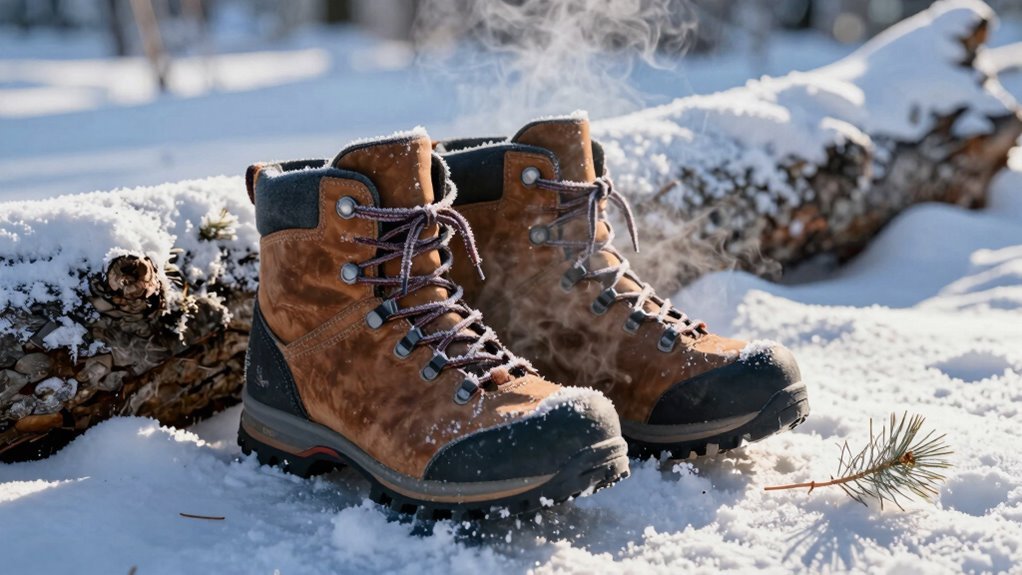
You’ll want boots that keep your feet dry, warm, and steady—so check for waterproof membranes like Gore-Tex (nearly 100% effective when sealed), insulation rated to at least -20°F (think 200–400g of Thinsulate), and aggressive rubber outsoles with lugs over 5mm deep for icy grip. Comfort matters just as much, so look for padded collars, ankle support, and a fit that accommodates thick socks without pinching—ever tried hiking with numb toes? It’s not exactly a walk in the park. And don’t assume sizing runs true; brands vary, so try them on late in the day when your feet are slightly swollen for the most accurate fit.
Waterproofing and Weather Resistance
Snowpack might look harmless, but stepping into slush without proper protection can quickly lead to soaked feet. Waterproof membranes like Gore-Tex or seam-sealed bootie constructions block liquid water while allowing vapor to escape, helping maintain ideal internal humidity below 60%.
For the upper material, opt for full-grain leather, suede, or treated textiles with factory-applied DWR coatings. These repel rain and wet snow, preventing saturation before it starts.
Sealed seams are crucial—taped or glued joints stop water from entering through tiny stitch holes, a common weak point many overlook. Without them, even the best materials can fail in wet conditions.
High-cut ankles or integrated gaiters aren’t overkill; they actively block melting snow, mud, and spray, especially near streams or muddy trails. These features add critical protection where low-cut designs fall short.
Even the warmest boot fails if water gets in—wet feet lose heat 25 times faster than dry ones. Keeping moisture out is just as important as insulation when staying comfortable in winter conditions.
Insulation for Cold Temperatures
You’ve kept the slush and sleet out—now it’s time to lock in the heat. Insulation, usually rated in grams (200g, 400g, etc.), determines how well your boots retain warmth.
200g suits chilly days above freezing, while 300–400g tackles subzero hikes or blustery ridgelines. So ask yourself: are you strolling or surviving?
Heavier insulation traps more warmth, but if you’re moving hard, you might overheat and sweat. Damp socks ruin everything, right?
Pair insulation with a moisture-wicking liner to keep feet dry and heat circulating. Wet insulation loses up to 90% of its warmth.
Look for boots with sealed seams and water-resistant uppers. They don’t just block puddles—they stop damp cold from seeping in.
Windproof layers help too, cutting wind chill that sneaks through fabric. Balance matters: too little insulation and you’re shivering; too much and you’re steaming.
Pick smart, not just warm.
Traction on Icy Terrain
When the trail turns slick with ice, your boot’s grip becomes the difference between steady progress and an unplanned sit-down—so don’t just rely on luck or thick soles. You need aggressive, multidirectional lugs (4–6mm deep) that bite into hard-packed snow and shed slush before it freezes.
Look for outsoles with siping—those thin, flexible slits—that act like tire treads, increasing surface friction when you’re side-hilling or braking downhill. Cold-brittle rubber fails when it matters most, so pick boots with low-temperature rubber compounds (rated to -20°F) that stay pliable.
Some models even offer metal stud inserts or crampon compatibility for glassy ice—because no matter how surefooted you are, physics usually wins. And let’s be honest: would you rather trust your balance or a well-engineered heel brake?
Your boot’s midsole/outsole combo must resist forward slips and lateral drift without locking up.
Comfort and Support Features
You just avoided a face-first slide on black ice thanks to your boot’s siping and aggressive lugs—now let’s talk about what keeps you moving mile after mile without calling it quits by noon. You’re relying on a cushioned footbed and lightweight midsole, both working together to absorb impact (reducing joint strain by up to 30%) while snapping back with high energy return.
Targeted cushioning zones—typically under the heel and ball—pair with a durable EVA midsole that resists compression set, even after 20+ miles in subfreezing temps. Insulation (think 200g–400g Thinsulate) traps warmth without bulk, especially when combined with a truly accurate fit.
A waterproof, breathable membrane (like Gore-Tex) keeps moisture out—because nothing kills comfort faster than wet, cold feet. And let’s be real: traction’s great, but can you enjoy it if your arches are screaming by mile five? That’s where long-term support wins.
Fit and Sizing Accuracy
Though it might seem obvious, nailing the right fit starts with trusting—rather than second-guessing—your usual shoe size. Especially since most winter hiking boots are engineered for a true-to-size match that aligns with standard sizing charts (including half-sizes down to 5 and up to 13 in men’s, 6–10 in women’s).
You’re not shopping for fashion—why complicate it? These boots are built to accommodate insulating socks without forcing you into half-size gambles or “sizing up just in case” chaos.
Stick to your known size and let the boot do the work. Manufacturers keep messaging consistent across models, so straying from your norm risks pinching or heel slip—not exactly confidence boosters mid-blizzard.
When trying them on, wear the same socks you’ll use on-trail, lace up fully, and walk around. Your toes shouldn’t jam when descending or slide forward uphill.
Is one brand running narrow? Sure—but that’s what width options and reviews are for. Stick close to true-to-size, and you’ll skip avoidable misery.
Frequently Asked Questions
What Size Should I Choose for Winter Hiking Boots?
You should choose a size that fits snugly but lets you wiggle your toes, especially when wearing thermal socks. Go half a size up if needed, and always try them on later in the day when your feet are slightly swollen.
Are These Boots Suitable for Sub-Zero Temperatures?
You’ll laugh at how warm your feet stay—even at -40°, these boots don’t just survive, they thrive. You’re basically hiking in a heated cocoon. Ice age? No problem. They’re built to handle it all without breaking a sweat.
Can I Use Trekking Poles With These Boots?
Yes, you can use trekking poles with these boots—they’re designed for rugged terrain. The poles boost your balance and stability in snow, reduce strain on your knees, and help you move quicker and safer across icy, uneven trails.
How Do I Clean and Maintain Waterproof Boots?
You don’t need fancy products—just rinse off mud, use a damp cloth with mild soap, scrub gently, then air-dry away from heat. Reapply waterproofing treatment after cleaning to keep seams sealed and keep your boots performing like new every time you hit the trail.
Do These Boots Require a Break-In Period?
Yes, they do require a break-in period. You’ll need to wear them around the house and on short walks first. That way, you’ll avoid blisters and let the materials mold comfortably to your feet before tackling tough trails.
Conclusion
You might think “warm” means bulky, but the Newton Ridge and Ice Maiden II prove otherwise—200g insulation, seam-sealed uppers, and Techlite midsoles deliver heat without hampering agility. With waterproof suede-leather builds and advanced outsoles (perfect for icy rocks or slushy roots), they strike a rare balance: lightweight enough for all-day miles, rugged enough for sudden storms—so why sacrifice comfort for protection when you don’t have to?