Beginner Guide To Hiking With Knee Pain Over 50
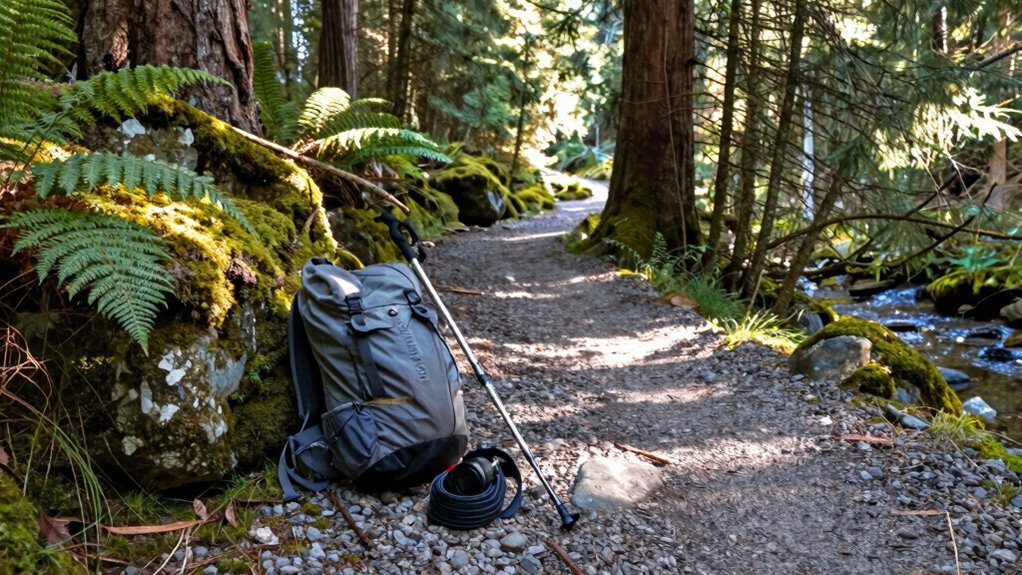
Hiking with knee pain over 50 is absolutely doable when you choose the right terrain and gear. Start with flat, soft trails like forest paths or old rail-trails to reduce impact on your knees.
Supportive hiking boots and trekking poles are essential—one study shows poles can reduce knee stress by nearly 25%. Add a reliable knee brace if needed for extra stability and confidence on uneven ground.
Use a light step and slightly lean forward when going downhill to ease pressure on your joints. Take frequent breaks to stretch, hydrate, and enjoy a snack—your knees will thank you.
Off-trail strength training, especially for glutes and quads, supports knee health and improves hiking performance. Always listen to your body; less “ouch” means more “ahhh” on your hiking journey.
Choose the Right Trails for Knee-Friendly Hiking
Ever wonder how you can keep hiking without turning your knees into creaky old hinges? You’ve got this—just pick the right trail.
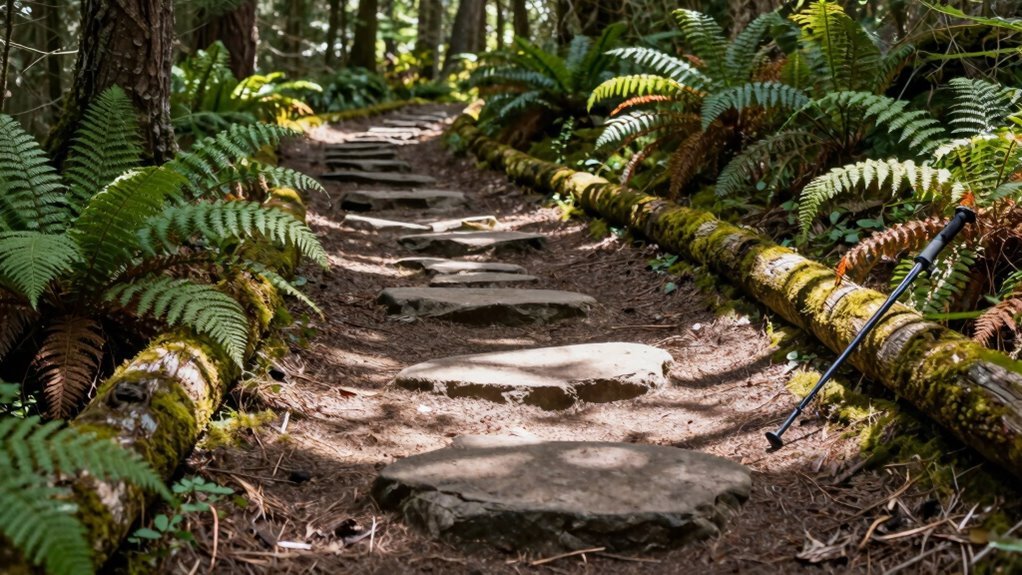
Stick to flat, soft paths like forest floors or old rail-trails; they’re gentle on your joints and way kinder than pavement. Skip steep hills—they’re tough on your knees and can spark inflammation. Right trail selection reduces pressure on knees Instead, choose beginner-friendly routes with clear markers and short distances to start. Flat, level ground keeps your balance steady and your steps smooth.
Avoid muddy or rocky spots after heavy rain—they’re slip hazards. Check the weather so you don’t get caught in extreme heat or cold, which can stiffen joints.
Trails with gentle ridgeline strolls? Perfect. They offer stability, low impact, and beautiful views. Listen to your body, take it slow, and let your knees enjoy the journey too. After all, hiking should feel good, not like a punishment!
Invest in Supportive Gear and Proper Footwear
Why let creaky knees steal the joy of hitting the trail?
You’ve got options—gear that turns “ouch” into “ahhh” with every step.
The right support makes all the difference, so don’t wing it.
Think of your body as a finely tuned hiking machine—give it the tools it deserves!
Here’s what to pack:
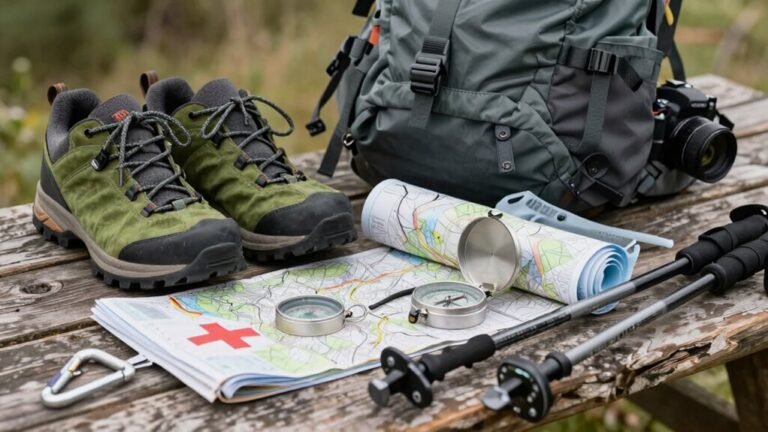
- Trekking poles – Cut knee stress by 25% and wobble less on rocky paths. Use two, not one, and set them so your elbows bend at 90 degrees.
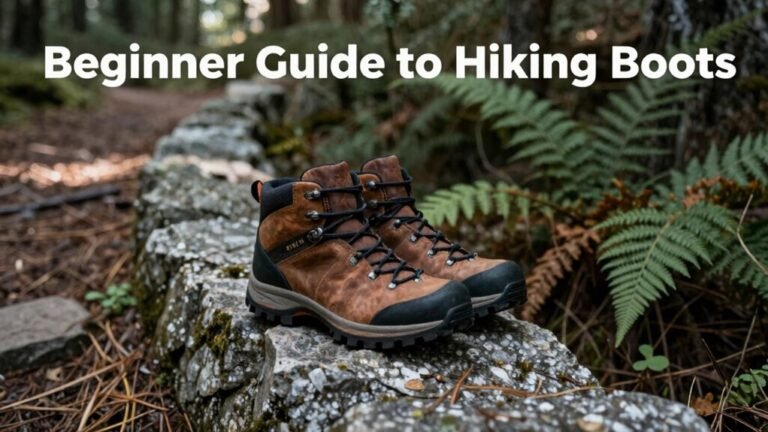
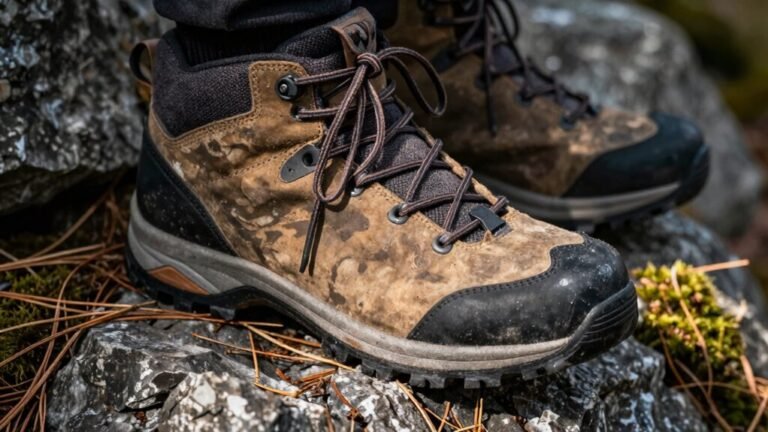
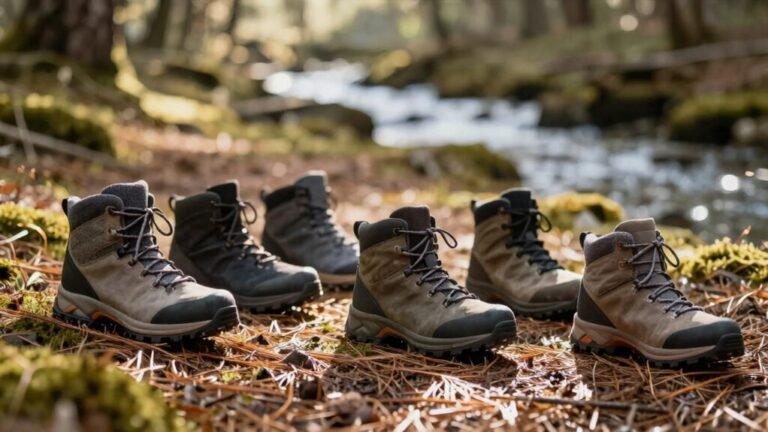
- Hiking boots – Snug, supportive, with cushioned soles and roomy toes. No more “I bought boots at the airport” regrets!
- Knee braces – Great for arthritis; unloader braces shift pressure off sore spots. Skip flimsy ones—they’re basically costume jewelry.
- Compression socks – Boost blood flow, fight swelling, and feel springier on long climbs. Plus, they look cool.
Balancing weight and comfort is key, especially when carrying essential health gear like a 3.5 lb CPAP machine.
Master Pacing and Hiking Techniques to Reduce Strain
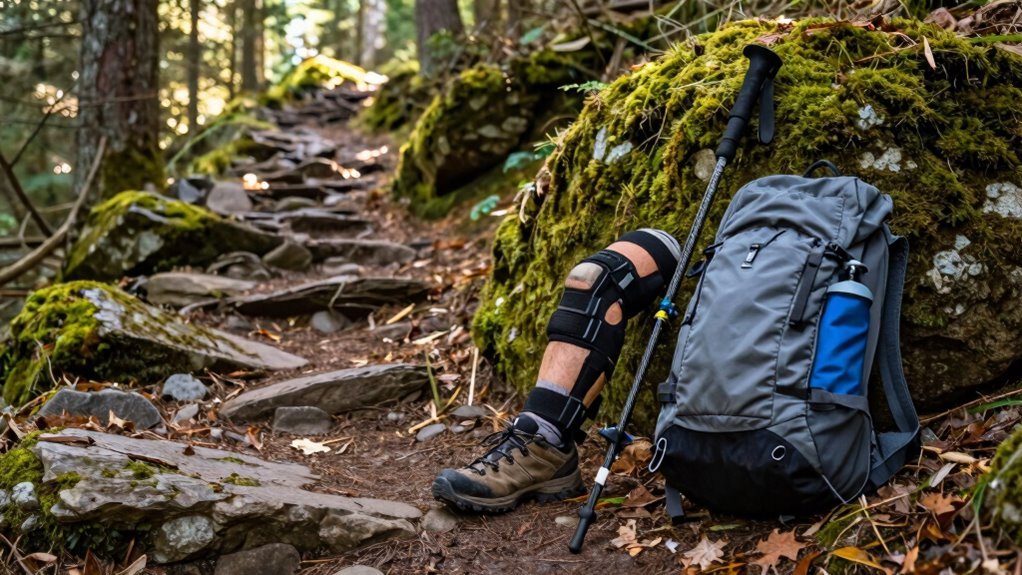
When the trail starts to dip, it’s easy to let momentum take over—but that’s when your knees take the hit.
Instead of braking hard with every step, lean slightly forward and let gravity help you glide down smoothly.
Keep your steps light and springy, never locking your knees.
Trekking poles? They’re game-changers, cutting knee stress by up to 25% and boosting balance.
On uphill climbs, shorten your stride, engage your core, and push off with your toes to protect those joints.
Don’t slouch—good posture keeps strain where it belongs: off your knees.
Take breaks at pretty viewpoints, stretch your quads and hamstrings, and grab a snack.
It’s not quitting—it’s smart hiking.
Listen to your body, adjust your pace, and mix in small step-ups to prep your knees.
Strengthening your quadriceps muscles can significantly reduce knee pain by improving joint stability and support.
You’ve got this—hiking should feel good, not wreck your joints.
Strengthen Key Muscles to Support Knee Health
You’ve nailed the smart moves on the trail, so now let’s build the muscle backup your knees crave.
Strong legs don’t just power hikes—they protect your joints, especially on rocky or steep paths.
You don’t need a gym membership or hours to spare, just consistent effort and the right moves.
Think of your muscles as your knees’ best buddies—when they’re strong, your knees hurt less and enjoy more trail time.
Here’s how to boost that support:
- Do glute bridges and side steps with a mini band to fire up your hips and stabilize each step.
- Try slow step-downs and heel raise squats to prep your quads for tough downhill stretches.
- Practice single-leg stands or step-ups to stay steady on uneven ground—no faceplants allowed!
- Plank regularly and rotate hips in a 90/90 stretch to keep your core and hips in the game.
Your knees will thank you every mile.
Listen to Your Body and Know When to Rest
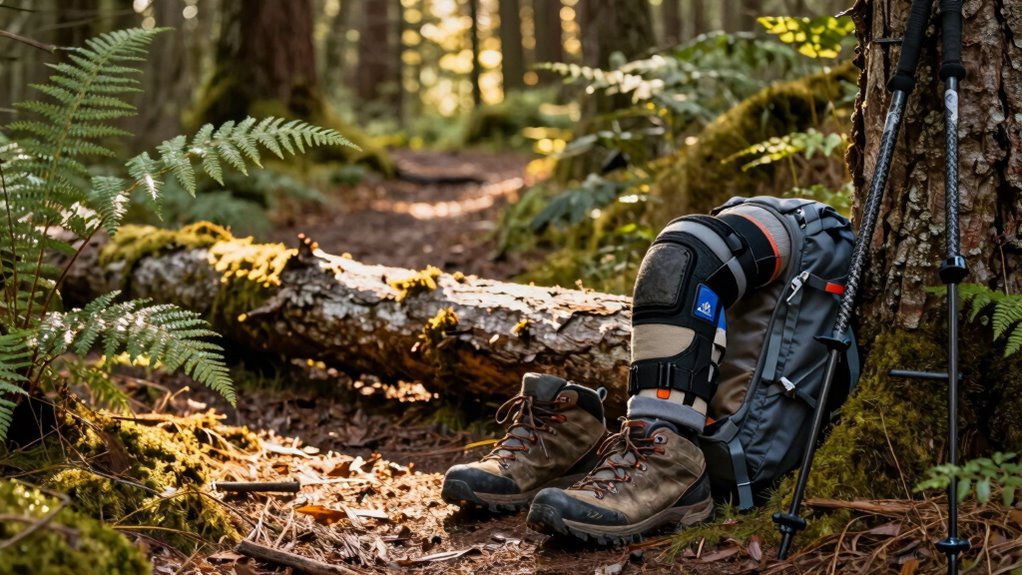
While your determination to summit that trail is admirable, your body sometimes needs to tap you on the shoulder—okay, maybe even poke you in the knee—and say, “Hey, let’s cool it for a sec.” Hiking with knee pain over 50 isn’t about pushing through the burn like a superhero; it’s about listening closely to what your joints are whispering (or yelling) so you can keep hitting the trails for years to come.
If you feel sharp pain—stop, don’t tough it out. A quick ice break or cold stream soak can cool inflammation fast.
Mild soreness? Keep trekking, but turn back if it flares.
Take real breaks: sit, stretch, snack, and actually enjoy the view.
After tough hikes, rest, elevate your leg, and stay off your feet.
Track how your knee feels—patterns help you adjust.
And hey, if pain sticks around, chat with a doctor.
Your future self will thank you for the TLC.
Frequently Asked Questions
Can Hiking Worsen Existing Knee Arthritis Over Time?
Yeah, hiking can worsen knee arthritis over time—if you’re not careful.
Trudging uphill or using poor form hikes up pressure on your knees, speeding up damage.
But don’t hang up your boots yet!
With smart moves—like tuning your stride, building strength, and easing into trails—you’re not just safe, you’re stepping toward stronger joints.
Think of it as hiking *with* your knees, not against them.
Adventure awaits, wisely!
Is It Safe to Hike Alone With Knee Pain?
Yeah, you *can* hike solo with knee pain, but it’s like venturing into the wild with a wobbly compass—doable, just riskier.
If your knee’s acting up, going it alone means no backup when things go sideways.
Why not bring a friend?
Trails feel friendlier with good company, laughter, and someone to help if your knee decides to stage a protest on a steep downhill.
Stay smart, stay safe, and keep the adventure fun!
Should I Use Trekking Poles on Flat Terrain?
Yeah, you should definitely use trekking poles on flat terrain—your knees will thank you!
They cut joint stress by up to 25%, keep your rhythm smooth, and boost speed without extra leg burn.
Plus, they engage your arms, reduce fatigue, and help you stay balanced, especially with a loaded pack.
Think of them as cheat codes for easier hiking.
Just adjust them right and plant them firmly—boom, you’re gliding!
How Long Before Hiking Should I Stop Taking Pain Meds?
You don’t stop taking pain meds before hiking—you time them right!
Pop an NSAID with dinner the night before big miles, then dose every 12 hours like clockwork.
Take ibuprofen before bed if you gained elevation.
Start early, stay ahead of pain, and never skip with food.
Think of it as preventive crafting, not crisis control.
Just don’t mix meds or chug beer after—your stomach will thank you later.
Smooth sailing, happy knees!
Can Knee Braces Replace Strength Training for Support?
Nope, knee braces can’t swap in for strength training—think of them as crutches, not champions.
You’re building your body’s own armor, not renting support.
Skip the muscle work, and you’ll wobble like a wobbly table with loose legs.
Strengthen those quads, glutes, and hips, and you’ll hike taller, stronger, and way more confidently.
Braces? Just backup dancers.
Your muscles run the show.
Conclusion
Keep calm, conquer trails, and care for your knees with clever choices. Pick pleasant, gradual paths, pack practical gear, and pace yourself with purpose. Strengthen your stride, savor the scenery, and stop when sore—smart moves help you stay active and joyful. Hiking with hurt knees? No problem! Play it prudent, progress patiently, and pleasure in every step. You’ve got this—strong, steady, and smiling all the way!
References
- https://www.fcvb.org/hiking-with-knee-pain/
- https://www.bauerfeind-group.com/en/health/joint-pain/hiking-for-beginners
- https://www.athletico.com/2024/06/19/tips-for-hiking-with-knee-arthritis/
- https://orthosportsmed.com/getting-your-knees-ready-for-summer-hiking/
- https://www.hingehealth.com/resources/articles/hiking-knee-pain/
- https://mdtherapeutics.com/blogs/news-1/knee-friendly-trails
- https://www.leconteortho.com/post/4-ways-to-keep-your-knees-in-shape-for-hiking
- https://thetrek.co/appalachian-trail/appalachian-trail-gear-list-for-older-hikers-beginner-friendly/
- https://earthtrekgear.com/pages/protecting-your-knees-while-hiking
- https://www.davidonearth.com/blog/top-7-hiking-gear-must-haves-for-seniors