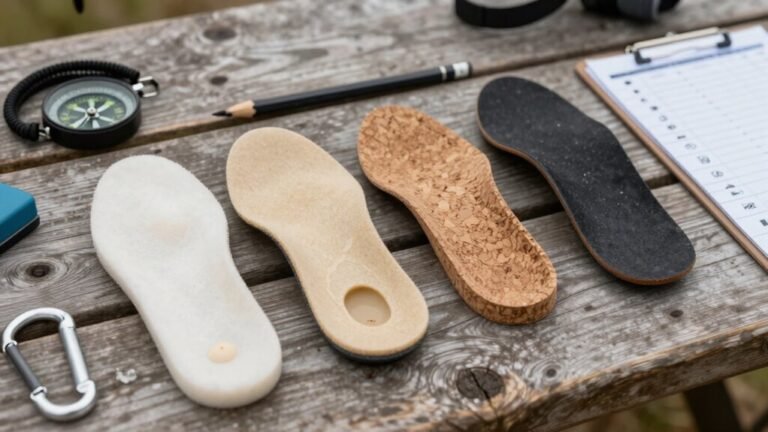
How to Keep Boot Fit Working in Bad Weather
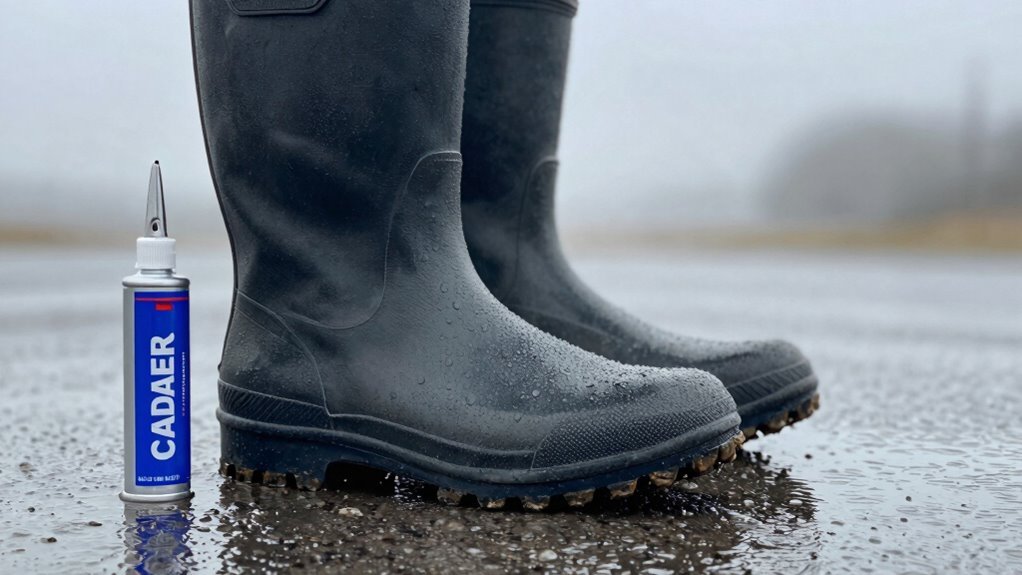
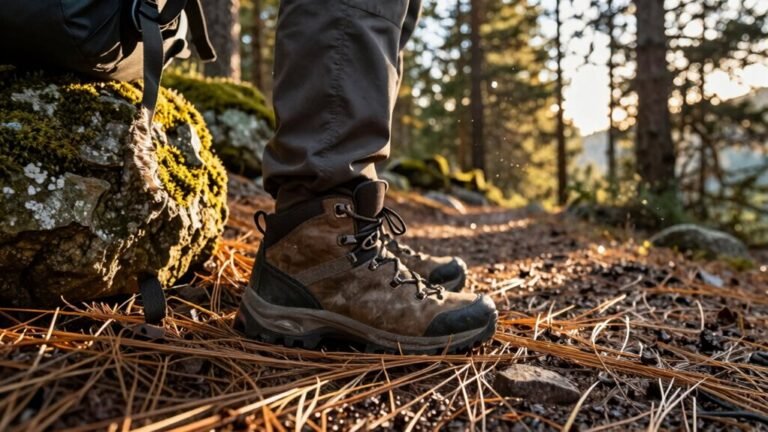
To keep boot fit working in bad weather, choose rugged, weather-resistant materials like full-grain leather with Gore-Tex. These materials provide durability and reliable protection against rain, snow, and muck.
Break in your boots before hitting the trails to ensure a comfortable fit and prevent blisters. Proper fit is essential to keep boot fit working in bad weather and maintain foot health during long treks.
Wear moisture-wicking socks made from merino wool to manage sweat and maintain warmth. Layering your socks wisely can enhance comfort and improve overall boot performance in harsh conditions.
Reapply waterproofing treatments every few months to maintain your boots’ resistance to moisture. Add gaiters to block snow, dirt, and debris from entering your boots during wet hikes.
Dry wet boots slowly by stuffing them with newspaper—never place them near direct heat. Always carry a spare pair of socks to swap into, keeping your feet dry and your morale high.
Choose Weather-Resistant Boot Materials
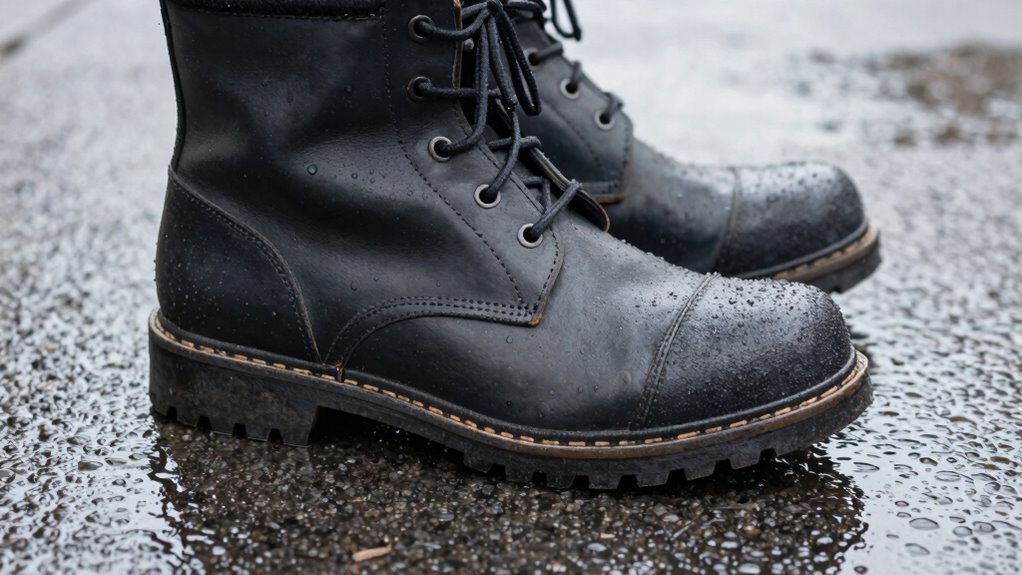
When the skies open up and you’re caught outside, the last thing you want is soggy socks and grumpy feet—so picking the right boot material really matters.
Go for full-grain leather if you like tough, breathable uppers that laugh at light rain.
Treat it right, and it’ll keep water out while letting your feet breathe.
Facing downpour after downpour? Boots with Gore-Tex or B-DRY linings have your back—water can’t get in, but sweat sneaks out.
Rubber and PVC boots laugh at puddles and chemicals, though PVC’s a bit stiff and best for quick jobs.
Need all-day comfort? PU boots are light, flexible, and handle acids like a champ.
And hey, rubber outsoles won’t slip when things get slick.
Think of your boot material like a superhero suit—each has powers, but only one’s perfect for *your* weather battle.
Proper sealed seams prevent water from seeping in through stitch holes, keeping your feet dry even in prolonged wet conditions.
Pick wisely, stay dry, and give puddles the cold shoulder.
Break In Boots Before the Storm Hits
While the sun might still be shining, now’s the time to get your boots ready—because nobody wants to be breaking in stiff, unforgiving footwear as the first raindrops fall.
Start by wearing them indoors with your go-to socks, lacing up snug but not tight.
Walk around the house, do some chores, maybe even dance in the kitchen—bend those soles, flex the shaft.
Begin with an hour, then build up daily.
Stuff them with newspaper overnight to stretch the uppers, or try the damp cloth wipe followed by hand flexing.
Condition the leather—mink oil works wonders—but skip the ankle area for now.
Take short walks, then longer ones, maybe even sneak in a daypack hike.
Use thick socks, blister patches, and smart lacing so hot spots don’t ruin your groove.
Break ’em in now, and when storm season hits, you’ll step out ready, not sore.
For faster results, consider submerging your boots in water—a wet method can accelerate leather molding to your foot.
Use Moisture-Wicking Sock Layers
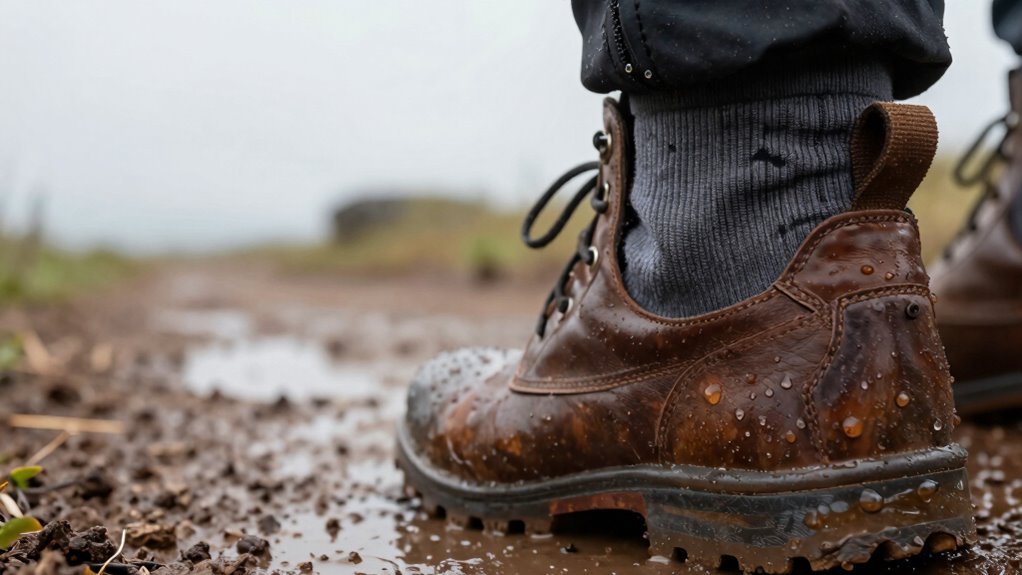
Sweat happens, but soggy socks don’t have to — especially when you’re gearing up for bad weather adventures.
You’ve got moisture-wicking sock layers on your side, heroically pulling sweat away from your skin and shipping it off to evaporate.
Thanks to smart fabrics like merino wool and polyester, your feet stay dry, cool, and happy, even when the trail turns mucky.
These socks fight blisters by reducing friction, plus their seamless toes mean no more “hot spot” dramas.
They even stay warm when wet—seriously, merino can hold 35% of its weight in water before feeling damp!
And let’s not forget: no swamp foot stink.
With breathable mesh zones and odor-fighting fibers, your boots won’t double as a fungal motel.
Whether it’s rain, snow, or a surprise puddle detour, your feet stay comfy, cushioned, and in charge.
Smart socks? Absolutely.
Your boots will thank you.
Blending synthetic and natural fibers enhances moisture management by combining the best of both materials.
Apply Waterproofing Treatments Regularly
Your socks are doing their magic, keeping your feet dry from the inside out—now let’s make sure the outside stays dry too. Reapply waterproofing every 2–3 months, or when water stops beading on your boots—nature’s way of saying “help!” Seasonal treatment keeps them happy, especially in wet fall and winter months.
If your boot’s DWR finish has ghosted, it’s time to revive it. Use sprays for quick nubuck love, mink oil for thirsty leather, or wax-based treatments like SnoSeal when storms hit hard.
Clean your boots first—dirt hates teamwork.
Apply sprays in even circles, warm waxes slightly, and rub dubbin in like you’re giving a tiny spa massage.
Let sprays dry 10–24 hours; conditioners overnight.
Your boots aren’t just protected—they’re pampered.
After all, happy boots mean happy hikes!
Invest in Gaiters for Extra Protection
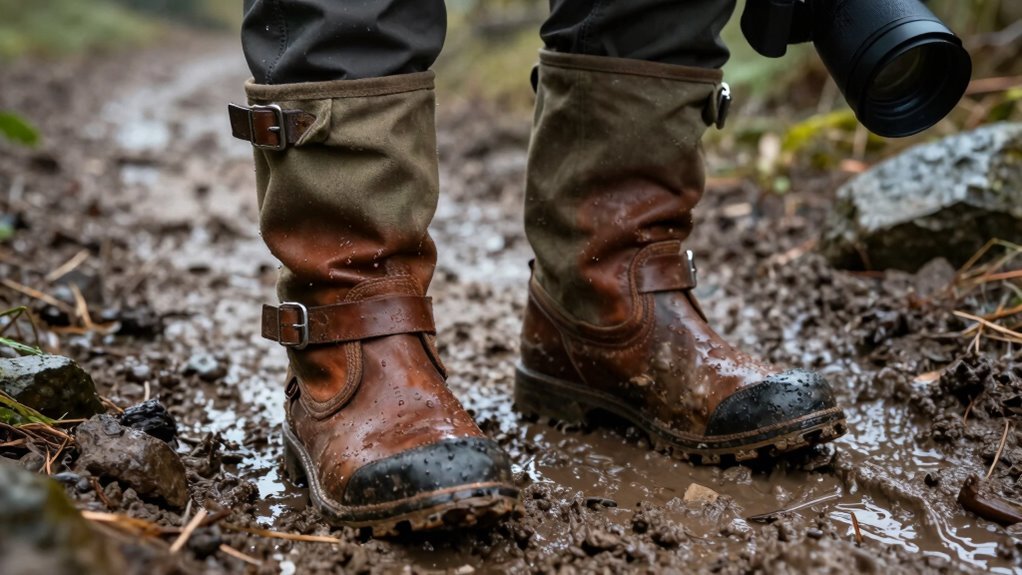
Keeping trail junk out of your boots just got a whole lot easier—meet gaiters, your footwear’s new best friend. They block rocks, dirt, snow, and sneaky thorns before they turn your hike into a gritty game of “what’s in my shoe?”
Whether you’re trampling through mud, wading across streams, or brushing past dew-soaked grass, gaiters keep everything from gravel to ticks from hitchhiking up your legs.
Plus, they’ve got your back (or your ankles) with waterproof fabrics that shrug off rain and meltwater like tiny bodyguards.
Love hiking in snow? Mountaineering gaiters have you covered.
Prefer zipping through trails? Trail-running styles stay light and low-profile.
Some even repel bugs—talk about overachievers! They keep your boots clean, feet dry, and legs scratch-free, so you can focus on the view, not the blisters.
Trust us, once you try gaiters, you’ll wonder how you ever stomped through puddles—or poison oak—without them.
Adjust Lacing for Swollen or Cold Feet
When the trail gets tough and your feet start swelling or stiffening up from the cold, tweaking your lacing isn’t just smart—it’s a total game-changer. Try the Heel Lock to stop slippage—loop the top hooks like a pulley and pull tight so your heel stays put without squeezing your arch.
If your toes are throbbing, use Pressure Relief Lacing: skip eyelets over hot spots or loosen the top with a two-finger rule under the tongue.
Swollen feet? Go full pro with parallel ladder lacing to ditch cross-strap pressure, or skip sections for more room.
Got sore spots? The Surgeon’s Knot lets you lock down the lower lace tight while keeping the top loose—genius, right?
And for foot shape quirks, tweak eyelets: inner for wide feet, outer for narrow, and double-back the last loop if your heel’s doing the cha-cha.
A few lace tricks, and you’re back in control—comfort never looked so easy.
Dry Boots Properly After Each Use
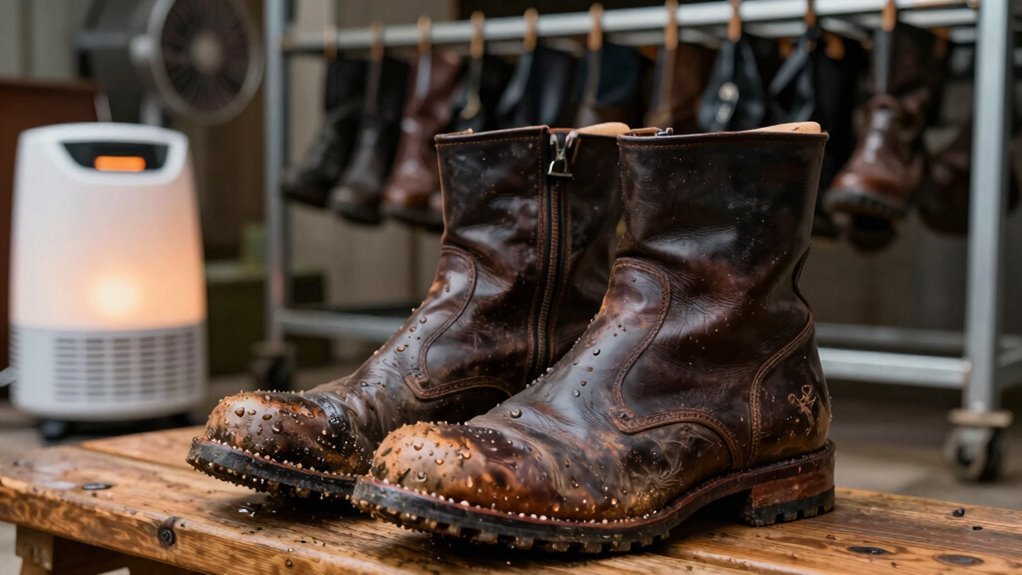
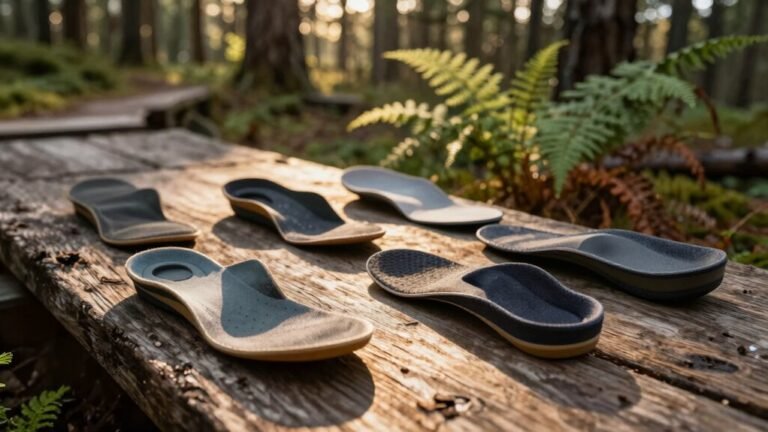
Right after you kick off your boots, don’t just toss them in the corner like yesterday’s pizza box—those damp insides need some love. Pull out the insoles and loosen the laces so air can swoop right through.
Stuff them snug with crumpled newspaper or paper towels—they’ll suck up moisture like little sponges and weigh next to nothing on the trail.
Swap the paper every few hours until it comes out dry. If you’re out of paper, a clean tea towel works too.
Place your boots in a shady, breezy spot—never right by a heater or in blazing sun—leather hates fast drying and might crack like an overbaked cookie.
Let them breathe for at least a day and a half; slow and steady keeps them happy.
This routine keeps your boots shape-right, damage-free, and ready to rock whenever the weather tries to rain on your parade.
Carry Spare Socks for Wet Conditions
Ditching soggy socks mid-hike?
Don’t—you’re asking for cold, cranky feet!
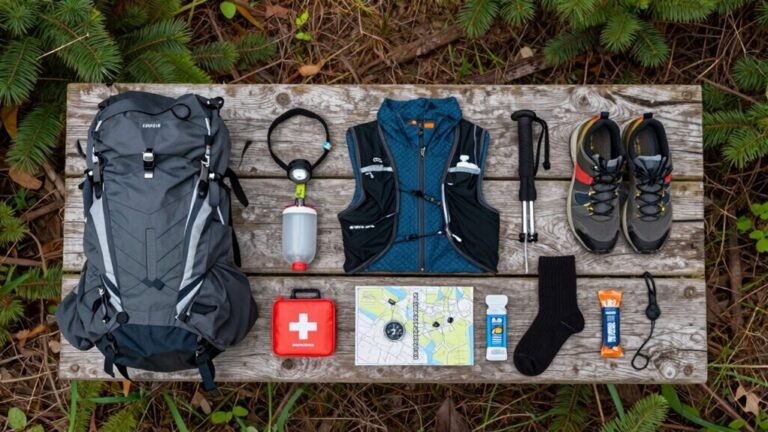
Toss a spare pair of merino wool or synthetic-blend socks into your pack, and you’ll thank yourself later.
Merino soaks up moisture without feeling wet, keeps you warm even when damp, and fights stink like a champ.
Plus, it dries fast and stays comfy over days.
Synthetic socks with Gore-Tex or nylon?
They’re tough, durable, and perfect for trudging through mud and puddles.
A good spare sock blends 30–60% merino, nylon, and a hint of stretch for snug comfort.
When your feet stay dry, warm, and cushioned, every mile feels easier.
Think of extra socks as trail superheroes—small, mighty, and always ready to save the day.
Pack at least one fresh pair, and never let wet feet turn your adventure into a soggy sob story.
Stay dry, stay happy—your boots (and toes) will love you!
Prevent Blisters With Proper Friction Control
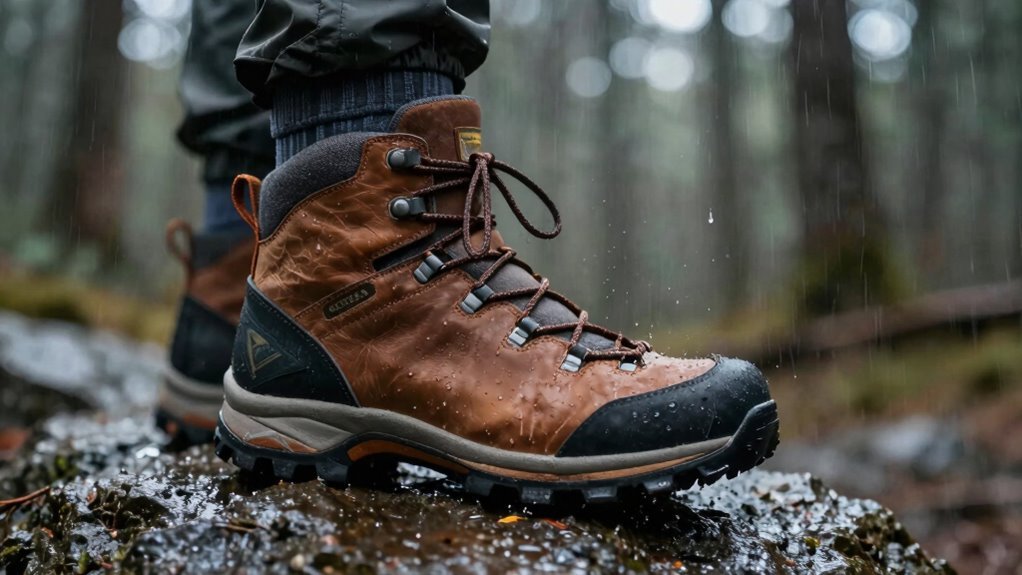
Though your boots might feel great right out of the box, skipping friction control is like inviting blisters to a dance—they’ll show up, and they won’t leave quietly.
You’ve got options: wear moisture-wicking socks (ditch cotton—it’s a sponge for trouble), and layer a CoolMax liner under wool to keep things dry.
Lace up smart—tighten your heels to stop slips, and adjust for swelling when things get soggy.
Break in your boots on short walks so surprises happen at home, not halfway up a muddy trail.
Trail runners? Great choice—light, quick-drying, and less break-in drama.
Toss in gel toe guards or Engo patches where rubbing hits, slap on a Hapla Band for arch armor, and slick hotspots with lube.
Oh, and treat early blisters like VIPs—cover ’em with Compeed before they throw a full-blown party.
Select Boots With Rugged, Slip-Resistant Outsoles
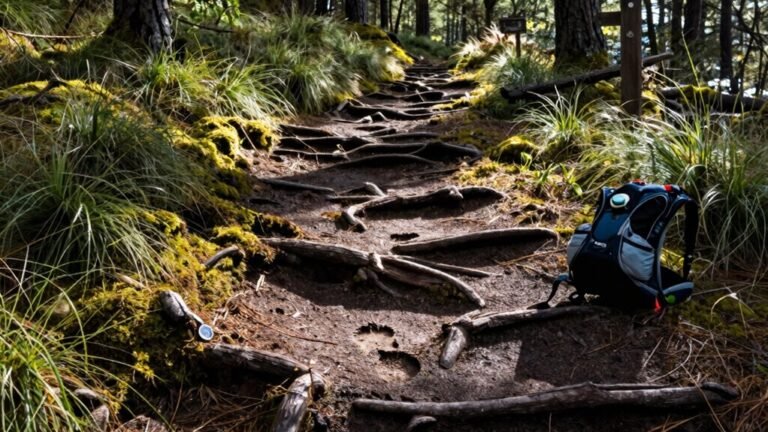
Grab a boot with a rugged, slip-resistant outsole, and you’re not just stepping—you’re conquering.
Rain-slicked pavement, muddy trails, or oily garage floors won’t stand a chance when you’re geared up with the right sole.
- Rubber grips like it’s never letting go, even when things get slippery or icy
- TPU stays tough in extreme cold and won’t crack under pressure—literally
- Nitrile rubber gets grippier over time, like it’s training for the Traction Olympics
- Vibram soles laugh in the face of rocks, mud, and slush
Look for deep treads, siping, and channels that push water and gunk away.
Certified slip resistance (ASTM or CSA) means real-world safety, not just lab bragging rights.
Whether you’re trudging through slush or dodging puddles, your boot’s outsole is your first defense.
Frequently Asked Questions
How Often Should I Replace My Waterproofing Treatment?
You should replace your waterproofing every 3 to 4 months with regular use, but if you’re stomping through puddles or hiking in the rain often, refresh it every couple of weeks.
Think of it like sunscreen for your boots—once water stops beading on the surface, it’s toast.
Don’t wait for soaked socks as a reminder!
Reapply before big outings, and always clean ’em first—nobody likes sludge marinade.
Can I Use Regular Socks With Weather-Resistant Boots?
Nope, you’re begging for trouble if you rock regular socks with weather-resistant boots.
They’ll trap sweat like a sponge in a rainstorm, leaving you soggy and sorry.
Cotton’s a no-go—it holds moisture and smells faster than you can say “stinky sneakers.”
Swap in synthetic blends or merino wool instead; they hug your feet, wick dampness, and keep things fresh, cozy, and blister-free, even when the weather throws a tantrum.
Do Gaiters Work With All Boot Types?
No, gaiters don’t work with all boot types—sorry, magic sock dreams!
They’re built for lace-up outdoor footwear, so slip-ons or clogs? Nope.
Tall gaiters love winter boots, while shorter ones hug trail runners just right.
Match the gaiter to your boot height and style, or you’ll fight flaps and gaps.
Check compatibility—some brands play favorites.
Get the right fit, and you’re golden, mud-free, and laughing in the rain like a happy puddle-jumper!
Is It Safe to Dry Boots Near a Heater?
No, you shouldn’t dry your boots near a heater—it’s risky!
Heat warps leather, melts glue, and can even start a fire if things get too toasty.
Plus, your boots might shrink or crack, and that’s no fun.
Instead, let them air dry naturally or use a proper boot dryer.
Your footwear will stay happy, safe, and ready for adventure—because nobody wants crispy, toasted boots!
How Do I Prevent Lace Freezing in Cold Weather?
Think of your laces as icy noodles—nobody wants those!
You prevent freezing by using water-repellent silicone-coated anti-slip laces, they shrug off moisture like a duck in a rainstorm.
Tuck in loose ends, so snow can’t sneak in and chill things out.
Go for elastic no-tie systems when you can—they’re the superhero shortcut.
And hey, double-knot just in case, because frozen laces are basically winter pranksters waiting to trip you up—literally.
Conclusion
You’ve got this—keep your boots ready, and your feet will thank you. Did you know 68% of hikers ditch trips due to soggy feet? Don’t be one of them! With grippy soles, dry socks, and a quick waterproof spray, you’re set. Gaiters block sneak attacks from mud, and a solid break-in means no blisters, no drama. Tackle storms head-on, laugh at puddles, and step with confidence—every adventure’s better when your boots *work*.
References
- https://chinookfootwear.com/blogs/news/ultimate-guide-to-waterproof-work-boots
- https://www.overlookboots.com/blogs/boots/best-waterproof-work-boots-ultimate-buying-guide
- https://i-pinnip.com/blogs/blog/differences-and-applications-of-pvc-pu-and-rb-work-boots-materials
- https://www.hexarmor.com/posts/water-resistant-vs-waterproof-how-to-choose-your-work-boots
- https://peaceoutfittersaz.com/the-great-debate-waterproof-and-non-waterproof-shoes/
- https://xlfeet.com/blog/waterproof-vs-water-resistant-boots
- https://www.overlookboots.com/blogs/boots/waterproof-vs-water-resistant-vs-water-repellent-boots-what-is-the-difference
- https://bruntworkwear.com/pages/boot-comparison-guide
- https://us.merrypeople.com/blogs/news/let-s-compare-waterproof-versus-water-resistant-rain-boots
- https://www.waders.com/blogs/news/rubber-boots-comparison-and-selection-guide