How to Purify Water on the Trail
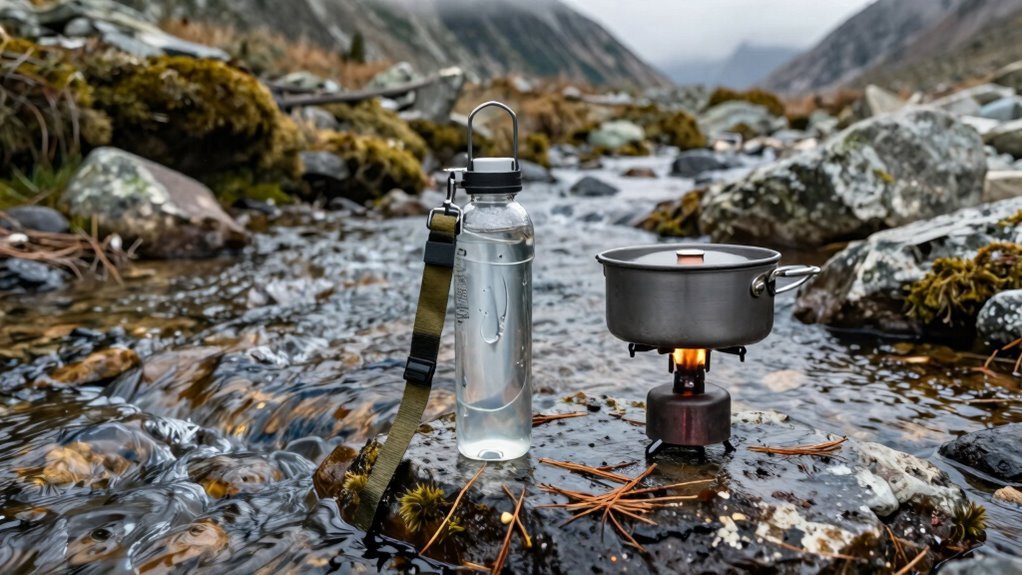
When you’re hiking, knowing how to purify water on the trail is essential for staying safe and hydrated. You’ve got options when that stream looks tasty but might pack a nasty surprise.
Use a squeeze filter for quick clean water, or drop in chemical tablets if you’re lightening your load. For a high-tech solution, give your water a UV zap—just don’t forget spare batteries.
Boiling works in a pinch, though it eats fuel and time. One gulp of bad water could mean cramps, chills, or an *unforgettable* campsite story. Ready to find your perfect trail trick?
Understanding Waterborne Threats in the Backcountry
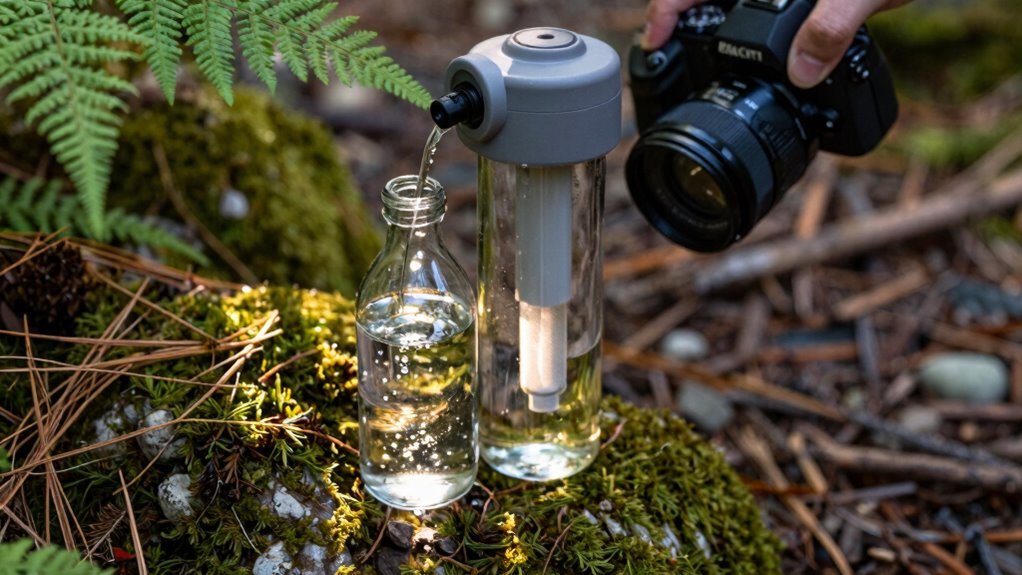
Ever wonder what’s really lurking in that sparkling mountain stream you’re tempted to sip from?
Well, behind that crystal-clear facade, you might find giardia cysts, crypto, or fecal bacteria—nasty little hitchhikers from beavers, cows, or even other hikers.
Yeah, that innocent-looking trickle below the trail? It’s often riskier than you think, especially near pack animals or campsites.
Stagnant ponds and runoff after rain boost contamination too.
While some say the danger’s overblown, the odds still favor caution—especially since just one gulp can (rarely) lead to cramps, diarrhea, and a *very* memorable backpacking story you didn’t want.
Over half of long-distance hikers face stomach issues, and untreated water plays a big role.
So sure, nature’s pretty, but it doesn’t mean its water’s clean.
Treat it right, and you’ll skip the gut-wrenching souvenirs—no one wants that kind of keepsake!
Viral threats are more prevalent in populated areas.
Using Portable Water Filters
Sipping clean water on the trail just got a whole lot easier thanks to portable filters that turn sketchy-looking streams into safe, drinkable refreshment in seconds.
You’ve got options: squeeze filters like the Sawyer Squeeze work great with bottles, while straws like LifeStraw Peak Squeeze let you sip straight from the source—no setup needed.
For groups, gravity systems like Platypus GravityWorks filter up to 4 liters hands-free.
Pump filters such as MSR TrailShot handle murky water like a champ, though pumping can tire your arms.
The Grayl GeoPress? Just fill, press, and go in 8 seconds—no pumping or batteries.
Most filters knock out bacteria and protozoa like pros, but only some, like MSR Guardian or Grayl, tackle viruses too.
Pro tip: backflush when flow slows, and shake or clean filters after sipping silty water.
Light, fast, and reliable? Now *that’s* trail magic in your backpack.
Many hikers favor ultralight options like the 3 oz. Sawyer Squeeze for long trips where pack weight matters most.
Treating Water With Chemical Solutions
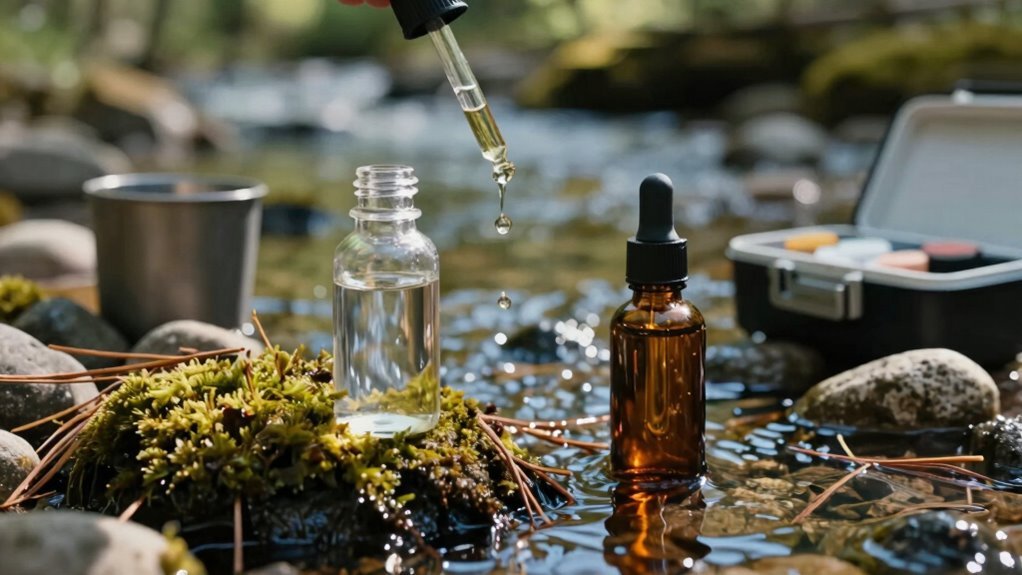
Dropping a tablet into your water bottle and letting chemistry do the heavy lifting might sound like a campsite magic trick, but it’s real—and it works.
You’ve got options: iodine, chlorine dioxide, or even a few drops of bleach.
They’re light, cheap, and fit right in your pocket—no pumping or waiting around to filter.
Just drop, wait, and drink.
Chlorine dioxide, like Aquamira, zaps bacteria, viruses, and gnarly cysts in 15 minutes, no matter how cold or murky the water.
Iodine’s the old-school pick—it works but leaves a funky taste and yellow tint.
Yeah, it’s not perfect (don’t expect sparkling water), but it’ll keep you safe from giardia and norovirus.
Just remember: if the water’s full of gunk, strain it first.
And always follow the wait times—chemistry’s powerful, but it’s not instant.
With a little patience, you’re hiking through the wild with peace of mind—and a full bottle.
Harnessing UV Light for Purification
How does a little blue glow turn sketchy stream water into something safe to drink?
It’s science, not magic—UV light zaps tiny threats by wrecking their DNA so they can’t make you sick.
You just stir the water with your pen-style gadget for about 60 seconds, and bam—99.99% of viruses, bacteria, and protozoa are done for.
It’s lightweight, works fast, and leaves zero aftertaste (unlike those “pool water” chemical tablets).
But keep in mind:
- 🚫 Don’t use it in cloudy water—it needs clarity to shine (literally).
- 🔋 Pack extra batteries or a USB charger—nobody wants a dead pen mid-stream.
- ❄ It works even in freezing temps, unlike some wimpy filters.
- 🐣 It won’t stop worm eggs or chemicals, so know your water source.
UV’s a trail favorite for good reason: it’s quick, easy, and keeps your belly happy.
Boiling Water Over a Camp Stove or Fire
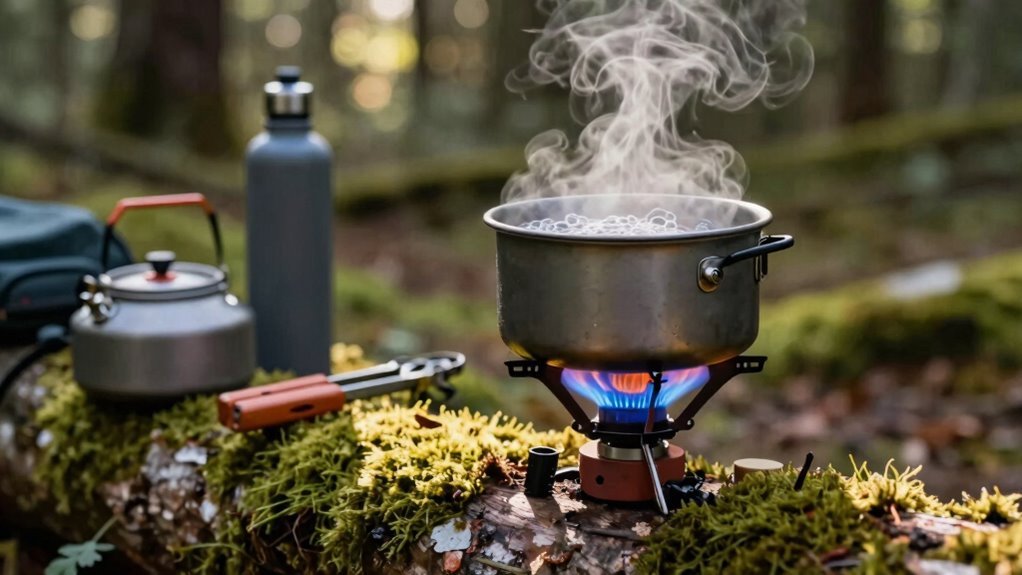
While your campfire crackles or your stove hums to life, you’ve got a foolproof way to turn even sketchy-looking stream water into something safe and sip-worthy—just add heat. Grab your metal pot, scoop water from the clearest spot, and let sediment sink before straining it through a bandanna—your DIY filter. Pop it on the flame and get it to a rolling boil. Down low? One full minute’s enough. Up high? Boil for three—it’s science, not a tea timer. Let it cool, and bam: bacteria, viruses, and little creepy crawlies are history. No chemicals, no weird aftertaste—just safe, simple sipping. Yeah, it uses fuel, takes time, and won’t win awards for instant gratification, but it’s trusty, cheap, and works when your filter’s clogged or batteries quit. Perfect for camp, not so much mid-hike. Think of it as nature’s hot tub—only you’re purifying the water, not soaking in it.
Comparing Speed and Convenience of Methods
You just spent 10 minutes boiling water, watched the steam curl into the mountain air, and now you’re sipping something safe—but slow.
Good news: faster, easier options exist.
Meet your trail-tested crew:
- Sawyer Squeeze: 2 minutes per liter and flowing like a champ—perfect for solo dashes or long trails.
- Grayl: Crush 500ml in under a minute, like a water-purifying espresso shot (just watch for clogs!).
- UV Purifier: Zap water in 60 seconds with a button push—ideal for the “I-want-it-now” hiker.
- Aquamira Drops: Mix, wait 30 minutes, and go—lightweight magic for overnight soaks and group jugs.
Each has quirks, but all save time and effort.
Want speed? Go Grayl or UV.
Need volume? GravityWorks rules.
Chemicals? Brilliant for low-effort hikes.
Pick your favorite and keep moving—your next sip shouldn’t take a nap to happen.
Tips for Collecting Water Safely
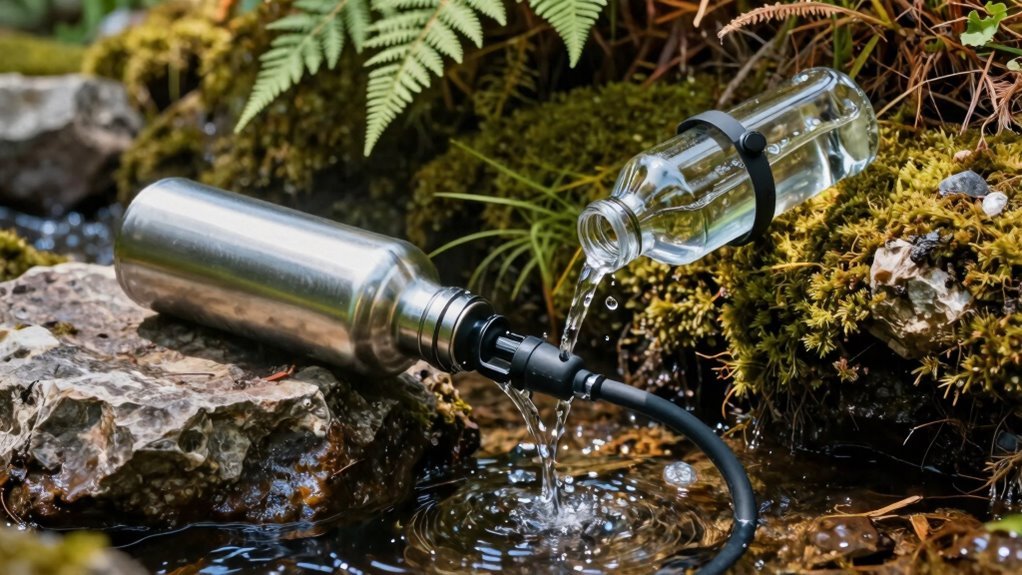
When you’re deep in the wild and your bottle runs dry, snagging safe water doesn’t have to be a sketchy game of chance—treat it like a smart scavenger hunt instead.
Start with clean hands and a sanitized, sealable container—your water’s first line of defense.
Head uphill, away from camp chaos and grazing animals, and scoop moving water from streams or the top layer of lakes.
Avoid stagnant puddles; they’re basically bacteria buffets.
If it’s raining, spread your poncho like a water-catching net—nature’s free refill.
Early risers can soak up dew with a sponge or bandana, even wicking moisture by strapping fabric to your boots.
In dry spots, dig into damp sand and build a solar still—yes, you can turn dirt into drinkable with plastic and sunshine.
Snow? Melt it first, then boil.
Follow green patches like a desert detective—they’re hiding water secrets.
Stay clever, stay safe, and drink like a trail pro.
Frequently Asked Questions
How Long Do Water Filters Last Before Needing Replacement?
Your water filter lasts anywhere from 500 to over 100,000 liters—Sawyer Squeeze handles a crazy 378,541 liters, though mucky water clogs it faster.
Ceramic and hollow fiber filters go the distance with care, while tiny LifeStraws tap out after about 4,000 liters.
You’ve gotta backflush, clean, and store it right, or it’ll quit early—treat it well, and it’ll keep you sipping happy for years!
Can I Drink From a Hot Spring Safely?
You can drink from some hot springs, but not all—here’s the twist: trust only those labeled safe, like at Hot Springs National Park, where they’ve got your back since 1832.
Elsewhere? Sketchy.
Bacteria, algae, and surprise germs love crashing the party.
So skip the sip at sketchy spots—your stomach isn’t auditioning for a horror show.
Stick to the safe fountains, and save your drama for Netflix.
Do Water Purifiers Remove Bad Tastes and Odors?
Yes, you do get rid of bad tastes and odors with most water purifiers—seriously, goodbye swamp water!
They zap chlorine, stinky organic gunk, and funky chemicals that make water taste like a science experiment.
Your filtered sip tastes clean, fresh, and way more delicious.
Think of it as a mini spa treatment for your water.
Who knew hydration could be this pleasant—and tasty?
Cheers to that!
Is Melting Snow Safe Without Treatment?
You’re braving the cold, but is melting snow safe without treatment?
Nope—it’s not as pure as it looks.
Critters roam, humans pass through, and germs hide in that fluffy white blanket.
Even if it sparkles, those sneaky microbes survive freezing.
Melt it?
Great start.
But skip the sip until you’ve boiled, filtered, or zapped it with a SteriPen—your belly will thank you later.
Stay smart, stay hydrated, and keep the adventure bug-free!
Can I Use Sea Water With a Portable Filter?
Nope, you can’t use seawater with a regular portable filter—those handy little devices hate salt and let it sneak right through.
They’re great for dirt and bugs, not salt ions.
But hey, don’t start sipping ocean water just yet!
Special desalination gadgets like the MIT unit or NEWater can handle it, turning seawater into a cool, safe drink.
They’re a bit heavy and power-hungry, but perfect for beach adventures!
Conclusion
You’ve braved the wild, dodged bugs, and found water—now go ahead, make it safe! Whether you’re squeezing, boiling, zapping, or dropping tablets, every method’s a trusty trail buddy. Think of them as your hydration heroes, cape and all. Stay smart, stay hydrated, and let every sip taste like victory. The stream didn’t beat you, and neither will germs—cheers to clean water, one clever trick at a time!
References
- https://cascadedesigns.com/blogs/msr-gear-guides/backcountry-water-101-danger-zones
- https://pubmed.ncbi.nlm.nih.gov/12681456/
- https://resonantliving.wordpress.com/2018/02/04/keeping-it-raw-actually-backpackers-you-might-still-want-to-treat-your-stream-water/
- https://en.wikipedia.org/wiki/Wilderness-acquired_diarrhea
- https://berkeleysciencereview.com/article/2016/01/15/empirical-comforts-overcoming-our-paranoia-of-giardia/
- https://www.theinertia.com/surf/hiking-more-dangerous-than-surfing/
- https://catalog.data.gov/dataset/an-assessment-of-coliform-bacteria-in-water-sources-near-appalachian-trail-shelters-within
- https://www.discovermagazine.com/backpackers-dont-listen-to-slate-science-does-support-stream-water-treatment-7377
- https://www.cleverhiker.com/backpacking/best-backpacking-water-filters/
- https://waterfilterguru.com/best-portable-water-filters/