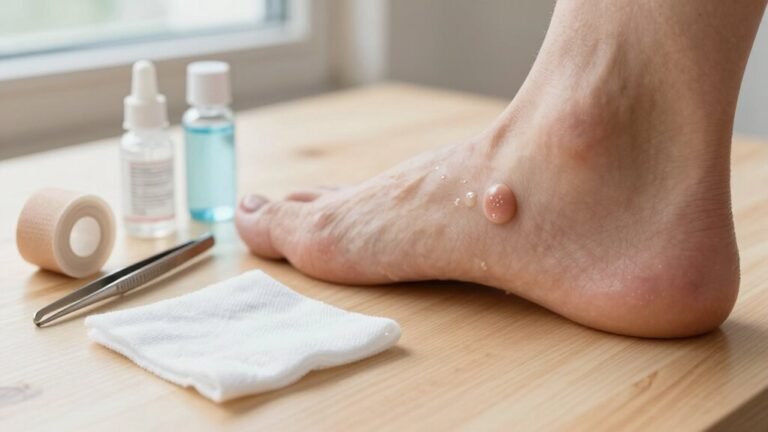
Do You Really Need Blister Care?
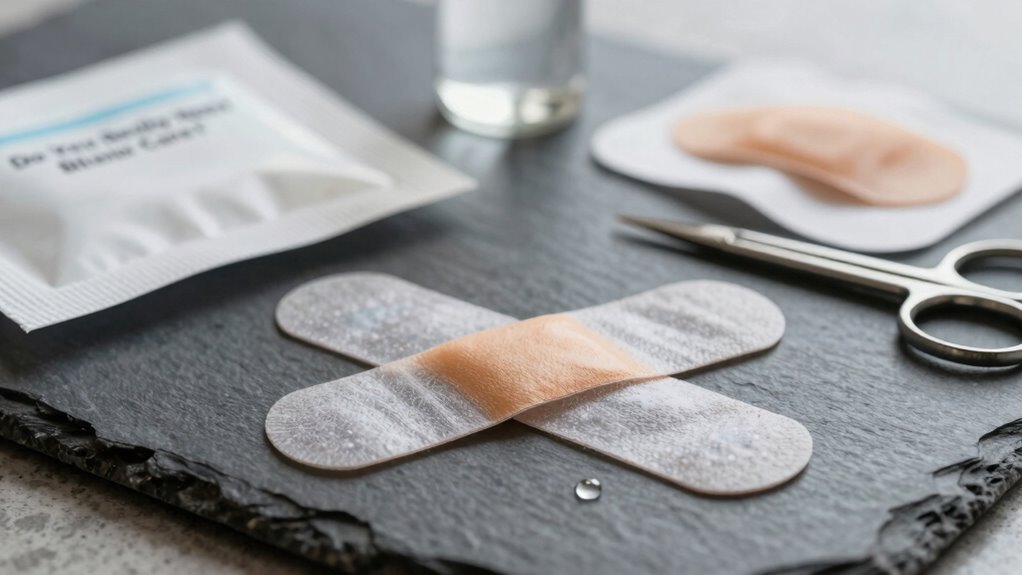
Yeah, you really do need to care for blisters—skipping it’s like inviting trouble to a party on your foot. Blister care is essential to prevent complications and promote faster healing.
Leave small blisters alone, but protect them with a bandage to reduce friction and keep them infection-free. This simple step in blister care ensures they heal properly without bursting on their own.
Large, painful blisters may need safe draining using a clean needle, followed by thorough cleaning. Afterward, apply a sterile bandage to support proper blister care and speed up recovery.
Ignoring signs like pus or spreading redness can lead to serious infections. Proper blister care includes monitoring for these warning signs and acting quickly.
Treat blisters right, and you’ll get back to your routine sooner. There are even more smart ways to prevent blisters from ruining your day.
What Causes Blisters and How Do They Form?
Ever had that unmistakable bubble pop up after a long hike or blistering sunburn?
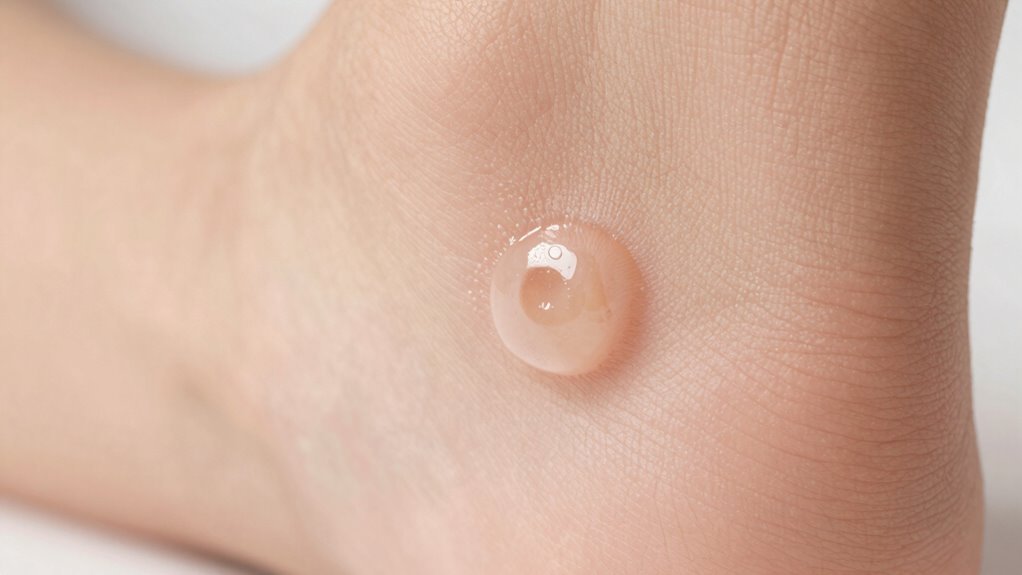
You’re not alone—blisters form when friction, heat, or irritation pushes your skin layers apart, and your body rushes in with fluid to protect the area.
On your feet or palms, repeated rubbing traps moisture, increasing grip and, yep, blister risk—especially under heavy loads or nonstop movement.
Sunburns, frostbite, or even a hot scald do similar damage, creating fluid-filled pockets as your skin reacts.
Some bugs like chickenpox or herpes join the party with their own blistering rashes, while allergies to poison ivy can turn your skin into a bumpy, itchy bubble wrap.
Even your immune system can go rogue, mistaking skin connections for enemies.
And if your genes are involved, like in epidermolysis bullosa, even a hug might leave a blister.
Wild, right?
Your skin’s just trying to heal—sometimes it gets *too* creative.
This protective fluid buildup occurs in the impacted area just beneath the outer layer of skin.
When Can You Leave a Blister Alone?
You’ve got a blister, but before you reach for the needle, pause—sometimes the best move is no move at all.
If it’s small, unbroken, and not bugging you, leave it alone!
That little bubble is actually doing its job, acting like a natural cushion and bandage all in one.
The fluid inside protects the skin underneath while your body works its healing magic—pretty cool, right?
As long as it’s not in the way of shoes or pressure, just protect it, keep it clean, and let time do the rest.
No popping, no drama.
Think of it as trust-falling into your body’s repair skills.
Even if you’re diabetic or immunity’s a concern, keeping it intact is smarter.
Just monitor it, reduce friction, and let your skin breathe.
Trust us, your blister’s got this—you really can just walk away.
The intact roof stage helps prevent infection and supports natural healing when left undisturbed.
Signs a Blister Needs Immediate Attention
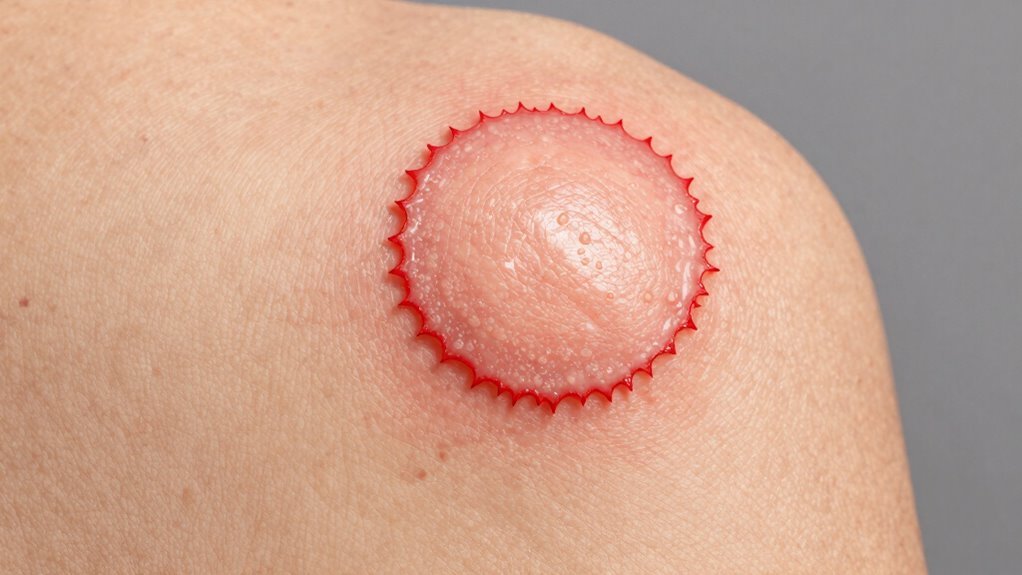
Could your blister be crying for help?
If pain’s getting worse instead of better, or feels sharp and intense, don’t brush it off—it’s time to act.
A blister that stays sore despite your best care, or one that’s super tender to touch or movement, might be screaming for attention.
Redness spreading out, warmth, swelling, or red streaks? Uh-oh, that’s trouble brewing.
Pus, greenish-yellow goo, or weird discharge means your blister’s not happy and needs real help.
If healing hasn’t started in a few days—or you’ve got blisters in strange spots like your mouth or eyelids—get it checked.
Fever, chills, or feeling flu-ish with a blister? That’s your body sounding the alarm.
Don’t wait—your health’s no joke, and neither is a blister gone rogue! foul smell can also signal a serious infection needing prompt medical evaluation.
The Risks of Ignoring an Open Blister
What could go wrong if you leave that open blister alone?
A lot, actually!
That tiny tear in your skin is like rolling out a welcome mat for bacteria.
You might notice redness, swelling, or pus—classic signs of infection creeping in.
Ignore it, and boom: cellulitis could take over, with red streaks spreading like wildfire, possibly needing antibiotics fast.
If the bug jumps into your bloodstream, things get serious—think fever, chills, even sepsis, where your body fights so hard it can harm itself.
Scary, right?
And if you have diabetes or weak circulation, your body can’t play defense as well, making healing harder.
That foot blister? It’s not just a “walk it off” moment.
Treat it early, or you could be facing way bigger trouble.
Don’t let a little bubble become a big oops!
Safe Ways to Drain a Blister at Home
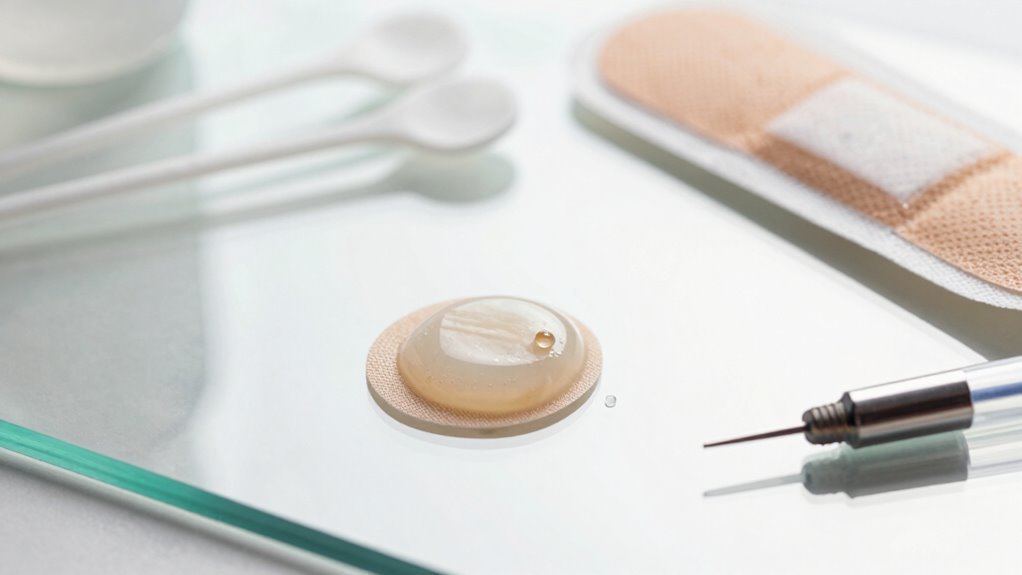
- Clean everything like you’re prepping a tiny surgery zone—yes, even your hands and that angry little bubble.
- Poke the edge gently with a sterilized needle—not the center, unless you enjoy pain and problems.
- Press out the fluid, but leave the skin flap like a cozy blanket—it’s nature’s bandage, genius!
- Slap on some ointment and cover it up—think of it as a spa treatment for boo-boos.
- Drain only if it’s huge and ruining your life—otherwise, let it be.
- And please, no threading—it’s not a TikTok hack.
- Your future, infection-free self will thank you.
Choosing the Right Bandage or Dressing
So, you’ve just drained that blister like a pro—awesome job—now what?
Time to pick the perfect bandage.
If it’s oozing, go for an island dressing—its spongy center soaks up fluid while the sealed edges keep gunk out.
Love convenience? Try hydrocolloid dressings; they turn gooey, stay on for days, and help your skin heal smoothly—great for small blisters or scrapes.
Got a bony spot like a heel or elbow? Foam dressings cushion and breathe, though you’ll change them more often.
If your skin’s super sensitive, non-adherent types won’t rip it off like a bad sticker.
And for larger, drier blisters, transparent films seal tight and let you peek without peeling.
Each one’s got a superpower—just match it to your blister’s vibe.
No capes, but they *are* healing heroes.
Preventing Blisters Before They Start
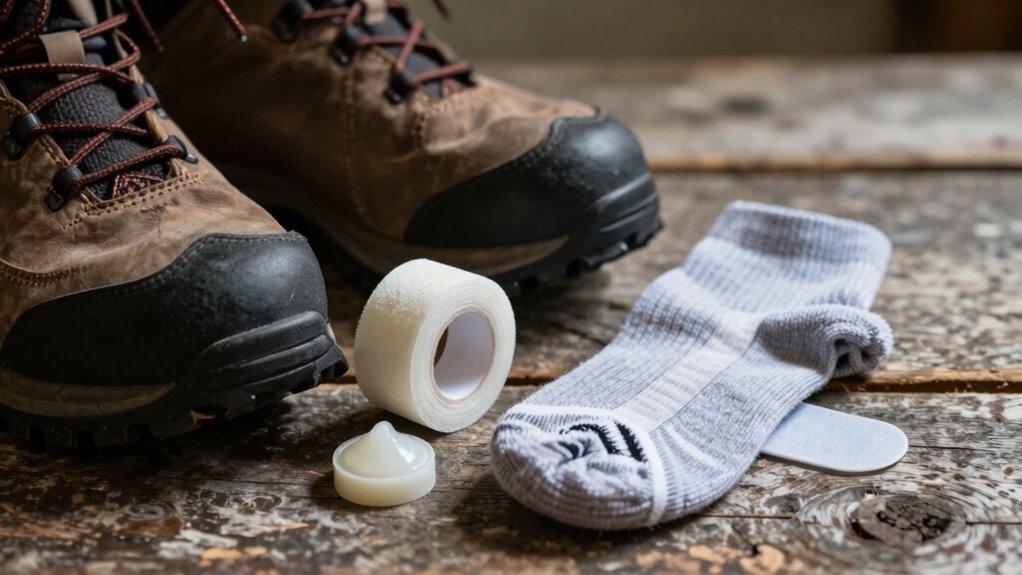
You’ve nailed the aftercare, but here’s the real power move—keeping blisters from forming at all.
Imagine finishing your run, hike, or long day on your feet with zero hot spots.
Sounds dreamy, right?
You can make it happen.
Small changes now save big pain later.
Think of your feet as teammates—they’ve got your back, so have theirs.
- Slip on properly fitted shoes and break in new kicks like you’re dating them—not rushing!
- Grab moisture-wicking, thick acrylic, or double-layer socks; your feet will thank you mid-mile.
- Tape those trouble spots early or slick ’em with lubricant—friction doesn’t stand a chance.
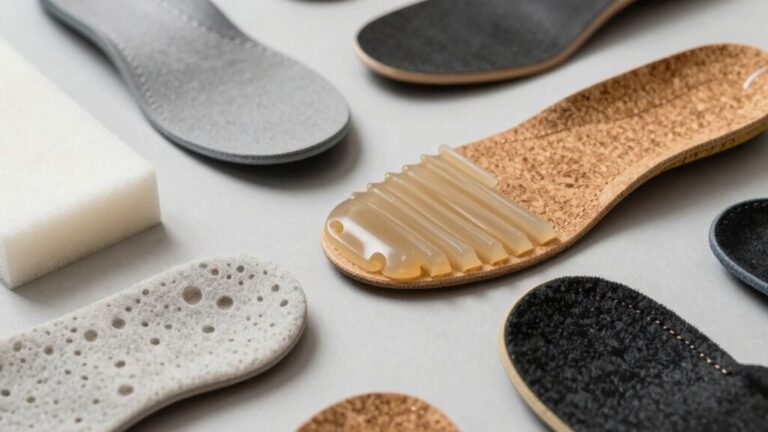
- Toss in cushioned insoles and keep moisture under control; dry feet are happy, blister-free feet.
When to See a Doctor for Blister Issues
While most blisters are more of a pesky souvenir than a real problem, it’s smart to know when that little bubble of skin is crying out for backup.
If it’s oozing pus, turns yellow or green, or the area gets red, warm, and swollen, don’t play hero—see a doc.
Worsening pain, spreading redness, or red streaks? That’s your body waving a white flag.
Fever, chills, or feeling crummy? Time for a pro.
Healing takes 1–2 weeks; if it drags on or the blister grows, skip the DIY fixes.
Recurring blisters, weird spots (like on eyelids or genitals), or burns causing blisters? Definitely not normal stuff.
If you’ve got diabetes, weak immunity, or poor circulation, get it checked fast—your body mightn’t fight well.
When in doubt, shout—your health’s worth more than toughing it out.
Frequently Asked Questions
Can Blisters Be Filled With Blood Instead of Clear Fluid?
Yeah, blisters can definitely fill with blood instead of clear fluid—those are called blood blisters.
You get them when something pinches or crushes your skin hard enough to break tiny blood vessels underneath.
They look dark red or purple and might feel tender, but hey, at least they’re your body’s way of wearing its bruises like tiny domes of tough armor!
They heal on their own, no drama.
Are Blister Patches Better Than Regular Bandages?
Yes, blister patches are way better than regular bandages—you’re not just covering a blister, you’re upgrading it.
They cushion 3x better, stay on 50% longer, and heal blisters 20% faster.
Plus, they’re waterproof, so showering or sweating? No problem.
Think of them as a mini spa for your blister—pampering, protecting, and speeding up healing while you walk, run, or just chill.
Your feet will thank you.
Do Blisters Heal Faster if Kept Dry?
No, blisters don’t heal faster when kept dry—you’re actually slowing things down.
Keeping that spot moist speeds up skin repair by up to twice as fast.
Think of it like a spa for your blister: happy, hydrated cells rebuild quicker.
Moist environments cut infection risk, reduce scarring, and skip the crunchy scab phase nobody wants.
Can I Exercise With a Blister on My Foot?
You can exercise with a blister, but you’re tempting fate—like poking a bubble wrap pack labeled “do not pop.”
Tape a hydrocolloid bandage or moleskin over it, wear double-layer socks, and lace your shoes snug but chill.
If it stings or squishes, stop—you’re not auditioning for a torture show.
Protect it now, or you’ll be hobbling later like a penguin in flip-flops.
Listen to your feet; they’ve got your back… or not.
Is It Safe to Pop a Blister With a Needle?
Yes, it’s safe to pop a blister with a needle—if you do it right.
Sterilize the needle with alcohol or flame, then poke 3–4 tiny holes at the blister’s edge.
Keep the skin intact, drain gently, and clean the area.
Slap on some antibiotic ointment, cover it up, and boom—you’re golden.
Just skip the drama of squeezing or ripping the roof off, unless you enjoy pain.
Smart moves mean faster healing!
Conclusion
You’ve got this! Blisters might be pesky little party crashers, but now you know when to let them ride and when to take charge. Treat them right, and they’ll clear out fast—no drama. Keep your feet happy, your socks smart, and your bandaids ready. Think of blister care like a tiny bodyguard for your adventures. Stay on your toes, and your skin will thank you with every step!
References
- https://www.urmc.rochester.edu/encyclopedia/content?contenttypeid=85&contentid=P00262
- https://www.medicalnewstoday.com/articles/264783
- https://www.atlantamedicaldermatology.com/blog/blisters-blistering-skin-disease/
- https://rarediseases.org/rare-diseases/autoimmune-blistering-diseases/
- https://pubmed.ncbi.nlm.nih.gov/8570998/
- https://medlineplus.gov/blisters.html
- https://www.uofmhealth.org/our-care/specialties-services/blistering-skin-disorders-immunobullous-disease
- https://my.clevelandclinic.org/health/diseases/16787-blisters
- https://pro.blister-prevention.com/office-hours/should-blisters-be-lanced-deroofed-intact/
- https://www.nationwidechildrens.org/specialties/sports-medicine/sports-medicine-articles/the-abcs-of-blister-care