How to Hike With Arthritis Without Overdoing It
To hike with arthritis without overdoing it, choose trails that are short, flat, and have smooth paths. These surfaces are easier on your joints and help reduce strain during your walk.
Wear supportive shoes with cushioned soles to absorb impact and improve comfort. Using trekking poles can also help by reducing pressure on your knees and improving balance.
Before starting, take time to warm up your muscles and joints. Pace yourself, take frequent breaks, and avoid carrying a heavy backpack.
Stay hydrated throughout your hike and stretch afterward to ease stiffness. Allow your body time to recover so you can enjoy more hiking adventures in the future.
Choose the Right Trail for Your Mobility Level
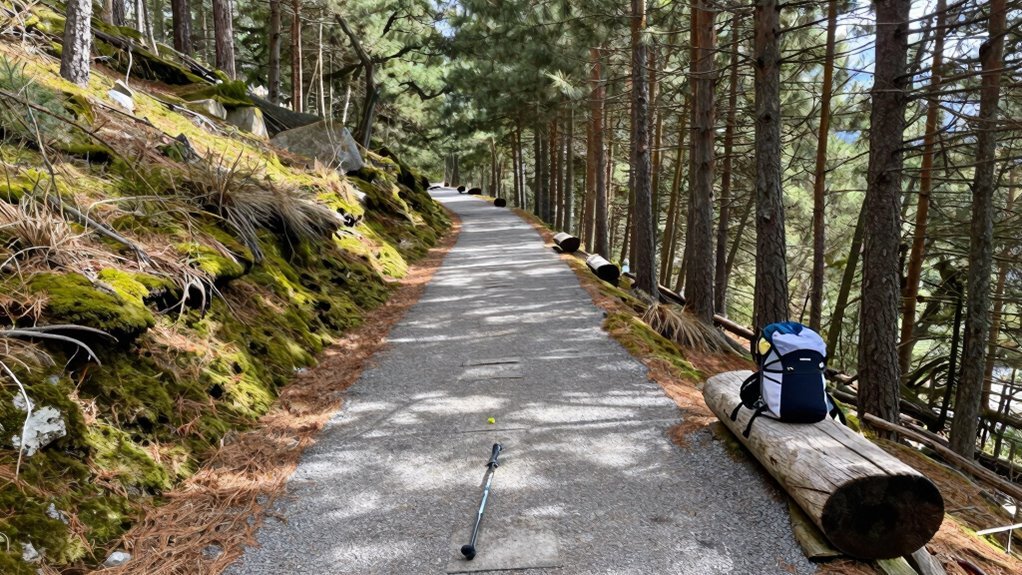
Wondering how to hit the trail without turning your knees into creaky hinges? You’ve got this—just start smart. Pick short, sweet trails of 1 to 2 miles with easy ratings and gentle slopes.
Avoid steep climbs and rocky paths—they’re like bullies for your joints. Smooth, well-maintained surfaces keep you steady and happy. Loop trails are golden: no backtracking, less fatigue.
Use trail guides or park websites to check difficulty, elevation, and what real hikers say—especially seniors who know their stuff. When you match the hike to your fitness level, you protect your joints without missing the fun. Think of it as hiking smarter, not harder.
Look for gentle inclines to prevent unnecessary strain on your joints and make each step more comfortable.
Before you know it, you’ll be strolling through nature with confidence, breeze in your hair, and knees that actually thank you. Who knew trails could feel this good?
Invest in Supportive Hiking Footwear
Stepping into the right pair of hiking shoes can feel like hitting the jackpot—especially when your joints are begging for a break.
You want boots that hug your feet like a favorite pair of jeans—snug, supportive, and kind.
Look for a 9mm heel drop or higher to ease stress on your soles, plus shock absorption rated at 100 SA or more to soften every step.
Flexible soles move with you, while lightweight builds keep your legs from turning into lead anchors.
A wide toe box? Absolutely.
Let those toes splay freely!
And with extra depth and removable insoles, you can fit custom orthotics without a squeeze.
One standout option delivers exceptional impact protection with a 126 SA score, making each step notably easier on arthritic joints.
Your feet won’t feel like they’ve been in a wrestling match
Every rocky path feels a little less punishing
You’ll actually look forward to the downhill part—for once!
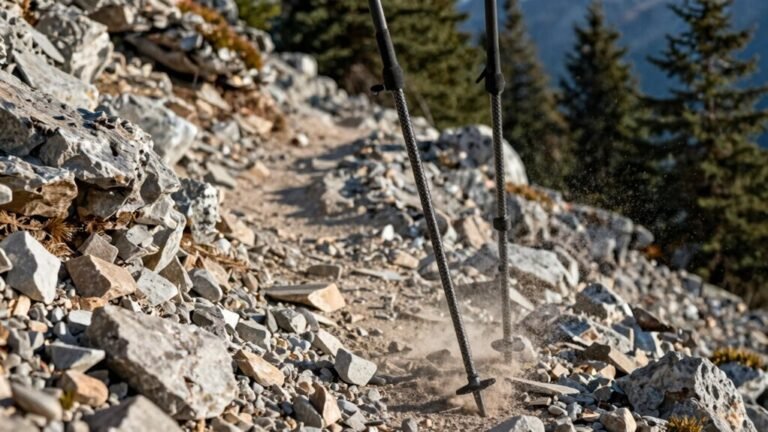
Use Trekking Poles to Reduce Joint Strain
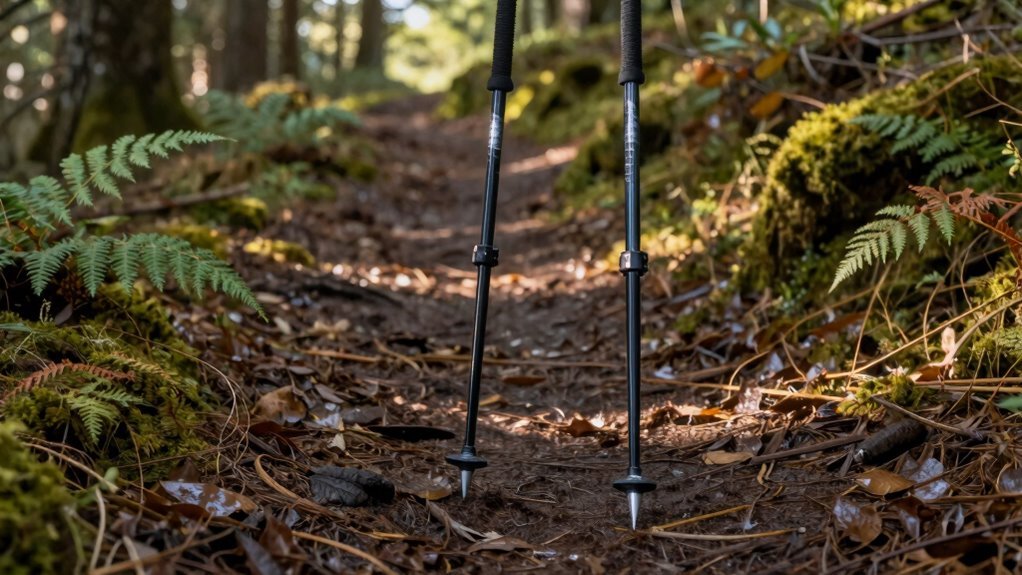
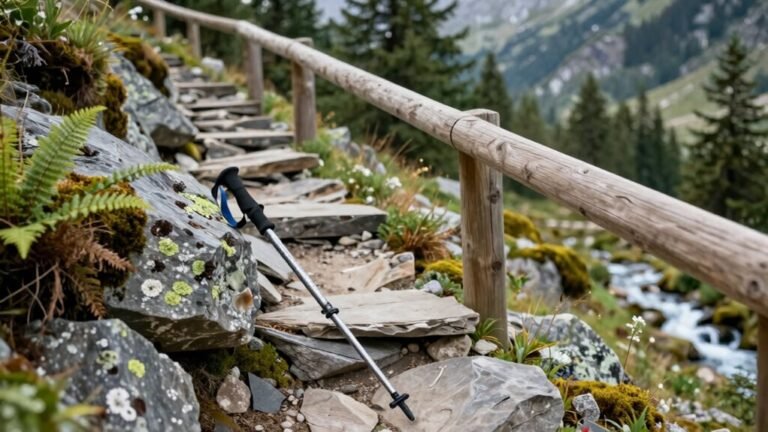
When the trail starts to feel like it’s working against your joints, trekking poles step in like a trusty sidekick—ready to take some of the pressure off.
You’ll love how they reduce knee, hip, and back pain—91% of users feel relief fast, sometimes in just a week.
They cut joint stress by 10–20%, especially going downhill, where your knees usually throw a silent protest.
Poles also spread your weight more evenly, using your arms and core so your legs don’t do all the complaining.
They boost balance on rocky paths and keep you steady, even with a loaded pack.
Bonus: they reduce muscle soreness and protect your cartilage—so you’re less likely to waddle like a penguin the next day.
Plus, you’ll walk nearly four times farther without burning out.
Think of them as mini superheroes for your stride—light, loyal, and always up for adventure.
91 participants completed the full 12-week program.
Warm Up Before Hitting the Trail
You’ve got your trekking poles ready to lighten the load on your joints, but don’t hit the trail just yet—your body’s got a warm-up queue, and it’s time to hit play. Spend 10–15 minutes waking up your muscles and joints with gentle movement. Try marching in place, arm circles, and heel lifts to boost blood flow. Add dynamic moves like leg swings, hip abductions, and split squats to mimic hiking actions safely. Don’t skip calf stretches or toe scrunches—they prep your feet for rocky paths. A warm shower or heating pad beforehand? Even better. Your stiff joints will thank you.
- Your body feels looser, more alive—like you’ve hit the “refresh” button
- Every step becomes easier, smoother, more joyful
- You start strong, confident, and ready to savor the trail
Take Frequent Breaks to Prevent Fatigue
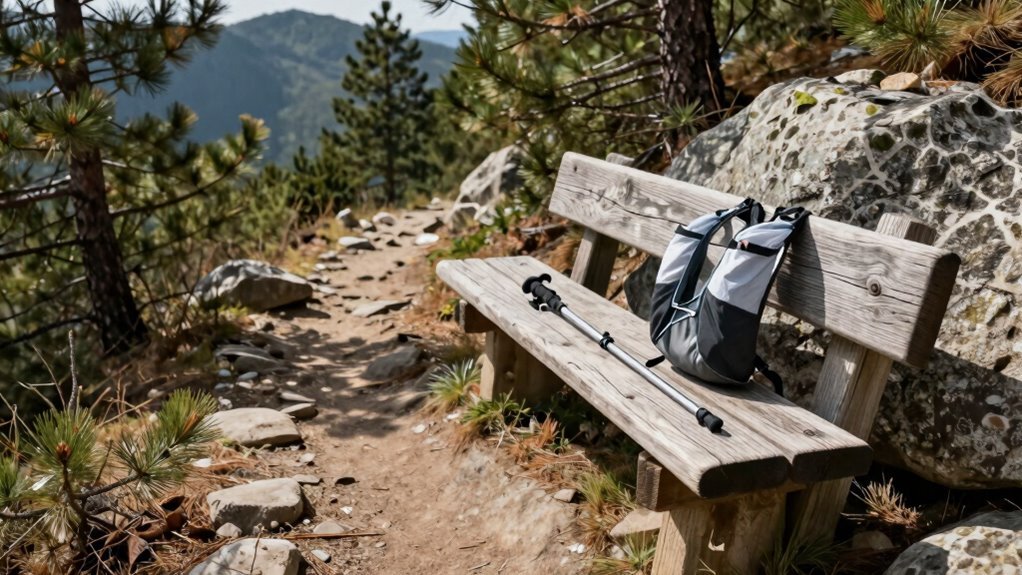
Even if you’re feeling unstoppable, your joints will appreciate a little pit stop now and then—so don’t power through like a robot on a mission. Take short breaks every 20 to 30 minutes to let your joints reset and reduce stress buildup.
Find a shady rock or log, sit down, sip some water, and let your body catch up—your knees and hips will thank you. These mini timeouts prevent overexertion and keep pain in check.
Think of it like snack time, but for your joints. Listen closely: if you feel stiffness, fatigue, or discomfort, it’s time to pause. Ignoring those signals can backfire fast.
Break your hike into fun, bite-sized chunks instead of a marathon. Rest, recharge, and get back out there—because pacing yourself means you’ll enjoy the trail more without paying for it later.
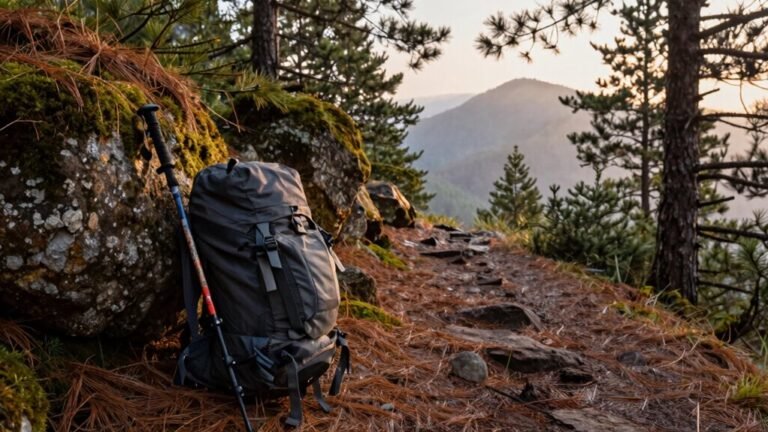
Pack Light to Minimize Joint Stress
Now that you’ve got your break rhythm down—because let’s be real, snack time for your joints is just as important as snack time for your stomach—it’s time to talk about what’s actually in your pack.
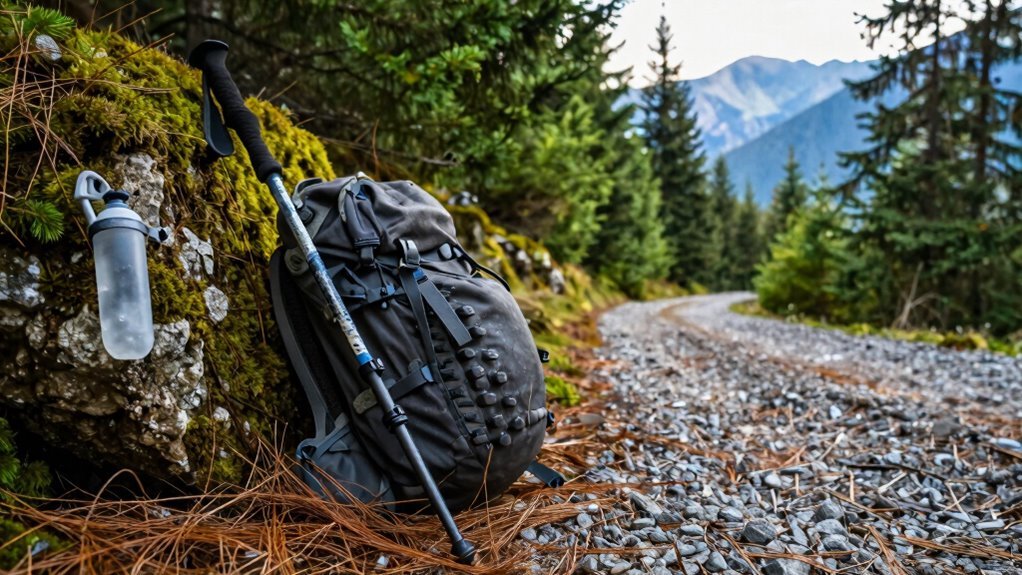
Every extra pound you carry beats down on your knees, hips, and back, especially with arthritis.
Keep it light, and your joints will thank you like you just handed them a cold drink after a long walk.
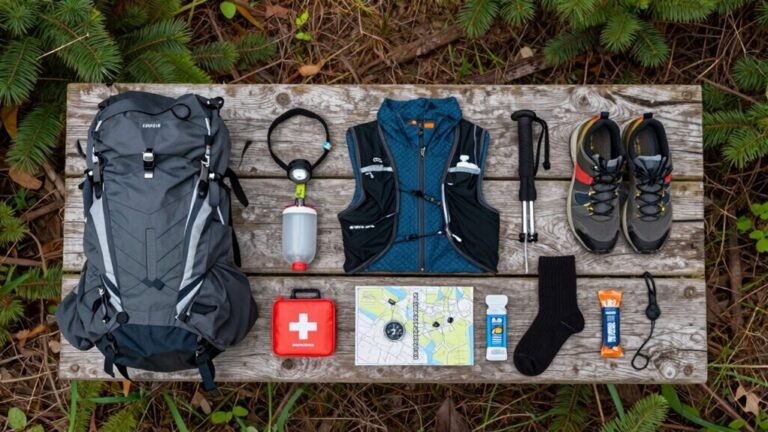
Ditch the “just in case” junk, stick to essentials, and embrace gear that pulls double duty.
- Imagine hiking without that ache screaming at you to stop
- Feel the relief in your knees with every uphill step
- Smile as your backpack doesn’t feel like a burden from an action movie villain
Use trekking poles, pack smart, and let your hips—not your shoulders—take the load. Lighten up, literally, and love the trail again.
Stay Hydrated and Maintain Energy Levels
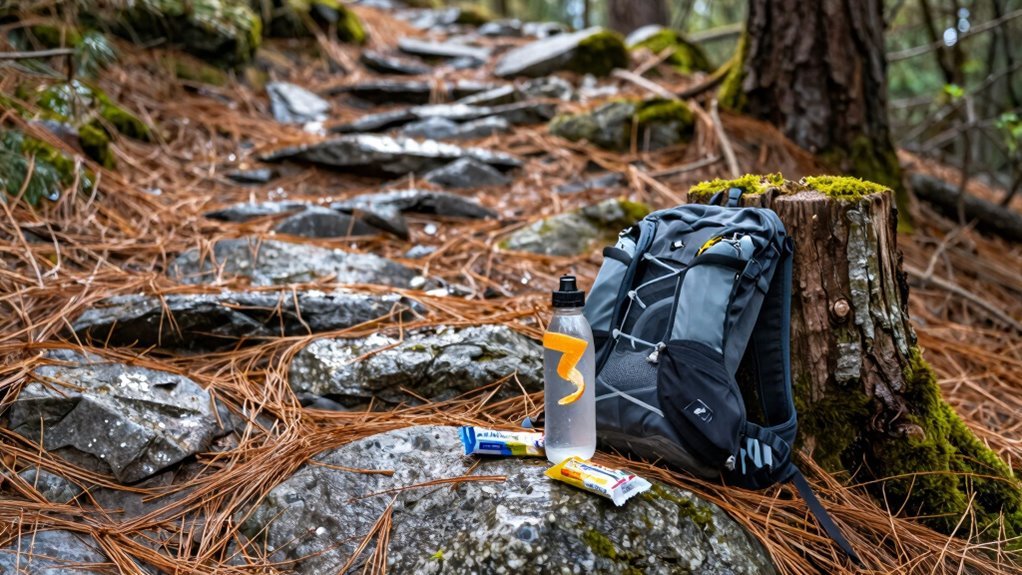
Sipping your way to smoother strides? Absolutely!
When you stay hydrated, your joints stay cushioned and happy, thanks to that slick synovial fluid working hard as your body’s natural shock absorber.
Skip the water, and you’ll likely face more stiffness, pain, and even inflammation flare-ups—no fun on the trail.
But drink up, and you’ll keep waste flushed out, inflammation in check, and energy humming.
Water fuels your muscles, delivers oxygen, and with a little help from electrolytes (hello, banana snack!), prevents cramps.
Plus, staying hydrated helps your body process arthritis meds and repair joints post-hike.
Don’t wait till you’re parched—by then, it’s too late!
Carry plenty, sip often, and use reminders if you’re forgetful (we’ve all been there).
With every invigorating gulp, you’re not just quenching thirst—you’re boosting stamina, focus, and trail joy.
Hydration’s like a secret power-up: simple, effective, and always by your side!
Apply Joint-Friendly Hiking Techniques
You’ve got your water bottle in hand and your banana stashed in your pack—great start!
Now let’s make every step easier on your joints with smart hiking techniques.
Wear supportive shoes and grab those trekking poles—they’re like mini bodyguards for your knees.
Pick softer dirt trails over pavement, and take it slow, especially downhill.
Bend your knees slightly, keep your posture tall, and let your poles take some of the pressure.
- Your joints don’t lie—honor what they’re telling you
- Every step forward is a win, no matter how small
- You’re strong, capable, and totally in charge out here
Start with short, flat trails and build up as you feel stronger.
With the right moves, hiking isn’t just doable—it’s joyful.
Cool Down and Stretch After Your Hike
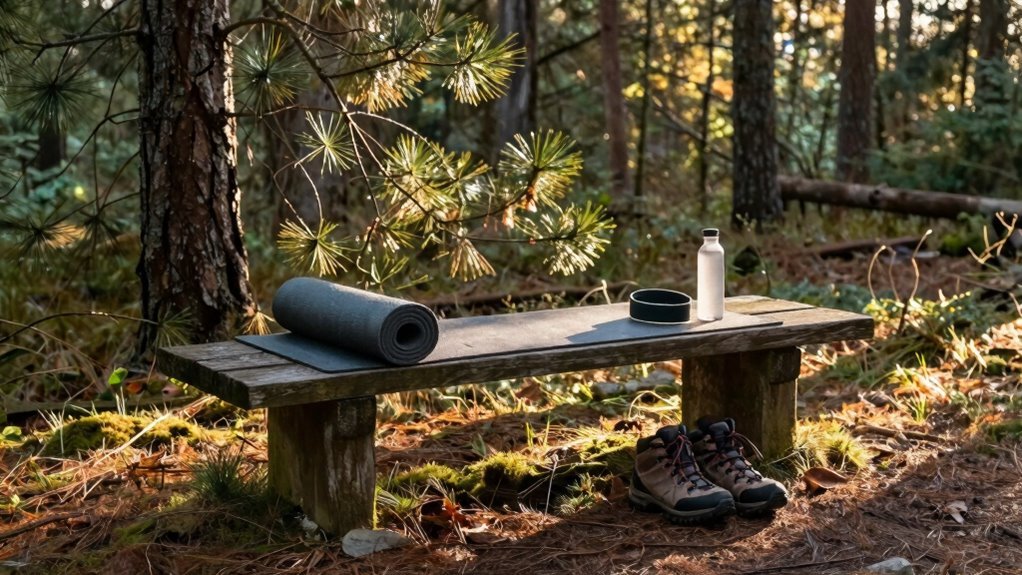
Wrap up your adventure the right way—don’t let your joints pay the price later.
Cool down with a few minutes of slow walking to ease your body out of hike mode.
Once you’re done, stretch those muscles while they’re still warm—your quads, hamstrings, calves, and hips will thank you.
Static stretches help prevent that stiff, “I aged 20 years overnight” feeling.
Grab a foam roller to work out kinks and keep your joints moving smoothly—think of it as a mini self-massage for your hiking heroes.
If things feel a bit swollen, try a cold pack to calm inflammation, or a warm one to relax tight spots.
Don’t forget to drink water and refuel—your joints thrive on hydration and nutrients.
And hey, nap if you need to—rest is like a reset button for your whole body.
Smart recovery means more hikes ahead!
Frequently Asked Questions
Can I Hike During a Flare-Up?
No, you shouldn’t hike during a flare-up—your joints are already throwing a tantrum, and hiking’ll just make them madder.
Sharp pain? That’s your body yelling, “Stop!”
Pushing through means more swelling, stiffness, or long-term damage.
Wait ’til the storm passes.
Rest, chill your knees, and let things calm down.
Then lace up, hit the trail fresh, and hike smart—you and your knees’ll have way more fun that way.
Are There Arthritis-Friendly Hiking Groups?
Oh, you *bet* there are arthritis-friendly hiking groups—because nothing says “fun” like trading joint pain for joy with people who get it!
You’ll find your people with Senior hiking meetups, Disabled Hikers (love the name, right?), and CreakyJoints crews.
They all stick to gentle trails, share pain-smart tips, and laugh their way through creaky knees.
You’re not just hiking—you’re thriving, one easy step at a time.
Should I Take Medication Before Hiking?
Yes, you should take medication before hiking if your doctor says it’s safe.
Pop a pain reliever 30 minutes prior—acetaminophen for general relief or an NSAID for inflammation.
It’ll help you move easier and enjoy the trail more.
Think of it as greasing your joints for adventure!
Just stick to the recommended dose, and don’t forget: meds work best when paired with smart pacing and good boots.
Is Hiking Safe With Knee Replacements?
Yes, hiking’s a green light with knee replacements—think of your joints as rebooted engines ready for scenic routes.
Doctors give the thumbs-up since low-impact trails are kind to new knees.
You’ll love how fresh air fuels recovery while boots crunch gravel with confidence.
Just start slow, pick gentle slopes, and let your strength grow like wildflowers in spring—your adventure’s just beginning, not over!
Can Diet Affect Hiking Comfort With Arthritis?
Absolutely, your diet can make or flip your hiking comfort with arthritis.
Nosh on olive oil, fatty fish, and tons of veggies—they fight inflammation like tiny superheroes.
Toss in walnuts and green tea, skip the junk food, and your joints might just thank you mid-trail.
Less swelling, more swagger.
Think of it as fueling your adventure from the inside out—delicious *and* pain-busting.
Win-win!
Conclusion
You’ve got this, trailblazer! Pick a path that suits your pace, gear up smart, and let those trekking poles do some 1950s-style heavy lifting. Listen to your body, take breaks like a seasoned explorer, and keep snacks handy—no floppy disk of energy here! With the right moves and a smile, you’re not just hiking, you’re conquering nature, one happy step at a time. Now go shine, you magnificent adventurer!
References
- https://www.samuelfinkmd.com/blog/how-to-tackle-summer-hikes-with-arthritis
- https://www.arthritis-uk.org/news/2025/february/the-benefits-of-nordic-walking-if-you-live-with-arthritis/
- https://www.ehrr.ca/best-mobility-exercises-seniors-arthritis/
- https://hwypt.clinic/blog/hiking-nature-trails-for-seniors-active-aging-guide
- https://www.arthritis.org/health-wellness/healthy-living/physical-activity/getting-started/exercise-and-strength-training-with-arthritis
- https://www.youtube.com/watch?v=GT0mDPJULAE
- https://sectionhiker.com/hiking-with-arthritis/
- https://www.qcora.com/hiking-with-dr-stewart/
- https://casacolinasurgerycenter.com/news/summer-outdoor-exercises-benefit-your-joint-health
- https://runrepeat.com/guides/best-plantar-fasciitis-hiking-shoes