How to Hike Safely With Balance Issues
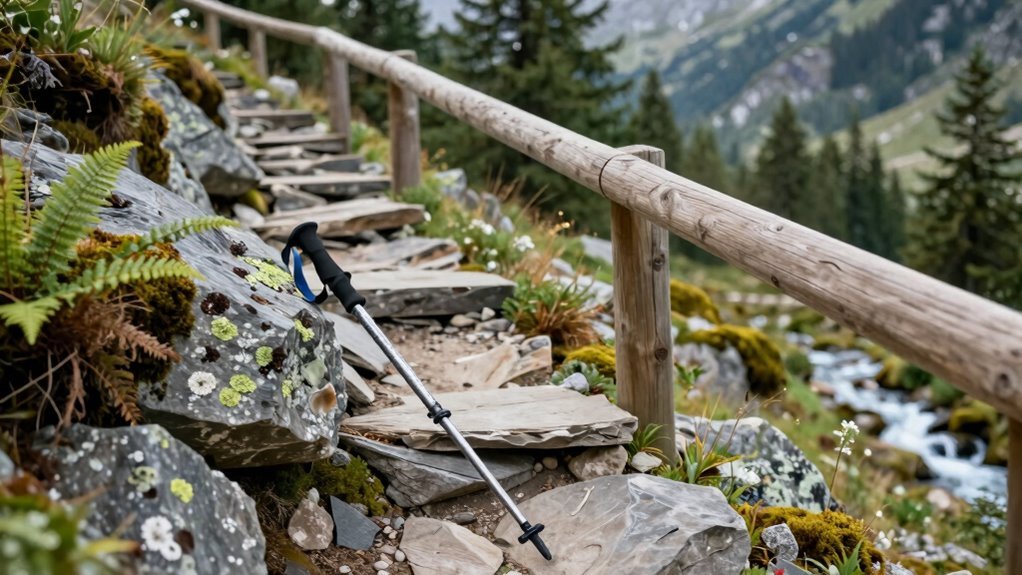
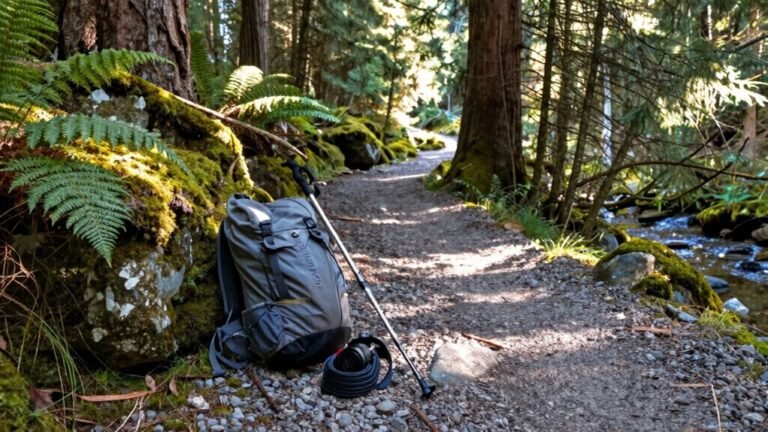
Lace up supportive boots with a snug heel and grab trekking poles—they’re essential for hiking safely with balance issues. These poles act like training wheels on trails, providing stability on uneven terrain.
Pick flat, firm paths to minimize tripping hazards and maximize confidence. Bring a trusty buddy who won’t mind spotting you, like a hiking coach ensuring your safety.
Take it slow, stay centered, and let your poles handle the obstacles like roots and rocks. Short steps, steady breath, and a smile go a long way.
Turn back anytime it feels off—no shame in saving the adventure for another day. You’re already on the path to better balance, and there’s even more waiting just ahead.
Choose Supportive Footwear
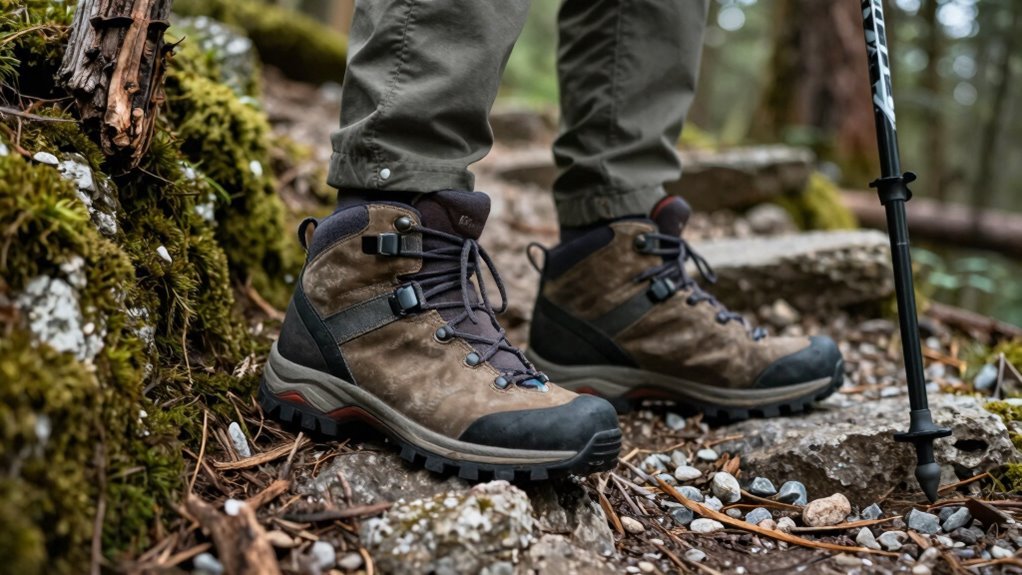
Lace up the right pair and step into confidence—your feet are your foundation, especially when trails get tricky.
You wouldn’t build a house on wobbly stilts, so don’t hike in flimsy shoes!
Opt for supportive boots with a snug heel counter that hugs your heel—no slipping, no blisters, just stability.
High-cut designs give your ankles a security blanket, while stiff soles handle rocky ground so your feet don’t have to.
Ditch the slippers and high heels (yes, hiking in stilettos is a *bad* idea).
Instead, pick boots with a moderate to high heel drop—they reduce strain and keep you balanced.
Studies show 90% feel steadier in supportive kicks, and 85% would wear them to avoid face-planting on the trail.
Your feet will thank you, your balance will improve, and let’s be honest—looking cool helps too.
40% lighter trail runners can enhance mobility and reduce fatigue, offering better ground feel for uneven terrain.
Use Trekking Poles for Stability
Gripping a pair of trekking poles isn’t just for seasoned hikers—it’s like giving yourself two extra legs!
They boost balance by keeping two points on the ground even when you lift a foot, so wobbles turn into wins.
Studies show they help on tricky spots, like logs, and are must-haves if you’re carrying a pack.
They cut knee and ankle strain, especially going downhill, so your joints stay happier.
Use them opposite your legs—right pole with left foot—for smooth, steady rhythm.
Adjust them so your elbows bend at 90 degrees, and don’t forget to use the wrist straps right.
They turn every push into power while waking up core muscles and burning more calories.
Sure, you might worry about leaning too hard on them, but hey, confidence on the trail beats fear any day—step steadier, walk stronger!
Adding poles can increase calorie burn by about 20 percent calorie bonus due to greater upper body engagement.
Start With Accessible Trails

Picking the right trail can turn a shaky outing into a confident adventure, and starting with accessible paths is your secret weapon for staying steady on your feet.
Look for firm, flat surfaces like crushed stone or geocell-stabilized trails—they’re tough on erosion but kind to your balance.
Skip loose gravel or cracked pavement that love to play trip-and-slip.
Check trail maps for short loops with benches near the start, so you can hike a little, rest a lot, and still feel like a champ.
Wide, barrier-free paths give you room to wobble without worry.
Boardwalks over marshes? Yes, please—just make sure they’ve got anti-slip treads.
Avoid roots, rocks, and surprise slopes by scouting ahead online or using accessible hiking guides.
Geocell-stabilized trails maintain stability over time because they lock fill material in place using a honeycomb-like grid, greatly reducing surface shifting underfoot honeycomb-like grid.
And hey, even if the trail’s easy, you’re still wild and free—just wiser.
Hike With a Trusted Companion
You’ve picked the perfect trail—flat, firm, and full of benches—so now let’s talk about your next best move: bringing a solid hiking buddy.
Seriously, a trusted companion isn’t just great company—you’re your personal balance coach, snack reminder, and emergency backup all in one.
- They’ve got your back when gravel shifts underfoot and you wobble like a newborn deer.
- They notice when you’re slowing down before you even realize you’re tired.
- They help adjust your poles or carry a bit of your load so you stay steady.
- They’ll turn around with you if things feel off—no judgment, just teamwork.
Hiking with a friend who gets it? That’s not just smart—it’s trail magic in action.
Plus, you’ll laugh more.
And who doesn’t need more trail giggles?
Take Your Time and Pace Yourself
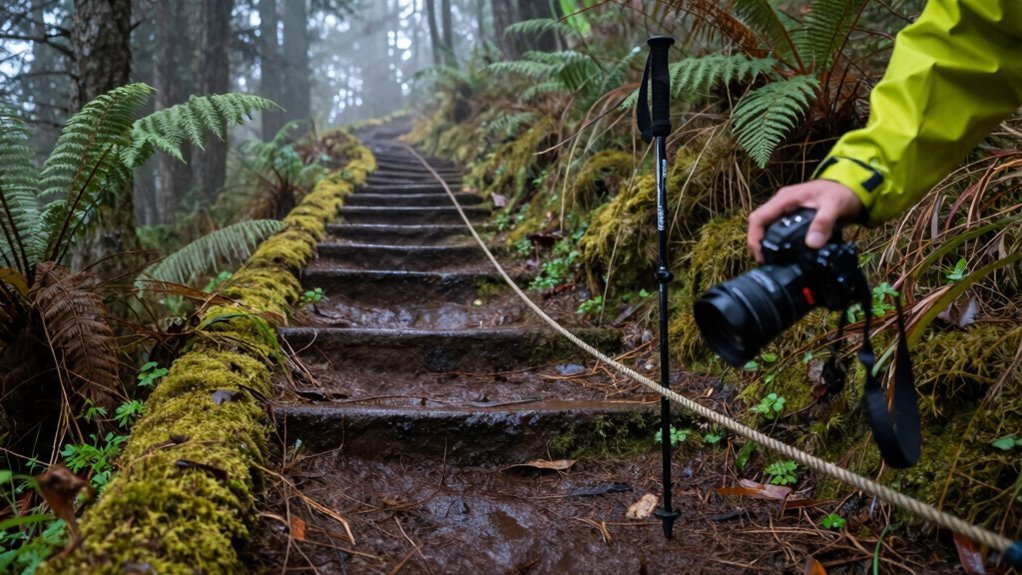
When the trail stretches out ahead and your boots are laced tight, it’s easy to hit the ground running—literally.
But slow down, trailblazer—rushing at the start often leaves you drained when the real challenge hits.
Take your time and pace yourself like a pro, not a panic-packed tourist on flatbread and ambition.
Short, deliberate steps on rocky downhill stretches keep you steady and reduce slips.
If your feet ache or muscles whisper “nope,” listen!
A quick pause now prevents bigger trouble later.
Hiking’s tough—about half of mountain rescues happen because folks underestimated the effort.
Match the trail to your fitness, not your ego.
With balance in mind, every breath and step counts.
You’re not racing; you’re savoring.
Stay Centered With Proper Posture
Stand tall like a tree that’s proud of its roots—your posture is your power move on the trail.
When you keep your spine aligned and shoulders back, you’re not just hiking; you’re owning every step with confidence and control.
Good posture cuts fatigue, keeps your balance sharp, and turns shaky paths into joyful adventures.
Think of your body as a well-tuned machine—everything in sync so you can move smoothly, no wobbling or shuffling like a penguin on ice!
- You feel stronger, lighter, and more in charge with each stride
- Your back stops nagging you like an overprotective parent
- Trekking poles become trusty sidekicks, not crutches
- Every uphill feels like a victory dance, not a struggle
Stay centered, stay proud—your trail story is worth standing tall for.
Carry Essential Safety Gear
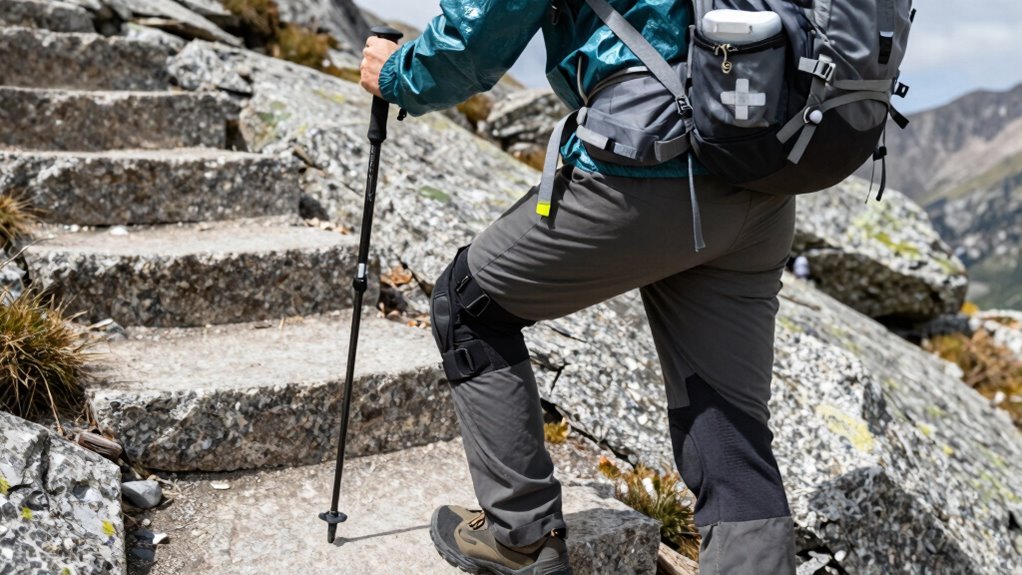
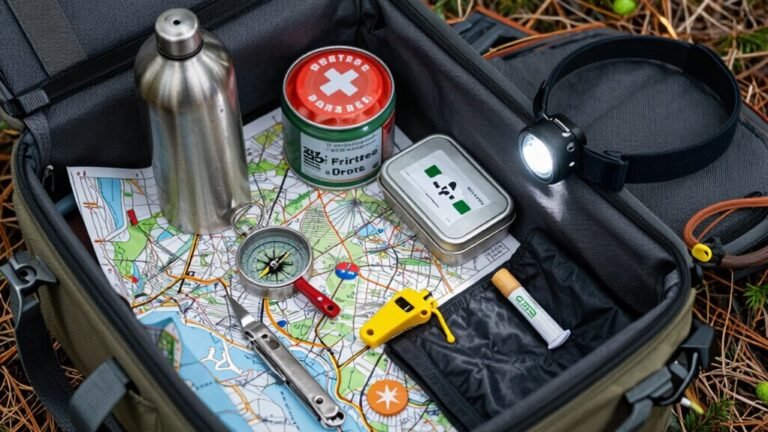
Even if the trail throws wobbles your way, you’ve got the right gear to keep your cool—think of it as your adventure pit crew packed into one smart setup.
Grab trekking poles with carbide tips; they shift 20% of the load to your arms and steady you on slick rocks or sketchy stream hops.
Wear a balanced backpack—load it right, with heavy stuff near your back, and tweak the straps as you go to stay aligned and comfy.
Toss in a personal locator beacon; if you take a tumble solo, it pings your GPS spot to rescuers (just don’t expect a thank-you text).
Slam two aspirins if your chest flares, antihistamines for bee attacks, or ibuprofen for that throbbing ankle—wrap it snug with the brace, too.
Merino socks, a trusty visor, and a rain shell? Non-negotiables.
They’re the unsung heroes keeping you dry, cool, and stable when the trail turns drama queen.
Know When to Turn Back
- That shaky leg? It’s not “just tired”—it’s your balance breaking down.
- That backpack digging in? Poor load + fatigue = trouble walking straight.
- That hill that looked easy? Slopes lie, especially when your knees scream “no.”
- That shortcut? Save your ankles—nature doesn’t do mercy rolls.
Turn around proud. You’ll live to hike another, better day—maybe even one with snacks at the summit.
Frequently Asked Questions
Can I Hike if I Use a Walking Cane?
You bet you can hike with a walking cane—it’s like bringing a trusty sidekick on the trail!
It gives you extra support, especially on bumpy or sloped paths, and helps take pressure off your joints. Just make sure it’s adjusted to the right height so you’re not hunching or stretching.
Pick sturdy terrain-friendly trails, stay aware of your balance, and hey, your cane’s got your back—literally!
Are There Hiking Groups for People With Disabilities?
Yeah, there are hiking groups just for people with disabilities, and they’re awesome!
You’ll find folks who get it—access needs, pacing, breaks, the whole deal.
Groups like Disabled Hikers and Unlikely Hikers welcome you with open arms, no trail ego, just good vibes.
They’ve got adaptive tools, chill check-ins, and zero pressure.
It’s hiking, but softer, kinder, and way more fun when you’re not going it alone—think of it as nature with a support squad!
How Do I Improve Balance for Hiking?
You improve balance for hiking by standing on one leg while brushing your teeth—turn chores into fun challenges!
Add squats and lunges to build trail-ready strength.
Try closing your eyes during balance drills to level up.
Use a countertop for light support at first, then let go as you gain confidence.
Toss in some pretend rock-hopping in the yard—seriously, it helps!
What if I Fall During a Hike?
If you fall during a hike, stay calm and check yourself for injuries—don’t rush up.
Use your hands and knees to slowly rise, or roll to your side first.
If you’re hurt, stop, rest, and call for help.
Carry a whistle or phone for emergencies.
Laugh it off if it’s minor—hey, even pros wipe out!
Then brush off, learn from it, and keep going.
You’ve got this!
Can Physical Therapy Help With Hiking Stability?
Absolutely, physical therapy’s like your personal pit crew for hiking stability—tuning you up before the big race!
You’ll strengthen muscles, boost balance, and move with way more confidence.
It helps your hips, knees, and ankles work better together, so you’re not wobbling like a newborn kangaroo.
With targeted exercises and outdoor practice, you’ll stride smoother, avoid slips, and feel way more in control on every trail twist and turn.
Conclusion
You’ve got this! With the right shoes, poles, and a buddy by your side, every step becomes a little adventure, like walking across a wobbly bridge with your dog happily tugging ahead. Take it slow, stay steady, and laugh off the wobbles—they’re just part of the fun. Nature’s waiting, and so is your next great trail story. Just pace yourself, stay safe, and enjoy the view!
References
- https://pmc.ncbi.nlm.nih.gov/articles/PMC5599840/
- https://www.thehikinglife.com/2020/08/trail-runners-vs-hiking-boots-a-30-year-perspective/
- https://runrepeat.com/guides/best-plantar-fasciitis-hiking-boots
- https://www.scirp.org/journal/paperinformation?paperid=115399
- https://egrove.olemiss.edu/cgi/viewcontent.cgi?article=1078&context=etd
- https://pmc.ncbi.nlm.nih.gov/articles/PMC10278322/
- https://academic.oup.com/ptj/article/80/1/17/2842465
- https://www.outsideonline.com/health/training-performance/trekking-poles-research/
- https://pubmed.ncbi.nlm.nih.gov/32980249/
- https://www.youtube.com/watch?v=2s6ra1vlEhw