How to Avoid Falls on Trails for Seniors
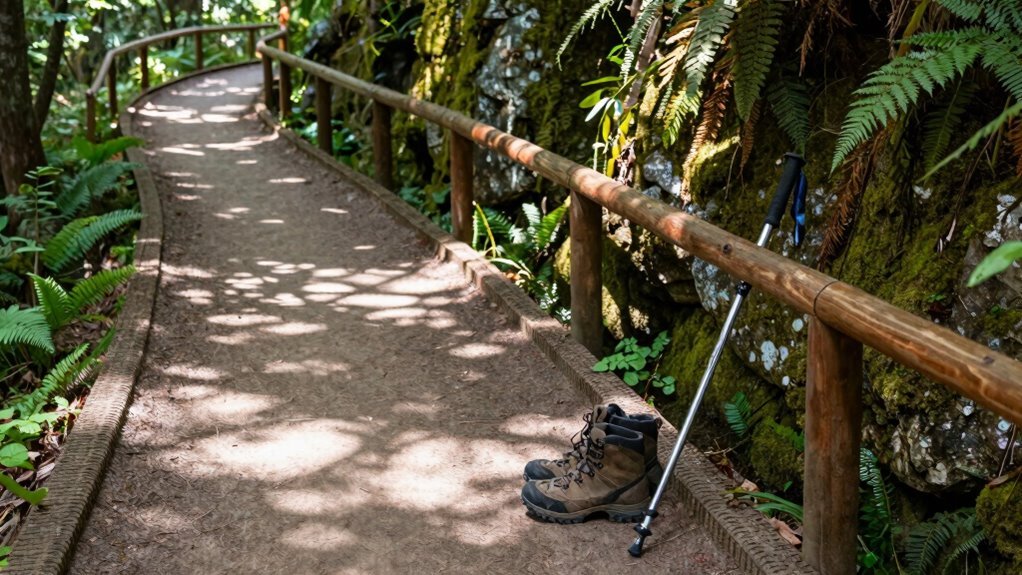
To avoid falls on trails for seniors, start by choosing hiking shoes with excellent arch support and grippy Vibram soles. These features provide stability and traction, especially when the trail gets slick or uneven.
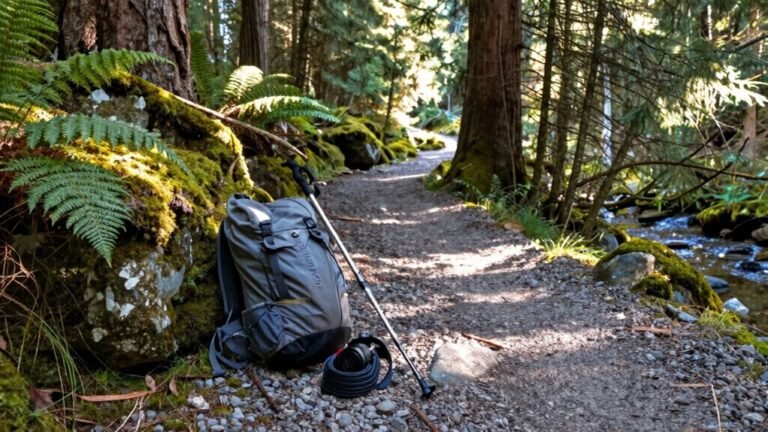
Use trekking poles to improve balance and reduce strain on your knees, particularly during downhill sections. They add extra points of contact with the ground, helping you stay steady on unstable terrain.
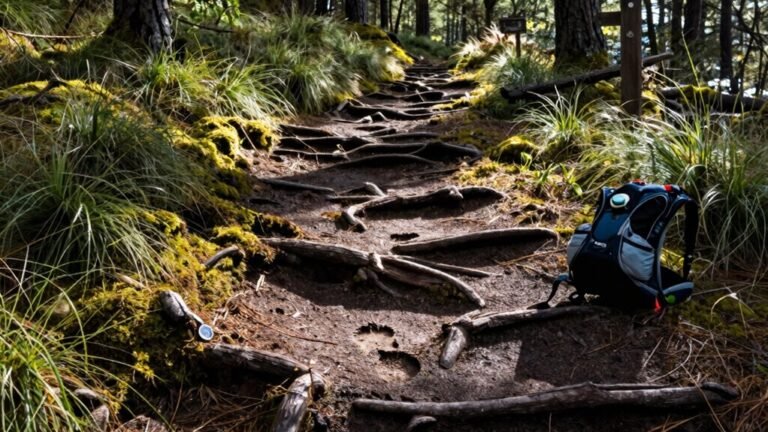
Stick to marked trails and maintain a slow, mindful pace. Watch your step closely—roots, rocks, and changes in elevation can be hidden hazards.
Incorporate balance exercises into your daily routine to improve stability and confidence on the trail. Simple moves like standing on one foot or heel-to-toe walking make a big difference in helping seniors avoid falls on trails.
Pack smart: bring water, snacks, a map, and a fully charged phone. Whenever possible, hike with a buddy for added safety and support.
Choose the Right Footwear for Traction and Support
Lace up your sense of adventure—because the right shoes can turn a rocky trail from foe to friend!
You’ve got this, and your feet should too.
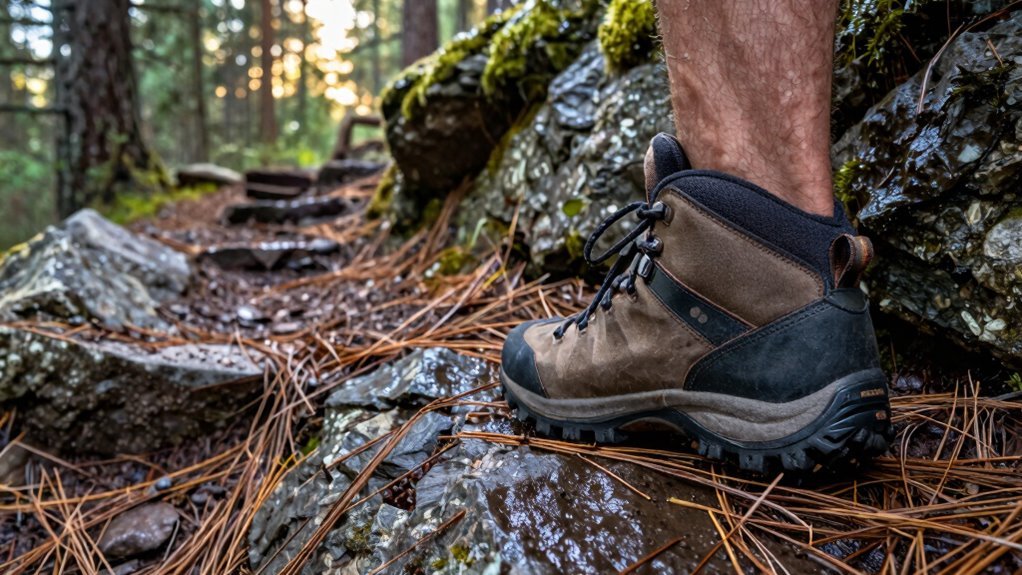
Pick hiking shoes with solid arch support to keep your ankles, knees, and hips happy—no wobbly domino effect!
Don’t let poor alignment sneak up like a surprise root—check reviews and descriptions, especially if your arches crave extra love.
Grip matters: go for Vibram soles with Megagrip; they’re like superhero hands for wet rocks.
Angular lugs dig into mud, snow, and sand, while close-set treads hug slick surfaces.
You’ll stick better than your favorite playlist.
Lightweight shoes? Yes, please—they cut fatigue so you hike farther, smile wider, and still have energy for trail snacks.
Heel support and cushioning team up to soften impacts, protect joints, and keep every step steady.
Your feet won’t just survive the trail—they’ll dominate it, one confident step at a time.
Testers logged 49 miles across varied terrain, confirming durable comfort in real-world use.
Use Trekking Poles for Added Stability
Step into the rhythm of the trail with trekking poles and feel the difference—they’ve got your back (and your balance)!
You’ll instantly stand steadier with four points on the ground instead of two, like having superpowers in your hands.
Poles cut knee strain by up to 25%, making descents safer and easier—your joints will thank you.
They help you “feel” shaky ground before stepping down, stopping stumbles before they start.
Whether you’re tackling rocks, mud, or just fighting gravity on hills, poles boost your confidence and keep you upright.
They’re great if you have arthritis, balance issues, or are rebuilding strength after surgery.
Plus, you’ll walk longer, faster, and with more fun—yes, even burn more calories!
Think of them as tiny bodyguards for your knees and confidence.
Try them—your hike just got a lot more “you.”
Research shows trekking poles can reduce lower-extremity injuries by up to 20%, thanks to improved balance and stability.
Stay on Marked and Well-Maintained Trails
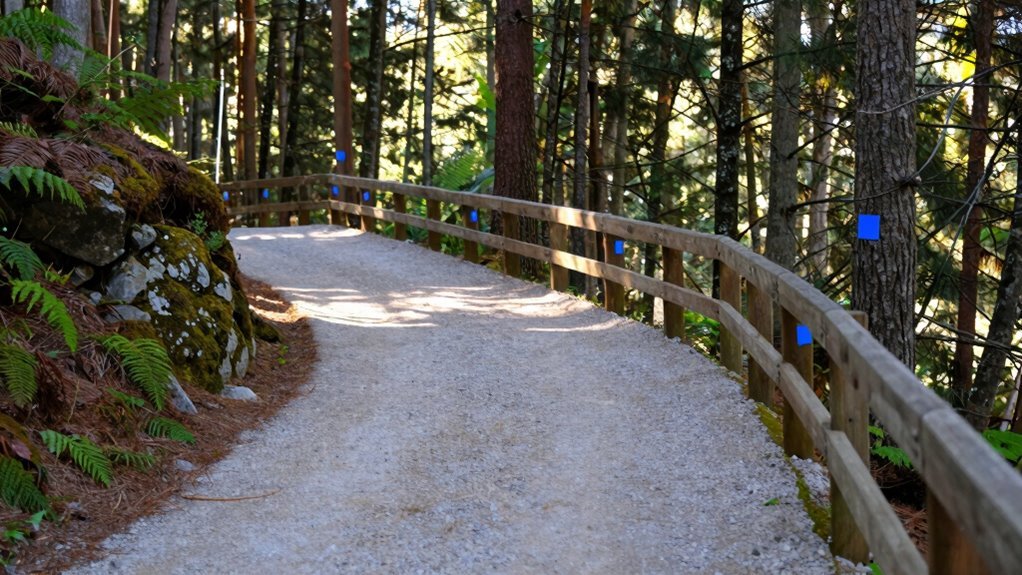
While it’s tempting to blaze your own trail like a modern-day explorer, sticking to marked and well-maintained paths is your best move for staying safe—especially when you’re aiming to avoid slips and falls.
You’re in good company: over 80% of falls happen on these trails, but don’t let that spook you—most hikers stay upright by choosing wisely.
These paths are designed for safety, with better footing and fewer surprise drop-offs.
Even though 75% of falls occur during descent, a clear route helps you keep your balance.
Skipping unmarked terrain cuts your risk, especially since those off-path adventures can turn serious fast.
Think of trails like guardrails with scenery—your body will thank you.
Plus, older hikers like you often pick smarter routes, so keep trusting your instincts.
Staying on designated paths also reduces exposure to rocky terrain, which dominates above 1800 meters and is a common factor in trail accidents.
Stay visible, stay steady, and let someone else be the hero in the wilderness.
You’ve got this—safely.
Take Your Time and Mind Your Step
You’ve picked the right path by sticking to marked trails, and now let’s talk about how to walk it like a pro—no sprinting, no showboating, just smart, steady strides.
Slow and steady wins the hike, not the race.
Rushing drains your energy fast, leaving you shaky before the trail’s done.
Take small steps, keep a controlled pace, and let your body stay happy and strong.
Watch the ground like a hawk—roots, rocks, and dips are sneaky tripsters!
Scan ahead, place your feet with care, and treat curbs and slopes like uninvited in-laws: with respect and caution.
Use trekking poles for bonus balance, and take breaks often to stretch, check in with your body, and admire the view (or just catch your breath).
Know your limits, honor them, and hike your own hike—safely, calmly, and with a grin.
Strengthen Balance and Leg Muscles With Regular Exercise
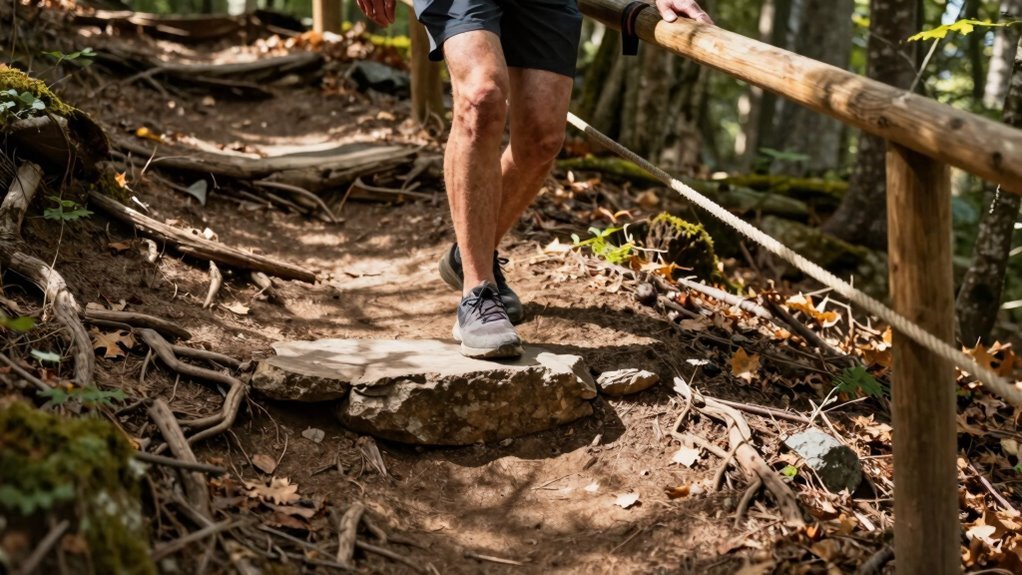
Ready to turn wobbles into wins?
Strengthening your balance and leg muscles isn’t just smart—it’s your secret weapon on trails.
Try the heel-toe walk: place one heel right in front of the other, take five steady steps, and feel your coordination soar.
Lift those legs while holding a chair for leg raises—10 to 15 reps build strength and stability.
March in place for 30 seconds, knees high, core tight, and enjoy a little indoor pep.
Lunges?
Step forward, bend that knee, hold it, and boom—stronger legs for uphill climbs.
Shift weight side to side to wake up your hips, ankles, and brain connection.
These moves aren’t fancy, but they work.
Do them regularly, and you’ll stride with confidence, not caution.
Strong legs and steady balance mean fewer stumbles and more fun.
Who knew staying steady could feel so empowering—and fun?
Carry Essential Safety Gear and Supplies
Always pack smart, and you’ll hike with confidence—because hitting the trail unprepared is a bit like showing up to a picnic with no food: a well-meaning miss.
You’ve got this, especially when you bring gear that keeps you steady, safe, and ready for anything.
Think of your pack as your trail buddy—quiet, reliable, and full of surprises that save the day.
Here’s what to grab:
- Trekking poles – they steady your stride and spare your knees on downhills.
- Emergency gear – like a Garmin InReach or medical alert device, just in case.
- Smart supplies – knee braces, blister-proof socks, a headlamp, and a compact first-aid kit.
Add sunglasses, sunscreen, and water treatment, and you’re not just ready—you’re trail-smart. Who knew being responsible could feel this fun?
Hike With a Companion Whenever Possible
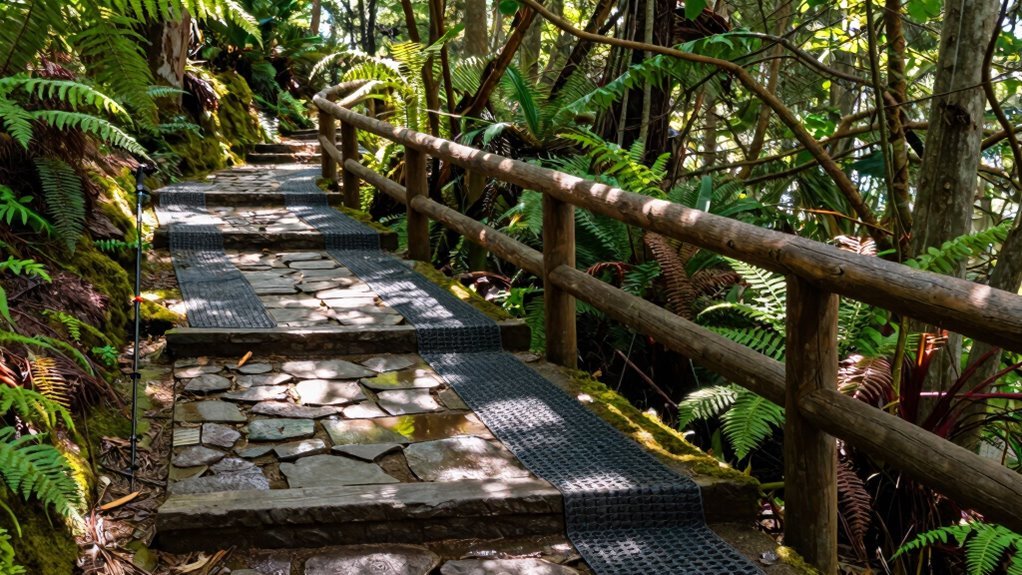
There’s something special about sharing the crunch of leaves underfoot or the view from a rocky overlook with someone who gets it—someone right beside you on the trail.
Hiking with a buddy isn’t just fun—it’s smart.
You’ve got backup if the path turns tricky or your legs say “no more.”
They’ll spot when you’re tired before you even realize it.
Plus, studies show you’re 30% more likely to stay active when you’ve got a trail pal keeping you honest.
Need help over a rocky patch? Just ask.
Laughing through steep climbs makes them feel like flat strolls.
And if you do stumble, help’s already on hand.
Choose someone who matches your pace, shares your vibe, and won’t ditch you for a squirrel.
Check in with each other, pick trails you both enjoy, and don’t forget to tell someone where you’re headed.
Two boots are better than one!
Frequently Asked Questions
Can Poor Eyesight Increase Fall Risk on Trails?
Yeah, poor eyesight definitely increases your fall risk on trails—your eyes are your trail scouts, after all!
If you can’t spot roots, rocks, or sudden drops, you’re more likely to stumble.
Blurry vision or low contrast sensitivity makes it hard to see changes in terrain, while poor depth perception throws your balance off.
It’s like hiking with sneak attacks from the path itself—nature’s got no chill when you can’t see clearly!
Should I Avoid Trails With Steep Inclines?
Yeah, you should skip steep inclines—they’re tough on your knees and can throw off your balance.
Stick to gentle slopes that let you hike comfortably without huffing and puffing.
Your legs will thank you, and you won’t feel like you’re auditioning for a mountain goat role.
Gradual trails still give you great views and a solid workout—minus the drama.
Take it easy, enjoy the journey, and save the Everest dreams for another day.
Are There Specific Trails Recommended for Seniors?
Yeah, there are plenty of senior-friendly trails you’ll love!
Imagine strolling under towering redwoods at Muir Woods, or ambling past waterfalls on Virginia’s paved paths at Great Falls Park.
You’ve got flat boardwalks in the Everglades, gentle loops in Acadia, and serene forest walks in Gatlinburg.
These trails are scenic, well-maintained, and kind to knees—no surprise mountain goats needed!
Just grab your boots and go—nature’s waiting, and it’s gorgeous out there.
What Snacks Help Maintain Energy While Hiking?
You’ll love how snacks like protein bars, trail mix, and Perfect Bars keep your energy steady on the trail.
Toss in some beef jerky or almonds for a protein punch, and don’t forget dried fruit for a sweet, quick boost.
Squeeze packs of nut butter? Total game-changer.
Just don’t save chocolate covered almonds for “later”—we both know they’ll vanish by mile two.
Fuel up, have fun, and hike happy!
How Often Should I Stop to Rest on a Hike?
You should stop every hour like clockwork, friend—10 minutes to stretch, sip water, and laugh at your trail snacks’ crumbs.
Pop a micro-break every 30 minutes if needed, like a quick pit stop for your knees.
Take a longer breather every couple hours to air out your feet and refuel.
Don’t wait till you’re wobbling like jelly—rest before you need it, and your legs will thank you with every step.
Conclusion
Pick perfect footwear, plant poles with pride, prowl pristine paths, pace with patience, and practice powerful moves. Partners make hikes happier—and safer! Pack practical provisions, prevent perilous slips, and prance with purpose, not panic. Picture it: you, strong and smiling, striding through stunning scenes without a stumble. Stay steady, stay smart, and savor every second. Sweet success starts with smart, simple steps—so step up, not sideways!
References
- https://www.rei.com/learn/expert-advice/the-best-hiking-boots.html
- https://www.treelinereview.com/gearreviews/best-hiking-shoes
- https://runrepeat.com/guides/best-stability-walking-shoes
- https://cadense.com/collections/shoes-for-seniors
- https://www.outdoorgearlab.com/topics/shoes-and-boots/best-hiking-shoes
- https://sectionhiker.com/zero-drop-trail-runners-for-hikers-over-60/
- https://bw-lf.com/blogs/into-the-wild/guide-trekking-poles-seniors
- https://stvitalphysio.ca/the-powerful-benefits-of-walking-poles/
- https://www.youtube.com/watch?v=2s6ra1vlEhw
- https://agewellproject.com/how-walking-poles-can-help-us-age-well/