How to Choose Trekking Poles for Seniors
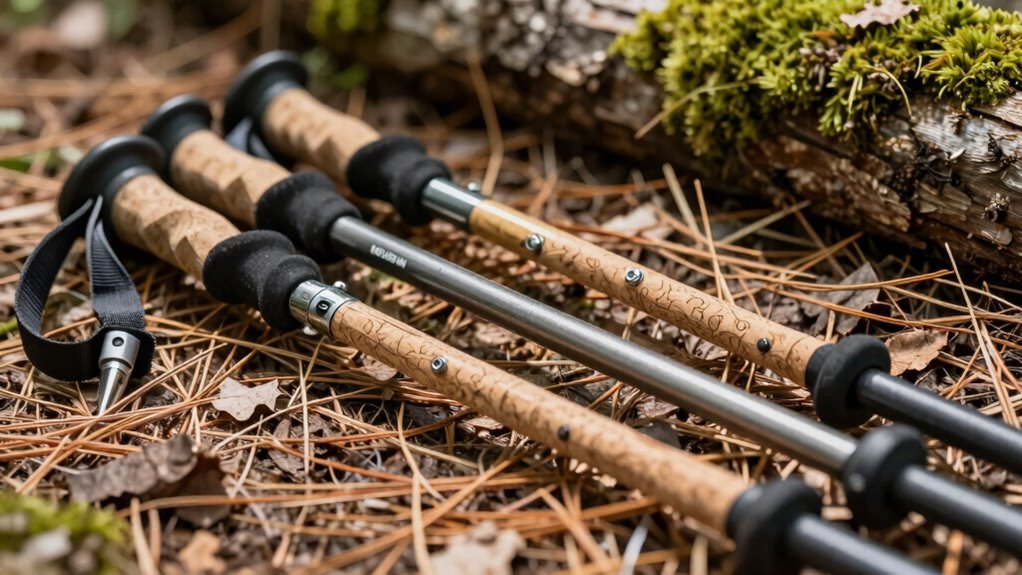
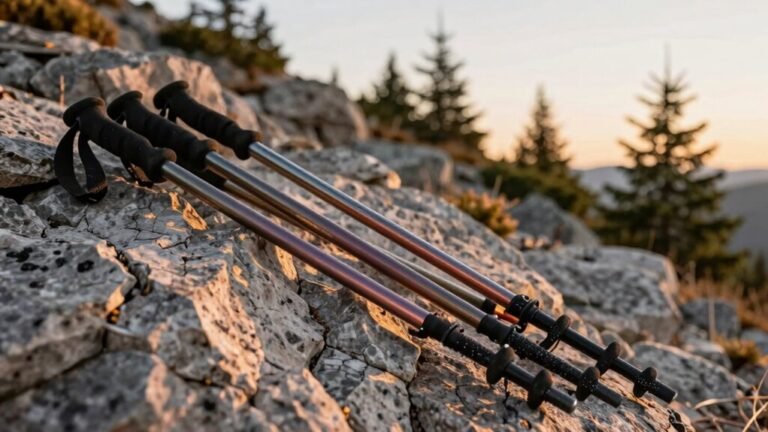
When choosing trekking poles for seniors, material matters—opt for lightweight carbon fiber to reduce joint stress and enjoy quieter strides, or durable aluminum 7075 for rugged trail performance. Both options support stability, a key factor in how to choose trekking poles for seniors.
Look for poles with ergonomic, angled grips and padded, adjustable straps to prevent hand fatigue and improve comfort. These features make a noticeable difference during long walks, especially for older hikers.
Adjustable poles help navigate uphill and downhill terrain with ease, while built-in shock absorption can significantly reduce impact on knees and joints. Select the correct length based on your height to ensure optimal support and balance.
With the right features, trekking poles become a reliable companion, enhancing mobility and confidence on every hike.
Consider the Right Material for Lightweight Support
Wondering what makes a trekking pole light enough to carry all day but strong enough to lean on when your knees say “no more”?
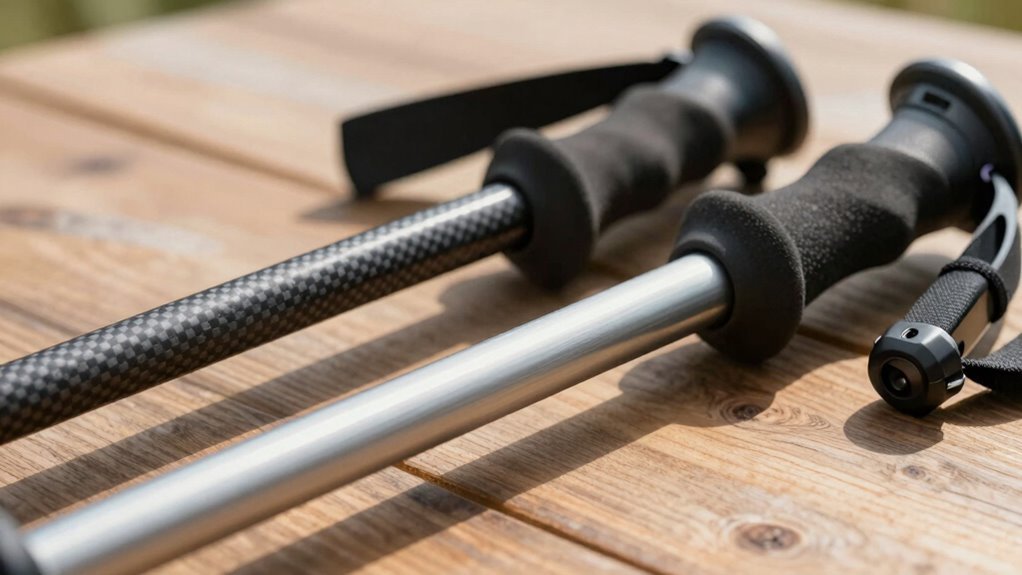
You’ve got two main choices: carbon fiber or aluminum.
Carbon fiber’s super light, so your arms won’t tire easily, and it absorbs shocks like a champ—perfect when trails get tough on your joints.
But it’s pricier and can crack if you whack it sideways.
Aluminum’s tougher, especially the aircraft-grade kind, and it won’t snap if you lean hard or trip over a root—peace of mind for clumsy moments.
Yeah, it’s a bit heavier, but it’s also kinder to your wallet.
Either way, you’re walking easier, one smart step at a time.
Research shows trekking poles can reduce knee compressive force by up to 25%, making lightweight support especially beneficial for seniors managing joint pain.
Prioritize Comfort With Ergonomic Grip Design
Say goodbye to sore palms and stiff wrists—your trekking poles shouldn’t feel like a chore to hold.
With the right ergonomic grip, every step becomes easier, especially if you’re dealing with arthritis or tired joints.
You’ll stay steady on rocky paths and still have energy to enjoy the view—no white-knuckle grip needed!
- Angled 45-degree handles – they help you stand tall, ease wrist pain, and power down slopes without straining.
- Cushioned, contoured grips – they hug your hands softly, reduce shock, and shift weight to your arms so fingers don’t cramp.
- Padded straps with a secure fit – they let you relax your grip (yes, really!), transfer force smoothly, and keep poles from slipping—even if you let go.
Choose grips that feel like an extension of your hand, not a wrestling match.
Your future self (and sore hands) will thank you halfway up that hill!
They also reduce joint impact, making each step gentler on knees and legs during long hikes.
Choose Adjustable Poles for Versatile Terrain Use
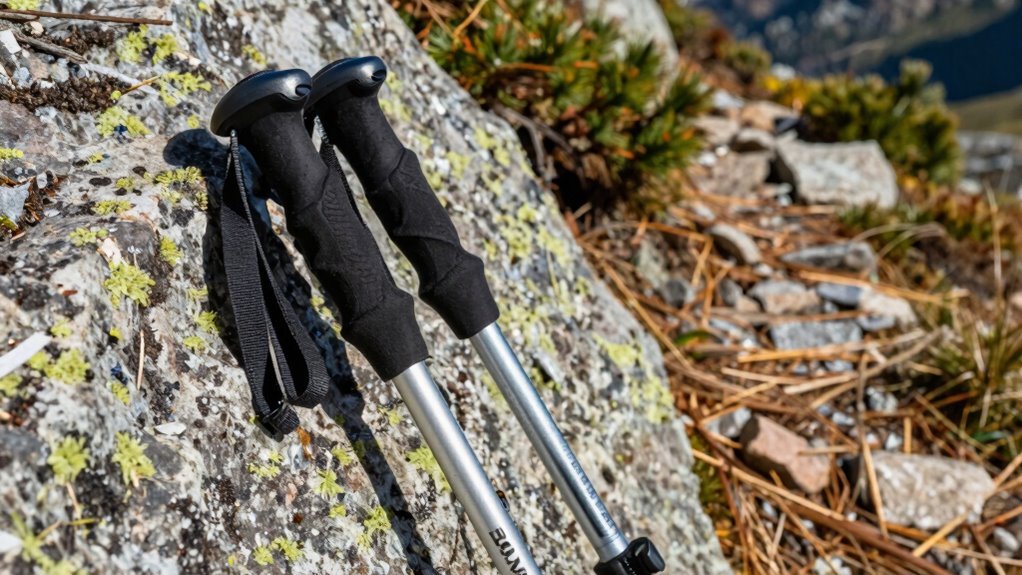
How does it feel to tackle a steep uphill one minute and glide down a rocky descent the next—without missing a beat? With adjustable trekking poles, you’ve got the perfect partner for every twist and turn.
Just twist the lock, tweak the length, and keep moving—no tools, no hassle.
Shorten the poles for uphill climbs to keep that comfy 90-degree elbow bend, then extend them for downhill stretches to stay steady and save your knees.
Whether you’re crunching on gravel, squishing through mud, or crunching across snow, your poles adapt right along with you.
Interchangeable tips and customizable heights mean you’re always ready for what’s ahead.
Plus, extra stability on slippery or uneven ground keeps wobbles—and worries—at bay.
It’s like having four-wheel drive for your feet, minus the gas bill.
Conquer all kinds of trails with confidence, one smooth stride at a time.
Adjustable walking poles offer versatile length changes for optimal balance and joint support across diverse terrains.
Evaluate Shock Absorption Features for Joint Protection
Why take every jolt from the trail straight to your joints when your poles can shoulder some of that load? Shock-absorbing trekking poles are like tiny bodyguards for your knees, hips, and back—especially helpful if you’re tackling downhill paths or dealing with aches.
They use internal springs to cushion each step, and you can even switch them off when heading uphill for better push.
Great for arthritis or past injuries, they boost stability and cut fall risks.
- Choose carbon fiber poles – they’re lightweight, quiet on impact, and naturally soak up vibrations.
- Look for adjustable shock systems – so you can customize support and lock them securely.
- Grab poles with comfy grips – foam or rubber means less hand fatigue and more trail joy.
Your joints will thank you every mile.
Select the Proper Pole Length for Your Height and Stature
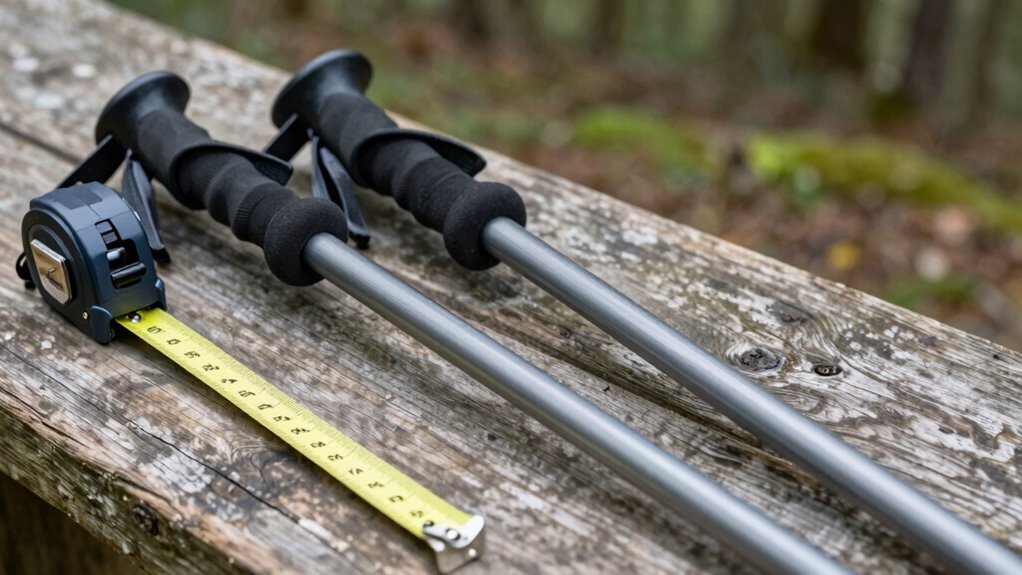
You’ve got your shock-absorbing poles lined up to protect your joints—now let’s make sure they’re the right length, because even the fanciest poles can feel like awkward broomsticks if they don’t fit.
Stand up straight, arms bent at 90 degrees, and let the pole tips touch the ground—your forearms should run parallel to the floor, wrists relaxed, like you’re casually waving hello to a neighbor.
If you’re 5’10”, grab 125 cm poles; if you’re under 6 feet, most adjustable models will work.
Taller than that? Look for ones that go up to 51 inches.
For a perfect fit, multiply your height in centimeters by 0.68—it’s like a mini science experiment that actually helps!
And remember, shorten poles going uphill, lengthen them downhill.
It’s not magic—it’s smart hiking.
Test the Wrist Straps for Stability and Ease of Use
Grab those poles and slip your hands in—let’s make sure the wrist straps feel like a firm, friendly handshake, not a wrestling match.
You want comfort and control, not a death grip on your energy.
Here’s how to test them right:
- Slide your hand up through the strap so it sits snug between palm and grip—like shaking hands with your gear.
- Walk around for 10–15 minutes, leaning into the straps on a slope; they should support you, not slip or pinch.
- Adjust them quickly—uphill, shorten; downhill, lengthen—and see if they stay put without fuss.
The best straps cushion your wrists, cut hand fatigue, and make each step feel light.
When done right, they’re like tiny helpers saying, “We’ve got you.”
And hey, if they make you smile mid-stride, you’ve nailed it.
Check Durability and Reliability for Long-Term Use
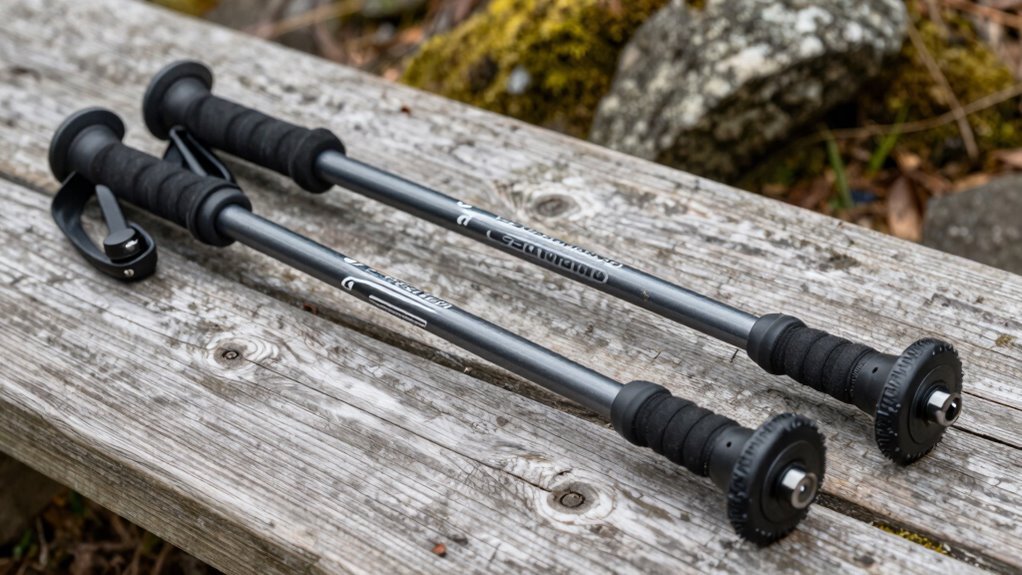
When you’re out on the trail and the path gets rough, you don’t want your poles tapping out before you do—so it’s smart to pick ones that laugh in the face of mud, rocks, and unexpected downhill sprints.
Go for aluminum 7075; it’s tough, light, and handles rough terrain like a champ.
Or try carbon fiber if you want something sleek and strong that won’t quit over time.
Both stand up to seasons of trails, but carbon fights off dents better, while aluminum loves heavy loads.
Flip-locks? Perfect—they adjust fast and stay put without slipping.
And don’t forget shock absorption; it saves your joints when the trail gets bumpy.
Look for rubber grips and cushioned tips to keep things comfy on gravel or mud.
With poles this reliable, you’ll be striding strong for years—no drama, just adventure.
Your future self will thank you!
Frequently Asked Questions
Can I Use Trekking Poles on Paved Trails?
Yes, you can absolutely use trekking poles on paved trails—go ahead and strut your stuff down that sidewalk like you’re in a nature-inspired marching band!
Just swap out the metal tips for rubber ones so you don’t screech like a startled seagull on concrete.
They’ll cushion each step, boost your balance, and save your knees from throwing a protest.
Poles aren’t just for mountain goats—use ’em proudly, pavement pro!
Are Folding Poles as Durable as Fixed-Length Ones?
No, folding poles aren’t as tough as fixed-length ones—you’re better off with single-piece poles if durability’s your goal.
They’ve got fewer weak spots, so they won’t let you down on rough trails.
Folding poles flex and wear at the joints, especially when you’re leaning hard.
Think of them like cheap headphones—convenient, but they quit faster.
Stick with fixed poles, and you’ll skip the drama!
Do I Need Different Poles for Summer and Winter?
Nah, you don’t *need* two sets, but having different poles sure makes life easier—like wearing sandals in summer and boots in winter.
Light, packable three-section poles rock for warm trails, while beefier two-section ones with snow baskets handle icy slopes like champs.
Just toss on rubber tips for pavement strolls.
It’s not a must, but hey, who doesn’t love gear that doesn’t make you work harder?
Can Trekking Poles Help Improve Posture While Walking?
Trekking poles pull you upright like a puppet on strings, and that’s a good thing.
You stand taller, shoulders back, core engaged—no slouching allowed.
They boost balance, cut strain on joints, and sneak in a little upper-body workout.
Think of them as cheerleaders for your spine: “Hey, stand up straight!”
Plus, walking feels lighter, easier, and way more fun.
Are Expensive Poles Worth the Investment for Occasional Use?
No, you don’t need to splurge on fancy poles for occasional hikes—they’re not worth the splurge.
Basic aluminum ones do the same job, saving your knees and burning extra calories just fine.
Lightweight? Check.
Sturdy? Check.
You’ll love the support without the price tag.
Save your cash for trail snacks—you’ve earned ’em!
Conclusion
You’ve got this! Picking the right trekking poles isn’t rocket science, but it *is* your golden ticket to walking like a mountain goat with knees of steel. Lightweight materials, comfy grips, and shock absorption? Yes, please! Adjustable and properly sized poles make every trail feel like a stroll in the park—even if that park has a 10,000-foot hill. Test straps, trust durability, and boom: adventure just got a whole lot kinder on your joints.
References
- https://bw-lf.com/blogs/into-the-wild/guide-trekking-poles-seniors
- https://www.hikerhunger.com/blogs/news/best-hiking-sticks-for-seniors
- https://physioed.com/health-advice/exercise-and-fitness/walking-poles-for-seniors/
- https://www.supplyingseniors.com/products/trekking-poles
- https://www.bullets-n-broadheads.com/products/weighted-walking-sticks-for-seniors-women-men-12lb-each-ergo/202008363/
- https://www.outdoorgearlab.com/topics/camping-and-hiking/best-trekking-poles
- https://sectionhiker.com/pacerpole-posture-poles/
- https://smartcrutch-usa.com/products/motivator-walking-poles-for-balance-and-rehab-patented-stability-grips-lightweight-adjustable-and-collapsible-2-pieces-adjustable-w-flip-locks-detachable-feet-and-travel-bag
- https://stvitalphysio.ca/the-powerful-benefits-of-walking-poles/
- https://healthcaresolutions.ca/blogs/articles/the-benefits-of-walking-poles